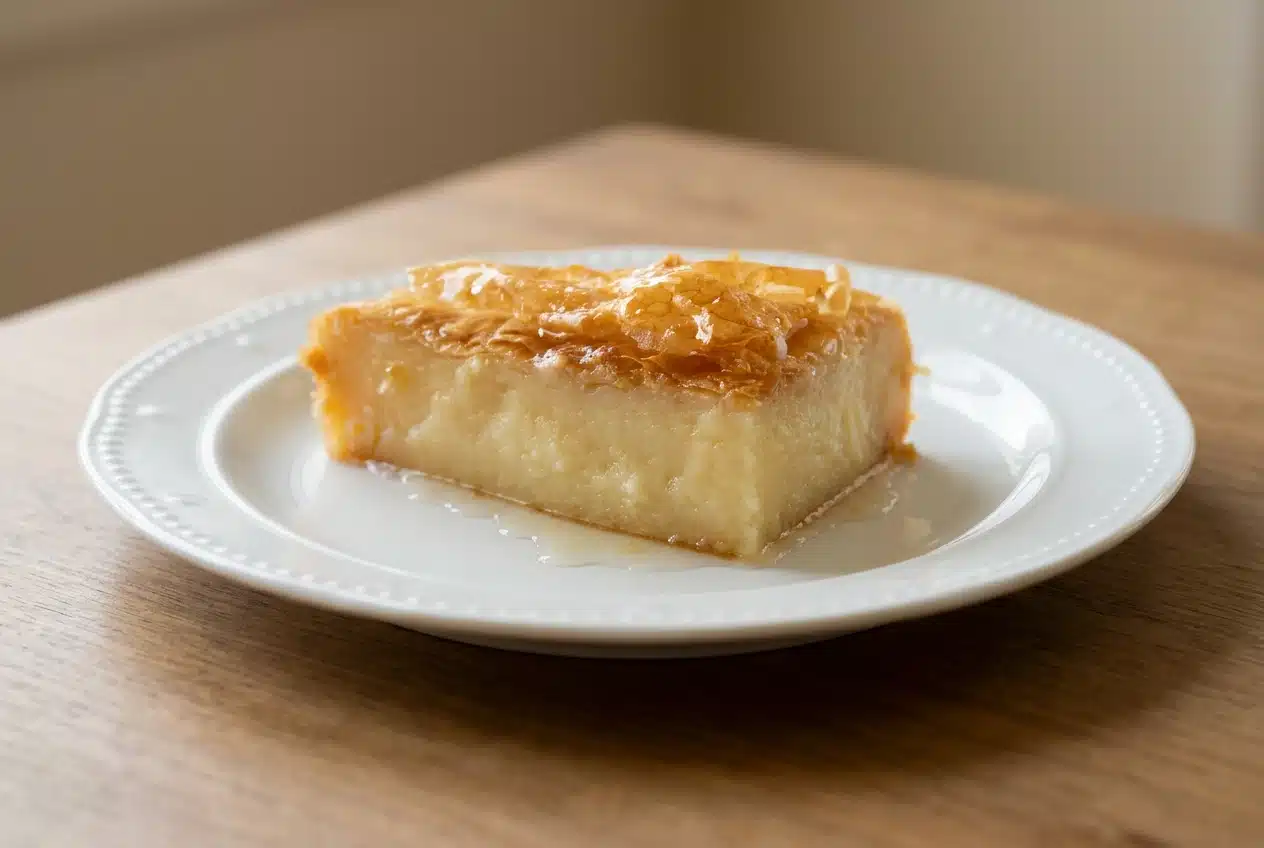
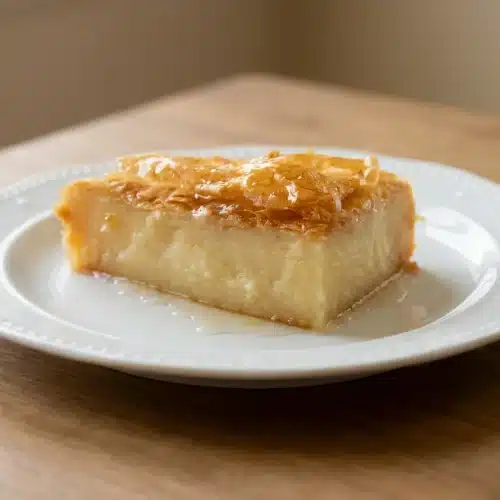
This galaktoboureko recipe combines buttered phyllo, creamy semolina custard, and lemon-honey syrup. The key texture cue is crisp, golden pastry: ladle completely cold syrup over it while it’s hot, then let the syrup absorb before slicing.
Galaktoboureko is a Greek custard pie with delicate pastry layers surrounding a rich milk-and-cream filling. Fine semolina gives the custard body, while whipped eggs bring a lighter texture.
Lemon peel, cinnamon, and honey balance the buttery layers without overwhelming the filling. The preparation takes attention, especially when folding the eggs and handling phyllo. That first crisp bite is the reward.
Keep the phyllo wrapped until the filling and melted butter are ready.
Key Ingredients and Pastry Components
Each ingredient contributes to the contrast: phyllo and butter create flaky layers, semolina and eggs structure the creamy filling, and dairy adds richness. Sugar, honey, lemon, cinnamon, and vanilla bring sweetness, fragrance, and balance.
- 450g phyllo pastry (14 oz./ 12 sheets)
- 230g butter (8 oz.)
- 160g finely ground (thin) semolina (6 oz.)
- 220g sugar (7.5 oz.)
- 500g milk (17.6 oz.)
- 4 eggs (separated into whites and yolks)
- 30g butter (1 oz.)
- 1 tsp vanilla extract
- 500g double (heavy) cream (17.6 oz)
- 325g water (11.4 ounces)
- 575g sugar (20.2 ounces)
- 1 large tbsp honey
- peel of 1 lemon
- a cinnamon stick
- 10 drops of the lemon juice
The syrup: Water dissolves the sugar, while honey rounds out the sweetness. Lemon peel supplies citrus fragrance, lemon juice adds brightness, and the cinnamon stick brings warmth.
The custard: Choose finely ground semolina for a smoother filling. Milk supplies moisture, heavy cream adds richness, and eggs help the filling hold its shape. Vanilla softens the dairy flavor, while butter enriches the cooked semolina cream.
The pastry: Phyllo, also sold as filo dough, provides the delicate layered shell. Choose butter whose flavor you enjoy, since it runs through the pastry rather than acting only as a pan coating.
How to Make Galaktoboureko Step by Step
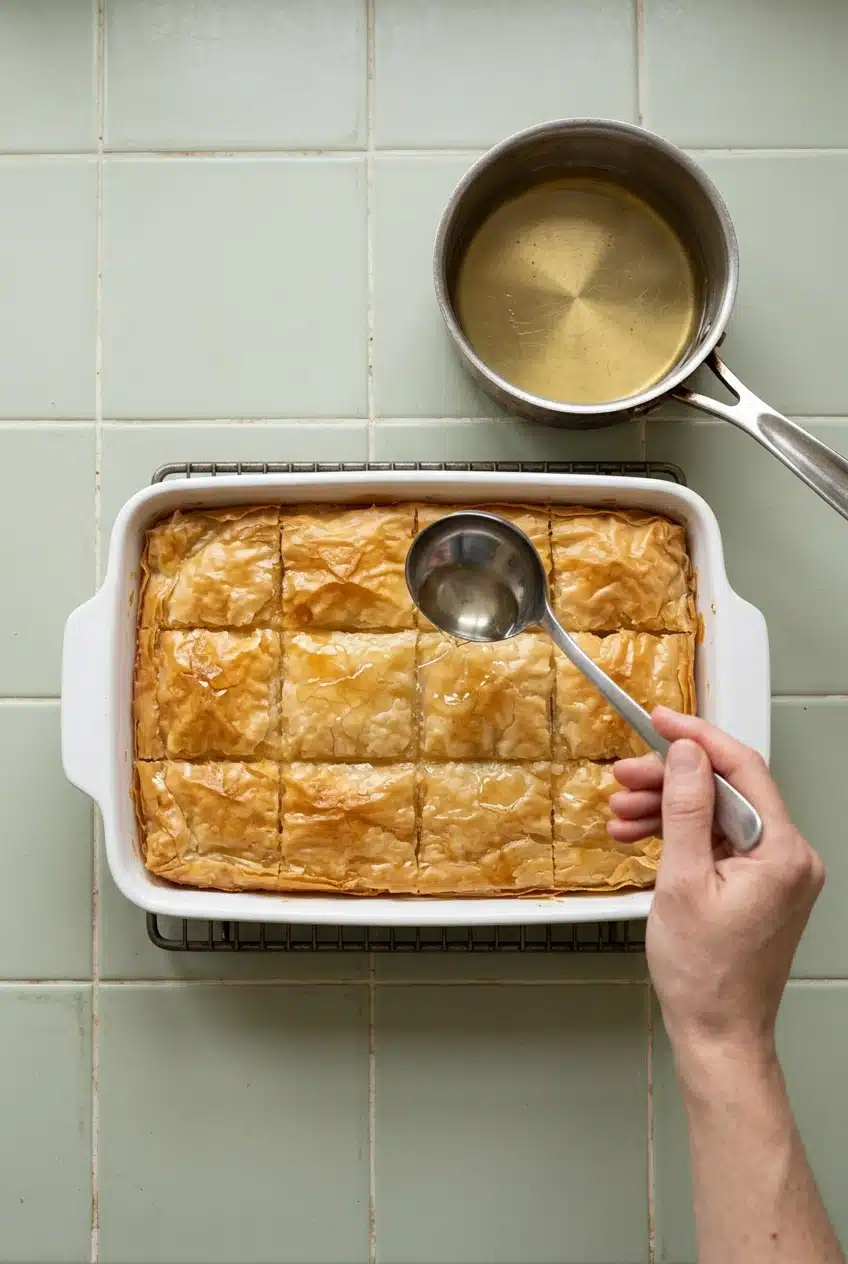
Work in this order: syrup first, custard second, pastry assembly last. This gives the syrup time to cool completely and the cooked semolina mixture time to become gently warm before the eggs go in.
Before starting: An oven temperature and baking duration are not specified here. Confirm both before proceeding; the overall cooking time is not a substitute for a complete baking schedule.
Prep: 1 hour. Cook: 1 hour. Total: 2 hours. Servings: 10. Yield: 10–12 pieces.
- Combine the 575g sugar, water, lemon peel, cinnamon stick, and lemon juice in a small saucepan and boil until the sugar dissolves, then remove from the heat, stir in the honey, and leave to cool completely.
The finished syrup should have no visible sugar crystals and must be cold before it meets the baked pastry. - Place the milk, cream, and 120g of the custard sugar in a saucepan and bring to a boil without initially whisking, then gradually whisk in the semolina and vanilla.
Adding the semolina in a slow stream helps it disperse through the hot dairy instead of gathering into clumps. - Reduce the heat to medium and whisk continuously until creamy, then remove from the heat, fold in the custard butter, and cool to 50 °C / 120 °F, whisking occasionally.
The mixture should become a smooth, thick cream and feel warm rather than piping hot before the eggs are incorporated. - Beat the egg whites with the remaining custard sugar using an electric mixer and a dry bowl and beaters.
Stop when the sugar has dissolved and the meringue looks thick and glossy, with a long peak trailing from the lifted beaters. - Whip the yolks with 50g sugar in a separate bowl for about 5 minutes.
The yolk mixture should look thick, pale, and foamy. - Fold one-quarter of the meringue into the whipped yolks with a spatula, then gently incorporate the rest before folding the egg mixture into the cooled semolina cream.
Use lifting movements from underneath to preserve the airy texture. - Melt the 230g butter over low heat and grease the bottom and sides of an approximately 25 × 32 cm baking tray.
The butter should remain fluid so it can be sprinkled over the delicate sheets. - Arrange six phyllo sheets across the tray, sprinkling butter over each, with four sheets overlapping the sides in both directions and two covering the center.
The overhanging sheets should provide flaps that can fold over the filling. - Spread the custard evenly over the pastry, fold the overhanging flaps inward, sprinkle with butter, and cover with the remaining phyllo, buttering each layer.
Smooth the filling with a spatula so the top pastry rests on an even surface. - Trim excessive overhang, tuck the pastry edges inward with a pastry brush, and score portions through the top layers with a sharp knife, stopping at the custard.
The cuts should define the portions without dragging filling onto the surface. - Sprinkle a little water over the top and bake using a confirmed oven setting and baking schedule.
Crisp, golden phyllo is the stated pastry cue, but it does not supply the missing baking settings. - Ladle the completely cold syrup gradually over the pastry immediately after baking.
Wait until the syrup has absorbed before cutting the portions.
Tips and Troubleshooting for Crisp Phyllo and Silky Custard
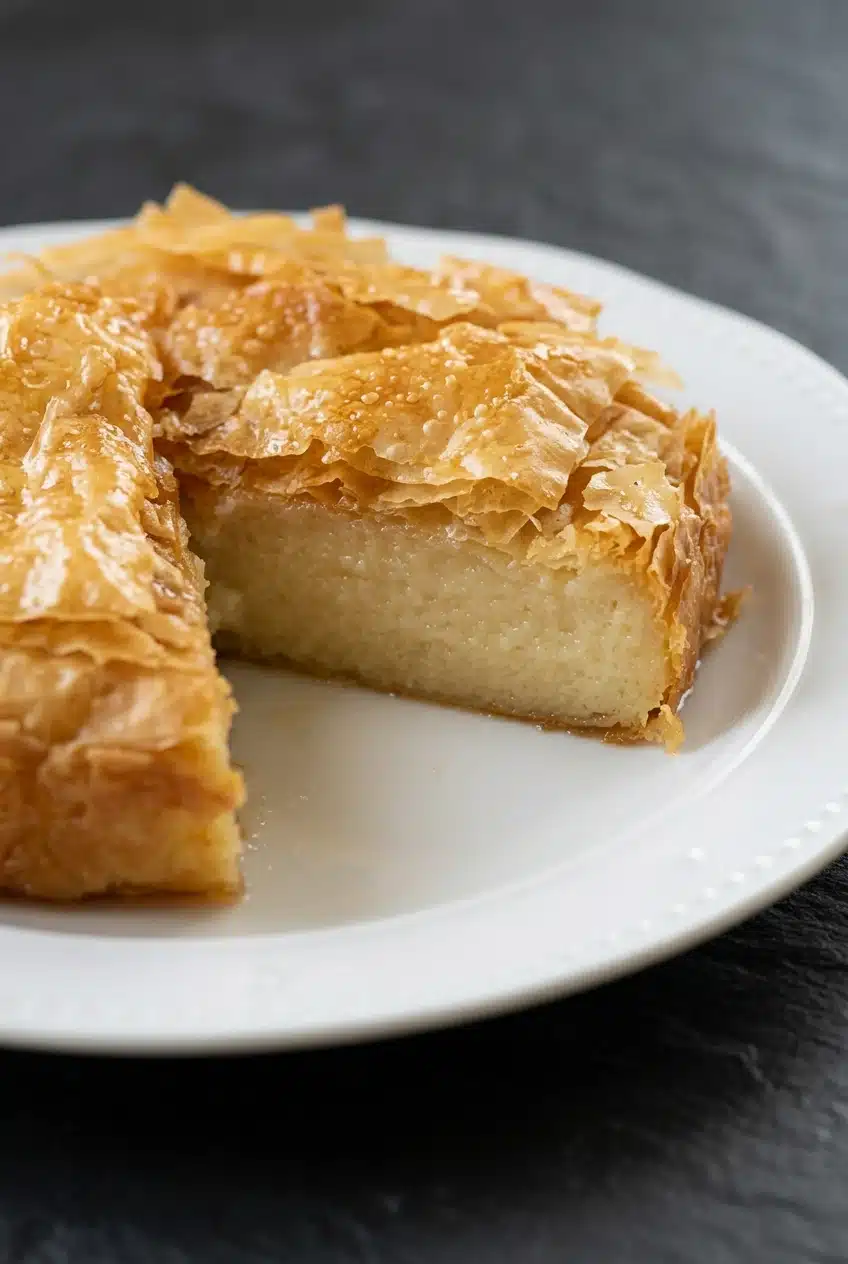
Most texture problems begin with moisture management or adding eggs before the semolina cream has cooled enough.
How to Prevent Soggy Phyllo and Burnt Spots
- Soft crust after syruping: Warm syrup or cooled pastry loses the intended temperature contrast, so have the syrup completely cold when the pastry comes out of the oven.
- Syrup collecting in one spot: Pouring everything at once concentrates moisture; distribute it gradually with a ladle.
- Dry, cracking sheets: Exposed phyllo becomes brittle; protect the unused stack with a lightly damp cloth without soaking the pastry.
- Compressed layers: Heavy brushing can press the sheets together; sprinkle melted butter gently instead.
- Dark butter spots: Uneven butter deposits can create uneven coloring; distribute the melted butter across each sheet rather than leaving concentrated patches.
- A softening top during resting: Covering warm pastry traps steam; leave the top uncovered during its initial rest, without treating this as permission for extended room-temperature storage.
I favor a light hand with phyllo: a small tear matters less than pressing the layers flat while trying to make them perfect.
How to Keep Semolina Custard Smooth and Curdle-Free
- Lumpy cream: Semolina added too quickly can clump; stream it into the hot dairy while whisking, then keep whisking as it thickens.
- Noticeably grainy filling: Coarse semolina changes the texture; select finely ground semolina rather than trying to compensate later.
- Curdled egg mixture: Excessively hot semolina cream can cook the eggs on contact; let it cool to the warm stage before folding.
- Heavy filling: Rough mixing knocks air out of the whipped eggs; fold with a spatula using gentle movements from the bottom upward.
Popular Galaktoboureko Variations to Try
Keep these optional directions separate from the meringue-folded, melted-butter version above. They change flavor or texture rather than correcting a failed custard.
Whole-Egg Semolina Custard vs. Meringue-Folded Custard
A whole-egg semolina custard generally has a more compact texture. The meringue-folded filling used here incorporates air through whipped whites and yolks, creating a lighter impression within the rich dairy filling. The methods aren’t interchangeable without adjusting the preparation.
Clarified or Browned Butter Finish
Clarified butter offers a different browning profile because it lacks the milk solids found in regular butter. Browned-and-strained butter points the flavor toward toasted nuttiness. Both are optional directions; the method above uses melted butter.
Syrup Aromatics and Spiced Finishes
- More citrus emphasis: Additional citrus fragrance gives the syrup a brighter character.
- Clove: This optional spice adds a stronger, warmer note than cinnamon alone.
- Ground cinnamon: A light finishing dusting adds aroma directly to each portion.
- Individual rolls: Rolled portions offer a different presentation, but they require their own assembly and baking instructions.
Dietary Considerations and Ingredient Adaptations
Changing the dairy, eggs, or wheat ingredients affects structure as much as flavor. Treat substantial adaptations as separate recipes rather than direct substitutions.
Dairy-Free, Egg-Free, and Grain-Free Adaptations
- Dairy-free direction: Plant milks and alternative fats change the richness and behavior of the custard and pastry; they aren’t tested replacements here.
- Egg-free direction: Removing the eggs also removes their setting and aerating roles, so simply leaving them out won’t reproduce this filling.
- Grain-free direction: Arrowroot and nut flours appear in alternative custard bakes, but replacing semolina and omitting phyllo moves the result toward a custard cake rather than flaky layered pastry.
Check every ingredient label when cooking for dietary restrictions. These conceptual alternatives don’t establish allergen suitability or verified dietary compliance.
How to Slice and Serve Galaktoboureko
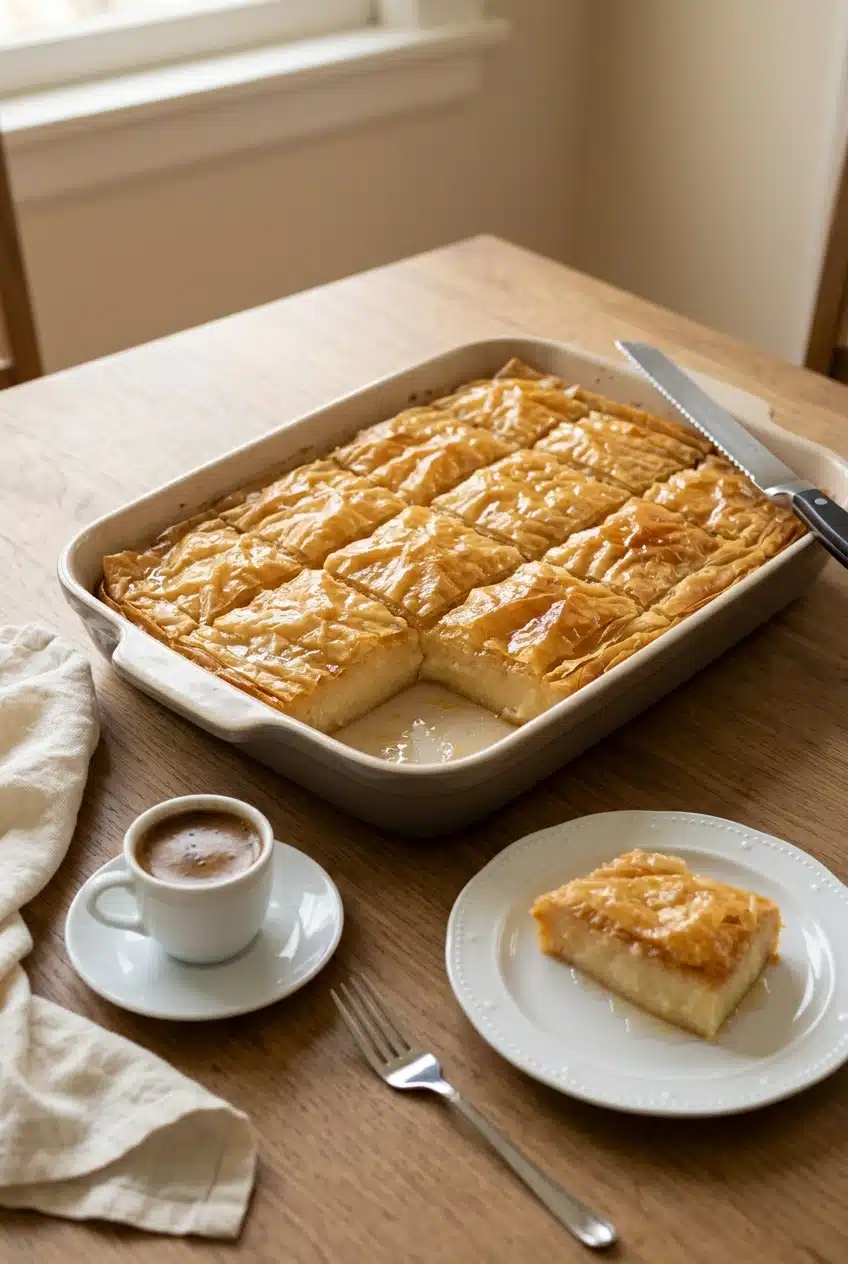
Wait for the syrup to absorb before slicing. For neater portions, follow the existing score lines with a sharp serrated knife, using gentle strokes rather than pressing straight down through the crust.
Unsweetened Greek coffee, espresso, or black tea balances the sweet syrup. Ground cinnamon or citrus zest can add an optional finishing fragrance.
For a Greek-inspired dinner, serve Greek lamb gyros as the savory main, then finish with a portion of custard pastry and coffee.
Make-Ahead Planning and Safe Refrigeration Storage
Build your preparation around the syrup’s cooling stage. Make it first, then organize the custard and pastry work while it cools; this is the most useful way to reduce last-minute juggling without assigning an unsupported holding period.
For leftovers, keep the custard pastry covered and chilled rather than treating it like a dry, shelf-stable pastry. Refrigeration may soften the phyllo, so expect less contrast between the crust and filling after storage.
Leaving the top uncovered during its initial rest is a texture choice, not a storage method. Avoid prolonging room-temperature holding just to preserve crunch.
Final Thoughts on Making Galaktoboureko at Home
The defining contrast comes from delicate buttered phyllo, smooth semolina cream, and fragrant syrup. Cool the custard before folding in the eggs, and keep the syrup cold for the hot pastry.
Use the ingredient quantities and preparation details above, and confirm the missing oven settings before beginning. Once the syrup has absorbed, follow those score lines and enjoy the creamy center beneath the crisp layers.
Frequently Asked Questions
How Do You Keep Galaktoboureko Phyllo Crispy After Adding Syrup?
Ladle completely cold syrup slowly over the pastry while it is hot from baking. Leave the top uncovered during the initial rest so steam can escape rather than collect under a cover.
Why Is Fine Semolina Used Instead of Coarse Semolina or Cornstarch?
Fine semolina gives the custard its characteristic smooth, gently structured texture; coarse semolina makes that texture more noticeable and grainy. Cornstarch thickens differently and isn’t a direct replacement in this method.
How Long Is Galaktoboureko Good for in the Fridge?
A specific refrigerator shelf life isn’t established here, so a day count would be a guess. Keep leftovers covered and chilled, and expect the phyllo to soften during storage.
Is Galaktoboureko Greek or Turkish?
Galaktoboureko is known as a traditional Greek custard-and-phyllo dessert. That culinary identity doesn’t establish an exclusive historical origin; precise lineage claims require more evidence.
Can You Make Galaktoboureko Ahead of Time?
Start with the syrup so its cooling happens before the pastry needs it. Plan around serving after baking and syrup absorption for the strongest contrast between flaky pastry and creamy filling.
Can Galaktoboureko Be Adapted for Dairy-Free or Grain-Free Diets?
Separate adaptation recipes may use plant milks, arrowroot, or nut flours, but these aren’t tested swaps for the quantities above. Replacing semolina and phyllo changes the dessert substantially, often toward a custard-cake texture rather than layered pastry.
Galaktoboureko Recipe

Equipment
- Saucepan
- Whisk
- Electric Mixer
- Mixing Bowls
- Spatula
- 25 x 32 cm baking tray
- Pastry brush
- Sharp knife
- Ladle
Ingredients
- 450 g phyllo pastry (14 oz./ 12 sheets)
- 230 g butter (8 oz.)
- 160 g finely ground (thin) semolina (6 oz.)
- 220 g sugar (7.5 oz.)
- 500 g milk (17.6 oz.)
- 4 eggs (separated into whites and yolks)
- 30 g butter (1 oz.)
- 1 tsp vanilla extract
- 500 g double (heavy) cream (17.6 oz)
- 325 g water (11.4 ounces)
- 575 g sugar (20.2 ounces)
- 1 large tbsp honey
- peel of 1 lemon
- a cinnamon stick
- 10 drops of the lemon juice
Instructions
- Combine the 575g sugar, water, lemon peel, cinnamon stick, and lemon juice in a small saucepan and boil until the sugar dissolves, then remove from the heat, stir in the honey, and leave to cool completely. The finished syrup should have no visible sugar crystals and must be cold before it meets the baked pastry.
- Place the milk, cream, and 120g of the custard sugar in a saucepan and bring to the boil without initially whisking, then gradually whisk in the semolina and vanilla. Adding the semolina in a slow stream helps it disperse through the hot dairy instead of gathering into clumps.
- Reduce the heat to medium and whisk continuously until creamy, then remove from the heat, fold in the custard butter, and cool to 50 °C / 120 °F, whisking occasionally. The mixture should become a smooth, thick cream and feel warm rather than piping hot before the eggs are incorporated.
- Beat the egg whites with the remaining custard sugar using an electric mixer and a dry bowl and beaters. Stop when the sugar has dissolved and the meringue looks thick and glossy, with a long peak trailing from the lifted beaters.
- Whip the yolks with 50g sugar in a separate bowl for about 5 minutes. The yolk mixture should look thick, pale, and foamy.
- Fold one-quarter of the meringue into the whipped yolks with a spatula, then gently incorporate the rest before folding the egg mixture into the cooled semolina cream. Use lifting movements from underneath to preserve the airy texture.
- Melt the 230g butter over low heat and grease the bottom and sides of an approximately 25 × 32 cm baking tray. The butter should remain fluid so it can be sprinkled over the delicate sheets.
- Arrange six phyllo sheets across the tray, sprinkling butter over each, with four sheets overlapping the sides in both directions and two covering the center. The overhanging sheets should provide flaps that can fold over the filling.
- Spread the custard evenly over the pastry, fold the overhanging flaps inward, sprinkle with butter, and cover with the remaining phyllo, buttering each layer. Smooth the filling with a spatula so the top pastry rests on an even surface.
- Trim excessive overhang, tuck the pastry edges inward with a pastry brush, and score portions through the top layers with a sharp knife, stopping at the custard. The cuts should define the portions without dragging filling onto the surface.
- Sprinkle a little water over the top and bake using a confirmed oven setting and baking schedule. Crisp, golden phyllo is the stated pastry cue, but it does not supply the missing baking settings.
- Ladle the completely cold syrup gradually over the pastry immediately after baking. Wait until the syrup has absorbed before cutting the portions.