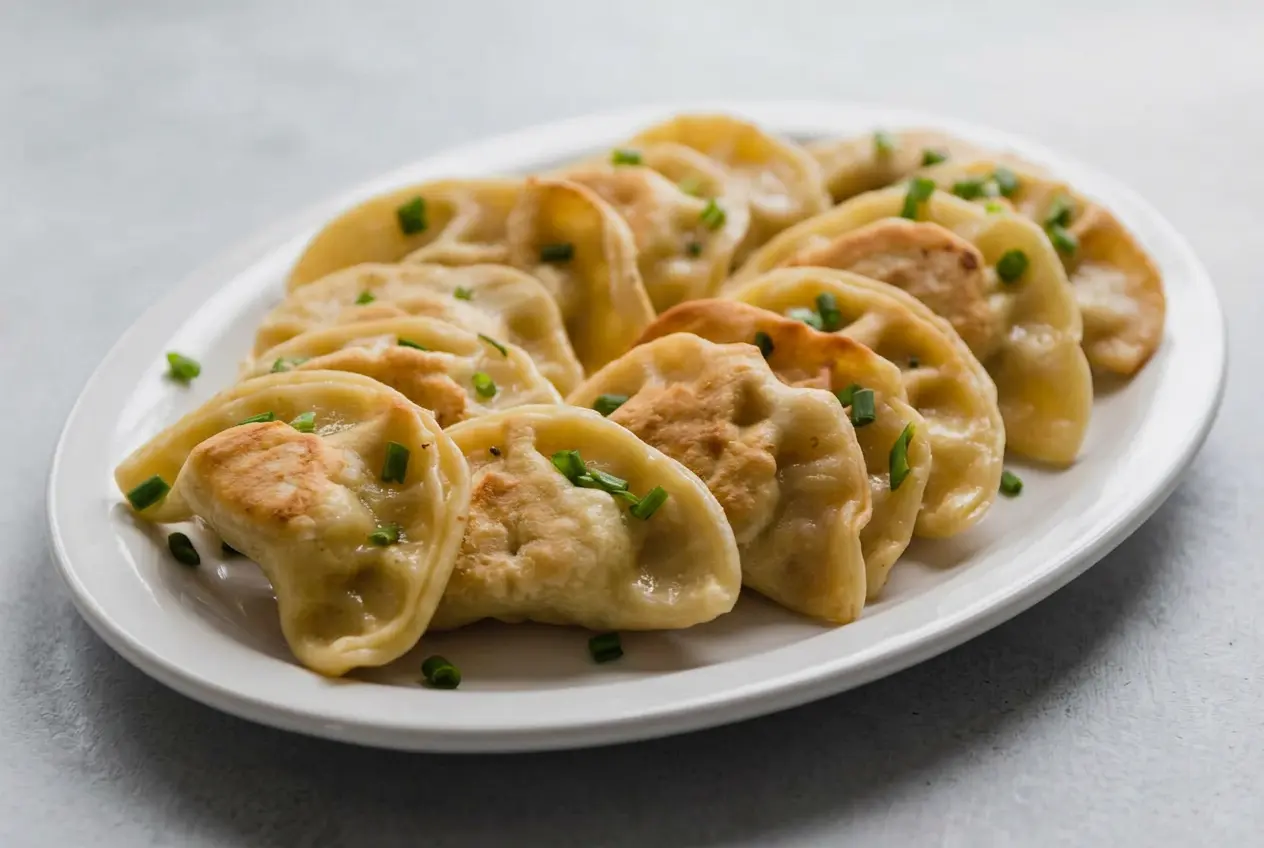
Potato pierogi are Polish stuffed dumplings with tender dough and a savory potato and cheese filling. This version pairs a sour cream wrapper with fontina, parmesan, onion, and thyme, then finishes the boiled dumplings in ghee for buttery, golden edges.
Homemade potato pierogi give you a soft, cheesy center inside a wrapper that stays tender beneath its crisp spots. The shaping takes some attention, but each stage has a clear stopping point.
Prepare the filling, rest the dough, then settle into cutting and pinching. Small batches make the cooking manageable, too. Those golden edges are worth the pause.
I look for dough that feels smooth without clinging to my fingers before reaching for the rolling pin.
Essential Ingredients for Homemade Dumplings
Potatoes give the filling body, cheeses add richness, and butter carries the aromatics. Flour and eggs build the wrapper, while sour cream softens its texture; ghee supplies the golden finish, and chives and the optional dip add freshness and tang.
- 1 pound potatoes, quartered (red potatoes work well, but use whatever you have on hand!)
- 2 teaspoons kosher salt
- 2 Tablespoons unsalted butter
- 2 cloves garlic, minced
- 1/2 large yellow onion, diced
- salt and pepper to taste
- 1 teaspoon dried thyme
- 1/2 cup parmesan cheese, shredded
- 1/2 cup fontina cheese, shredded
- 540 g (3 to 4 1/2 cups) all-purpose flour, plus extra for dusting
- 3 eggs
- 1 tsp. kosher salt
- 1/2 cup sour cream
- 1/2 cup water (you may not need it all)
- 4 Tablespoons ghee or clarified butter, for frying
- 3 Tablespoons fresh chopped chives
- Sour cream or sour cream and chive sauce, for dipping (optional)
Garlic and yellow onion bring savory sweetness to the buttery potatoes, while dried thyme adds an earthy aroma. Fontina melts into the mash; parmesan supplies a sharper, salty flavor. Together, they make a cohesive filling rather than a loose pocket of shredded cheese.
All-purpose flour provides structure, eggs bind the dough, and kosher salt seasons the wrapper itself. Sour cream contributes richness and tenderness. Add water gradually because the dough’s feel, rather than an empty measuring cup, tells you when it has enough moisture.
Ghee and clarified butter have their milk solids removed. Regular butter contains those solids, which can scorch during repeated skillet batches; clarified fat makes browning easier to manage. Chives brighten the finished dumplings, while the optional sour cream accompaniment balances their richness.
Step-by-Step: How to Make Potato Pierogi From Scratch
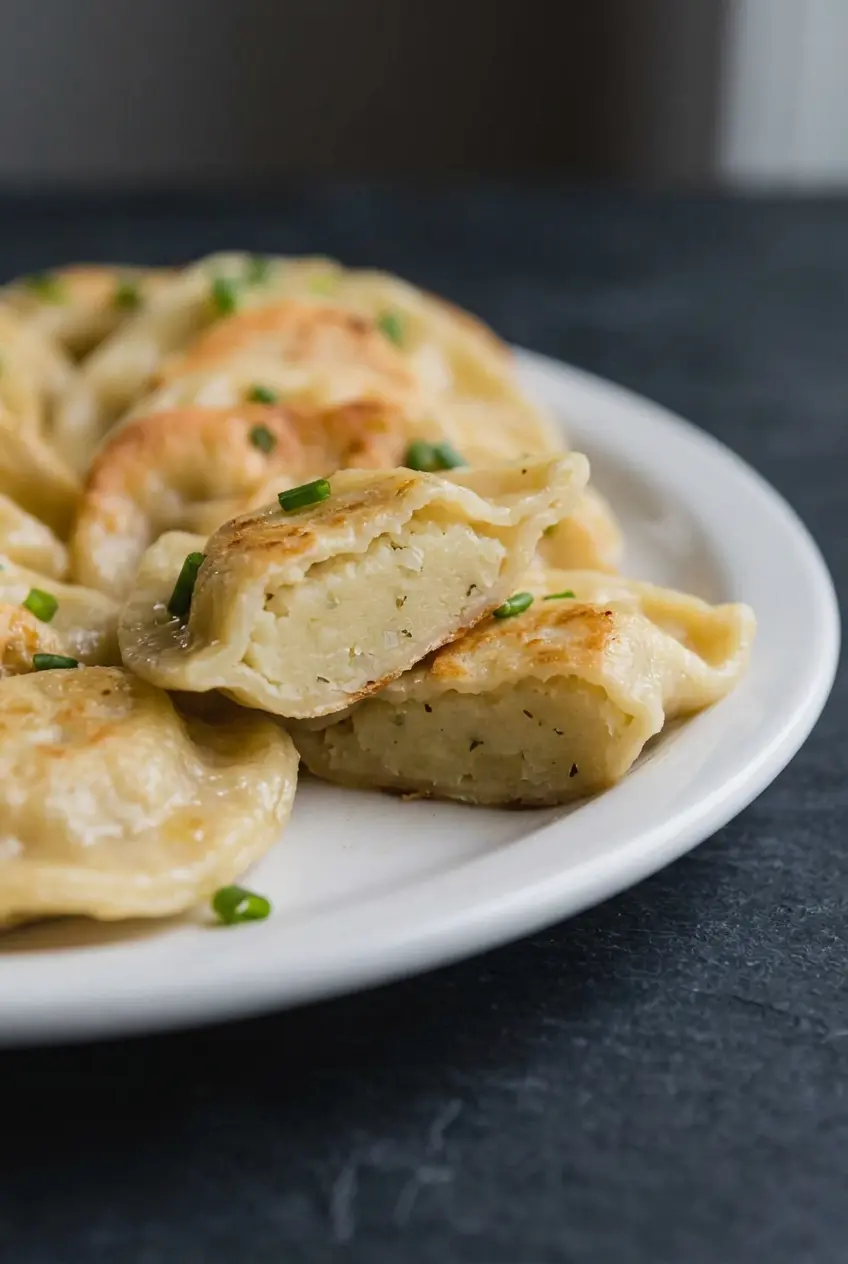
Work through filling, dough, shaping, and cooking in that order. Keep the boiling pot near the skillet so transferring each batch takes one short movement.
Prep: 1 hour. Cook: 30 minutes. Total: 1 hour 30 minutes. Yield: about 50 pierogi.
Make the Filling
- Boil the potatoes in a medium pot with enough water to cover and 2 teaspoons kosher salt for 20–30 minutes.
A fork should slip into the pieces easily. - Empty the potatoes into a colander, then place the pot back on the stove and melt the butter over medium-high heat.
The butter should become liquid before the aromatics go in. - Sauté the garlic and onion in the butter for 3–4 minutes, stirring occasionally, then mix in salt, pepper, and thyme.
Look for translucent onion pieces. - Mash the drained potatoes into the seasoned onion mixture with a potato masher, then stir in the fontina and parmesan.
The filling should look relatively smooth, with the cheese melted throughout. - Allow the filling to cool for at least 30 minutes before shaping.
It should lose its steaming heat so it doesn’t soften the dough during assembly.
Make the Dough
- Combine the flour, eggs, salt, and sour cream in a large bowl or a stand mixer fitted with the paddle attachment.
The mixture will look firm and rough before hydration is complete. - Work in water 1–2 tablespoons at a time, mixing or kneading between additions.
Stop when the dough holds together and feels relatively smooth without being sticky. - Place the dough on a lightly floured surface and leave it covered with a tea towel for 30 minutes.
After resting, it should feel more supple and offer less resistance to rolling.
Form the Pierogi
- Place a small dish of room-temperature water beside your work area, then roll the dough to about 1/8 inch thick with a rolling pin or pasta roller.
A pasta roller’s numbered settings vary, so judge the sheet by its thickness. - Stamp out rounds with a 2–3-inch cookie cutter, biscuit cutter, or inverted drinking glass.
Evenly rolled rounds give the wrappers a consistent thickness. - Center about 1/2 teaspoon filling on each round and lightly wet the rim with a fingertip or pastry brush.
Leave the border clear of potato and cheese so the dough surfaces can meet. - Fold each round over its filling and pinch the curved seam from the top center toward both ends.
The finished half-moon should have a firmly closed rim without obvious trapped air. - Set the shaped dumplings on a lightly floured baking sheet or cutting board.
Keep them separate so their moist surfaces don’t stick together.
Cook the Pierogi
- Bring a large pot of water to a boil and season it with about a tablespoon kosher salt.
The water should be boiling before the dumplings enter. - Cook 5–6 pierogi at a time for 4–5 minutes, stirring gently to check their movement.
They should float after stirring and be cooked through. - Heat a tablespoon of ghee in a large nonstick skillet over medium-high heat while the dumplings boil.
The fat should be hot when the boiled batch arrives. - Lift the cooked dumplings into the skillet with a spider or slotted spoon and fry for about 2 minutes per side.
Look for lightly browned surfaces and golden edges before transferring them to a serving dish. - Continue boiling and frying the remaining dumplings in batches, then scatter the chopped chives over them and serve immediately.
The wrappers should remain tender between their browned patches.
Pro Tips and Troubleshooting for Tender, Leak-Proof Dumplings
Most dough and seam problems start before the dumplings reach the water. These checks help keep the wrappers tender and the filling tucked inside.
- Tough dough: Compacted flour can make the mixture too dry. Prefer the listed weight; when measuring by volume, fluff the flour, spoon it into the cup, and level without packing.
- Dough springs back: Gluten tension makes rolling frustrating. Give it the full covered rest; if it still shrinks, cover it and let it relax before continuing.
- Sticky dough: Too much water can make shaping difficult. Add it gradually and stop at the smooth, nonsticky stage instead of using it all automatically.
- Wet or gummy filling: Drain potatoes thoroughly and mash only until relatively smooth. Red potatoes tend toward a denser texture, while starchier potatoes can produce a fluffier mash; either needs careful moisture handling.
- Opening seams: Warm filling, greasy rims, overfilling, or trapped air can weaken closure. Cool the filling, keep the border clean, and use a light water seal with a firm center-outward pinch.
- Sticking or uneven browning: Crowded pots and skillets make batches harder to manage. Follow the small-batch approach so the dumplings have room to move and brown.
The goal resembles smooth mashed potatoes, but the filling should hold a mound rather than spread like a creamy side dish. Don’t chase perfect smoothness by repeatedly working the potatoes.
Classic Variations: From Pierogi Ruskie to Loaded Bacon & Potato
These optional flavor directions are separate from the fontina-parmesan filling above. They offer different balances of tang, sweetness, smoke, and richness rather than interchangeable formulas.
Traditional Pierogi Ruskie (Farmer’s Cheese or Quark & Caramelized Onion)
Farmer’s cheese or quark gives potato filling a tangy, fresh-cheese character. Caramelized onion adds sweetness, contrasting with the smoother melting fontina and savory parmesan used here.
Loaded Bacon and Cheddar Potato Pierogi
Smoky bacon and sharp cheddar lean into loaded-potato flavors. Cheddar brings a more pronounced bite than fontina, while bacon adds salty richness.
Caramelized Onion and Herb Potato Pierogi
An onion-forward filling emphasizes sweetness and savory herbs rather than cheese. Cabbage and potato offer another earthy, gently sweet direction without implying that the sour cream dough changes.
Sweet Potato and Tangy Feta Pierogi
The sweetness of mashed sweet potatoes contrasts with feta’s salty tang. Expect a sweeter filling with distinct cheese crumbles rather than the melted-cheese character of this version.
Traditional Toppings and Serving Ideas
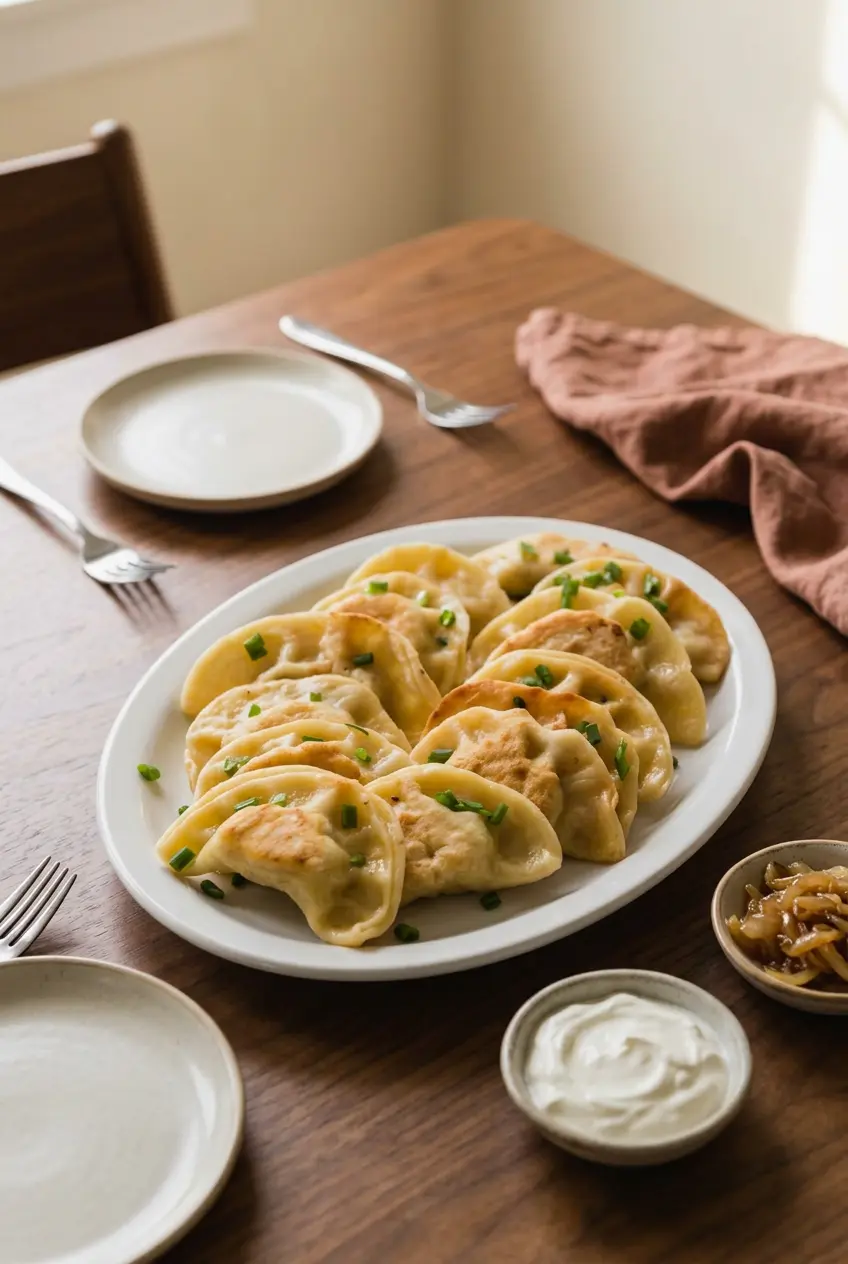
Choose toppings that complement the golden crust without hiding the potato filling.
- Cool and tangy: Sour cream, Greek yogurt, or sour cream and chive sauce balance the buttery finish.
- Fresh: Chopped chives add a mild onion flavor and a bright finish.
- Rich and savory: Optional caramelized onions, browned butter, or bacon crumbles add sweetness, nuttiness, or smoke.
- Alongside: Sauerkraut, kielbasa, or light borscht can round out dinner, depending on the occasion and your preferences.
For a holiday spread, offer toppings separately so everyone can choose. Keep optional caramelized onions separate from the onion already included in the filling.
Make-Ahead, Freezing, and Storage Guide
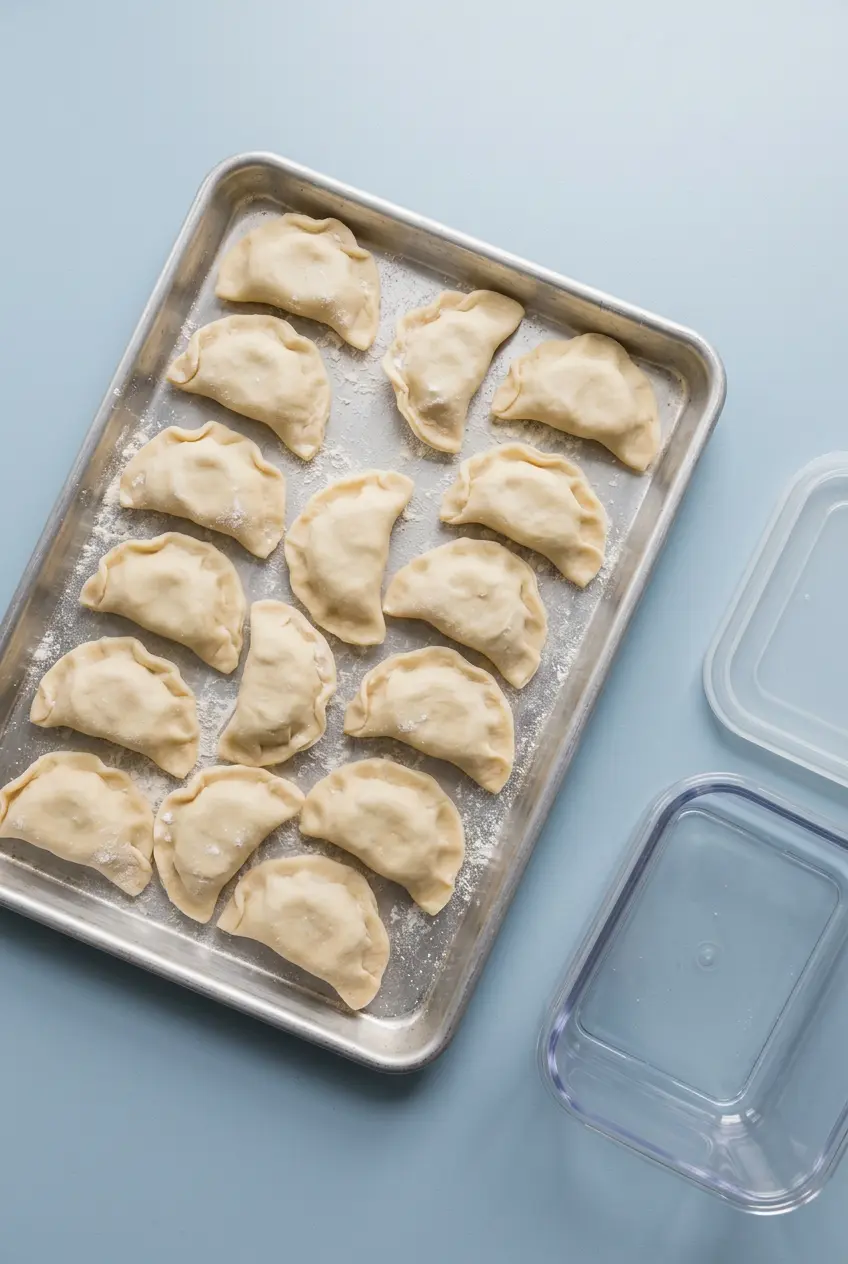
Split the project at its natural pauses rather than rushing through assembly and cooking.
- Filling: Cool the potato mixture, then refrigerate it in an airtight container until assembly.
- Dough: Wrap it tightly and refrigerate ahead of rolling, then let it return to room temperature before use.
- Shaped dumplings: Keep them covered and chilled on a lightly floured tray if you aren’t cooking immediately.
- Freezing: Arrange uncooked pierogi in a single layer on a floured baking sheet, freeze until solid, then transfer them to an airtight container.
Keep refrigerated components covered and chilled, and leave frying for serving time to preserve the golden finish. The fresh-dumpling cooking time above is not a verified frozen cooking time; use a tested frozen-pierogi method rather than assuming they are interchangeable.
Final Thoughts on Mastering Homemade Dumplings
Tender wrappers, cooled cheesy filling, and a golden ghee finish make this batch rewarding. Watch the dough’s feel and keep those sealing rims clean.
Shaping gets more comfortable with practice, and the staged approach gives you room to work without rushing. Bring your favorite toppings to the table and enjoy the crisp-tender contrast.
Frequently Asked Questions
How Do I Keep Homemade Potato Pierogi From Bursting in Boiling Water?
Cool the filling and avoid overfilling the rounds. Keep the rims clean, moisten lightly, and pinch firmly from the center outward without trapping air. Boil in small batches rather than crowding the pot.
Can You Freeze Potato Pierogi Ahead of Time, and How Do You Cook Them From Frozen?
Yes, freeze shaped, uncooked pierogi separately on a floured tray before transferring them to an airtight container. A frozen cooking time isn’t established here, so use a tested frozen-pierogi method rather than relying on the fresh timing.
Are Pierogi and Gnocchi the Same Thing?
No, pierogi enclose a filling inside a rolled flour-dough wrapper. Italian potato gnocchi usually incorporate potato directly into the dough instead of enclosing it.
What Is the Traditional Ukrainian Pierogi Dough Recipe?
In Ukrainian cooking, related stuffed dumplings are called varenyky. Dough traditions vary, commonly starting with flour, salt, and water; some versions include egg or cultured dairy, so there isn’t one universal formula.
What Are the Best Toppings and Sauces to Serve With Potato Pierogi?
Sour cream, chives, and sour cream and chive sauce complement the filling without overwhelming it. Optional caramelized onions, browned butter, or bacon crumbles add a richer finish.
How Many Calories Are in Potato Pierogi?
There isn’t a verified calorie total available for this batch. A useful estimate needs to account for dumpling size, portion size, cheese, frying fat, and any toppings.

Potato Pierogi

Equipment
- Medium pot
- Colander
- Potato masher
- Stand mixer
- Rolling Pin
- Round cutter
- Large Pot
- Nonstick skillet
- Spider or slotted spoon
Ingredients
- 1 pound potatoes quartered (red potatoes work well, but use whatever you have on hand!)
- 2 teaspoons kosher salt
- 2 Tablespoons unsalted butter
- 2 cloves garlic minced
- 1/2 large yellow onion diced
- salt and pepper to taste
- 1 teaspoon dried thyme
- 1/2 cup parmesan cheese shredded
- 1/2 cup fontina cheese shredded
- 540 g all-purpose flour (3 to 4 1/2 cups), plus extra for dusting
- 3 eggs
- 1 tsp. kosher salt
- 1/2 cup sour cream
- 1/2 cup water (you may not need it all)
- 4 Tablespoons ghee or clarified butter for frying
- 3 Tablespoons fresh chopped chives
- Sour cream or sour cream and chive sauce for dipping (optional)
Instructions
Make the Filling
- Boil the potatoes in a medium pot with enough water to cover and 2 teaspoons kosher salt for 20–30 minutes. A fork should slip into the pieces easily.
- Empty the potatoes into a colander, then place the pot back on the stove and melt the butter over medium-high heat. The butter should become liquid before the aromatics go in.
- Sauté the garlic and onion in the butter for 3–4 minutes, stirring occasionally, then mix in salt, pepper, and thyme. Look for translucent onion pieces.
- Mash the drained potatoes into the seasoned onion mixture with a potato masher, then stir in the fontina and parmesan. The filling should look relatively smooth, with the cheese melted throughout.
- Allow the filling to cool for at least 30 minutes before shaping. It should lose its steaming heat so it doesn’t soften the dough during assembly.
Make the Dough
- Combine the flour, eggs, salt, and sour cream in a large bowl or a stand mixer fitted with the paddle attachment. The mixture will look firm and rough before hydration is complete.
- Work in water 1–2 tablespoons at a time, mixing or kneading between additions. Stop when the dough holds together and feels relatively smooth without being sticky.
- Place the dough on a lightly floured surface and leave it covered with a tea towel for 30 minutes. After resting, it should feel more supple and offer less resistance to rolling.
Form the Pierogi
- Place a small dish of room-temperature water beside your work area, then roll the dough to about 1/8 inch thick with a rolling pin or pasta roller. A pasta roller’s numbered settings vary, so judge the sheet by its thickness.
- Stamp out rounds with a 2–3-inch cookie cutter, biscuit cutter, or inverted drinking glass. Evenly rolled rounds give the wrappers a consistent thickness.
- Center about 1/2 teaspoon filling on each round and lightly wet the rim with a fingertip or pastry brush. Leave the border clear of potato and cheese so the dough surfaces can meet.
- Fold each round over its filling and pinch the curved seam from the top center toward both ends. The finished half-moon should have a firmly closed rim without obvious trapped air.
- Set the shaped dumplings on a lightly floured baking sheet or cutting board. Keep them separate so their moist surfaces don’t stick together.
Cook the Pierogi
- Bring a large pot of water to a boil and season it with about a tablespoon kosher salt. The water should be boiling before the dumplings enter.
- Cook 5–6 pierogi at a time for 4–5 minutes, stirring gently to check their movement. They should float after stirring and be cooked through.
- Heat a tablespoon of ghee in a large nonstick skillet over medium-high heat while the dumplings boil. The fat should be hot when the boiled batch arrives.
- Lift the cooked dumplings into the skillet with a spider or slotted spoon and fry for about 2 minutes per side. Look for lightly browned surfaces and golden edges before transferring them to a serving dish.
- Continue boiling and frying the remaining dumplings in batches, then scatter the chopped chives over them and serve immediately. The wrappers should remain tender between their browned patches.