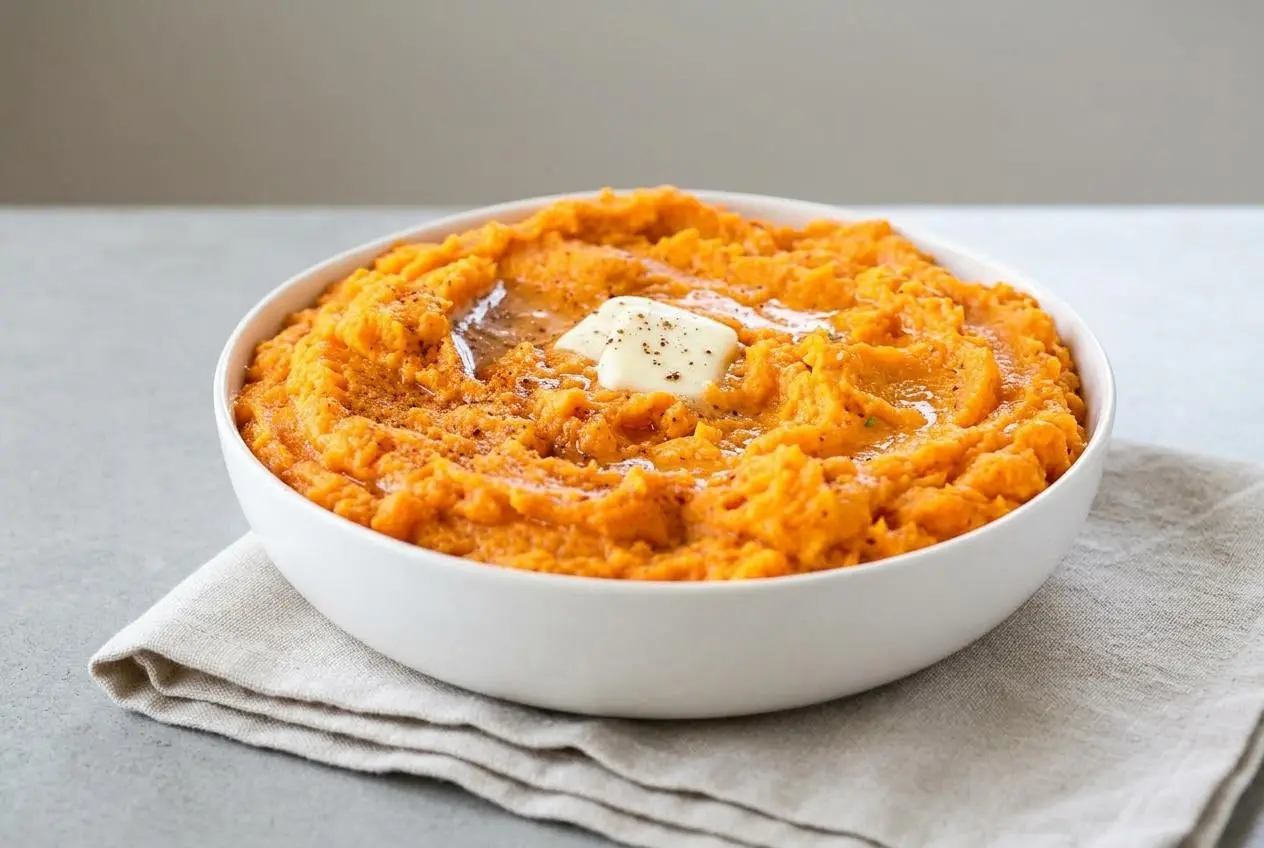
For creamy mashed sweet potatoes, boil peeled chunks in salted water until fork-tender, let them steam dry in a colander, then mash gently with warm butter and dairy.
These mashed sweet potatoes are a velvety, buttery side dish with natural sweetness and a soft, comforting texture that suits both holiday dinners and weeknight meals.
The key is keeping excess water out while warm butter melts into the steaming potatoes. That small pause makes all the difference.
Warm the butter and half and half before mashing so the potatoes stay hot and smooth instead of cooling down too quickly.
Ingredients for Creamy Mashed Sweet Potatoes
Sweet potatoes provide silky body and gentle sweetness, while butter and warm dairy add richness and moisture. Salt and pepper sharpen the flavor so the mash tastes balanced rather than flat.
- 4 pounds sweet potatoes peeled
- ⅓ cup butter cut into 4 pieces
- ⅓ cup half and half or milk, warmed
- salt and black pepper to taste
Garnet and Jewel sweet potatoes are especially good choices because their orange flesh cooks into a smooth, naturally sweet mash. Butter rounds out their earthy flavor, while warmed half and half or milk loosens the potatoes gradually without making them runny.
For a dairy-free version, use vegan butter and warmed full-fat coconut milk. Coconut milk adds a subtle tropical richness, so it works best when you plan to lean into warm spices or maple later.
I choose sweet potatoes that feel firm and heavy for their size, with smooth skin and no soft spots, because they tend to cook more evenly.
How to Make Mashed Sweet Potatoes
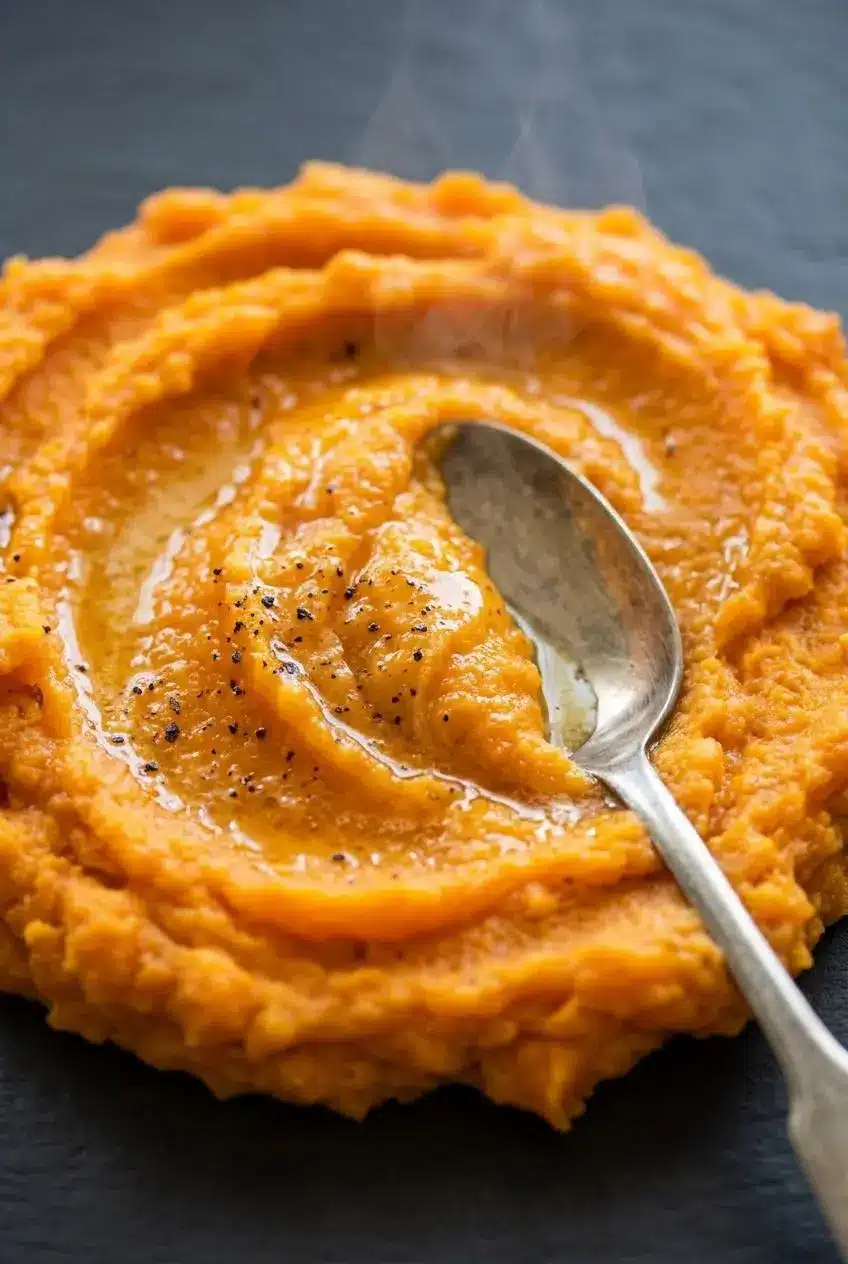
Keep the pieces close in size so they soften at the same pace. The goal is tender potato flesh with enough dryness to absorb butter and dairy without turning loose.
- Cut the peeled sweet potatoes into even 2-inch chunks.
Similar-sized pieces cook evenly, so you will not end up with some chunks collapsing while others stay firm in the center. - Bring a large pot of well-salted water to a boil, add the sweet potatoes, and cook for about 15 minutes.
They are ready when a fork slides through a piece easily with no firm core resistance. - Drain the potatoes thoroughly in a strainer and leave them there for 2 minutes before returning them to the pot.
Steam should rise from the chunks as surface moisture evaporates, which helps prevent a thin mash. - Add the butter and mash the hot potatoes with a potato masher, then pour in the warmed half and half or milk gradually.
Stop adding dairy when the mash looks glossy and velvety, since the potatoes may not need every drop. - Season with salt and black pepper, then serve while hot with a dash of cinnamon if desired.
The finished mash should be soft and spoonable with a warm buttery aroma.
Gentle mashing matters more than chasing absolute smoothness. A few soft ridges from the masher give the dish a cozy texture, while repeated beating can make it dense.
Troubleshooting Common Mashing Mistakes
Most texture problems start before the butter goes in. Drain well, work while the potatoes are hot, and use a light hand once the dairy is added.
The Crucial Steam-Drying Step
Boiled sweet potatoes hold water on their surface and between the pieces. Letting them stand in the colander for a full 2 minutes lets that moisture escape before it dilutes the mash.
If the potatoes still seem damp, return them to the warm, empty pot and stir gently over low heat for about 1 minute. Keep them moving just enough to release moisture, then remove them before they stick or develop a dry crust.
Choosing a Mashing Method
A standard potato masher gives the most control and leaves a pleasantly rustic finish. A ricer makes a finer, lighter mash, though it takes more effort with sweet potatoes. A handheld mixer can work briefly on low speed, but stop as soon as the potatoes come together.
A high-speed blender or food processor is a poor match here. Fast blades break down the potato structure too aggressively, creating a pasty, gummy texture that warm dairy cannot fully repair.
How to Fix Watery or Lumpy Mash
- Watery mash: Move it to a wide saucepan and stir gently over low heat until excess moisture cooks away. Do not beat it hard while it thickens.
- Hard lumps: The potatoes needed more time in the boiling water. Mash only when a fork passes through the center without resistance.
- Gummy texture: Stop mixing as soon as the butter and dairy are incorporated. Add a little warm dairy only if the mash truly needs loosening.
- Bland flavor: Add salt and black pepper in small increments, tasting between additions. Sweet potatoes need seasoning to keep their natural sugars from tasting one-dimensional.
If you enjoy comparing textures, a Yukon Gold mash has a more starchy, fluffy character, while sweet potatoes stay softer and silkier even when handled gently.
Sweet and Savory Flavor Variations
Once the mash is seasoned, take it in a sweet or savory direction without changing the main method. Add any extras after mashing, folding just until evenly distributed.
For a warm, aromatic finish, fold in browned butter and a pinch of ground cardamom right before serving. The butter brings toasted nuttiness, while cardamom adds gentle citrusy warmth without overwhelming the sweet potatoes.
Garlic and Fresh Herb Savory Mash
Fold in roasted garlic, sour cream, and minced fresh thyme or chives for a more savory bowl. Garlic adds mellow depth, while tangy sour cream and herbs balance the potatoes’ natural sweetness, making this a good choice beside rich roast meats.
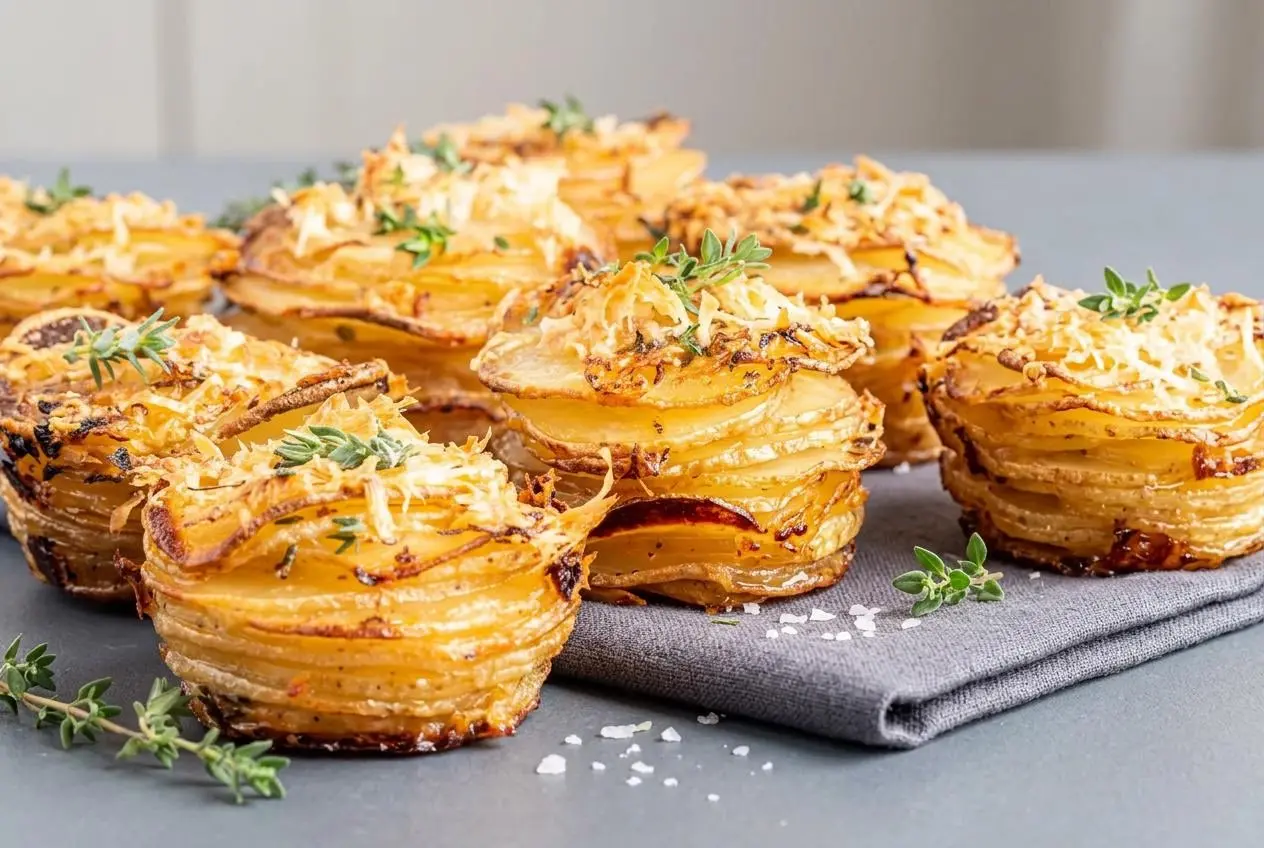
For another savory direction, try these roasted sweet potatoes with tangy cheese and herbs.
Brown Sugar and Toasted Pecan Mash
For a classic holiday profile, add brown sugar, ground cinnamon, and chopped toasted pecans. The brown sugar deepens the caramel-like flavor, cinnamon adds warmth, and pecans bring welcome crunch without the heaviness of marshmallows.
If you prefer a baked presentation with a pecan topping, this sweet potato casserole offers a more structured holiday side.
Maple Bacon Sweet and Salty Mash
Stir in pure maple syrup and crumbled crisp bacon for a smoky-sweet finish. Use maple lightly so it complements the potatoes rather than turning the dish into dessert, and add the bacon near serving time to keep its crisp edges intact.
Storage and Reheating Mashed Sweet Potatoes
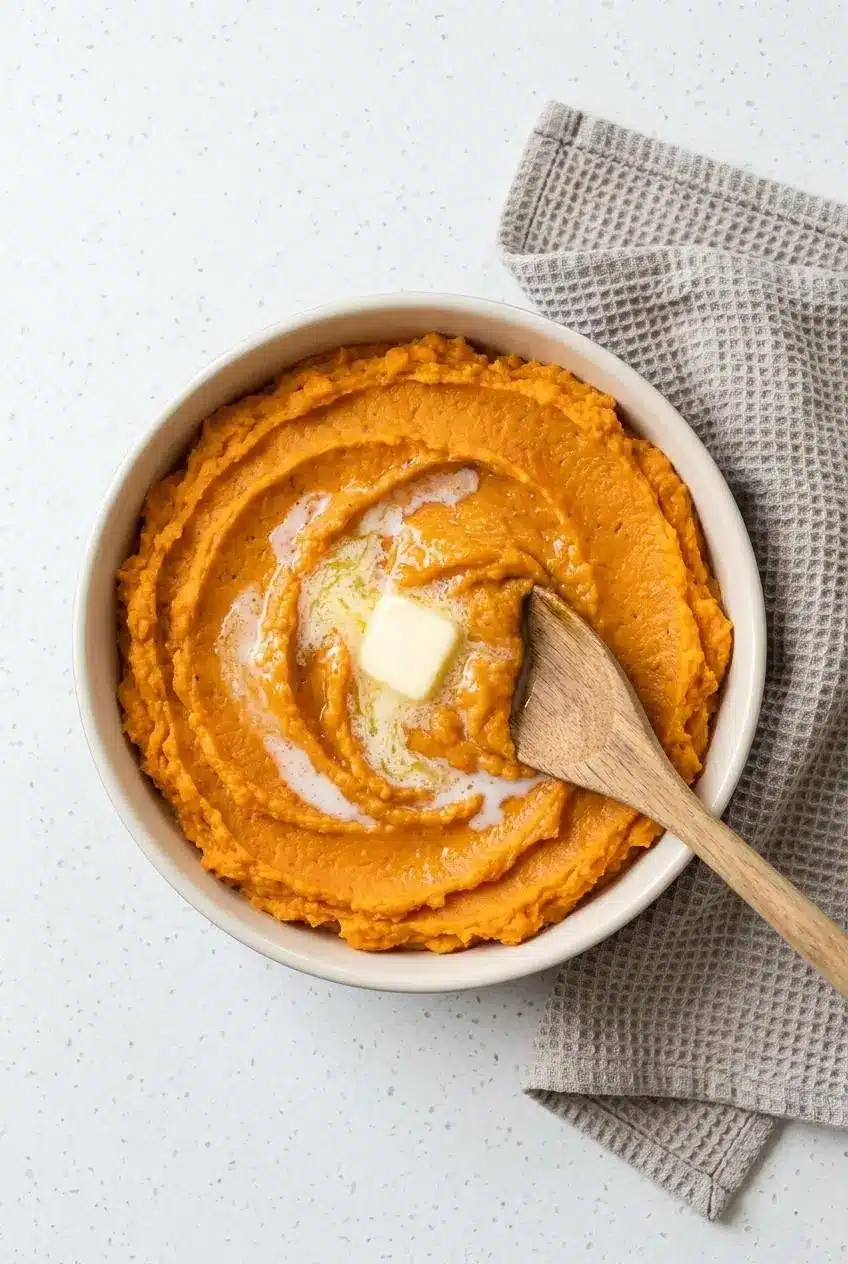
For advance meal planning, cool the mash, transfer it to an airtight container, and keep it chilled. Refrigerator storage for 3 to 4 days is appropriate for cooked leftovers kept below 40 °F.
Refrigeration for Better Texture
Press the mash into the container in an even layer and cover it tightly to limit drying around the edges. Sweet potatoes can firm up as they chill, which is normal and easy to correct with gentle reheating.
For a make-ahead holiday side, prepare the mash, chill it in its covered dish, and warm it close to serving time. Hold back a little of the warmed dairy so you can restore the texture when reheating.
Reheating Methods for Silky Texture
On the stovetop, warm the mash over low heat in a covered pan, stirring occasionally and adding a splash of warm milk plus a pat of butter as needed. The gentle heat protects the soft texture and helps the dairy blend back in.
For the oven, place the mash in a covered baking dish and heat until hot throughout, stirring once if the center is warming more slowly than the edges. For the microwave, cover loosely, heat in short intervals, and stir between intervals so the mash warms evenly instead of drying around the rim.
Serving Suggestions and Meal Pairings
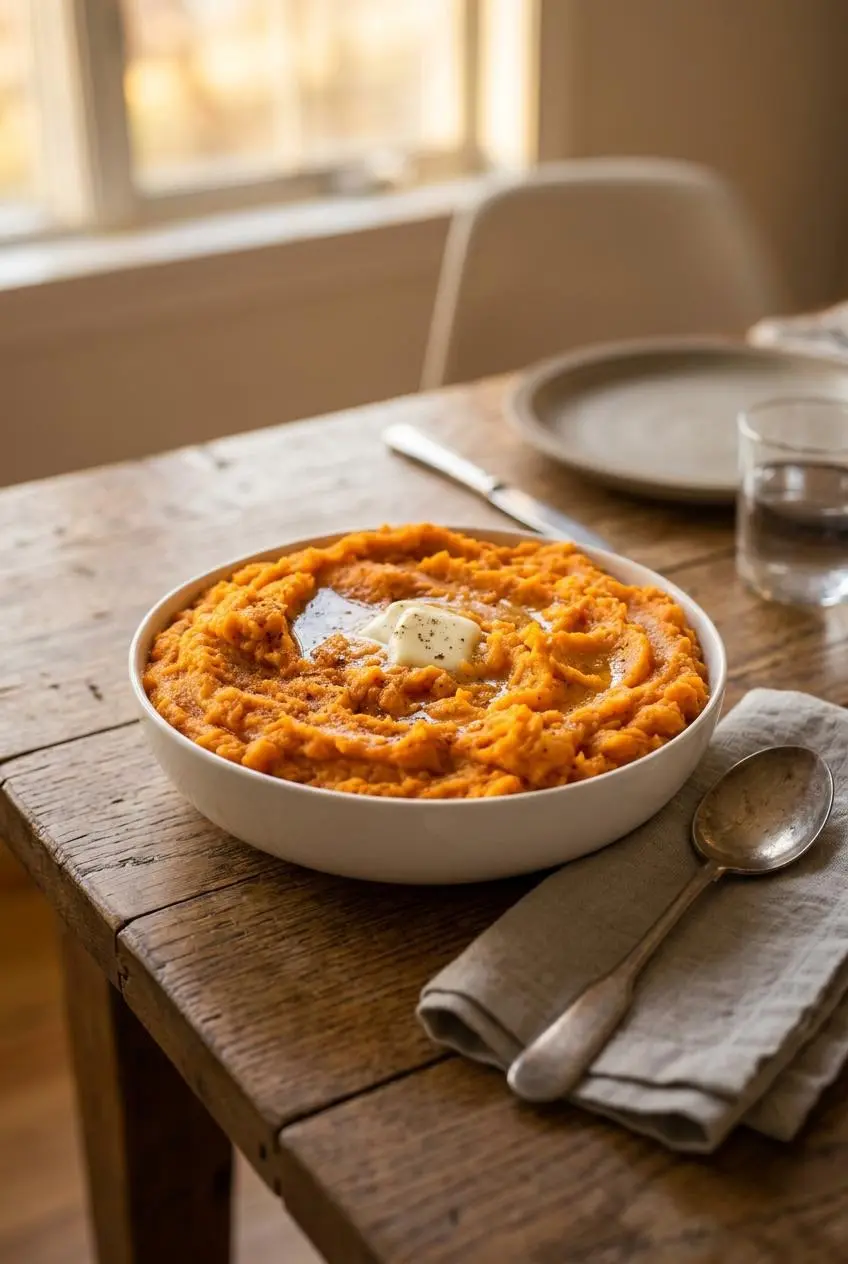
Mashed sweet potatoes bring warmth and color to a meal without demanding much extra fuss. Serve them in a wide bowl with a final pat of butter, cracked black pepper, or one of the optional flavor finishes above.
- Pair them with roast turkey and gravy for a holiday plate that has both savory depth and natural sweetness.
- Serve them beside herb-crusted pork tenderloin, where the mild sweetness complements the savory crust.
- Offer them with braised short ribs for a rich, comforting cold-weather dinner.
- Try them with baked salmon and a green vegetable for an easy weeknight meal.
- Spread leftover mash over a shepherd’s pie filling, then bake until the top is lightly golden.
For a crisp leftover makeover, shape chilled mash into small patties and pan-fry them, or use it as inspiration for mashed potato pancakes.
Conclusion
These mashed sweet potatoes stay creamy because the potatoes are fully tender, thoroughly drained, and mashed with warm butter and dairy. The 2-minute steam-drying pause is the small habit that protects their velvety texture.
Keep them classic with black pepper, make them sweet with cinnamon and pecans, or go savory with garlic and herbs. A warm bowl of buttery sweet potatoes always earns its place on the table.
Frequently Asked Questions
How Do You Prevent Mashed Sweet Potatoes From Becoming Watery?
Drain the boiled chunks very well. Leave them in the colander for 2 minutes so trapped surface moisture can evaporate. Add warmed dairy gradually instead of pouring it all in at once.
Can I Make Mashed Sweet Potatoes Ahead of Time?
Yes. Prepare the mash, keep it chilled in an airtight container, and reheat it gently near serving time. Stir in warm milk and butter as needed to bring back its soft, silky texture.
Why Do Sweet Potatoes Get Gummy When Mashed?
Sweet potatoes turn gummy when they are overworked, especially with high-speed blades. Use a hand masher or ricer, then mix only until the butter and dairy are incorporated.
Is It Better to Boil or Roast Sweet Potatoes for Mashing?
Boiling is the faster option for this method, taking about 15 minutes once the water reaches a boil. Roasting takes longer, around 60 minutes for whole sweet potatoes, but it concentrates their natural sugars and gives a deeper caramelized flavor.
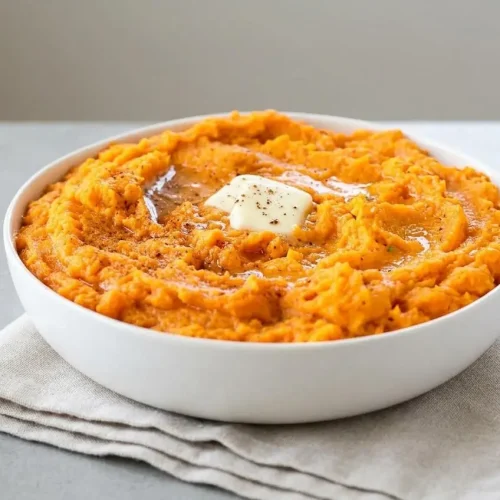
Mashed Sweet Potatoes

Equipment
- Large Pot
- Strainer
- Potato masher
Ingredients
- 4 pounds sweet potatoes peeled
- ⅓ cup butter cut into 4 pieces
- ⅓ cup half and half or milk, warmed
- salt and black pepper to taste
Instructions
- Cut the peeled sweet potatoes into even 2-inch chunks. Similar-sized pieces cook evenly, so you will not end up with some chunks collapsing while others stay firm in the center.
- Bring a large pot of well-salted water to a boil, add the sweet potatoes, and cook for about 15 minutes. They are ready when a fork slides through a piece easily with no firm core resistance.
- Drain the potatoes thoroughly in a strainer and leave them there for 2 minutes before returning them to the pot. Steam should rise from the chunks as surface moisture evaporates, which helps prevent a thin mash.
- Add the butter and mash the hot potatoes with a potato masher, then pour in the warmed half and half or milk gradually. Stop adding dairy when the mash looks glossy and velvety, since the potatoes may not need every drop.
- Season with salt and black pepper, then serve while hot with a dash of cinnamon if desired. The finished mash should be soft and spoonable with a warm buttery aroma.