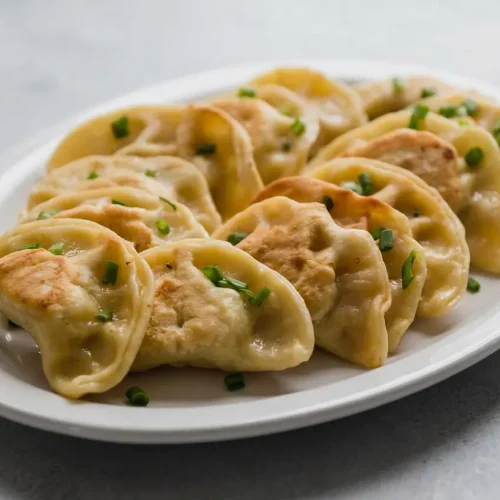
Potato Pierogi

These homemade Polish dumplings pair a tender sour cream wrapper with a savory potato, fontina, parmesan, onion, and thyme filling, then boil and pan-fry in ghee for golden edges in 1 hour 30 minutes.
Equipment
- Medium pot
- Colander
- Potato masher
- Stand mixer
- Rolling Pin
- Round cutter
- Large Pot
- Nonstick skillet
- Spider or slotted spoon
Ingredients
- 1 pound potatoes quartered (red potatoes work well, but use whatever you have on hand!)
- 2 teaspoons kosher salt
- 2 Tablespoons unsalted butter
- 2 cloves garlic minced
- 1/2 large yellow onion diced
- salt and pepper to taste
- 1 teaspoon dried thyme
- 1/2 cup parmesan cheese shredded
- 1/2 cup fontina cheese shredded
- 540 g all-purpose flour (3 to 4 1/2 cups), plus extra for dusting
- 3 eggs
- 1 tsp. kosher salt
- 1/2 cup sour cream
- 1/2 cup water (you may not need it all)
- 4 Tablespoons ghee or clarified butter for frying
- 3 Tablespoons fresh chopped chives
- Sour cream or sour cream and chive sauce for dipping (optional)
Instructions
Make the Filling
- Boil the potatoes in a medium pot with enough water to cover and 2 teaspoons kosher salt for 20–30 minutes. A fork should slip into the pieces easily.
- Empty the potatoes into a colander, then place the pot back on the stove and melt the butter over medium-high heat. The butter should become liquid before the aromatics go in.
- Sauté the garlic and onion in the butter for 3–4 minutes, stirring occasionally, then mix in salt, pepper, and thyme. Look for translucent onion pieces.
- Mash the drained potatoes into the seasoned onion mixture with a potato masher, then stir in the fontina and parmesan. The filling should look relatively smooth, with the cheese melted throughout.
- Allow the filling to cool for at least 30 minutes before shaping. It should lose its steaming heat so it doesn’t soften the dough during assembly.
Make the Dough
- Combine the flour, eggs, salt, and sour cream in a large bowl or a stand mixer fitted with the paddle attachment. The mixture will look firm and rough before hydration is complete.
- Work in water 1–2 tablespoons at a time, mixing or kneading between additions. Stop when the dough holds together and feels relatively smooth without being sticky.
- Place the dough on a lightly floured surface and leave it covered with a tea towel for 30 minutes. After resting, it should feel more supple and offer less resistance to rolling.
Form the Pierogi
- Place a small dish of room-temperature water beside your work area, then roll the dough to about 1/8 inch thick with a rolling pin or pasta roller. A pasta roller’s numbered settings vary, so judge the sheet by its thickness.
- Stamp out rounds with a 2–3-inch cookie cutter, biscuit cutter, or inverted drinking glass. Evenly rolled rounds give the wrappers a consistent thickness.
- Center about 1/2 teaspoon filling on each round and lightly wet the rim with a fingertip or pastry brush. Leave the border clear of potato and cheese so the dough surfaces can meet.
- Fold each round over its filling and pinch the curved seam from the top center toward both ends. The finished half-moon should have a firmly closed rim without obvious trapped air.
- Set the shaped dumplings on a lightly floured baking sheet or cutting board. Keep them separate so their moist surfaces don’t stick together.
Cook the Pierogi
- Bring a large pot of water to a boil and season it with about a tablespoon kosher salt. The water should be boiling before the dumplings enter.
- Cook 5–6 pierogi at a time for 4–5 minutes, stirring gently to check their movement. They should float after stirring and be cooked through.
- Heat a tablespoon of ghee in a large nonstick skillet over medium-high heat while the dumplings boil. The fat should be hot when the boiled batch arrives.
- Lift the cooked dumplings into the skillet with a spider or slotted spoon and fry for about 2 minutes per side. Look for lightly browned surfaces and golden edges before transferring them to a serving dish.
- Continue boiling and frying the remaining dumplings in batches, then scatter the chopped chives over them and serve immediately. The wrappers should remain tender between their browned patches.
Notes
Texture tip: Weigh the flour or fluff, spoon, and level it into measuring cups so the dough does not turn dry and tough, and give it the full 30-minute covered rest so it rolls without springing back.
Ingredient tip: Cool the potato filling for at least 30 minutes and keep the outer dough rims clean before moistening and pinching from the top center outward so seams stay closed in boiling water.
Cooking tip: Use ghee or clarified butter in the skillet because the milk solids are removed, which prevents scorching across multiple fried batches.
Storage: Uncooked shaped pierogi can be kept covered and chilled on a lightly floured tray, or frozen in a single layer on a floured baking sheet until solid before transferring to an airtight container.
Nutrition information is an estimate based on common ingredients and serving sizes. Values may vary depending on brands, portions, and substitutions.