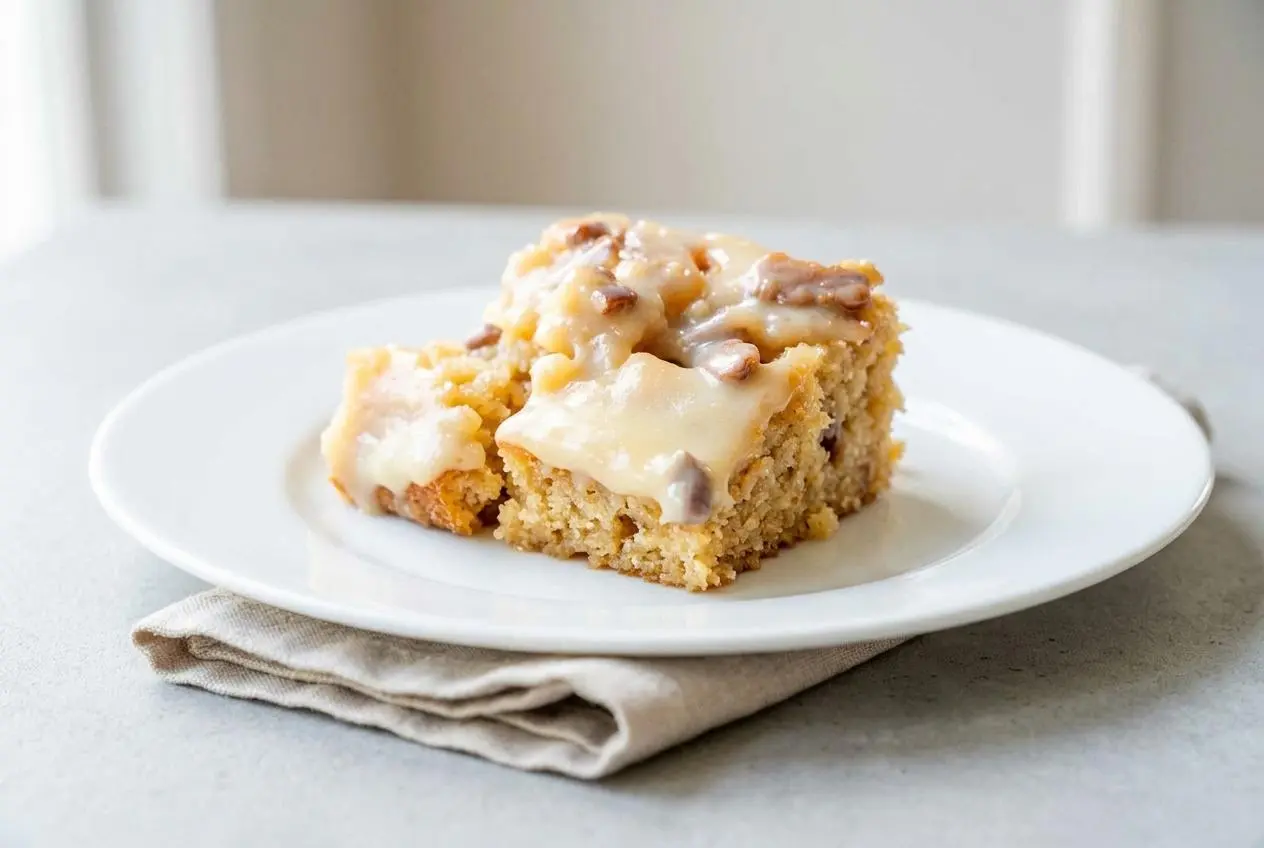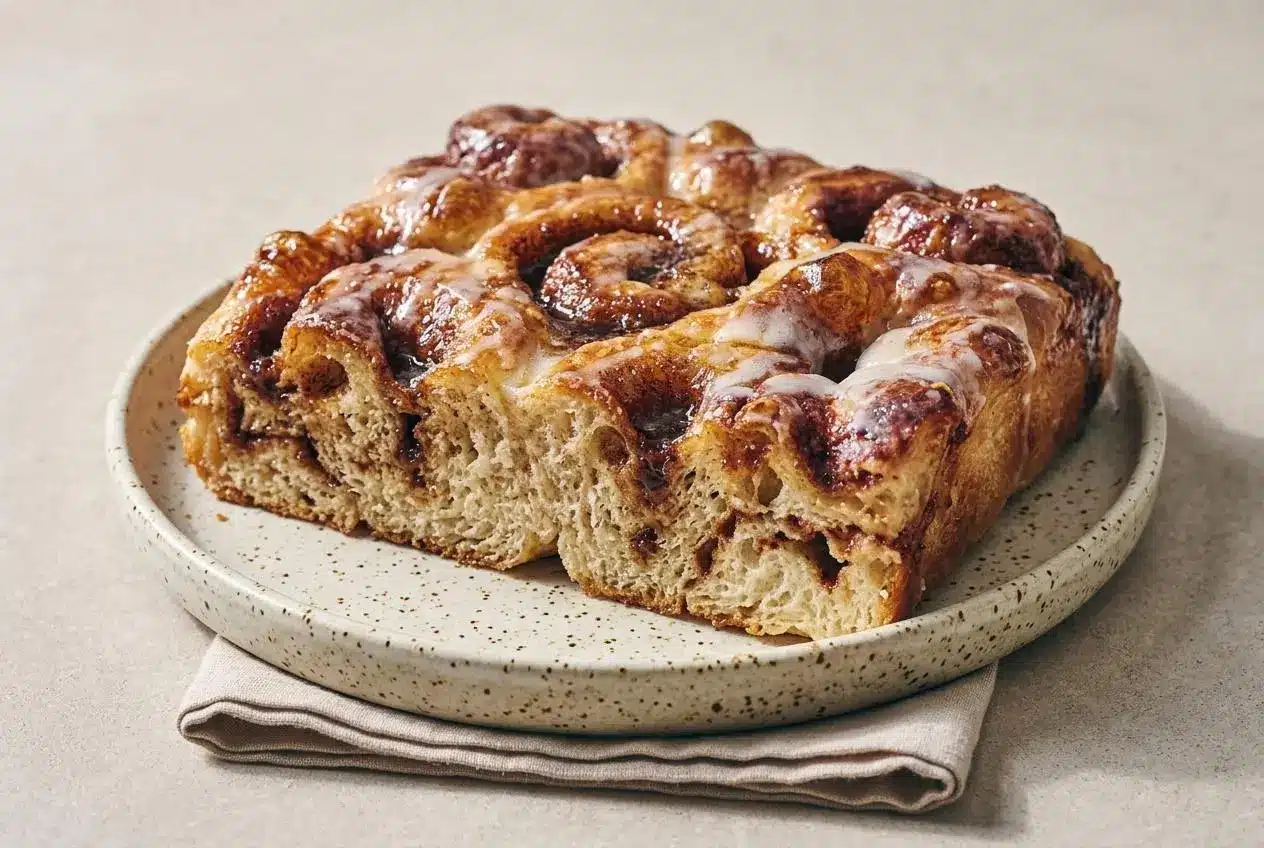
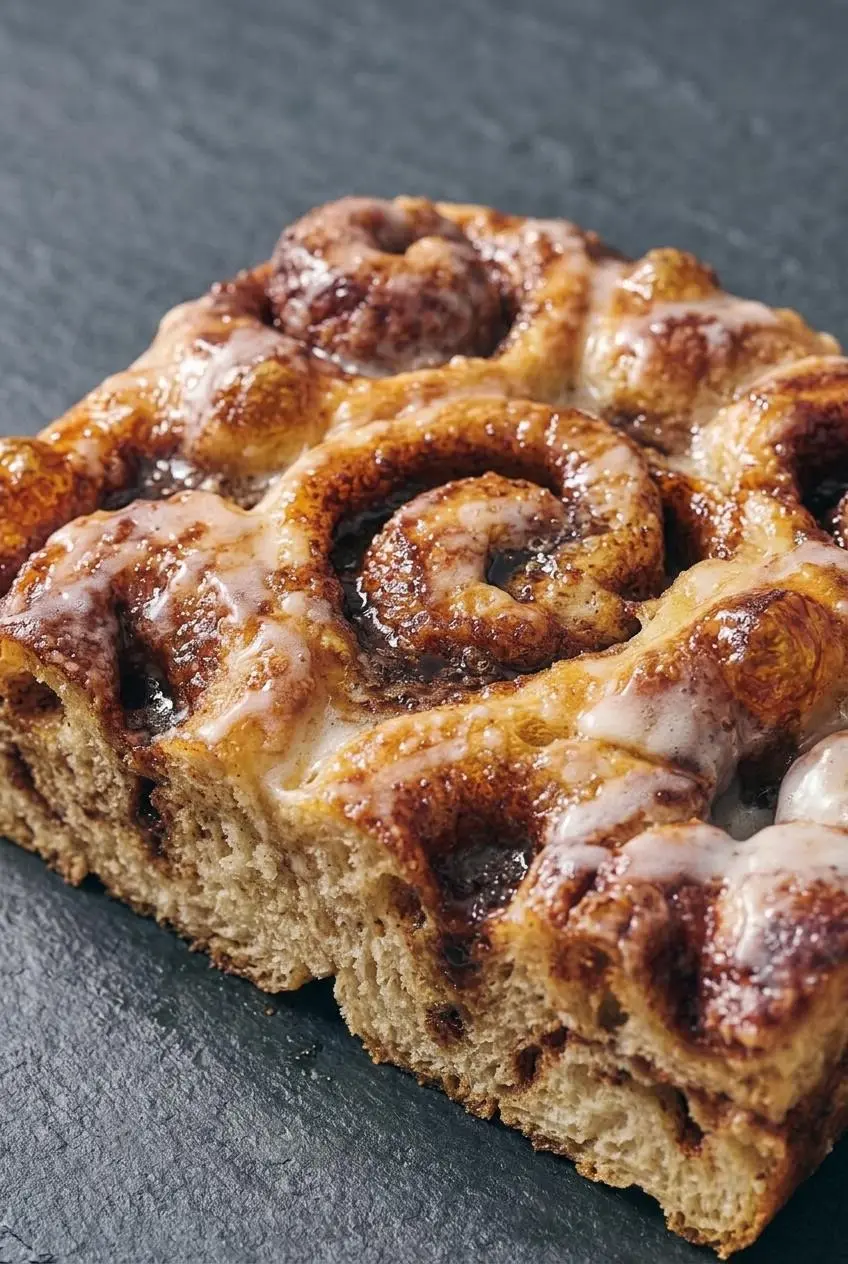
Cinnamon roll focaccia combines airy, olive oil dough with buttery cinnamon brown sugar dimples and vanilla glaze, without rolling or shaping individual buns. Four rounds of bowl folds build the dough’s strength, while a patient final rise creates its pillowy center and crisp, caramelized base.
Warm cinnamon, bubbling brown sugar, and a lightly crackling crust give this sweet bread its cinnamon roll appeal. The topping settles into deep pockets, so each slice has spiced sweetness woven through the fluffy crumb.
This cinnamon roll focaccia needs gentle handling rather than kneading, with most of the work happening during rests and rises. It makes one 9-inch square bread, enough for 16 portions. The dimples hold the good stuff.
Have your parchment and pan ready before transferring the risen dough so you can move it gently without stopping to wrestle with the lining.
Essential Ingredients for Cinnamon Roll Focaccia and Their Baking Roles
Flour builds structure, yeast creates lift, and water keeps the dough supple. Olive oil supports tenderness and a crisp base, while cinnamon, butter, and brown sugar form the spiced pockets. Vanilla glaze adds sweetness, and salt keeps the flavors balanced.
Dough
- 3 cups (360g) King Arthur Unbleached All-Purpose Flour
- 1 3/4 teaspoons (11g) table salt
- 1 teaspoon instant yeast
- 1 teaspoon granulated sugar
- 1 1/4 cups (284g) water, warm (90°F to 110°F)
- 1 1/2 tablespoons (18g) olive oil
- 1/4 cup (35g) King Arthur Cinnamon Sweet Bits
Topping
- 3 tablespoons (36g) olive oil, divided
- 1/3 cup (71g) light brown sugar, packed
- 2 tablespoons (28g) butter, softened
- 1 tablespoon (5g) Vietnamese cinnamon
Glaze
- 3/4 cup (85g) confectioners’ sugar, sifted if lumpy
- 1 1/2 tablespoons (21g) milk or heavy cream
- 1/2 teaspoon King Arthur Pure Vanilla Extract
- pinch of table salt
The all-purpose flour provides gluten-forming protein that lets the dough hold expanding air pockets. Bread flour isn’t required here; stick with the listed flour rather than changing its absorption and texture. Accurate flour measurement matters because excess flour makes this moist dough harder to stretch.
Warm water helps the instant yeast get started. Aim for the listed water temperature rather than making it hotter to hurry the rise. Olive oil enriches the crumb, and the oil beneath the dough helps the bottom develop a crisp crust.
Softened butter binds the cinnamon and brown sugar into a paste that stays where you place it. As the topping heats, it becomes bubbly and settles into the dimples. Keep the paste thick rather than diluting it, which could leave the surface overly wet.
I’d soften the butter until it yields easily to a spoon, but keep it unmelted so the cinnamon paste is easy to distribute.
How to Make Cinnamon Roll Focaccia
Allow about 4 hours for the full process, including rests, rising, baking, and setting the glaze. The hands-on prep takes about 30 minutes, but the dough’s appearance should guide you through the proofing stages.
Make and Strengthen Dough
- Measure the flour by weight, or spoon it lightly into a measuring cup and level it, then whisk it with the salt, yeast, and granulated sugar in a large bowl.
A 3-quart bowl gives the dough room to expand, and the dry mixture should look evenly blended. - Stir in the warm water and olive oil until all the flour is incorporated, then cover the bowl for a 15-minute rest.
The dough should look uniformly moist, with no flour pockets or unmixed lumps. - With a wet hand, stretch a section of dough upward and fold it toward the middle, working around the bowl with about 8 to 12 stretches; turn the dough smooth-side up, cover, and rest for 15 minutes.
This first round gathers the loose dough into a more cohesive mass. - Wet your hand again, complete a second round of folds around the bowl, then cover and rest for another 15 minutes.
The dough should now offer more resistance and have a smoother surface. - Scatter half the Cinnamon Sweet Bits, about 2 tablespoons or 18g, over the dough and enclose them during the third round of folds, then cover and rest for 15 minutes.
The folds should tuck the bits into the dough rather than leave them clustered on top. - Add the remaining Cinnamon Sweet Bits and complete the fourth round of folds.
The dough should stretch as a connected piece and feel stronger than it did at mixing.
First Rise and Pan Preparation
- Keep the bowl covered and let the dough rise in a comfortably warm room for 1 hour.
Look for substantial puffing, nearly twice the starting volume, with possible bubbles at the surface. - Spray the bottom and sides of a 9-inch square focaccia pan, line it fully with overhanging parchment, lightly spray the paper, and spread 1 tablespoon of the topping olive oil across the bottom.
The lining should cover the pan’s interior, and the oil should form an even coating beneath the dough. - Ease the dough into the center of the prepared pan with a flexible spatula or bowl scraper, then pour another tablespoon of topping olive oil over it.
Preserve the dough’s puffiness rather than scraping or pressing it flat. - Cover the pan and let the dough rise in a warm room for 1 to 1 1/2 hours.
It should swell toward the corners and top edge and wobble softly when you move the pan.
Dimple, Top, and Bake
- During the pan rise, blend the brown sugar, softened butter, and cinnamon in a small bowl, then cover the mixture until needed.
The topping should be a thick, cohesive paste without noticeable butter lumps. - As the final rise nears completion, position an oven rack in the lower third and preheat to 450°F.
The dough should be visibly inflated before you move on to dimpling. - Oil your fingertips and press gently down to the pan bottom, working across the dough with dimples about 1 1/2 inches apart and adding single-finger indentations in untouched areas.
The dough should yield around your fingers without tearing or collapsing across the entire pan. - Distribute the cinnamon paste across the surface and into the hollows, dimple again to work it into the dough, and drizzle with the final tablespoon of topping olive oil.
The topping should sit throughout the dimples instead of forming one thick mound. - Bake on the lower-third rack for 15 to 20 minutes, adding a loose foil tent after 15 minutes if the surface darkens too quickly.
The cinnamon topping should bubble thickly, and the uncovered bread should develop a deep golden color.
Glaze and Serve
- Lift the baked focaccia onto a wire rack using the parchment, supporting it underneath with a thin spatula, and let it cool slightly.
Cooling outside the pan lets steam escape from the bottom crust. - Stir together the glaze ingredients until smooth, drizzle over the warm bread, and leave it to set for 10 to 15 minutes.
The glaze should flow like honey and cling to the surface rather than disappear into it. - Cut the focaccia into portions and serve slightly warm or at room temperature.
The crumb should feel tender, with cinnamon pockets and firmer edges. - Wrap any leftover focaccia loosely in foil, keep it at room temperature, and rewarm before serving.
The bread has its best contrast of crisp crust and soft crumb when freshly baked.
Building Dough Strength Without Kneading
Each round of folds stretches the dough and layers it over itself, helping it hold the gas produced by yeast. The rests give the flour time to absorb water and let the dough relax before the next stretch.
Wet your hand before folding, not the whole dough. A damp hand releases more easily, so you can lift a section without pulling it into ragged strands. If it resists stretching, don’t yank harder; work gently around the bowl and let the scheduled rest do its job.
Spotting the Marshmallow Jiggle Proof
For the final pan rise, look for a soft, marshmallow-like wobble rather than a tight, compact mound. The dough should spread toward the corners, rise close to the rim, and may show bubbles beneath its surface.
A gentle movement of the pan should make the dough tremble. If it remains stiff and low, it needs more rising rather than deeper dimpling. Don’t force it into the corners by pressing out the air you’ve just built.
Dimpling Technique and Brown Sugar Topping
Use oiled fingers for dimpling, even though you used wet hands for folding. Press straight down with controlled pressure, then lift cleanly. Reaching the bottom creates deep pockets without requiring repeated, aggressive poking.
The dough should feel airy around your fingertips. Work the cinnamon paste into those valleys, leaving exposed patches of bread that can brown. The caramelized butter aroma is inviting, but use bubbling topping and golden dough, not aroma alone, to judge the bake.
Planning the Same-Day Baking Schedule
The dependable schedule for this dough is the same-day method above. Plan around the folding rests, the bowl rise, and the final pan proof rather than treating it as a quick mix-and-bake bread.
- Mix and strengthen: Make the dough, allow the initial rest, and complete all four folding rounds with their scheduled pauses.
- Let it expand: Give it the bowl rise before gently transferring it to the lined, oiled pan.
- Finish the pan proof: Wait for the soft wobble and visible expansion before adding the topping.
- Bake and finish: Allow time for slight cooling and for the glaze to set before cutting.
Planning a Morning Bake
For this formula, plan to begin early enough to complete the same-day rises. A refrigerator schedule needs its own tested holding limit and warmup instructions; the room-temperature proofing times shouldn’t simply be applied to chilled dough.
If you need a breakfast bake designed around a chilled schedule, choose overnight cinnamon rolls instead. For this focaccia, keeping the established sequence avoids guessing at when cold dough will be ready.
Troubleshooting Common Sweet Focaccia Mistakes
Most texture problems come from rushing the rise, knocking out too much air, or letting the topping brown before the bottom crust develops.
- Dense or gummy center: An insufficient final rise can leave a tight crumb; wait for the dough to expand toward the corners and wobble before dimpling.
- Torn dough: Sticky fingers or forceful stretching can rip the surface; wet your hand for folds and oil your fingertips for dimpling.
- Flat bread: Aggressive pressing can collapse the dough; make controlled indentations instead of pushing down broad areas with your palm.
- Pale or soft bottom: Glass and ceramic can produce different browning results from metal; use a dark anodized metal focaccia pan for this method and keep the rack in the lower third.
- Scorched topping: Sugar can darken before the bread finishes; check at the stated point and tent loosely with foil if needed.
- Stuck edges: Cinnamon sugar can cling as it cools; fully line the sprayed pan and use the parchment overhang to lift the bread onto the rack.
Keep the specified pan size, too. A wide sheet pan spreads the dough thinner and changes both its rise and baking behavior. The lower rack helps develop the base, while foil protects the topping without requiring a different oven temperature.
Glaze Variations and Finishing Touches
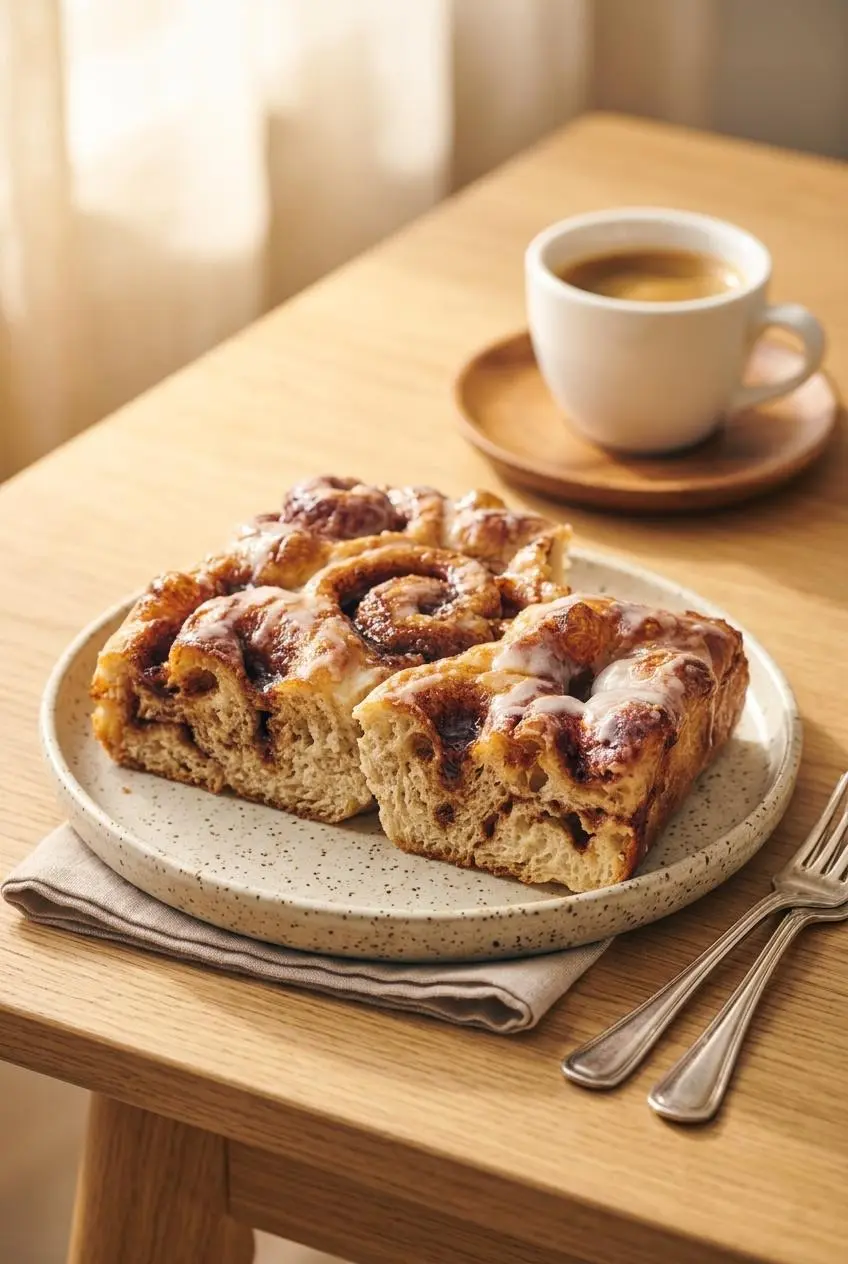
The vanilla glaze gives a light, sweet finish, but you can choose a tangier icing or a different serving presentation without changing the official dough.
- Pull-apart presentation: Optionally score shallow portion lines before baking, without cutting through or flattening the risen dough; the finished bread will still need separating along those lines.
- Brunch slices: Serve warm portions with fresh berries and scrambled eggs to balance the sweet topping.
- Coffee pairing: Espresso or dark roast coffee provides a pleasantly bitter contrast to the glaze.
Classic Vanilla Milk Glaze
The glaze should fall from a spoon in a smooth ribbon, with a honey-like consistency. Sift lumpy confectioners’ sugar before mixing so the glaze doesn’t need vigorous stirring after the liquid goes in.
Apply it when the bread is warm rather than piping hot. Excess heat makes the glaze run into the pockets and off the edges instead of leaving a visible coating.
Tangy Whipped Cream Cheese Icing
For an optional tangy finish, whisk softened cream cheese with confectioners’ sugar, vanilla, and a splash of milk until smooth and spreadable. Use it instead of the vanilla glaze, not as an additional required topping.
A dedicated cream cheese frosting recipe provides measured proportions for a thicker finish. Let the bread lose its intense oven heat before spreading it, and follow the frosting’s storage guidance for any iced leftovers.
Storage, Reheating, and Leftover French Toast
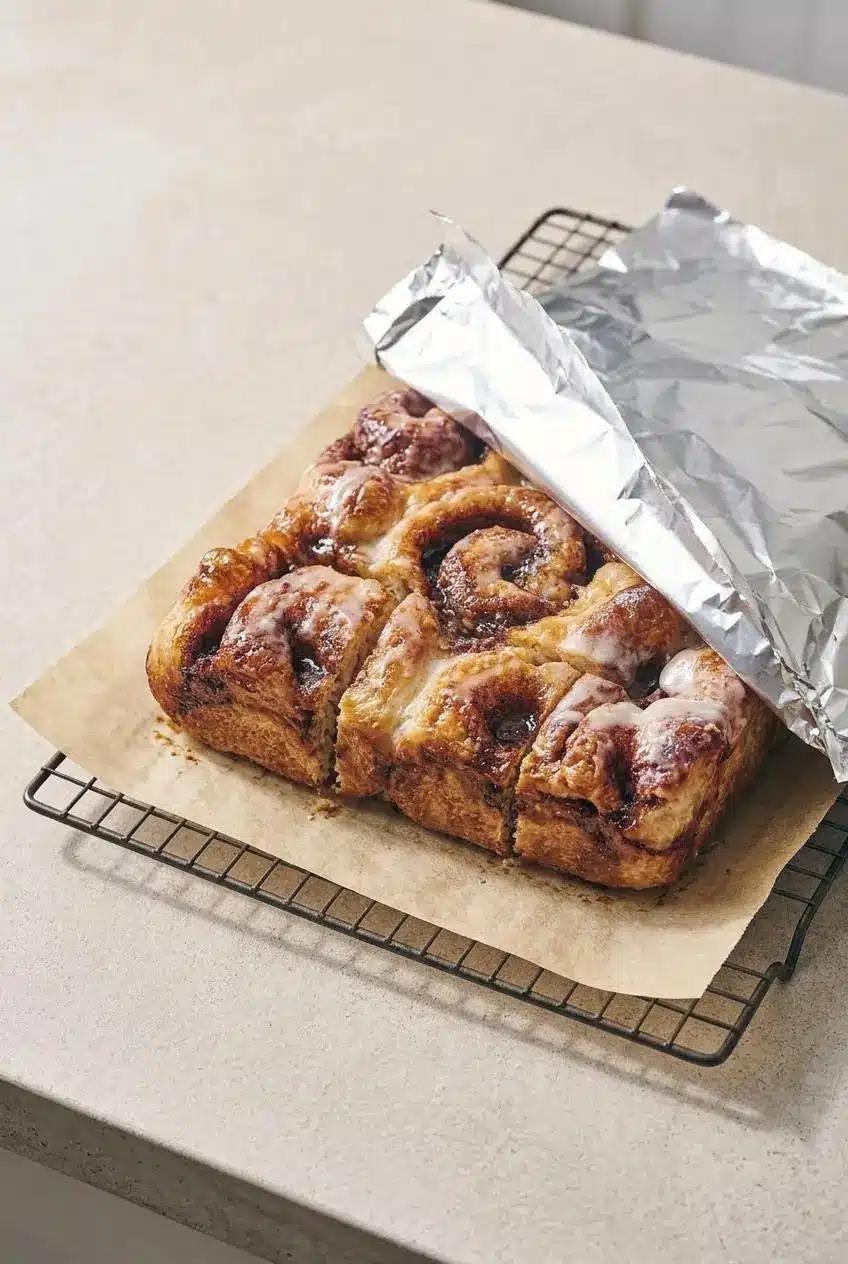
This focaccia tastes best freshly baked, when the edges still contrast with the pillowy center. For leftovers with the vanilla glaze, let the bread cool, wrap it loosely in foil, and keep it at room temperature.
Rewarm portions in the oven until the middle feels warm and the edges regain some crispness. Loosen the foil to expose the crust, and watch the sugary surface. A microwave can warm the center, but it won’t restore crisp edges and can leave the bread chewy.
For another breakfast, split leftover pieces horizontally, dip them in egg-and-milk custard, and cook until the coating sets and both sides turn golden. The cinnamon pockets supply much of the flavor already. A cinnamon roll French toast recipe offers a measured custard and cooking method for that approach.
Conclusion
Crisp edges, airy crumb, and buttery cinnamon pockets make this sweet focaccia a satisfying alternative to individually rolled buns. The vanilla glaze brings everything together without hiding the bread’s texture.
Give the final rise the attention it deserves, then dimple with a gentle hand. That soft wobble is worth waiting for, especially when the first warm slice reaches the plate.
Frequently Asked Questions
How Long Does Cinnamon Roll Focaccia Take to Bake?
Bake it for 15 to 20 minutes at 450°F on a rack in the lower third of the oven. Look for thickly bubbling topping and deep golden exposed dough; tent with foil after 15 minutes if it browns too quickly.
Can I Let the Dough Rise in the Refrigerator Overnight?
Use the same-day schedule for a predictable result with this formula; an overnight holding limit and morning warmup schedule aren’t established here. Cold dough won’t follow the same proofing clock as warm dough, so don’t substitute refrigeration and then bake while it remains tight and unexpanded.
Why Did My Cinnamon Roll Focaccia Turn Out Dense?
The final pan rise may have been too short; the dough should look inflated and wobble softly before topping. Forceful dimpling can also knock out too much air, so press with oiled fingertips rather than flattening the surface.
What Is the Best Pan for Baking Sweet Focaccia?
Use a 9-inch square dark anodized metal focaccia pan lined fully with parchment and prepared with oil as directed. Glass and ceramic can brown differently, making them less predictable choices for this high-heat method.
How Do I Know When the Focaccia Is Finished Baking?
The cinnamon topping should bubble thickly, and the exposed bread should be deep golden brown. Check both cues rather than relying on the dark cinnamon paste alone, which can make the surface look browned early.
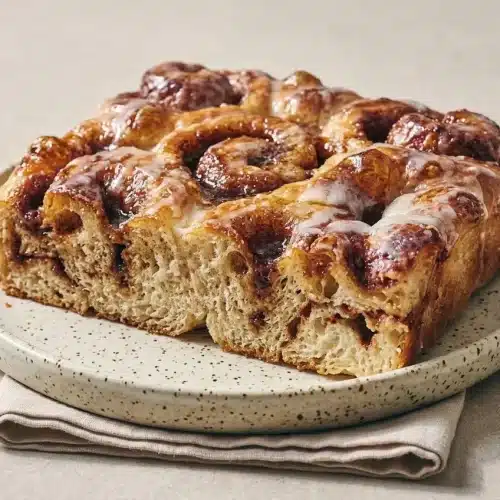
Cinnamon Roll Focaccia

Equipment
- 9″ square Fabulous Focaccia Pan
- 3-quart bowl with lid
- Parchment Paper
- Wire rack
Ingredients
Dough
- 3 cups King Arthur Unbleached All-Purpose Flour (360g)
- 1 3/4 teaspoons table salt (11g)
- 1 teaspoon instant yeast
- 1 teaspoon granulated sugar
- 1 1/4 cups water warm (90°F to 110°F) (284g)
- 1 1/2 tablespoons olive oil (18g)
- 1/4 cup King Arthur Cinnamon Sweet Bits (35g)
Topping
- 3 tablespoons olive oil divided (36g)
- 1/3 cup light brown sugar packed (71g)
- 2 tablespoons butter softened (28g)
- 1 tablespoon Vietnamese cinnamon (5g)
Glaze
- 3/4 cup confectioners’ sugar sifted if lumpy (85g)
- 1 1/2 tablespoons milk or heavy cream (21g)
- 1/2 teaspoon King Arthur Pure Vanilla Extract
- pinch table salt
Instructions
Make and Strengthen Dough
- Measure the flour by weight, or spoon it lightly into a measuring cup and level it, then whisk it with the salt, yeast, and granulated sugar in a large bowl. A 3-quart bowl gives the dough room to expand, and the dry mixture should look evenly blended.
- Stir in the warm water and olive oil until all the flour is incorporated, then cover the bowl for a 15-minute rest. The dough should look uniformly moist, with no flour pockets or unmixed lumps.
- With a wet hand, stretch a section of dough upward and fold it toward the middle, working around the bowl with about 8 to 12 stretches; turn the dough smooth-side up, cover, and rest for 15 minutes. This first round gathers the loose dough into a more cohesive mass.
- Wet your hand again, complete a second round of folds around the bowl, then cover and rest for another 15 minutes. The dough should now offer more resistance and have a smoother surface.
- Scatter half the Cinnamon Sweet Bits, about 2 tablespoons or 18g, over the dough and enclose them during the third round of folds, then cover and rest for 15 minutes. The folds should tuck the bits into the dough rather than leave them clustered on top.
- Add the remaining Cinnamon Sweet Bits and complete the fourth round of folds. The dough should stretch as a connected piece and feel stronger than it did at mixing.
First Rise and Pan Preparation
- Keep the bowl covered and let the dough rise in a comfortably warm room for 1 hour. Look for substantial puffing, nearly twice the starting volume, with possible bubbles at the surface.
- Spray the bottom and sides of a 9-inch square focaccia pan, line it fully with overhanging parchment, lightly spray the paper, and spread 1 tablespoon of the topping olive oil across the bottom. The lining should cover the pan’s interior, and the oil should form an even coating beneath the dough.
- Ease the dough into the center of the prepared pan with a flexible spatula or bowl scraper, then pour another tablespoon of topping olive oil over it. Preserve the dough’s puffiness rather than scraping or pressing it flat.
- Cover the pan and let the dough rise in a warm room for 1 to 1 1/2 hours. It should swell toward the corners and top edge and wobble softly when you move the pan.
Dimple, Top, and Bake
- During the pan rise, blend the brown sugar, softened butter, and cinnamon in a small bowl, then cover the mixture until needed. The topping should be a thick, cohesive paste without noticeable butter lumps.
- As the final rise nears completion, position an oven rack in the lower third and preheat to 450°F. The dough should be visibly inflated before you move on to dimpling.
- Oil your fingertips and press gently down to the pan bottom, working across the dough with dimples about 1 1/2 inches apart and adding single-finger indentations in untouched areas. The dough should yield around your fingers without tearing or collapsing across the entire pan.
- Distribute the cinnamon paste across the surface and into the hollows, dimple again to work it into the dough, and drizzle with the final tablespoon of topping olive oil. The topping should sit throughout the dimples instead of forming one thick mound.
- Bake on the lower-third rack for 15 to 20 minutes, adding a loose foil tent after 15 minutes if the surface darkens too quickly. The cinnamon topping should bubble thickly, and the uncovered bread should develop a deep golden color.
Glaze and Serve
- Lift the baked focaccia onto a wire rack using the parchment, supporting it underneath with a thin spatula, and let it cool slightly. Cooling outside the pan lets steam escape from the bottom crust.
- Stir together the glaze ingredients until smooth, drizzle over the warm bread, and leave it to set for 10 to 15 minutes. The glaze should flow like honey and cling to the surface rather than disappear into it.
- Cut the focaccia into portions and serve slightly warm or at room temperature. The crumb should feel tender, with cinnamon pockets and firmer edges.
- Wrap any leftover focaccia loosely in foil, keep it at room temperature, and rewarm before serving. The bread has its best contrast of crisp crust and soft crumb when freshly baked.