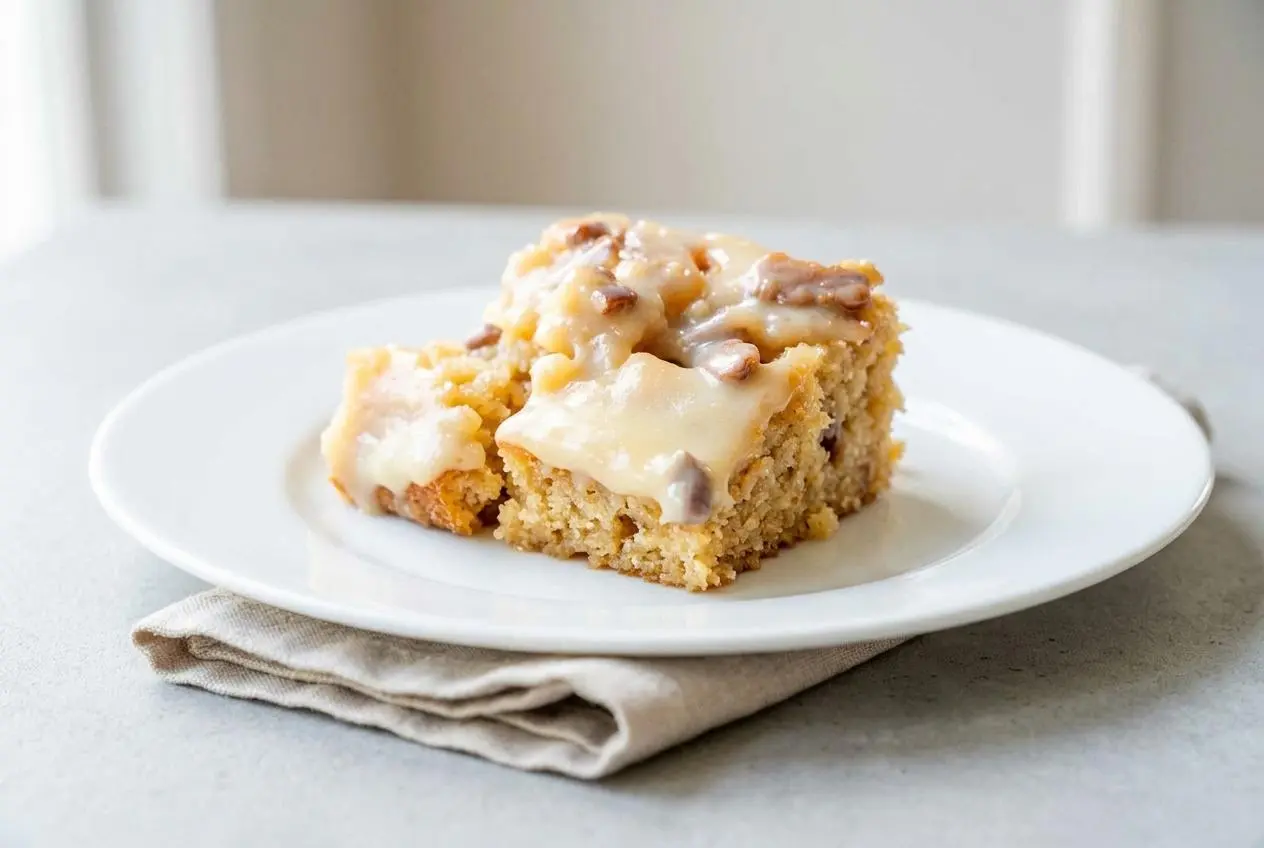
Butter pecan poke cake is a moist Southern-style sheet cake made with doctored cake mix, holes poked into the warm crumb, and a buttery sweetened condensed milk sauce filled with chopped pecans.
Warm, caramel-like aromas and buttery pecan crunch give this butter pecan poke cake its appeal. Coconut pecan frosting goes directly into the batter, enriching the cake before the praline-style sauce ever touches it.
The boxed mix keeps mixing straightforward, while the warm sauce brings richness to every slice. You’ll get a soft crumb with nuts throughout, rather than just scattered on top. The trick is in the holes.
Keep a rounded wooden spoon handle handy; its wider openings let the thick sauce reach into the cake.
Essential Ingredients and Flavor Dynamics for Butter Pecan Poke Cake
The cake mix and eggs build structure, oil and milk support a tender crumb, and coconut pecan frosting adds sweetness and richness. Pecans provide crunch, while butter and sweetened condensed milk form the creamy sauce that moistens the cake.
- 1 (15 oz) box butter pecan cake mix
- 1 (16 oz) can coconut pecan frosting
- 4 large eggs
- 3/4 cup vegetable or canola oil
- 1 cup milk
- 1/2 cup chopped pecans
For the sauce
- 1 (14 oz) can sweetened condensed milk
- 1/4 cup butter
- 1/2 cup chopped pecans
Coconut pecan frosting belongs in the batter. It contributes sugar, fat, coconut, and nuts, giving the cake a richer texture than cake mix prepared on its own. Don’t reserve the can for spreading over the finished cake.
The eggs help the enriched batter hold its shape. Oil contributes tenderness, while milk supplies moisture. Use the amounts listed here rather than adding the eggs, oil, or liquid printed on the cake mix box.
Choose sweetened condensed milk, not evaporated milk. Its concentrated sweetness and thick consistency give the sauce body. Melted butter loosens it while warm and adds buttery flavor; this is a creamy praline-style glaze, not a traditional cooked praline candy.
Fresh, unsalted pecans let the nut flavor come through without adding unexpected salt. They should smell pleasantly nutty, not stale or paint-like. For an optional toasted flavor, warm them in a dry skillet, stirring until fragrant and lightly darker, then let them cool before using.
- Yellow cake mix: A similarly sized box is an optional substitute when butter pecan mix is unavailable; expect a milder cake with flavor supplied by the frosting and pecans.
- Spice cake mix: This optional swap brings warm spice flavors that change the character of the dessert without requiring extra liquid.
- From-scratch baking: A classic yellow cake offers another starting point for homemade baking, but its batter formula isn’t interchangeable with this frosting-enriched mix.
I prefer evenly chopped pecans here so each bite has crunch without large pieces interfering with slicing.
Step by Step Baking and Assembly Method
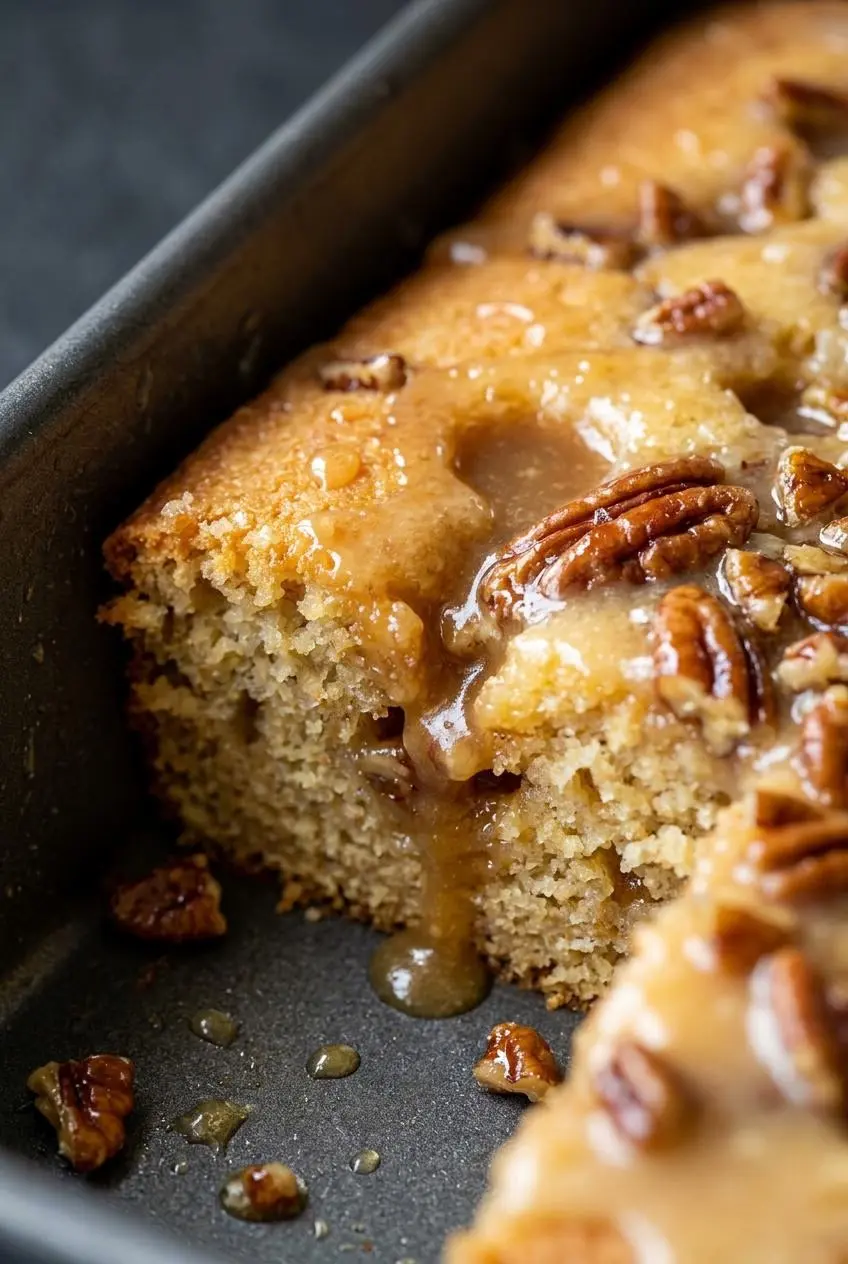
Use a 9×13-inch baking dish to keep the cake depth and sauce distribution consistent. This cake serves 12; allow about 10 minutes for preparation, 30–40 minutes for baking, and additional cooling time before slicing.
- Set the oven to 350°F and coat the inside of a 9×13-inch baking dish with grease.
Cover the corners and sides as well as the bottom to help the cake release when sliced. - Use an electric mixer to combine the cake mix, coconut pecan frosting, eggs, oil, and milk in a large mixing bowl.
The batter should look uniform, with no pockets of dry mix remaining. - Fold the chopped pecans through the batter, then transfer it to the greased dish.
Spread the batter evenly so the corners bake at a similar rate to the center. - Bake for 30–40 minutes, checking the middle with a toothpick before removing the cake.
A clean toothpick, without wet batter attached, signals that the center has baked through. - Make openings across the warm cake with the rounded handle of a wooden spoon, then leave the cake in its dish while preparing the sauce.
Stop short of the bottom crust so the openings form channels within the crumb. - Heat the butter in a saucepan over medium heat until melted, then stir in the sweetened condensed milk.
Keep stirring until the mixture looks smooth rather than streaked with butter. - Let the mixture reach a gentle simmer, stir in the sauce pecans, and take the pan off the heat before slowly pouring it over the cake.
Guide the warm sauce across the surface so it enters the openings and reaches the edges. - Allow the glazed cake to cool before cutting it into portions.
The crumb will hold together better once the sauce has settled and the cake has firmed.
Baking and Poking the Holes
Poke the cake while it’s warm, following the baking step rather than waiting until it’s chilled. A narrow toothpick makes openings that are too small for this thick sauce; the rounded spoon handle creates useful channels.
Work in loose rows, placing holes about half an inch apart where the handle size allows. Leave intact cake between them. If your handle is especially wide, spread the holes farther apart instead of creating one continuous trench.
Aim for halfway to three-quarters of the cake’s depth. Push straight down and lift straight up without twisting aggressively. Piercing the bottom crust gives the sauce a direct route underneath the cake, where it can collect instead of moistening the crumb.
Check doneness before poking. A center that still contains wet batter won’t gain structure from the sauce, and repeated poking can tear an underbaked cake.
Simmering the Homemade Praline Glaze
Look for gentle, recurring bubbles around the saucepan’s edges. Once the mixture reaches that light simmer, add the pecans and remove it from the heat. There’s no need to cook it into a dark caramel.
Stir along the bottom and corners of the saucepan as it heats. Sweetened condensed milk can catch there, especially if the burner runs hot. Avoid a rolling boil, which can scorch the mixture and make the sauce excessively thick.
Pour slowly while both the cake and sauce are warm. Move across the surface rather than emptying the saucepan into one spot. If sauce gathers on top, pause briefly to let it enter the holes, then continue pouring.
Troubleshooting and Success Secrets
Most texture problems come from an underbaked center, holes that reach the pan, or sauce that has cooked too long. Use these cues to catch the problem early.
- Sauce pooling underneath: Holes that pierce the bottom crust let the glaze bypass the crumb. Keep the remaining holes shallower and let the cake cool before trying to lift out slices.
- Center collapsing during poking: Wet batter or closely packed holes can weaken the middle. Confirm a clean center toothpick test before removing the cake, and leave intact crumb between openings.
- Sauce too thick to pour: Prolonged simmering concentrates the glaze. Remove it from the heat and, as an optional repair, stir in a little warm milk gradually until it flows again.
- Scorched sauce: Dark flecks and an acrid smell suggest the dairy sugars caught on the pan. Don’t scrape the scorched layer into the cake; badly burned sauce needs replacing.
- Glaze sitting on top: Tiny holes or cooled sauce limit absorption. Use the spoon handle rather than a skewer, and pour the sauce promptly after removing it from the heat.
- Overly sweet flavor: Toasting the pecans adds a deeper nutty contrast. An optional light sprinkle of sea salt over the finished cake can also balance the sweetness without changing the batter.
- Dry edges: Start checking at the early end of the baking range. Remove the cake once the center passes the toothpick test rather than waiting for a very dark top.
Make-Ahead and Storage Guidelines
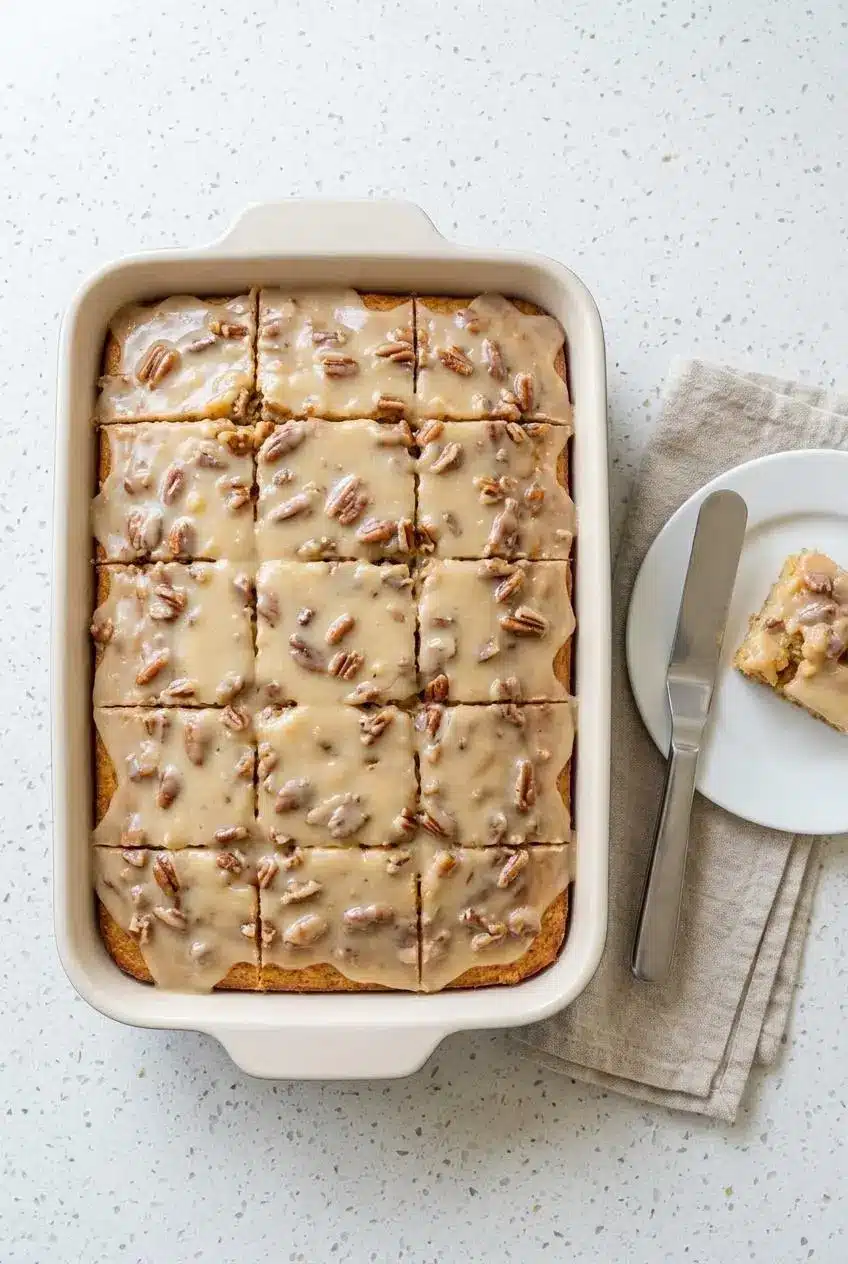
Plan around cooling rather than a fixed advance-preparation window. The cake needs to cool before slicing, so finish baking and glazing before you need to portion it. Gather your serving utensils and any optional toppings while it cools.
For leftovers, keep the glazed cake covered in the refrigerator as a precaution. Cover the baking dish tightly or transfer slices to a closed container to limit drying. Avoid leaving the dessert out for extended serving periods, especially with an added whipped topping.
During preparation, keep eggs refrigerated until needed and use clean hands and utensils when handling them. Proper handling and thorough cooking of eggs help reduce foodborne illness risk.
Chilled slices feel firmer and are easier to portion neatly. For a softer serving texture, gently warm an individual slice in the microwave, checking frequently rather than heating the entire dish. Add whipped toppings after warming, not before.
Serving Suggestions and Variations
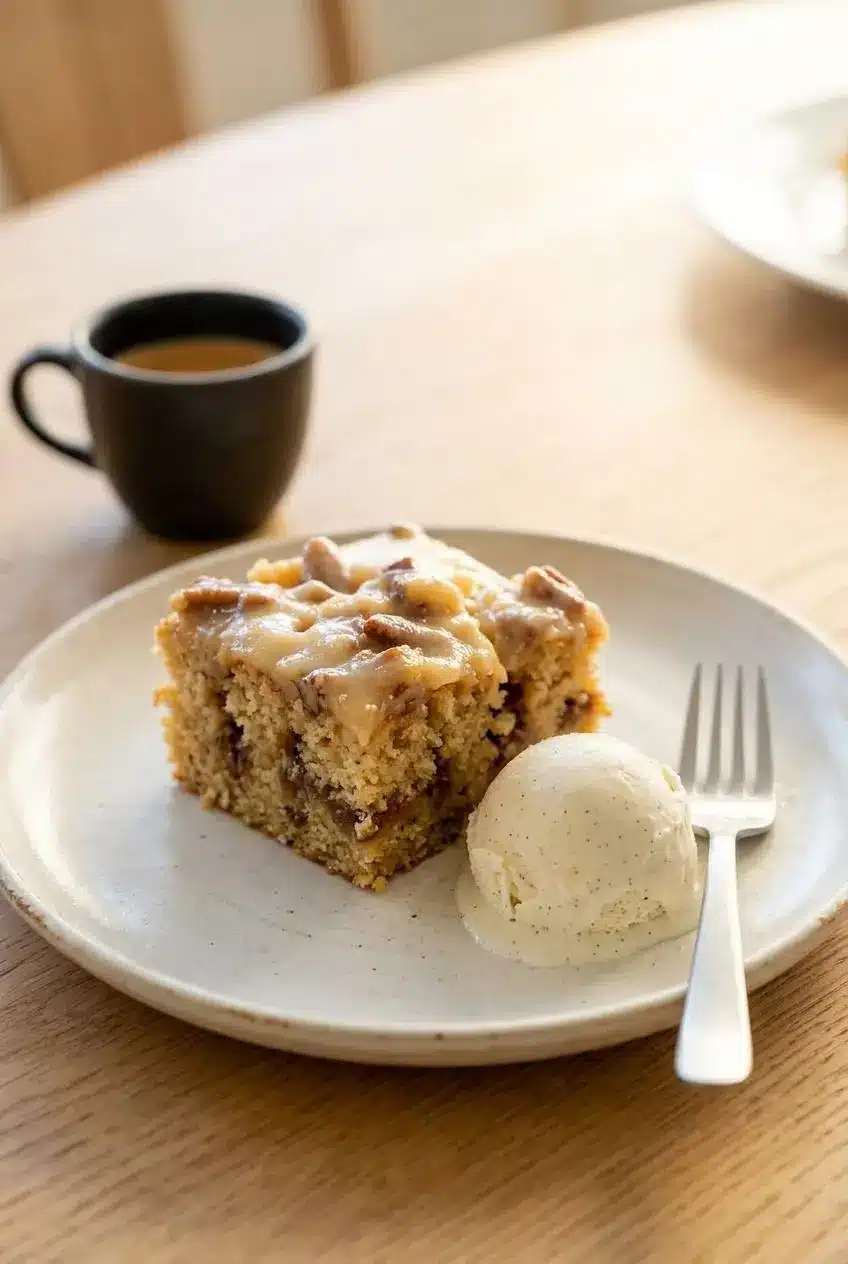
Let the cake cool before its first slicing, then choose a serving style that suits its rich glaze. Smaller portions work well when you’re adding another topping.
- Cool and creamy: Pair a slice with vanilla bean ice cream, or choose butter pecan ice cream for a more pronounced nutty pairing.
- Coffee pairing: Unsweetened dark roast coffee or espresso provides a pleasantly bitter contrast to the condensed milk glaze.
- Dessert-table portions: Serve chilled squares for cleaner edges and a firmer texture that’s easier to transfer to plates.
Gluten-Free and Allergy-Friendly Swaps
A gluten-free adaptation needs more than checking the cake mix. Choose a gluten-free yellow cake mix with a package weight comparable to the listed box, and check the coconut pecan frosting and other packaged ingredients for gluten-free labeling.
Gluten-free mixes vary in formulation, so equal package weight doesn’t guarantee identical results with this enriched batter. Treat the swap as an adaptation, keep the listed moisture amounts unchanged initially, and use the center doneness cue rather than assuming identical baking behavior.
Removing the chopped pecans doesn’t make this cake nut-free. Both butter pecan cake mix and coconut pecan frosting may contain pecans or other nut ingredients. A nut-free praline-style version would need suitable replacements for those products as well as the chopped nuts.
Toasted sunflower seeds or butter-toasted rolled oats can offer an optional crunch in an adapted dessert, provided they suit the person’s dietary needs. Check every product label and use clean equipment to reduce cross-contact; neither option is an automatic allergy-safe substitute.
Whipped Topping and Bakery Upgrades
For a lighter finish, spread an optional thin layer of whipped cream over the completely chilled cake. Whipped cream cheese topping gives a tangier contrast to the sweet glaze.
Keep either topping separate until the cake has chilled so it doesn’t melt into the sauce. An optional scatter of toasted pecans adds crunch, but the cake already has nuts in both its crumb and glaze.
Conclusion
Coconut pecan frosting in the batter and warm, buttery condensed milk sauce turn a boxed cake into a rich dessert with a tender crumb and plenty of pecan crunch.
Poke the cake while warm, protect the bottom crust, and let it cool before slicing. Those small details make each square easier to serve and better to eat.
Frequently Asked Questions
Do You Poke Holes in the Cake When It Is Hot or Cold?
Poke this cake while it’s warm after baking, before preparing the sauce. Use a rounded wooden spoon handle and stop short of the bottom crust.
Can You Make Butter Pecan Poke Cake With Sweetened Condensed Milk?
Yes. Sweetened condensed milk is the main ingredient in this cake’s buttery praline-style sauce. Heat it with melted butter to a gentle simmer, add pecans, and pour it over the warm cake.
What Is the Best Cake Mix to Use for Butter Pecan Poke Cake?
Use the listed 15 oz butter pecan cake mix for the intended flavor. A similarly sized yellow or spice cake mix is an optional alternative, with a milder or more spiced result.
Can You Make Butter Pecan Poke Cake Ahead of Time?
Finish baking and glazing before serving so the cake has time to cool and hold together for slicing. If you won’t serve it once cooled, keep it covered and chilled, and add any whipped topping after chilling.
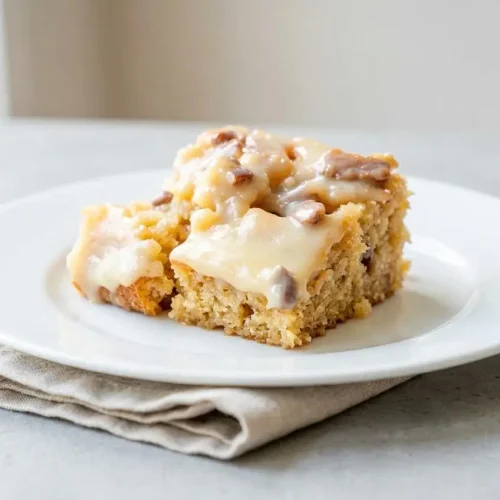
Butter Pecan Poke Cake

Equipment
- 9×13-inch baking dish
- Electric Mixer
- Saucepan
- Wooden Spoon
Ingredients
- 1 (15 oz) box butter pecan cake mix
- 1 (16 oz) can coconut pecan frosting
- 4 large eggs
- 3/4 cup vegetable or canola oil
- 1 cup milk
- 1/2 cup chopped pecans
For the sauce
- 1 (14 oz) can sweetened condensed milk
- 1/4 cup butter
- 1/2 cup chopped pecans
Instructions
- Set the oven to 350°F and coat the inside of a 9×13-inch baking dish with grease. Cover the corners and sides as well as the bottom to help the cake release when sliced.
- Use an electric mixer to combine the cake mix, coconut pecan frosting, eggs, oil, and milk in a large mixing bowl. The batter should look uniform, with no pockets of dry mix remaining.
- Fold the chopped pecans through the batter, then transfer it to the greased dish. Spread the batter evenly so the corners bake at a similar rate to the center.
- Bake for 30-40 minutes, checking the middle with a toothpick before removing the cake. A clean toothpick, without wet batter attached, signals that the center has baked through.
- Make openings across the warm cake with the rounded handle of a wooden spoon, then leave the cake in its dish while preparing the sauce. Stop short of the bottom crust so the openings form channels within the crumb.
- Heat the butter in a saucepan over medium heat until melted, then stir in the sweetened condensed milk. Keep stirring until the mixture looks smooth rather than streaked with butter.
- Let the mixture reach a gentle simmer, stir in the sauce pecans, and take the pan off the heat before slowly pouring it over the cake. Guide the warm sauce across the surface so it enters the openings and reaches the edges.
- Allow the glazed cake to cool before cutting it into portions. The crumb will hold together better once the sauce has settled and the cake has firmed.