
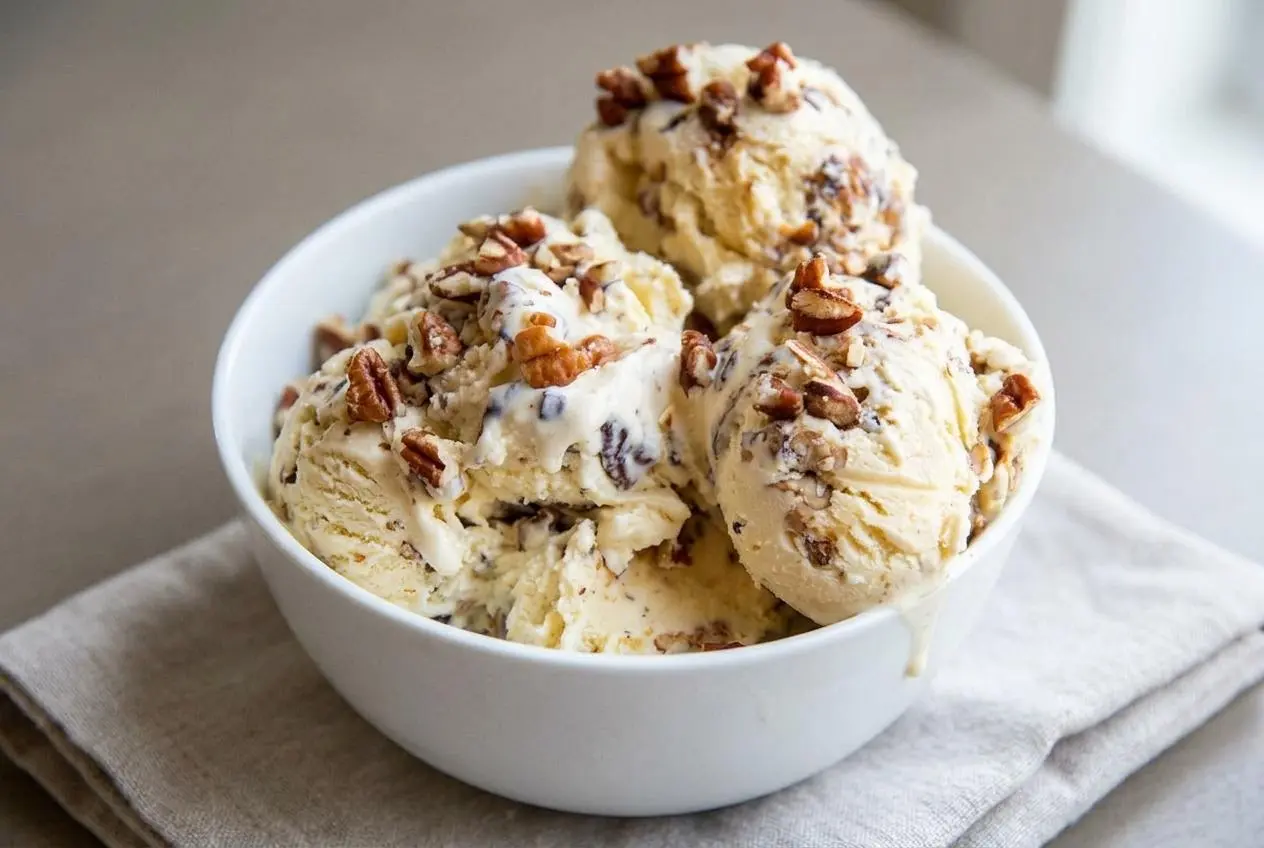
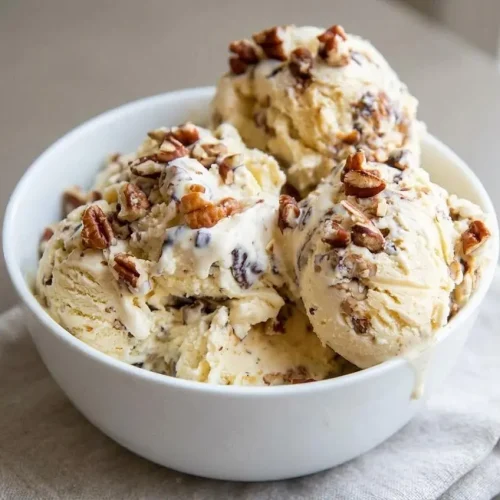
Butter pecan ice cream starts with a cooked vanilla custard made from cream, milk, egg yolks, and two sugars. Chill the base until cold, churn it in an ice cream maker, then fold in pecans toasted in salted butter and cooled completely before mixing.
Homemade butter pecan ice cream tastes nothing like the pale grocery store version. The custard is thick and golden from four egg yolks, the brown sugar pushes it toward butterscotch, and the pecans come out of the pan smelling like warm toffee and toasted nuts. That aroma alone is worth turning on the stove for.
You get a dense, velvety scoop with real crunch, not soft sandy bits. The two things that decide whether this works are patience with the custard and patience with the pecans. Get both right and the texture stays smooth for the entire container.
Set a bowl of ice water in the sink before you start heating the cream, because the custard needs to cool fast the moment it comes off the burner.
Key Ingredients for Authentic Butter Pecan Ice Cream
Every ingredient here does structural work. The dairy controls creaminess, the yolks build body, the sugars shape flavor and softness, and the butter carries the toasted pecan flavor straight into the base.
For the Custard
- 2 cups heavy cream
- 1 cup whole milk
- 4 egg yolks
- 1/3 cup granulated sugar
- 1/3 cup brown sugar
- 1 tsp vanilla extract
- 1/8 tsp salt
For the Buttered Pecans
- 1 cup roughly chopped pecans
- 1/4 cup unsalted butter
- 1/4 tsp salt
The 2 to 1 ratio of heavy cream to whole milk is doing the heavy lifting. Cream sits around 36 percent butterfat, and that fat physically blocks water molecules from linking into large ice crystals. Whole milk keeps the mix from turning greasy or waxy on the tongue. Skim milk is a poor swap here since removing fat means more free water, which freezes hard and icy.
Egg yolks are the emulsifier and the reason this reads as custard rather than sweet frozen cream. Their lecithin binds fat and water together, and their proteins thicken the base when gently heated, giving that dense, slow-melting spoonful.
Running both sugars matters more than it looks. Granulated sugar handles clean sweetness and lowers the freezing point so the finished ice cream stays scoopable. Brown sugar brings molasses, which is exactly where the caramel and butterscotch undertone in classic butter pecan comes from. Skip it and the base tastes flat.
For the nuts, use pecan halves you chop yourself and check that they smell sweet, not sharp or waxy. Pecans carry a lot of oil and go rancid quickly. Unsalted butter lets you control the seasoning with that quarter teaspoon of salt, which is what makes the pecans taste seasoned rather than merely sweet.
I always taste one raw pecan before it hits the pan. If it has any bitter, paint-like edge, the whole batch will carry that flavor through the freezer and there is no fixing it later.
Step-by-Step Guide to Making Custard-Based Butter Pecan Ice Cream
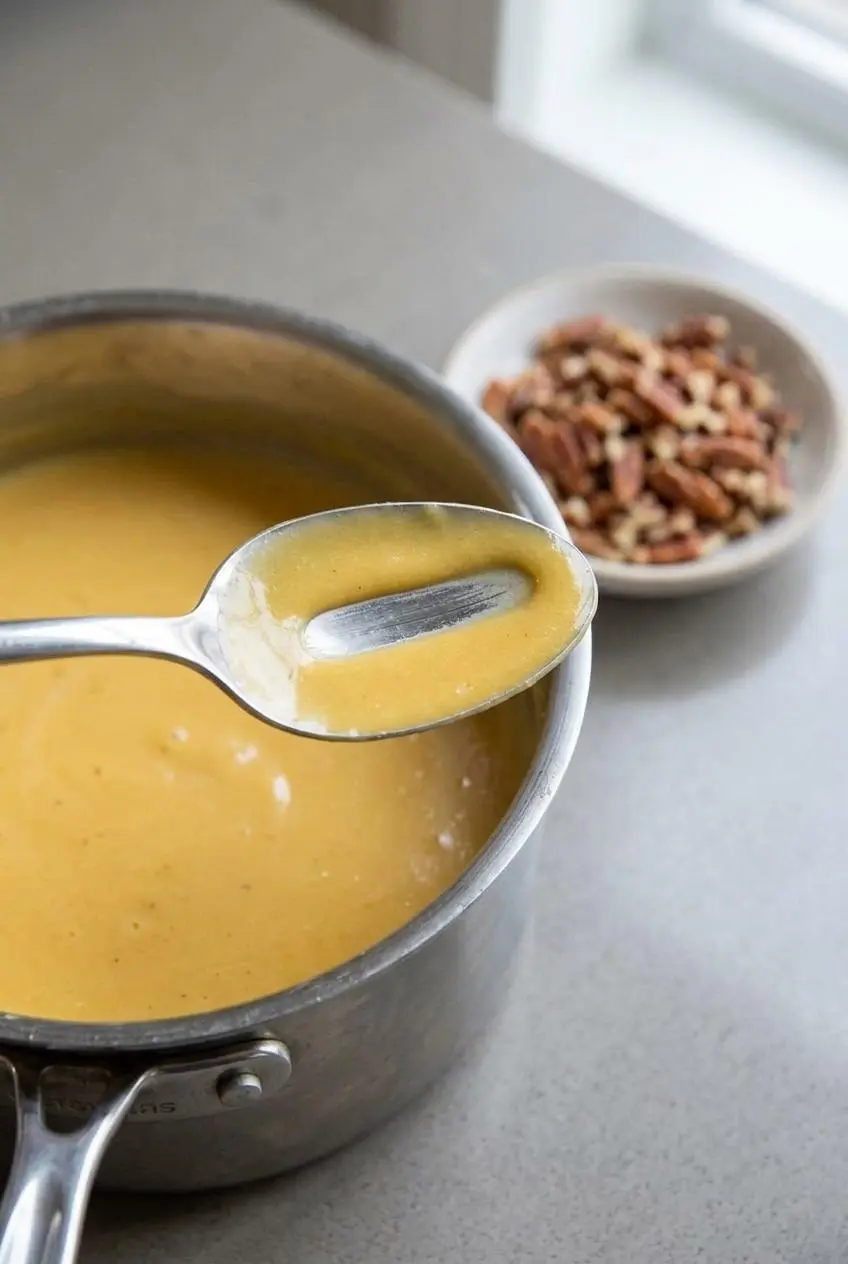
Three stages run this recipe: toasting the nuts, cooking and chilling the custard, then churning and hardening. The custard needs at least 2 hours in the fridge and the finished ice cream needs at least 6 hours in the freezer, so plan around those windows.
For the Custard
- Pour the heavy cream and whole milk into a large saucepan and set it over medium heat until the surface just begins to bubble at the edges.
Look for small bubbles ringing the pan and steam rising, not a rolling boil. - Whisk the egg yolks with the granulated sugar and brown sugar in a large bowl until the mixture loosens and lightens.
The yolks should look glossy and slightly paler once the sugar dissolves into them. - While whisking hard, stream 1/2 cup of the hot dairy into the yolks, then add another cup in 1/2 cup additions, whisking the entire time.
The bowl warms gradually and the mixture stays smooth with no visible flecks of cooked egg. - Return the tempered yolk mixture to the saucepan with the remaining dairy and cook about 5 minutes, stirring, until it thickens slightly.
Dip a spoon in and swipe a finger across the back, the line should hold clean without the custard running back over it. - Strain the custard through a fine-mesh sieve into a large bowl, then stir in the vanilla extract and salt.
Anything the sieve catches is exactly what would have turned into gritty specks in the finished ice cream. - Set the bowl inside a second bowl filled with ice and water and let it sit about 10 minutes, stirring now and then.
The custard should feel cool against the back of your hand and thicken noticeably as it drops in temperature. - Cover the bowl and refrigerate it for at least 2 hours.
A properly chilled base feels cold straight through and coats the spoon thickly.
For the Buttered Pecans
- Combine the chopped pecans, unsalted butter, and salt in a saute pan over medium heat, stirring constantly until the butter melts and the nuts toast.
You will smell a deep, roasted, almost caramel aroma and the pecans will darken a shade. - Strain off the butter and spread the pecans out to cool to room temperature.
Cooled pecans feel dry and snap cleanly instead of bending.
For the Ice Cream
- Pour the chilled custard into your ice cream maker and churn according to the manufacturer directions, roughly 30 minutes.
The base thickens to soft-serve consistency and holds ridges from the paddle. - Add the cooled buttered pecans and churn another 5 minutes until they distribute evenly.
The nuts should be suspended throughout rather than sinking to the bottom. - Transfer the ice cream to a 1.5 to 2 quart pan, cover it with plastic wrap or foil, and freeze at least 6 hours or overnight.
It is ready when a scoop holds its shape without slumping.
Toasting the Buttered Pecans
Medium heat is the ceiling here. Pecans are high in oil and go from toasted to scorched in under a minute, and burnt nuts will taint the whole batch. Keep the pan moving so every piece contacts the butter evenly.
Your nose is the real timer. When the kitchen smells nutty and toasty with a faint caramel note, they are done. Strain off the butter immediately, since leftover fat clinging to the nuts turns slick and greasy once frozen.
Then let them cool fully. Warm pecans dropped into churning custard will melt the frozen base on contact, and that melted patch refreezes into coarse ice crystals. Spread them in a single layer so they cool quickly and stay crisp.
Cooking and Tempering the Custard
Tempering is nothing more than raising the yolks’ temperature slowly enough that their proteins thicken instead of scrambling. Adding all the hot cream at once shocks the yolks and you end up straining out most of your thickener.
Whisk continuously as you stream in the first 1/2 cup, then the next cup in stages. The mixture should stay glossy and pourable throughout. If you see any grainy texture starting, stop pouring and whisk hard until it smooths out.
Back on the burner, keep the heat gentle and stir constantly for about 5 minutes. The custard is ready when it coats the back of a spoon and a finger swiped through leaves a clean line that does not fill in. If you use a thermometer, the base should thicken well before it reaches a simmer, and it should never boil. Straining and the ice bath immediately after are non-negotiable, since residual heat keeps cooking the yolks even off the burner.
Churning and Hardening
Churn only when the base is thoroughly cold. Around 30 minutes in most home machines, the custard climbs the sides of the canister and takes on a thick soft-serve look, holding the marks left by the dasher.
The pecans go in for the final 5 minutes. That is enough to distribute them without over-churning the base, which can make the texture heavy and buttery in the wrong way.
Then comes hardening. Six hours minimum, overnight is better. Churned ice cream is still soft when it leaves the machine, and the freezer is what firms the structure so you get clean, round scoops instead of soup.
Expert Tips and Troubleshooting for Creamy Ice Cream
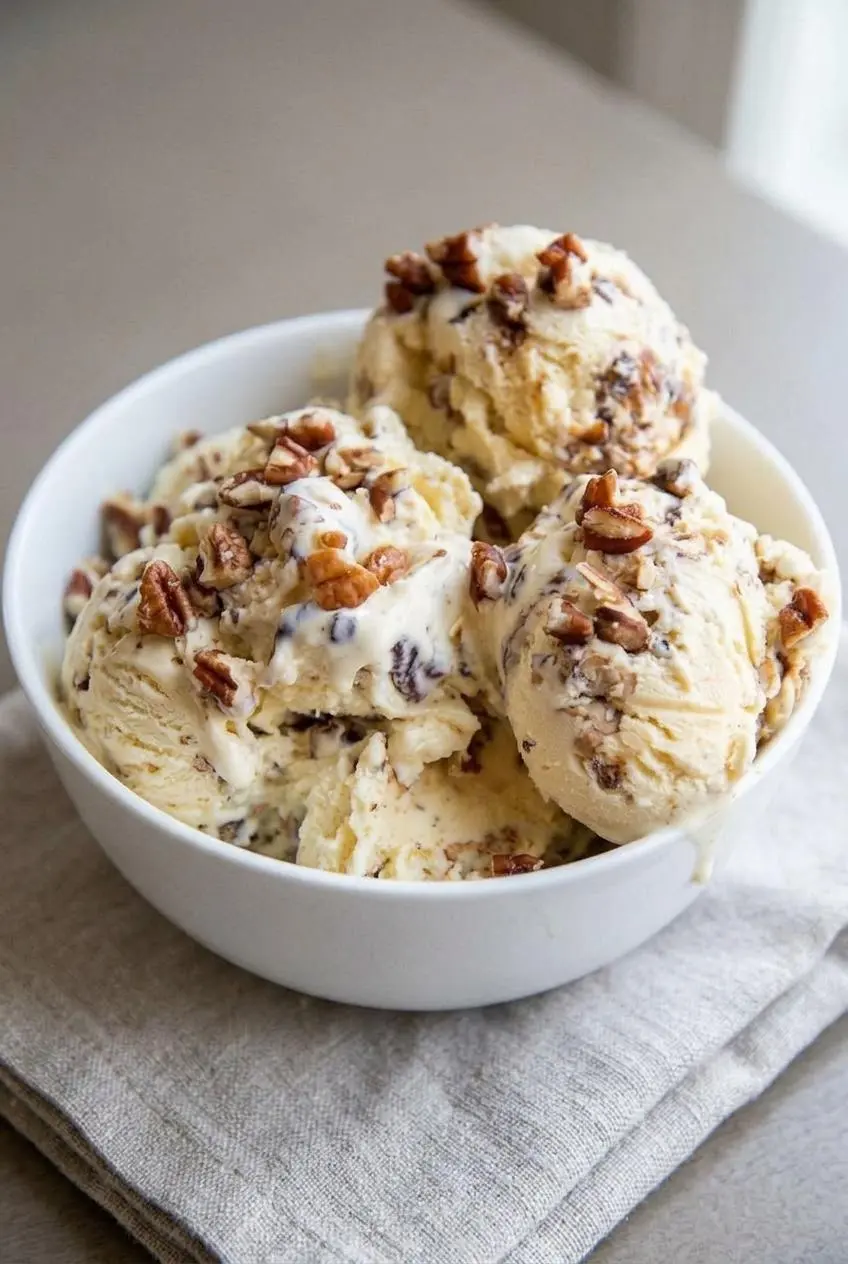
Most ice cream problems trace back to temperature, either the base or the machine. Here is how to head off the common ones:
- Icy, grainy texture: the base went into the machine too warm. A cold base freezes fast, and fast freezing means small crystals. Refrigerate the full 2 hours minimum, and longer if your fridge runs on the warmer side.
- The base never thickens in the machine: the canister was not frozen solid. Most freezer bowls need 12 to 24 hours in the freezer beforehand. Shake it, and if you hear liquid sloshing inside the walls, it is not ready.
- Scrambled bits in the custard: the heat was too high or the tempering went too fast. Pull the pan off the burner immediately and pour the custard through a fine-mesh sieve. If it is badly curdled, blend it for 20 seconds with an immersion blender, then strain it before chilling.
- Soft pecans: either they went in warm, or the butter was not strained off. Both introduce moisture and fat that soften the nuts in the freezer.
- Ice cream freezes rock hard: usually the sugar was reduced. Sugar lowers the freezing point, so cutting it makes the finished ice cream brick up.
Run through this quick check before you churn anything: canister frozen solid, custard cold to the touch, pecans fully at room temperature, storage container already chilling in the freezer. That last one helps more than people expect, since transferring soft ice cream into a warm container melts the edges immediately. These same temperature rules apply to any custard base, including a batch of rich chocolate ice cream where the cocoa solids change the thickening timing slightly.
Freezing, Storage, and Serving Suggestions
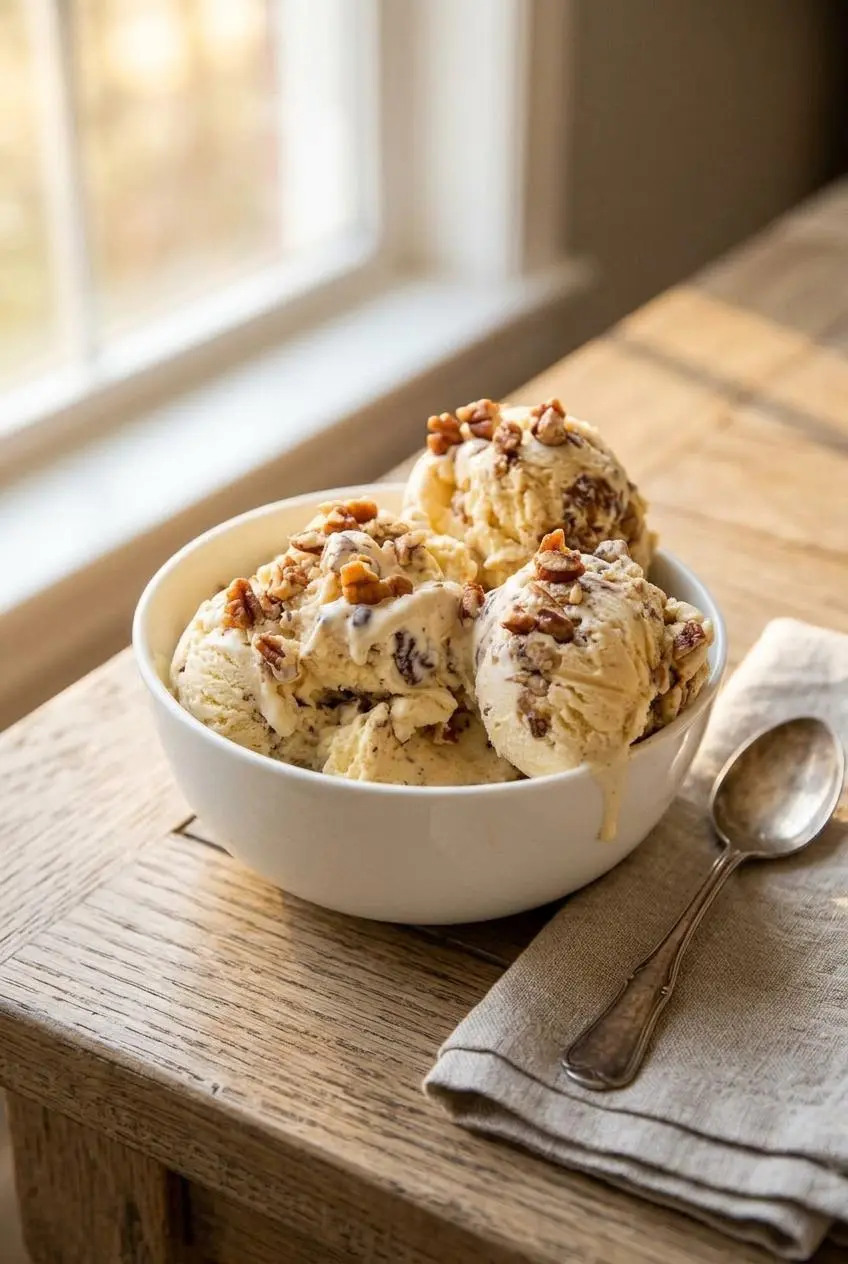
The enemy of stored ice cream is air. Press a sheet of plastic wrap or wax paper direct
Butter Pecan Ice Cream

Equipment
- Hand whisk
- Large Mixing Bowl
- Large saucepan
- Ice Cream Maker
Ingredients
For the Custard
- 2 cups heavy cream
- 1 cup whole milk
- 4 egg yolks
- 1/3 cup granulated sugar
- 1/3 cup brown sugar
- 1 tsp vanilla extract
- 1/8 tsp salt
For the Buttered Pecans
- 1 cup roughly chopped pecans
- 1/4 cup unsalted butter
- 1/4 tsp salt
Instructions
For the Custard
- Pour the heavy cream and whole milk into a large saucepan and set it over medium heat until the surface just begins to bubble at the edges. Look for small bubbles ringing the pan and steam rising, not a rolling boil.
- Whisk the egg yolks with the granulated sugar and brown sugar in a large bowl until the mixture loosens and lightens. The yolks should look glossy and slightly paler once the sugar dissolves into them.
- While whisking hard, stream 1/2 cup of the hot dairy into the yolks, then add another cup in 1/2 cup additions, whisking the entire time. The bowl warms gradually and the mixture stays smooth with no visible flecks of cooked egg.
- Return the tempered yolk mixture to the saucepan with the remaining dairy and cook about 5 minutes, stirring, until it thickens slightly. Dip a spoon in and swipe a finger across the back, the line should hold clean without the custard running back over it.
- Strain the custard through a fine-mesh sieve into a large bowl, then stir in the vanilla extract and salt. Anything the sieve catches is exactly what would have turned into gritty specks in the finished ice cream.
- Set the bowl inside a second bowl filled with ice and water and let it sit about 10 minutes, stirring now and then. The custard should feel cool against the back of your hand and thicken noticeably as it drops in temperature.
- Cover the bowl and refrigerate it for at least 2 hours. A properly chilled base feels cold straight through and coats the spoon thickly.
For the Buttered Pecans
- Combine the chopped pecans, unsalted butter, and salt in a saute pan over medium heat, stirring constantly until the butter melts and the nuts toast. You will smell a deep, roasted, almost caramel aroma and the pecans will darken a shade.
- Strain off the butter and spread the pecans out to cool to room temperature. Cooled pecans feel dry and snap cleanly instead of bending.
For the Ice Cream
- Pour the chilled custard into your ice cream maker and churn according to the manufacturer directions, roughly 30 minutes. The base thickens to soft-serve consistency and holds ridges from the paddle.
- Add the cooled buttered pecans and churn another 5 minutes until they distribute evenly. The nuts should be suspended throughout rather than sinking to the bottom.
- Transfer the ice cream to a 1.5 to 2 quart pan, cover it with plastic wrap or foil, and freeze at least 6 hours or overnight. It is ready when a scoop holds its shape without slumping.



1 thought on “Butter Pecan Ice Cream”