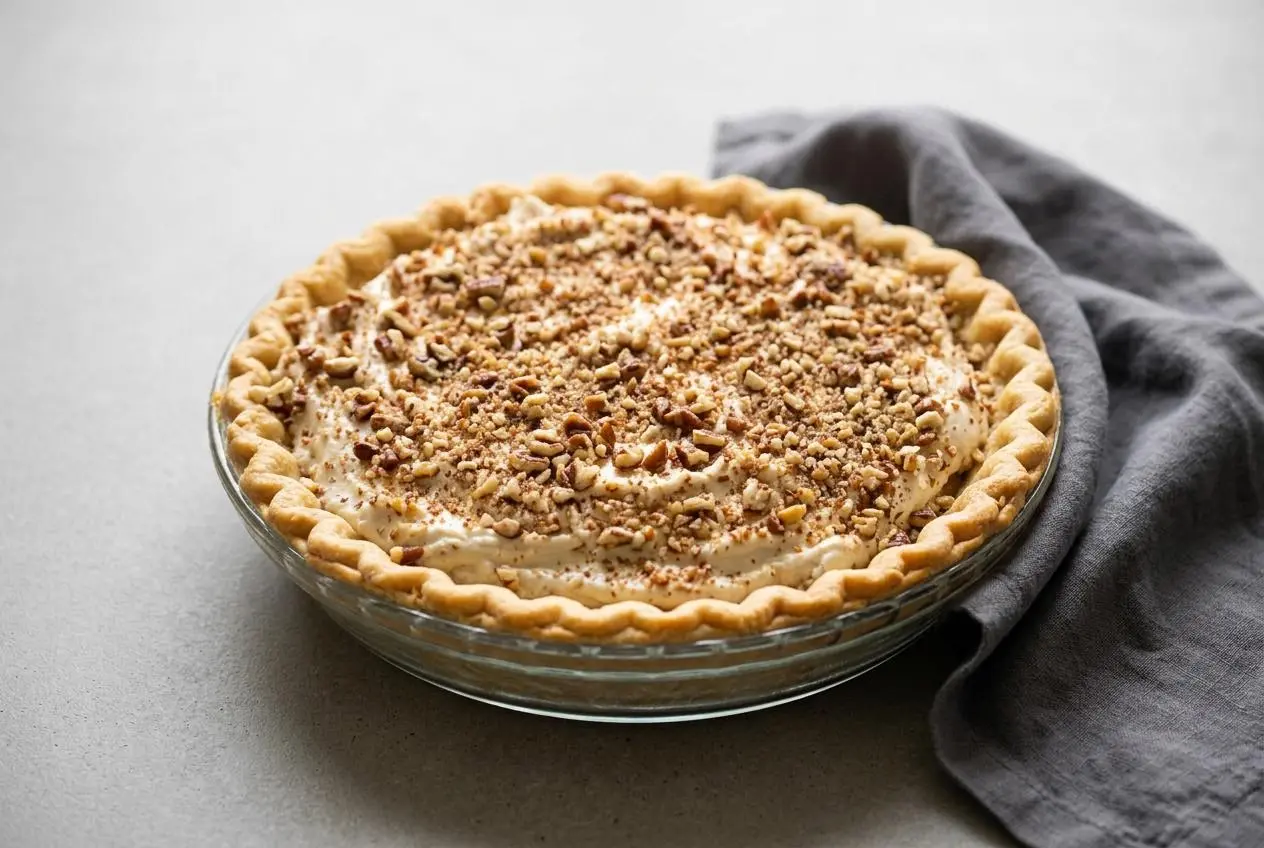
Pecan cream pie is a chilled, mousse-like dessert made by folding whipped cream and chopped pecans into a smooth cream cheese, brown sugar, and maple syrup filling. A completely cooled crust holds the fluffy filling, which firms in the refrigerator rather than baking in the oven.
This pecan cream pie brings together cool creaminess, buttery nut crunch, and the maple sweetness of a butter pecan scoop, all tucked into flaky pastry. The cream cheese adds a gentle tang that keeps the filling from tasting sugary.
Once the crust is baked and cooled, allow about 15 minutes of active preparation. The 2-hour setting time is refrigerator chilling, not cooking, so plan separately for baking and cooling the shell. The payoff is in that first cool, nutty forkful.
Keep the heavy cream cold while the cream cheese softens, and check that the crust feels completely cool before filling it.
Key Ingredients and Their Roles
Cream cheese gives the filling structure, whipped cream adds lift, and pecans provide crunch. Brown sugar and maple syrup build warm sweetness, while salt balances the richness and the pastry supplies a crisp contrast.
- 1 9-inch pie crust, unbaked
- 1 cup heavy whipping cream
- 1/3 cup powdered sugar
- 2 (8 oz) packages cream cheese, softened
- 1/2 cup light brown sugar
- 1/4 cup pure maple syrup
- 1 1/2 cups pecans, finely chopped
- 1/4 teaspoon salt
Soften the cream cheese, but keep the cream cold. Room-temperature cream cheese blends smoothly instead of breaking into stubborn little lumps. It should yield readily when pressed, without becoming warm or oily. Heavy whipping cream needs the opposite treatment: keep it chilled until you’re ready to beat it so it can hold firm peaks.
Use pure maple syrup for its flavor. It brings a woodsy sweetness that complements the molasses notes in light brown sugar. Pancake syrup won’t give the same maple character. The salt rounds out both sweeteners and makes the nuts taste more pronounced; it doesn’t make the filling salty.
Chop the pecans finely, not into powder. Small pieces spread throughout the mousse, giving each bite crunch without weighing down a forkful. Reserve the remaining nuts for the top as directed below. Powdered sugar dissolves readily into the cream, while the baked shell gives the soft filling a firm foundation.
I set the cream cheese out ahead of mixing so it yields easily to the beaters before the liquid maple syrup goes in.
How to Make the Pecan Cream Pie Step by Step
Prepare the crust first, then build the filling in separate bowls. That separation lets you smooth the cream cheese thoroughly without overworking the whipped cream.
Timing: About 15 minutes active preparation, plus crust baking and cooling; at least 2 hours chilling. Makes 1 pie.
- Bake the empty 9-inch pastry shell using the package’s blind-baking directions, then set it aside to cool fully.
The shell should look baked through and feel cool across the bottom before any cream filling touches it. - Whip the cold heavy cream with the powdered sugar in a small bowl using an electric mixer.
Stop at stiff peaks, when a lifted beater leaves a defined point that stands upright rather than folding over. - Work the softened cream cheese, brown sugar, salt, and maple syrup together with the mixer in a separate large bowl, scraping the sides as needed.
A properly blended mixture resembles glossy frosting, with no visible cream cheese lumps. - Use a rubber spatula to incorporate the whipped cream into the cream cheese mixture, then distribute 1 cup of the chopped pecans with gentle strokes.
Cut down through the center and sweep around the bowl, turning it as you fold, until the filling looks evenly combined but still airy. - Fill the cold pastry shell, level the surface, scatter the remaining pecans over it, and refrigerate for at least 2 hours or up to overnight.
The filling should feel firm enough to hold a cut edge rather than slump into the space left by a slice. - Cut the chilled pie with a sharp knife, wiping the blade between cuts.
Each portion should show a fluffy interior dotted with pecans above the pastry shell.
For blind baking, follow the crust’s specific directions for temperature and timing. If those directions call for weights, line the pastry with parchment or foil before adding pie weights or dried beans. Remove the liner and weights when directed so the bottom can finish baking. A pale, underbaked bottom won’t become crisp in the refrigerator.
Once the whipped cream goes into the cream cheese mixture, put the mixer aside. Folding preserves the air you just whipped in. Stop when the white streaks disappear rather than continuing until the filling looks perfectly polished.
Expert Tips and Troubleshooting for Perfect Texture
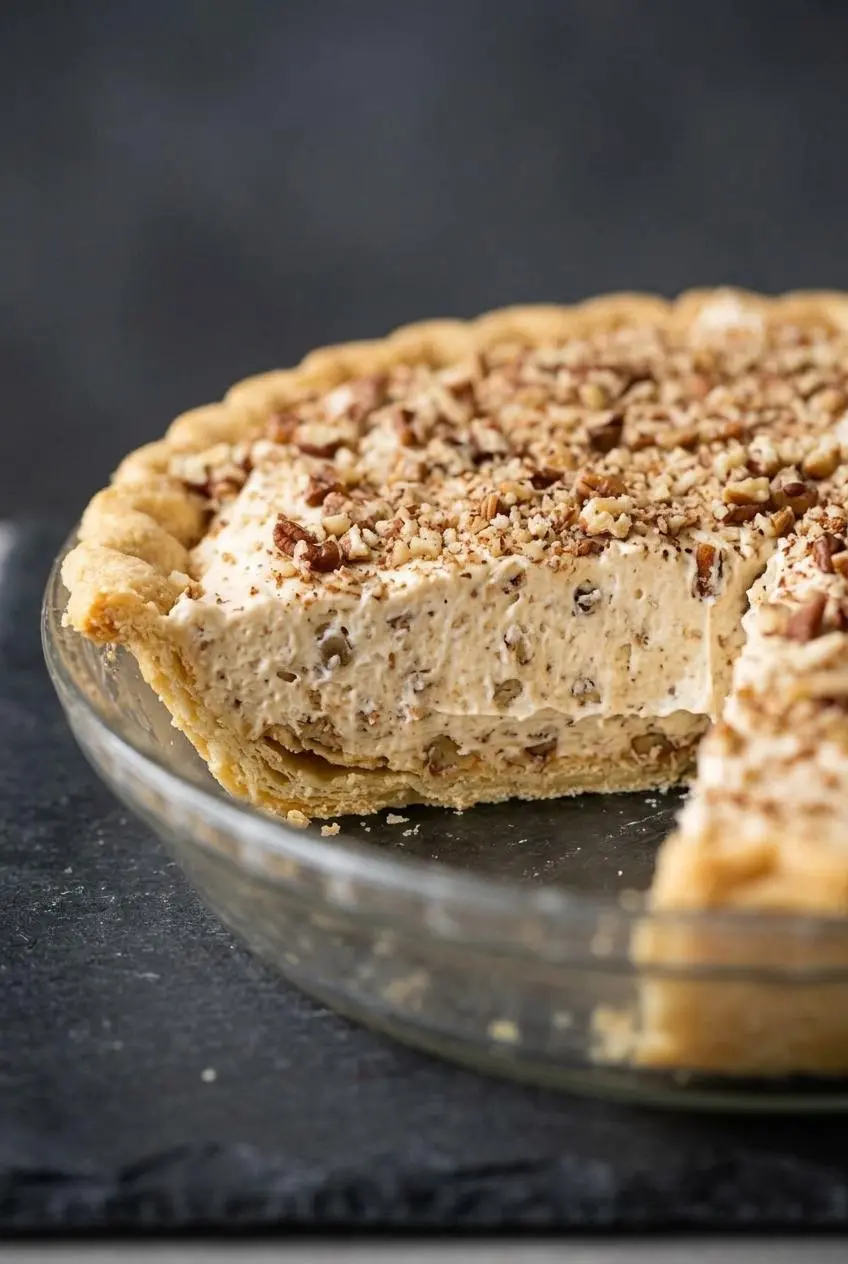
The most useful checks happen before assembly: smooth cream cheese, firm whipped cream, and a cold crust. Chilling firms the dairy filling, but it can’t rebuild whipped cream that has already collapsed.
How to Toast Pecans for Maximum Flavor
Toasting is optional, but it gives the nuts a deeper aroma that stands out against cold dairy, much like the nutty flavor in butter pecan ice cream.
- Oven option: Spread the chopped pecans on a baking sheet and toast at 350°F for 5 to 6 minutes, watching closely for a fragrant aroma and slightly deeper color.
- Skillet option: Stir the nuts frequently in a dry skillet over moderate heat, removing them when they smell toasted rather than waiting for dark edges.
- Salted vanilla option: For an optional flavor accent, toss the toasted nuts off the heat with a little flaky salt and a small splash of vanilla, then spread them out to cool.
- Cooling matters: Transfer hot nuts off the baking sheet or skillet and let them cool completely before folding them into the filling.
Finely chopped nuts can scorch quickly, especially the tiny pieces around the edges. Let aroma guide you alongside color. Burnt pecans will taste bitter even after you mix them into sweet cream.
Common Filling Problems and How to Fix Them
- Lumpy cream cheese mixture: Cold cream cheese resists blending, and syrup can loosen the mixture around the lumps without smoothing them out. Check softness before mixing and finish beating this mixture smooth before adding whipped cream.
- Grainy whipped cream: Beating beyond stiff peaks can make the cream separate. Stop the mixer as soon as the peaks hold; if the cream has visibly split, start that component again rather than folding it into the pie.
- Soupy filling near the crust: A warm shell or warm toasted nuts can melt and deflate the cream. Cool both fully before assembly; extra mixing won’t fix heat-damaged mousse.
- Soft slices: Under-whipped cream, heavy-handed folding, or insufficient chilling can weaken the set. Use the full minimum chilling time and, for a firmer cut, choose the overnight chill.
- Dense filling: Mixing vigorously after adding whipped cream knocks out its air. Use broad, gentle spatula strokes and stop once everything is combined.
Easy Variations and Substitutions
Crust changes are the easiest way to adapt this pie without changing the maple cream cheese filling. Filling shortcuts need more care because their sweetness and structure differ.
No-Bake Graham Cracker Crust Swap
- Flaky pastry: Choose the blind-baked shell for a buttery, crisp contrast to the mousse; it must bake and cool before filling.
- Graham cracker crust: Use a ready-to-fill 9-inch shell for a completely no-bake option, or prepare a homemade version following its own directions and cool it if baked.
- Shortbread crust: A prepared shortbread shell adds a buttery cookie flavor; check whether it requires baking before use.
- Oatmeal-pecan crumb crust: This gives a nuttier, more textured foundation, but follow a dedicated crust formula rather than adding loose oats to a prepared shell.
Keep the filling level with what the shell can comfortably hold. Packaged crumb crusts vary in depth, even when their stated diameter matches.
Whipped Topping and Pudding Mix Shortcuts
Prepared whipped topping can replace the sweetened whipped cream component. Omit the heavy cream and powdered sugar for that variation, and fold the topping in gently. Follow a substitution formula suited to your topping rather than assuming every product has the same sweetness or volume.
Instant cheesecake pudding appears in some shortcut versions, but it changes the filling’s liquid needs, sweetness, and texture. Use a pudding-based pie formula if you prefer that style. Don’t whisk dry pudding indiscriminately into this filling or rely on it to make a dairy pie suitable for warm-weather display.
Cream Cheese Style vs Old-Fashioned Custard Style
This version gets its body from cream cheese and whipped cream, with no cooked custard. Some Amish or old-fashioned versions use cooked brown sugar or caramel custard with egg yolks, which creates a denser, silkier filling and requires a different method.
A traditional pecan pie follows another path, baking an egg-and-syrup filling around the nuts. Choose this chilled cream cheese style when you want maple flavor and pecan crunch in a fluffy rather than gooey filling.
Serving Suggestions
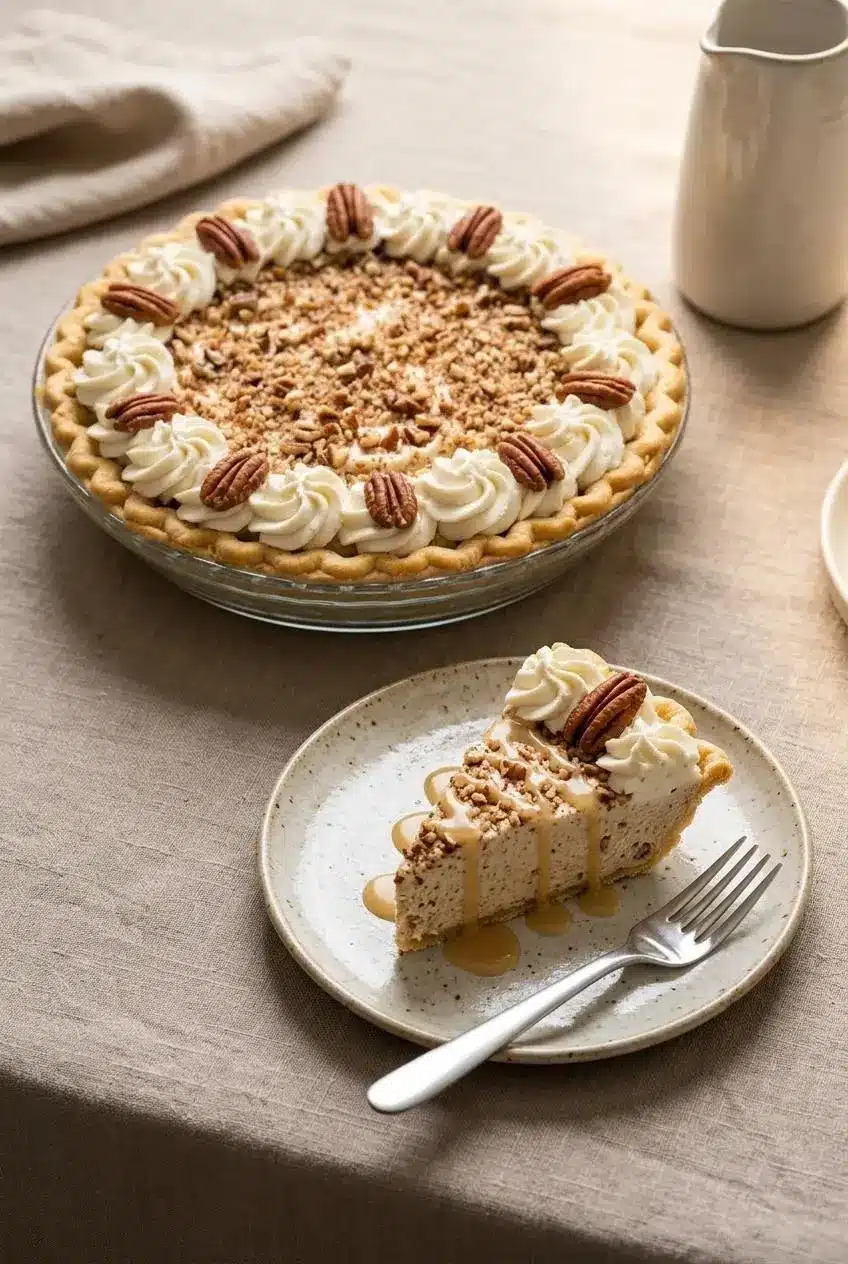
Serve the pie chilled so the filling stays firm and the contrast between cream and nuts comes through clearly.
- For a finished border: Pipe rosettes of homemade whipped cream around the edge and add whole toasted pecan halves.
- For a sauce finish: Drizzle individual slices with caramel or chocolate sauce just before serving, letting heated sauce cool until barely warm first.
- For a holiday meal: Serve after roast turkey or glazed ham when a cool, airy dessert sounds more appealing than a dense baked filling.
For tidy portions, cut through the topping and filling first, then press through the crust. Slide a pie server fully underneath each wedge so the pastry supports the soft center.
Make-Ahead and Storage Tips
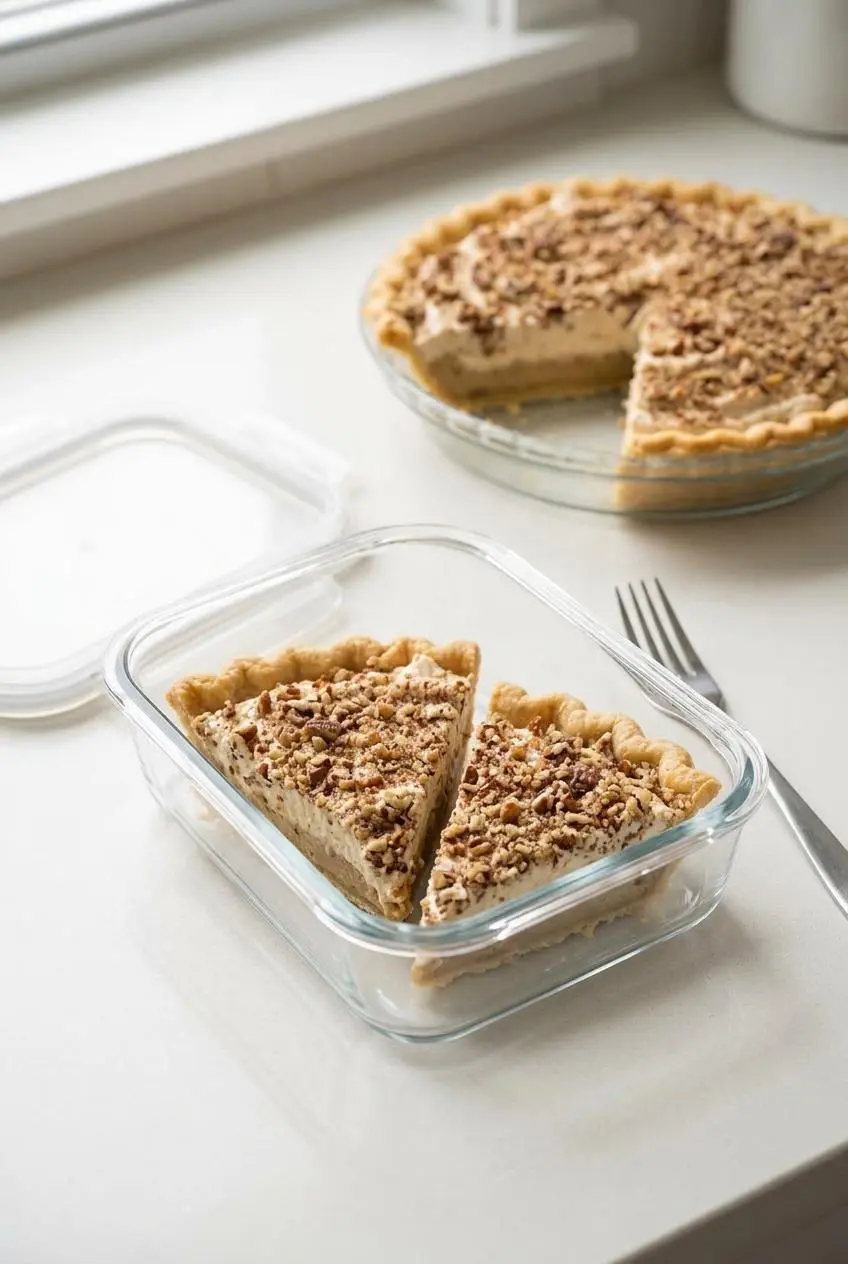
The overnight chilling option makes this pie convenient for a planned meal. Assemble it before the serving day, refrigerate it, and leave decorative whipped cream or sauce until serving.
Once the surface has firmed, cover the pie without pressing the covering into the filling. A domed pie container protects the topping; a clean, covered container works well for individual slices.
Keep leftovers refrigerated and return the pie to the refrigerator promptly after cutting portions. Bring out what you plan to serve rather than leaving the whole pie on a buffet. This filling contains uncooked whipped cream, so storage limits for baked egg-based pecan pies aren’t a direct match.
Store sauce separately and add it at the table. That protects the pecan topping from excess moisture and keeps the presentation tidy.
Conclusion
This cool maple-pecan dessert delivers a fluffy filling and plenty of crunch with about 15 minutes of active preparation once the shell is ready. Softened cream cheese and a completely cooled crust make the biggest difference.
Keep the nuts plain or try the optional toasted salted vanilla finish. Give the pie its full chill, then enjoy the contrast of creamy filling and crisp pastry.
Frequently Asked Questions
What Is a Pecan Cream Pie?
It’s a chilled pie with chopped pecans folded into cream cheese, whipped cream, brown sugar, and maple syrup. Unlike a baked egg-and-corn-syrup filling, this version has an airy, mousse-like texture.
Can I Use a Graham Cracker Crust Instead of a Baked Pie Crust?
Yes, a ready-to-fill 9-inch graham cracker crust works well. A homemade shell also works; follow its preparation directions and cool it completely if baking is required.
Can I Use Cool Whip Instead of Heavy Whipping Cream?
Yes, prepared whipped topping is an optional alternative to the sweetened whipped cream component. Omit the heavy cream and powdered sugar for that variation, and follow a topping-based formula for the appropriate amount.
How Should I Store Leftover Pie?
Keep the pie covered in the refrigerator, protecting the surface from contact with the covering. Store slices in a covered container and add sauces only when serving.
Why Is My Pecan Cream Pie Filling Runny or Not Setting?
The cream may not have reached stiff peaks, or vigorous mixing may have deflated it. A warm crust or warm pecans can soften the filling before it chills. Allow the full chilling period before slicing; chilling longer helps a properly mixed filling firm up.
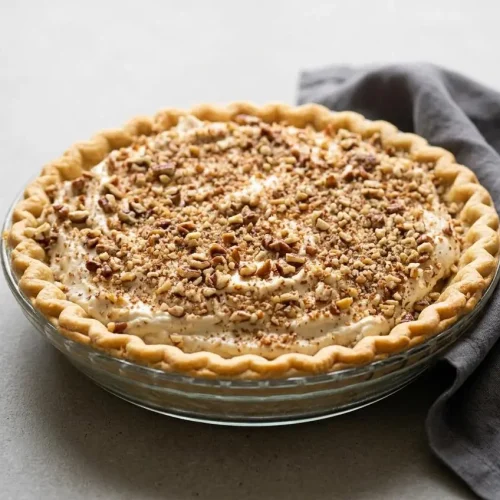
Pecan Cream Pie

Equipment
- Electric Mixer
Ingredients
- 1 9-inch pie crust unbaked
- 1 cup heavy whipping cream
- 1/3 cup powdered sugar
- 2 (8 oz) packages cream cheese softened
- 1/2 cup light brown sugar
- 1/4 cup pure maple syrup
- 1 1/2 cups pecans finely chopped
- 1/4 teaspoon salt
Instructions
- Bake the empty 9-inch pastry shell using the package’s blind-baking directions, then set it aside to cool fully. The shell should look baked through and feel cool across the bottom before any cream filling touches it.
- Whip the cold heavy cream with the powdered sugar in a small bowl using an electric mixer. Stop at stiff peaks, when a lifted beater leaves a defined point that stands upright rather than folding over.
- Work the softened cream cheese, brown sugar, salt, and maple syrup together with the mixer in a separate large bowl, scraping the sides as needed. A properly blended mixture resembles glossy frosting, with no visible cream cheese lumps.
- Use a rubber spatula to incorporate the whipped cream into the cream cheese mixture, then distribute 1 cup of the chopped pecans with gentle strokes. Cut down through the center and sweep around the bowl, turning it as you fold, until the filling looks evenly combined but still airy.
- Fill the cold pastry shell, level the surface, scatter the remaining pecans over it, and refrigerate for at least 2 hours or up to overnight. The filling should feel firm enough to hold a cut edge rather than slump into the space left by a slice.
- Cut the chilled pie with a sharp knife, wiping the blade between cuts. Each portion should show a fluffy interior dotted with pecans above the pastry shell.