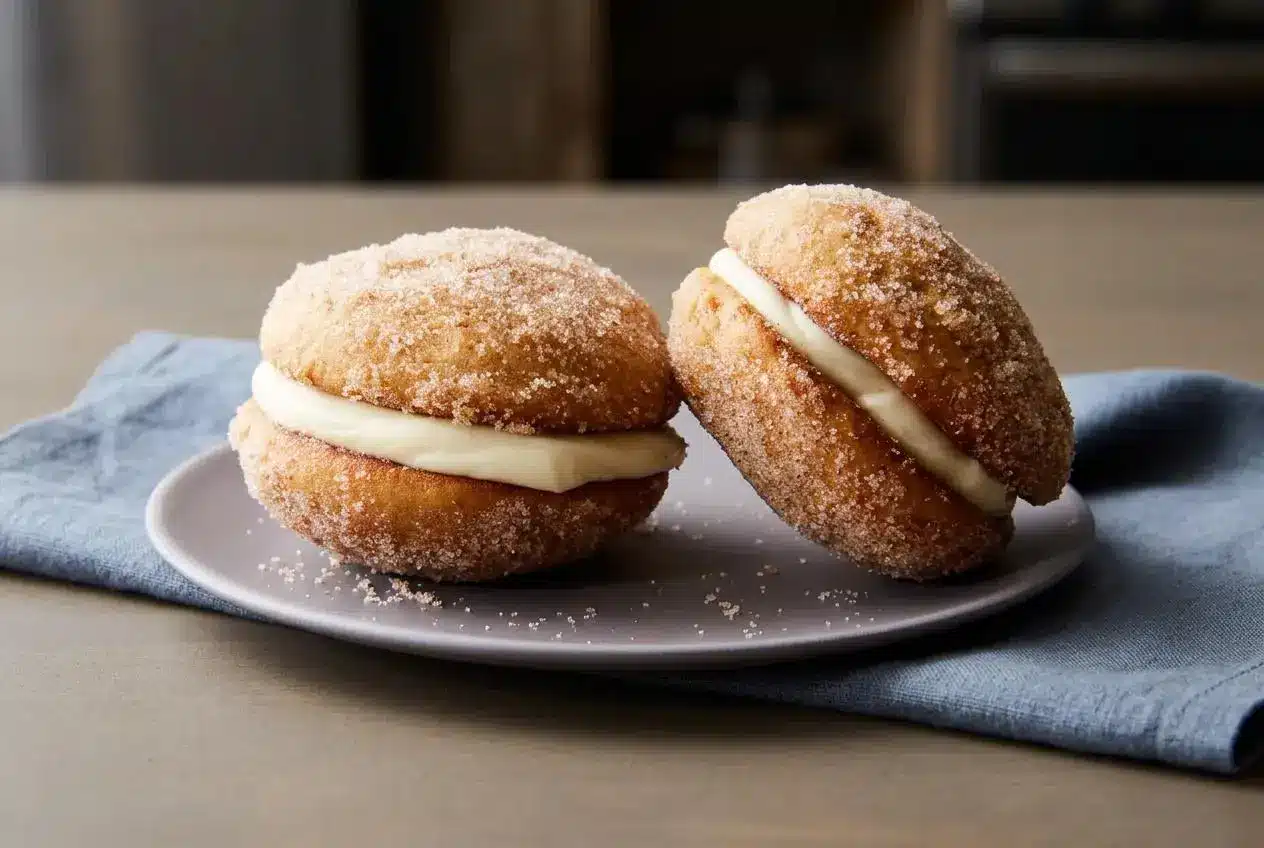
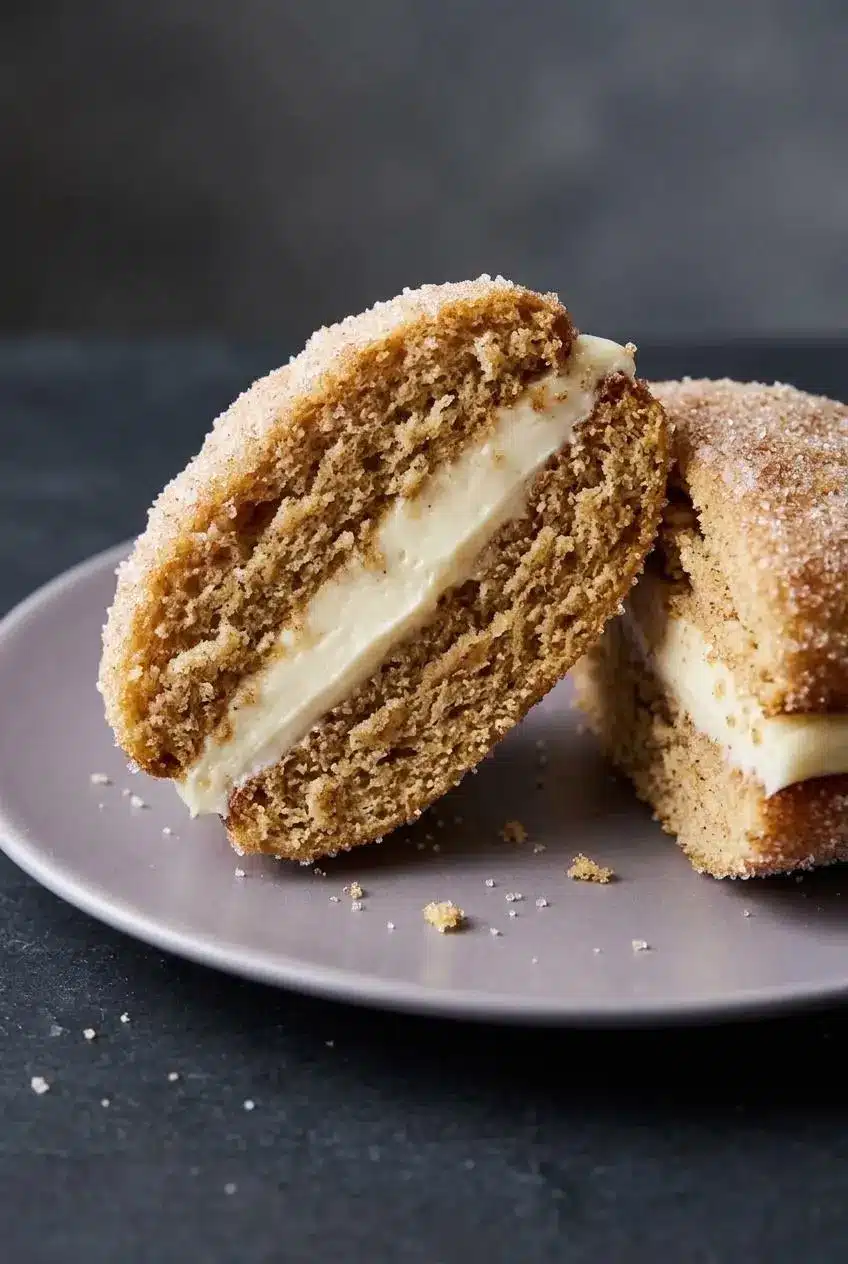
Apple cider whoopie pies are soft, spiced cake sandwiches made with reduced apple cider and apple butter, finished with cinnamon sugar and tangy cream cheese frosting. They deliver orchard doughnut flavor in pillow-soft domes, with a creamy center that balances the sweet coating.
Simmering cider fills the kitchen with a warm apple aroma before the cakes even reach the oven. These apple cider whoopie pies build that flavor in two layers: concentrated cider brings brightness, while apple butter adds richness without pouring extra liquid into the batter.
The cakes bake up tender rather than chewy, and their lightly sugared tops give each bite a little sparkle. The filling stays pleasantly tangy, with enough sweetness to round out the spices. The cider reduction makes the difference.
Set out the butter and cream cheese before starting, but keep the melted coating butter separate from the butter for the batter.
Key Ingredients and Why Each One Matters
Cider and apple butter build the fruit flavor, brown sugar keeps the crumb moist, and flour, egg, and leaveners give the cakes structure. Warm spices add aroma, while the cream cheese filling balances the cinnamon-sugar coating.
FOR THE CAKES
- 1 ¼ cup/300 milliliters apple cider
- 1 ½ cups/190 grams all-purpose flour
- 1 teaspoon baking powder
- ½ teaspoon kosher salt
- ¼ teaspoon baking soda
- 1 ½ teaspoons ground cinnamon
- ½ teaspoon ground ginger
- ½ teaspoon freshly ground nutmeg
- 6 tablespoons/85 grams unsalted butter, at room temperature, plus 2 tablespoons melted
- ½ cup/110 grams packed dark brown sugar
- 1 large egg
- ¼ cup/60 milliliters apple butter
- ¼ cup/50 grams granulated sugar
FOR THE FILLING
- 6 ounces/170 grams cream cheese, at room temperature
- 3 tablespoons unsalted butter, at room temperature
- 3 tablespoons confectioners’ sugar
- ½ teaspoon pure vanilla extract
Reduced cider provides concentrated apple flavor. Boiling the cider down to ¼ cup/60 milliliters removes water while concentrating its fruit sugars and tartness. Using the full amount unreduced would change the batter’s moisture balance. Cool the reduction completely before mixing it with the creamed butter.
Apple butter supplies a second layer of apple. Its thick texture contributes moisture and concentrated fruit flavor without the looseness of cider. The spice level varies by brand, so choose one whose flavor you enjoy straight from the jar.
Dark brown sugar brings moisture and molasses depth. Alongside the fruit’s acidity, its rich flavor makes the cakes taste rounded rather than simply sweet. Cinnamon, ginger, and freshly grated nutmeg complement that depth; reserving some cinnamon for the coating keeps the aroma right at the surface.
Flour, egg, and leaveners support the domes. The flour forms the cake structure, the egg helps bind the mixture, and baking powder and baking soda provide lift. Mix gently once the flour goes in so the crumb stays tender.
Softened dairy matters for texture. Room-temperature butter can trap air during creaming, but butter that feels greasy or nearly melted cannot do that job as well. An egg that isn’t refrigerator-cold also blends more readily. For the filling, softened cream cheese and butter beat together smoothly before the sugar goes in.
The filling deliberately stays tangy. Its modest confectioners’ sugar balances the sweet shells rather than competing with them. Vanilla softens the sharpness without covering up the apple.
I prefer cooling the reduced cider in a shallow heatproof dish in the refrigerator so the center cools along with the edges.
How to Make Apple Cider Whoopie Pies Step by Step
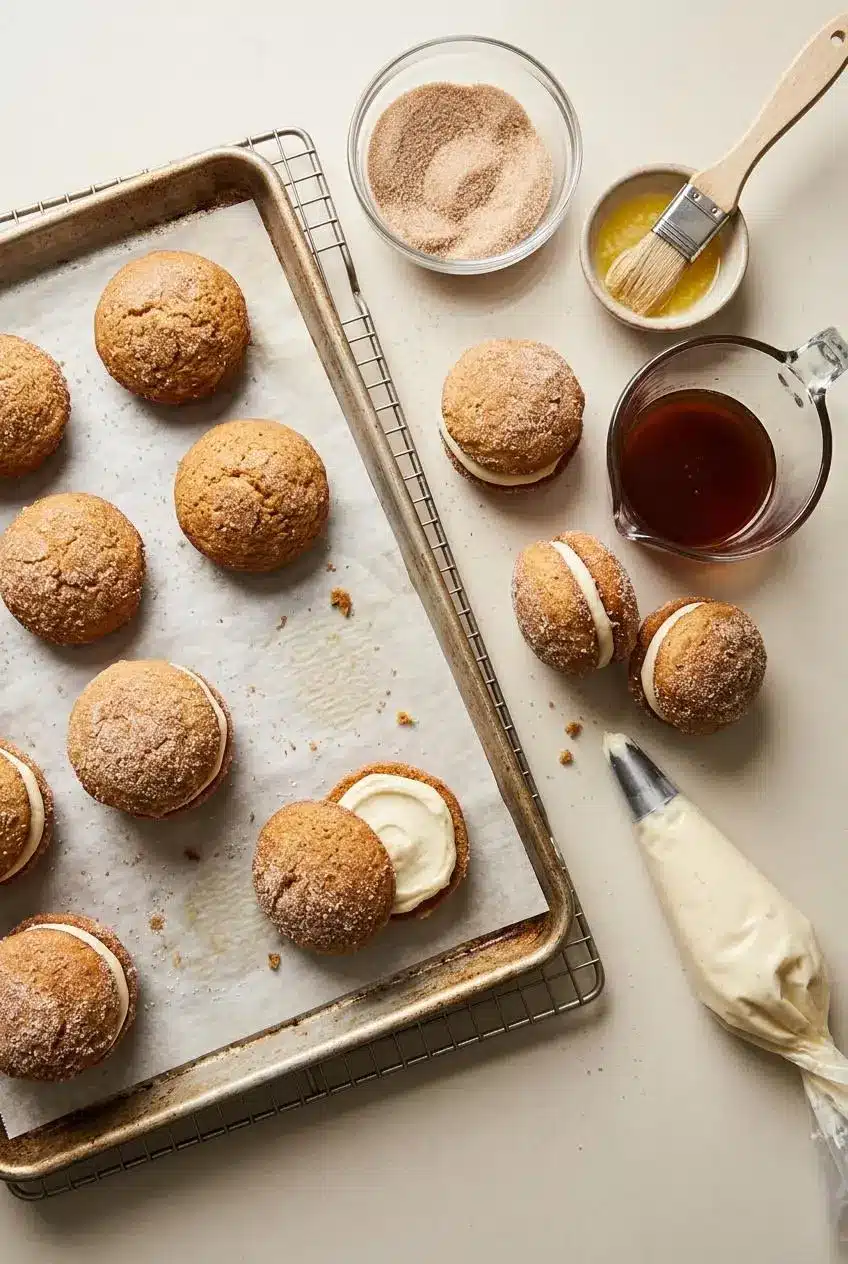
Follow the cooling cues as closely as the baking time: warm cider can loosen the batter, and warm cakes can soften the filling.
Reducing and Cooling the Apple Cider
- Preheat the oven to 350°F, then boil the cider in a small saucepan over medium-high heat for about 16 to 18 minutes, stopping when ¼ cup/60 milliliters remains and cooling it completely before mixing.
The liquid becomes darker and more syrupy as it concentrates, with larger, slower-breaking bubbles near the end.
Watch especially closely during the final stretch. Color alone won’t tell you the volume, since ciders start at different shades of amber. Carefully check the reduction in a heatproof measuring cup if needed, and return it to the pan only if it needs further reducing.
The refrigerator can speed cooling while you prepare the other ingredients. The syrup should no longer feel warm when it meets the butter.
Mixing the Spiced Apple Batter
- Whisk the flour, baking powder, salt, baking soda, 1 teaspoon cinnamon, ginger, and nutmeg in a medium bowl; separately, use an electric mixer on medium to cream the softened butter and brown sugar in a large bowl for about 3 minutes, scrape the bowl, beat in the egg, apple butter, and cooled cider, then mix in the dry ingredients just until incorporated.
The creamed butter should look fluffy, and any slight separation after the fruit additions should disappear into a thick batter once the flour blends in.
A slightly curdled appearance at the wet stage isn’t a reason to restart. Fruit liquid can disrupt the butter mixture temporarily. Don’t keep beating in an effort to make it perfectly smooth before adding the flour, and scrape the bottom of the bowl so no dry pockets remain.
Baking and Coating in Cinnamon Sugar
- Place 2-tablespoon portions on two parchment-lined rimmed baking sheets with about 1 ½ inches between them, bake for 12 to 14 minutes while rotating the sheets halfway through, move the sheets to racks, combine the remaining ½ teaspoon cinnamon with the granulated sugar, then lightly brush the warm tops with melted butter and gently turn the cakes in the sugar before cooling completely.
Pull the cakes when their domes look set and spring back lightly under a fingertip, before the edges become dark or dry.
A spring-loaded scoop helps you portion matching halves without repeatedly handling the batter. For the coating, aim for a thin sheen of butter, not a soaked surface. Handle the warm cakes gently, since their tender crumb firms as they cool.
Whipping the Cream Cheese Filling and Assembling
- Use an electric mixer on medium to blend the cream cheese and butter in a large bowl until smooth, incorporate the confectioners’ sugar and vanilla, then spread about 2 tablespoons of filling over the flat bottoms of half the completely cooled cakes and cover with the remaining halves.
The filling should look creamy and hold its shape between the cakes without melting at the edges.
Match similar-sized cakes before filling them. Spread toward the edges without pressing hard, then settle the top cake into place with a light touch.
Expert Baking Tips and Troubleshooting
Most texture problems begin with ingredient temperature, uneven portions, or taking the cider reduction too far.
- Flat, greasy cakes: Warm cider can melt the butter and undo the air incorporated during creaming. Cool it completely, use softened rather than oily butter, and check that your baking powder is fresh.
- Uneven sandwich halves: Use level 2-tablespoon scoops rather than estimating with a spoon. Consistent portions encourage even baking and make pairing the cakes much easier, though portioning alone won’t correct loose batter.
- Scorched cider: The shallow layer of concentrated syrup can darken quickly near the end. Check its volume rather than waiting for an extremely thick texture; a cooled reduction will feel thicker than a boiling one. Start again if it smells burnt.
- Pasty cinnamon sugar: Too much melted butter dissolves the coating into wet patches. Brush lightly while the cakes are warm, then turn them gently through the sugar instead of pressing them down.
- Lumpy filling: Cold cream cheese resists blending. Let it soften before beating, and smooth out the cream cheese and butter before adding the confectioners’ sugar so lumps don’t drag across the cake bottoms.
- Runny filling: First check that the cakes are completely cool. If the filling itself has become overly soft, chill it until spreadable rather than immediately adding more sugar and changing its tangy balance.
The same attention to matched portions is useful for other cake sandwiches, including German chocolate whoopie pies.
Flavorful Filling Variations and Ingredient Swaps
The cream cheese filling gives the clearest contrast to the sugared cakes, but these optional changes offer different flavors and textures.
Brown Butter Cider Frosting
For a nuttier filling, brown the butter intended for the frosting until the milk solids turn golden and smell toasted. Transfer it out of the hot pan, then let it return to a soft, solid consistency before beating it with the cream cheese.
A little additional reduced cider can echo the cakes’ apple flavor. Add it sparingly so the frosting stays spreadable, and keep the full measured reduction reserved for the cake batter.
Spiced Marshmallow Fluff Filling
For a sweeter, fluffier center, use a marshmallow-creme filling with beaten butter and confectioners’ sugar. A pinch of ginger and a little reduced cider complement the spices in the cakes.
This option loses the tang of cream cheese, so expect a more candy-sweet sandwich. Add cider cautiously to avoid loosening the filling.
Applesauce Swap and Mini Whoopie Pies
- Unsweetened applesauce: Replace the apple butter with an equal amount if needed. Applesauce is generally looser and less concentrated, so expect a lighter apple flavor and potentially softer batter.
- Mini portions: Use a 1-tablespoon scoop for smaller sandwiches, and begin checking for set, springy domes earlier than you would for the full-size cakes.
For another way to use leftover applesauce, try Amish applesauce cake.
Make-Ahead, Storage, and Serving Suggestions
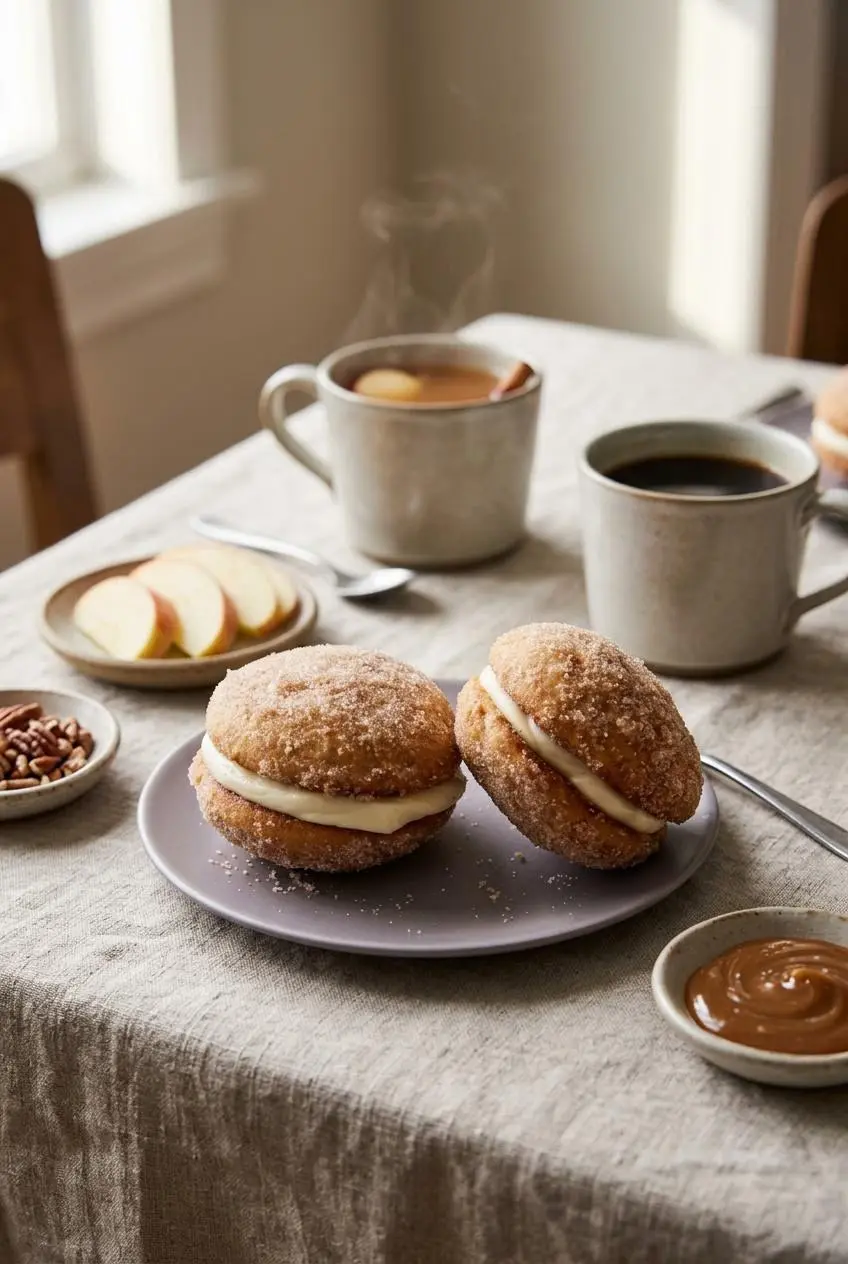
Protect the tender cakes from drying out, but expect the cinnamon-sugar coating to soften somewhat during storage.
To separate the preparation into stages, reduce the cider first, cool it completely, and keep it covered in the refrigerator until you’re ready to mix. Check the measured amount before using it, and don’t warm it back up for the batter.
Because the filling contains cream cheese, keep assembled pies refrigerated. Wrap each completely cooled sandwich individually, or arrange them in a single layer in an airtight container. Avoid packing warm cakes, which can trap condensation and make the sugar coating wet. Individual wrapping also prevents the cakes from sticking to each other.
Let refrigerated pies soften briefly before serving, just until the crumb feels tender and the filling turns creamy rather than firm. Bring out what you plan to serve and keep the rest chilled.
Pair them with warm mulled apple cider or dark roast coffee. For a fall dessert platter, add crisp apple slices, toasted pecans, and salted caramel dip in separate dishes so they don’t moisten the sugared cakes. Bite-sized mini apple pies offer a contrasting pastry texture alongside the soft sandwiches.
Conclusion
These soft cinnamon-sugar cakes bring together concentrated apple flavor, warm spice, and a tangy cream cheese center. Reducing the cider properly and cooling it completely sets the batter up for success.
Enjoy the cream cheese version first, then try the optional brown butter filling for a toastier finish. Keep the cakes tender, the coating light, and the filling cool until serving.
Frequently Asked Questions
Can I Substitute Applesauce for Apple Butter in Apple Cider Whoopie Pies?
Yes, use an equal amount of unsweetened applesauce. Apple butter gives thicker batter and a deeper, more concentrated apple flavor; applesauce can make the mixture looser.
How Do I Store Apple Cider Whoopie Pies So They Do Not Get Soggy?
Cool the cakes completely before filling and wrapping them. Refrigerate individually wrapped pies or keep them in a single layer in an airtight container; some softening of the sugar coating is normal.
Can I Make the Reduced Apple Cider Ahead of Time?
Yes, reduce it separately, cool it completely, and keep it covered in the refrigerator until mixing. Check the measured portion before adding it, and use it cool rather than warm.
Why Did My Whoopie Pies Bake Flat Instead of Dome-Shaped?
Warm cider or overly soft butter can cause spreading by weakening the creamed mixture. Check the baking powder and stop mixing once the flour incorporates; extra beating won’t restore lift.
Why Did My Whoopie Pie Batter Curdle When I Added the Cider?
A slightly separated appearance is normal when fruit liquid meets the butter mixture. Add the dry ingredients as directed and mix gently; the batter should come together without prolonged beating.
What Is the Difference Between Apple Cider and Apple Juice for Baking?
In the US, apple cider usually means cloudy, unfiltered apple juice with a fuller fruit flavor, while clear apple juice has been filtered. Sweetness and tartness vary by apple blend, and either product may be pasteurized; choose flavorful apple cider for this recipe.

Apple Cider Whoopie Pies

Equipment
- Small saucepan
- Electric Mixer
- 2 tablespoon cookie scoop
- 2 parchment-lined rimmed baking sheets
Ingredients
FOR THE CAKES
- 1 ¼ cup apple cider /300 milliliters
- 1 ½ cups all-purpose flour /190 grams
- 1 teaspoon baking powder
- ½ teaspoon kosher salt
- ¼ teaspoon baking soda
- 1 ½ teaspoons ground cinnamon
- ½ teaspoon ground ginger
- ½ teaspoon freshly ground nutmeg
- 6 tablespoons unsalted butter /85 grams, at room temperature, plus 2 tablespoons melted
- ½ cup packed dark brown sugar /110 grams
- 1 large egg
- ¼ cup apple butter /60 milliliters
- ¼ cup granulated sugar /50 grams
FOR THE FILLING
- 6 ounces cream cheese /170 grams, at room temperature
- 3 tablespoons unsalted butter at room temperature
- 3 tablespoons confectioners’ sugar
- ½ teaspoon pure vanilla extract
Instructions
Reducing and Cooling the Apple Cider
- Preheat the oven to 350°F, then boil the cider in a small saucepan over medium-high heat for about 16 to 18 minutes, stopping when ¼ cup/60 milliliters remains and cooling it completely before mixing. The liquid becomes darker and more syrupy as it concentrates, with larger, slower-breaking bubbles near the end.
Mixing the Spiced Apple Batter
- Whisk the flour, baking powder, salt, baking soda, 1 teaspoon cinnamon, ginger, and nutmeg in a medium bowl; separately, use an electric mixer on medium to cream the softened butter and brown sugar in a large bowl for about 3 minutes, scrape the bowl, beat in the egg, apple butter, and cooled cider, then mix in the dry ingredients just until incorporated. The creamed butter should look fluffy, and any slight separation after the fruit additions should disappear into a thick batter once the flour blends in.
Baking and Coating in Cinnamon Sugar
- Place 2-tablespoon portions on two parchment-lined rimmed baking sheets with about 1 ½ inches between them, bake for 12 to 14 minutes while rotating the sheets halfway through, move the sheets to racks, combine the remaining ½ teaspoon cinnamon with the granulated sugar, then lightly brush the warm tops with melted butter and gently turn the cakes in the sugar before cooling completely. Pull the cakes when their domes look set and spring back lightly under a fingertip, before the edges become dark or dry.
Whipping the Cream Cheese Filling and Assembling
- Use an electric mixer on medium to blend the cream cheese and butter in a large bowl until smooth, incorporate the confectioners’ sugar and vanilla, then spread about 2 tablespoons of filling over the flat bottoms of half the completely cooled cakes and cover with the remaining halves. The filling should look creamy and hold its shape between the cakes without melting at the edges.