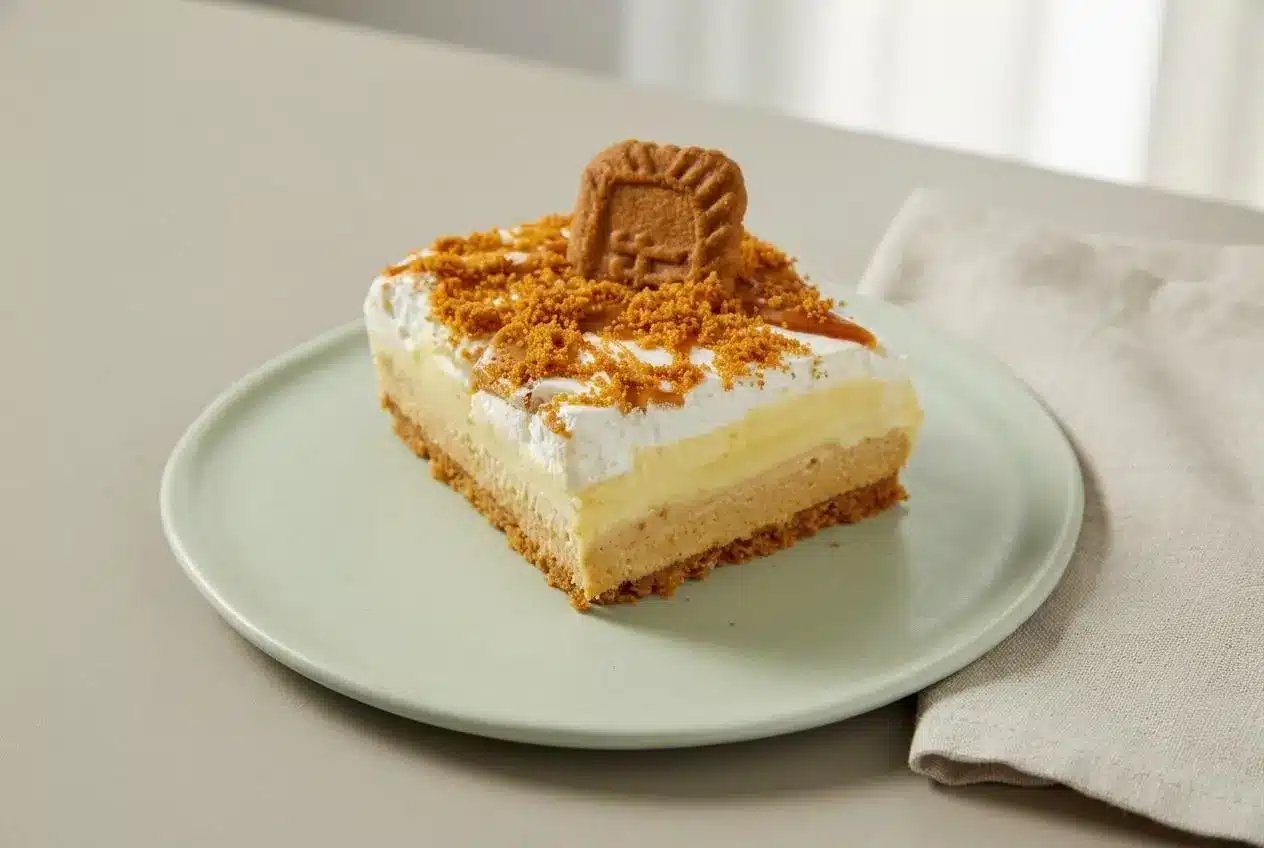
Biscoff lasagna is a no-bake dessert with a spiced cookie crust, cookie butter cheesecake filling, vanilla pudding, and fluffy whipped topping. Refrigerate the assembled layers until firm, then cut into cold squares with a creamy center and caramel-spiced flavor.
Caramelized cookies and cloud-like cream give this biscoff lasagna its dessert-table appeal. The pressed crumb crust supports distinct layers of tangy cream cheese, rich vanilla pudding, and airy topping, so each forkful brings a different texture.
You don’t need an oven, but you do need patience while the fillings set. Careful spreading and thorough chilling help the squares hold their shape. The pale caramel filling is worth the wait.
Soften the cream cheese before mixing, but keep the milk and heavy cream cold for the pudding layer.
The Flavor Profile of Speculoos Cookie Butter
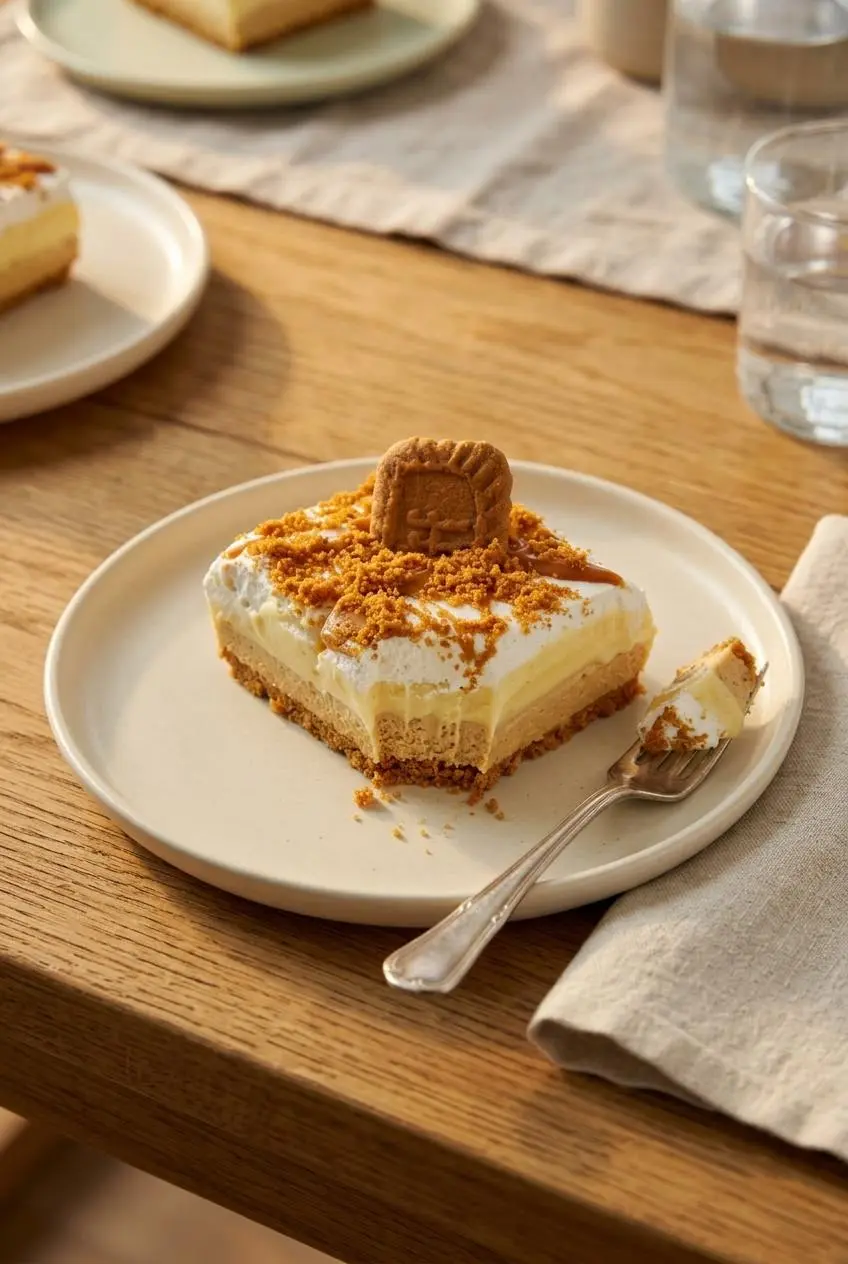
Biscoff tastes like caramelized sugar and cinnamon, with a toasted-cookie finish that carries through the creamy layers. Cookie butter turns that same flavor into a smooth spread, reinforcing the crust without adding another crunchy layer.
The vanilla pudding rounds out the spice rather than competing with it. Cream cheese adds a gentle tang, while whipped topping lightens the texture. Together, they keep the cookie butter from dominating every bite, although this is still a rich, sweet dessert.
If you enjoy baking spiced biscuits, try homemade Biscoff cookies as a separate baking project. For the measurements below, use the specified package of cookies so the crumb quantity stays consistent.
Essential Ingredients and Their Roles
Cookies supply spice and crunch, butter binds the crust, and confectioners’ sugar sweetens the layers. Cream cheese gives the filling body and tang; cookie spread adds caramel flavor, while pudding, cream, milk, and whipped topping create contrasting creamy textures.
Crust
- 1 package (8.8 ounces) Biscoff cookies
- 1/4 cup confectioners’ sugar
- 8 tablespoons butter, melted
Filling
- 1 package (8 ounces) cream cheese, softened
- 1-1/4 cups Biscoff creamy cookie spread, divided
- 1/2 cup confectioners’ sugar
- 12 ounces frozen whipped topping (about 4-1/2 cups), thawed, divided
- 2 (3.4 ounces each) instant vanilla pudding mixes
- 2 cups heavy whipping cream
- 1 cup cold whole milk
- Biscoff cookies, for decoration
Use instant vanilla pudding, not cook-and-serve pudding. Instant pudding thickens during mixing without cooking, which makes this layering method possible. Add the dry mix directly to the dairy specified here rather than preparing it using the package directions.
Heavy whipping cream and whole milk serve different purposes: cream adds richness and body, while milk supplies liquid for the pudding mixture. Keep that balance intact for the intended texture. The pudding’s thickening ingredients also matter, so fat content alone doesn’t determine whether it sets.
I prefer cream cheese that yields easily under a spatula before beating; a firm center is a warning that lumps may remain.
Crust Foundation and Butter Ratios
Fine crumbs compact more evenly than chunky cookie pieces. After adding butter, the mixture should resemble damp sand and hold together when pressed, rather than scatter across the bowl.
Measure the requested 2 cups of crumbs before mixing. Adding every crumb from the package would change the balance between cookies and butter, potentially leaving the crust dry and loose. Keep any extra crumbs for the garnish.
Butter coats and binds the crumbs, then firms as the dessert chills. You don’t need to bake this crust or add more butter when it looks sandy. Pressing the mixture evenly gives it the support it needs.
Balancing Sweetness with Tangy Cream Fillings
Softened cream cheese blends smoothly with cookie butter and confectioners’ sugar, producing a pale caramel filling with a mild tang. Cold cream cheese tends to break into small lumps instead of blending evenly.
Use regular cream cheese for the intended body and richness. Fold in the thawed whipped topping after beating the cheese mixture smooth; its airy texture softens the dense filling without requiring more liquid.
The remaining whipped topping forms the lighter upper layer. It provides a gentle finish above the richer cheesecake and pudding, so avoid stirring all of it into the cream cheese mixture.
Step-by-Step Biscoff Lasagna Assembly
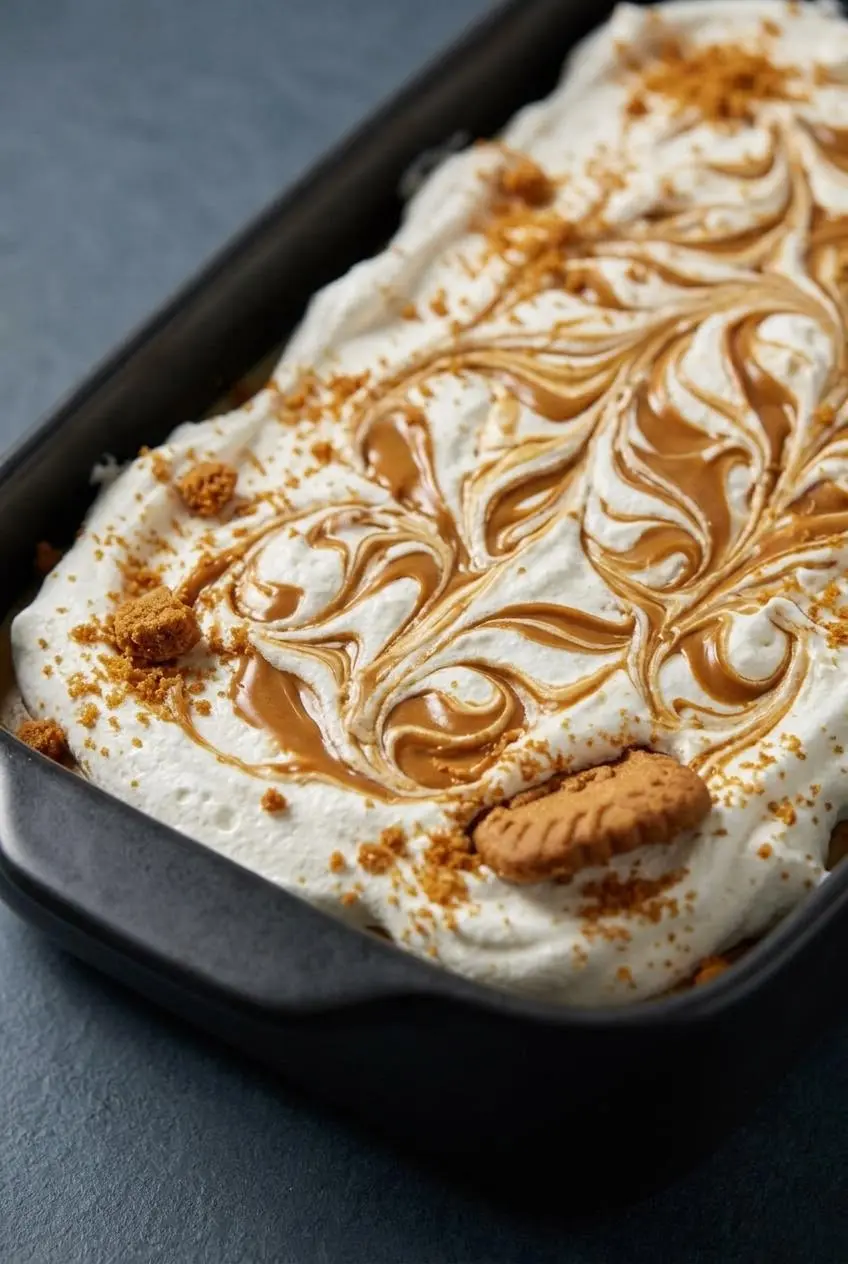
Build the layers in order and spread each one gently before adding the next. Plan on about 55 minutes of preparation, plus at least 4 hours of chilling. This recipe makes 12 servings in a parchment-lined 13×9-inch pan.
- Reserve six cookies, process the others into fine crumbs, then measure 2 cups into a large bowl and mix with the crust confectioners’ sugar and melted butter before packing into a parchment-lined 13×9-inch pan.
The moistened crumbs should hold together under pressure and form an even foundation. - Beat the softened cream cheese, filling confectioners’ sugar, and 1 cup cookie spread with a stand mixer fitted with a paddle attachment, then fold in 1-1/2 cups thawed whipped topping and spread over the crust.
The filling should look uniformly pale caramel, without visible cream cheese lumps. - Combine the dry instant pudding mixes with the cold whole milk and heavy whipping cream in another bowl, whisk or beat with an electric hand mixer for 2 to 3 minutes, then distribute over the cheesecake filling.
A smooth, thick mixture that leaves trails behind the whisk is ready to spread. - Cover the pudding with the remaining whipped topping, about 3 cups, then microwave the remaining 1/4 cup cookie spread in a small glass measuring cup for 30 seconds, cool slightly, drizzle over the surface, and draw a sharp knife tip through it.
The spread should flow in thin ribbons without melting the topping beneath it. - Cover the assembled pan and refrigerate for at least 4 hours, or overnight for a firmer set.
The fillings should hold their layers rather than flow when you begin cutting. - Finish with the extra cookie crumbs and, if desired, reserved whole cookies, then cut into squares.
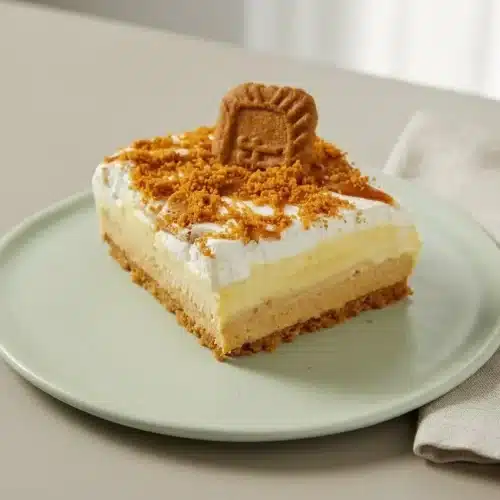
Each portion should show a compact crust beneath distinct creamy layers.
Pressing the Buttered Cookie Crust
Line the pan before adding the crumbs so the dessert doesn’t cling directly to the bottom. Spread the mixture into the corners first, then compact the center with the flat bottom of a measuring cup or glass.
Use steady pressure rather than pounding. Aim for the same thickness across the pan; a mound in the middle creates uneven portions and leaves the edges with less support. Stop once the surface feels compact and level.
Layering Cream Cheese and Vanilla Custard
Place dollops of cheesecake filling across the crust instead of depositing everything in one spot. Join the dollops with short, gentle spatula strokes. This reduces the distance you need to drag the filling and helps prevent loose crumbs from lifting.
Use the same approach for the thickened vanilla pudding. Let the spatula move across the surface rather than digging downward into the cheesecake. If you see caramel-colored streaks in the pudding, lighten your pressure.
The pudding should thicken in the mixing bowl before it reaches the pan. Don’t pour a thin mixture over the cheesecake and expect refrigeration to solve every texture problem. Check the pudding type and dairy measurements first.
Creating the Decorative Cookie Butter Swirl
Warm cookie butter needs to be pourable, not hot. After microwaving, stir it and allow the heat to ease before drizzling. Hot spread can soften the whipped topping and turn distinct ribbons into sunken patches.
Drizzle across several parts of the surface, then pull the knife tip lightly through the ribbons. Keep the tip near the top rather than reaching into the pudding. A few deliberate passes create clearer marbling than repeated stirring.
Troubleshooting Layer Stability and Common Mistakes
Most texture problems begin before chilling, so check the mixture at each stage instead of waiting until serving time.
- Loose or thin pudding: Check that you used instant pudding and the listed cream and whole milk quantities, not the package preparation amounts. Extra liquid or dairy substitutions can change the texture; beat for the specified time before layering.
- Lumpy cheesecake filling: Cream cheese that still feels firm won’t blend evenly. Let it soften before mixing, and beat the cheese, sugar, and cookie spread smooth before folding in the topping.
- Crust that falls apart: Coarse crumbs, an inaccurate crumb measurement, or light pressing can weaken the foundation. Grind finely, measure before mixing, and compact the crumbs into the corners as well as the center.
- Mixed or streaked layers: Heavy spatula pressure can pull one filling into another. Distribute dollops across the pan and spread only the surface of the layer you’re adding.
- Squares that slump: The dessert may need more chilling. Keep it covered and refrigerated until the center holds its structure; cutting early won’t give the fillings time to firm.
- Drizzle that sinks: Overheated cookie spread can melt the topping. Let it cool slightly while retaining its pourable consistency, then use a light drizzle.
For cleaner cuts, warm a sharp chef’s knife with hot water, dry it, and cut straight down through the layers. Wipe the blade between cuts so pudding and crumbs don’t smear onto the next square.
Keep the specified pan size for the intended layer thickness. A smaller dish makes deeper layers and can complicate setting and portioning; don’t squeeze the full mixture into an 8×8-inch pan.
Flavor Variations and Add-Ins
Keep optional additions separate from the measured recipe above. Choose a flavor or texture contrast rather than adding several rich toppings at once.
- Flaky sea salt: An optional light sprinkle in the crust adds contrast to the cookie butter’s sweetness.
- Salted caramel: Use it as an optional topping drizzle for a sweeter finish with a salty edge, allowing any warmed sauce to cool before applying.
- Dark chocolate: A chocolate topping brings bitterness that balances the caramel-spiced filling.
If the cream cheese and cookie butter combination is your favorite part, a Biscoff cheesecake recipe offers another way to enjoy that tangy, spiced pairing.
Express Layering Method with Whole Biscuits
A whole-cookie version is a different dessert style, closer to an icebox cake than a pressed-crust lasagna. Arrange whole speculoos cookies in close rows and alternate them with whipped cream and cookie butter.
Cover and refrigerate until the cookies soften from contact with the cream. Expect a cake-like biscuit layer rather than the compact, buttery crumb foundation in the main recipe.
This shortcut can also suit a pudding-free dessert, but it isn’t a direct substitution within the measured instructions. Omitting the pudding layer changes the dessert’s height, texture, and portions.
White Chocolate Crunch and Chocolate Ganache Swirls
For an optional interior crunch, coat crushed cookies with melted white chocolate and let the coating firm before scattering the pieces between the cheesecake and pudding layers. Keep the pieces small enough to cut through comfortably.
Alternatively, replace the decorative cookie butter drizzle with cooled, pourable dark chocolate ganache. Its deeper flavor provides contrast without changing the fillings beneath it.
Both additions change the texture: white chocolate creates firmer bites, while ganache adds a richer finish. Avoid applying either while hot, since the creamy layers underneath are delicate.
Storage and Make-Ahead Instructions
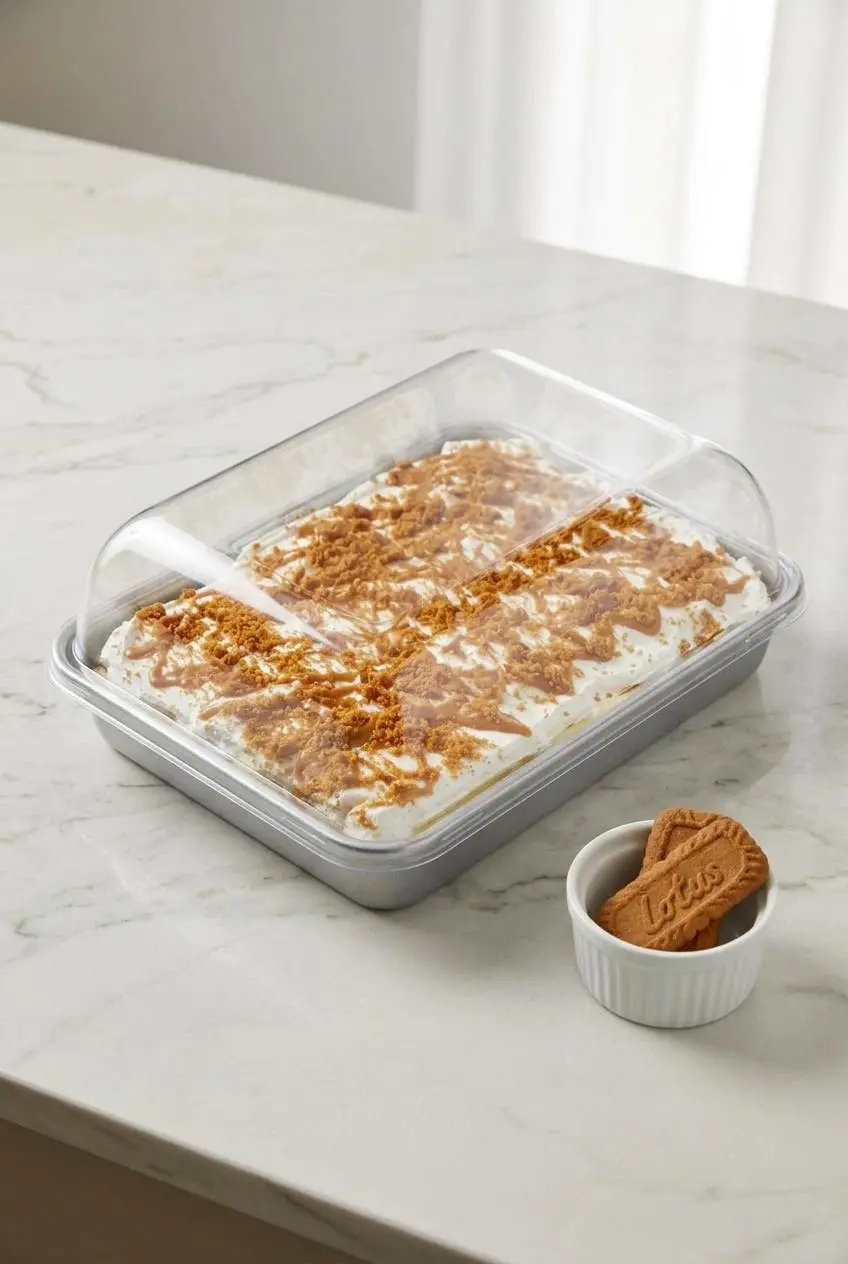
Keep the assembled dessert covered and refrigerated, and add the decorative cookies close to serving so they retain more crunch. A snug cover also protects the topping from drying out and picking up refrigerator odors.
For make-ahead preparation, assemble the layers and use the overnight chilling option in the method. Leave the cookie garnish separate until you’re ready to cut. This gives the fillings time to firm without softening the decorative cookies unnecessarily.
- Protect the surface: Use a lid or secure covering that doesn’t press into the whipped topping and smear the swirl.
- Store portions neatly: Place leftover squares in a covered container without stacking them directly on one another.
- Serve cold: Bring out the portions you need and keep the remaining dessert chilled.
Conclusion
Biscoff lasagna brings spiced cookies, tangy cheesecake filling, vanilla pudding, and fluffy topping together in one creamy square. Even layers and a well-compacted crust make the contrast especially satisfying.
Give the fillings their full chilling time, then use a clean, warm blade for serving. Save the cookie garnish for the finish, and enjoy those caramel-spiced layers cold.
Frequently Asked Questions
How Long Does Biscoff Lasagna Need to Chill Before Slicing?
Refrigerate it for at least 4 hours before cutting. Overnight chilling gives the fillings more time to firm and generally produces cleaner squares. Check that the center holds its layers before serving.
Should Biscoff Lasagna Be Kept Refrigerated?
Yes, keep the assembled dessert covered and chilled. Refrigeration is the preparation method described here for setting the creamy layers. Keep decorative cookies separate until serving for better crunch.
What Causes the Pudding or Cheesecake Layers to Stay Soft?
Extra liquid, dairy substitutions, the wrong pudding type, or insufficient chilling can change the texture. Use the specified heavy whipping cream and whole milk with instant pudding rather than following the pudding package’s liquid amounts. Soften cream cheese for smooth mixing, then refrigerate the assembled dessert until the fillings hold their shape.
Can Whole Biscoff Cookies Be Used Instead of a Crushed Crust?
Yes, as an optional icebox-style variation rather than an identical replacement for the crumb crust. Arrange whole cookies in close rows; moisture from the cream layers softens them into a cake-like foundation. Expect a softer biscuit texture, not the compact butter-bound crust in the main recipe.
Biscoff Lasagna

Equipment
- Food processor
- 13×9-inch pan
- stand mixer fitted with paddle attachment
- Mixing Bowls
- electric hand mixer or whisk
Ingredients
Crust
- 1 package Biscoff cookies (8.8 ounces)
- 1/4 cup confectioners’ sugar
- 8 tablespoons butter melted
Filling
- 1 package cream cheese (8 ounces), softened
- 1-1/4 cups Biscoff creamy cookie spread divided
- 1/2 cup confectioners’ sugar
- 12 ounces frozen whipped topping (about 4-1/2 cups), thawed, divided
- 2 packages instant vanilla pudding mixes (3.4 ounces each)
- 2 cups heavy whipping cream
- 1 cup cold whole milk
- Biscoff cookies for decoration
Instructions
- Reserve six cookies, process the others into fine crumbs, then measure 2 cups into a large bowl and mix with the crust confectioners’ sugar and melted butter before packing into a parchment-lined 13×9-inch pan. The moistened crumbs should hold together under pressure and form an even foundation.
- Beat the softened cream cheese, filling confectioners’ sugar, and 1 cup cookie spread with a stand mixer fitted with a paddle attachment, then fold in 1-1/2 cups thawed whipped topping and spread over the crust. The filling should look uniformly pale caramel, without visible cream cheese lumps.
- Combine the dry instant pudding mixes with the cold whole milk and heavy whipping cream in another bowl, whisk or beat with an electric hand mixer for 2 to 3 minutes, then distribute over the cheesecake filling. A smooth, thick mixture that leaves trails behind the whisk is ready to spread.
- Cover the pudding with the remaining whipped topping, about 3 cups, then microwave the remaining 1/4 cup cookie spread in a small glass measuring cup for 30 seconds, cool slightly, drizzle over the surface, and draw a sharp knife tip through it. The spread should flow in thin ribbons without melting the topping beneath it.
- Cover the assembled pan and refrigerate for at least 4 hours, or overnight for a firmer set. The fillings should hold their layers rather than flow when you begin cutting.
- Finish with the extra cookie crumbs and, if desired, reserved whole cookies, then cut into squares. Each portion should show a compact crust beneath distinct creamy layers.