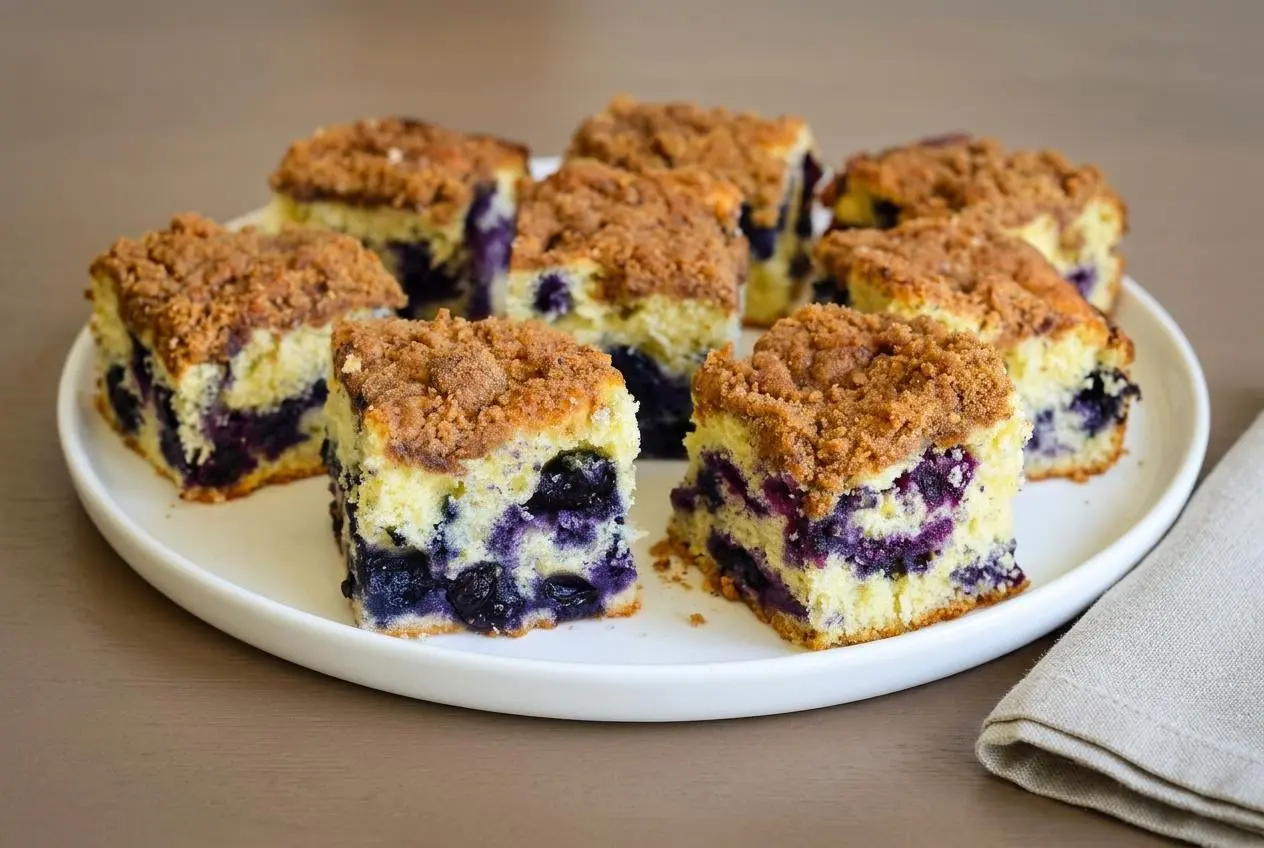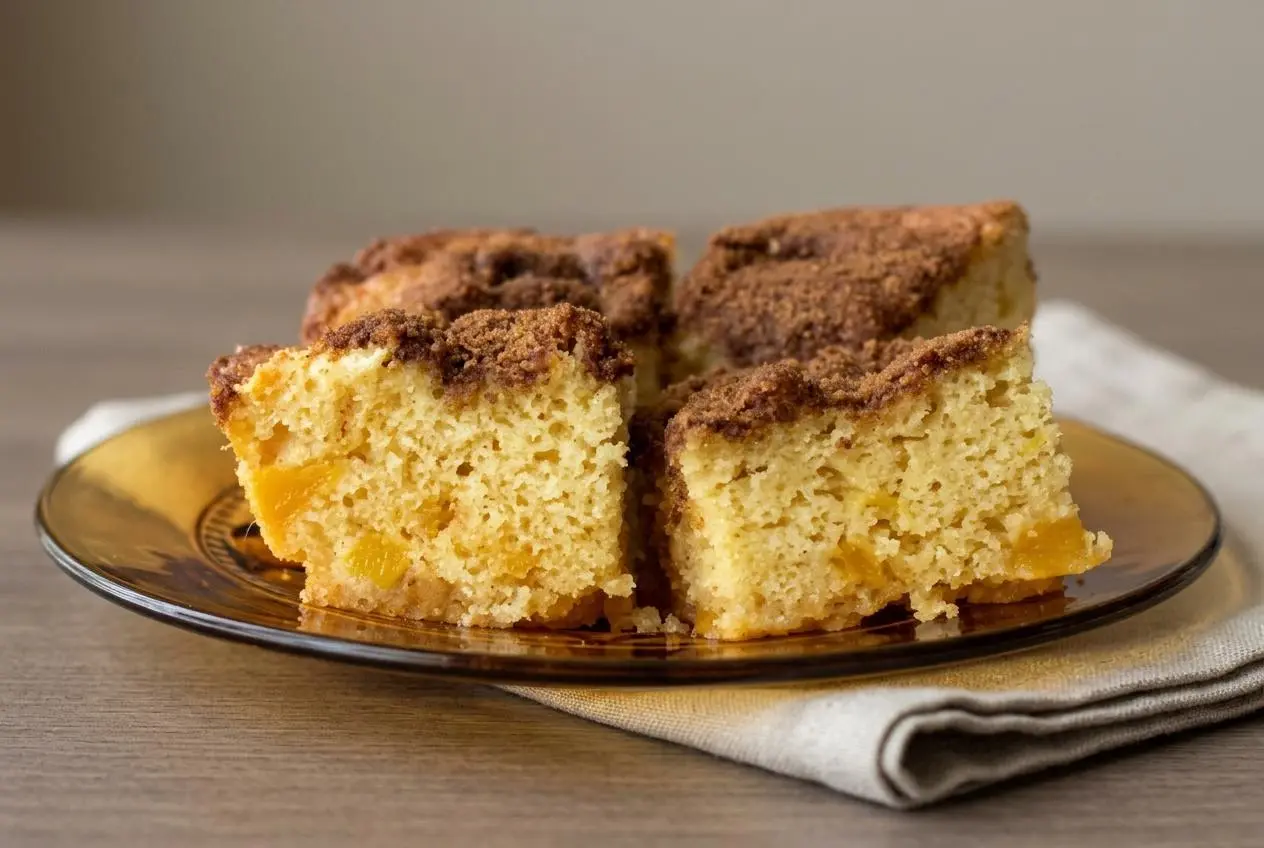
Mango coffee cake is a moist buttermilk snack cake packed with fresh mango and finished with cinnamon sugar, made for serving alongside coffee or tea.
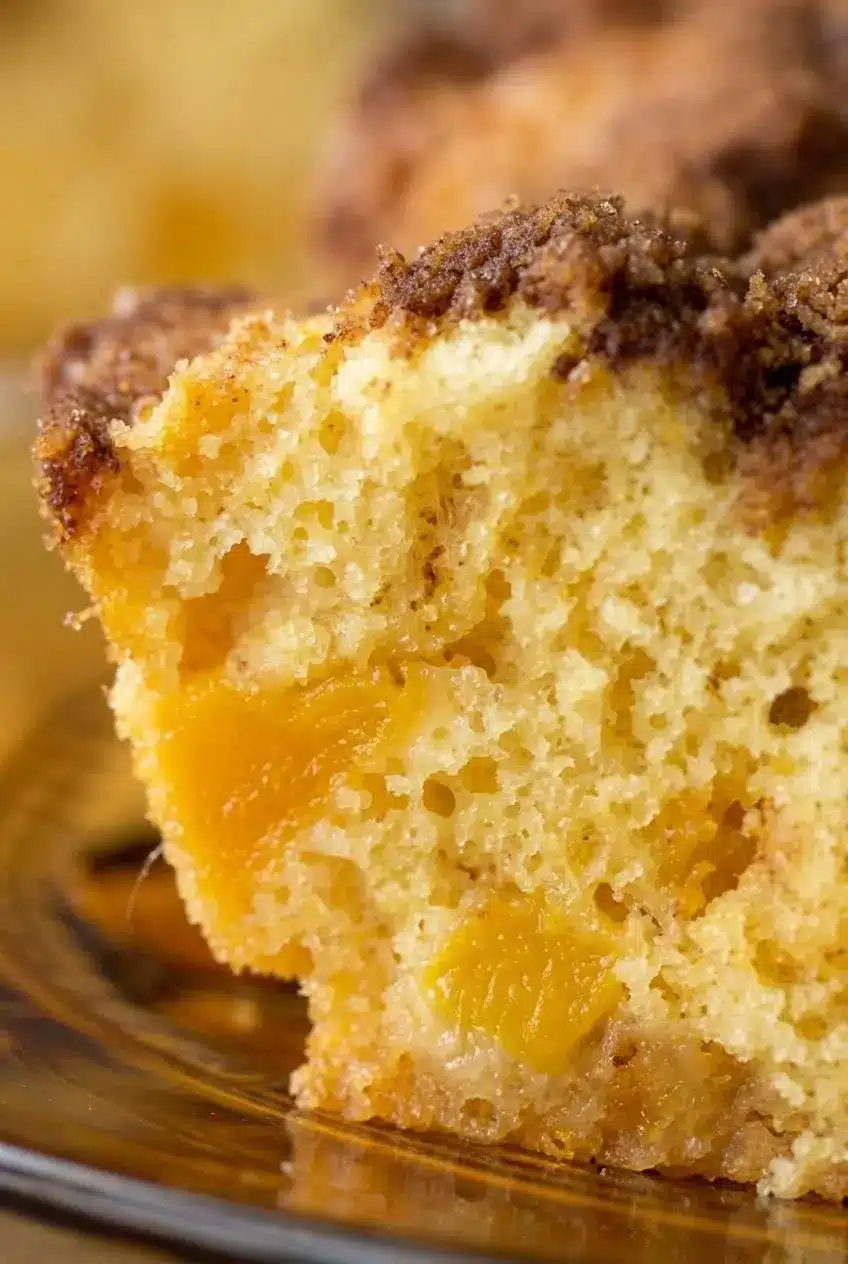
This Mango Coffee Cake bakes into a tender, buttery crumb with soft pockets of sweet fruit and a warmly spiced top. It is an easy way to turn ripe mangoes into a brunch-worthy bake.
Warm cinnamon and bubbling mango around the edges make the kitchen smell especially inviting. The key is keeping the fruit juicy, not watery.
Choose mangoes that give slightly when pressed but still feel firm enough to dice cleanly.
What Makes Mango Coffee Cake So Special
Traditional coffee cake does not contain brewed coffee. It gets its name from the classic habit of serving a lightly sweet, unfrosted cake with hot coffee or tea.
Here, floral mango sweetness brightens the rich crumb while nutmeg and cinnamon add warmth. The result lands between a breakfast pastry and a simple fruit dessert. If you enjoy the tangy crumb of a sour cream coffee cake, this mango version offers a sunnier fruit flavor with the same cozy coffee-break appeal.
Essential Ingredients and Their Roles
Flour gives the cake structure, butter creates richness, buttermilk keeps the crumb tender, and mango brings juicy sweetness balanced by nutmeg and cinnamon.
- 2 cups all-purpose flour
- 2 cups sugar
- 1 1/2 teaspoons baking powder
- 1/2 teaspoon baking soda
- 1/2 teaspoon ground nutmeg
- 1/4 teaspoon salt
- 1/2 cup butter
- 1 cup buttermilk
- 2 eggs, beaten
- 1 teaspoon vanilla
- 3 cups coarsely chopped seeded and peeled mangoes (about 3)
- 1/3 cup sugar
- 3/4 teaspoon ground cinnamon
- sweetened whipped cream (optional) or Cool Whip (optional)
The baking powder and baking soda lift the cake, while buttermilk adds tang and helps keep the crumb soft. Cold butter is cut into the flour rather than melted, creating small rich pockets instead of an oily batter. The cinnamon sugar forms a crackly, fragrant top.
I prefer Kent or Honey mangoes for baking because their flesh stays in distinct, sweet cubes instead of dissolving into the batter.
Selecting and Prepping Fresh Mangoes
Use firm-ripe mangoes that yield slightly under gentle thumb pressure without feeling squishy, bruised, or wet near the stem. Peel and seed them, then chop them coarsely so they remain recognizable after baking.
Very soft mangoes can release enough juice to create damp pockets and a weak bottom crust. If the cut fruit looks glossy or damp, blot it gently before adding it to the batter.
The Power of Buttermilk and Cold Butter
Buttermilk’s acidity softens the flour’s gluten development and reacts with baking soda for a lighter crumb. Add it only after the butter has been worked into the dry mixture, then stir gently.
Keep the butter cold and cut it in with a pastry blender or two knives. Stop when the mixture looks like coarse crumbs with some pea-size buttery bits still visible. Those bits help the cake bake up tender rather than heavy.
How to Make Mango Coffee Cake Step by Step
- Heat the oven to 350°F and grease a 13x9x2-inch baking pan. Combine the flour, 2 cups sugar, baking powder, baking soda, nutmeg, and salt, then cut in the butter with a pastry blender or two knives.
The dry mixture should look crumbly and uneven, with no large solid pieces of butter remaining. - Whisk the buttermilk, beaten eggs, and vanilla in a separate bowl, then stir them into the flour mixture just until the flour disappears. Fold in the mangoes, spread the thick batter in the pan, and sprinkle the surface with the combined 1/3 cup sugar and cinnamon.
The batter should be thick and spoonable, holding soft mounds instead of pouring like pancake batter. - Bake for 40 to 45 minutes, then let the cake cool slightly before serving with sweetened whipped cream or Cool Whip, if desired. Check the center with a wooden pick, avoiding a molten mango pocket when testing.
The top should be deep golden brown, the fruit may bubble lightly near the rim, and the pick should come out clean from the cake crumb.
Troubleshooting Common Baking Issues
Fresh fruit cakes need a little moisture management. These quick fixes address the problems most likely to affect the crumb and cinnamon sugar crust.
- Gummy center: Overripe mangoes or overmixed batter can make the middle dense and wet. Use firm-ripe fruit, pat it dry if needed, and stop stirring as soon as the dry flour disappears.
- Too-dark topping: The sugar can brown before the center finishes. Keep the pan on the middle rack and loosely cover the top with foil if it is coloring too quickly.
- Wet toothpick: A pick that hits mango may come out shiny even when the cake is done. Test a nearby patch of cake crumb, where it should come out clean.
Preventing Sunken Fruit and Gummy Layers
Mango pieces are heavy and become even heavier as they release juice in the oven. Before folding them in, lightly toss the chopped fruit with a tablespoon of dry flour taken from the measured flour. The light coating helps the thick batter grip the fruit more evenly.
Fold with a broad, gentle motion rather than beating the mixture. Some mango will naturally settle lower in the cake, but dry fruit and a thick batter prevent a soggy fruit layer from collecting at the bottom.
Managing Pan Size and Baking Times
The 13×9-inch pan spreads the batter into a shallower layer, which supports the stated 40 to 45 minute bake. A deeper 9-inch square pan holds the batter more thickly and may need an additional 10 to 15 minutes. Watch the surface color and use the wooden-pick test in a crumb-only spot rather than relying on the clock alone.
Storage and Reheating Tips
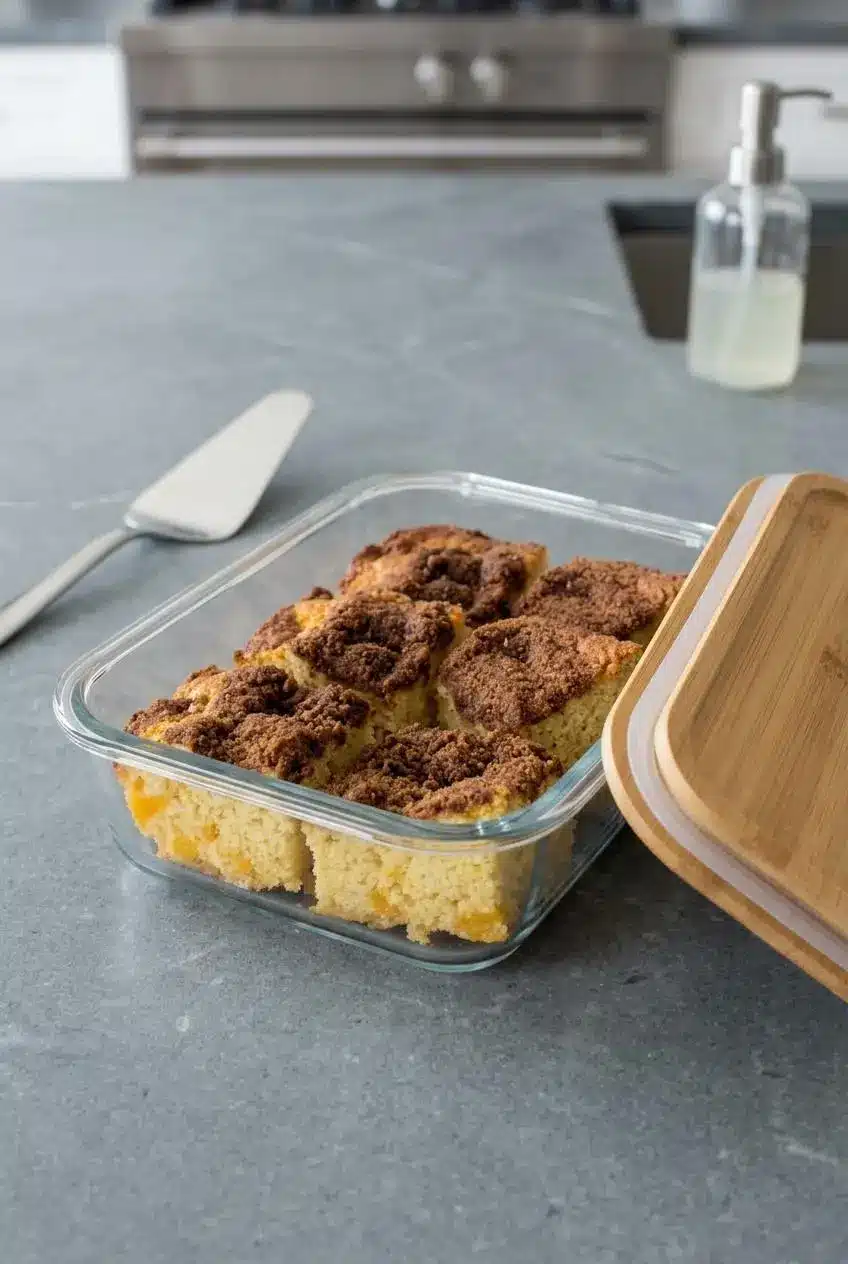
Cool the cake completely before covering it so trapped steam does not soften the cinnamon sugar top. Because it contains fresh mango, refrigerate it after cooling rather than leaving it at room temperature. Fresh-fruit baked goods should be refrigerated within two hours after baking.
Store slices in a tightly covered container and warm a portion in a toaster oven when you want to revive the crisp edge of the topping. A microwave will warm the cake, but it will soften the sugary crust.
For easier serving later, cut the cooled cake into portions before storing. Keep whipped cream separate until serving so the surface stays pleasantly crisp.
Delicious Variations and Serving Suggestions
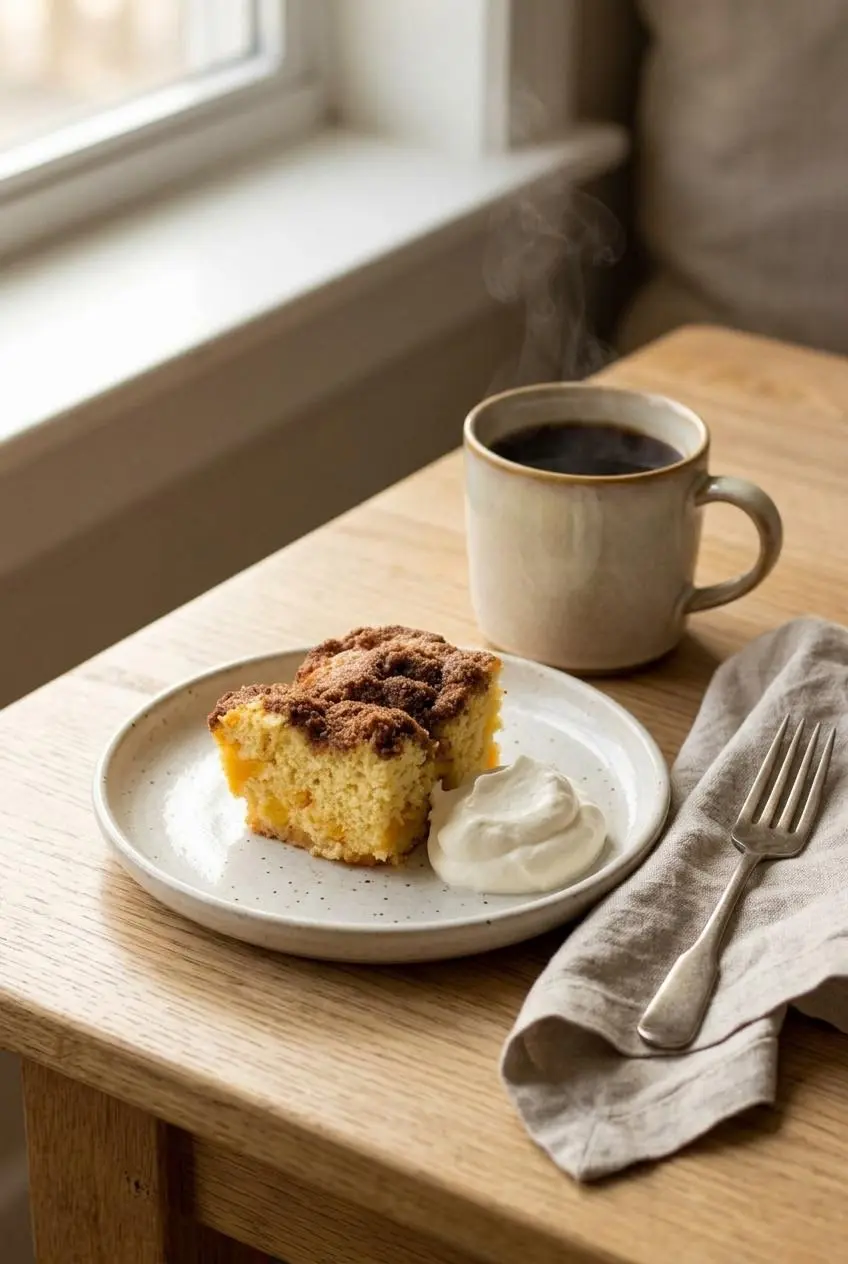
Serve a warm square with hot dark roast coffee, whose bitter roasted notes balance the sweet mango, or choose spiced black tea for a gentler pairing. Chilled slices are also lovely with a spoonful of unsweetened Greek yogurt or the optional whipped topping.
Bakery-Style Pecan Streusel
For a thicker crumb topping, replace the cinnamon sugar with an optional mix of cold diced butter, brown sugar, a sprinkle of flour, and chopped pecans. Rub the mixture together until it forms uneven clumps, then scatter it over the batter. Keep the butter chilled so the crumbs bake into distinct crunchy clusters.
For another spiced fruit-and-crumb direction, an apple crisp coffee cake offers a useful contrast in topping style.
Mango Blueberry Combination
For a two-fruit version, replace 1 cup of mango with fresh blueberries. Keep the berries whole and dry before folding them in, which limits juice streaking and preserves their tart pop against the sweet mango.
If berry-filled coffee cakes are a favorite, this blueberry coffee cake is another cozy option for brunch.
Cardamom Lime Spiced Cake
Add finely grated lime zest and a pinch of ground cardamom to the dry flour mixture for an optional tropical fragrance. Lime gives the fruit a brighter edge, while cardamom adds a floral warmth that complements the nutmeg without taking over the cake.
Conclusion
This cake brings together buttery buttermilk crumb, sweet mango, nutmeg, and a crisp cinnamon sugar finish in one comforting pan. Firm fruit and gentle mixing make the biggest difference to the final texture.
Serve it slightly warm with coffee, or enjoy a chilled slice with a dollop of cream when you want something sweet but unfussy.
Frequently Asked Questions
Can I Use Frozen Mango for This Coffee Cake?
Yes. Thaw frozen mango completely in a colander, drain away excess juice, and pat the pieces dry before measuring and folding them into the batter. This keeps extra moisture from loosening the crumb.
Why Did My Mango Pieces Sink to the Bottom of the Cake?
Mango chunks are heavy and release juice as they heat. Tossing them with a tablespoon of flour before folding helps the thick batter hold them in place more evenly.
Does Mango Coffee Cake Contain Real Coffee?
No. American-style coffee cake usually contains no brewed coffee or espresso powder. The name refers to the tradition of serving it with morning coffee or afternoon tea.
How Long Will Mango Coffee Cake Stay Fresh?
Keep the cooled cake tightly covered in the refrigerator because of the fresh mango. For the best topping texture, reheat individual portions in a toaster oven shortly before serving.
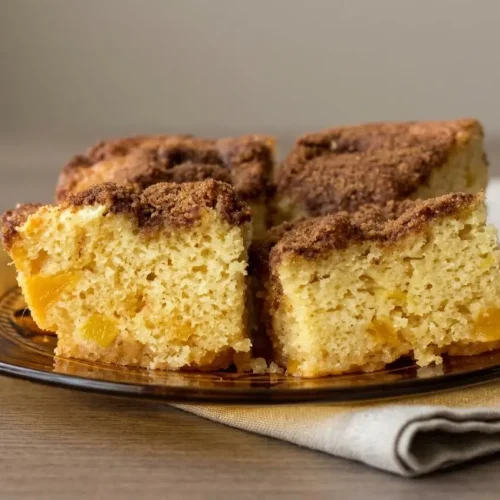
Mango Coffee Cake

Equipment
- 13x9x2-inch baking pan
- Pastry blender
- Mixing Bowls
Ingredients
- 2 cups all-purpose flour
- 2 cups sugar
- 1 1/2 teaspoons baking powder
- 1/2 teaspoon baking soda
- 1/2 teaspoon ground nutmeg
- 1/4 teaspoon salt
- 1/2 cup butter
- 1 cup buttermilk
- 2 eggs beaten
- 1 teaspoon vanilla
- 3 cups coarsely chopped seeded and peeled mangoes (about 3)
- 1/3 cup sugar
- 3/4 teaspoon ground cinnamon
- sweetened whipped cream (optional) or Cool Whip (optional)
Instructions
- Heat the oven to 350°F and grease a 13x9x2-inch baking pan. Combine the flour, 2 cups sugar, baking powder, baking soda, nutmeg, and salt, then cut in the butter with a pastry blender or two knives. The dry mixture should look crumbly and uneven, with no large solid pieces of butter remaining.
- Whisk the buttermilk, beaten eggs, and vanilla in a separate bowl, then stir them into the flour mixture just until the flour disappears. Fold in the mangoes, spread the thick batter in the pan, and sprinkle the surface with the combined 1/3 cup sugar and cinnamon. The batter should be thick and spoonable, holding soft mounds instead of pouring like pancake batter.
- Bake for 40 to 45 minutes, then let the cake cool slightly before serving with sweetened whipped cream or Cool Whip, if desired. Check the center with a wooden pick, avoiding a molten mango pocket when testing. The top should be deep golden brown, the fruit may bubble lightly near the rim, and the pick should come out clean from the cake crumb.