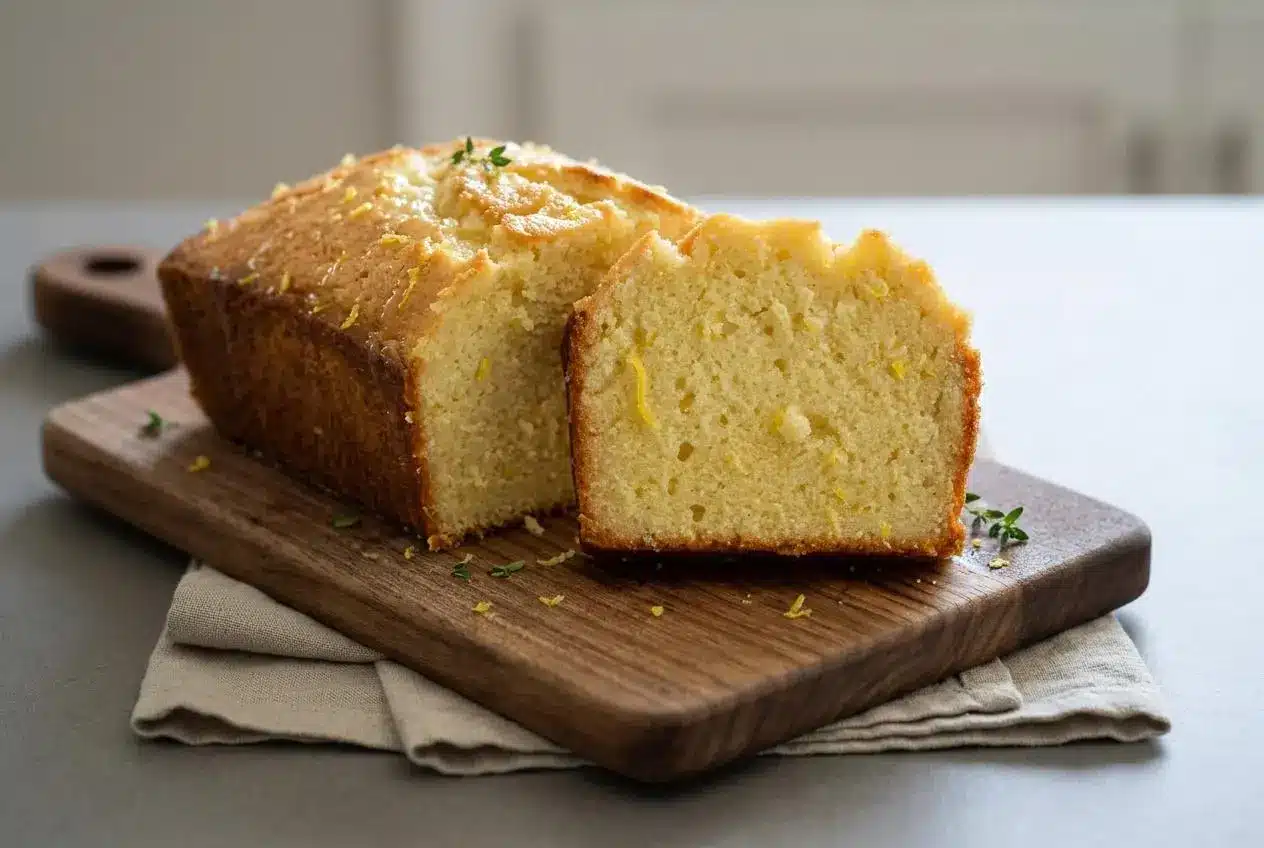
Cream softened butter with lemon-zest sugar, mix gently with cake flour and sour cream, then slowly soak the warm loaf with fresh lemon syrup for a tender, citrusy crumb.
This lemon pound cake recipe delivers a buttery loaf with a fine, velvety texture and bold lemon flavor from both zest and juice. The syrup settles into the warm crumb, keeping every slice bright and tender.
Freshly grated lemon peel changes the whole kitchen aroma as it meets the sugar and butter. That fragrant first step makes a real difference.
Set the butter, eggs, and sour cream out before starting so they blend into a smooth, stable batter.
Key Ingredients for the Ultimate Lemon Pound Cake
Each ingredient supports the loaf’s rich flavor, delicate structure, moisture, and fresh citrus aroma, from the butter-based crumb to the syrup that finishes it.
Lemon Pound Cake
- 200g or 1 cup fine granulated sugar
- Zest of 3-4 fresh lemons (rinse then rub the skin before zesting)
- 226g or 1 cup unsalted butter (at room temperature)
- 225g or 1 ¾ cups cake flour
- 1 teaspoons baking powder
- 1 tsp fine sea salt
- 2 teaspoons pure vanilla extract or vanilla bean paste
- 2 large eggs (at room temperature)
- 120g or ½ cup sour cream (full fat)
Lemon Simple Syrup
- 160g or ⅔ cup fine granulated sugar
- 75g or ⅓ cup freshly squeezed lemon juice (for a sharper lemon flavor use ½ cup each sugar and fresh lemon juice)
- Pinch fine sea salt
Full-fat sour cream brings richness and gentle acidity, which helps keep the crumb soft. Cake flour gives the loaf a refined, tender structure, while fresh zest carries the floral lemon oils that juice alone cannot provide.
I rub the zest into the sugar until the granules feel slightly damp and smell intensely lemony before adding the butter.
The Power of Fresh Lemon Zest and Sugar Infusion
Rubbing zest into sugar does more than combine two ingredients. The friction breaks tiny oil pockets in the peel, releasing fragrant citrus oils into the granules. Once the butter is added, those oils disperse through the batter, giving the finished cake a deeper lemon flavor than juice can deliver on its own.
Use only the yellow outer layer of the lemon. The white pith underneath can taste bitter, especially when several lemons are used.
Sour Cream vs Buttermilk for Crumb Texture
Sour cream creates a plush, close crumb because it adds both fat and moisture without thinning the batter. Its mild acidity also helps soften the flour’s structure, so the loaf stays dense in the pleasant pound-cake way rather than heavy or chewy.
Buttermilk is thinner and makes a lighter batter, but it will not give this loaf the same velvety richness. Keep the sour cream at room temperature so it blends smoothly into the butter mixture.
Choosing Between Cake Flour and All-Purpose Flour
Cake flour contains less protein than all-purpose flour, so it forms less gluten as the batter comes together. That means a softer, finer crumb with less chew.
If all-purpose flour is your only option, measure 1 ¾ cups, remove 3.5 tablespoons of flour, replace it with 3.5 tablespoons of cornstarch, and sift the mixture twice. The result will be slightly sturdier than cake flour, but still tender when mixed gently.
How to Make Lemon Pound Cake Step by Step
Give the creaming stage your full attention. It builds the loaf’s lift before the flour goes in, while the syrup adds the final layer of citrus moisture after baking.
- Heat the oven to 350 °F and grease and flour a standard 4.5- or 5-inch by 8.5- or 9-inch loaf pan.
Warm cold eggs in a bowl of hot water before mixing so they blend smoothly with the butter. - Place the sugar in the stand-mixer bowl and zest the lemons directly over it, then rub the zest through the sugar with your fingertips.
The sugar should smell sharp and floral, with tiny yellow flecks distributed throughout. - Add the salt, vanilla, and room-temperature butter, then beat with the paddle attachment, beginning on low and increasing to medium speed.
After at least 5 minutes, the mixture should look pale ivory, fluffy, and noticeably fuller in volume. - Reduce the mixer to low and add the eggs one at a time, scraping the bowl as needed between additions.
Continue mixing for about 3 to 5 minutes until the batter looks cohesive and glossy rather than curdled. - Sift in the cake flour, then add the baking powder and sour cream; mix on low only until the batter is evenly combined.
Stop once no dry streaks remain, since extra mixing can make the finished crumb rubbery. - Transfer the batter to the prepared pan and level the surface with a rubber spatula, then draw a shallow line down the center.
The groove encourages the loaf to open along the middle as it rises. - Bake for about 50 to 60 minutes, depending on the loaf-pan size.
The center should resist gently and spring back beneath a fingertip, and a cake tester should come out clean. - Near the end of baking, combine the lemon juice, sugar, and salt in a small saucepan and warm over medium heat just until the sugar dissolves.
Keep the syrup below a boil so the lemon flavor stays fresh and bright. - While the cake is still hot in the pan, poke holes across the surface with a cake tester and drizzle the warm syrup over it gradually.
Pause between pours so the crumb can draw in the syrup instead of letting it pool on top. - Let the loaf cool in the pan as it absorbs the syrup, then serve it warm or at room temperature.
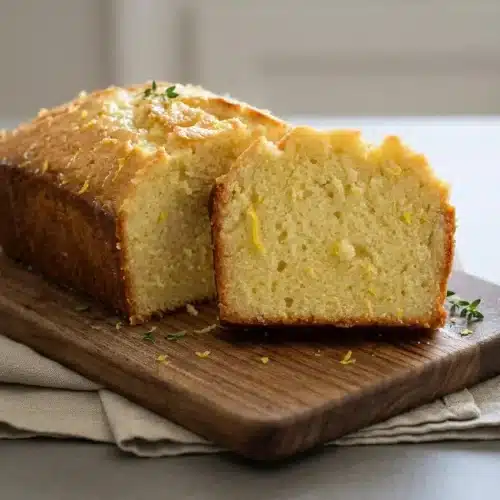
The cake should slice cleanly once cooled, with a moist crumb and a lightly glossy top.
Essential Secrets for a Moist, Velvety Pound Cake
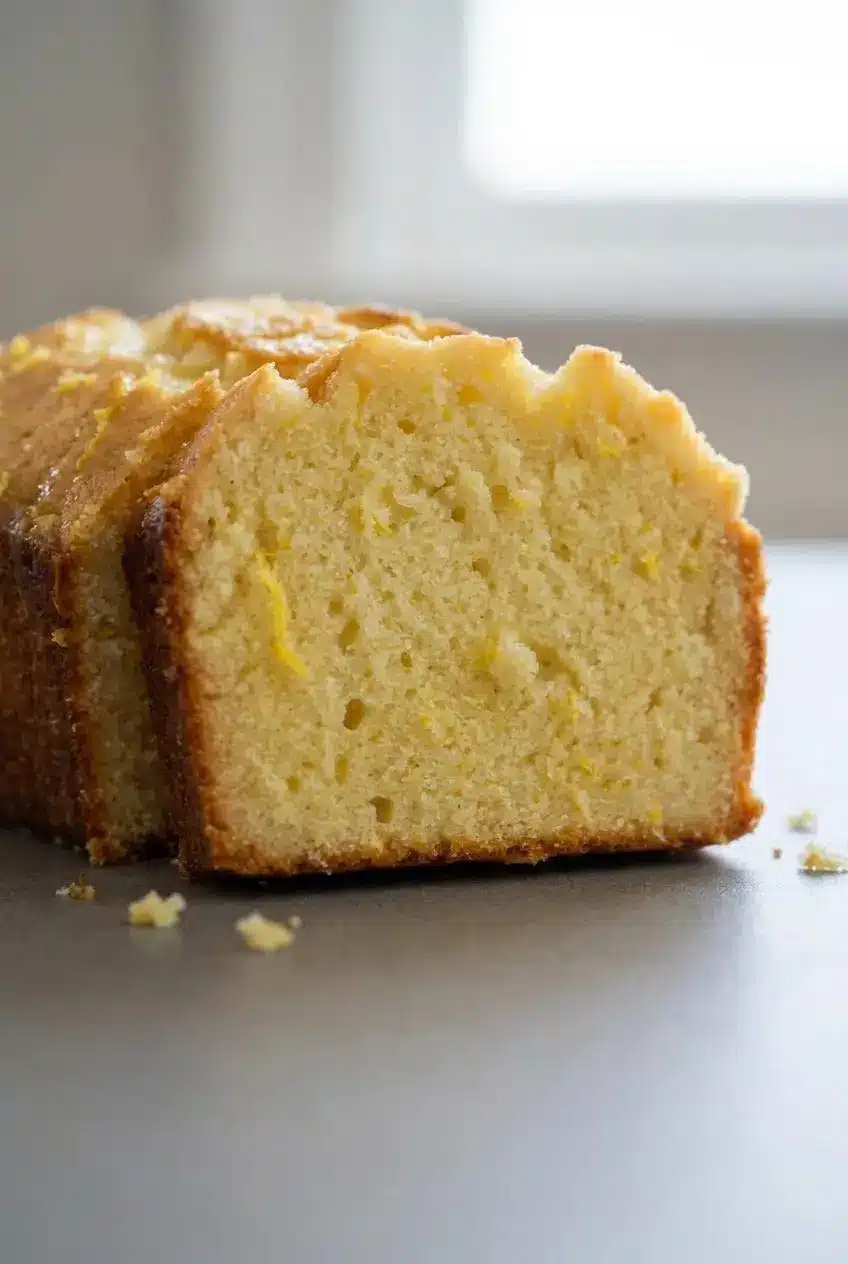
The best pound cakes depend on a stable butter-and-egg emulsion, restrained mixing, and syrup applied at the right moment. Small choices here prevent the usual dry, greasy, or tight-textured loaf.
- Keep the dairy at room temperature. Soft butter, eggs, and sour cream combine evenly. Cold ingredients can make the butter mixture look broken, which often leads to uneven rise and a heavier crumb.
- Cream thoroughly before adding eggs. The butter and sugar need the full mixing time to hold air. By around minute four, the mixture should be very pale and fluffy rather than grainy and yellow.
- Mix flour with restraint. Once cake flour enters the bowl, use the lowest speed and stop as soon as the batter looks uniform. Overworking flour develops gluten and makes pound cake chewy.
- Soak while warm. The loaf should come straight from the oven before you prick and drizzle it. A warm crumb takes in syrup more evenly than a cooled cake, helping it stay soft without becoming soggy.
The same careful creaming method gives a sour cream pound cake its character too: rich, close-textured, and tender when the batter stays properly emulsified.
Cool the loaf before slicing. Cutting too early can compress the crumb and make even a well-baked cake seem gummy.
Glaze and Syrup Finishes for Extra Lemon Punch
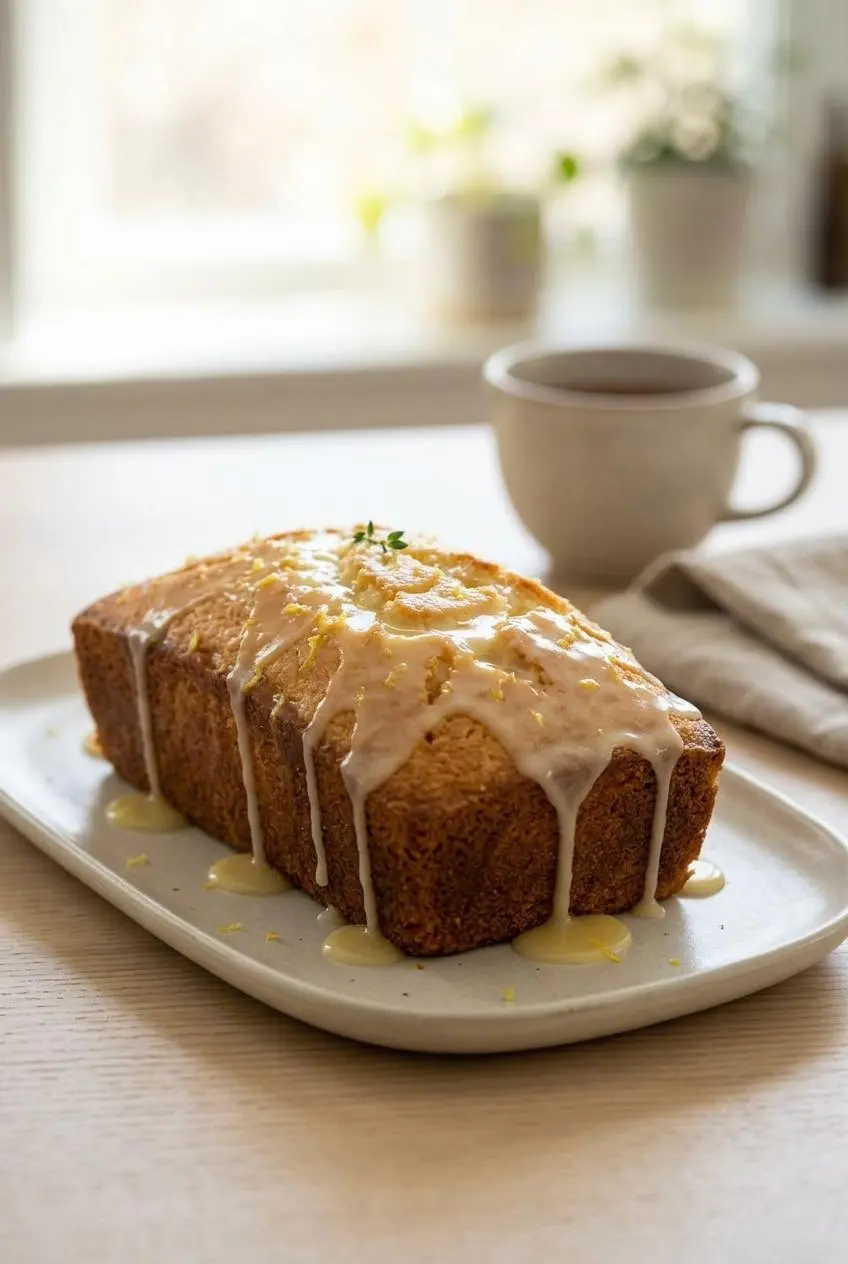
The syrup is the signature finish here, but a cooled loaf can also carry a sweet bakery-style glaze. Keep either addition optional so the lemon cake stays true to its buttery base.
Warm Lemon Soaking Syrup Technique
Warm the juice, sugar, and salt only until the sugar melts. Boiling dulls the fresh lemon aroma and can make the syrup taste more candy-like than citrusy. Drizzle it slowly over the tester holes while the cake is warm, aiming for an even coating across the loaf.
For an optional herbal accent, steep two sprigs of fresh lemon thyme in the warm syrup for five minutes, then strain before spooning it over the cake. The herb adds a quiet citrusy lift without taking over.
Thick Bakery-Style Lemon Confectioners’ Glaze
For an optional opaque finish, whisk 1 cup of powdered sugar with 2 tablespoons of freshly squeezed lemon juice and a splash of heavy cream. Spoon it over the completely cooled loaf so it sets into a thick white shell instead of disappearing into the warm cake.
Let the glaze fall naturally over the sides rather than spreading it too thin. A thicker layer gives each slice a sweet-tart contrast to the syrup-soaked crumb.
Creative Flavor Customizations and Pan Adaptations
- Lemon poppy seed loaf: Fold 1 to 2 tablespoons of blue poppy seeds into the finished batter just before panning for a delicate crunch.
- Lemon blueberry version: Toss fresh blueberries with a spoonful of cake flour, then fold them in gently to help limit sinking. For a berry-forward alternative, try this lemon blueberry cake.
- Bundt or tube pan: Double the batter for a larger presentation, bake at 325 °F, and allow 65 to 75 minutes in the lower third of the oven. Start checking when the cake has a deep golden crust and a tester reaches the center cleanly.
Troubleshooting Common Lemon Pound Cake Problems
A loaf cake gives clear clues when something goes wrong. Match the symptom to the likely cause, then adjust one part of the process next time instead of changing everything at once.
How to Prevent Sunken Centers and Dense Bottoms
- Sunken center: The middle usually needed more baking time, or the oven door was opened before the structure set. Keep the door closed until the loaf is well risen, then test the deepest part of the center before removing it.
- Dense or gummy bottom: This often comes from an unevenly mixed batter or flour that was worked too much. Scrape the bowl thoroughly during creaming, then mix gently once flour and sour cream go in.
- Greasy, heavy crumb: Cold eggs or sour cream can disrupt the butter emulsion. Bring them to room temperature before starting, and add eggs gradually on low speed.
Managing Overly Dark Crusts During Long Bakes
If the top turns deeply golden around the 35-minute mark but the center still has wet batter, loosely tent the pan with aluminum foil. Leave room for heat to circulate, then continue baking until the center springs back and the tester comes out clean.
Dark metal pans brown more quickly than lighter pans. Keep the loaf on a middle rack so the bottom heats steadily without over-darkening the top.
Storing Your Lemon Pound Cake
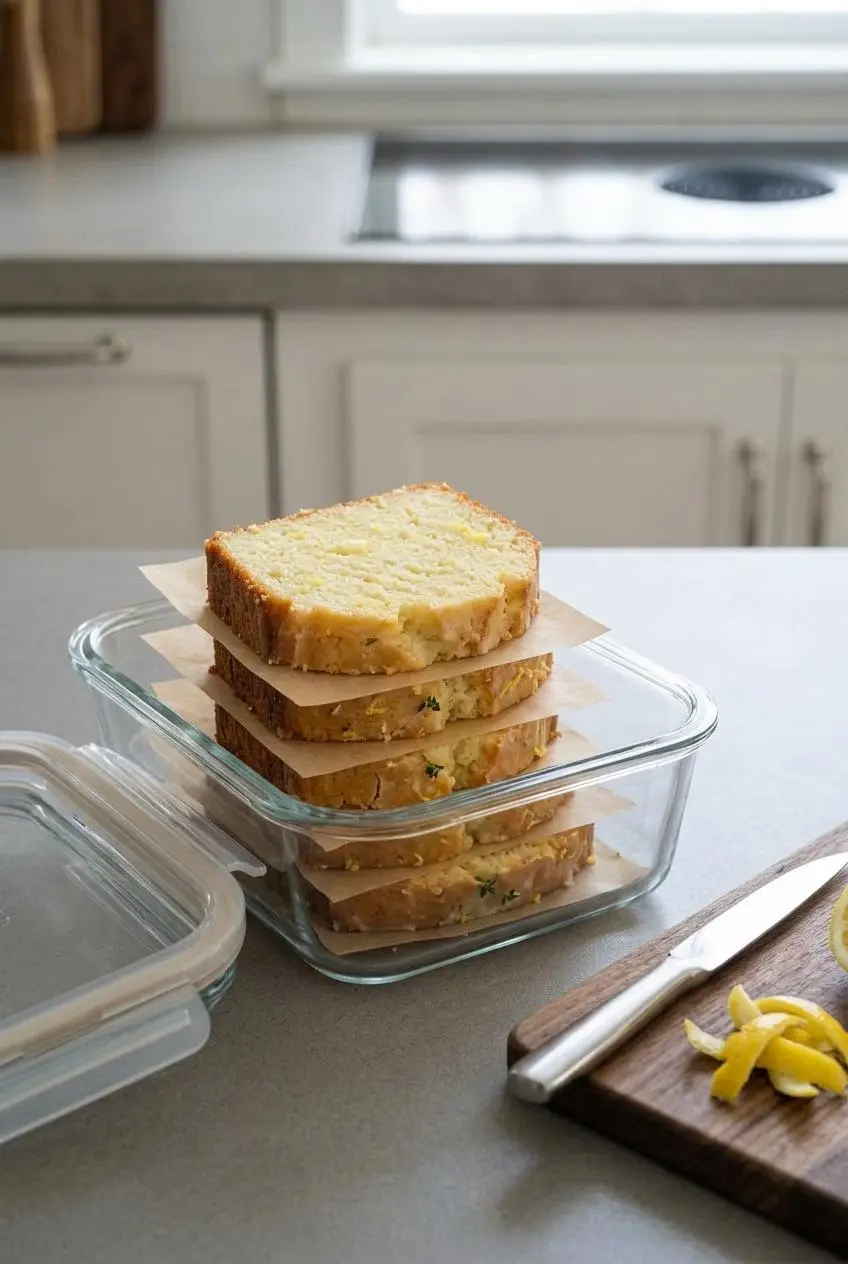
Once completely cooled, keep the loaf in an airtight container at room temperature to protect the syrup-soaked crumb from drying out. Avoid leaving cut slices exposed, since the open crumb loses moisture first.
For a cleaner presentation later, wait until the loaf has cooled fully before wrapping or slicing it. If the glaze is used, let it firm before covering so the finish stays neat rather than smearing.
Conclusion
This lemon loaf earns its bright flavor in two places: the zest-infused sugar and the warm syrup that settles into the cake after baking. Together, they create a buttery crumb with lemon in every bite.
Take your time with the creaming step, keep the flour mixing gentle, and pour the syrup patiently. The reward is a fragrant loaf that feels right at home with a cup of tea.
Frequently Asked Questions
What Is the Secret to a Moist Lemon Pound Cake?
Use full-fat sour cream, room-temperature butter and eggs, and fresh lemon syrup. Sour cream adds moisture and tenderness without making the batter thin. Proper creaming creates a stable, airy butter base. Pricking the warm loaf lets the lemon syrup reach beyond the crust.
Why Did My Lemon Pound Cake Sink in the Center?
A sunken center usually means the dense middle was underbaked or lost structure too early. Test the center rather than relying on the color of the crust. Avoid opening the oven early, which can interrupt the rise. Add eggs gradually and do not overwhip the batter after they are incorporated.
Can I Use All-Purpose Flour Instead of Cake Flour?
Yes. Measure 1 ¾ cups all-purpose flour, remove 3.5 tablespoons, replace that amount with 3.5 tablespoons cornstarch, and sift twice. This lowers the effective protein level and creates a softer crumb than all-purpose flour alone.
How Long Does Homemade Lemon Pound Cake Stay Fresh?
Keep the cooled loaf tightly covered at room temperature so the crumb stays moist and the lemon flavor remains lively. For the best texture, protect sliced surfaces from air and avoid storing the cake uncovered in the refrigerator.
Lemon Pound Cake Recipe

Equipment
- Stand mixer with paddle attachment
- standard loaf pan (4.5×8.5 or 5×9 inches)
- Rubber spatula
- cake tester
- Small saucepan
Ingredients
Lemon Pound Cake
- 200 g fine granulated sugar or 1 cup
- 3-4 Zest of fresh lemons rinse then rub the skin before zesting
- 226 g unsalted butter at room temperature; or 1 cup
- 225 g cake flour or 1 ¾ cups
- 1 teaspoons baking powder
- 1 tsp fine sea salt
- 2 teaspoons pure vanilla extract or vanilla bean paste
- 2 large eggs at room temperature
- 120 g sour cream full fat; or ½ cup
Lemon Simple Syrup
- 160 g fine granulated sugar or ⅔ cup
- 75 g freshly squeezed lemon juice or ⅓ cup; for a sharper lemon flavor use ½ cup each sugar and fresh lemon juice
- 1 pinch fine sea salt
Instructions
- Heat the oven to 350 °F and grease and flour a standard 4.5- or 5-inch by 8.5- or 9-inch loaf pan. Warm cold eggs in a bowl of hot water before mixing so they blend smoothly with the butter.
- Place the sugar in the stand-mixer bowl and zest the lemons directly over it, then rub the zest through the sugar with your fingertips. The sugar should smell sharp and floral, with tiny yellow flecks distributed throughout.
- Add the salt, vanilla, and room-temperature butter, then beat with the paddle attachment, beginning on low and increasing to medium speed. After at least 5 minutes, the mixture should look pale ivory, fluffy, and noticeably fuller in volume.
- Reduce the mixer to low and add the eggs one at a time, scraping the bowl as needed between additions. Continue mixing for about 3 to 5 minutes until the batter looks cohesive and glossy rather than curdled.
- Sift in the cake flour, then add the baking powder and sour cream; mix on low only until the batter is evenly combined. Stop once no dry streaks remain, since extra mixing can make the finished crumb rubbery.
- Transfer the batter to the prepared pan and level the surface with a rubber spatula, then draw a shallow line down the center. The groove encourages the loaf to open along the middle as it rises.
- Bake for about 50 to 60 minutes, depending on the loaf-pan size. The center should resist gently and spring back beneath a fingertip, and a cake tester should come out clean.
- Near the end of baking, combine the lemon juice, sugar, and salt in a small saucepan and warm over medium heat just until the sugar dissolves. Keep the syrup below a boil so the lemon flavor stays fresh and bright.
- While the cake is still hot in the pan, poke holes across the surface with a cake tester and drizzle the warm syrup over it gradually. Pause between pours so the crumb can draw in the syrup instead of letting it pool on top.
- Let the loaf cool in the pan as it absorbs the syrup, then serve it warm or at room temperature. The cake should slice cleanly once cooled, with a moist crumb and a lightly glossy top.