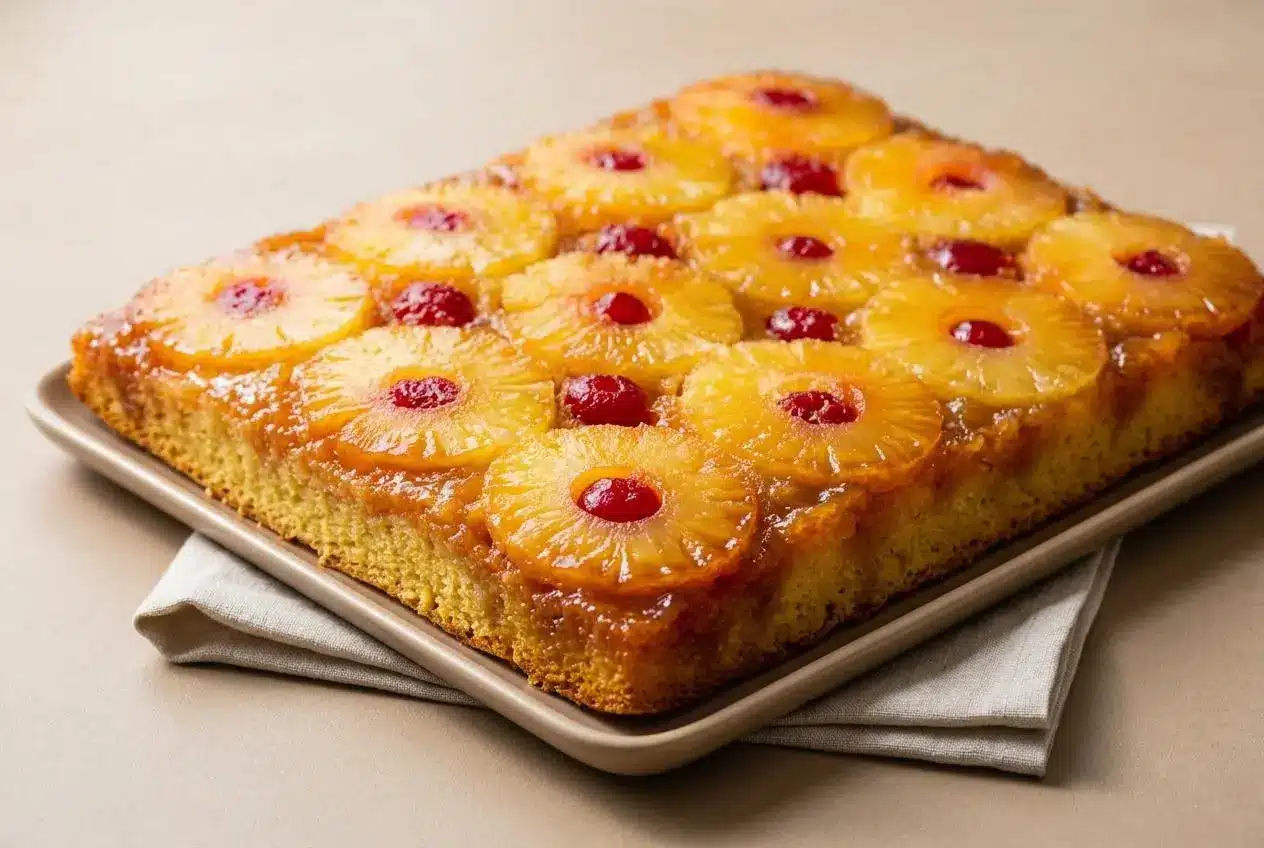
Pineapple upside down cake is a classic dessert where butter, brown sugar, pineapple rings, and maraschino cherries bake beneath yellow cake batter, then flip into a glossy caramel topping.
A pineapple upside down cake brings together bubbling caramelized sugar, warm fruit, and a soft vanilla crumb in one cheerful pan. The fruit bakes into the topping while the cake rises over it, creating the familiar golden pattern when you turn it out.
The key is managing moisture and timing the flip while the glaze is still warm. That shiny brown sugar topping is worth the small bit of care.
Pat the pineapple and cherries very dry with paper towels before they touch the pan so excess juice does not soften the caramel layer or the cake center.
Key Ingredients and Essential Flavor Roles
Each ingredient supports the final texture and flavor: butter and brown sugar create the glaze, fruit adds brightness and color, and yellow cake batter provides a tender structure around the topping.
- 1/4 cup butter
- 1 cup packed brown sugar
- 1 can (20 oz) pineapple slices in juice, drained, juice reserved
- 1 jar (6 oz) maraschino cherries without stems, drained (about 18 cherries)
- 1 box Betty Crocker™ Super Moist™ Yellow Cake Mix
- Vegetable oil and eggs called for on cake mix box
Choose pineapple packed in juice rather than heavy syrup when possible. Juice gives the fruit a cleaner tang and keeps the brown sugar glaze from becoming overly sweet. The melted butter helps the packed brown sugar melt into a unified caramel layer instead of leaving dry, grainy patches.
The reserved pineapple juice has a second job: it replaces the water in the cake batter, bringing fruit flavor into every bite rather than limiting it to the topping. Fresh lime zest or minced candied ginger can be stirred into the glaze as an optional accent, but keep those additions outside the prepared pan until you are ready to experiment.
I always blot both sides of each pineapple ring and every cherry because even a little surface liquid can dilute the buttery caramel underneath.
Scratch Sponge vs. Yellow Cake Mix
The yellow cake mix route is ideal when you want dependable rise and a light, tender crumb with very little fuss. Its mild vanilla flavor also lets the pineapple and brown sugar topping lead the way.
A homemade vanilla sponge is an optional alternative for bakers who prefer a more involved project. Batters enriched with sour cream or buttermilk tend to bake into a slightly denser crumb, which can support a heavier fruit topping well. For a homemade starting point, this scratch yellow cake is a useful direction, though it is a separate variation rather than part of the ingredient list above.
Using Fresh vs. Canned Pineapple
Canned rings give this cake its classic shape, predictable sweetness, and easy-to-control moisture. Fresh pineapple can work as an optional change, but it needs more preparation because it is firmer and releases more liquid as it cooks.
For fresh fruit, cut even rings, then briefly sear them in a skillet with a little sugar until the surfaces soften and extra moisture cooks away. Let them cool and blot them dry before arranging them over the brown sugar. This helps protect the center from becoming wet and heavy.
How to Make Pineapple Upside Down Cake Step by Step
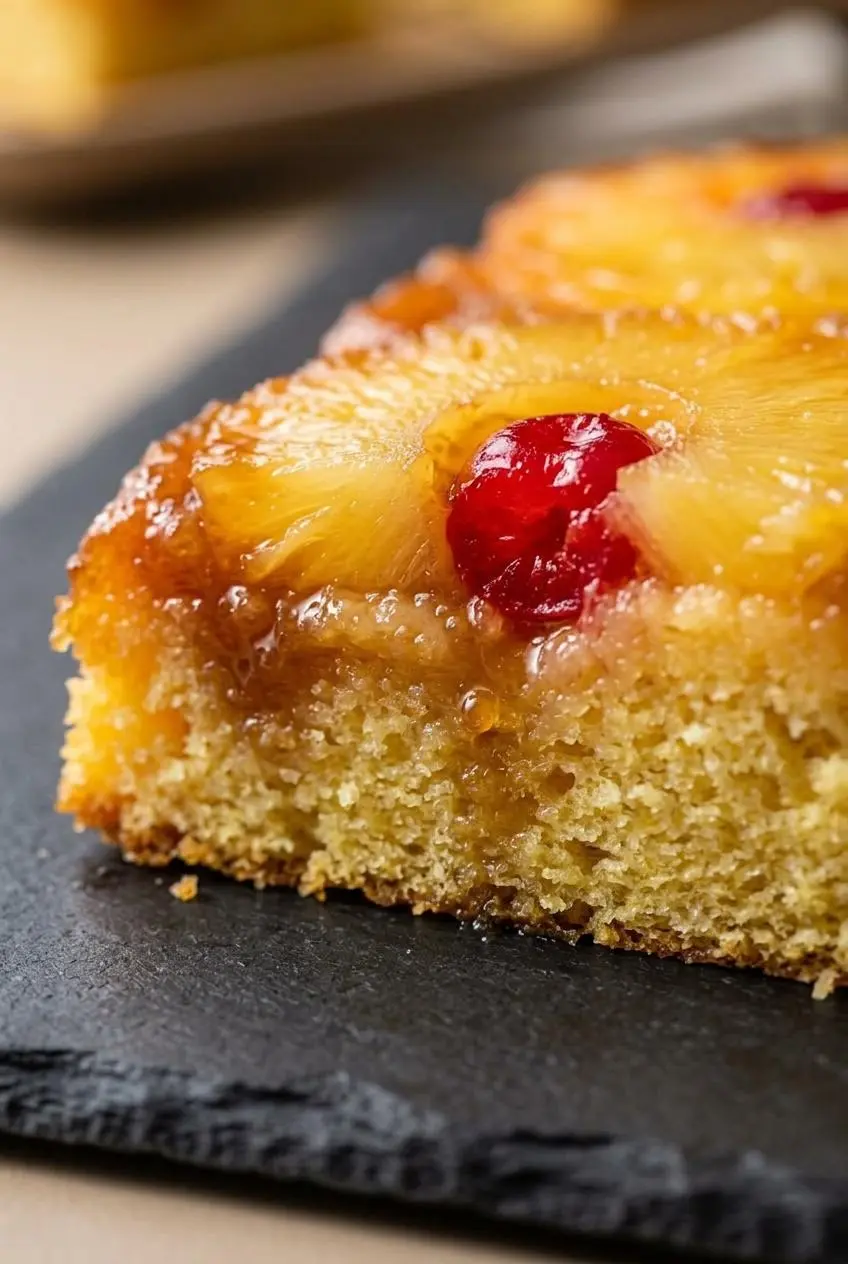
This method builds the caramel topping directly in the pan, then uses reserved fruit juice to carry pineapple flavor through the cake crumb.
- Heat the oven to 350°F, or 325°F if using a dark or nonstick pan.
Set the rack in the middle position so the cake bakes evenly without over-darkening at the edges. - Put the butter in a 13×9-inch pan and place the pan in the warming oven for 5 to 7 minutes.
Check it near the end of that time; the butter should be fully melted but should not brown. - Remove the pan, scatter the brown sugar evenly over the butter, then arrange the pineapple rings and cherries on top.
Press the fruit gently into the sugar so it stays in place as the butter and sugar begin to bubble around the edges. - Add water to the reserved pineapple juice until the total reaches 1 cup, then prepare the cake batter as directed on the box using that mixture instead of water.
The batter should look smooth and pourable, with a light pineapple aroma. - Pour the prepared batter evenly over the arranged fruit.
Cover the fruit completely and level the surface gently so the cake rises evenly across the pan. - Bake for 40 to 46 minutes, or 44 to 53 minutes for a dark or nonstick pan, then loosen the cake edges immediately with a knife.
A toothpick inserted into the center should come out without wet batter, and the center should spring back lightly when touched. - Set a heatproof serving plate upside down over the pan and carefully turn both over together, leaving the pan in place for 5 minutes.
The warm glaze will drizzle down over the cake as it releases, and a gentle tap may produce a hollow release sound. - Lift away the pan and let the cake cool for 30 minutes before serving warm or cool.
The topping will settle into a glossy layer while the crumb becomes easier to slice cleanly.
Essential Pan Selection and Prep
A sturdy pan makes this cake much easier to turn out neatly. The melted butter coats the bottom, but a light coating of butter or baking spray on the sides helps the sponge release without tearing.
Skip springform pans for this dessert. The butter and brown sugar melt into a loose syrup before the cake sets, and a pan with a removable base can leak that syrup into the oven.
Metal 13×9 Sheet Pans vs. Round Tins
A shiny metal 13×9-inch pan is the format used here, giving you even slices and room for a full pineapple-ring pattern. Its lighter finish also helps the caramel stay golden rather than turning too dark too quickly.
Two 9-inch round pans create a more traditional layer-style presentation, but they divide the topping and batter into separate cakes. Treat that as a separate adaptation and watch closely for doneness with a toothpick in the center of each pan. Dark metal needs the lower 325°F oven setting given in the method; glass bakeware can behave differently, so follow its manufacturer guidance and check the center carefully.
Cast Iron Skillet Method
A 10-inch or 12-inch cast iron skillet is an optional presentation change for cooks who enjoy deeply caramelized edges. Cast iron holds heat well, so the fruit around the perimeter can brown more intensely than it does in a light metal pan.
Use a skillet that is fully oven-safe and large enough to hold the batter comfortably. Handle it with care after baking because the heavy pan stays hot, and use a wide platter for the flip. For single-portion versions of the same caramel-and-fruit idea, try individual upside-down cakes.
How to Flip and Unmold With Confidence
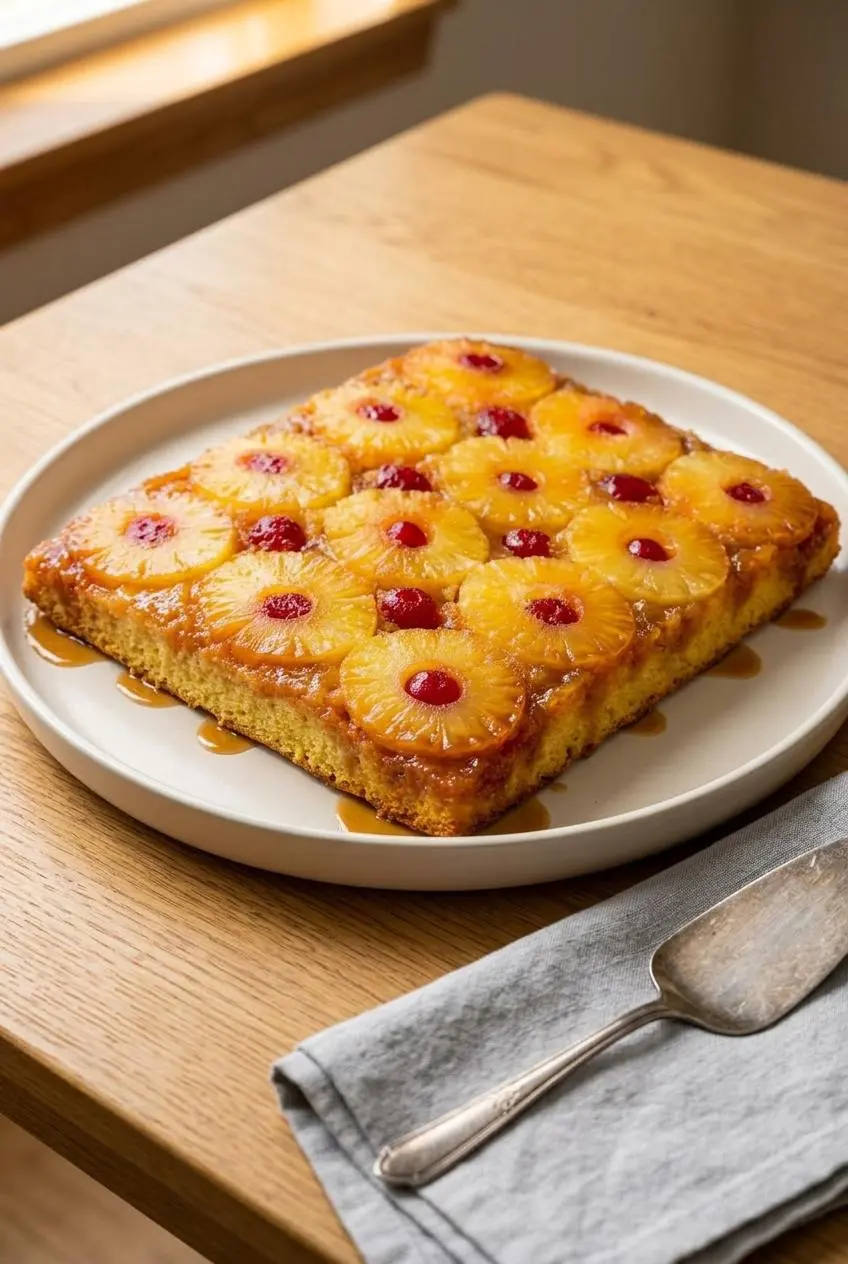
The flip determines whether the pineapple pattern stays neat and the caramel stays on the cake. Letting the pan rest for 5 minutes gives the topping time to thicken slightly while keeping it fluid enough to release.
Do not invert it while it is fiercely bubbling, since the soft cake can slump and the syrup can run too freely. Do not leave it in the pan until fully cool either, because the brown sugar can firm up and hold the fruit in place.
Choose a wide, rimmed serving platter rather than a flat dinner plate. It gives you room to center the cake and catches any warm caramel that runs over the sides. Hold the platter and pan firmly together, flip in one confident motion, then leave the pan over the cake for the full 5 minutes before lifting it away.
Troubleshooting Common Baking Problems
Most issues come down to moisture, pan heat, or flipping at the wrong moment. These quick fixes keep the fruit topping glossy and the cake crumb tender.
- Glaze looks thin: The fruit likely carried extra liquid into the pan. Drain and blot the pineapple and cherries thoroughly before arranging them.
- Edges brown too fast: A dark or nonstick pan absorbs heat more aggressively. Use the lower oven temperature listed in the method and check the center before judging doneness by color alone.
- Caramel tastes too sweet: Choose pineapple packed in juice instead of heavy syrup, and serve the cake with unsweetened whipped cream or plain vanilla ice cream.
- Fruit pattern shifted: The fruit was not pressed into the brown sugar firmly enough. Set each ring and cherry into the sugar layer with a gentle push before adding batter.
Fixing Fruit Stuck to the Pan
If a pineapple slice or cherry stays behind after the flip, do not panic. While the glaze is still warm, slide a warm offset spatula under the fruit, lift it carefully, and place it back into the matching space on the cake.
Spoon a little of the warm caramel from the pan over the moved piece to help it blend in. Once the topping cools, the repair becomes much less noticeable than it may seem in the moment.
Preventing an Underbaked Middle
A gummy center usually means too much fruit liquid reached the batter or the cake was checked only near the edges. Use a thin skewer or toothpick in the middle of the pan, where the batter takes longest to set.
If the topping is deeply browned but the center still shows wet batter, loosely tent the pan with foil and return it to the oven for an additional 5 minutes before checking again. The foil slows surface browning while the center finishes baking.
Storing and Reheating Leftover Cake
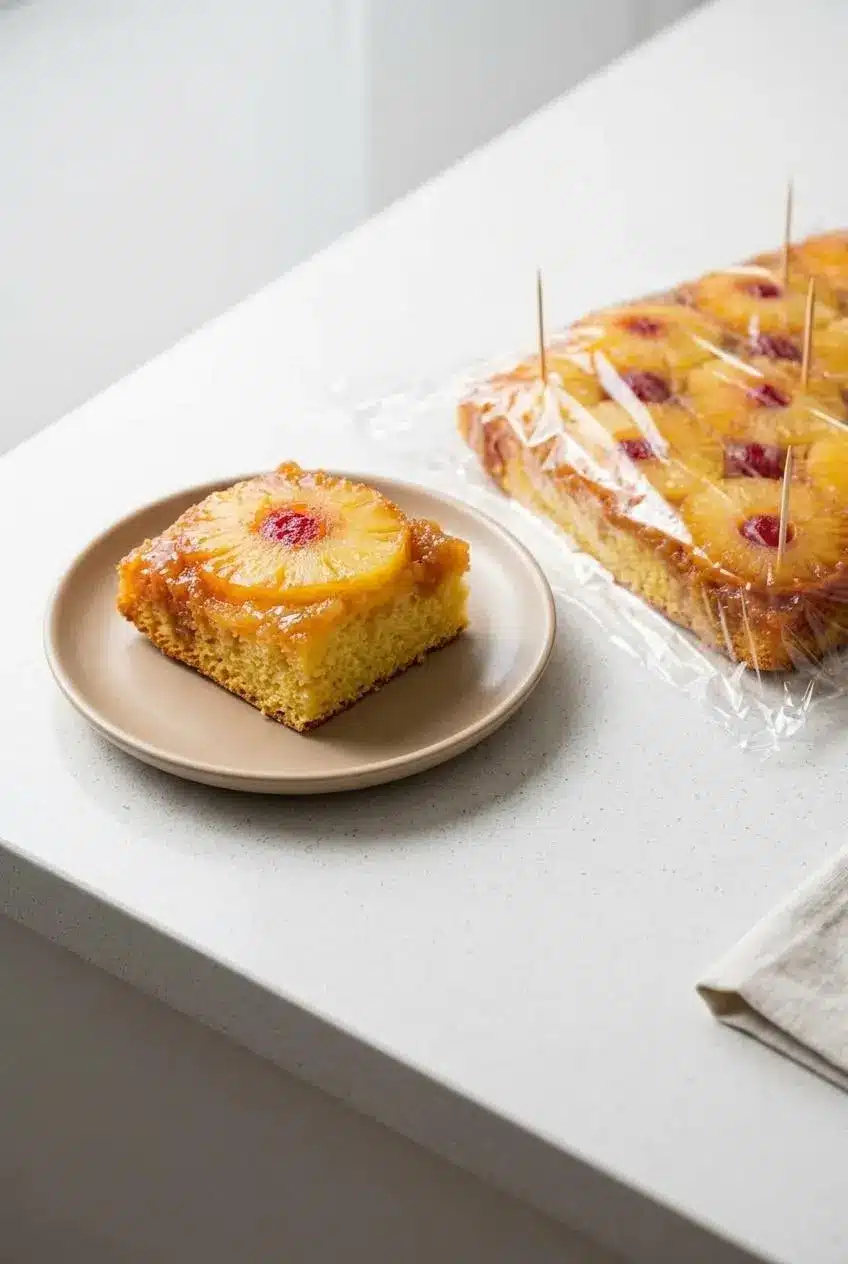
Serve the cake at room temperature on the day it is baked, or enjoy it slightly warm while the caramel remains loose and glossy. Once cooled, cover leftovers and keep them in the refrigerator as directed in the method.
To keep plastic wrap from touching the topping, place toothpicks around the cake or slices first, then drape the wrap loosely over them. Warm individual slices gently in a low oven or microwave on low power only until the cake loses its chill; overheating can make the fruit topping run and the crumb dry out.
For a dessert table, cut the cake shortly before serving so the fruit pattern stays tidy. A spoonful of lightly sweetened or unsweetened whipped cream offers a cool contrast to the brown sugar glaze.
Conclusion
This cake earns its classic status with buttery caramel, bright pineapple, and a tender yellow crumb that comes together in one pan. The fruit-and-glaze flip gives it plenty of charm without complicated decorating.
Blot the fruit dry, check the center for doneness, and give the pan its full 5-minute rest before turning it out. That small pause makes the glossy topping much easier to keep where it belongs.
Frequently Asked Questions
Why Did My Pineapple Upside Down Cake Turn Out Soggy?
Extra fruit moisture is the usual cause. Drain the pineapple and cherries well, then blot them dry before arranging them in the pan. Also measure the pineapple juice and water mixture carefully. Too much liquid in the batter can leave the center heavy even when the edges look done.
How Long Should Pineapple Upside Down Cake Rest Before Flipping?
Let the cake rest in the pan for 5 minutes before flipping. This gives the caramel a moment to settle while it is still warm enough to flow over the cake. Flipping immediately can disturb the soft crumb, while waiting until the cake is completely cool can make the topping stick to the pan.
Can I Use Fresh Pineapple Instead of Canned Rings?
Yes, but prepare it first. Fresh pineapple is firmer and wetter than canned rings, so briefly sear or cook the slices to soften them and reduce excess juice. Cool and blot the slices before arranging them over the brown sugar. This helps the cake center bake through cleanly.
How Should Leftover Pineapple Upside Down Cake Be Stored and Reheated?
Cover cooled leftovers and keep them refrigerated. Use toothpicks beneath the wrap when possible so the caramel topping does not stick to it. Warm slices gently in a low oven or microwave on low power until just warmed through. Gentle heat keeps the pineapple tender and helps the brown sugar glaze loosen again.
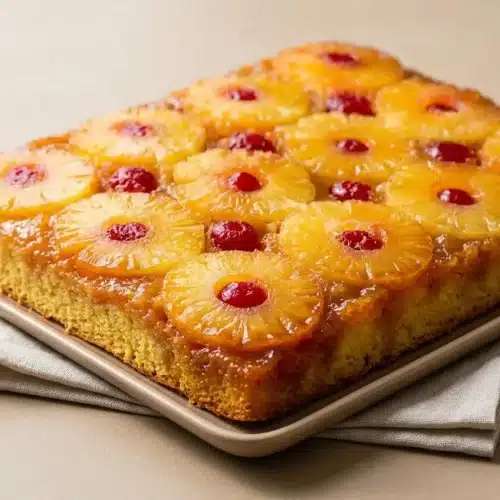
Pineapple Upside Down Cake

Equipment
- 13×9-inch pan
- Heatproof serving plate
- Electric hand mixer
Ingredients
- 1/4 cup butter
- 1 cup packed brown sugar
- 1 can (20 oz) pineapple slices in juice drained, juice reserved
- 1 jar (6 oz) maraschino cherries without stems drained (about 18 cherries)
- 1 box Betty Crocker™ Super Moist™ Yellow Cake Mix
- Vegetable oil and eggs called for on cake mix box
Instructions
- Heat the oven to 350°F, or 325°F if using a dark or nonstick pan. Set the rack in the middle position so the cake bakes evenly without over-darkening at the edges.
- Put the butter in a 13×9-inch pan and place the pan in the warming oven for 5 to 7 minutes. Check it near the end of that time; the butter should be fully melted but should not brown.
- Remove the pan, scatter the brown sugar evenly over the butter, then arrange the pineapple rings and cherries on top. Press the fruit gently into the sugar so it stays in place as the butter and sugar begin to bubble around the edges.
- Add water to the reserved pineapple juice until the total reaches 1 cup, then prepare the cake batter as directed on the box using that mixture instead of water. The batter should look smooth and pourable, with a light pineapple aroma.
- Pour the prepared batter evenly over the arranged fruit. Cover the fruit completely and level the surface gently so the cake rises evenly across the pan.
- Bake for 40 to 46 minutes, or 44 to 53 minutes for a dark or nonstick pan, then loosen the cake edges immediately with a knife. A toothpick inserted into the center should come out without wet batter, and the center should spring back lightly when touched.
- Set a heatproof serving plate upside down over the pan and carefully turn both over together, leaving the pan in place for 5 minutes. The warm glaze will drizzle down over the cake as it releases, and a gentle tap may produce a hollow release sound.
- Lift away the pan and let the cake cool for 30 minutes before serving warm or cool. The topping will settle into a glossy layer while the crumb becomes easier to slice cleanly.