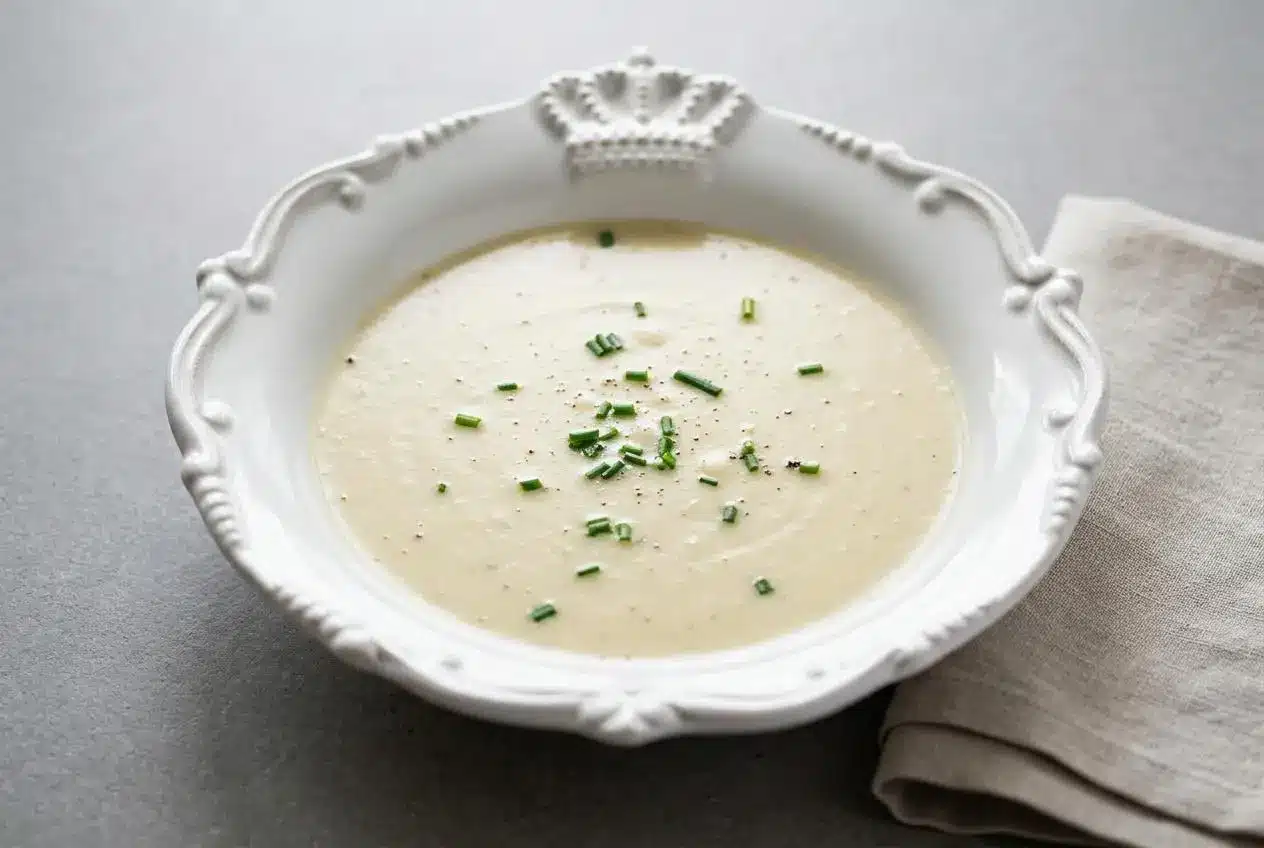
Vichyssoise is a velvety chilled French-American soup of leeks, potatoes, broth, and cream, blended smooth and finished with fresh chives.
Cool, creamy vichyssoise soup feels especially welcome on a warm day, yet its flavor stays delicate rather than heavy. Gentle cooking keeps the leeks sweet and the color beautifully pale.
The key is patience with the leeks, then a careful blend and strain for a completely lump-free finish. That silky spoonful is worth it.
Keep the heat moderate from the start: any golden color on the onion or leeks will darken the finished soup and shift its mild flavor.
What Makes Classic Vichyssoise Unique
Vichyssoise is primarily served cold, with an ivory color, delicate leek sweetness, and a smooth creaminess that feels lighter once chilled. French chef Louis Diat created it at New York’s Ritz-Carlton in 1917, drawing inspiration from the warm leek and potato soup of his childhood and cooling it with milk.
Its warm relative is Potage Parmentier, a comforting potato-leek soup served hot. Think of vichyssoise as the elegant chilled expression of classic potato leek soup, refined with cream and often strained until every spoonful is velvety.
The pale finish matters. Browned alliums bring a deeper, toastier flavor that belongs in many soups, but not here. Vichyssoise should taste clean, mildly sweet, and fresh enough that the chives still stand out.
Essential Ingredients and Culinary Roles
Each ingredient shapes the soup’s balance: leeks bring sweetness, potatoes create body, broth adds savory depth, and cream gives the chilled puree its soft, velvety texture.
- 1 large sweet onion (chopped)
- 2 tablespoons butter
- 1 tablespoon olive oil
- 3 large potatoes (peeled and diced)
- 6 large leeks (thoroughly rinsed and sliced (white and light green parts only))
- 1 quart chicken broth
- Salt and pepper to taste
- A pinch of nutmeg
- 1/2 cup heavy cream
- Chives to garnish
The butter and olive oil create a gentle cooking fat that helps the onion and leeks soften without scorching. Potatoes provide the soup’s natural thickness, while chicken broth should taste balanced rather than aggressively salty because the flavor concentrates differently once the soup is cold. Heavy cream rounds everything out, and nutmeg adds a quiet warmth without making the soup taste sweet.
I trim away the dark green leek tops, then rinse the pale sections more thoroughly than seems necessary because grit loves to hide between those layers.
Selecting the Right Potatoes: Russet vs Yukon Gold
Yukon Gold potatoes give the soup a naturally buttery flavor and creamy body, with a slightly lower chance of turning pasty during blending. Russets also work well because their higher starch content breaks down readily into the broth, creating a fuller puree.
Handle either choice gently once cooked. Waxy red potatoes are less suitable here because they hold their shape stubbornly and can leave tiny grainy bits instead of melting into a smooth soup.
Prepping and Cleaning Gritty Leeks Thoroughly
Start by cutting off the root end and dark, fibrous green leaves. Split the white and pale green portions lengthwise before slicing so you can reach the hidden dirt.
- Place the sliced leeks in a bowl of cold water and separate the layers with your fingers.
- Swish them gently so the grit falls to the bottom of the bowl.
- Lift the clean leeks out with your hands or a slotted spoon instead of draining the bowl through a colander.
Pouring everything through a colander sends the settled grit right back over the leeks. It is a tiny detail that saves the whole bowl from an unpleasant sandy crunch.
How to Make Vichyssoise Soup
- Warm the butter and olive oil in a Dutch oven or heavy-bottomed pot over medium-high heat.
The butter should melt and foam gently without turning brown. - Add the chopped onion and cook for about 2 minutes.
Stir until it looks translucent and smells sweet rather than sharp. - Stir in the leeks and cook for about 4 to 5 minutes.
Let them soften completely while keeping every piece pale and free of browned edges. - Add the diced potatoes, season with salt and pepper, and stir them with the softened alliums for a couple of minutes.
The potatoes should be coated in the fragrant butter and oil mixture. - Pour in the chicken broth and bring the pot to a boil.
Scrape the bottom as the broth heats so all the softened vegetables are evenly distributed. - Reduce the heat and simmer for 30 minutes.
A fork should slide easily through the potatoes when they are ready to puree. - Blend the soup until smooth with an immersion blender, or blend it in batches in a regular blender.
Keep the blending gentle and stop once the puree is uniform to avoid overworking the potato starch. - Stir in the heavy cream and return the soup to medium heat for about 5 minutes.
The soup should look glossy and lightly thicken enough to cling to the back of a spoon. - Taste the soup, adjust the salt and pepper, and stir in the nutmeg before removing the pot from the heat.
The seasoning should taste slightly more pronounced than expected for hot soup because chilling softens it. - Let the soup cool to room temperature, then chill it for at least 1 hour before serving.
For the fullest flavor and a more settled texture, chill it overnight. - Finish each serving with chopped chives.
The fresh green garnish should add a clean, oniony lift against the pale soup.
Sweating Without Browning
The onion and leeks need softness, not color. Lower the heat if the pot looks dry or you see even small golden spots forming. Properly sweated leeks release moisture, become fully translucent, and give off a gentle sweet-onion aroma.
Browning brings a toasted flavor and beige tint that can overwhelm the refined character of this soup. Stir often enough to keep the vegetables moving, but do not rush them with high heat.
Pureeing and Straining for Ultra Silkiness
Potatoes become gluey when high-speed blades work them too aggressively after cooking. An immersion blender gives better control: blend in short, gentle passes and stop when the soup is smooth.
For an especially refined finish, press the blended soup through a fine-mesh sieve with the back of a ladle. The sieve catches stubborn leek fibers and gives the soup that smooth, clinging nappe texture that makes chilled vichyssoise feel restaurant-ready.
Chilling, Storing, and Make-Ahead Guidance
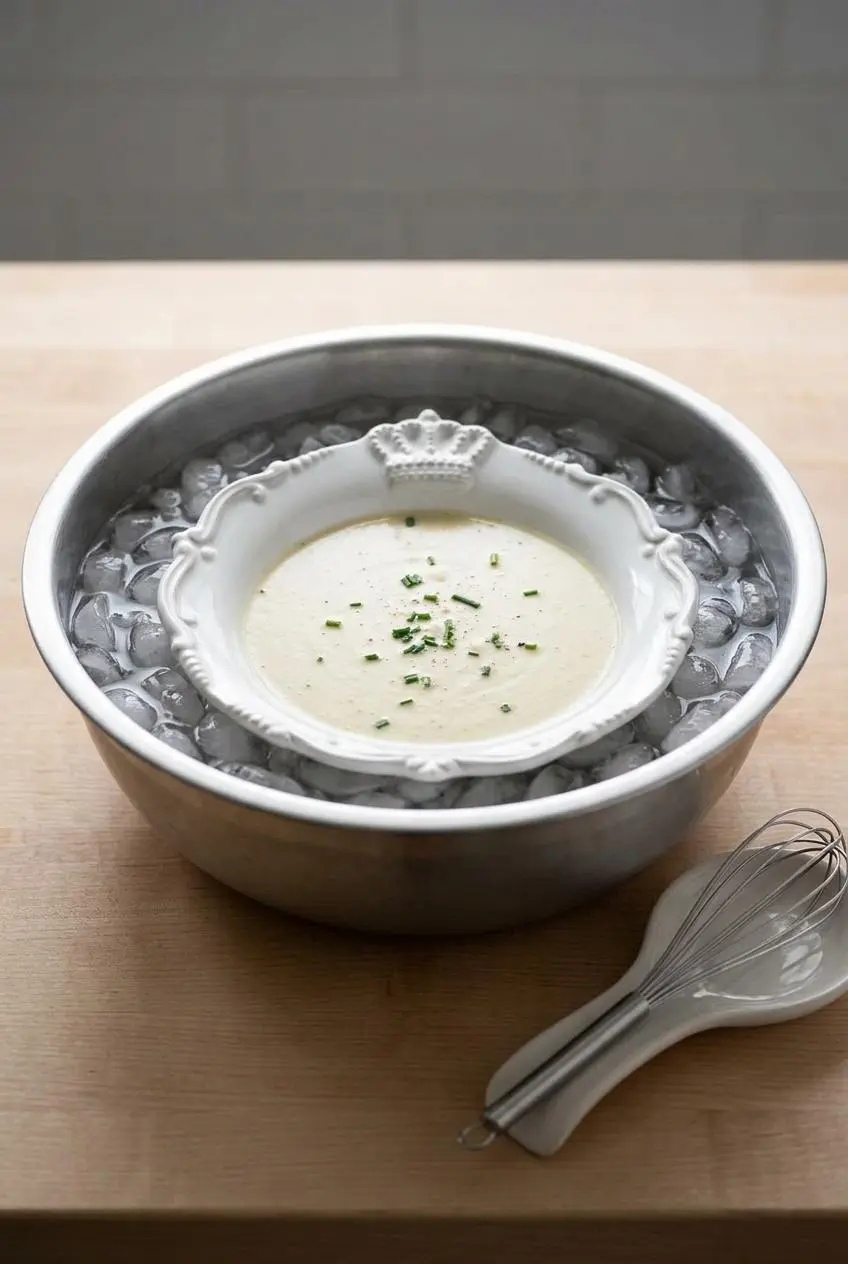
Cool the soup promptly after cooking rather than placing a steaming pot straight into the refrigerator. Set the pot in a sink or larger bowl of ice water and stir occasionally until the heat has dropped, then transfer the soup to a covered container and chill it.
The soup needs at least 1 hour of chilling, and an overnight rest gives the leek flavor time to settle into the cream. Serve it cool rather than ice-cold when possible, since extreme cold can hide the delicate aroma and make the seasoning seem flatter.
Keep leftover soup covered and chilled, and reheat only the portion you plan to serve warm. The finished cream soup is not an ideal candidate for freezing because dairy can separate and the potato texture may become watery or grainy after thawing.
Troubleshooting Common Texture and Flavor Issues
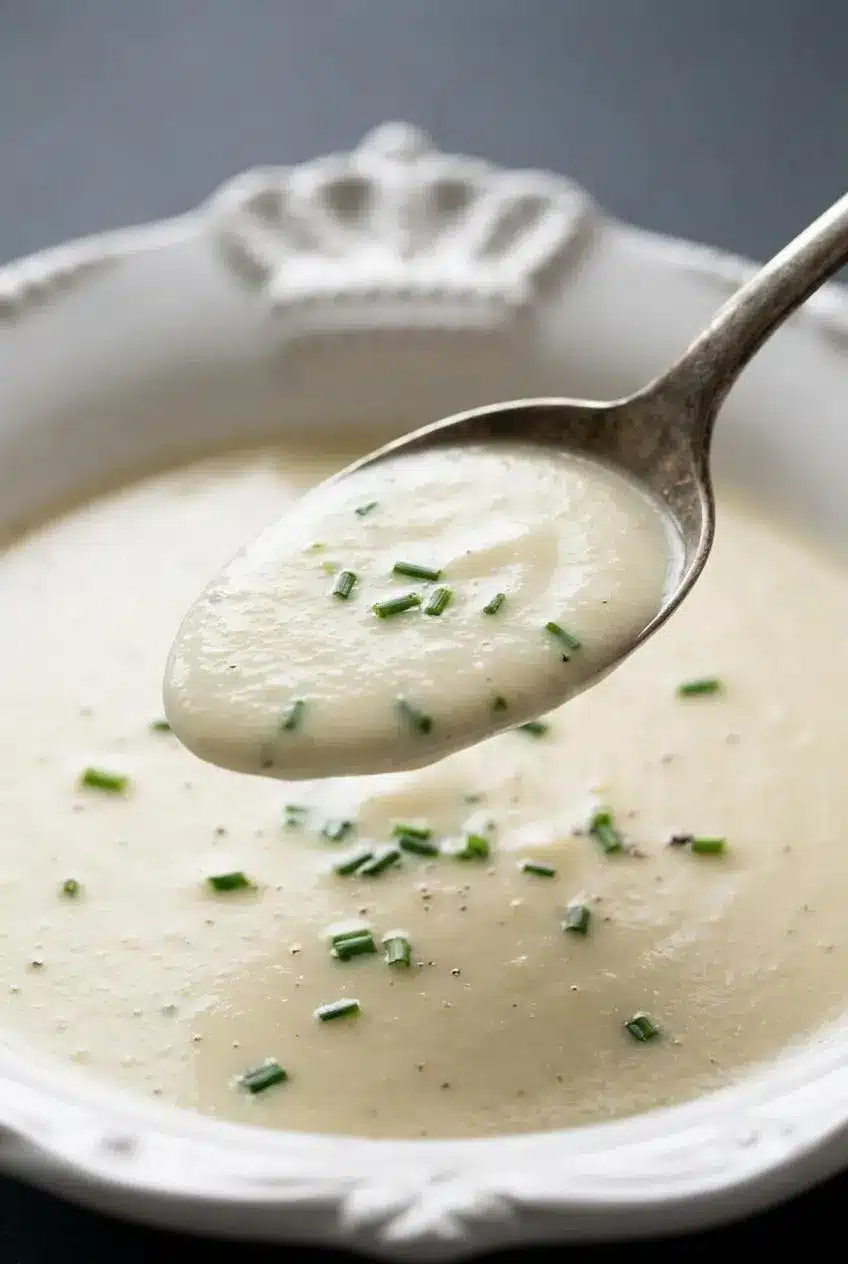
- The soup is too thick: Cold potatoes continue to firm up the puree. Whisk in small splashes of cold broth, milk, or cream until the soup flows smoothly from the spoon.
- The flavor seems bland after chilling: Cold temperatures mute salt perception. Taste the fully chilled soup, then add salt and white pepper gradually until the leek flavor wakes up.
- The puree is gummy: Overblending releases excess potato starch. Do not keep blending; gently whisk in a little warm liquid and pass the soup through a fine-mesh sieve to soften the texture.
- The soup has fibrous bits: Leek layers can leave behind fine strands. Strain the puree, pressing only enough to move the creamy portion through the sieve.
- The color looks dull: The alliums likely browned during cooking. Next time, use lower heat and keep the leeks moist as they soften.
Serving Suggestions and Elegant Variations
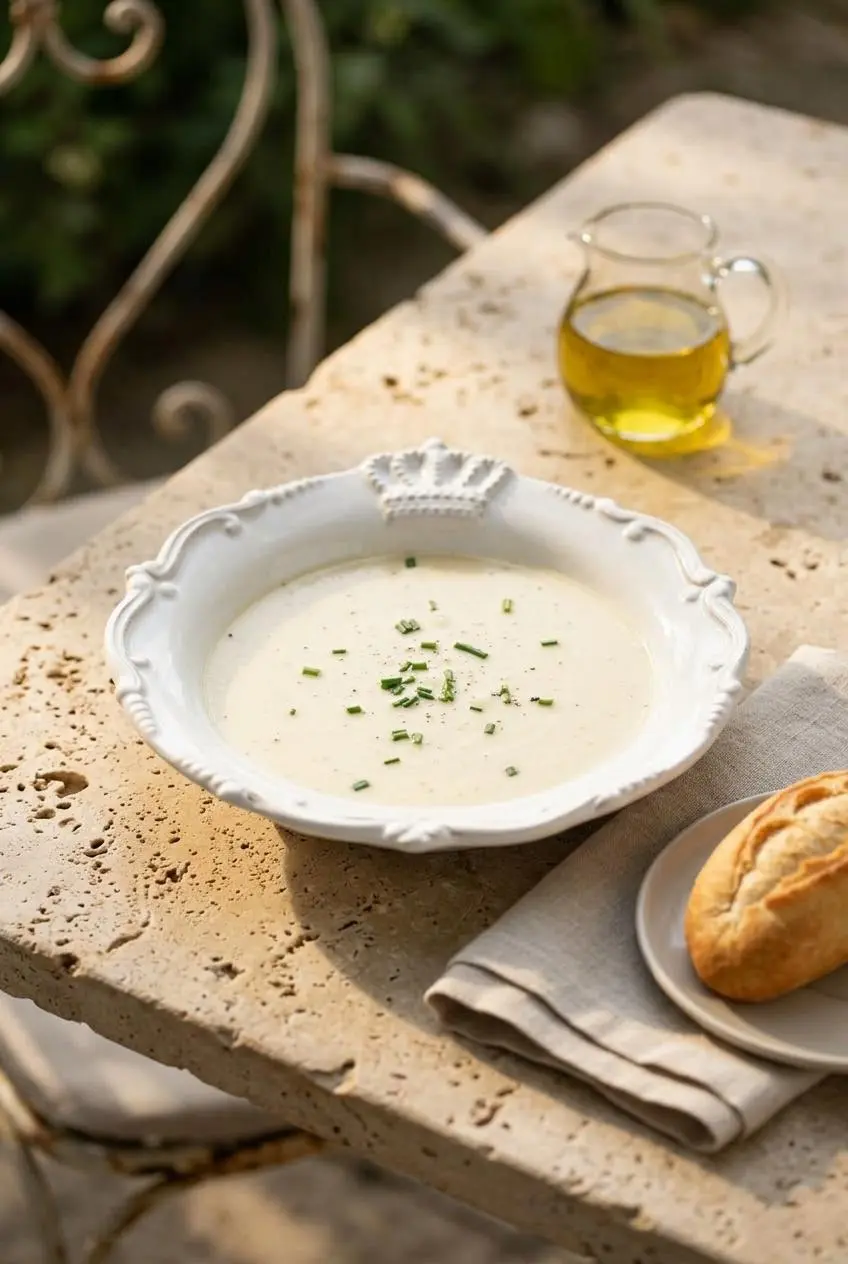
Serve vichyssoise in chilled bowls as a light first course, with a crisp green salad and warm crusty bread alongside. It also works beautifully in small cups for a summer gathering, where its cool, creamy texture feels polished without being fussy.
Chilled vs Warm: Enjoying as Potage Parmentier
Traditional vichyssoise is served chilled. If cool weather calls for something warmer, gently heat a portion over low heat and serve it as Potage Parmentier, the warm potato-leek version of the dish.
Taste again before serving warm. The hot soup usually needs slightly less seasoning than the chilled version because its aroma and saltiness come through more clearly.
Garnishes and Dairy-Free Swaps
Finely snipped chives are the classic finish, and a pinch of white pepper adds a subtle earthy edge. For a more polished bowl, drizzle in a little chive oil or add a thin strip of lemon zest that has briefly perfumed the warm broth before chilling.
- Vegetarian: Use vegetable broth in place of chicken broth for a lighter savory profile.
- Dairy-free: Replace the heavy cream with cashew cream for a rich, rounded texture.
- Vegan: Use vegetable broth, replace the butter with olive oil, and finish with unsweetened coconut cream for a different but still silky result.
These are optional adaptations rather than changes to the main method. Keep the leek cooking gentle and the blending restrained, and the soup will still hold its elegant character.
Conclusion
Vichyssoise earns its place as a warm-weather classic with its cool velvet texture, mild leek sweetness, and understated richness. The ingredients do the work when they are treated gently.
Keep the leeks pale, blend with restraint, and strain for the smoothest finish. A chilled bowl with fresh chives makes a quietly special meal.
Frequently Asked Questions
Is Vichyssoise Soup Served Hot or Cold?
Vichyssoise is traditionally served chilled. The same leek-and-potato preparation served warm is known as Potage Parmentier. Both are delicious, but cold service gives vichyssoise its signature refreshing character.
What Is the Difference Between Potato Leek Soup and Vichyssoise?
Potato leek soup is often served hot and may have a rustic, less uniform texture. Vichyssoise is blended very smooth, commonly strained through a fine sieve, enriched with cream, and served cold. Its pale color and polished texture are central to the dish.
Can Vichyssoise Soup Be Frozen Successfully?
Freezing the finished cream soup is not ideal. Heavy cream can separate, and the potato puree may turn watery or grainy after thawing. For the best texture, enjoy the chilled soup fresh from the refrigerator.
Why Did My Vichyssoise Turn Gluey or Gummy?
High-speed blending can overwork cooked potato starch and create a sticky texture. Use an immersion blender in gentle passes, or use a food mill for a lighter puree. If the soup is only slightly gummy, loosen it with warm liquid and strain it through a fine-mesh sieve.
How Far in Advance Can Vichyssoise Be Made?
The soup can be made ahead and chilled until serving. An overnight chill gives the flavors time to meld and helps the texture settle into its smooth, cold consistency. Keep it covered in the refrigerator and add the chives just before serving.

Vichyssoise Soup

Equipment
- Dutch oven or heavy-bottomed pot
- Immersion hand blender or regular blender
Ingredients
- 1 large sweet onion chopped
- 2 tablespoons butter
- 1 tablespoon olive oil
- 3 large potatoes peeled and diced
- 6 large leeks thoroughly rinsed and sliced (white and light green parts only)
- 1 quart chicken broth
- Salt and pepper to taste
- 1 pinch nutmeg
- 1/2 cup heavy cream
- Chives to garnish
Instructions
- Warm the butter and olive oil in a Dutch oven or heavy-bottomed pot over medium-high heat. The butter should melt and foam gently without turning brown.
- Add the chopped onion and cook for about 2 minutes. Stir until it looks translucent and smells sweet rather than sharp.
- Stir in the leeks and cook for about 4 to 5 minutes. Let them soften completely while keeping every piece pale and free of browned edges.
- Add the diced potatoes, season with salt and pepper, and stir them with the softened alliums for a couple of minutes. The potatoes should be coated in the fragrant butter and oil mixture.
- Pour in the chicken broth and bring the pot to a boil. Scrape the bottom as the broth heats so all the softened vegetables are evenly distributed.
- Reduce the heat and simmer for 30 minutes. A fork should slide easily through the potatoes when they are ready to puree.
- Blend the soup until smooth with an immersion blender, or blend it in batches in a regular blender. Keep the blending gentle and stop once the puree is uniform to avoid overworking the potato starch.
- Stir in the heavy cream and return the soup to medium heat for about 5 minutes. The soup should look glossy and lightly thicken enough to cling to the back of a spoon.
- Taste the soup, adjust the salt and pepper, and stir in the nutmeg before removing the pot from the heat. The seasoning should taste slightly more pronounced than expected for hot soup because chilling softens it.
- Let the soup cool to room temperature, then chill it for at least 1 hour before serving. For the fullest flavor and a more settled texture, chill it overnight.
- Finish each serving with chopped chives. The fresh green garnish should add a clean, oniony lift against the pale soup.