Classic potato leek soup is a silky French-style soup made by gently cooking leeks in butter, simmering Yukon Gold potatoes in broth, then blending everything smooth with heavy cream.
This potato leek soup gets its rich, mild onion flavor from leeks softened slowly in butter, with potatoes providing a naturally velvety body.
The aroma of sweet leeks and garlic turning soft in butter makes the kitchen feel instantly cozier. The key is gentle heat and a light hand with the blender.
Wash the leeks before heating the pot, since hidden grit is much easier to remove while the layers are cool and separate.
Key Ingredients and Flavor Roles
Each ingredient builds the soup’s savory depth, creamy structure, gentle allium aroma, and fresh finishing contrast without masking the delicate flavor of the leeks.
- 3 tablespoons unsalted butter
- 4 large leeks, (white and light green parts only, roughly chopped (about 5 cups))
- 3 cloves garlic, (peeled and smashed)
- 2 lb Yukon Gold potatoes, (peeled and roughly chopped into 1/2-in (13-cm) pieces)
- 7 cups chicken or vegetable broth
- 2 bay leaves
- 3 sprigs fresh thyme
- 1 teaspoon salt
- 1/4 teaspoon freshly ground black pepper
- 1 cup heavy cream
- Chives (finely chopped, for serving)
Butter carries the sweetness of the leeks and softens the garlic’s sharper edge. Broth gives the potatoes savory depth, while thyme and bay leaves keep the finished soup from tasting flat. Heavy cream rounds out the purée, and chives add a clean, fresh finish.
I trim away only the fibrous darkest leek leaves and keep every pale, tender ring, since that is where the sweetest flavor lives.
Yukon Gold vs Russet Potatoes
Yukon Gold potatoes are the best fit here because they have balanced starch and a naturally buttery texture. Once blended, they create a creamy emulsion that feels lush without becoming heavy.
Russets contain more starch and can turn pasty if blended aggressively, especially in a powerful countertop blender. Red potatoes hold their shape well, but their waxier texture gives the soup less body. If Yukon Golds are unavailable, blend any substitute gently and stop as soon as the soup looks smooth.
Selecting and Prepping Fresh Leeks
Choose leeks with firm white stalks, pale green centers, and crisp tops. Avoid stalks that feel slippery or have deeply dried outer layers. Trim the root end, remove the tough dark green leaves, and use the white and light green portions for the soup.
Leeks grow in sandy soil, and their tight layers catch it surprisingly well. Treat cleaning as part of the prep, not an optional rinse.
How to Clean Leeks Thoroughly
A gritty spoonful can spoil an otherwise beautiful soup, so wash leeks in a bowl of water rather than relying on a quick rinse.
After trimming the roots and tough dark green leaves, cut each leek lengthwise and fan open the layers under cold running water. This loosens soil trapped near the base while preserving the tender sections that belong in the pot.
For chopped leeks, place the slices in a large bowl of cold water and swish them vigorously with your hands. Let the grit sink, then lift the floating leek pieces out with a spider or slotted spoon. Do not pour the bowl through a colander, since that can send settled sand right back over the cleaned leeks.
Zero-Waste Tip for Green Leek Tops
Clean dark green leek tops still bring plenty of savory aroma. Save them in a freezer bag until you are making chicken or vegetable stock, then simmer them with other vegetable trimmings and strain before using. Their flavor is useful even though their texture is too fibrous for this smooth soup.
How to Make Classic Potato Leek Soup Step by Step
Gentle cooking keeps the flavor pale, sweet, and balanced. Watch for soft leeks, completely tender potatoes, and a quiet shimmer after the cream goes in.
Sweating the Aromatics
Start with butter, leeks, and smashed garlic in a large soup pot over medium heat. Stir regularly and lower the heat if the edges begin to color. The leeks should soften and smell sweet, not toasted.
Simmering to Fork-Tender Perfection
Potatoes need a gentle covered simmer so they soften evenly and absorb the herb-scented broth. Test a piece with a fork or paring knife before blending. It should yield without resistance.
Blending and Finishing With Cream
Remove the bay leaves and thyme stems before puréeing. An immersion blender gives the most control and lets you stop at the first sign of smoothness. Finish with cream over low heat, keeping the surface at a gentle shimmer rather than a hard boil.
- Melt the butter in a large soup pot over medium heat, then add the leeks and smashed garlic and cook for about 10 minutes, stirring often.
The leeks should look soft and glossy with a sweet aroma, without golden or brown edges. - Add the potatoes, chicken or vegetable broth, bay leaves, thyme, salt, and black pepper, then bring the mixture to a boil.
Cover the pot, lower the heat, and let it simmer gently for 15 minutes until the potato pieces collapse easily when pressed with a fork. - Remove the bay leaves and thyme, then purée the soup with an immersion blender until smooth.
Blend only until the texture is even and creamy, as excessive blending can make potato starch feel gluey. - Warm the heavy cream with a ladleful of hot soup, then stir it into the pot and bring the soup to a gentle simmer.
Taste and adjust with salt and pepper, thinning with water or broth if needed or simmering gently if the soup needs more body.
Recipe Success Tips and Common Mistakes

Small technique choices make the difference between a bright, velvety soup and one that tastes dull or feels sticky.
- Browned leeks: High heat gives the leeks a darker, roasted flavor and changes the soup’s pale color. Keep the heat moderate and stir often until they are soft and translucent.
- Gluey texture: Potatoes release starch when their cells are worked too hard. Use an immersion blender, or blend countertop batches briefly at a low setting rather than running at full speed.
- Hot blender splatters: If using a countertop blender, work in small batches and leave room for steam to escape. Hold the lid with a folded kitchen towel and start slowly.
- Separated cream: Temper cold cream with some warm soup before adding it, then keep the pot below a rolling boil. The surface should barely ripple.
- Soup too thick: Stir in water or broth gradually until the spoon moves easily through the soup.
- Soup too thin: Let it simmer gently after blending so moisture can cook off without scorching the bottom.
If you prefer a hands-off potato soup for another meal, this slow cooker potato soup offers a different approach, though the leek version benefits from the close control of stovetop sweating.
Variations, Swaps, and Serving Suggestions
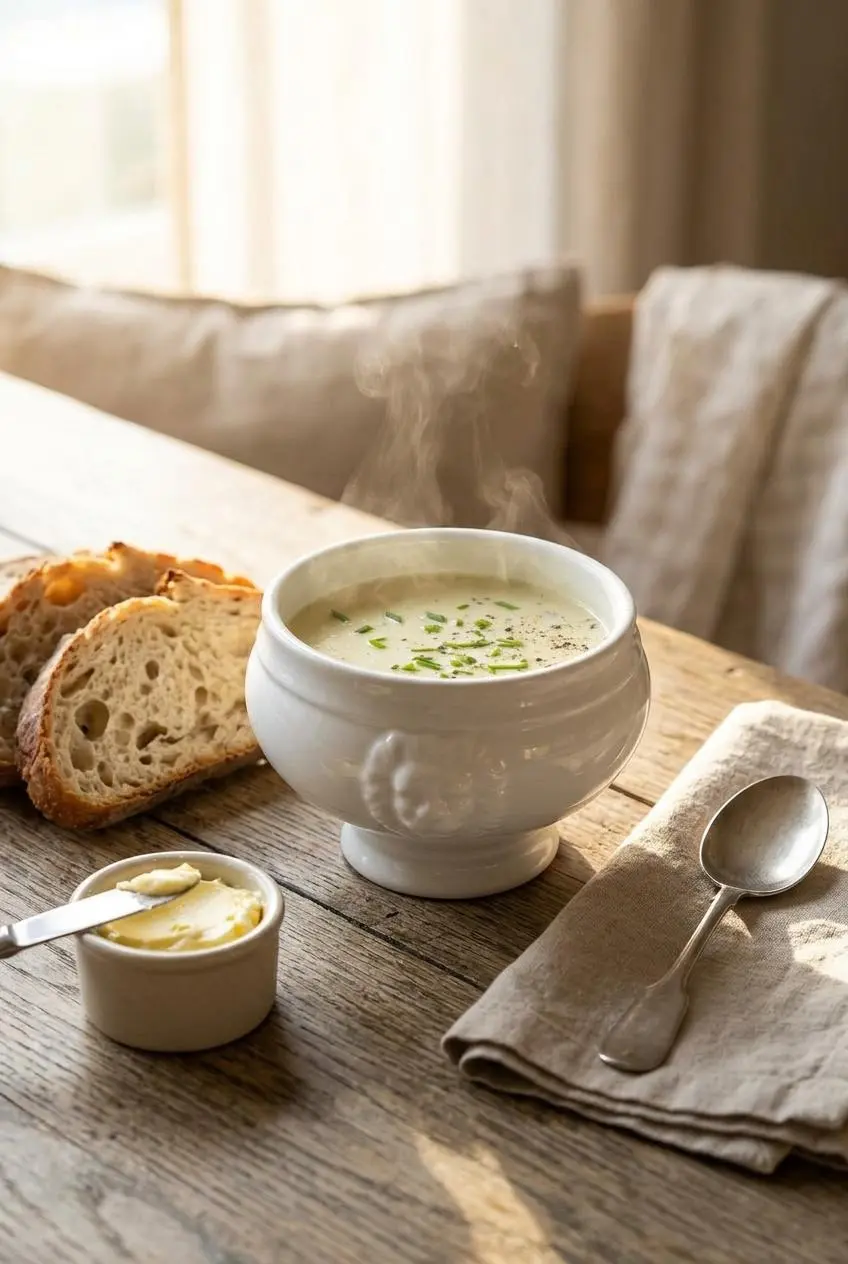
Keep the main pot as written, then adjust the finished soup only if you want a different texture or a dairy-free direction.
For a subtle aromatic lift, stir in a little fresh lemon zest and a pinch of ground nutmeg after puréeing. Both additions stay in the background and complement the cream without taking over the leek flavor.
Dairy-Free and Vegan Options
For a dairy-free version, use olive oil or plant butter for the leeks and choose vegetable broth. Replace the heavy cream with full-fat canned coconut milk, blended soaked cashews, or creamy oat milk.
- Coconut milk: Adds the richest body with a faint coconut flavor.
- Cashew cream: Produces a neutral, thick finish with a classic creamy feel.
- Oat milk: Keeps the flavor mild but makes a lighter-bodied soup.
Rustic Chunky Style vs Silky Purée
For a heartier bowl, remove some tender potato pieces before blending. Purée the remaining soup, then fold the reserved potatoes back in for soft chunks surrounded by creamy broth. For the silkiest finish, blend the full pot with an immersion blender just until uniform.
Chilled Vichyssoise Variation
Turn the finished soup into a chilled Vichyssoise by cooling it completely in the refrigerator and serving it cold. Extra minced chives and cracked white pepper suit the smooth, delicate flavor especially well.
What to Serve With Potato Leek Soup
- Warm crusty sourdough for dipping into the creamy broth.
- Garlic butter croutons for crunch without overwhelming the leeks.
- Crisp bacon crumbles for a salty contrast.
- A mixed green salad with Dijon vinaigrette for a sharper, fresh side.
- A sharp cheddar grilled cheese sandwich for a cozy lunch or casual dinner.
For another smooth vegetable-potato option, try this cauliflower and potato soup, which has a similarly creamy spoonable texture with a different vegetable flavor.
Storage and Gentle Reheating
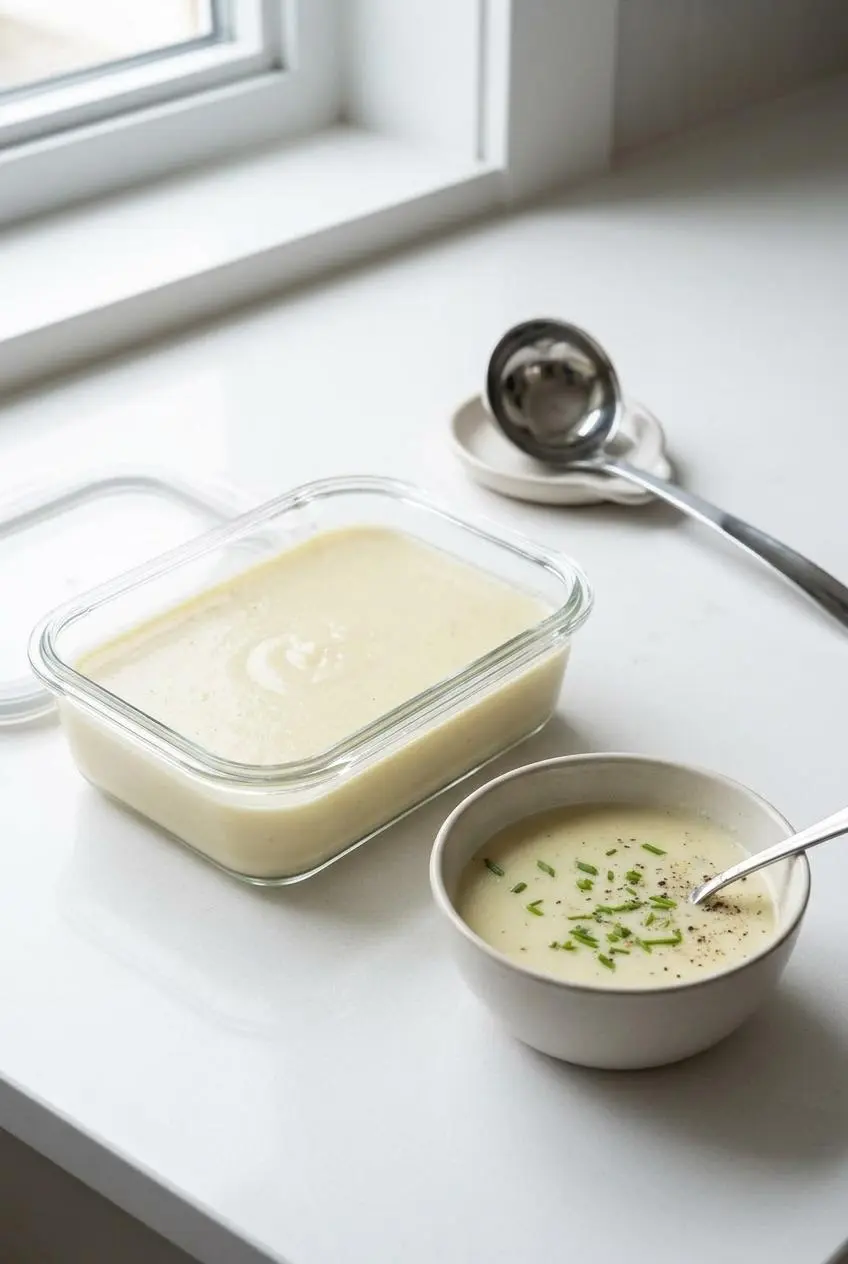
Cool leftover soup before transferring it to an airtight container and keeping it chilled. Store the chives separately when possible so they stay fresh and bright rather than softening into the soup.
Reheat portions slowly on the stovetop over low heat, stirring often enough to keep the creamy base smooth. Avoid a rapid boil after adding cream. If the soup thickens while chilled, loosen it with a small splash of broth or water until it returns to a spoonable consistency.
For advance prep, cook and blend the potato-leek base, then add the cream when you reheat it gently for serving. This gives you more control over the final texture and seasoning.
Conclusion
Sweet leeks, Yukon Gold potatoes, butter, and herbs make a deeply comforting soup with a smooth, savory finish. Thorough washing, gentle sweating, and restrained blending are the habits that keep every bowl silky.
Serve it warm with crusty bread for a cozy meal, or cool it fully for a chilled Vichyssoise-style bowl. Either way, let the leeks stay the star.
Frequently Asked Questions
What Are the Most Common Mistakes When Making Potato Leek Soup?
Browning the leeks instead of softening them gently, which makes the flavor darker and less delicate. Skipping the water-bath wash, leaving hidden grit between leek layers. Over-blending the potatoes, which can make their starch turn sticky. Boiling the soup vigorously after adding heavy cream, which can affect its smooth texture.
How Should Leftover Potato Leek Soup Be Handled?
Cool the soup, transfer it to a covered airtight container, and keep it chilled. Reheat it gently on the stovetop rather than using high heat, and add a splash of broth or water if the potatoes have thickened the texture.
Which Potatoes Make the Best Potato Leek Soup?
Yukon Gold potatoes are the strongest choice because their medium starch content and buttery texture create a creamy purée without needing aggressive blending. Russets can work but need a lighter hand, while red potatoes make a less velvety soup.
How Can You Make Potato Leek Soup Without Dairy?
Sauté the leeks in olive oil or plant butter, use vegetable broth, and finish the puréed soup with coconut milk, cashew cream, or creamy oat milk. Each option changes the flavor slightly, so choose coconut for richness, cashew for neutrality, or oat milk for a lighter finish.

Potato Leek Soup

Equipment
- Immersion Blender
- Dutch oven or large soup pot
Ingredients
- 3 tablespoons unsalted butter
- 4 large leeks white and light green parts only, roughly chopped (about 5 cups)
- 3 cloves garlic peeled and smashed
- 2 lb Yukon Gold potatoes peeled and roughly chopped into 1/2-in (13-cm) pieces
- 7 cups chicken or vegetable broth
- 2 bay leaves
- 3 sprigs fresh thyme
- 1 teaspoon salt
- 1/4 teaspoon freshly ground black pepper
- 1 cup heavy cream
- Chives finely chopped, for serving
Instructions
- Melt the butter in a large soup pot over medium heat, then add the leeks and smashed garlic and cook for about 10 minutes, stirring often. The leeks should look soft and glossy with a sweet aroma, without golden or brown edges.
- Add the potatoes, chicken or vegetable broth, bay leaves, thyme, salt, and black pepper, then bring the mixture to a boil. Cover the pot, lower the heat, and let it simmer gently for 15 minutes until the potato pieces collapse easily when pressed with a fork.
- Remove the bay leaves and thyme, then purée the soup with an immersion blender until smooth. Blend only until the texture is even and creamy, as excessive blending can make potato starch feel gluey.
- Warm the heavy cream with a ladleful of hot soup, then stir it into the pot and bring the soup to a gentle simmer. Taste and adjust with salt and pepper, thinning with water or broth if needed or simmering gently if the soup needs more body.