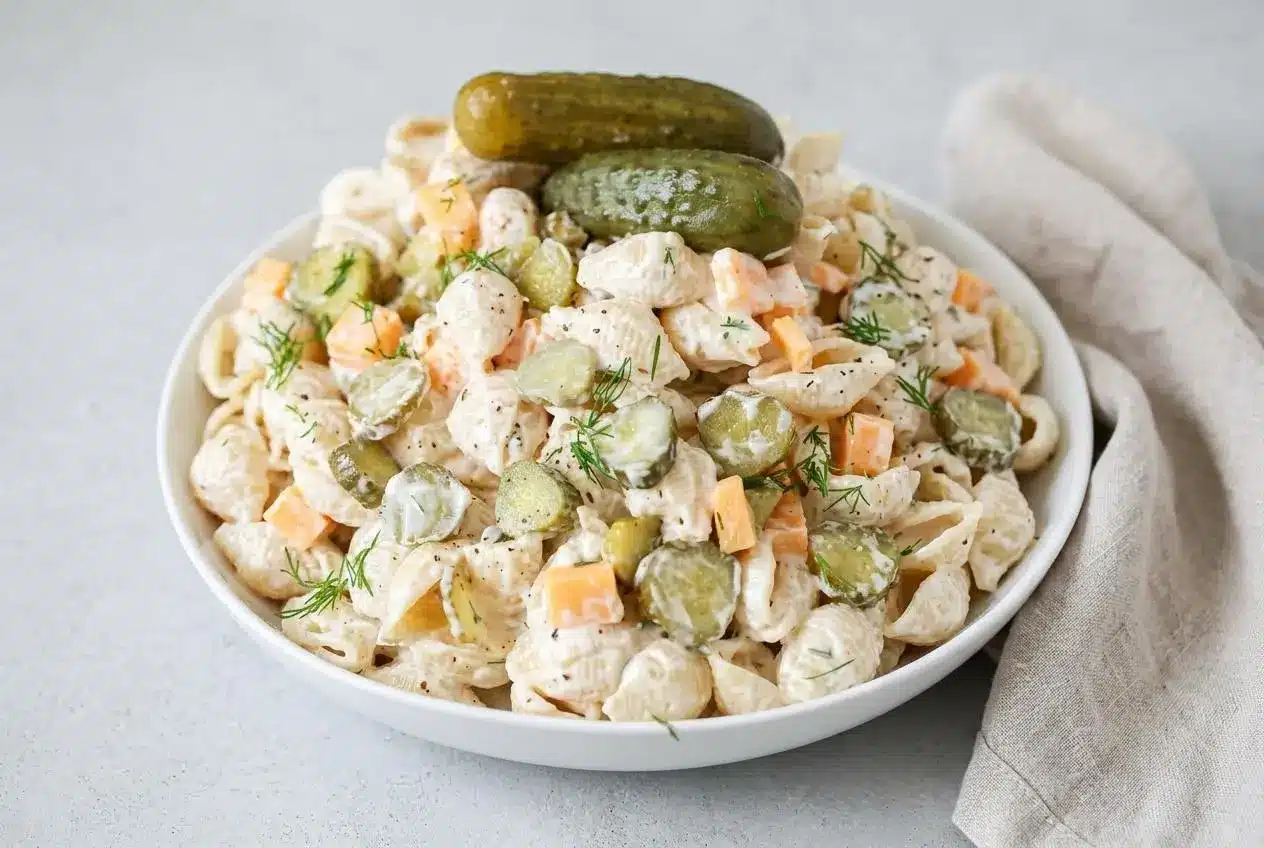
Dill pickle pasta salad pairs tender shells with crunchy dill pickles, cheddar, onion, and fresh dill in a creamy pickle juice dressing. A five-minute brine soak seasons the pasta before dressing, giving this chilled side a tangy flavor throughout.
Cold pickle slices bring a satisfying crunch against soft pasta and creamy cheddar. This is a pickle-forward cookout side, with fresh dill adding a green, fragrant lift to every forkful.
The mayonnaise and sour cream dressing balances richness with sharp brine without burying the pickles. Careful draining keeps the coating creamy rather than watery. The brine soak makes the difference.
Set a colander beside the sink before you start so you can cool and drain the shells as soon as they’re ready.
Essential Ingredients for Pickly Pasta Salad
Shells hold the creamy coating, pickles supply crunch and acidity, and cheddar adds richness. Onion and dill bring sharpness and freshness, while mayonnaise, sour cream, brine, and seasonings create a balanced dressing that ties everything together.
- ½ pound medium shells (about 3 cups)
- ¾ cup sliced pickles
- ⅔ cup diced cheddar cheese
- 3 tablespoons minced white onion
- 2 tablespoons chopped fresh dill
- ½ cup dill pickle juice
Dressing
- ⅔ cup mayonnaise
- ⅓ cup sour cream
- ⅛ teaspoon cayenne pepper
- 4 tablespoons dill pickle juice
- salt and black pepper (to taste)
Cheddar cubes give each bite a distinct creamy, salty contrast. Sharp cheddar stands up especially well to the vinegar flavor, though the listed cheddar can be whatever variety you prefer. Mince the onion finely so it adds a little bite without taking over.
Fresh dill brings a grassy aroma and green flecks that complement the pickles. Chop its tender leaves and fine stems; leave out tough stems that would feel stringy against the pasta.
I like to blot the pickle slices gently with a clean towel so their surface brine doesn’t thin the dressing.
Choosing the Best Pasta Shapes
Medium shells are the choice here because their curved pockets collect dressing and small bits of onion and dill. Their size also lets you scoop pasta, cheese, and pickles together rather than chasing separate pieces around the bowl.
If you want an optional shape swap, choose another short pasta:
- Rotini: The spiral grooves hold creamy dressing along each twist.
- Cavatappi: Curved tubes offer a slightly chewier bite and plenty of surface for coating.
- Small shells: Their pockets work similarly to medium shells, with a smaller bite.
Follow the package directions for the shape you choose, then check the texture yourself. The pasta should bend easily but retain a firm center.
Deli Pickles vs Jarred Baby Dills
Refrigerated deli dill pickles are often a good starting point when crispness matters. Choose slices that feel firm and have a clean snap when you bite into them. Garlic-forward pickles make the salad bolder; milder dills let the fresh herbs come through.
Jarred baby dills also work well. Refrigeration alone doesn’t guarantee better crunch, so taste a pickle before committing it to the salad. Avoid soft pickles, and slice large ones into pieces that fit comfortably on a fork.
Use sour dill pickles for the intended savory tang. Sweet bread-and-butter pickles change both the salad and its dressing because their brine brings sweetness along with acidity.
Creating the Balanced Creamy Dressing
The dressing uses twice as much mayonnaise as sour cream. Mayonnaise supplies body and richness, while sour cream adds tang and softens the heavier mayonnaise flavor. Pickle juice loosens the mixture enough to coat the shells.
Whisk until the dressing looks smooth, without streaks of sour cream. It should cling to a spoon while still spreading easily through the pasta. Cayenne adds a touch of warmth, but its strength varies, so don’t assume the finished salad will taste completely mild.
Taste before adding salt because the pickle juice and cheese already contribute saltiness. Fresh dill gives the finished bowl a brighter aroma than dried dill, although dried dill weed can be an optional substitute. Start with less and adjust after it has hydrated in the dressing.
How to Make the Dill Pickle Pasta Salad and the Brine Secret
Keep the pasta cold and well drained before adding the creamy dressing. This recipe makes 8 servings, with about 20 minutes of preparation and cooking plus at least 1 hour of chilling.
- Cook the shells using the package’s al dente directions, then transfer them to a colander and rinse with cold water until cool.
The shells should feel tender at the edges with a firm bite in the center. - Coat the cooled shells with about ½ cup dill pickle juice, let them soak for about 5 minutes, then drain away and discard the soaking liquid.
The pasta should taste lightly briny, with no puddle of juice remaining beneath it. - Whisk the mayonnaise, sour cream, cayenne, 4 tablespoons dill pickle juice, and salt and black pepper to taste in a small bowl.
The finished dressing should look evenly blended and creamy, without pale streaks or separate liquid. - Fold the drained shells, pickle slices, cheddar, onion, fresh dill, and dressing together in a large bowl, then refrigerate for at least 1 hour before serving.
Each shell should have a glossy coating, with pickle slices and cheese distributed throughout.
Cooking Pasta to True Al Dente
Begin checking the shells near the end of the package’s recommended cooking range. Bite into one rather than relying only on the clock. You want firmness, not a chalky or crunchy center.
Seasoning the cooking water can help prevent bland pasta, but remember that this salad also gets salty pickle brine and cheddar. There’s no need to compensate for every seasoning concern with more salt.
Cold rinsing stops residual cooking and cools the shells for the dressing. Move the pasta gently in the colander so water reaches the shells underneath, then let it drain thoroughly. Overcooked pasta won’t become firm again when chilled.
The Pickle Juice Marinade Technique
This recipe uses pickle juice in two stages. The first portion contacts the bare, cooled pasta for about five minutes, giving the shells tang before the creamy coating goes on. The second portion flavors the dressing itself.
The soak helps prevent a bowl that tastes flavorful on the surface but plain when you bite into the pasta. You don’t need to warm the shells for this step; use the cooled pasta as directed.
Drain the soaking liquid even if some still remains after the rest. It has done its job. Keeping it in the bowl would change the dressing’s balance and leave excess liquid collecting beneath the salad.
Tossing and Chilling for Maximum Flavor
Use a broad spatula or large spoon to lift the pasta from the bottom and fold it over. Gentle folding coats the shells without breaking them or crushing the pickle slices.
Check the bottom of the bowl for uncoated pasta as you work. The mixture should look glossy and evenly speckled with dill, not flooded with dressing.
The required chill gives the salad time to cool thoroughly and lets the flavors settle together. Stir gently before serving to redistribute any coating that has collected underneath.
Troubleshooting Common Pasta Salad Mistakes
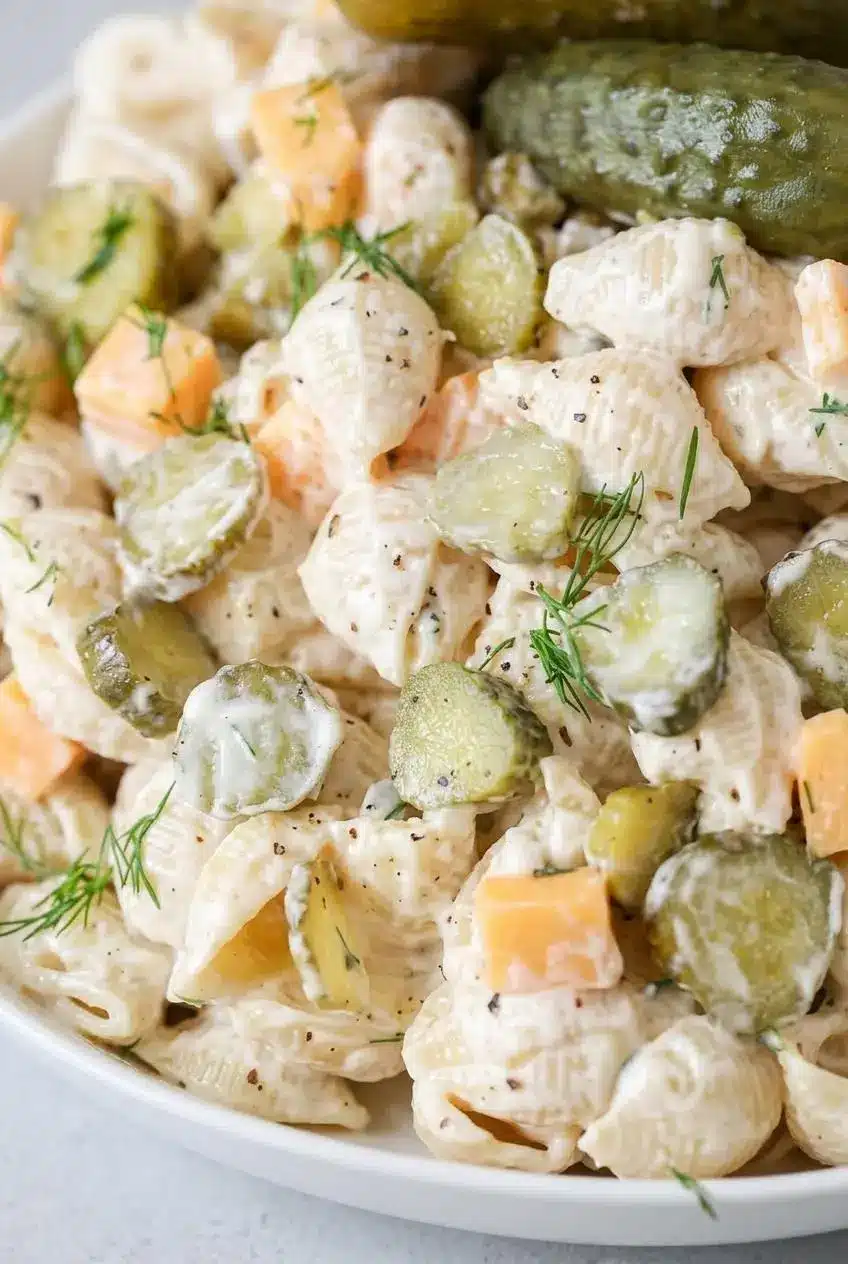
Texture problems usually start with overcooked pasta or extra liquid. These fixes help you identify the cause before adding more dressing or seasoning.
- Mushy shells: The pasta cooked beyond al dente or stayed hot after draining. Check its bite during cooking and rinse promptly with cold water. Already-mushy shells can’t be repaired, so handle them gently rather than stirring aggressively.
- Watery salad: Rinse water, soaking brine, or wet pickle slices diluted the dressing. Drain the pasta thoroughly at both stages and blot the pickles before mixing. Don’t pour additional juice into an already-loose bowl.
- Dry coating: Cooked pasta continues taking up moisture while it rests. Fold in a little additional creamy dressing or a small splash of pickle juice, then reassess before adding more.
- Strong onion bite: Large pieces or a particularly pungent onion can dominate. Mince finely; for an optional gentler result, soak the minced onion in cold water and dry it thoroughly before adding.
- Bland flavor: Taste a complete bite with pasta, pickle, and cheese before adjusting. More dill or black pepper may help without adding salt, while extra brine adds both acidity and saltiness.
- Warm, loose dressing: The pasta wasn’t fully cooled before mixing. Cool the shells completely first so the dressing coats cold pasta rather than warming on contact.
The same attention to cooking and draining helps with a classic pasta salad. Here, the extra brine soak makes that second drain especially important.
Flavorful Add-Ins and Protein Variations
Keep these changes optional and choose additions that support the pickle flavor rather than crowding it out. Taste the finished salad before adding another salty or acidic ingredient.
- Colby Jack: Swap it for cheddar if you prefer a milder cheese flavor.
- Dijon mustard: Stir a little into the dressing for sharper tang; whole-grain Dijon also adds small mustard seeds.
- Lemon zest: Add a light grating for citrus aroma without pouring more liquid into the bowl.
- Cooked chicken: Fold in chilled, chopped grilled chicken for a more substantial lunch.
Adding Crispy Smoked Bacon
Crisp cooked bacon adds smoky flavor that pairs well with cheddar and dill pickles. Let it cool, break it into bite-size pieces, and fold it in just before serving to preserve its crunch.
Cubed smoked ham offers a softer, savory alternative. Both additions bring salt, so taste before adjusting the dressing’s seasoning. They’re optional additions, not replacements for the listed pickles or cheese.
Plain Greek Yogurt Substitution
Plain Greek yogurt can replace some or all of the sour cream for a different tangy finish. Keep the sour cream’s listed volume as your guide rather than adding yogurt on top of it.
Replacing mayonnaise changes the result more noticeably: the dressing becomes more yogurt-forward and less rich. Try replacing part first, then adjust to your preference. Choose plain, unsweetened yogurt and whisk thoroughly before folding it into the pasta.
For another meal-style option, try this high protein pasta salad. It offers a separate direction without requiring you to redesign this pickle-focused bowl.
Spicy Pickle Kick
Add heat gradually, especially when your pickles already have a spicy brine.
- Pickled jalapeños: Drain and chop them for pockets of peppery crunch.
- Crushed red pepper: Add a pinch for warmth without extra liquid.
- Hot sauce: Whisk a small splash into the dressing, then taste for both heat and acidity.
Make-Ahead and Storage Guidelines
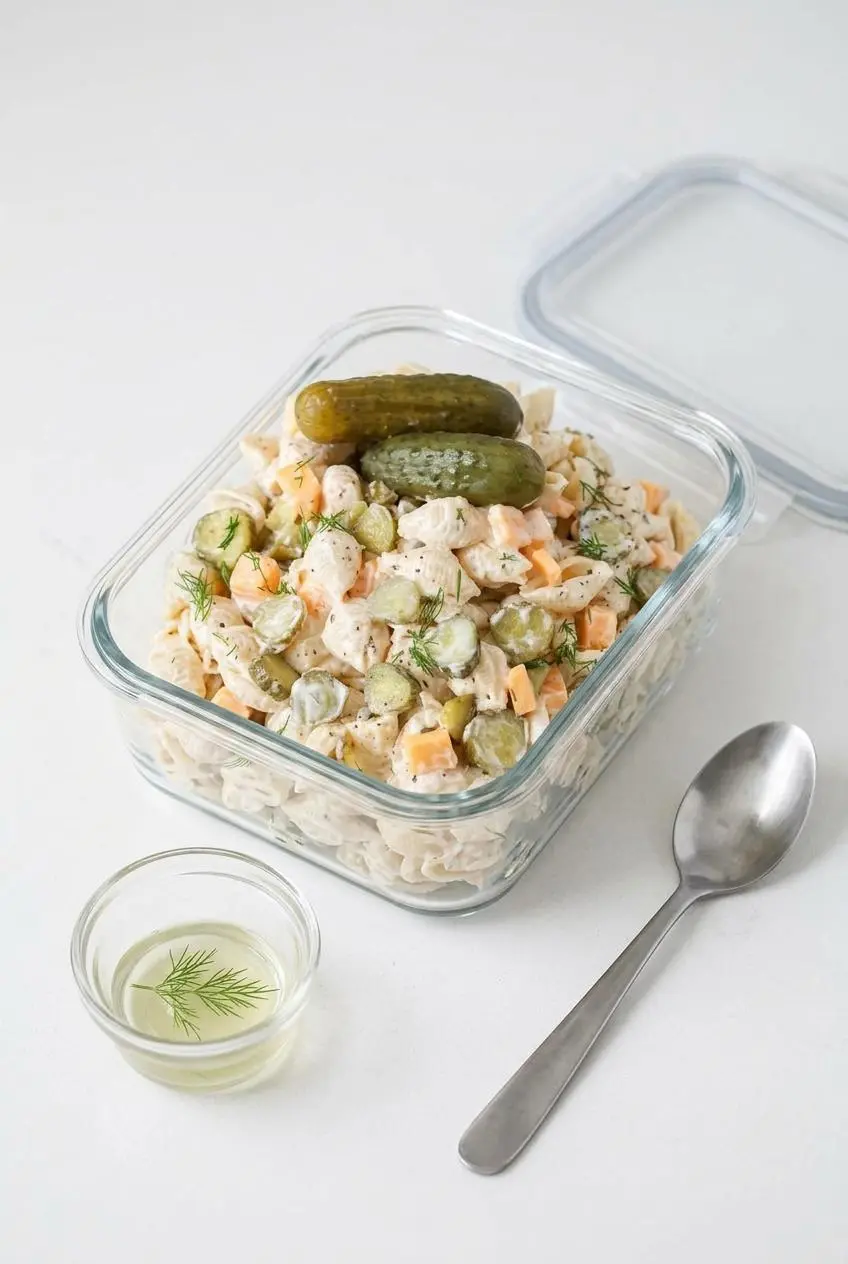
The required refrigerator chill makes this a useful dish to assemble before serving. Keep the salad covered in a tightly sealed container, and stir it gently when you’re ready to bring it to the table.
If you’re preparing components separately, keep the dressing and chopped mix-ins covered and refrigerated. Store any optional crisp bacon separately and add it at serving time so it doesn’t soften in the dressing.
For a picnic or potluck, transport the salad in a cooler with ice packs and keep it chilled until serving. Set out a smaller portion and replenish from the chilled container rather than leaving the entire batch exposed to outdoor heat. Refrigerate leftovers promptly.
How to Revive Leftover Pasta Salad
Stir the chilled salad first. Dressing sometimes collects beneath the pasta, so redistribution may restore the coating without any additions.
If the shells still look dry, fold in a little sour cream or mayonnaise. Add a small splash of pickle juice only if the mixture also needs loosening. Work gradually until the pasta looks glossy again.
Taste after refreshing. Brine affects salt and acidity as well as moisture, while mayonnaise mainly restores richness. Use the ingredient that addresses the actual problem instead of adding everything at once.
What to Serve With the Dill Pickle Pasta Salad
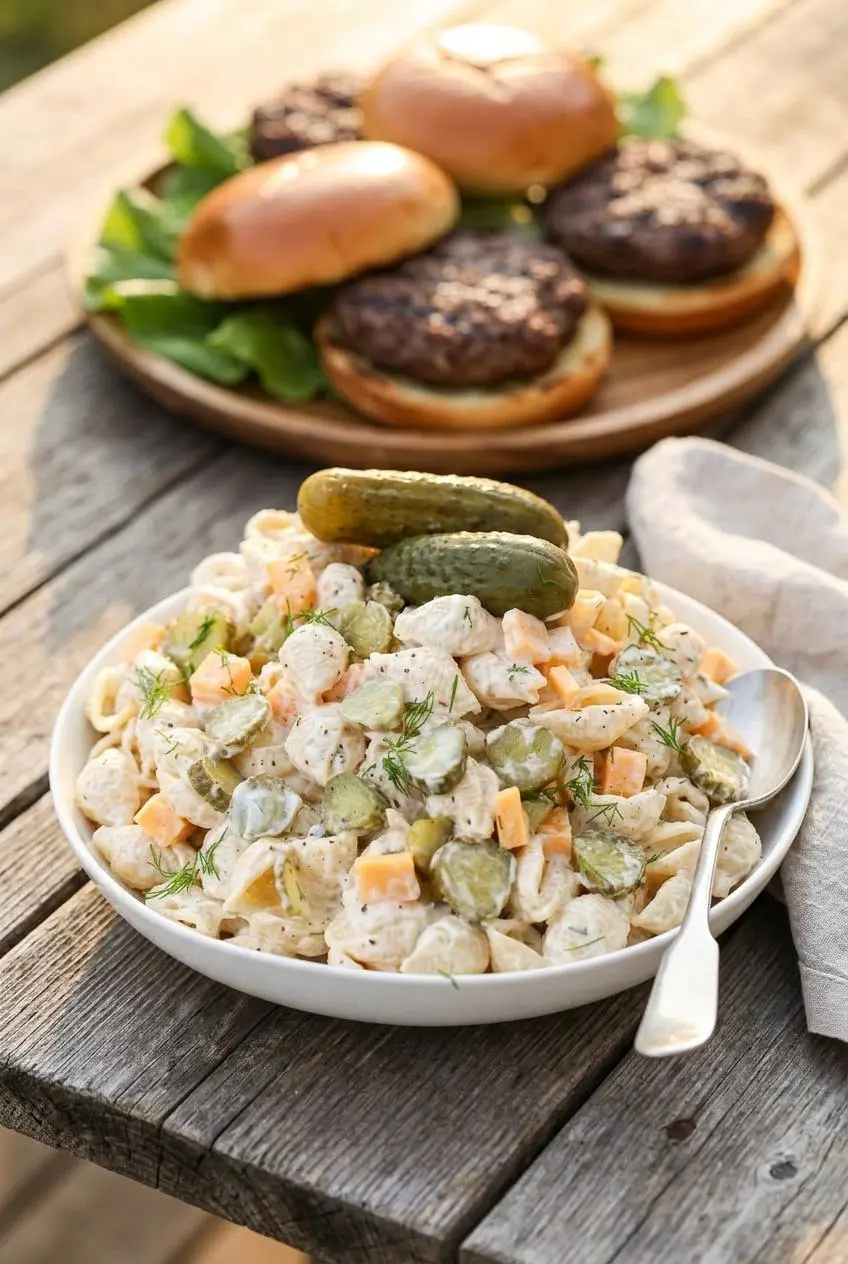
The salad’s cool, tangy character works especially well beside smoky, savory mains. Its creamy coating also makes it a satisfying counterpoint to a toasted sandwich.
- Grilled burgers or hot dogs: Serve the salad as a chilled side with crisp vegetables or fruit.
- Barbecue ribs or pulled pork: The pickle acidity contrasts with rich meat and sweet barbecue sauce.
- Barbecue chicken: Fresh dill and cold pickle crunch brighten a smoky plate.
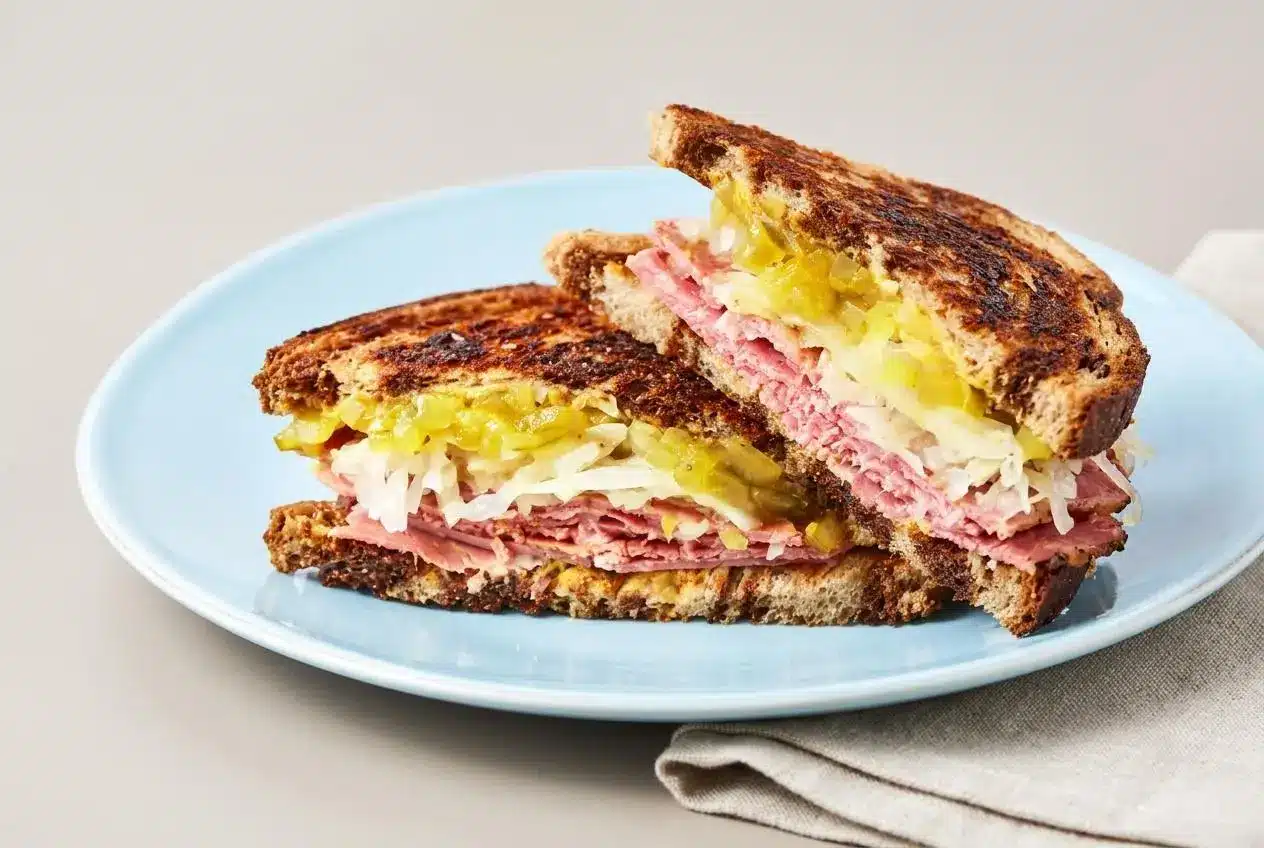
- Toasted deli sandwiches, wraps, or sliders: Add a scoop alongside for a lunch with contrasting temperatures and textures.
Conclusion
A brief pickle juice soak gives the shells their own tang, while crisp pickles, cheddar, and fresh dill keep every bite interesting. Thorough draining protects the creamy dressing.
Give the salad its full chill, then stir gently before serving. Keep it cold, taste a complete forkful, and adjust only what it needs.
Frequently Asked Questions
Why Did My Pasta Salad Absorb All the Dressing Overnight?
Cooked pasta continues absorbing moisture as it rests, so a generous coating can look thinner after chilling. Stir first, then fold in a little additional creamy dressing or pickle juice as needed. Add gradually to avoid making it watery.
What Are the Best Types of Pickles to Use for Pasta Salad?
Choose firm, crisp sour dill pickles. Refrigerated deli dills are often a good option, but crunchy jarred baby dills work too. Sweet bread-and-butter pickles create a different, sweeter flavor.
Can I Make Dill Pickle Pasta Salad Ahead of Time?
Yes. Assemble it before serving so it has time for the required refrigerator chill, and keep it tightly covered and cold. Stir before serving and refresh the coating only if it looks dry.
Can I Substitute Dried Dill for Fresh Dill in the Dressing?
Yes, dried dill weed is an optional substitute, though it won’t have the same fresh aroma. Use less than you would fresh dill, whisk it into the dressing, and let it hydrate before tasting and adjusting.
Dill Pickle Pasta Salad

Ingredients
- ½ pound medium shells (about 3 cups)
- ¾ cup sliced pickles
- ⅔ cup diced cheddar cheese
- 3 tablespoons minced white onion
- 2 tablespoons chopped fresh dill
- ½ cup dill pickle juice
Dressing
- ⅔ cup mayonnaise
- ⅓ cup sour cream
- ⅛ teaspoon cayenne pepper
- 4 tablespoons dill pickle juice
- salt and black pepper (to taste)
Instructions
- Cook the shells using the package’s al dente directions, then transfer them to a colander and rinse with cold water until cool. The shells should feel tender at the edges with a firm bite in the center.
- Coat the cooled shells with about ½ cup dill pickle juice, let them soak for about 5 minutes, then drain away and discard the soaking liquid. The pasta should taste lightly briny, with no puddle of juice remaining beneath it.
- Whisk the mayonnaise, sour cream, cayenne, 4 tablespoons dill pickle juice, and salt and black pepper to taste in a small bowl. The finished dressing should look evenly blended and creamy, without pale streaks or separate liquid.
- Fold the drained shells, pickle slices, cheddar, onion, fresh dill, and dressing together in a large bowl, then refrigerate for at least 1 hour before serving. Each shell should have a glossy coating, with pickle slices and cheese distributed throughout.