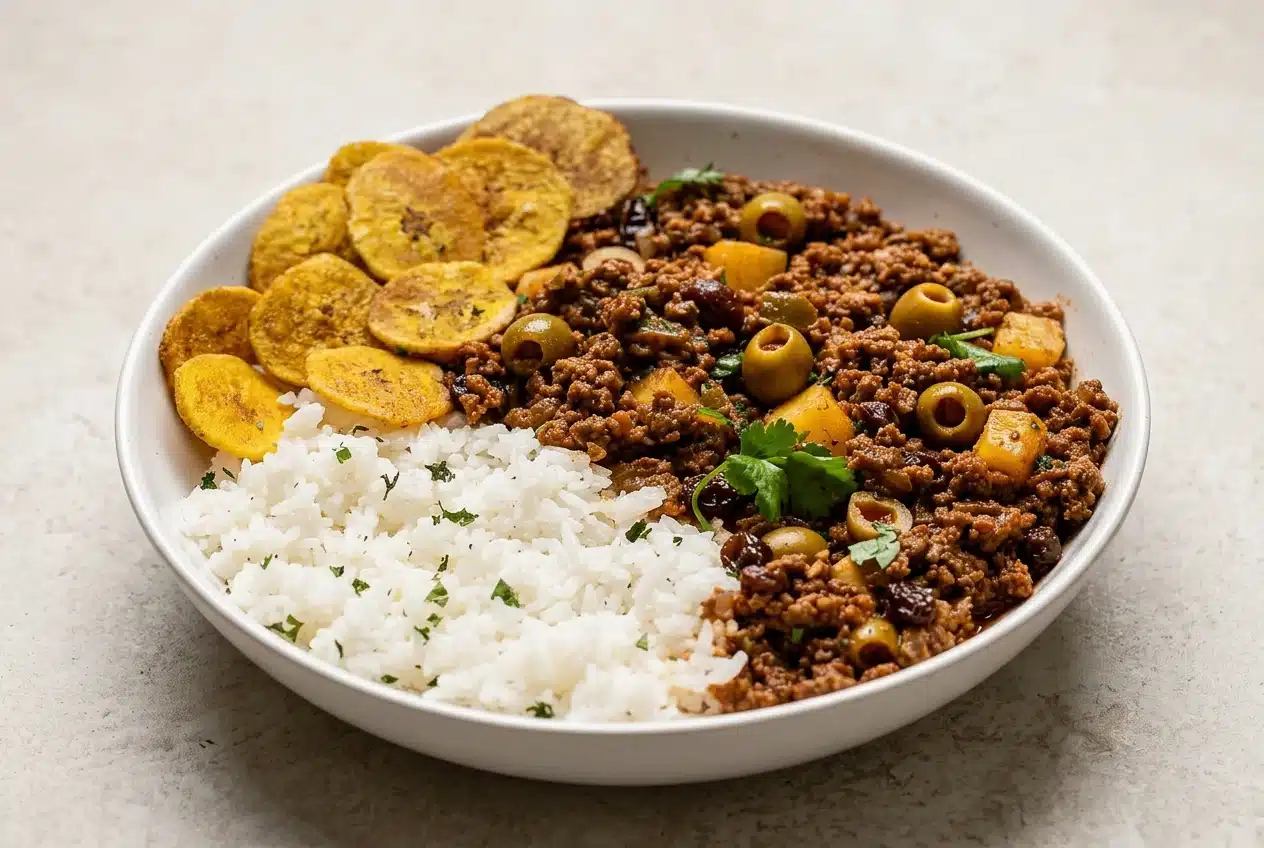
This Cuban picadillo recipe simmers ground beef with onion, green pepper, garlic, tomatoes, and briny green olives. Potato cubes turn tender in the sauce, which clings to the beef and is ready to spoon over white rice. Raisins are optional for a touch of sweetness.
Picadillo cubano is a stovetop ground beef dish with plenty of room for household preferences. This version gets its savory backbone from sofrito, cumin, and oregano, then gets a bright, salty bite from olives and a splash of their brine.
The potato cubes make the dish hearty, but they don’t have to cook from raw in the tomato sauce. Their head start is what makes the timing work.
Cut the potatoes into even cubes so they finish cooking at the same time.
Cuban Picadillo Ingredients
Every ingredient has a job, from building the aromatic base to giving the sauce body and balancing its richness. Potatoes add tender bites, olives bring tang, and the optional raisins offer a sweet contrast.
- 2 small potatoes, (I use Yukon Gold, can also use russet, cut into 3/4-inch cubes (see notes))
- 2 Tablespoons extra virgin olive oil
- 1 medium yellow or red onion, (finely chopped (about 1 cup))
- 1 small green pepper, (cored, seeded, and finely chopped (about 3/4 cup))
- 4 cloves garlic, (minced)
- 3 Tablespoons tomato paste
- 2 teaspoons dried oregano
- 2 teaspoons ground cumin
- 1 1/2 teaspoons kosher salt
- 1 teaspoon freshly ground black pepper
- 2 pounds lean ground beef ((see notes))
- ½ cup dry white wine
- 1 cup tomato sauce
- 2 bay leaves
- 1 cup broth, (I use beef but chicken or vegetable works)
- ½ cup pimento-stuffed Spanish olives plus 2 tablespoons brine
- 3-4 Tablespoons raisins, (optional)
- 2 tablespoons chopped cilantro, (plus more for garnish, optional)
The onion, green pepper, and garlic make the sofrito. Softening the onion and pepper brings out their sweetness, while the garlic goes in later so it can turn fragrant without browning. Cumin brings earthiness, and oregano adds an herbal edge.
Tomato paste and tomato sauce do different jobs. The paste darkens as it cooks with the seasonings, giving the dish a concentrated tomato flavor. The sauce gives the beef and potatoes a liquid to simmer in. The olives give you distinct salty bites, while their brine carries that tang through every spoonful.
How to Make Cuban Picadillo
Prep: · Cook: · Total: · Servings: 4
- Start the potato cubes in a small saucepan with enough cold water to cover them, bring the water to a boil, then lower it to a simmer for 5 to 6 minutes.
Drain and set the cubes aside when a fork can just enter the outside but still meets resistance in the center. - Warm the olive oil over medium heat in a large, deep skillet or Dutch oven and sauté the onion and green pepper for 3 to 4 minutes, giving them an occasional stir.
Once the vegetables have softened without browning, stir in the garlic for 30 seconds, just until you can smell it. - Work the tomato paste, oregano, cumin, salt, and pepper into the softened vegetables, keeping everything moving for about 1 minute.
The paste should turn a deeper red and the spices should smell toasted. - Brown the beef for about 5 to 7 minutes, using a wooden spoon to break it into small crumbles as it loses its pink color.
Deglaze with the white wine, using the spoon to loosen the browned bits, and let the wine bubble for about 1 to 2 minutes until the liquid reduces slightly. - Bring the tomato sauce, bay leaves, and broth to a gentle bubble in the pan, then stir in the drained potatoes, olives, brine, and raisins if using.
Cover and simmer on medium-low for 20 to 25 minutes, stirring occasionally, until a fork slides easily through the potatoes and the sauce coats the beef. - Take the pan off the heat and fold in the chopped cilantro if using it.
Taste the sauce before adjusting the seasoning, then scatter extra cilantro on top if you’d like a fresh finish.
I’d break the beef into small crumbles from the start. They’re easier to coat with sauce, and they make it easier to get beef, potato, and olive together in one bite.
How to Troubleshoot Cuban Picadillo
Potato and Sauce Cues
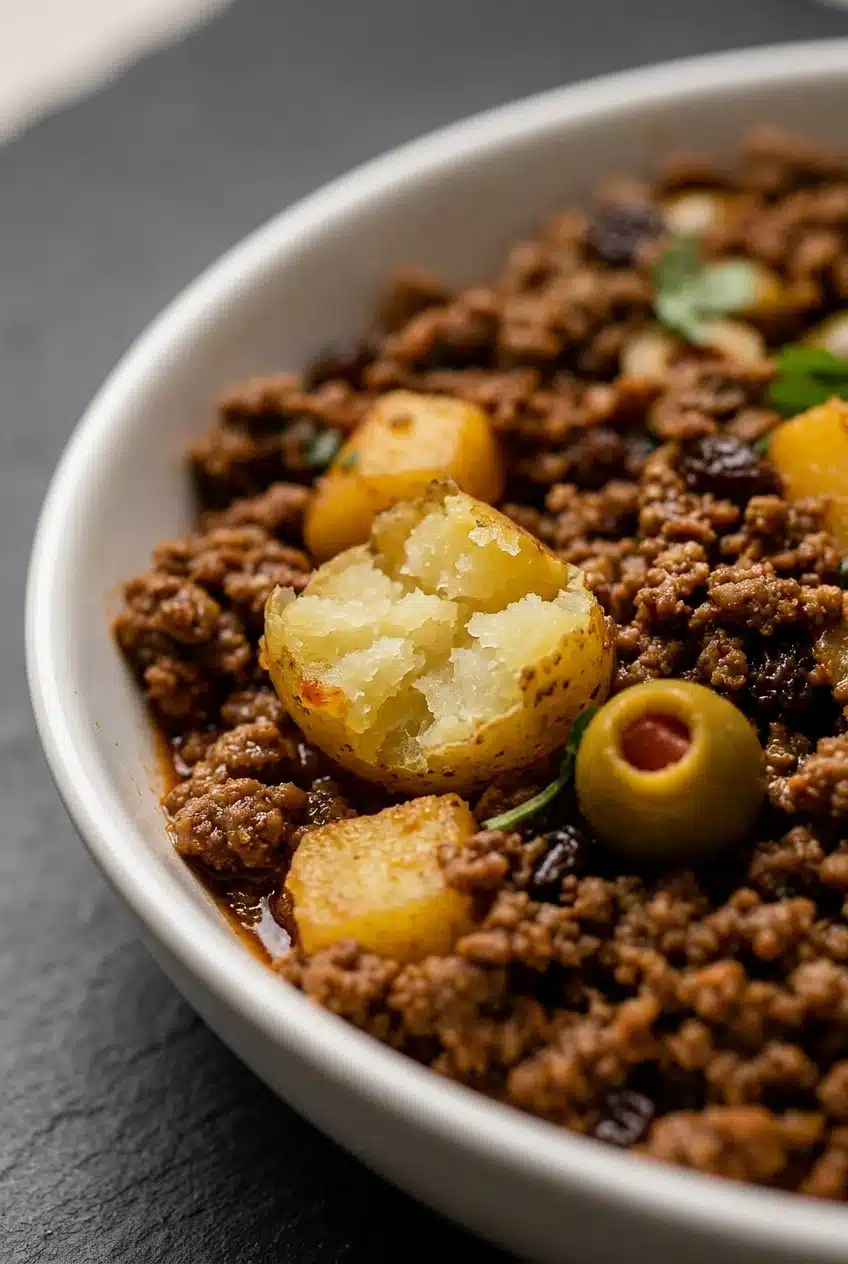
- The potatoes are still firm. Larger cubes or a short par-cook can leave the centers chalky. If the sauce already looks right, keep the pan covered and simmer gently until a fork goes through the largest cube without resistance.
- The sauce pools on the plate. Once the potatoes are tender, let excess liquid bubble off with the lid off. Stop when the sauce coats the crumbles and cubes but still slides off a spoon. If the mixture looks dry or starts sticking, it’s gone too far.
- It tastes too salty. Olives and their brine contribute salt after the beef is browned, so save the final seasoning check until the end. If the finished picadillo is already saltier than you’d like, serve it over plain rice rather than reducing the sauce further and concentrating the salt.
Cuban Picadillo Variations
With or Without Raisins
Raisins are optional, and both choices suit the dish. Include them if you like a sweet bite against a salty olive, or leave them out for a more savory finish.
How Raisins Change the Flavor
The sweetness is strongest when you bite into a raisin, so the sauce still tastes of tomato and olives. Without raisins, the brine and cumin come through more clearly.
With or Without Potatoes
Keep the potatoes for the version here. They make the dish feel heartier and give the forkfuls a soft bite alongside the crumbled beef.
How Potatoes Change the Texture
A potato-free adaptation puts the beef and sauce front and center. Expect a more uniform texture without the tender cubes breaking up the crumbles.
- Ground turkey or chicken: Either works as an optional adaptation if you prefer a milder meat flavor. The tomato, spices, and olives will stand out more than they do with beef.
What to Serve with Cuban Picadillo
Rice Plates and Filling Ideas
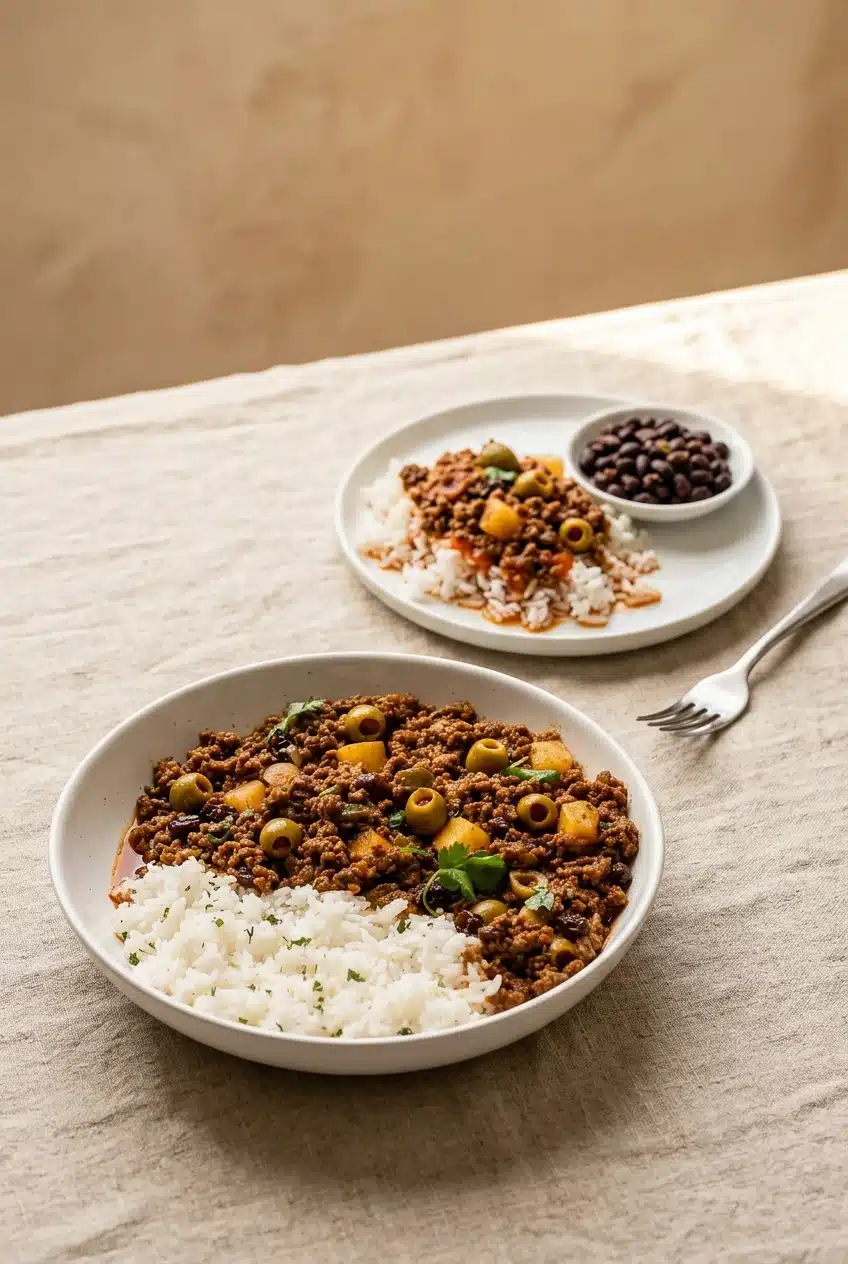
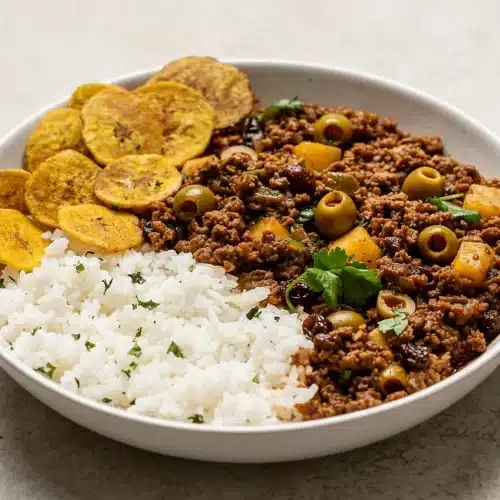
Start with fluffy white rice. The grains catch the sauce, and black beans make a natural side. Sweet plantains play up the contrast with the olives, while crisp tostones give the plate some crunch.
For a Central American pairing that combines rice and beans in one side, try gallo pinto in place of the plain rice and beans.
If you’re using picadillo as an empanada filling, set aside a portion of the finished dish and reduce just that portion. It should hold together on a spoon without liquid pooling underneath. Leave the rest saucy for the rice plate.
Planning Meals with Leftover Picadillo
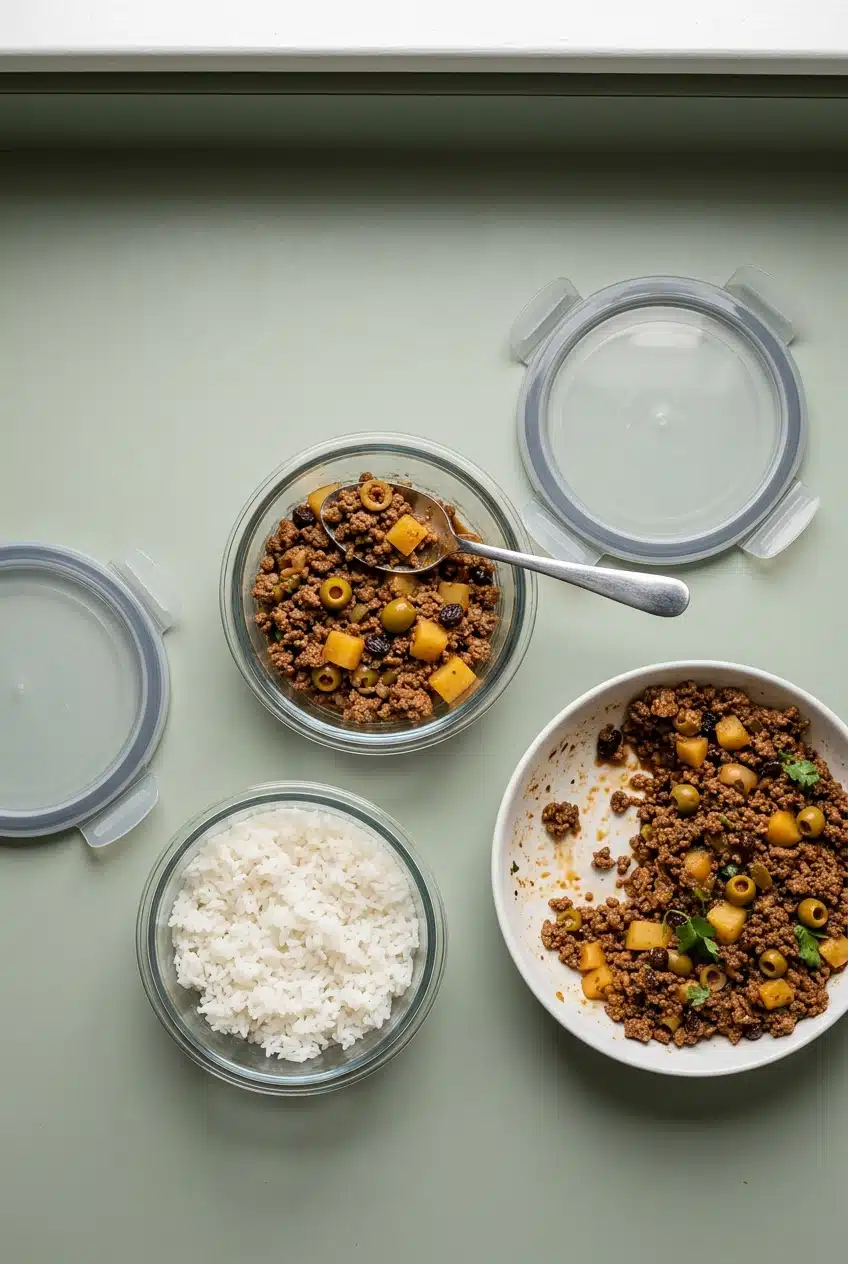
Portion leftovers with the next meal in mind. Keep the rice separate so you can decide later whether to spoon the picadillo into a rice bowl or tuck it into a quesadilla. For a quesadilla, scoop up more beef and potatoes than sauce so the tortilla can crisp.
Cuban Picadillo for a Weeknight Dinner
The olives give this savory ground beef dinner its briny edge, and the tender potatoes make every spoonful hearty.
When the tomato sauce coats the beef and potatoes, spoon it over warm white rice. That’s dinner, even without a side.
Cuban Picadillo FAQs
What Is Cuban Picadillo?
It’s a Cuban dish of ground beef simmered with aromatics, spices, tomato, and briny green olives. Some versions include potatoes, raisins, or both.
Can I Make Cuban Picadillo Without Raisins?
Yes. Leave out the optional raisins for a more savory picadillo with the same tang from the green olives and brine.
Do I Need to Par-Cook the Potatoes?
Yes, for this method. Simmer the cubes until the outside starts to soften, then let them finish cooking in the sauce so the centers turn tender.
What Should I Serve with Cuban Picadillo?
Spoon it over white rice. Serve black beans, sweet plantains, or crisp tostones on the side.
How Should I Store and Reheat Leftover Picadillo?
Refrigerate leftovers promptly in shallow, covered containers. Reheat just the portion you plan to eat in a skillet, stirring so the sauce, beef, and potatoes heat through evenly.
Cuban Picadillo Recipe

Equipment
- Small saucepan
- Large, deep skillet or Dutch oven with lid
- Wooden Spoon
- Fork
Ingredients
- 2 small potatoes, (I use Yukon Gold, can also use russet, cut into 3/4-inch cubes (see notes))
- 2 Tablespoons extra virgin olive oil
- 1 medium yellow or red onion, (finely chopped (about 1 cup))
- 1 small green pepper, (cored, seeded, and finely chopped (about 3/4 cup))
- 4 cloves garlic, (minced)
- 3 Tablespoons tomato paste
- 2 teaspoons dried oregano
- 2 teaspoons ground cumin
- 1 1/2 teaspoons kosher salt
- 1 teaspoon freshly ground black pepper
- 2 pounds lean ground beef ((see notes))
- ½ cup dry white wine
- 1 cup tomato sauce
- 2 bay leaves
- 1 cup broth, (I use beef but chicken or vegetable works)
- ½ cup pimento-stuffed Spanish olives plus 2 tablespoons brine
- 3-4 Tablespoons raisins, (optional)
- 2 tablespoons chopped cilantro, (plus more for garnish, optional)
Instructions
- Start the potato cubes in a small saucepan with enough cold water to cover them, bring the water to a boil, then lower it to a simmer for 5 to 6 minutes. Drain and set the cubes aside when a fork can just enter the outside but still meets resistance in the center.
- Warm the olive oil over medium heat in a large, deep skillet or Dutch oven and sauté the onion and green pepper for 3 to 4 minutes, giving them an occasional stir. Once the vegetables have softened without browning, stir in the garlic for 30 seconds, just until you can smell it.
- Work the tomato paste, oregano, cumin, salt, and pepper into the softened vegetables, keeping everything moving for about 1 minute. The paste should turn a deeper red and the spices should smell toasted.
- Brown the beef for about 5 to 7 minutes, using a wooden spoon to break it into small crumbles as it loses its pink color. Deglaze with the white wine, using the spoon to loosen the browned bits, and let the wine bubble for about 1 to 2 minutes until the liquid reduces slightly.
- Bring the tomato sauce, bay leaves, and broth to a gentle bubble in the pan, then stir in the drained potatoes, olives, brine, and raisins if using. Cover and simmer on medium-low for 20 to 25 minutes, stirring occasionally, until a fork slides easily through the potatoes and the sauce coats the beef.
- Take the pan off the heat and fold in the chopped cilantro if using it. Taste the sauce before adjusting the seasoning, then scatter extra cilantro on top if you’d like a fresh finish.