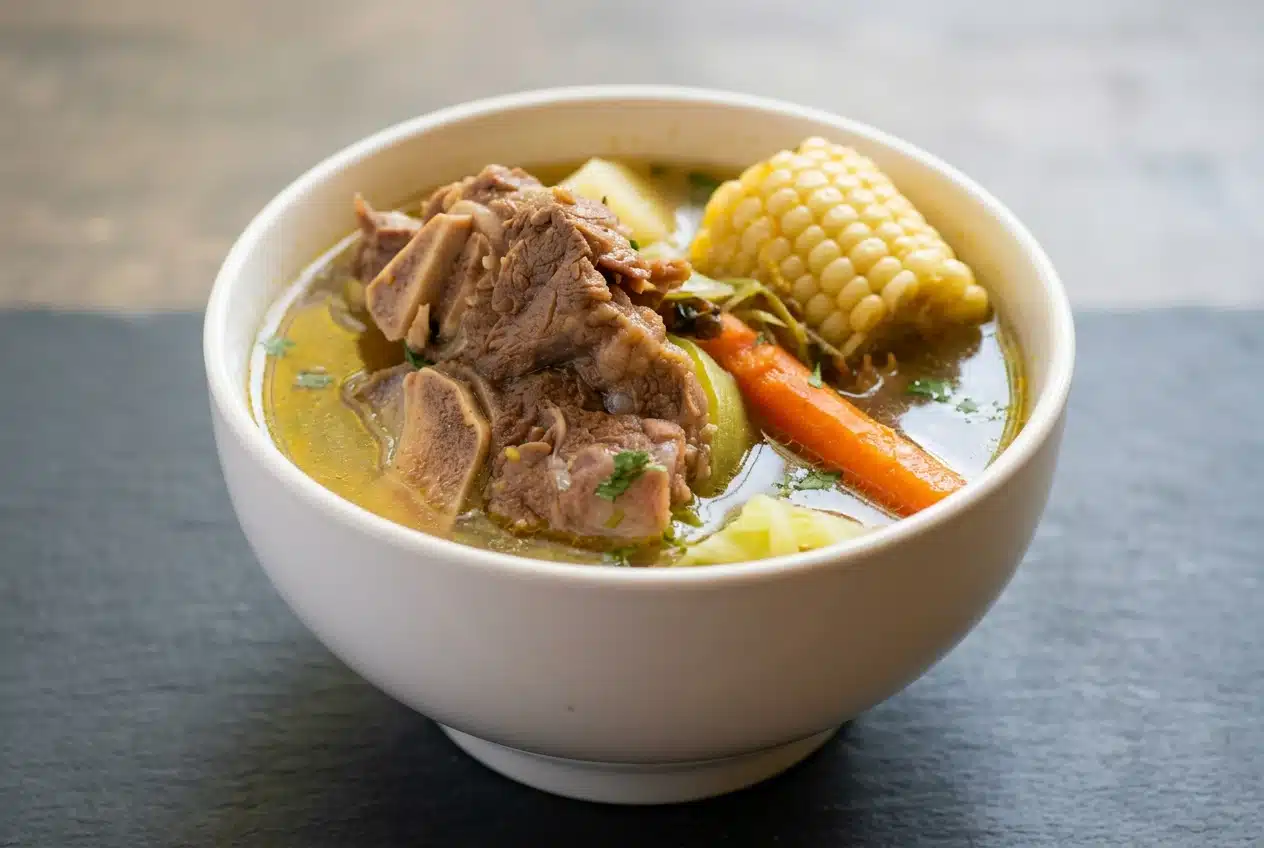
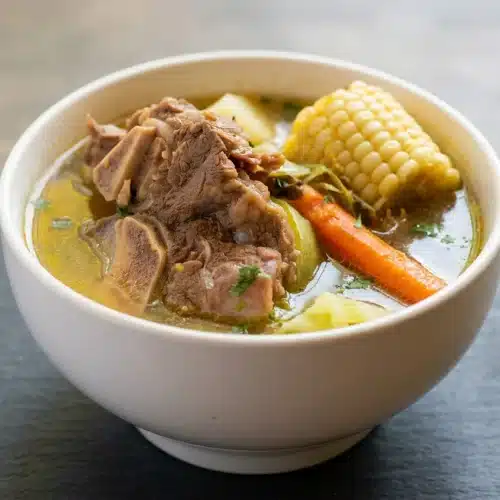
This caldo de res recipe makes a traditional Mexican beef soup with fork-tender bone-in shank, clear, savory broth, and large pieces of corn, potatoes, chayote, and cabbage. Simmer the beef first, add the vegetables in stages, and finish each bowl with lime, cilantro, onion, and serrano.
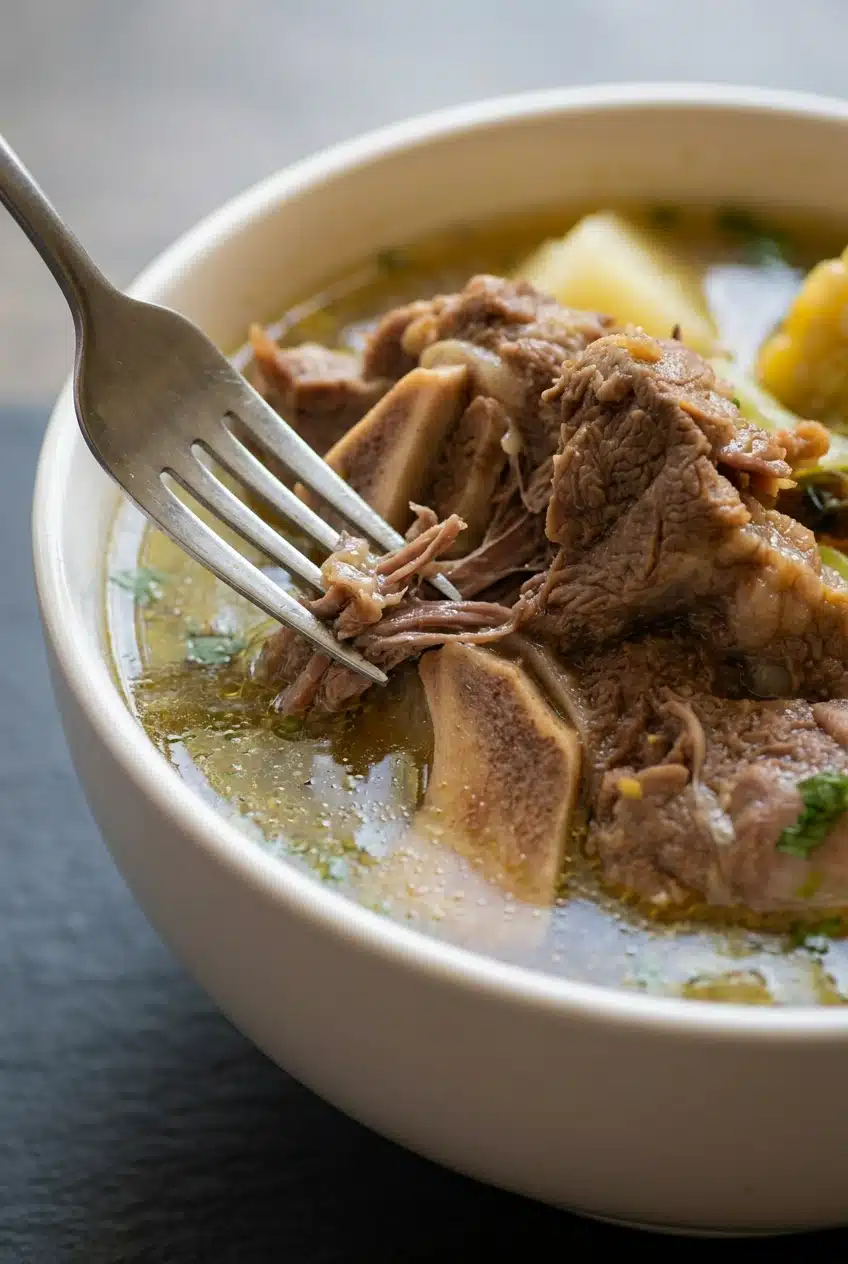
Cut into a piece of shank with your spoon and you’ll see why it’s worth simmering the beef before adding the vegetables. The meat gives way easily, and the broth has the richness of a stew without the thickness.
At the table, sweet corn and soft potatoes get a lift from sharp white onion and a squeeze of lime. The trick is knowing when the beef is ready for the vegetables.
Before turning on the stove, set a shallow spoon and a small bowl next to the stockpot so you can skim the foam as soon as it rises.
Ingredients and Beef Cut Selection
Beef shank gives the broth body, onion and garlic build its savory base, and the vegetables bring sweetness and contrasting textures. Lime, fresh herbs, and chile brighten the finished bowl, while tortillas and optional rice soak up the broth.
- 3 1/2 lb bone-in beef shank, cross-cut about 1 1/2 inches thick (or 2 1/2 lb shank plus 1 lb beef short ribs)
- 16 cups (4 quarts) cold water, plus more as needed
- 1 medium white onion, halved
- 1 head garlic, halved crosswise
- 2 bay leaves
- 1 teaspoon whole black peppercorns
- 1 tablespoon kosher salt, plus more to taste
- 3 ears fresh corn, husked and cut into thirds
- 3 medium carrots, peeled and cut into 2-inch pieces
- 4 medium Yukon Gold potatoes (about 1 1/2 lb), peeled and halved
- 2 chayotes, peeled, pitted (or not; the seed is edible) and cut into 6 wedges each
- 2 medium zucchini or Mexican gray squash, cut into 2-inch rounds
- 1/2 small head green cabbage, cut into 4 wedges with some core attached
- 1 small handful fresh cilantro sprigs
- 1 sprig fresh mint (optional)
- 2 limes, cut into wedges
- 1/2 white onion, finely chopped
- 1/2 cup chopped fresh cilantro
- 2 to 3 serrano chiles, finely chopped
- Warm corn tortillas
- Mexican red rice (optional)
Beef: Ask for cross-cut bone-in shank, or chambarete at a Mexican market. Look for pieces with a ring of meat around a visible marrow bone. The marrow adds richness, while the shank’s connective tissue softens and gives the broth body as it simmers. Bone-in short ribs work well alongside shank if you want a fattier cut in the pot. Lean boneless stew meat won’t give the broth the same body.
Vegetables: Look for firm, pale-green chayotes without soft spots. Peel them, split them lengthwise, and cut them into wedges. The pale seed is edible; lift it out if you prefer wedges without it. Mexican gray squash is usually plump and pale green. Regular zucchini works in its place, so choose whichever feels firm and has unbroken skin. Use the cuts in the ingredient list as a guide and keep pieces of each vegetable roughly the same size so they cook evenly.
I like to cut cabbage wedges through the stem end so each one keeps a sliver of core. It’s much easier to lift a whole wedge into a bowl than to fish loose leaves out of the pot.
Aromatics: Halved onion and garlic flavor the long simmer without scattering chopped pieces through the broth. Bay leaves and whole peppercorns add a quiet background note. Fresh cilantro and optional mint go in late so their fragrance still comes through at serving. Save the serranos for the table so everyone can choose how much heat goes into their bowl.
How to Make Caldo de Res Step by Step
Check the shank with a fork before the vegetables go in. If the meat still grips the bone tightly, keep simmering it on its own so the vegetables don’t have to wait in the hot broth while the beef finishes.
Prep: · Cook: · Total: · Servings: 8
- Cover the shank with the cold water in an 8-quart or larger stockpot, set it over medium-high heat, and skim as the water gradually comes to a boil.
Allow 10 to 15 minutes for skimming: the first foam is gray, then it turns pale white and stops rising. - Drop in the onion halves, garlic, bay leaves, peppercorns, and 1 tablespoon of kosher salt, then turn the heat down to a bare simmer and set the lid ajar.
After about 2 1/2 hours, a fork should slip into the meat and pull it away from the bone with little resistance; top up with hot water during the simmer whenever the beef is no longer submerged. - Fish out and discard the softened onion, garlic, and bay leaves.
If you prefer a less rich broth, skim some of the fat that has collected in shiny patches on the surface. - Put the corn, carrots, and potatoes into the broth and give them 10 minutes once the simmer resumes.
This head start lets the denser pieces soften before the quicker-cooking vegetables go in. - Slip the chayote wedges into the pot and give them another 10 minutes at a gentle simmer.
The wedges should begin to yield around the edges while still holding their shape. - Lower the zucchini rounds, cabbage wedges, cilantro sprigs, and mint sprig, if using, into the broth and simmer for 8 to 10 minutes.
When the broth smells fresh and herbal and a knife slides into the vegetables easily, taste and add more salt as needed. - Lift out the cilantro sprigs and any mint, then share the beef and vegetables among 8 deep bowls.
Give each bowl a piece of every vegetable and ladle in hot broth so it pools around the beef and vegetables.
Tips for Clear Broth and Tender Beef
Judge clarity, tenderness, and seasoning separately. A cloudy broth can still taste good, and a clear one can still need salt.
- Cloudy broth: A rolling boil breaks up foam and disperses fat through the liquid, making both harder to skim. Once you’ve skimmed the first foam, look for small bubbles that break the surface here and there rather than constant bubbling across the pot.
- Chewy beef: Shank can look cooked before its connective tissue has softened. Test the thickest part next to the bone and give the fork a gentle turn. If the meat moves as one solid piece, keep it at a gentle simmer rather than turning up the heat, which can leave the outer meat drier.
- Mushy vegetables: Adding the squash with the potatoes gives it too much time in the broth. Keep the vegetables in separate piles as you prep, and check a thick potato piece and a squash round near the end. Both should yield to a knife without breaking apart when lifted.
- Flat flavor: Taste a spoonful without toppings first. If the broth itself tastes underseasoned, adjust the salt in the pot after the vegetables have cooked and the liquid has reduced. If it tastes savory but feels heavy, squeeze lime into your bowl, then add cilantro and chile to taste.
Slow Cooker, Pressure Cooker, and Regional Variations
The stovetop gives you the most control over skimming and vegetable texture. These optional variations trade some of that control for convenience or take the broth in a different direction.
Slow Cooker Caldo de Res
A slow cooker suits the long, gentle cook that shank needs. The main thing to watch is the vegetables: squash and cabbage won’t hold their shape if they spend the whole beef cook in the crock. Treat them as a separate finishing stage once the beef is fork-tender, and judge them by texture rather than by the stovetop timings.
Instant Pot or Pressure Cooker Caldo de Res
A pressure cooker is useful when the beef is the part you want to speed up. Use your appliance’s beef or soup directions and observe its fill limit. An open-lid simmer is a better fit for finishing the vegetables: you can add the firm ones first and check the more delicate ones with a knife as they cook.
Tomato-Enriched Central Mexican Caldo de Res
Cooked tomato purée gives the broth a reddish tint and a gentle tang. A fried tomato purée takes it in a deeper, more savory direction. Browning the beef is another optional change, but it gives the broth a roasted flavor and darker color. Skip both if the clear, unbrowned shank broth is what you’re after.
- Zucchini for chayote: Expect a softer bite, and treat the extra zucchini as a late addition rather than simmering it as long as chayote.
- Yuca or extra root vegetables: Yuca brings a starchier texture, while extra carrots make the broth a little sweeter.
- Green beans or cauliflower: Green beans offer a firmer bite, while cauliflower florets catch broth between their buds.
- Plantain: For a different regional direction, plantain adds a denser bite and, when ripe, a touch of sweetness.
Toppings and What to Serve with Caldo de Res
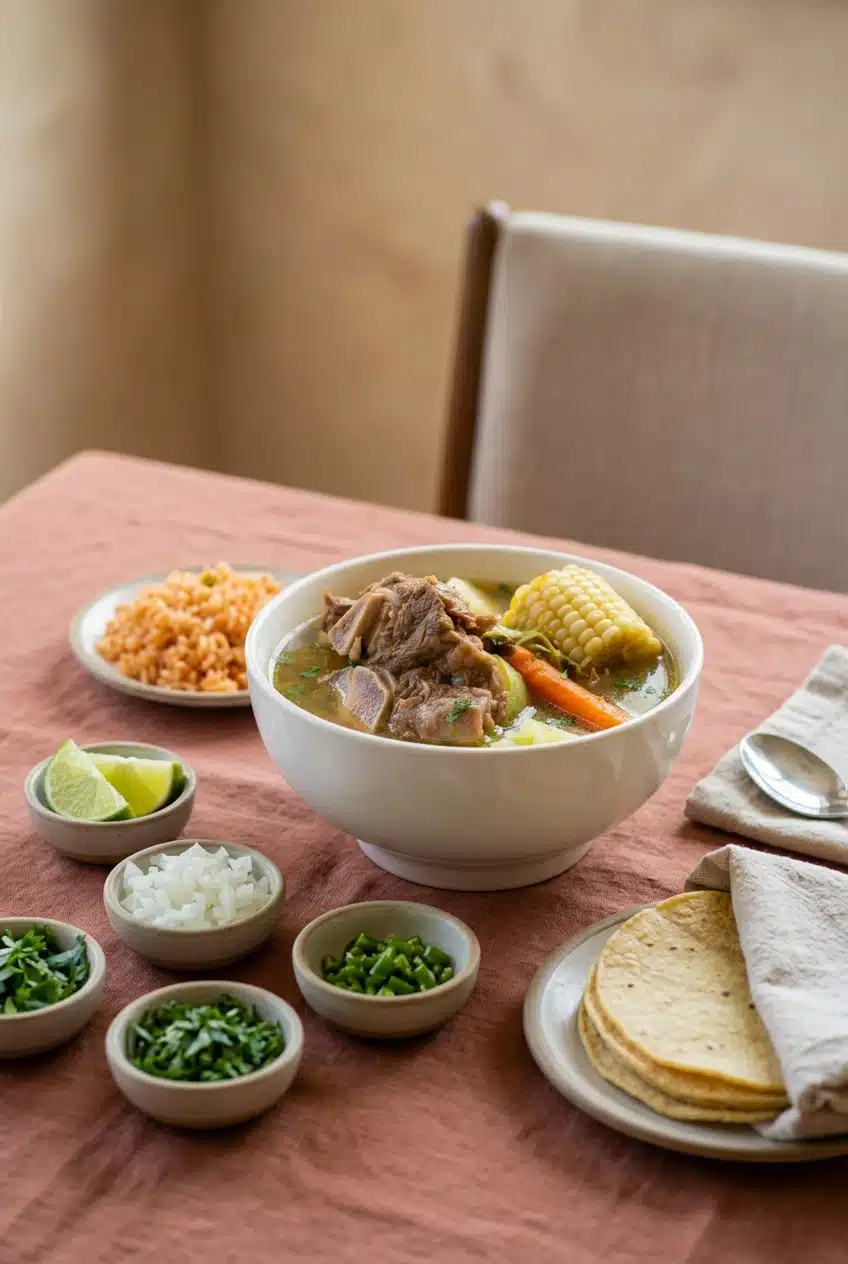
Bring the bowls to the table hot and set out lime wedges, finely chopped white onion, chopped cilantro, and serranos in separate dishes. The onion adds crunch, and a squeeze of lime brightens the broth. For a milder option, offer chopped jalapeño in place of serrano, or leave the chile out of individual bowls.
- Warm corn tortillas: Dip them into the broth or use a torn piece to scoop the soft marrow from the shank bone.
- Mexican red rice: Serve it on the side or spoon some into individual bowls before ladling in the broth. Keep it out of the stockpot so the grains don’t swell and soften while the soup sits.
- Other sides: Try sliced avocado or fresh salsa, pick a crusty bolillo for dipping, or pour a chilled agua fresca to go with the hot soup.
How to Make Caldo de Res Ahead, Store It, and Reheat It
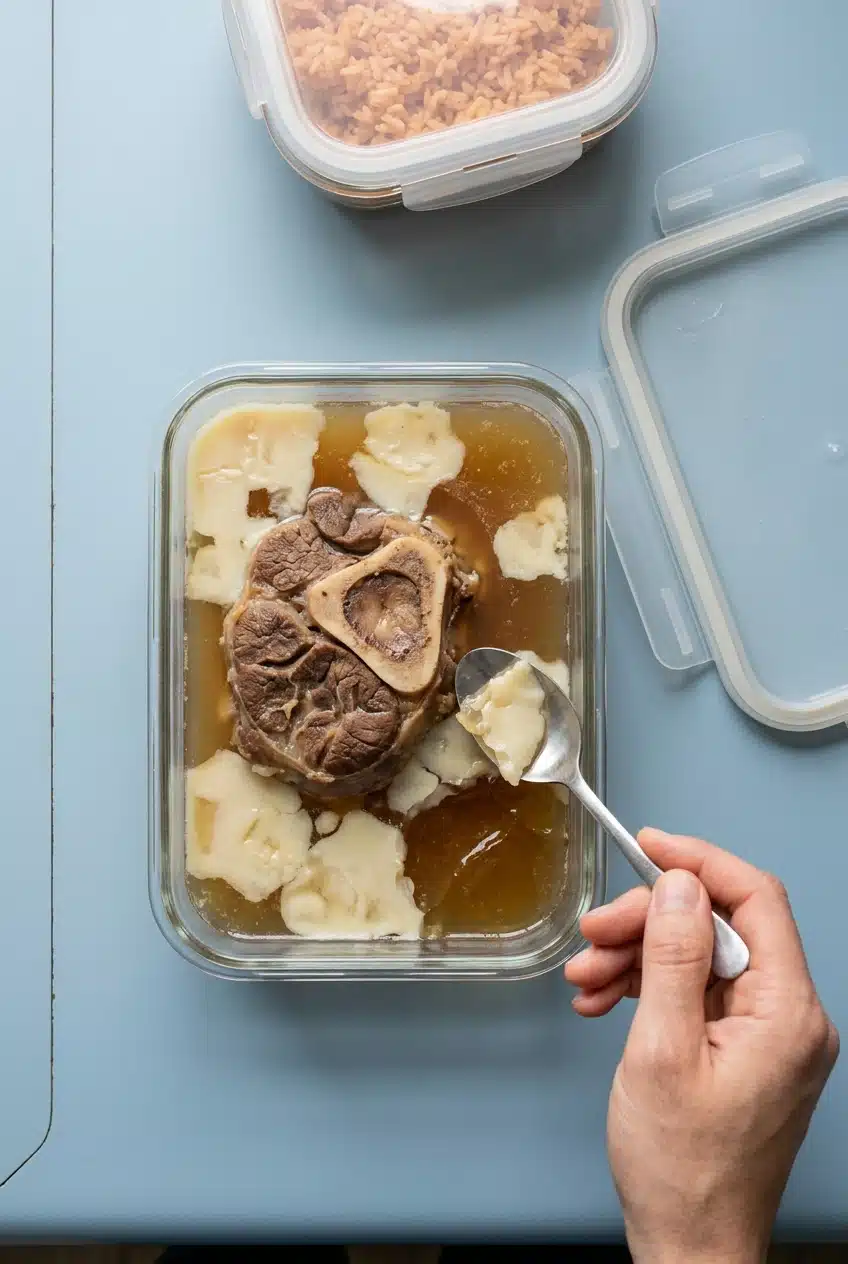
For the best vegetable texture, make the beef and broth ahead and save the vegetable simmer for when you’re ready to serve. Divide the beef and broth among shallow containers and refrigerate promptly. The chilled broth may set into a soft gel, with a firmer layer of fat on top. Lift off as much of that fat as you like before warming the broth; the gel will melt as it heats.
Keep cooked rice and fresh toppings in separate covered containers in the refrigerator. To reheat finished soup, warm just the portion you need in a saucepan until it’s hot throughout. Avoid stirring hard so the potatoes and cabbage stay intact. Ladle the soup over the rice, then add the lime, onion, cilantro, and chile at the table.
Dietary Considerations and Broth Customization
For a less rich bowl, skim more of the firm fat from the chilled broth. If you prefer to use less salt, taste after the vegetable simmer before adding any more. Let garlic and herbs carry some of the flavor, and add lime at the table for brightness.
For strict gluten avoidance, check the labels on any packaged broth, seasoning blends, tortillas, or prepared rice you use. If you’re serving someone with celiac disease, check how the sides were prepared, too, rather than assuming that a corn tortilla or rice dish will meet their needs.
Bringing Authentic Caldo de Res to Your Table
Start with bone-in beef, skim early, and keep the broth at a quiet simmer. Once the shank yields to a fork, follow the recipe’s vegetable timings so the potatoes turn tender without the squash or cabbage falling apart.
Bring the lime, herbs, and chopped chile to the table so everyone can season their own bowl. Keep the tortillas warm for that last bit of broth.
Frequently Asked Questions
How Do I Keep Leftover Caldo de Res Vegetables from Getting Too Soft?
If you’re planning ahead, refrigerate the beef and broth separately from the uncooked vegetables, then cook the vegetables before serving. If the soup is already assembled, reheat only what you plan to serve so the squash and cabbage don’t go through repeated heating.
How Do I Make Homemade Beef Soup from Scratch?
Start bone-in beef in cold water and skim the foam as it rises. Simmer with onion, garlic, bay leaves, and peppercorns until the meat is tender, then add the vegetables in rounds, starting with corn, carrots, and potatoes.
What Is the Best Cut of Beef for Caldo de Res?
Cross-cut bone-in beef shank, or chambarete, is the best choice for this version. The marrow and connective tissue give the broth body, and the meat turns fork-tender. Bone-in short ribs can replace part of the shank for a richer broth.
What Does Caldo Mean in Mexico?
Caldo means broth in Spanish. In Mexico, caldo de res refers to a beef soup with generous pieces of meat and vegetables in a broth you can sip, rather than a thickened beef stew.
Why Is My Caldo de Res Broth Cloudy or Bland?
Cloudiness usually comes from a hard boil or foam that wasn’t skimmed early. Blandness is a separate issue: lean beef gives the broth less body, and the finished pot may need salt. Taste it plain first, then use lime and cilantro to brighten individual bowls.
Is Caldo de Res Gluten-Free and Healthy?
The homemade broth doesn’t call for flour or a packaged broth base, but check labels and preparation for any substitutions and sides if you need to avoid gluten. How the meal fits your needs depends on the portion, the salt and fat you leave in the broth, and what you serve with it. The soup itself is mild because the chiles are served on the side.
Caldo de Res Recipe

Equipment
- 8-quart or larger stockpot with lid
- Shallow spoon
- Fork
- Knife
- Ladle
Ingredients
- 3 1/2 lb bone-in beef shank cross-cut about 1 1/2 inches thick (or 2 1/2 lb shank plus 1 lb beef short ribs)
- 16 cups (4 quarts) cold water plus more as needed
- 1 medium white onion halved
- 1 head garlic halved crosswise
- 2 bay leaves
- 1 teaspoon whole black peppercorns
- 1 tablespoon kosher salt plus more to taste
- 3 ears fresh corn husked and cut into thirds
- 3 medium carrots peeled and cut into 2-inch pieces
- 4 medium Yukon Gold potatoes (about 1 1/2 lb) peeled and halved
- 2 chayotes peeled, pitted (or not; the seed is edible) and cut into 6 wedges each
- 2 medium zucchini or Mexican gray squash cut into 2-inch rounds
- 1/2 small head green cabbage cut into 4 wedges with some core attached
- 1 small handful fresh cilantro sprigs
- 1 sprig fresh mint (optional)
- 2 limes cut into wedges
- 1/2 white onion finely chopped
- 1/2 cup chopped fresh cilantro
- 2 to 3 serrano chiles finely chopped
- Warm corn tortillas
- Mexican red rice (optional)
Instructions
- Cover the shank with the cold water in an 8-quart or larger stockpot, set it over medium-high heat, and skim as the water gradually comes to a boil. Allow 10 to 15 minutes for skimming: the first foam is gray, then it turns pale white and stops rising.
- Drop in the onion halves, garlic, bay leaves, peppercorns, and 1 tablespoon of kosher salt, then turn the heat down to a bare simmer and set the lid ajar. After about 2 1/2 hours, a fork should slip into the meat and pull it away from the bone with little resistance; top up with hot water during the simmer whenever the beef is no longer submerged.
- Fish out and discard the softened onion, garlic, and bay leaves. If you prefer a less rich broth, skim some of the fat that has collected in shiny patches on the surface.
- Put the corn, carrots, and potatoes into the broth and give them 10 minutes once the simmer resumes. This head start lets the denser pieces soften before the quicker-cooking vegetables go in.
- Slip the chayote wedges into the pot and give them another 10 minutes at a gentle simmer. The wedges should begin to yield around the edges while still holding their shape.
- Lower the zucchini rounds, cabbage wedges, cilantro sprigs, and mint sprig, if using, into the broth and simmer for 8 to 10 minutes. When the broth smells fresh and herbal and a knife slides into the vegetables easily, taste and add more salt as needed.
- Lift out the cilantro sprigs and any mint, then share the beef and vegetables among 8 deep bowls. Give each bowl a piece of every vegetable and ladle in hot broth so it pools around the beef and vegetables.