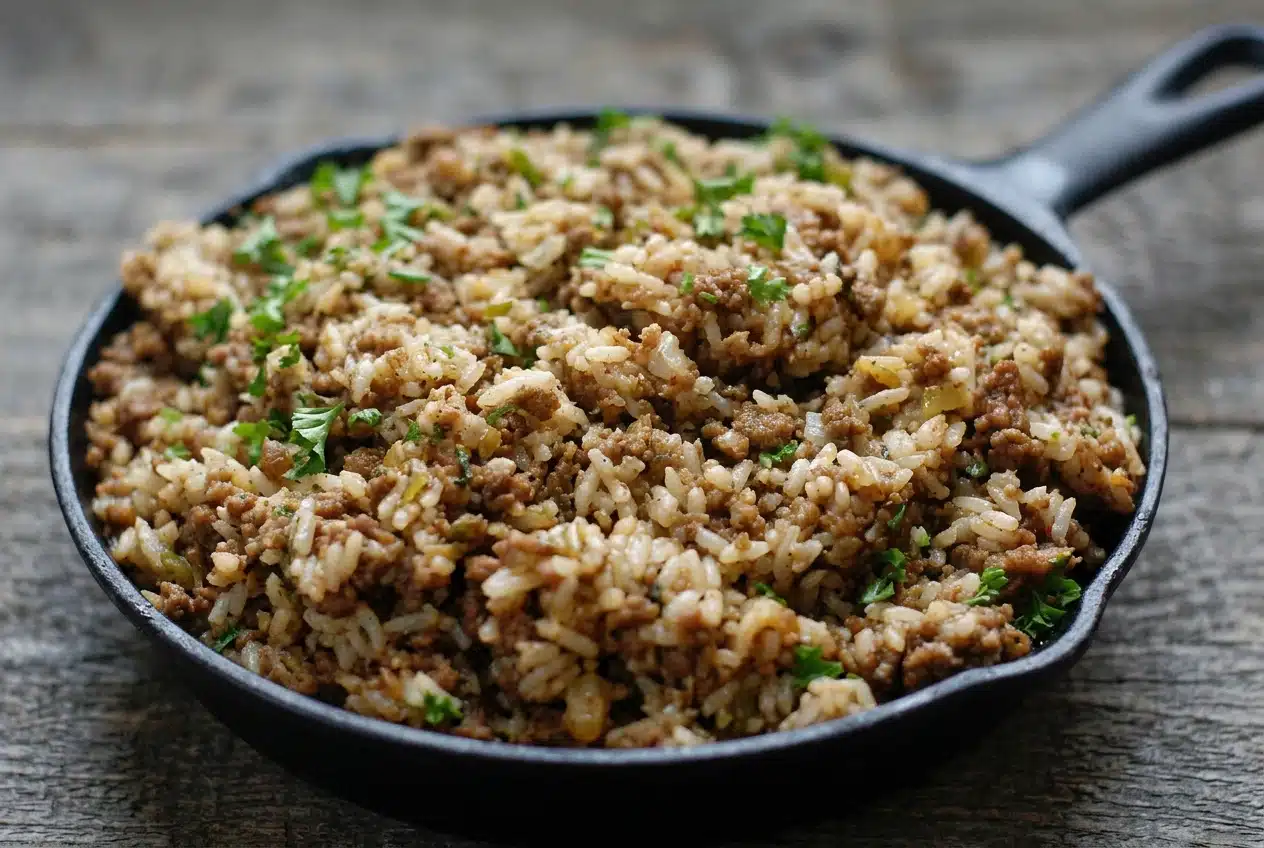
Dirty rice gets its speckled look from the browned meat and seasonings mixed through the grains. Here, onion, green bell pepper, and celery give the skillet a sweet, earthy aroma that balances the richness of the beef and sausage.
With the rice already cooked, the skillet comes together in 30 minutes. It’s hearty enough for dinner on its own and still right at home next to roast chicken. The best flavor starts on the bottom of the pan.
Dice the onion, bell pepper, and celery to roughly the same size so they soften evenly and you get some of each in every bite.
Dirty Rice Ingredients and Rice Preparation
Each ingredient has a job: the fat helps the meat brown, the vegetables and seasonings build aroma, and the flour gives the broth enough body to cling to the rice. Fresh parsley brightens the rich beef and sausage.
- 1 tablespoon bacon grease or cooking oil
- 1 pound ground beef
- 1 pound ground pork sausage ((Italian or breakfast sausage))
- 3/4 cup yellow onion, (diced)
- 3/4 cup green bell pepper, (diced)
- 1/4 cup celery, (diced)
- 1 tablespoon dried oregano
- 2 teaspoons dried thyme
- 2 teaspoons minced garlic
- 1 1/2 teaspoons salt
- 1 teaspoon chili powder
- 1/2 teaspoon ground black pepper
- 1/2 teaspoon paprika
- 1/4 teaspoon cayenne pepper
- 1/4 cup flour
- 2 cup chicken broth
- 3 bay leaves
- 4-5 cup cooked rice ((I use Minute Rice prepared with chicken broth.))
- 2 tablespoons fresh parsley, (chopped)
Choosing Rice and Savory Sausage
Measure the rice after cooking. Regular long-grain white rice works well, as does prepared instant rice. The chicken broth in the skillet is there to make a light sauce, not to hydrate dry grains. Recipes that start with uncooked rice use a different balance of liquid and cooking time, so the two methods aren’t interchangeable.
Choose ground pork sausage that can break into crumbles alongside the beef. Mild Italian sausage may bring a hint of fennel, while savory breakfast sausage often leans toward sage and black pepper. Either works here, but a sweet breakfast sausage will push the dish in a different direction.
I’d choose the sausage by its seasoning first. A mild, savory sausage leaves room for the thyme and oregano, while a heavily spiced one can take over the whole skillet.
Aromatics, Broth, and Seasoning
Beef gives the rice a deep, browned flavor, while the sausage contributes its own seasoning and richness. The onion softens and sweetens as it cooks, the green bell pepper adds a grassy note, and the celery gives the mixture a savory backbone. Together, those three vegetables are often called the holy trinity.
Flour thickens the chicken broth just enough to carry the browned bits and spices over the grains. Oregano, thyme, garlic, and bay leaves give that broth its herbal depth, while chili powder, paprika, black pepper, and cayenne bring warmth. Sausage and broth can both come well seasoned, which is why two brands can give the same recipe noticeably different levels of salt and heat.
How to Make Dirty Rice
Prep: 10 minutes. Cook: 20 minutes. Total: 30 minutes, starting with cooked rice. Yield: 10 servings.
A large skillet gives the beef and sausage room to brown and leaves space to fold in the rice without packing it down. Coat the crumbles with flour before adding the broth so the flour disperses through the pan instead of collecting in lumps.
- Heat the bacon grease or oil in a large skillet, then break the beef and sausage into crumbles in the hot fat.
Look for the first browned patches where the meat touches the skillet. - Scatter the diced bell pepper, onion, and celery over the meat once it starts to color, then cook them together.
The vegetables should begin to soften as the crumbles finish browning. - Once the meat has browned throughout, mix in the garlic, salt, oregano, thyme, and ground spices, holding back the bay leaves and parsley, then toss the mixture with the flour.
The crumbles should have a light, even coating with no dry pockets of flour. - Pour in the chicken broth, drop in the bay leaves, and sweep a spatula across the skillet bottom before simmering for 5 to 8 minutes.
The browned bits should loosen into the liquid as the broth develops enough body to lightly coat the meat. - Lift and turn the cooked rice and chopped parsley through the meat mixture, then simmer for 5 minutes before serving.
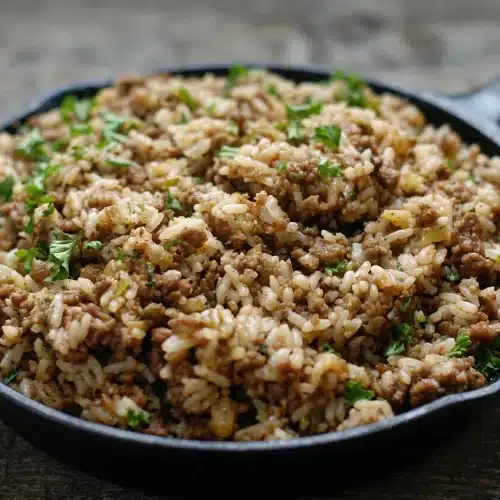
The grains should look evenly coated with flecks of parsley and meat throughout.
Texture Tips and Troubleshooting
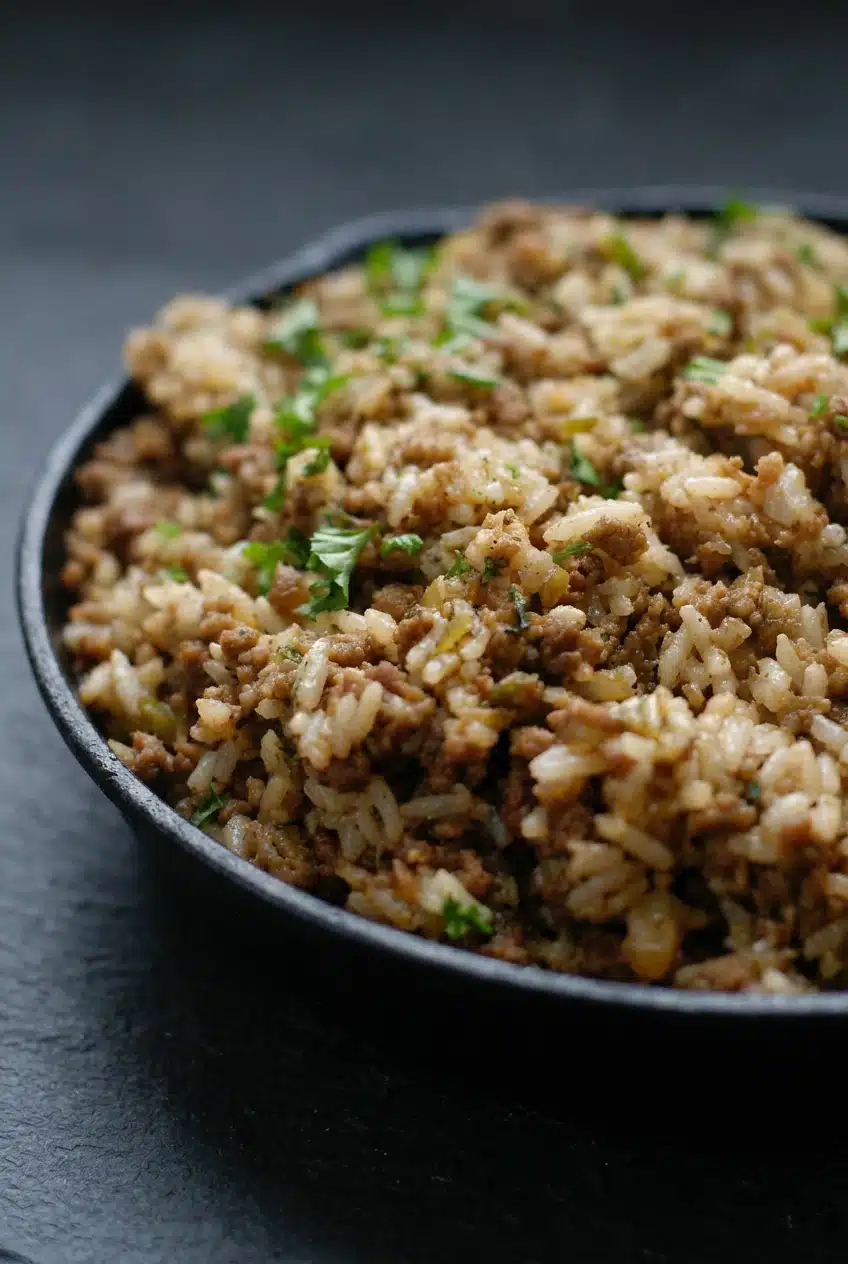
The skillet tells you a lot before the rice goes in. Brown bits that loosen into the broth give it a roasted, meaty flavor. Black, brittle residue with an acrid smell is scorching, and scraping that into the broth will carry the bitterness through the whole dish. A crowded pan is more likely to leave the meat pale and steamy, so the large skillet earns its keep here.
Recognizing the Right Texture
Look for tender grains you can still pick out individually, with small crumbles of meat and softened pieces of onion, pepper, and celery. A spoonful should lift without leaving a pool of broth behind or holding its shape like a packed scoop. The vegetables should still be recognizable, but they shouldn’t crunch like raw dice.
If you’re unsure whether you’ve folded enough, lift a spoonful from the middle of the skillet. If it has rice, meat, and vegetables throughout, the mixture is evenly distributed. There’s no need to stir out every little patch of lighter rice at the expense of the grains.
Understanding Wet, Dry, or Compacted Rice
- Wet or soupy: A puddle around the rice can mean the broth was still thin when the grains went in. Look for a light coating on the crumbles at the end of the broth simmer, rather than expecting the cooked rice to soak up the pan liquid like dry rice would.
- Dry or unevenly coated: Chilled cooked rice can go into the skillet in firm clumps. Gently loosen those clumps before folding so the broth can reach more of the grains without extra stirring.
- Dense or compacted: Pressing the rice against the bottom of the pan can crush tender grains. Scoop from underneath and turn the mixture over rather than pushing it around the skillet.
If you’re starting with dry rice, prepare it separately before measuring it for the skillet. Instant Pot jasmine rice is one option if that’s the variety you have on hand.
Dirty Rice Variations
These optional changes shift the flavor without changing what goes into the beef-and-pork version above.
Liver-Inclusive and Liver-Free Versions
Some traditional-style versions include chicken livers or other giblets alongside ground meat, rice, and aromatics. Chicken liver adds a deeper, earthier flavor. Leaving it out lets the browned beef, pork sausage, and herbs stand out. Which version feels familiar depends on the household.
Ground Poultry or Poultry Sausage Alternatives
Ground chicken or turkey is an option if you want a milder meat flavor than beef. Poultry sausage offers more built-in seasoning than plain ground poultry, so its herb and pepper profile matters as much as the choice between chicken and turkey.
Milder or Hotter Seasoning
For a gentler skillet, mild sausage keeps the heat from competing with the herbs. If you like more bite, hot sausage or a more cayenne-forward seasoning is an option. Chili powder blends vary, and a well-seasoned broth can make the spices taste more pronounced, so consider both when choosing your sausage.
Make-Ahead, Storage, and Reheating
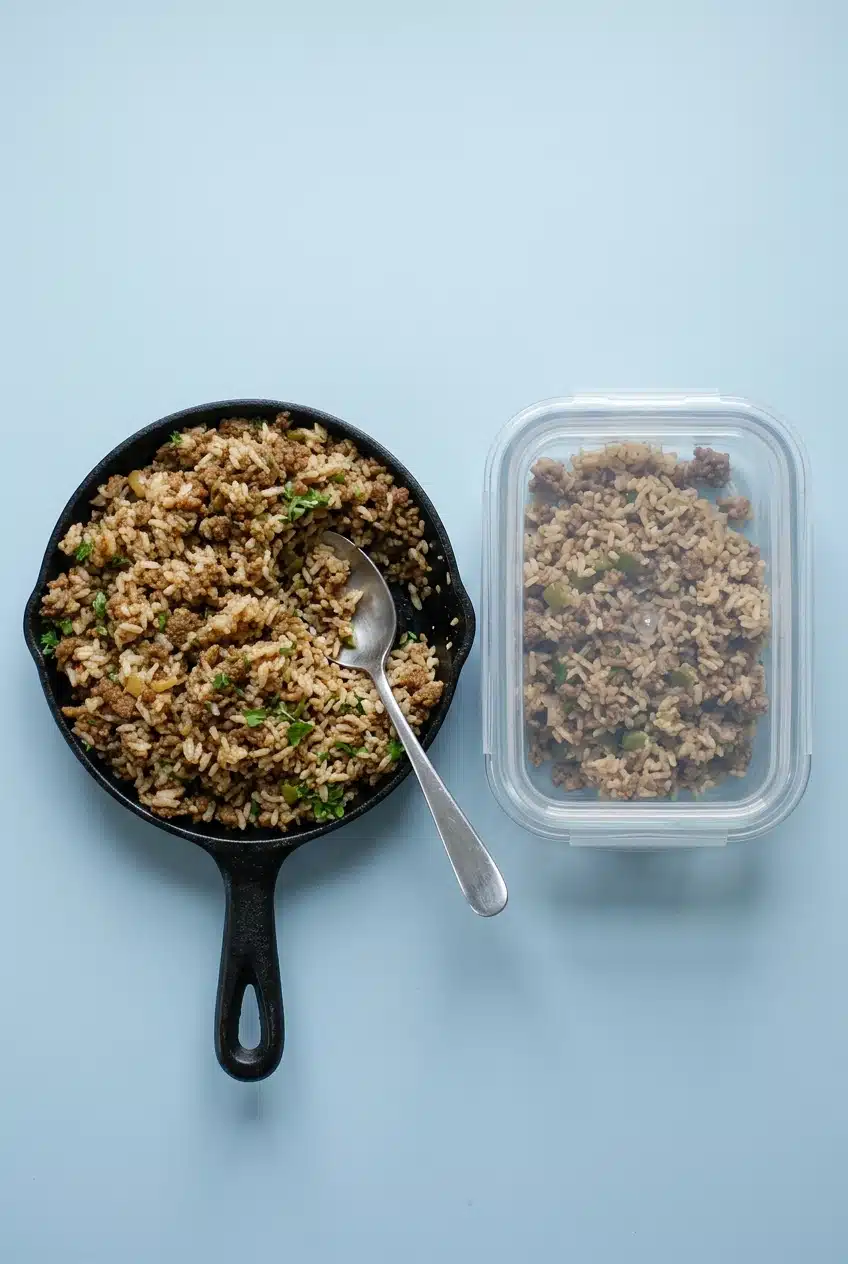
To get organized before you turn on the stove, dice the vegetables and measure the seasonings, keeping the flour, bay leaves, and parsley separate. If texture matters most, leave the cooked rice separate from the meat mixture until the final simmer.
Refrigerate leftovers promptly in shallow, covered containers. Reheat the portion you plan to eat until it’s hot throughout. For texture, cover the skillet as it warms and use a splash of broth if the rice seems dry. Fold gently to spread the moisture without mashing the grains.
What to Serve With Dirty Rice
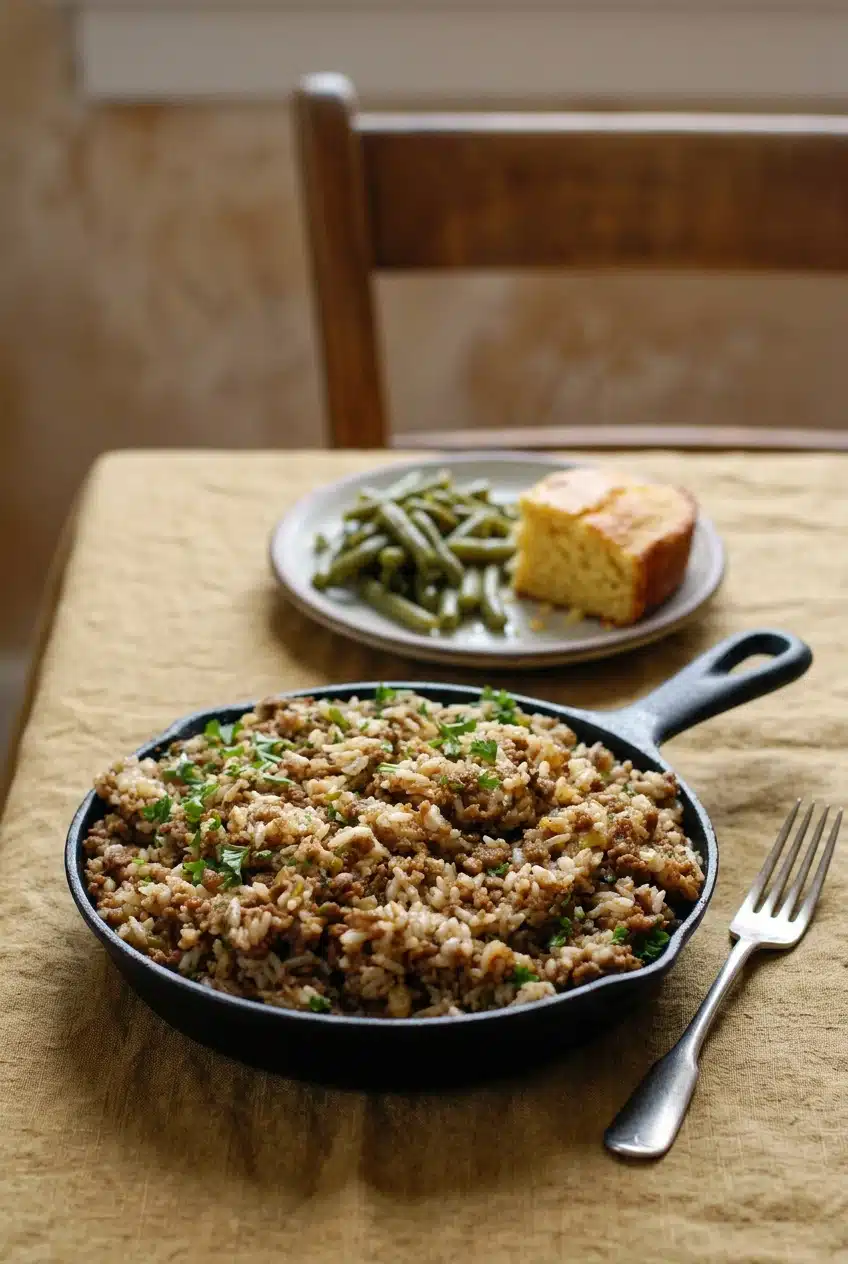
As the main dish: Pair a bowl with green beans or sautéed greens and a piece of cornbread. The vegetables offer a fresh contrast to the rich sausage, and the cornbread goes well with the peppery seasoning.
As a side: Spoon it alongside roasted chicken, blackened fish, or seared shrimp. Roast chicken lets the herbs in the rice stand out, while blackened fish or Cajun-spiced shrimp makes for a bolder plate. If the seafood already brings plenty of heat, a milder sausage in the rice keeps the flavors from competing.
Bring It All Together
Start with cooked rice and let the beef, sausage, and softened aromatics do the heavy lifting. The finished skillet should taste savory and peppery, with tender grains you can still see.
When the meat and vegetables are spread evenly through the rice, put down the spatula. It’s ready for the table.
Dirty Rice FAQ
What Ingredients Go Into Dirty Rice?
This version uses cooked rice, ground beef, pork sausage, onion, green bell pepper, and celery. Chicken broth and flour make the light coating, and herbs, spices, and parsley round out the flavor.
What Is Traditional Dirty Rice Made Of?
Traditional versions often pair rice, ground meat, aromatics, and seasonings with chicken livers or other giblets. The exact mix varies from kitchen to kitchen.
Can I Make Dirty Rice With Regular White Rice?
Yes. Cook the white rice first, then measure it and fold it into the skillet near the end. Dry rice won’t cook properly in the broth used here.
What Is the Difference Between Dirty Rice and Cajun Rice?
The names can overlap. Neither label tells you whether the dish contains liver, which meats it uses, or whether the rice starts out cooked, so check the ingredients and method.
Can I Make Dirty Rice Without Liver?
Yes. This version uses ground beef and pork sausage without liver. The browned meat and seasoned broth give the rice its dark flecks and savory flavor.
How Should I Store and Reheat Leftover Dirty Rice?
Keep it covered in the refrigerator and reheat only what you plan to eat. Warm it throughout, adding a splash of broth if the grains need moisture.
Dirty Rice Recipe

Equipment
- Large Skillet
- Spatula
Ingredients
- 1 tablespoon bacon grease or cooking oil
- 1 pound ground beef
- 1 pound ground pork sausage ((Italian or breakfast sausage))
- 3/4 cup yellow onion, (diced)
- 3/4 cup green bell pepper, (diced)
- 1/4 cup celery, (diced)
- 1 tablespoon dried oregano
- 2 teaspoons dried thyme
- 2 teaspoons minced garlic
- 1 1/2 teaspoons salt
- 1 teaspoon chili powder
- 1/2 teaspoon ground black pepper
- 1/2 teaspoon paprika
- 1/4 teaspoon cayenne pepper
- 1/4 cup flour
- 2 cup chicken broth
- 3 bay leaves
- 4-5 cup cooked rice ((I use Minute Rice prepared with chicken broth.))
- 2 tablespoons fresh parsley, (chopped)
Instructions
- Heat the bacon grease or oil in a large skillet, then break the beef and sausage into crumbles in the hot fat. Look for the first browned patches where the meat touches the skillet.
- Scatter the diced bell pepper, onion, and celery over the meat once it starts to color, then cook them together. The vegetables should begin to soften as the crumbles finish browning.
- Once the meat has browned throughout, mix in the garlic, salt, oregano, thyme, and ground spices, holding back the bay leaves and parsley, then toss the mixture with the flour. The crumbles should have a light, even coating with no dry pockets of flour.
- Pour in the chicken broth, drop in the bay leaves, and sweep a spatula across the skillet bottom before simmering for 5 to 8 minutes. The browned bits should loosen into the liquid as the broth develops enough body to lightly coat the meat.
- Lift and turn the cooked rice and chopped parsley through the meat mixture, then simmer for 5 minutes before serving. The grains should look evenly coated with flecks of parsley and meat throughout.