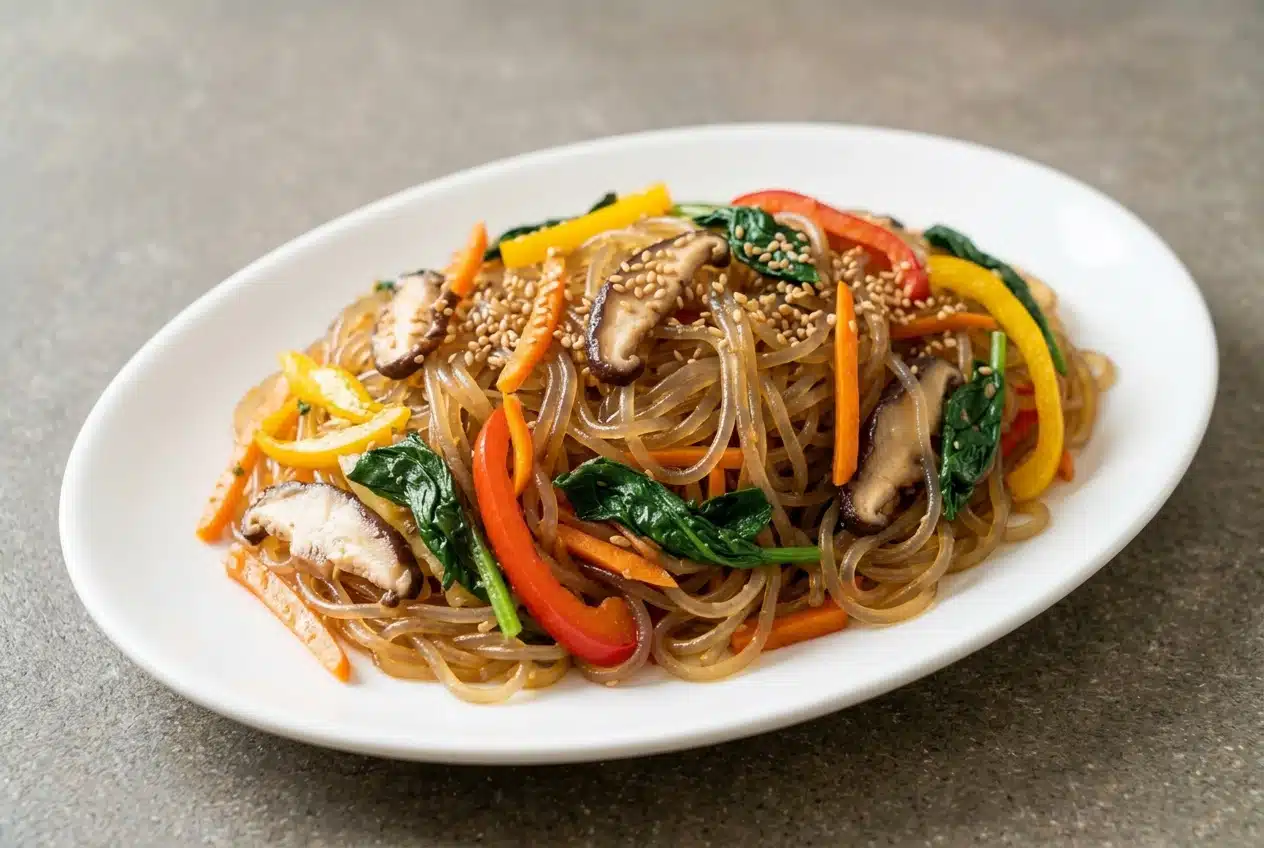
This japchae recipe uses Korean sweet potato glass noodles, thinly sliced beef, and separately cooked vegetables. Boil the noodles until tender with a little bounce, then gently toss everything in a savory-sweet soy and sesame dressing until the strands glisten.
Japchae is a Korean noodle dish with plenty of contrast in every bite. Here, chewy noodles meet browned beef, earthy shiitakes, and ribbons of egg, with toasted sesame seeds scattered over the top.
Cooking each vegetable on its own gives the carrots a chance to stay snappy while the onions turn soft and sweet. The sesame aroma hits as soon as you toss.
Set a large mixing bowl beside the stove so each batch of vegetables has somewhere to go as soon as it’s done.
Japchae Ingredients and Noodle Selection
Each ingredient has a job: the noodles give the dish its springy bite, beef and shiitakes add savory depth, and the vegetables bring color and contrast. Soy sauce, sugar, and sesame oil balance saltiness, sweetness, and aroma.
- 200 g (7 oz) dangmyeon sweet potato glass noodles
- 150 g (5 oz) beef sirloin or ribeye, thinly sliced (or substitute with mushrooms for a vegetarian version)
- 3 tablespoons soy sauce (for the main sauce)
- 2 tablespoons sugar (or honey)
- 2 tablespoons sesame oil
- 1 tablespoon sesame seeds, toasted, for garnish
- 1 tablespoon soy sauce
- 1 teaspoon sesame oil
- 1 teaspoon sugar
- 1 clove garlic, minced
- Black pepper to taste
- 100 g (3.5 oz) fresh spinach
- 2 medium carrots, julienned (about 1 cup)
- 1 medium yellow onion, thinly sliced
- 3–4 dried shiitake mushrooms, soaked in warm water for 30 minutes, stems removed and caps sliced (or 120 g / 4 oz fresh shiitake)
- 1 red bell pepper, thinly sliced (optional, but adds colour and sweetness)
- 2 cloves garlic, minced
- 2–3 tablespoons neutral oil (vegetable or sunflower) for stir-frying
- Salt to taste
- 2 large eggs, separated
- Pinch of salt
- 1 teaspoon neutral oil
- Shiitake mushrooms: Dried shiitake, rehydrated, have a deeper, more intense flavour than fresh. Save the soaking liquid; it can be used as a stock in other recipes.
Thin slices of sirloin or ribeye give you a little beef in each forkful without weighing down the noodles. Spinach adds tender greens, carrots bring a firmer bite, and onion softens into sweet ribbons. If you use the bell pepper, it adds another bit of crunch and sweetness. The thin egg strips, called jidan, make a soft garnish against the crunch of the toasted sesame seeds.
Choosing Dangmyeon
Look for dangmyeon or “Korean sweet potato glass noodles” on the front of the package, then check the ingredient list for sweet potato starch. “Glass noodles” describes how the noodles look when cooked, so that label alone won’t tell you which kind you’re buying.
Mung bean glass noodles can look similar on the shelf, but they don’t necessarily cook at the same rate or give you the same springy chew. Even among packages of dangmyeon, strand thickness can vary, so use the package directions and bite into a strand to check doneness.
Understanding the Seasoning Stages
The beef marinade flavors the meat before it hits the pan. The first toss with soy sauce and sesame oil seasons the bare noodles and helps keep the strands loose while you cook the vegetables. The final dressing brings those components together, with enough sweetness to round out the soy sauce and enough sesame oil to make its aroma noticeable.
The soy sauce and sesame oil are used in several places, and the ingredient list doesn’t assign every splash or drop to a specific step. Use the amounts stated in the noodle and dressing steps rather than assuming the dressing gets whatever is left. The separate two-clove garlic entry has no specified cooking step, and the shiitake soaking liquid is for another use, not for the dressing.
How to Make Japchae
There’s no need to get everything into the pan at once. Start the beef and mushrooms, boil and season the noodles, then add the spinach, vegetables, and beef as each is ready. The broad mixing bowl makes it easier to dress everything without crushing the softer vegetables.
- Stir the soy sauce, sesame oil, sugar, minced garlic, and black pepper together in a bowl, then turn the beef slices through the mixture.
Once the slices are evenly coated, let them marinate for at least 15 minutes while you get the other ingredients ready. - If you’re using dried shiitakes, submerge them in warm water for 30 minutes, then squeeze out excess water, discard the stems, and thinly slice the caps.
The caps should feel pliable all the way through before you slice them. - Boil the dangmyeon in a large pot of water as directed on the package, usually 7–8 minutes for dried noodles, until tender with a slight chew.
Drain and cool the noodles under cold running water to stop the cooking, then snip them with kitchen scissors into roughly 15–20 cm (6–8 inch) lengths and put them in a large mixing bowl. - Toss the drained noodles with 1 tablespoon of soy sauce and 1 tablespoon of sesame oil.
Lift and turn the strands until they’re lightly coated so they’re less likely to gather into a tight clump. - Drop the spinach into a small pot of boiling water with a pinch of salt and give it 30–45 seconds to wilt, then drain it right away and rinse it under cold water.
Squeeze the spinach firmly by hand until little water comes out, then season with a tiny pinch of salt and a few drops of sesame oil before adding it to the noodles. - Set a large skillet or wok over medium-high heat and stir-fry each vegetable in its own batch with a little neutral oil and a pinch of salt, starting with the carrots for 2 minutes, then the onion for 3 minutes, the mushrooms with a splash of soy sauce for 3–4 minutes, and the bell pepper, if using, for 2 minutes.
Look for carrots and peppers that still hold their shape, softened onion with a little gold at the edges, and just-cooked mushrooms; slide each batch into the noodle bowl and wipe the pan between batches. - Turn the heat to high, spread the marinated beef in one layer in the hot pan, and leave it alone for the first minute before stir-frying for another 1–2 minutes.
Transfer the beef to the noodle bowl once it’s cooked through and lightly browned. - Beat the separated whites and yolks in their own bowls with a pinch of salt, then use a lightly oiled pan over low heat to cook the whites first and the yolks second in thin, flat sheets.
When each sheet has set, lift it out, slice it into fine ribbons, and reserve the ribbons for the garnish. - Measure 2 tablespoons of soy sauce, 2 tablespoons of sugar, and 1 tablespoon of sesame oil into a small bowl and stir them together.
The dressing is ready when the sugar granules have dissolved. - Pour the dressing over the bowl and use tongs or clean hands to lift and fold the noodles, vegetables, and beef until they’re evenly coated.
Taste a dressed bite and add more soy sauce for saltiness, sugar for sweetness, or sesame oil for richness only if it needs it. - Move the dressed japchae to a platter and scatter the egg ribbons and toasted sesame seeds over the top.
Leave the ribbons on the surface so they keep their shape.
Texture Tips and Troubleshooting
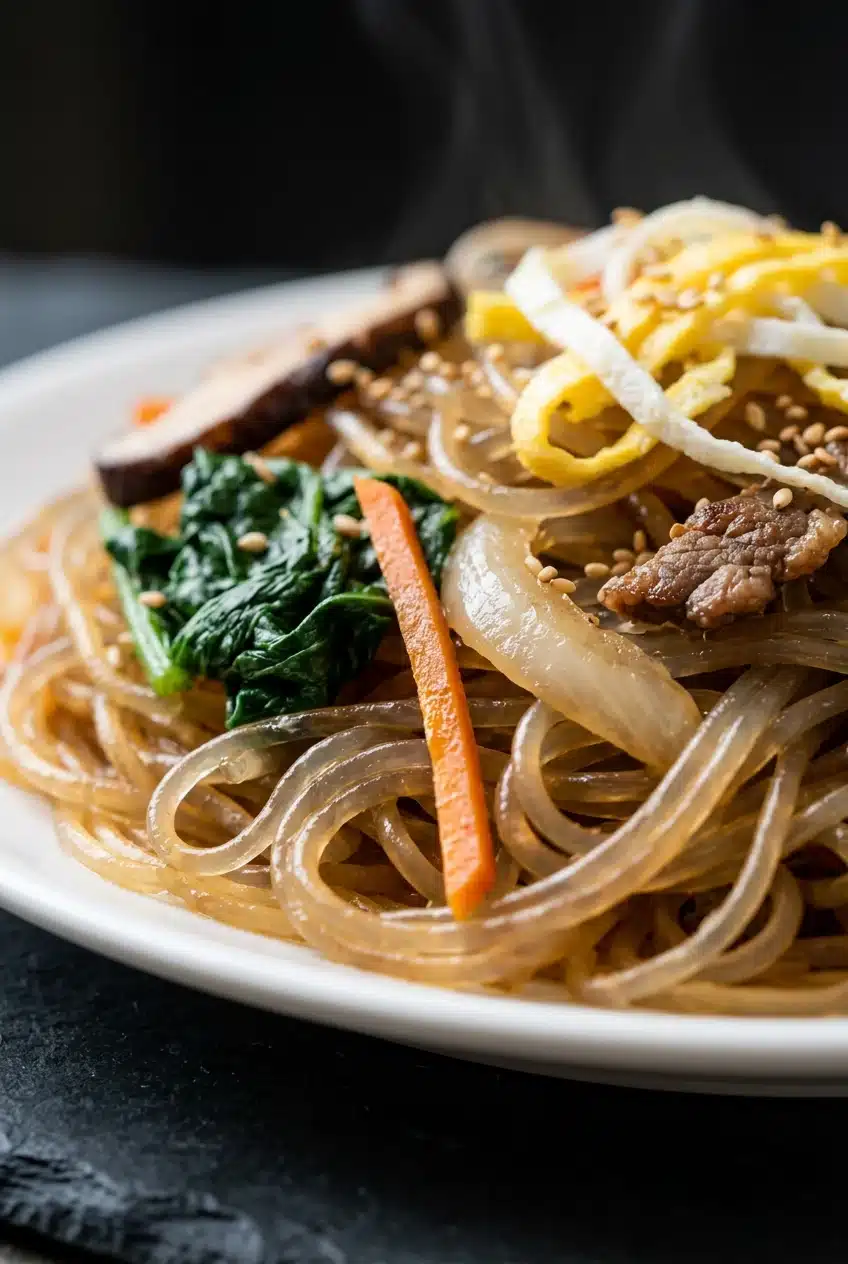
If your japchae tastes right but feels heavy or wet, look at the noodles and greens before adding more seasoning. The problem may be water in the bowl rather than the balance of the dressing.
Reading the Texture Checkpoints
A cooked strand should bend easily but still spring back a little when you bite it. The spinach should look tender and wrung out, not slick with rinse water. And when the vegetables go into the bowl, you should still be able to pick out a carrot matchstick or a strip of onion by its shape and texture.
The same contrast should be there after tossing. Take a look at the bottom of the bowl: the noodles should shine, but there shouldn’t be a puddle beneath them. That thin coating is what carries the soy and sesame into each bite.
Clumping and Excess Moisture
- The noodles gather into a knot. Long, unseasoned strands are harder to separate. Snip them as directed and give them their first toss with soy sauce and sesame oil before they sit while you cook the vegetables.
- The dressing looks watery. Check how well you drained the rinsed noodles and squeezed the spinach. If the greens are still dripping as they go into the bowl, they’ll dilute the dressing. More soy sauce will add salt without fixing the excess water.
- Some bites taste saltier than others. Lift noodles from the bottom of the bowl and fold them back through the vegetables. Taste again after the dressing is evenly distributed, since the beef and noodles already carry seasoning of their own.
Keep the cold rinse with this boil-and-toss method. A soak-and-pan method relies on the noodles finishing in the skillet, so advice about soaking, rinsing, or draining from that approach doesn’t carry over to noodles that have already been boiled.
Optional Japchae Variations
The beef-and-egg version is written above. If you’d rather go meatless or add some heat, these options change the flavor and texture without changing which noodles to buy.
Mushroom-Forward Vegetarian Japchae
Use mushrooms in place of the beef for a version that leans into their savory flavor. Shiitakes give the dish a deeper flavor and a chewy bite alongside the noodles. Keep the egg ribbons if eggs fit your vegetarian diet, and check the labels on any sauces you choose.
Tofu Japchae
Tofu is another optional swap for the beef. It gives the dish a milder flavor than mushrooms do, so the soy and sesame stand out more. For a vegan version, leave off the egg garnish, choose sugar rather than honey, and check that your sauces contain no animal-derived ingredients.
Spicy Japchae
Choose gochugaru if you want a straightforward chili kick, or gochujang for a deeper, savory-sweet heat. Gochujang brings seasoning of its own, so it changes the balance of the dressing as well as the heat level.
Make-Ahead, Storage, and Reheating
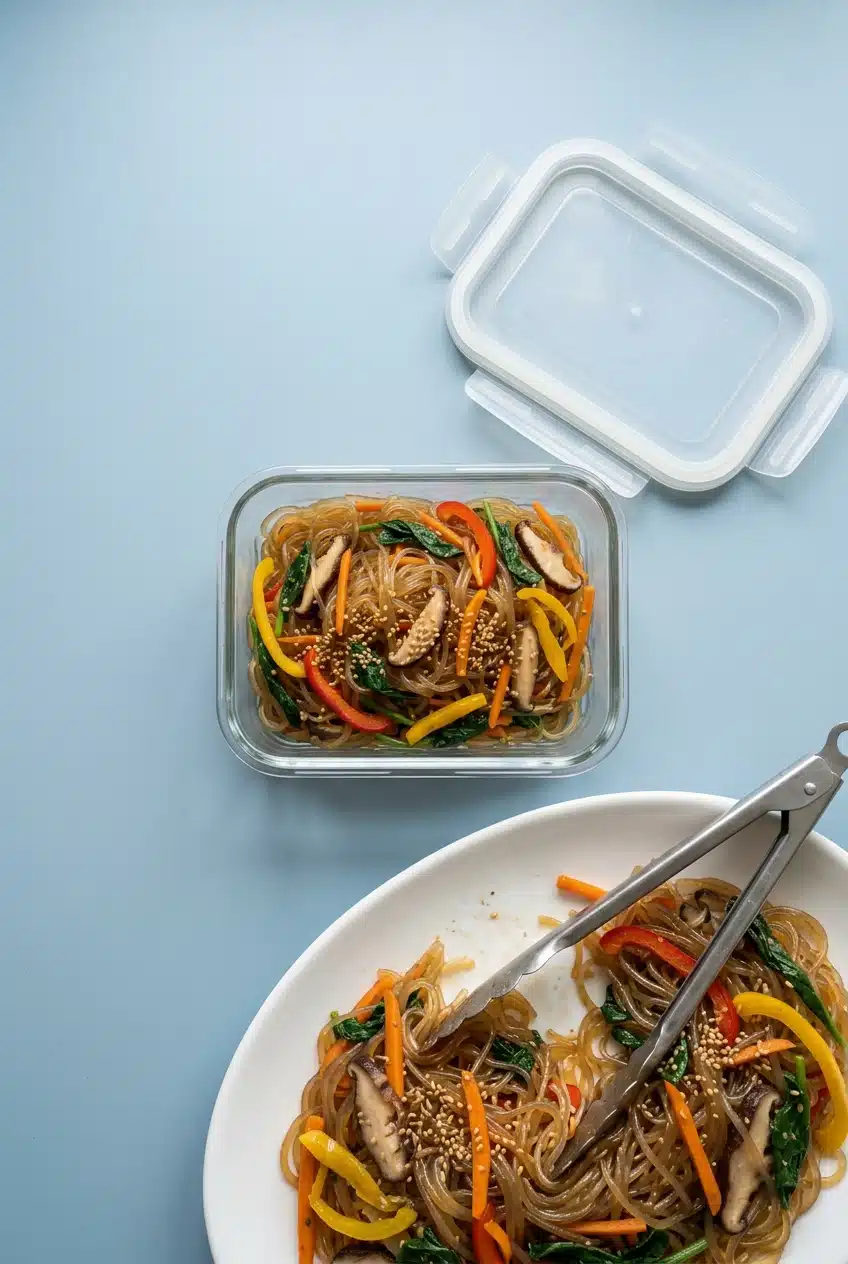
For an easier start, slice the carrots, onion, and optional bell pepper before you heat the skillet. Keep them in separate piles so you can tip each batch into the pan without sorting it out as you cook. Measure the marinade and dressing into separate bowls so they don’t get mixed up.
Refrigerate leftovers promptly in a covered container. If you plan to reheat the japchae, warm only the portion you’ll eat and turn the noodles gently so they heat evenly. The chilled strands may feel firmer than they did at the table, so give them a chance to warm before pulling apart any clumps.
What to Serve With Japchae
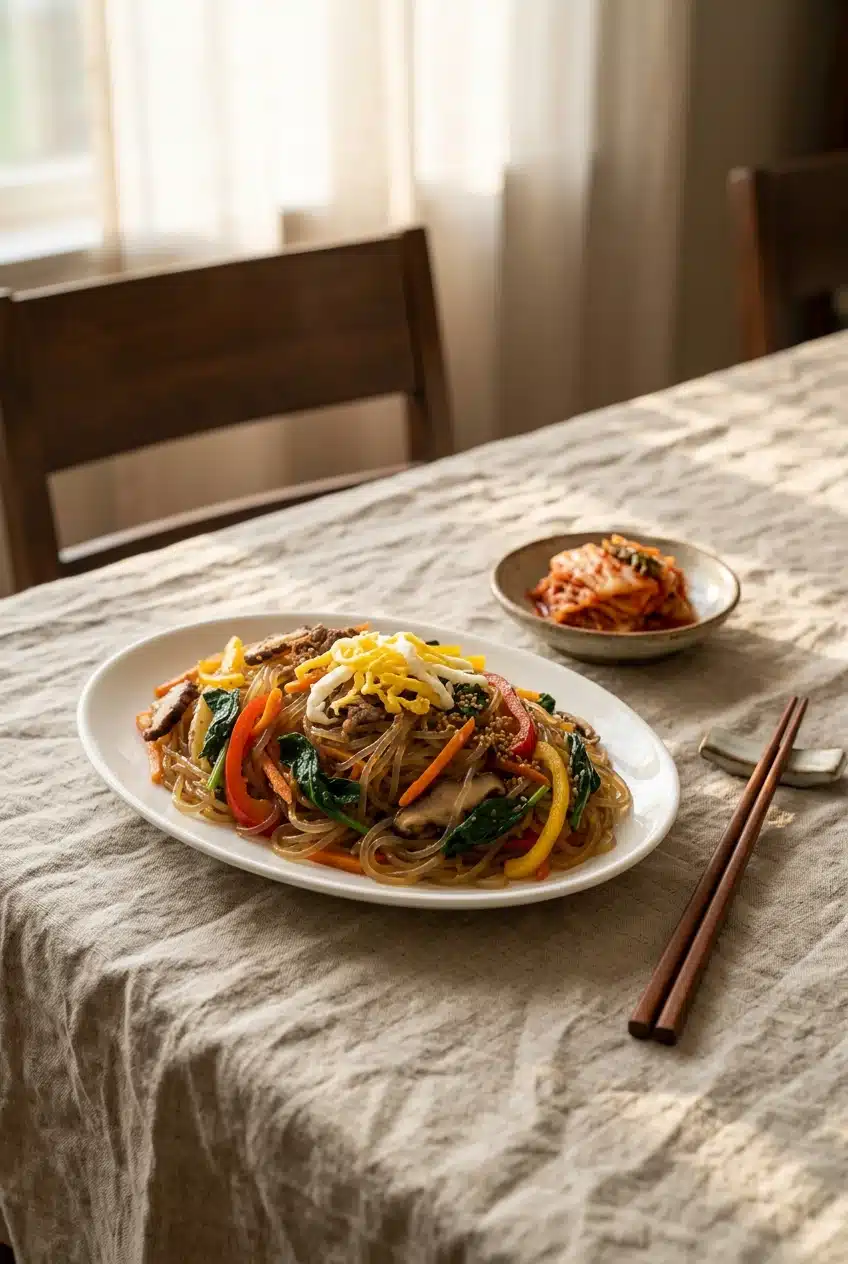
Serve the japchae warm as a noodle main with kimchi alongside. The tang and crunch of the kimchi cut through the sweetness of the dressing and give you a bright bite between forkfuls.
For a shared meal, set out the japchae as a side with bulgogi and steamed rice. The beef and sesame flavors fit together, while the plain rice gives the seasoned dishes a little breathing room. A crisp cucumber side also makes a good contrast to the chewy noodles and soft onions.
Bringing Your Japchae Together
Start with sweet potato starch dangmyeon, give each vegetable its own turn in the skillet, and fold everything together gently. That’s how the noodles stay springy and the vegetables keep their distinct bites.
When the strands glisten and there’s no puddle at the bottom of the bowl, you’re ready for the egg ribbons and toasted sesame. Bring the platter to the table while the sesame aroma is still rising.
Frequently Asked Questions
What Is the Difference Between Chapchae and Japchae?
You may see chapchae used as another spelling of japchae, the Korean glass noodle dish. The spelling alone doesn’t tell you whether a version includes beef, egg, or vegetables alone, so check the ingredients if you’re looking for a particular style.
How Do I Make Simple Japchae?
Do the slicing and measuring before you turn on the stove. Follow the boil-and-toss method above, cook the vegetables in separate batches, and use one large bowl to collect the cooked components and dress them at the end.
Can I Make Vegetarian or Tofu Japchae?
Yes. Replace the beef with mushrooms for a more savory version or tofu for a milder one. If you want a vegan dish, also skip the egg ribbons, use sugar rather than honey, and check the sauce labels.
Is Japchae Best Served Right After Tossing?
For the springiest bite and the strongest sesame aroma, serve it after the final toss. It’s also easier to portion while the noodles are still loose and the dressing is evenly spread.
How Many Calories Are in Japchae?
There’s no verified calorie count per serving for this version. A useful estimate would need to account for the ingredients you actually use and how much of the finished dish goes into each portion.
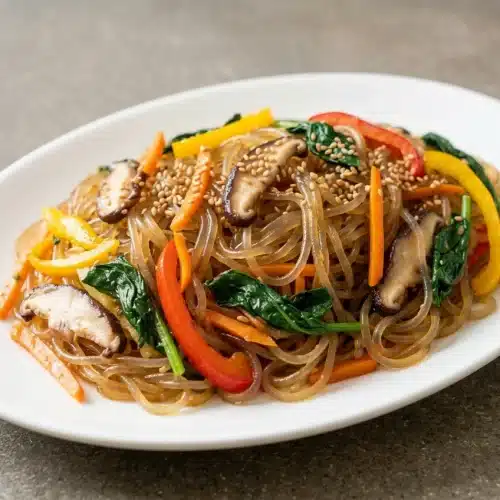
Japchae Recipe

Equipment
- Large Pot
- Small Pot
- Colander
- Large Mixing Bowl
- Small bowls
- large skillet or wok
- Kitchen scissors
- Knife
- Cutting board
- Measuring spoons
- Tongs
Ingredients
- 200 g dangmyeon sweet potato glass noodles (7 oz)
- 150 g beef sirloin or ribeye (5 oz), thinly sliced (or substitute with mushrooms for a vegetarian version)
- 3 tablespoons soy sauce (for the main sauce)
- 2 tablespoons sugar (or honey)
- 2 tablespoons sesame oil
- 1 tablespoon sesame seeds toasted, for garnish
- 1 tablespoon soy sauce
- 1 teaspoon sesame oil
- 1 teaspoon sugar
- 1 clove garlic minced
- Black pepper to taste
- 100 g fresh spinach (3.5 oz)
- 2 medium carrots julienned (about 1 cup)
- 1 medium yellow onion thinly sliced
- 3–4 dried shiitake mushrooms soaked in warm water for 30 minutes, stems removed and caps sliced (or 120 g / 4 oz fresh shiitake)
- 1 red bell pepper thinly sliced (optional, but adds colour and sweetness)
- 2 cloves garlic minced
- 2–3 tablespoons neutral oil (vegetable or sunflower) for stir-frying
- Salt to taste
- 2 large eggs separated
- Pinch salt
- 1 teaspoon neutral oil
- Shiitake mushrooms Dried shiitake, rehydrated, have a deeper, more intense flavour than fresh. Save the soaking liquid; it can be used as a stock in other recipes.
Instructions
- Stir the soy sauce, sesame oil, sugar, minced garlic, and black pepper together in a bowl, then turn the beef slices through the mixture. Once the slices are evenly coated, let them marinate for at least 15 minutes while you get the other ingredients ready.
- If you’re using dried shiitakes, submerge them in warm water for 30 minutes, then squeeze out excess water, discard the stems, and thinly slice the caps. The caps should feel pliable all the way through before you slice them.
- Boil the dangmyeon in a large pot of water as directed on the package, usually 7–8 minutes for dried noodles, until tender with a slight chew. Drain and cool the noodles under cold running water to stop the cooking, then snip them with kitchen scissors into roughly 15–20 cm (6–8 inch) lengths and put them in a large mixing bowl.
- Toss the drained noodles with 1 tablespoon of soy sauce and 1 tablespoon of sesame oil. Lift and turn the strands until they’re lightly coated so they’re less likely to gather into a tight clump.
- Drop the spinach into a small pot of boiling water with a pinch of salt and give it 30–45 seconds to wilt, then drain it right away and rinse it under cold water. Squeeze the spinach firmly by hand until little water comes out, then season with a tiny pinch of salt and a few drops of sesame oil before adding it to the noodles.
- Set a large skillet or wok over medium-high heat and stir-fry each vegetable in its own batch with a little neutral oil and a pinch of salt, starting with the carrots for 2 minutes, then the onion for 3 minutes, the mushrooms with a splash of soy sauce for 3–4 minutes, and the bell pepper, if using, for 2 minutes. Look for carrots and peppers that still hold their shape, softened onion with a little gold at the edges, and just-cooked mushrooms; slide each batch into the noodle bowl and wipe the pan between batches.
- Turn the heat to high, spread the marinated beef in one layer in the hot pan, and leave it alone for the first minute before stir-frying for another 1–2 minutes. Transfer the beef to the noodle bowl once it’s cooked through and lightly browned.
- Beat the separated whites and yolks in their own bowls with a pinch of salt, then use a lightly oiled pan over low heat to cook the whites first and the yolks second in thin, flat sheets. When each sheet has set, lift it out, slice it into fine ribbons, and reserve the ribbons for the garnish.
- Measure 2 tablespoons of soy sauce, 2 tablespoons of sugar, and 1 tablespoon of sesame oil into a small bowl and stir them together. The dressing is ready when the sugar granules have dissolved.
- Pour the dressing over the bowl and use tongs or clean hands to lift and fold the noodles, vegetables, and beef until they’re evenly coated. Taste a dressed bite and add more soy sauce for saltiness, sugar for sweetness, or sesame oil for richness only if it needs it.
- Move the dressed japchae to a platter and scatter the egg ribbons and toasted sesame seeds over the top. Leave the ribbons on the surface so they keep their shape.