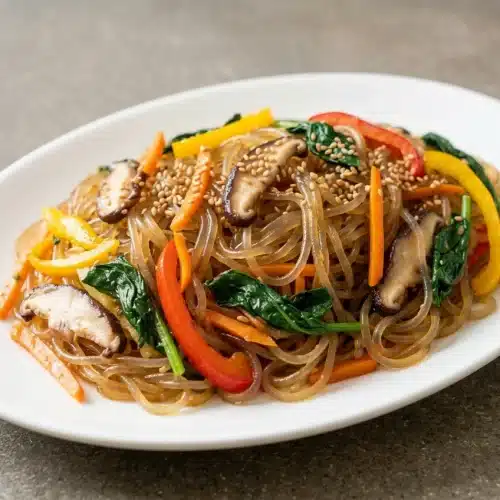
Japchae Recipe

Springy sweet potato noodles meet browned beef, colorful vegetables, and egg ribbons in this Korean japchae, gently tossed with a savory-sweet soy and sesame dressing.
Equipment
- Large Pot
- Small Pot
- Colander
- Large Mixing Bowl
- Small bowls
- large skillet or wok
- Kitchen scissors
- Knife
- Cutting board
- Measuring spoons
- Tongs
Ingredients
- 200 g dangmyeon sweet potato glass noodles (7 oz)
- 150 g beef sirloin or ribeye (5 oz), thinly sliced (or substitute with mushrooms for a vegetarian version)
- 3 tablespoons soy sauce (for the main sauce)
- 2 tablespoons sugar (or honey)
- 2 tablespoons sesame oil
- 1 tablespoon sesame seeds toasted, for garnish
- 1 tablespoon soy sauce
- 1 teaspoon sesame oil
- 1 teaspoon sugar
- 1 clove garlic minced
- Black pepper to taste
- 100 g fresh spinach (3.5 oz)
- 2 medium carrots julienned (about 1 cup)
- 1 medium yellow onion thinly sliced
- 3–4 dried shiitake mushrooms soaked in warm water for 30 minutes, stems removed and caps sliced (or 120 g / 4 oz fresh shiitake)
- 1 red bell pepper thinly sliced (optional, but adds colour and sweetness)
- 2 cloves garlic minced
- 2–3 tablespoons neutral oil (vegetable or sunflower) for stir-frying
- Salt to taste
- 2 large eggs separated
- Pinch salt
- 1 teaspoon neutral oil
- Shiitake mushrooms Dried shiitake, rehydrated, have a deeper, more intense flavour than fresh. Save the soaking liquid; it can be used as a stock in other recipes.
Instructions
- Stir the soy sauce, sesame oil, sugar, minced garlic, and black pepper together in a bowl, then turn the beef slices through the mixture. Once the slices are evenly coated, let them marinate for at least 15 minutes while you get the other ingredients ready.
- If you’re using dried shiitakes, submerge them in warm water for 30 minutes, then squeeze out excess water, discard the stems, and thinly slice the caps. The caps should feel pliable all the way through before you slice them.
- Boil the dangmyeon in a large pot of water as directed on the package, usually 7–8 minutes for dried noodles, until tender with a slight chew. Drain and cool the noodles under cold running water to stop the cooking, then snip them with kitchen scissors into roughly 15–20 cm (6–8 inch) lengths and put them in a large mixing bowl.
- Toss the drained noodles with 1 tablespoon of soy sauce and 1 tablespoon of sesame oil. Lift and turn the strands until they’re lightly coated so they’re less likely to gather into a tight clump.
- Drop the spinach into a small pot of boiling water with a pinch of salt and give it 30–45 seconds to wilt, then drain it right away and rinse it under cold water. Squeeze the spinach firmly by hand until little water comes out, then season with a tiny pinch of salt and a few drops of sesame oil before adding it to the noodles.
- Set a large skillet or wok over medium-high heat and stir-fry each vegetable in its own batch with a little neutral oil and a pinch of salt, starting with the carrots for 2 minutes, then the onion for 3 minutes, the mushrooms with a splash of soy sauce for 3–4 minutes, and the bell pepper, if using, for 2 minutes. Look for carrots and peppers that still hold their shape, softened onion with a little gold at the edges, and just-cooked mushrooms; slide each batch into the noodle bowl and wipe the pan between batches.
- Turn the heat to high, spread the marinated beef in one layer in the hot pan, and leave it alone for the first minute before stir-frying for another 1–2 minutes. Transfer the beef to the noodle bowl once it’s cooked through and lightly browned.
- Beat the separated whites and yolks in their own bowls with a pinch of salt, then use a lightly oiled pan over low heat to cook the whites first and the yolks second in thin, flat sheets. When each sheet has set, lift it out, slice it into fine ribbons, and reserve the ribbons for the garnish.
- Measure 2 tablespoons of soy sauce, 2 tablespoons of sugar, and 1 tablespoon of sesame oil into a small bowl and stir them together. The dressing is ready when the sugar granules have dissolved.
- Pour the dressing over the bowl and use tongs or clean hands to lift and fold the noodles, vegetables, and beef until they’re evenly coated. Taste a dressed bite and add more soy sauce for saltiness, sugar for sweetness, or sesame oil for richness only if it needs it.
- Move the dressed japchae to a platter and scatter the egg ribbons and toasted sesame seeds over the top. Leave the ribbons on the surface so they keep their shape.
Notes
Noodle tip: Check the package for sweet potato starch when buying dangmyeon. Follow its cooking directions and taste a strand, since noodle thickness varies.
Texture tip: Drain the rinsed noodles thoroughly and squeeze the spinach until it stops dripping. Extra water dilutes the dressing, and adding soy sauce will not fix it.
Seasoning tip: Keep the marinade and final dressing in separate bowls. Follow the measured amounts in the noodle and dressing steps rather than treating the dressing as whatever seasoning remains. The separate two-clove garlic entry has no specified cooking step.
Storage: Promptly refrigerate leftovers in a covered container. Reheat only the portion needed, turning gently and letting chilled noodles warm before separating clumps.
Nutrition information is an estimate based on common ingredients and serving sizes. Values may vary depending on brands, portions, and substitutions.