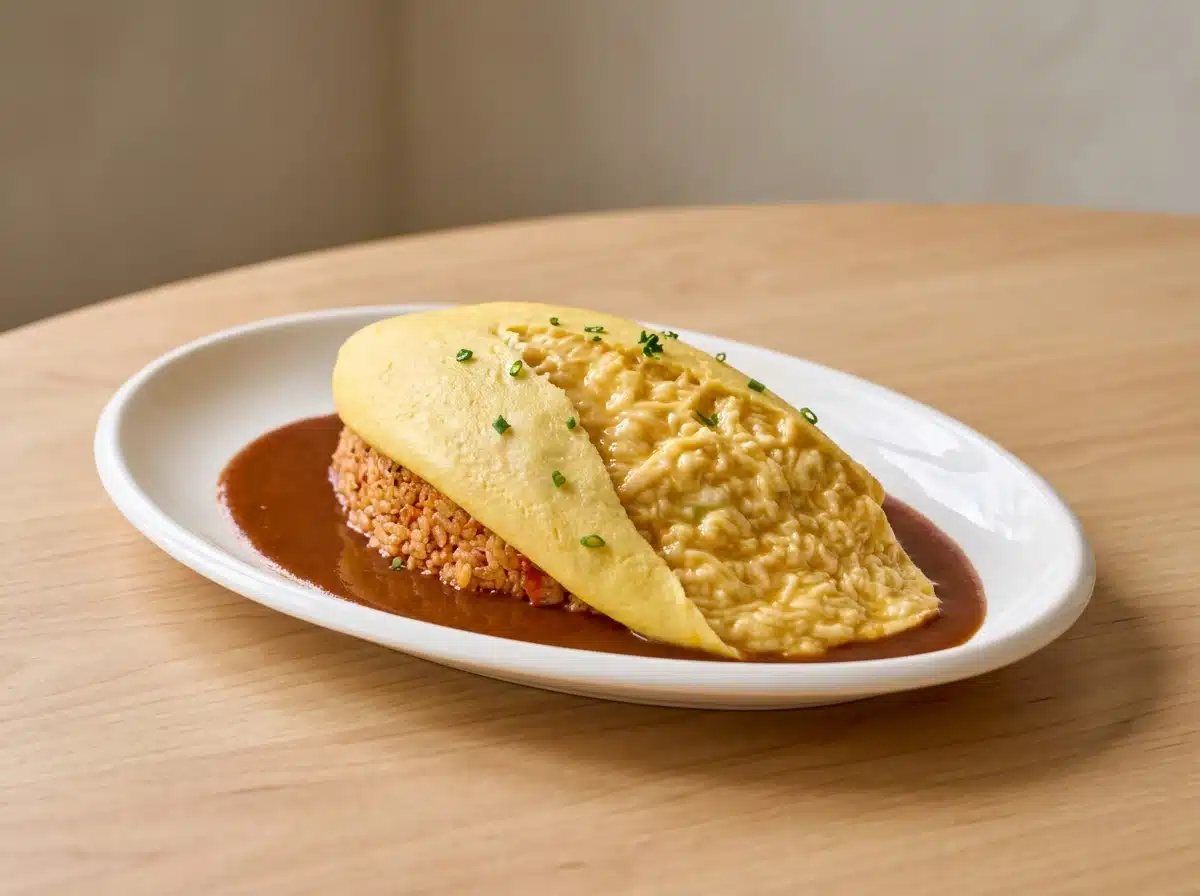
Omurice combines Japanese ketchup-seasoned chicken fried rice with an omelet and a finishing sauce. This version pairs savory rice with a silky, custardy omelet that opens over the mound, followed by glossy homemade demi-glace.
This omurice recipe belongs to yoshoku, Japanese cooking influenced by Western dishes. Chicken, mushrooms, and caramelized ketchup give the rice depth, while the unseasoned eggs soften each savory bite.
The split-open omelet takes attention, but the rice and sauce come together before that fast-moving final stage. A relaxed egg blanket works beautifully, too. Watch for the glossy curds.
Set the plates, rice mold, knife, and warm sauce within reach before the eggs meet the pan.
Essential Omurice Ingredients and Smart Substitutions
Each ingredient builds flavor or texture: aromatics deepen the sauce, ketchup balances the savory rice, butter adds richness, and eggs provide a tender covering. Parsley brings freshness against the concentrated beef broth and mushrooms.
- 1 tablespoon neutral oil
- 2 shallot (sliced)
- 2 green onion (sliced)
- ½ celery stalk (diced)
- ½ whole carrot (diced)
- 1 whole garlic clove
- 2 teaspoon tomato paste
- ½ cup Pinot Noir or good Burgundy wine
- 4 cup good-quality beef broth
- 1¾ tablespoon butter
- 1½ tablespoon all-purpose flour
- optional black pepper (freshly ground)
- 2 tablespoon neutral oil
- ⅔ cup chicken thigh (finely diced)
- ½ white onion (finely diced)
- 4-5 button mushroom (finely diced)
- 2 tablespoon Japanese ketchup
- 1 teaspoon Worcestershire sauce
- 2 cup cooked day-old Japanese short-grain rice
- 3 tablespoon butter
- salt (to taste)
- black pepper (freshly ground, to taste)
- 2 tablespoon fresh parsley (finely chopped)
- 3-4 large egg per person (cracked and beaten the day before)
Japanese short-grain rice gives the mound its cohesive shape. Chilled, day-old grains have a drier surface than steaming rice, making them easier to separate without smearing. For same-day cooking, aim for slightly drier rice and let excess steam escape before frying; don’t compensate by leaving cooked rice sitting out. Jasmine rice offers a looser, less cohesive result.
Finely diced chicken thigh distributes throughout the filling. Onion adds sweetness, mushrooms contribute savory depth, and Japanese ketchup supplies sweet acidity. Cooking the ketchup against the pan softens its sharp aroma and reduces moisture before it coats the grains. Worcestershire adds another savory layer.
The demi-glace combines browned shallots, vegetables, tomato paste, wine, and reduced beef broth. A golden butter-flour roux gives it enough body to cling to the omelet. Because the sauce concentrates as it reduces, season the rice cautiously.
I’d keep the eggs unseasoned here so their mellow richness balances the concentrated sauce and ketchup rice.
Beat the eggs until no separate white strands remain; those strands make an uneven covering. Optionally pass the beaten eggs through a fine-mesh strainer for a smoother mixture. Keep advance-prepared eggs covered and chilled.
How to Make Classic Japanese Omurice Step by Step
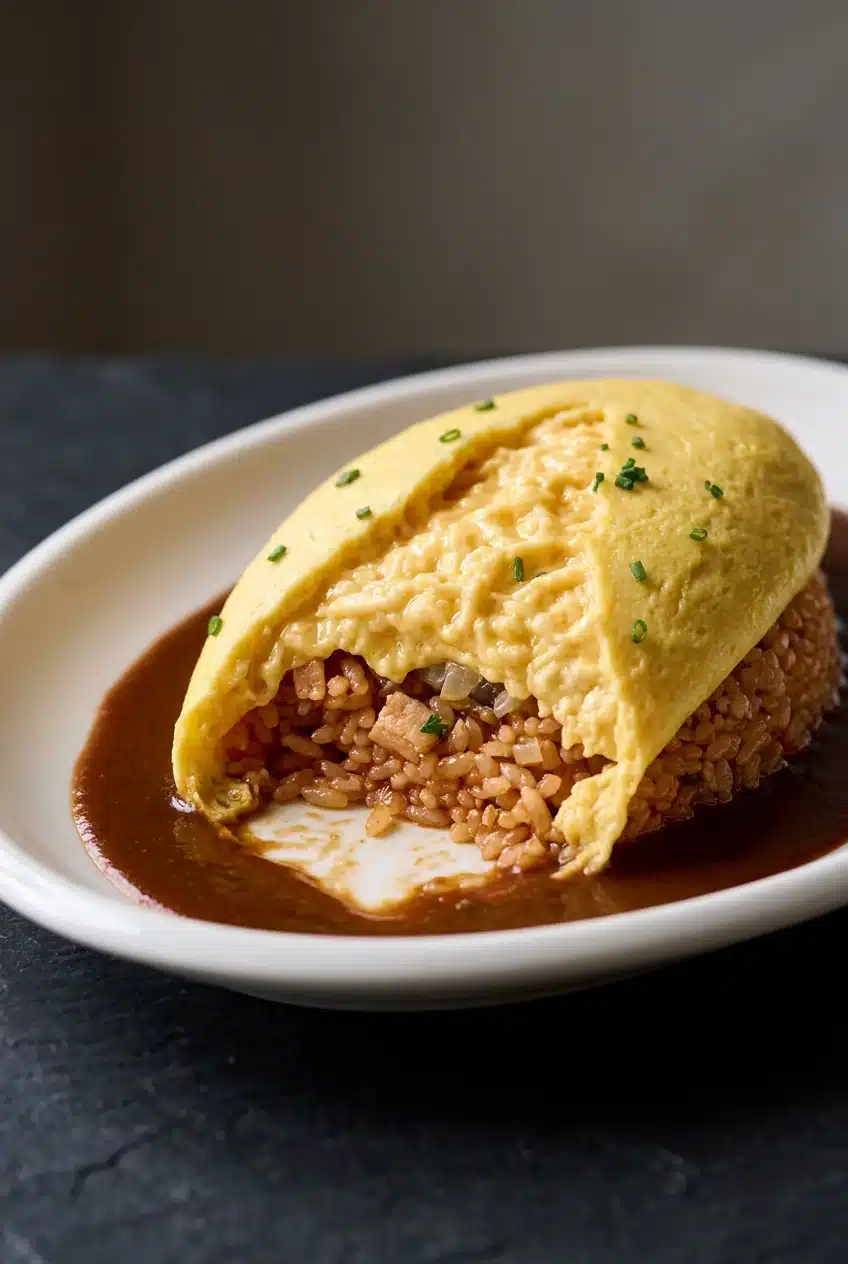
Make the sauce first, then the rice, and leave the eggs until everything else is ready. This recipe serves 2, with 20 minutes of prep and 50 minutes of cooking, for 70 minutes total. Cook each person’s omelet separately.
Make the Demi-Glace
- Soften and brown the shallots in a medium saucepan with 1 tablespoon neutral oil over medium heat.
Look for caramel-colored edges and a sweet aroma before continuing. - Sauté the green onion, celery, carrot, and garlic for 1 to 1½ minutes, then stir the tomato paste around the pan for 30 seconds.
The paste should lose its raw sharpness without scorching. - Pour in the wine and loosen the browned deposits from the saucepan.
Continue cooking until only half the wine remains. - Introduce the beef broth, lower the heat, and simmer for 20–30 minutes.
A reduction of about two-thirds leaves a concentrated broth for the sauce. - Prepare the roux in a separate small saucepan by melting the butter and working in the flour with a spatula, then take it off the heat to cool slightly.
The flour-butter mixture should reach a golden color. - Pour the reduced broth through a fine-mesh strainer positioned over the roux, pressing the vegetables with a spoon before discarding them.
The strained liquid should be free of vegetable pieces. - Whisk the combined mixture gently over heat, then taste, add black pepper if desired, and keep warm.
Stop thickening when the glossy sauce leaves a coating on a spoon’s back.
Make the Chicken Fried Rice
- Warm 2 tablespoons neutral oil in a deep frying pan or wok over medium-high heat.
The oil should flow readily across the cooking surface. - Toss the finely diced chicken in the oil occasionally as it cooks.
Continue until the pieces show light browning and are cooked through. - Cook the diced onion and mushrooms with the chicken.
The onion should turn translucent before the ketchup goes in. - Clear a space beside the chicken mixture and cook the ketchup directly against the pan.
Look for a slightly darker glaze and a deeper, less sharp tomato aroma. - Mix in the Worcestershire, add the rice, and separate clumps with a spatula while tossing.
The ketchup should color the grains evenly without leaving large white clusters. - Work the butter through the rice and adjust the salt and freshly ground black pepper to taste.
The grains should look lightly glossy rather than wet. - Fold the chopped parsley throughout the filling and set the pan aside.
Green flecks should appear evenly through the rice.
Make the Omelet
- Bring an 8-inch nonstick skillet to medium heat.
A hot surface without smoke is the target. - Add the beaten eggs and immediately stir with chopsticks or a spatula, drawing setting egg inward.
Soft curds should gather while fluid egg fills the spaces around them. - Pause the stirring when the eggs reach about 70% set, then leave the base undisturbed for about 5 seconds.
The underside should form a thin layer beneath glossy, wet curds. - Angle the skillet and guide the upper and lower edges toward each other to form an oval roll.
The outside should enclose the soft center without becoming a browned shell. - Turn the roll gently onto its joined edge and cook for a few seconds.
The seam should hold together while the center remains soft.
Assemble and Serve
- Press the warm rice into an omurice mold or small bowl, turn it onto a plate, and lift away the mold.
The mound should hold a clean dome without looking densely compressed. - Guide the omelet out of the skillet with chopsticks or a spatula and onto the rice.
Center the oval along the mound so it rests securely. - Draw a sharp knife lengthwise through the omelet’s center.
The tender covering should part and release the soft curds over the rice. - Spoon a generous covering of warm demi-glace over the opened eggs.
The sauce should cling while leaving some yellow egg visible. - Finish with additional chopped parsley and bring the plate to the table immediately.
The eggs should still look soft and the sauce glossy.
Troubleshooting Common Omurice Mistakes
The difficult part is matching the egg’s setting speed to your folding speed. A clean, undamaged nonstick surface gives you more control than forceful stirring or flipping.
- The egg sticks or tears: Worn coating and unmixed strands of egg white can undermine the covering; use an intact nonstick skillet and beat the eggs thoroughly.
- The underside browns before rolling: Excessive heat sets the exterior too quickly; ease the heat and watch the curds rather than waiting for a firm top.
- The omelet becomes scrambled eggs: Stirring after the base needs to form breaks up its structure; stop while the top still looks glossy and fluid.
- The rice turns gummy: Wet rice and ketchup added without caramelizing contribute excess moisture; start with drier grains and let the ketchup contact the pan before mixing.
- The roll breaks during transfer: Stop trying to rebuild it in the skillet; place it neatly over the rice as an egg blanket, with any torn edges tucked inward.
- The finished dish tastes too salty: Concentrated broth and Worcestershire already contribute seasoning; taste the rice alongside a little sauce before adding more salt.
Aim for grains that separate under the spatula, much like classic fried rice, while retaining enough cohesion to mold. Press clumps apart rather than chopping through them.
Popular Omurice Variations and Sauce Styles
Choose an egg style and sauce to suit the occasion. These optional directions change the presentation or flavor without altering the chicken-and-demi-glace method above.
Easy Soft-Scrambled Blanket (Fuwatoro) Style
For the most forgiving presentation, drape soft scrambled eggs directly over the molded rice instead of enclosing them in a roll. This gives you the creamy egg-and-rice contrast without the split-open finish. Spread the curds gently rather than flattening them tightly.
Classic Thin-Crepe Wrapped Omurice
The nostalgic home-style version uses a thin omelet wrapped around the seasoned rice. It has a more fully set covering than the restaurant-style split-open roll, often associated with Tampopo or Kichi Kichi presentations. A ketchup zigzag suits the wrapped style particularly well.
Alternative Sauces With Ketchup, Quick Pan Glaze, and Curry
- Ketchup drizzle: Choose this for a bright, sweet-tangy finish that keeps the rice and egg prominent.
- Butter-ketchup-Worcestershire glaze: This optional pan-sauce direction brings richness and savory tang without the scratch demi-glace.
- Curry-spiced or creamy tomato sauce: Either gives a warmer, fuller-flavored variation that pairs naturally with the egg covering.
Taste before seasoning the rice when changing sauces. A concentrated savory sauce calls for more restraint than a light ketchup drizzle.
Vegetarian and Alternative Protein Swaps
- Vegetable-forward: Replace chicken with extra mushrooms, peas, carrots, or peppers for more color and vegetable texture.
- Ham: This brings a salty, savory character, so reduce added seasoning as needed.
- Spam: Choose it for a richer, distinctly savory variation, again keeping salt restrained.
For a vegetarian meal, also replace the beef-based sauce and check that the Worcestershire you choose suits your diet.
Make-Ahead Prep and Storage Tips
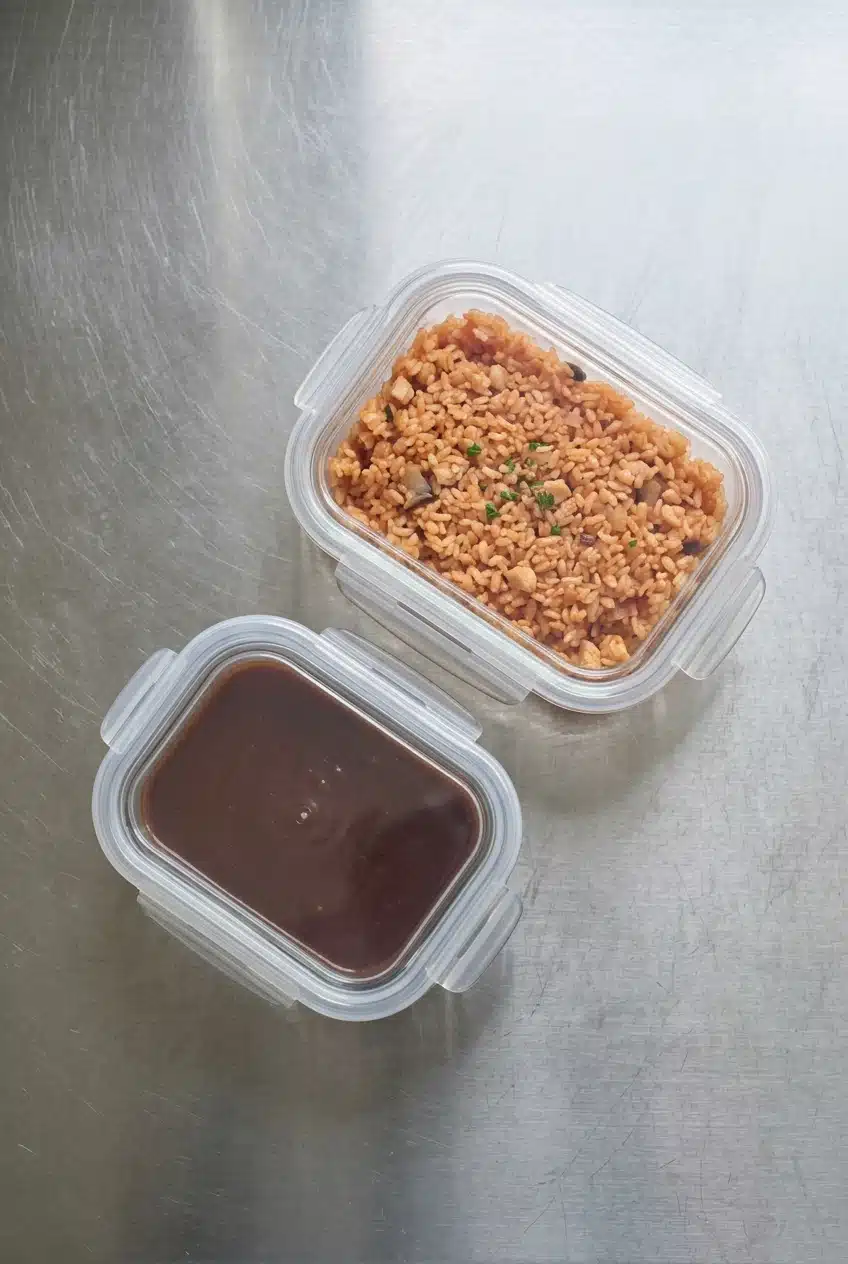
Separate the components rather than storing an assembled soft omelet over rice. The rice filling and sauce are the practical places to organize advance prep; cook the egg covering fresh for its best texture.
Keep prepared components covered and chilled, with the sauce separate from the rice. Before cooking fresh eggs, reheat the rice evenly and warm the sauce gently, stirring to restore its consistency. Don’t treat barely warmed rice as ready simply because the sauce is hot.
For cooked rice and poultry, check current food-handling instructions for cooling, refrigeration, and reheating rather than assuming that reheating corrects earlier handling problems. No storage window is specified here.
Dietary Adaptations and Egg Doneness
The split-open omelet intentionally has a soft, partly set center. Its glossy appearance describes texture, not a safety guarantee. If you need to avoid undercooked eggs, including when cooking for someone at higher risk, choose a fully set covering instead.
Eggs, all-purpose flour, and butter are present in this dish. Check Worcestershire and broth labels for ingredients relevant to fish, soy, wheat, or other dietary restrictions; formulations differ.
A gluten-free adaptation needs suitable flour and verified sauces and broth, not just a flour swap. Extra broth can replace wine as an optional flavor adjustment, though the sauce will lose some wine-derived acidity and depth.
How to Plate and Serve Omurice
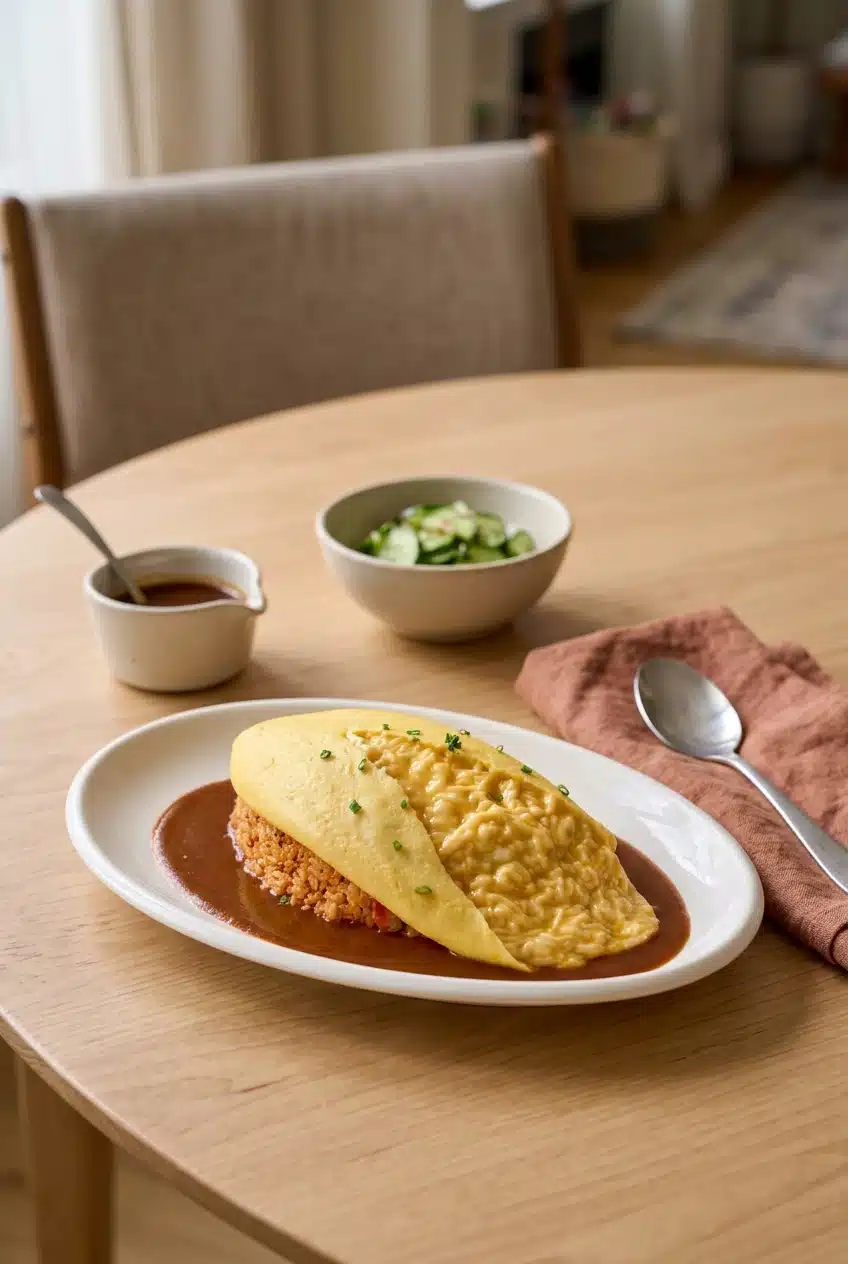
A smooth rice mound supports the omelet and makes slicing easier. Press firmly enough for the rice to hold its shape, but stop short of compressing it into a dense block.
For a tableside finish, center the roll over the dome and slice lengthwise, then spoon warm demi-glace over the opened egg. Finish with chopped parsley. Keep the sauce warm and nearby so the eggs don’t wait while you search for a ladle.
Serve cucumber salad, crisp pickled vegetables, or lightly dressed greens alongside. Their fresh crunch and acidity balance the butter-rich rice and concentrated sauce without competing with the main dish.
Bringing Restaurant-Style Omurice to Your Table
Good omurice balances distinct, ketchup-glazed rice with mellow eggs and rich sauce. Preparing the components in order leaves you free to focus on the omelet when it matters.
Choose the split-open roll for the dramatic finish or the blanket style for a relaxed meal. Either way, let the egg texture guide you, and bring the plate to the table while it’s warm.
Frequently Asked Questions About Omurice
What Makes Omurice So Hard to Make?
The exterior needs enough structure to roll while the center stays soft, so pan heat and timing matter. A sound nonstick surface, thoroughly beaten eggs, and a ready serving plate reduce the pressure; the blanket style removes the rolling challenge.
What Are the Key Ingredients in Traditional Omurice?
Japanese short-grain rice, chicken, onion, ketchup, and eggs form the familiar combination, with mushrooms and Worcestershire adding savory depth here. Ketchup or demi-glace finishes the dish, depending on the style.
Is the Inside of a Japanese Omurice Omelet Raw?
The split-open style contains partly set eggs, rather than a fully firm center. Don’t use its custardy texture as proof of safety; choose fully cooked eggs if undercooked eggs aren’t appropriate for you or your guests.
What Sauce Goes Best on Omurice Besides Ketchup?
Demi-glace complements the chicken and mushrooms with a rich, savory finish. Optional alternatives include butter-ketchup-Worcestershire glaze, creamy tomato sauce, or a curry-spiced sauce.
Can You Make Omurice With Fresh Rice or Vegetarian Swaps?
Yes, though freshly cooked rice should be slightly drier and no longer steaming heavily before frying. For a vegetarian version, replace chicken with vegetables and choose a vegetable-based sauce and suitable Worcestershire.
Omurice Recipe

Equipment
- Medium saucepan
- Small saucepan
- Fine mesh strainer
- Spatula
- Deep frying pan or wok
- 8-inch nonstick skillet
- chopsticks
- Omurice mold or small bowl
- Sharp knife
Ingredients
- 1 tablespoon neutral oil
- 2 shallot sliced
- 2 green onion sliced
- ½ celery stalk diced
- ½ whole carrot diced
- 1 whole garlic clove
- 2 teaspoon tomato paste
- ½ cup Pinot Noir or good Burgundy wine
- 4 cup good-quality beef broth
- 1¾ tablespoon butter
- 1½ tablespoon all-purpose flour
- optional black pepper freshly ground
- 2 tablespoon neutral oil
- ⅔ cup chicken thigh finely diced
- ½ white onion finely diced
- 4-5 button mushroom finely diced
- 2 tablespoon Japanese ketchup
- 1 teaspoon Worcestershire sauce
- 2 cup cooked day-old Japanese short-grain rice
- 3 tablespoon butter
- salt to taste
- black pepper freshly ground, to taste
- 2 tablespoon fresh parsley finely chopped
- 3-4 large egg per person cracked and beaten the day before
Instructions
Make the Demi-Glace
- Soften and brown the shallots in a medium saucepan with 1 tablespoon neutral oil over medium heat. Look for caramel-colored edges and a sweet aroma before continuing.
- Sauté the green onion, celery, carrot, and garlic for 1 to 1½ minutes, then stir the tomato paste around the pan for 30 seconds. The paste should lose its raw sharpness without scorching.
- Pour in the wine and loosen the browned deposits from the saucepan. Continue cooking until only half the wine remains.
- Introduce the beef broth, lower the heat, and simmer for 20–30 minutes. A reduction of about two-thirds leaves a concentrated broth for the sauce.
- Prepare the roux in a separate small saucepan by melting the butter and working in the flour with a spatula, then take it off the heat to cool slightly. The flour-butter mixture should reach a golden color.
- Pour the reduced broth through a fine-mesh strainer positioned over the roux, pressing the vegetables with a spoon before discarding them. The strained liquid should be free of vegetable pieces.
- Whisk the combined mixture gently over heat, then taste, add black pepper if desired, and keep warm. Stop thickening when the glossy sauce leaves a coating on a spoon’s back.
Make the Chicken Fried Rice
- Warm 2 tablespoons neutral oil in a deep frying pan or wok over medium-high heat. The oil should flow readily across the cooking surface.
- Toss the finely diced chicken in the oil occasionally as it cooks. Continue until the pieces show light browning and are cooked through.
- Cook the diced onion and mushrooms with the chicken. The onion should turn translucent before the ketchup goes in.
- Clear a space beside the chicken mixture and cook the ketchup directly against the pan. Look for a slightly darker glaze and a deeper, less sharp tomato aroma.
- Mix in the Worcestershire, add the rice, and separate clumps with a spatula while tossing. The ketchup should color the grains evenly without leaving large white clusters.
- Work the butter through the rice and adjust the salt and freshly ground black pepper to taste. The grains should look lightly glossy rather than wet.
- Fold the chopped parsley throughout the filling and set the pan aside. Green flecks should appear evenly through the rice.
Make the Omelet
- Bring an 8-inch nonstick skillet to medium heat. A hot surface without smoke is the target.
- Add the beaten eggs and immediately stir with chopsticks or a spatula, drawing setting egg inward. Soft curds should gather while fluid egg fills the spaces around them.
- Pause the stirring when the eggs reach about 70% set, then leave the base undisturbed for about 5 seconds. The underside should form a thin layer beneath glossy, wet curds.
- Angle the skillet and guide the upper and lower edges toward each other to form an oval roll. The outside should enclose the soft center without becoming a browned shell.
- Turn the roll gently onto its joined edge and cook for a few seconds. The seam should hold together while the center remains soft.
Assemble and Serve
- Press the warm rice into an omurice mold or small bowl, turn it onto a plate, and lift away the mold. The mound should hold a clean dome without looking densely compressed.
- Guide the omelet out of the skillet with chopsticks or a spatula and onto the rice. Center the oval along the mound so it rests securely.
- Draw a sharp knife lengthwise through the omelet’s center. The tender covering should part and release the soft curds over the rice.
- Spoon a generous covering of warm demi-glace over the opened eggs. The sauce should cling while leaving some yellow egg visible.
- Finish with additional chopped parsley and bring the plate to the table immediately. The eggs should still look soft and the sauce glossy.