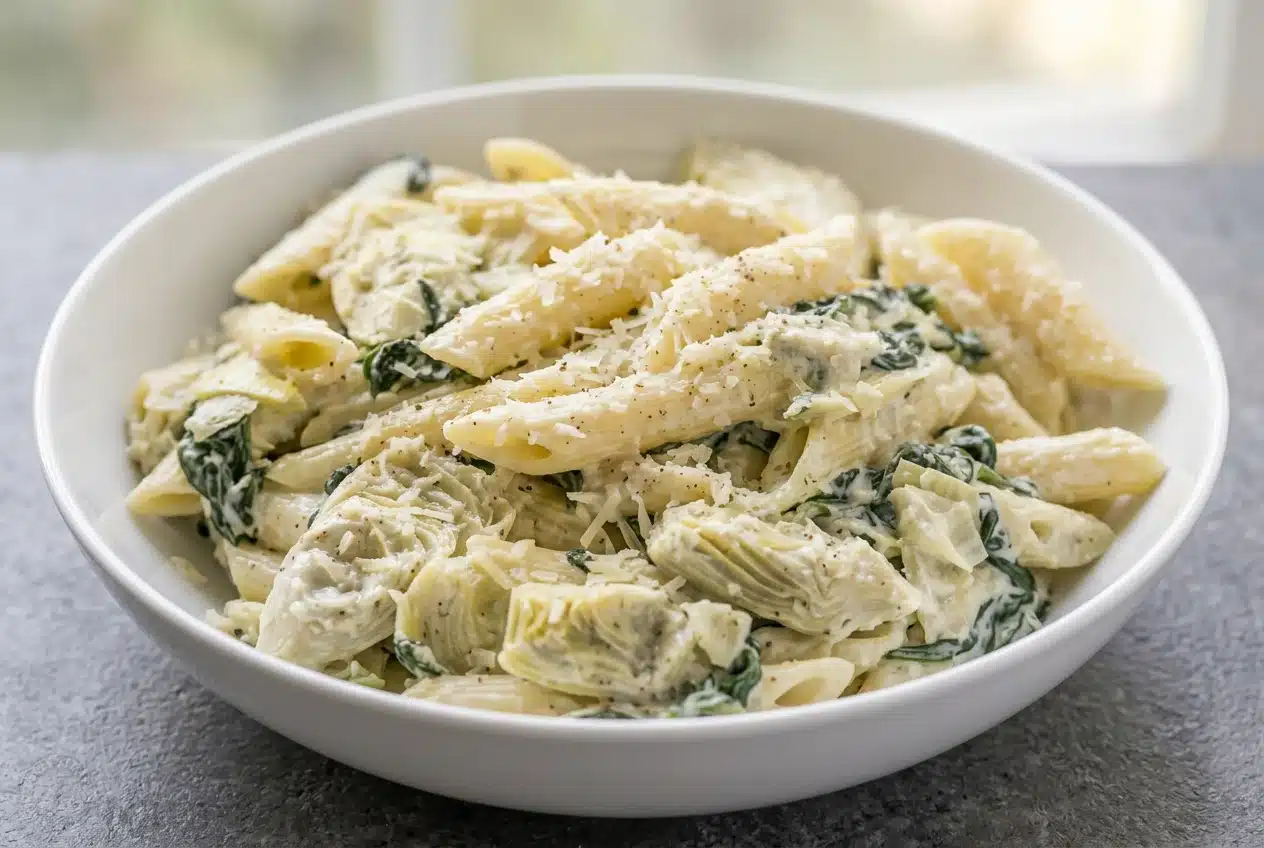
Turn spinach and artichoke dip into dinner by tossing penne with wilted spinach, artichoke hearts, and a garlicky cream cheese and Parmesan sauce. Drain the greens well, then use reserved pasta water to loosen the sauce just enough to coat the noodles.
This spinach artichoke pasta brings the tang of sour cream and the savory bite of Parmesan to a stovetop dinner. The artichoke hearts stay in tender pieces, so you get something to bite into between forkfuls of creamy penne.
There’s no oven to preheat, and the diced jalapeños are optional if you’d rather let the garlic do the talking. The sauce is best when it’s just loose enough to slip inside the penne.
Set a heatproof measuring cup next to the colander before you boil the pasta so you remember to scoop out the cooking water before draining.
Key Ingredients and Smart Substitutions
Each ingredient has a job: the dairy builds a rich, tangy sauce, the vegetables add color and bite, garlic and optional jalapeños sharpen the flavor, and penne catches the sauce in its hollow centers.
- 6 Tbsp unsalted butter (divided)
- 10 oz fresh spinach (*see note on substitutions for using frozen)
- 4 oz cream cheese (cut into pieces (reduced fat is ok))
- 1 cup 8 oz sour cream (“light” sour cream is ok)
- 1 cup shredded parmesan cheese
- 2 cans (15 oz each quartered artichoke hearts, well drained)
- 4 oz can diced jalapeños (drained (optional))
- 1 large or 2 small garlic cloves pressed
- 16 oz penne pasta with 1 cup reserved pasta cooking liquid
Butter helps wilt the spinach and adds richness to the sauce. Cream cheese gives the sauce body, sour cream brings its familiar dip-like tang, and Parmesan adds a salty, savory finish. Pressed garlic disperses through the sauce, while drained jalapeños add little pockets of heat if you use them.
Fresh vs. Frozen Spinach
Fresh spinach wilts quickly: the leaves turn glossy and collapse into a much smaller pile. Let it drain in a colander while you make the sauce. If you’re substituting frozen chopped spinach, thaw it first and squeeze out the liquid before adding it with the garlic. It’s already wilted, so it doesn’t need a turn in the butter.
Choosing the Best Pasta Shape and Artichokes
Ridged penne is a good fit because the sauce clings to the outside and collects inside the tubes. Rigatoni, fusilli, and shells also catch the spinach and artichoke pieces better than thin, smooth strands.
Choose plain canned artichoke hearts packed in water for a flavor closer to classic dip. Marinated artichokes bring their own oil, acidity, and seasonings, which can compete with the sour cream and garlic.
I like to turn the artichoke quarters cut-side down in the colander so liquid can drain from between the leaves.
How to Make the Spinach Artichoke Pasta
Prep: 5 minutes. Cook: 25 minutes. Total: 30 minutes. Serves: 6.
- Boil the penne in a large pot of salted water until it reaches your preferred doneness, then scoop out about 1 cup of cooking water before draining.
For al dente pasta, bite into a piece and check that it’s tender with a little resistance at the center. - Heat 2 Tbsp of the butter in a large pot over medium heat, stir the spinach through the melted butter for about 1 minute, and tip it into a colander to drain.
The leaves should have collapsed and turned glossy but still look bright green. - Return to the empty pot and stir the remaining 4 Tbsp butter, 4 oz cream cheese pieces, 1 cup sour cream, and 1 cup Parmesan together until melted.
The sauce is ready for the vegetables when it looks smooth and the first gentle bubbles appear. - Fold the drained artichokes into the sauce, give them 1 to 2 minutes to warm, then stir in the drained spinach, pressed garlic, and jalapeños, if using.
Let the mixture heat through until it steams evenly as you stir. - Toss in the drained penne and, if the sauce needs loosening, stir in the reserved cooking water a splash at a time.
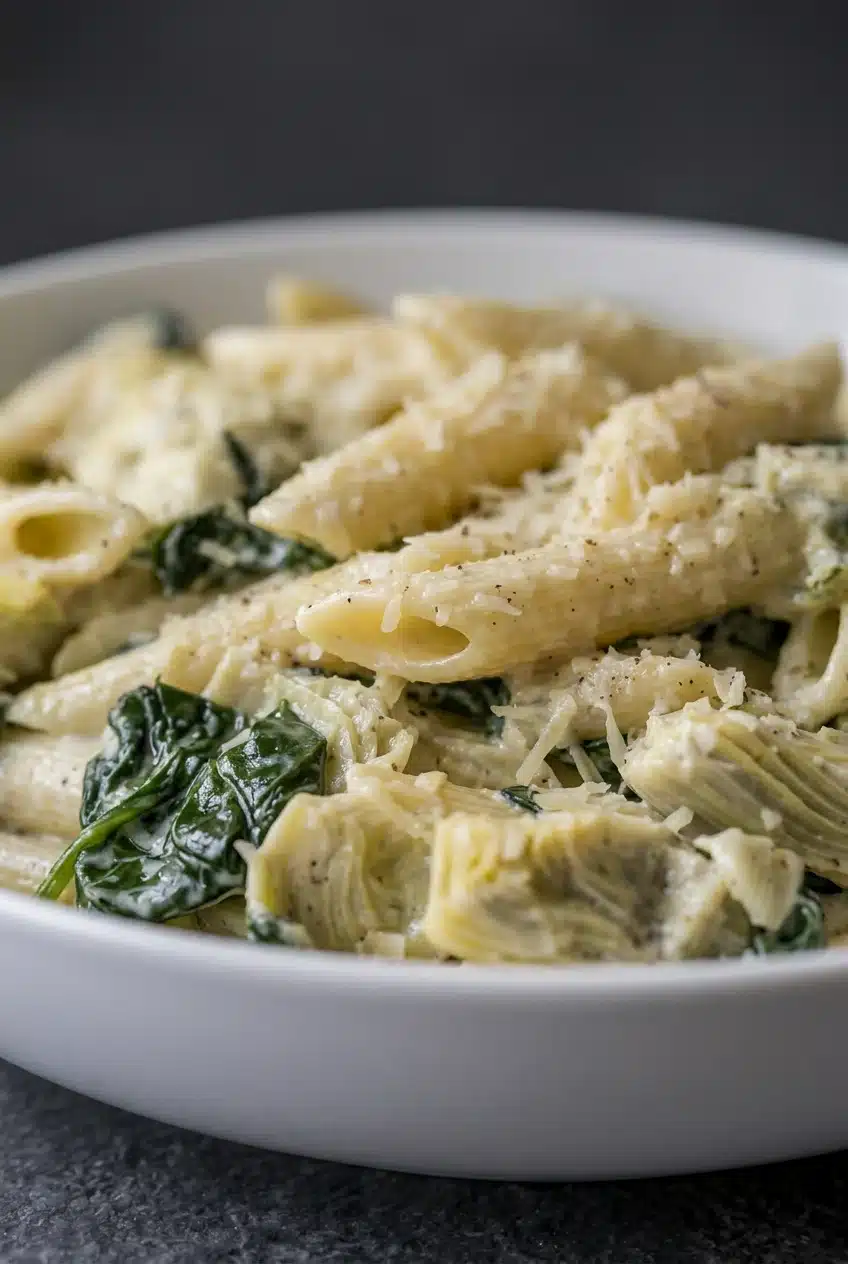
Stop adding liquid when the sauce leaves a glossy coat on the penne without pooling at the bottom of the pot.
Troubleshooting Sauce Texture and Moisture
Check the sauce before you toss in the pasta. It’s easier to adjust the consistency with room to stir.
- Watery sauce: Spinach and artichokes can carry more liquid than they appear to. If the vegetable mixture looks loose, stir it gently over low heat before adding the penne to let some moisture escape. Skip the pasta water unless the sauce tightens up.
- Thick or sticky sauce: Add a splash of reserved pasta water and toss before deciding whether to add more. The starch helps the loosened sauce cling to the noodles. Stop while it still moves easily in the pot, since it will thicken as it cools.
- Lumpy or grainy sauce: Cut the cream cheese into pieces so it melts evenly, and aim for gentle bubbling rather than a rolling boil. If the sauce starts to look oily, take the pot off the heat and stir gently before adding anything else.
Stovetop, Baked, Protein, and Plant-Based Variations
Stick with the stovetop for the quickest dinner, or give the finished pasta a baked cheese top, a crunchy garnish, or a more substantial mix-in.
Baked Spinach Artichoke Pasta with Mozzarella
For a casserole, keep the penne on the firm side of al dente so it doesn’t soften too much in the oven. Transfer the sauced pasta to a baking dish, scatter shredded mozzarella over the top, and bake until the cheese bubbles and turns golden in spots.
Spinach Artichoke Chicken Pasta
Fold in cooked, sliced chicken or shredded rotisserie chicken with the penne. For a meatless mix-in, use sautéed mushrooms and let their liquid cook off before adding them so they don’t thin the sauce.
Vegan Spinach Artichoke Pasta
For a dairy-free version, use a blended sauce of silken tofu, unsweetened nondairy milk, and nutritional yeast in place of the cream cheese, sour cream, and Parmesan. Use vegan butter for the spinach. The result can still be creamy and savory, though it will have less of sour cream’s tang.
Optional Crispy Toppings and Finishes
- Toasted panko: Scatter golden breadcrumbs over individual bowls just before serving for crunch without baking the pasta.
- Browned artichokes: Give well-drained quarters a light sear for golden edges and a deeper savory flavor.
- Extra heat: Use the optional diced jalapeños for bites of pepper, or finish individual bowls with crushed red pepper flakes so everyone can choose their heat level.
If you’re out of artichokes but still want a stovetop dinner with greens and a velvety sauce, try creamy spinach pasta.
Lighter Dairy Swaps and Gluten-Free Pasta
- Change the dairy: Reduced-fat cream cheese and light sour cream both work here. Keep the heat gentle and check the sauce before adding pasta water, since the consistency may differ from the full-fat version.
- Make it more vegetable-forward: Fold in extra wilted spinach if you want greens in more bites. Drain the extra spinach separately if needed so it doesn’t water down the sauce.
- Swap the noodles: Gluten-free penne or shells are good alternatives. Check doneness early, since the pasta will soften a bit more when you toss it with the hot sauce.
Make-Ahead, Storage, and Reheating Tips
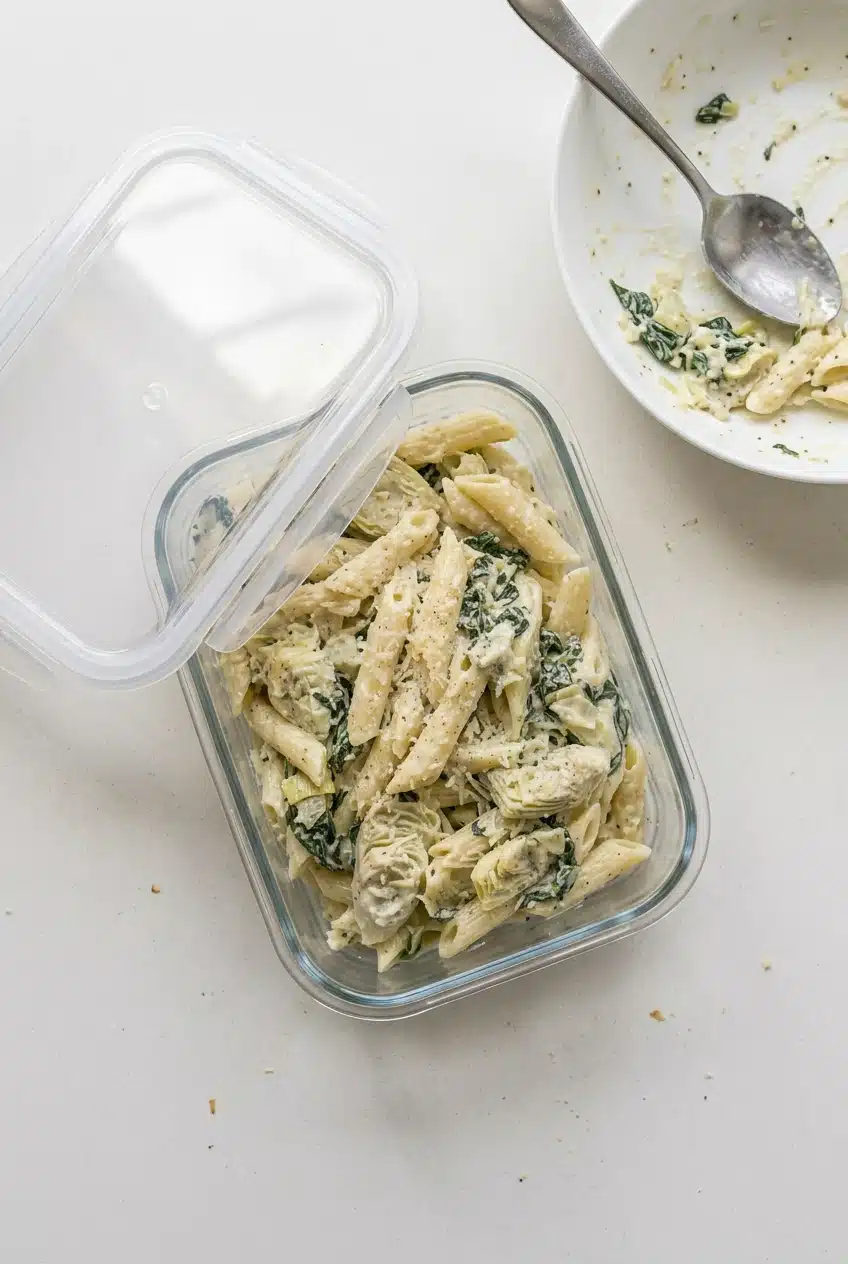
To get a head start, cut the cream cheese and shred the Parmesan before you start cooking. Leave the final toss for mealtime, when the sauce is warm enough to coat the penne evenly.
Gentle Reheating Without Drying Out
The sauce thickens in the refrigerator. Reheat only the portion you plan to eat, using low heat on the stove or short intervals in the microwave. Stir in a splash of water or milk to loosen the coating, then stir as it warms so the portion heats through evenly.
How to Store Leftovers
Refrigerate leftovers promptly in a shallow, covered container. If you made toasted panko, keep it separate and sprinkle it over the reheated pasta so the crumbs stay crisp.
What to Serve with This Creamy Pasta
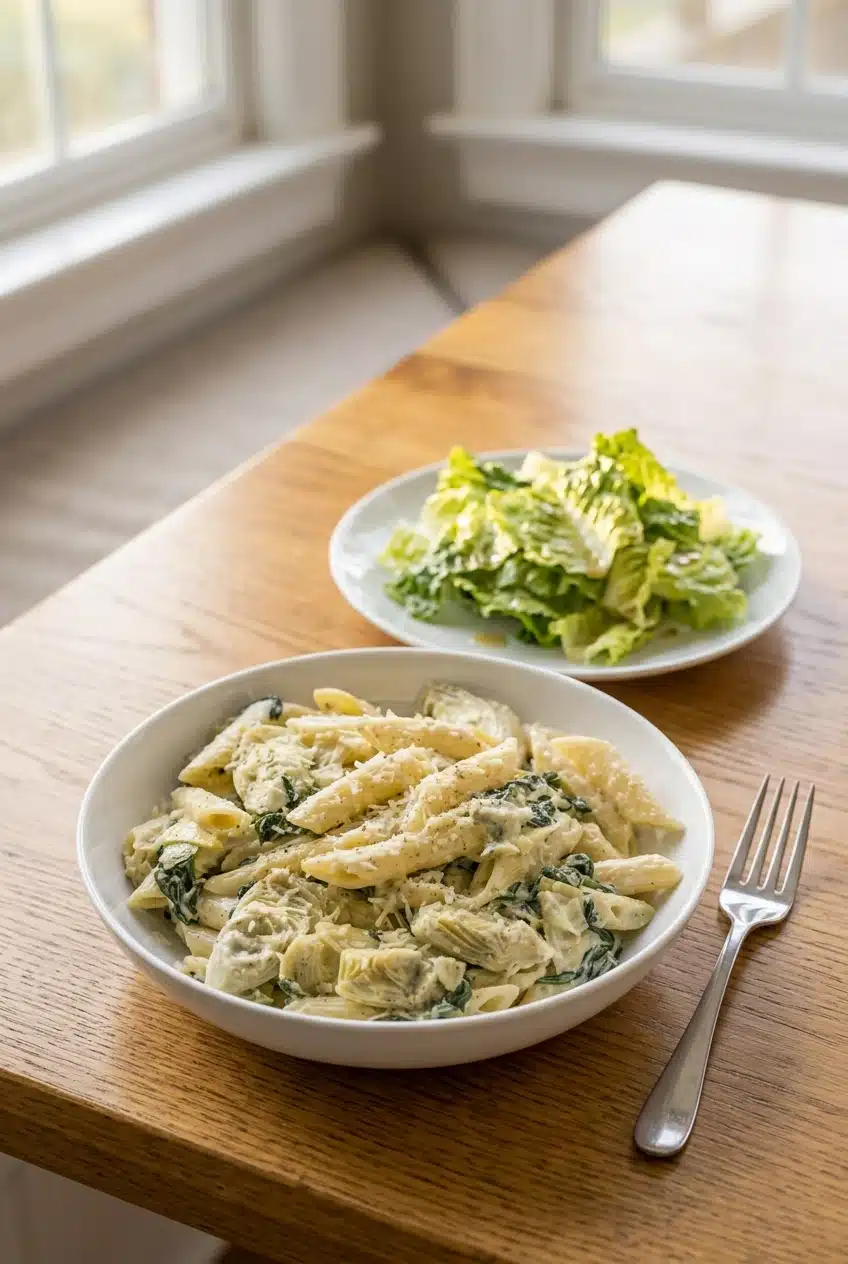
- A crisp green salad: Toss romaine or mixed greens with a bright vinaigrette to cut through the rich sauce.
- Roasted green vegetables: Asparagus or Brussels sprouts with browned edges add contrast to the tender penne.
- Crusty bread: Serve it alongside for scooping up the sauce left in the bowl.
Finish with freshly grated Parmesan for a savory edge or crushed red pepper for a little heat.
Final Thoughts
Drain the spinach well and save the pasta water. Those two moves let you control how much liquid goes into the pot, so the sauce coats the penne instead of puddling underneath it.
Keep it on the stovetop for a weeknight dinner, or add a golden mozzarella top when you want a casserole to share. Either way, bring it to the table while the sauce is still loose and glossy.
Frequently Asked Questions
Can I Use Frozen Spinach Instead of Fresh Spinach?
Yes. Use thawed chopped spinach and squeeze it until it stops dripping readily, then add it to the sauce without wilting it first.
What Kind of Pasta Works Best?
Ridged penne is a good first choice. Rigatoni and shells catch sauce in their hollow centers, while fusilli holds it between the spirals.
How Do I Keep the Sauce from Getting Watery or Too Thick?
Drain the spinach and artichokes well before they go into the pot. If the sauce clumps around the penne instead of coating it, toss in a splash of reserved cooking water and check the texture before adding more.
Can I Make This Pasta Lighter or Vegan?
Yes. Try reduced-fat cream cheese or light sour cream for a dairy version, or use a silken tofu sauce with unsweetened nondairy milk and nutritional yeast for a vegan version.
Does This Pasta Reheat Well?
Yes, especially if you stir in a little water or milk as you warm it. Use gentle heat and stir as you go to loosen the sauce without scorching it.
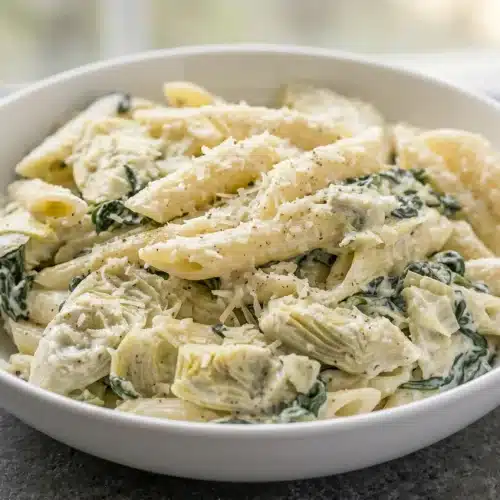
Spinach Artichoke Pasta

Equipment
- Large Pot
- Colander
Ingredients
- 6 Tbsp unsalted butter (divided)
- 10 oz fresh spinach (*see note on substitutions for using frozen)
- 4 oz cream cheese (cut into pieces (reduced fat is ok))
- 1 cup 8 oz sour cream (“light” sour cream is ok)
- 1 cup shredded parmesan cheese
- 2 cans (15 oz each quartered artichoke hearts, well drained)
- 4 oz can diced jalapeños (drained (optional))
- 1 large or 2 small garlic cloves pressed
- 16 oz penne pasta with 1 cup reserved pasta cooking liquid
Instructions
- Boil the penne in a large pot of salted water until it reaches your preferred doneness, then scoop out about 1 cup of cooking water before draining. For al dente pasta, bite into a piece and check that it’s tender with a little resistance at the center.
- Heat 2 Tbsp of the butter in a large pot over medium heat, stir the spinach through the melted butter for about 1 minute, and tip it into a colander to drain. The leaves should have collapsed and turned glossy but still look bright green.
- Return to the empty pot and stir the remaining 4 Tbsp butter, 4 oz cream cheese pieces, 1 cup sour cream, and 1 cup Parmesan together until melted. The sauce is ready for the vegetables when it looks smooth and the first gentle bubbles appear.
- Fold the drained artichokes into the sauce, give them 1 to 2 minutes to warm, then stir in the drained spinach, pressed garlic, and jalapeños, if using. Let the mixture heat through until it steams evenly as you stir.
- Toss in the drained penne and, if the sauce needs loosening, stir in the reserved cooking water a splash at a time. Stop adding liquid when the sauce leaves a glossy coat on the penne without pooling at the bottom of the pot.