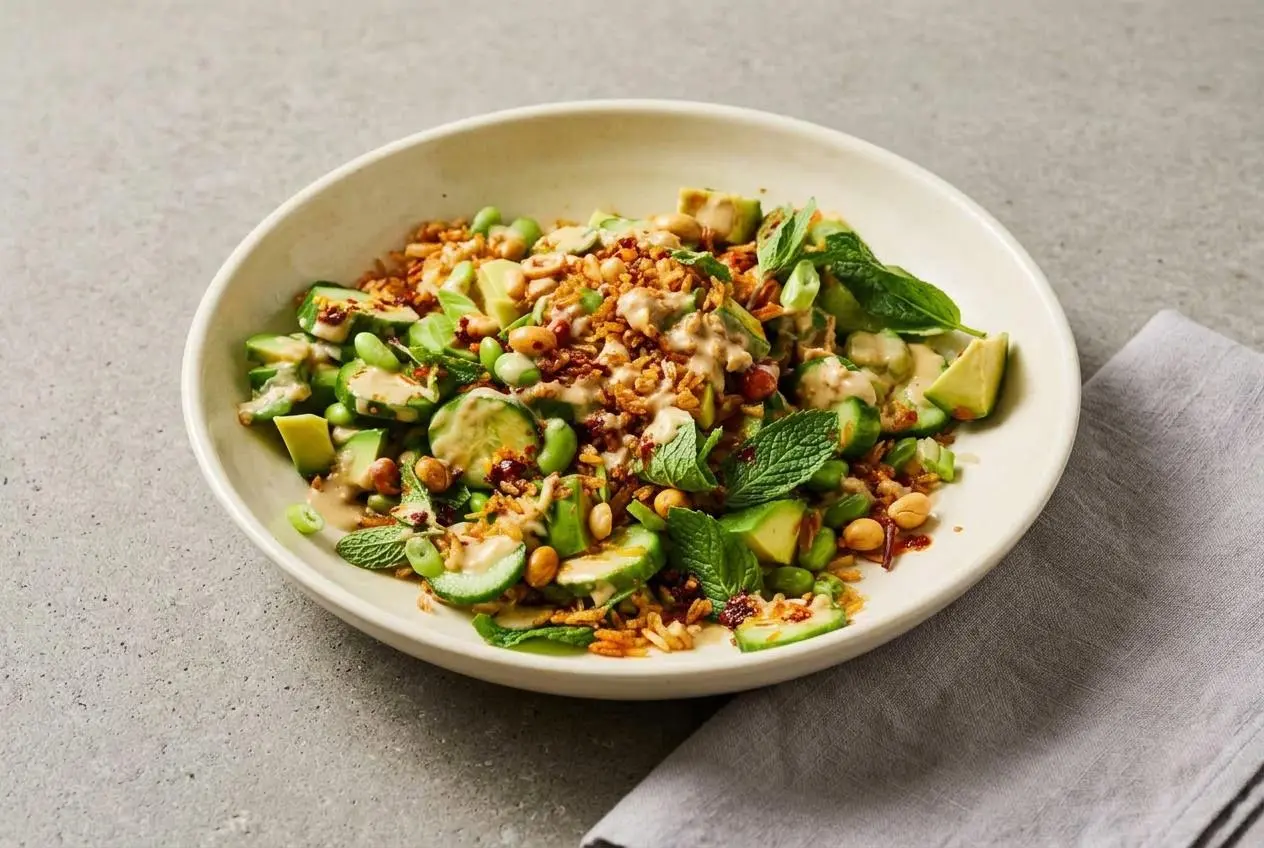
Crispy rice salad combines chilled cooked rice, baked or skillet-crisped until golden, with cool vegetables and a savory sesame ginger dressing. Use leftover rice, drain the marinated cucumbers, and add the crunchy grains just before serving for the best texture.
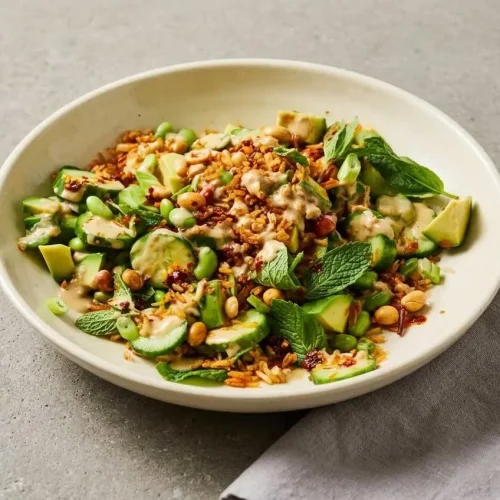
This crispy rice salad layers nutty toasted grains with cucumbers, creamy avocado, edamame, and roasted peanuts. Fresh mint and grated ginger brighten each bite, while chili crisp adds a spicy finish.
The contrast makes it satisfying: cool vegetables underneath, golden rice on top, and a creamy dressing that brings everything together. The oven version serves four and takes about 50 minutes with cooked rice ready. Listen for the crunch.
Break apart cold rice clumps before seasoning so the oil can coat the grains evenly.
Crispy Rice Salad Ingredients and Flavor
Rice and peanuts supply crunch, cucumbers and herbs bring freshness, and avocado adds richness. Tahini gives the dressing body, ginger adds a sharp aromatic lift, and vinegar balances the sesame oil with bright acidity.
Crispy Rice
- 3 cups cooked and cooled rice (leftover rice is best)
- 1 tablespoon toasted sesame oil
- 1 tablespoon tamari or soy sauce
- ¼ teaspoon sea salt
For the Salad
- 6 to 8 Persian cucumbers (1 pound, sliced)
- 1 tablespoon rice vinegar
- ¼ teaspoon cane sugar
- ¼ teaspoon sea salt
- 1 cup frozen shelled edamame (thawed)
- 2 avocados (diced)
- 3 scallions (chopped)
- ½ cup roasted peanuts
- Fresh mint leaves (for garnish)
- Chili crisp (for drizzling)
Sesame Ginger Dressing
- 3 tablespoons smooth tahini
- 2 tablespoons toasted sesame oil
- 2 tablespoons rice vinegar
- 1 tablespoon tamari
- 1 heaping teaspoon grated fresh ginger
- 1 teaspoon maple syrup or honey
- 1 to 3 tablespoons water (if necessary)
Toasted sesame oil gives both the rice and dressing a roasted aroma. Tamari brings savory depth, while tahini and avocado soften the sharper vinegar and ginger flavors. Scallions keep the salad lively, and peanuts provide a different, sturdier crunch alongside the delicate rice.
I prefer to stir tahini thoroughly before measuring it so separated oil doesn’t leave the dressing thin and greasy.
The Magic of Day-Old Chilled Rice
Cold leftover rice is easier to separate and usually has less surface moisture than freshly steamed rice. As cooked rice cools, its starch reorganizes and firms up, a process called retrogradation. That firmer structure helps the grains hold their shape during crisping.
The practical difference is moisture: wet, warm rice releases steam before it can develop a dry, crisp exterior. Start with cooled grains rather than trying to compensate for wet rice with extra baking time.
Jasmine and basmati are good choices when you want distinct grains. Short-grain sushi rice also works, but separate sticky clumps carefully. For freshly cooked rice, use shallow containers and refrigerate promptly rather than leaving it on the counter to dry.
Crisp Vegetables, Herbs, and Marinated Cucumbers
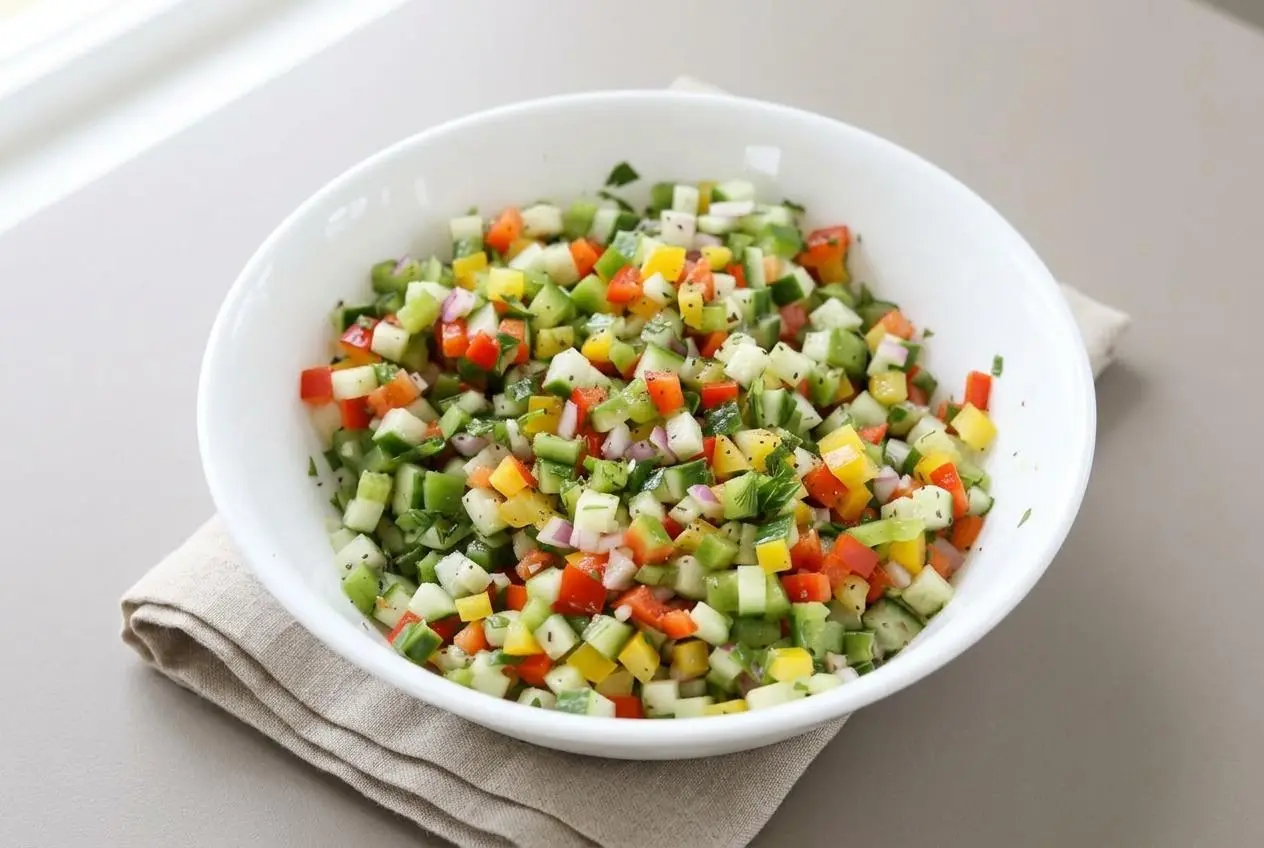
Persian cucumbers have tender skins and a crisp bite. Toss the slices with rice vinegar, sugar, and salt, then let them marinate for 15 minutes. The seasoning adds tang and draws out liquid that would otherwise collect beneath the salad.
Lift the cucumbers out of that liquid when assembling. You want seasoned cucumber slices, not a puddle that immediately soaks the rice. Edamame adds a tender bite, avocado supplies creaminess, and mint gives the finished bowls a fresh aroma.
Wash cucumbers and herbs under clean running water, without soap or commercial produce washes, and refrigerate cut salad ingredients promptly.
Whisking the Creamy Sesame Ginger Dressing
Whisk the tahini with sesame oil, vinegar, tamari, ginger, and maple syrup or honey. Tahini provides body and helps bring the oil and watery ingredients into a creamy mixture.
If the dressing looks stiff or tightens as you whisk, add the listed water a tablespoon at a time. Stop when it falls from the whisk in a smooth ribbon. It should drizzle across the vegetables without landing in thick blobs.
Grate the ginger finely so its flavor spreads through the dressing rather than gathering in fibrous pieces. Taste the dressing with a cucumber slice, since the seasoned vegetables affect the final balance.
How to Make the Crispy Rice Salad
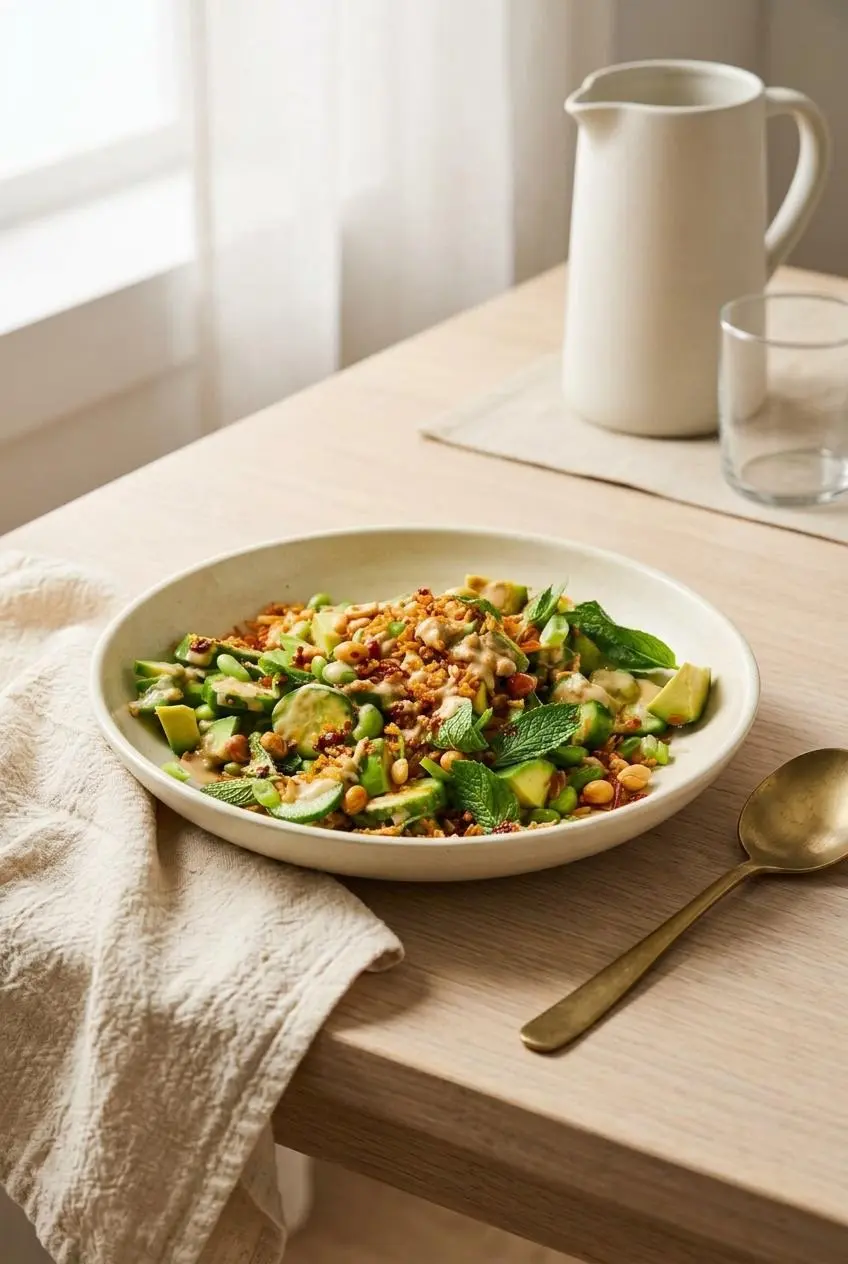
Let the baked rice cool while you prepare the cucumbers and dressing. Cooling firms the toasted grains, and keeping them on top during assembly limits their contact with moisture.
Prep: 20 minutes. Cook: 30 minutes. Total: 50 minutes. Servings: 4.
- Heat the oven to 400°F and cover a baking sheet with parchment paper.
The lined surface helps release the browned grains when it’s time to toss them. - Coat the rice on the prepared sheet with the sesame oil and tamari, then spread it into an even layer.
Separate visible clumps so the grains can brown rather than trap steam. - Bake for 10 minutes, turn the rice with a spatula, and continue baking for 12 to 16 minutes.
Look for lightly crisp, golden-brown grains and a toasted, nutty aroma. - Mix the salt into the roasted rice and leave it on the sheet to cool.
The grains become crisper as they cool and should rustle lightly when the pan moves. - Combine the cucumber slices, rice vinegar, sugar, and salt in a large bowl, then leave them to marinate for 15 minutes.
A little liquid will gather beneath the slices as they take on the seasoning. - Whisk the tahini, sesame oil, rice vinegar, tamari, ginger, and maple syrup or honey in a small bowl, adding water a tablespoon at a time only if needed.
The finished dressing should flow from the whisk in a creamy ribbon. - Lift the cucumbers into four serving bowls, discard the liquid left behind, and distribute the edamame, avocado, scallions, and peanuts before drizzling with some dressing.
The vegetables should look lightly coated without liquid pooling at the bottom. - Finish each bowl with cooled crispy rice, mint, and chili crisp, then taste for seasoning and serve immediately with the remaining dressing alongside.
Keeping the rice above the dressed vegetables preserves the contrast between crunchy grains and the cool salad underneath.
For family-style serving, use a wide platter rather than a deep bowl. Spread out the vegetables, scatter the rice over the surface, and pass the remaining dressing separately.
Mastering the Crispy Rice: Oven vs Skillet Methods
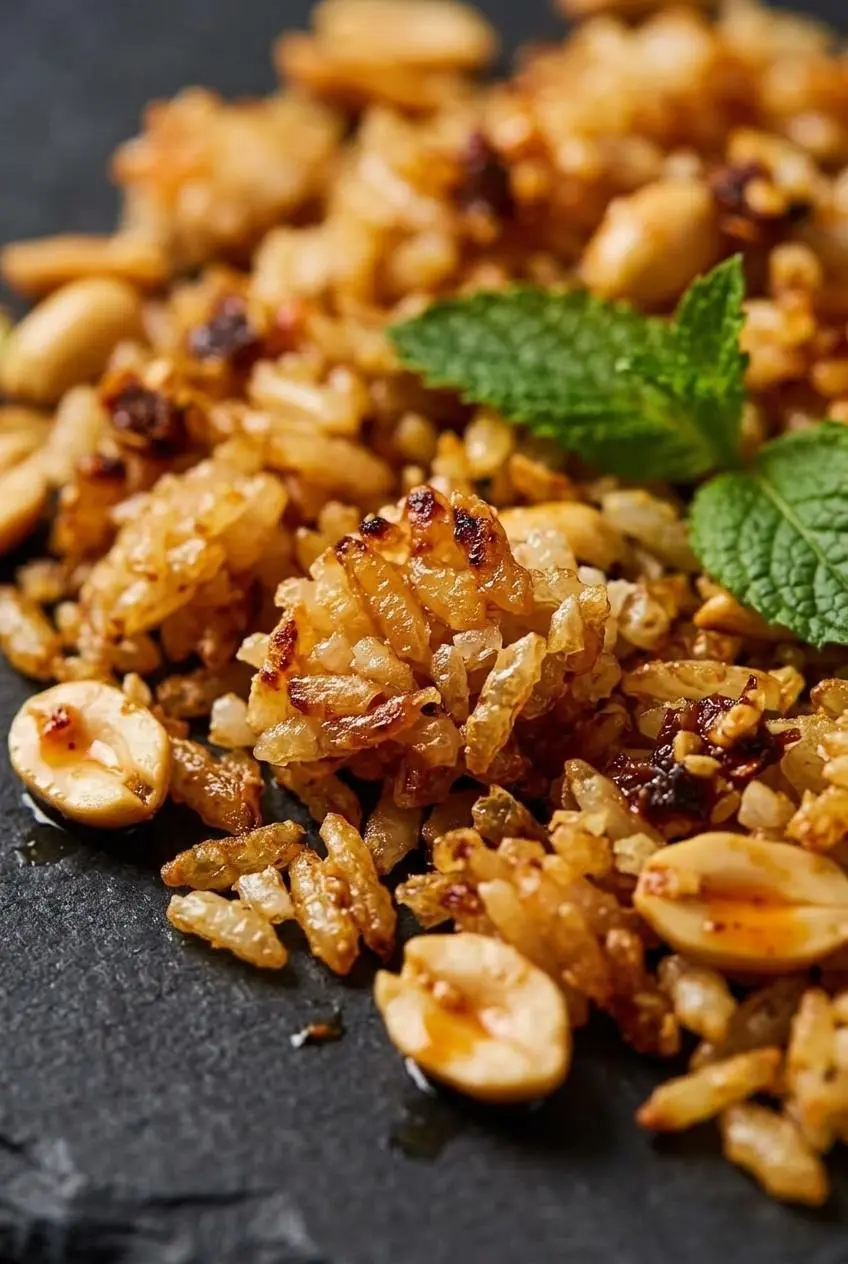
The oven produces a broad batch of lightly crisp grains; a skillet creates darker, unevenly browned patches and crunchy clusters. The skillet option needs closer attention, while the oven gives you room to prepare the other components.
The Sheet Pan Roasting Technique
At 400°F, the rice takes 22 to 26 minutes of roasting, with a toss after the first 10 minutes. The goal is golden browning, not drying every grain until it becomes hard throughout.
Spread the rice thinly enough that you can see spaces between grains and small clusters. If the sheet is crowded, use another sheet rather than piling the rice higher. During the toss, move darker edge grains toward the center and paler grains toward the edges.
The measured oil coating encourages browning without leaving the rice sitting in oil. Remove the tray when the rice smells toasted and looks golden, then let cooling finish the crisping process.
The 6-Minute Skillet Sizzle Method
For an optional stovetop version, heat a thin coating of neutral oil in a wide, heavy skillet over medium-high heat until it shimmers. Add cold, separated rice and press it into a shallow layer against the pan.
Leave it undisturbed until the underside develops a golden crust, then turn sections with a spatula. Continue until you have browned, crisp patches, roughly 6 to 8 minutes depending on the pan and batch size. Transfer the rice out of the skillet and let it cool before assembling.
Unlike the frequent tossing used for traditional fried rice, this technique benefits from sustained contact with the hot surface. Stirring constantly interrupts crust formation.
Skillet rice can feel richer because oil collects between clusters. Add only enough to coat the cooking surface, and avoid pouring in more oil simply because the rice hasn’t browned yet.
Troubleshooting Common Crispy Rice Mistakes
Check moisture, spacing, and browning before extending the cooking time. Those details usually explain why a batch is soft, uneven, or unpleasantly hard.
Preventing Rock-Hard or Tooth-Breaking Grains
- Hard throughout: Prolonged baking can dry the grain completely; use the specified 400°F oven and start checking at the earlier end of the finishing window.
- Crunch seems weak while hot: Rice firms as it cools; let a sample cool before deciding the tray needs more baking.
- Already over-dried: Dressing may soften the grains, but it won’t reliably restore a pleasant crisp texture; avoid baking that batch further and use a fresh batch for the crunchy topping.
Avoiding Soggy or Soft Grains on the Pan
- Steamy, pale rice: Wet grains or a crowded sheet trap moisture; start with cold rice and spread it into a shallow, uncrowded layer.
- Soft centers in large clumps: Dense clusters shield the inner grains; break them apart before coating with oil.
- Dark edges and a pale middle: Uneven distribution causes uneven browning; redistribute the grains during the mid-bake toss rather than simply stirring in place.
Balancing Salt, Acid, and Chili Crisp Heat
- Overly salty dressing: Tamari and chili crisp both contribute seasoning; loosen the dressing with the listed water and use a lighter drizzle rather than adding more salt.
- Too much tang: Cucumber marinade left in the bowl can overwhelm the sesame flavor; drain it thoroughly and taste each bite with avocado before adjusting.
- Too much heat: Chili crisp varies widely; start with a restrained drizzle and pass more at the table.
Protein Boosts and Delicious Variations
Keep additions separate from the rice until assembly so you can make a heartier meal without sacrificing the crunchy topping. All of these changes are optional.
Adding Rotisserie Chicken or Baked Salmon
- Rotisserie chicken: Shred fully cooked chicken into bite-size pieces and tuck it among the vegetables so the dressing reaches it.
- Baked salmon: Flake cooked salmon into large pieces and add it gently to avoid breaking it into the dressing.
- Tofu: Add pan-seared or baked tofu cubes alongside the edamame for another tender-and-crisp contrast.
For a seafood-focused lunch with similar assembly ideas, try a flaked salmon salad. Here, place the salmon beneath the rice so moist flakes don’t soften the topping prematurely.
Use precooked chicken, or cook raw poultry to a minimum internal temperature of 165°F before adding it to the salad.
Spicy Gochujang and Thai-Inspired Seasonings
- Gochujang: Add a light coating to the rice before cooking for fermented chili flavor; watch closely because sweetened paste can darken before the grains crisp.
- Red curry paste: Use a restrained coating for aromatic heat, then finish with Thai basil or cilantro if desired.
- Garlic powder: Sprinkle it into the rice seasoning for savory depth without introducing extra moisture.
- Toasted sesame seeds: Scatter them over the finished bowls for another layer of nutty flavor.
These seasonings are inspired adaptations, not a traditional nam khao preparation. Keep coatings light, since a thick paste can interfere with even crisping.
Top Allergen Swaps: Nut-Free and Soy-Free
- Peanut-free: Replace the roasted peanuts with roasted pumpkin seeds or sunflower seeds for a firm, nutty-tasting crunch.
- Sesame-free: Use sunflower seed butter instead of tahini and a suitable neutral oil instead of sesame oil; also check the chili crisp for sesame.
- Soy-free: Replace tamari and soy sauce with coconut aminos, and replace the edamame with a suitable vegetable such as diced bell pepper.
- Gluten-free: Choose labeled gluten-free tamari and check the chili crisp and any seasoning pastes rather than assuming every product is gluten-free.
Coconut aminos tastes sweeter than tamari, so taste the dressing before adding its sweetener. Seed butter can also be thicker than tahini and may need the listed water.
For allergies, check every packaged ingredient and its cross-contact information. Swapping the obvious ingredient alone doesn’t establish that the whole dish suits a particular allergy.
Storage, Make-Ahead Strategy, and Re-Crisping
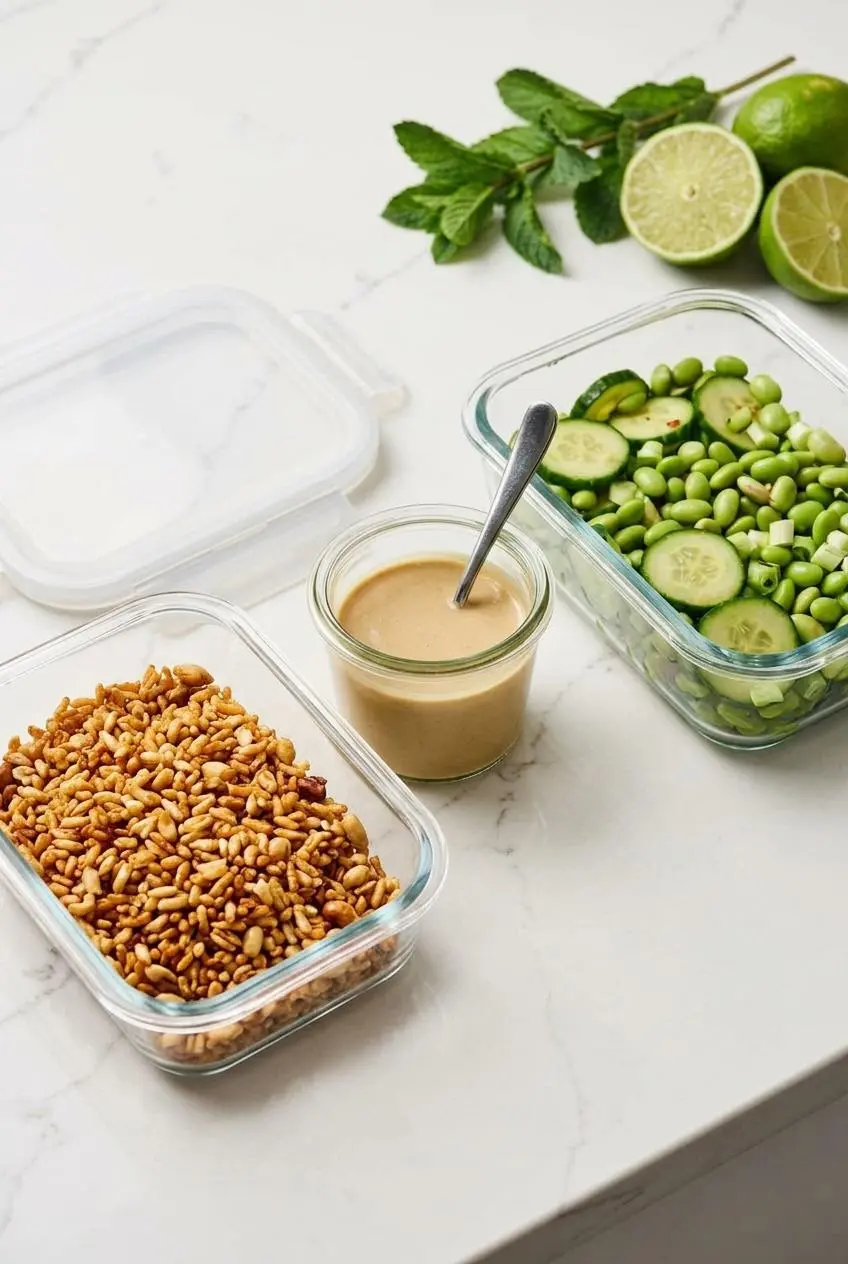
Store the components separately rather than storing a dressed bowl. Crisp rice readily absorbs moisture from cucumbers, avocado, and dressing, so separation protects texture better than trying to rescue the assembled salad.
Packing Crisp Desk Lunches for Meal Prep
Place the drained vegetables and edamame in one airtight container, the dressing in another, and completely cooled rice in a clean, dry container. Keep the components refrigerated, with mint, peanuts, and chili crisp apart from the wet vegetables where practical.
For the freshest appearance, dice the avocado during assembly. At lunch, dress the vegetables first and add rice last. If the rice container has condensation, don’t stir that moisture into the salad.
Pack only what you plan to assemble, and keep the rice container closed until serving. A mixed bowl will soften even if it started with perfectly toasted grains.
How to Reheat and Recrisp Stored Rice
For texture restoration, spread softened rice in a dry skillet over medium heat and turn it occasionally until its surface dries and the toasted aroma returns. A toaster oven can also restore surface crunch if you spread the rice thinly and watch it closely.
Re-crisp only the portion you need, then let it cool before adding it to the vegetables. Microwaving tends to soften the grains rather than restore their brittle exterior.
Re-crisping is a texture technique, not a substitute for proper leftover handling. Keep stored components chilled and refrigerate leftovers promptly.
Conclusion
Golden rice, cool marinated cucumbers, and creamy sesame ginger dressing make a satisfying contrast. Give the grains room to brown, let them cool, and keep cucumber liquid out of the serving bowls.
For extra savory depth, try the optional garlic powder or toasted sesame seed addition. Keep the dressing on the side and add the rice last so the first bite delivers the crunch you worked for.
Frequently Asked Questions
Which Type of Rice Makes the Crispiest Rice Salad?
Cold cooked jasmine or basmati rice is a good choice for distinct, crisp grains. Short-grain sushi rice also works, but break apart sticky clumps before seasoning. Surface moisture and an uncrowded pan matter more than choosing one particular variety.
How Do You Keep Crispy Rice Salad From Getting Soggy?
Keep the rice, dressing, and vegetables in separate containers until serving. Leave the cucumber marinade liquid behind and cool the toasted rice before assembly. Dress the vegetables first, add rice on top, and eat promptly for the strongest crunch.
Can I Crisp the Rice in a Skillet Instead of the Oven?
Yes, use cold, separated rice in a wide skillet with a thin coating of shimmering oil over medium-high heat. Let the underside form a crust before turning sections rather than stirring constantly. Expect patchier, deeper browning than the oven method, and cool the rice before adding it to the salad.
Why Did My Crispy Rice Turn Out Hard and Chewy Instead of Crunchy?
Hard grains often come from excessive drying; chewy clusters can come from trapped moisture and uneven cooking. Use the specified 400°F oven, separate clumps, and check for golden color rather than chasing a longer bake. Let a sample cool before judging its texture, since hot rice hasn’t reached its final crispness.
Crispy Rice Salad

Equipment
- Baking Sheet
- Parchment Paper
- large bowl
- Small bowl
- Whisk
Ingredients
Crispy Rice
- 3 cups cooked and cooled rice leftover rice is best
- 1 tablespoon toasted sesame oil
- 1 tablespoon tamari or soy sauce
- ¼ teaspoon sea salt
For the Salad
- 6 to 8 Persian cucumbers 1 pound, sliced
- 1 tablespoon rice vinegar
- ¼ teaspoon cane sugar
- ¼ teaspoon sea salt
- 1 cup frozen shelled edamame thawed
- 2 avocados diced
- 3 scallions chopped
- ½ cup roasted peanuts
- Fresh mint leaves for garnish
- Chili crisp for drizzling
Sesame Ginger Dressing
- 3 tablespoons smooth tahini
- 2 tablespoons toasted sesame oil
- 2 tablespoons rice vinegar
- 1 tablespoon tamari
- 1 heaping teaspoon grated fresh ginger
- 1 teaspoon maple syrup or honey
- 1 to 3 tablespoons water if necessary
Instructions
- Heat the oven to 400°F and cover a baking sheet with parchment paper. The lined surface helps release the browned grains when it’s time to toss them.
- Coat the rice on the prepared sheet with the sesame oil and tamari, then spread it into an even layer. Separate visible clumps so the grains can brown rather than trap steam.
- Bake for 10 minutes, turn the rice with a spatula, and continue baking for 12 to 16 minutes. Look for lightly crisp, golden-brown grains and a toasted, nutty aroma.
- Mix the salt into the roasted rice and leave it on the sheet to cool. The grains become crisper as they cool and should rustle lightly when the pan moves.
- Combine the cucumber slices, rice vinegar, sugar, and salt in a large bowl, then leave them to marinate for 15 minutes. A little liquid will gather beneath the slices as they take on the seasoning.
- Whisk the tahini, sesame oil, rice vinegar, tamari, ginger, and maple syrup or honey in a small bowl, adding water a tablespoon at a time only if needed. The finished dressing should flow from the whisk in a creamy ribbon.
- Lift the cucumbers into four serving bowls, discard the liquid left behind, and distribute the edamame, avocado, scallions, and peanuts before drizzling with some dressing. The vegetables should look lightly coated without liquid pooling at the bottom.
- Finish each bowl with cooled crispy rice, mint, and chili crisp, then taste for seasoning and serve immediately with the remaining dressing alongside. Keeping the rice above the dressed vegetables preserves the contrast between crunchy grains and the cool salad underneath.