For tender, coffee-shop-style egg bites, blend egg whites with cottage cheese and cheese until frothy, bake them in silicone cups surrounded by hot water, and let them rest before unmolding.
This egg white bites recipe turns a rushed breakfast into soft, savory bites with roasted red pepper, spinach, and a creamy custard-like center.
Skip the drive-thru line and let your oven fill the kitchen with the warm aroma of baked feta and sweet peppers. The water bath is the little trick that keeps the centers tender.
Set the silicone muffin tray on the baking sheet before adding the batter so the cups stay steady when the hot water goes into the oven.
Essential Ingredients for Velvety Egg White Bites
Each ingredient earns its place: egg whites provide structure, blended cheeses create moisture and richness, and peppers and spinach bring color, savory flavor, and freshness.
- 16 ounces egg whites
- ½ cup shredded mozzarella cheese
- ½ cup whole milk cottage cheese
- ¼ cup crumbled feta cheese
- ¼ cup roasted red pepper finely diced
- ¼ cup spinach finely chopped
- Salt and pepper to taste
- Cooking spray
- Boiling water
The 16 ounces of egg whites provide the main structure for 12 bites. Mozzarella melts smoothly, while feta adds salty tang that keeps the mild egg whites from tasting flat. Whole milk cottage cheese is the key to the soft, custardy center because it brings moisture and richness to the blended mixture.
I dab roasted peppers thoroughly and press chopped spinach in a clean towel before using them, because even a little excess moisture can leave the centers watery.
Liquid Egg Whites vs. Freshly Separated Whites
Carton egg whites make this breakfast especially convenient because 16 ounces equals about 2 cups, or the whites from roughly 10 to 12 large eggs. Choose a pasteurized carton for easy measuring, or separate fresh eggs if that is what you have on hand.
Freshly separated whites can whip a little firmer, but this batter does not depend on stiff peaks. The blender creates light foam instead, so both options work well. If you separate fresh eggs, save the yolks for another use rather than trying to work them into these white-only bites.
The Crucial Emulsifying Role of Cottage Cheese
Plain baked egg whites can set into a dry, springy network of proteins. Blending cottage cheese with the whites breaks down the curds and disperses their moisture and fat throughout the batter. That creates a smoother mixture and softens the finished texture.
For an optional dairy swap, part-skim ricotta gives a mild, creamy result, while strained Greek yogurt adds a noticeable tang and a denser set. Blend either choice until completely smooth. These swaps change the flavor and texture slightly, so use them when you are comfortable moving away from the original version.
Selecting and Moisture-Prepping Vegetables
Roasted red peppers work well because they bring sweetness without needing extra cooking. Dice them finely, then blot them dry with paper towels. Chop the spinach finely and squeeze out any liquid before it reaches the cups.
Watery add-ins need more attention than dense ones. Mushrooms, zucchini, frozen spinach, and raw onions can release moisture as they bake, so cook and drain them first if you use them in an optional variation. Dry vegetables stay suspended in the egg mixture instead of creating puddles at the bottom.
How to Make Egg White Bites

- Heat the oven to 350°F, then place a silicone 12-cup muffin tray on a baking sheet and coat the cups with non-stick spray.
The flexible cups should sit flat and remain stable on the sheet. - Blend the egg whites, mozzarella, cottage cheese, and feta for about 30 seconds until the mixture is smooth and foamy.
Look for tiny bubbles across the surface rather than visible cottage cheese curds. - Scatter the diced roasted red pepper and chopped spinach among the cups, then pour the blended egg mixture over them and season with salt and black pepper.
Fill the cups close to the top, leaving enough room for a gentle rise. - Set the baking sheet on the middle oven rack, then carefully pour boiling water into the sheet until it reaches about halfway up the silicone cups.
The water should surround the cups without splashing into the egg mixture. - Bake for 30 to 35 minutes, then let the bites stand for 5 minutes before lifting them from the silicone mold.
The tops should feel firm with a gentle spring when lightly pressed, and the bites will begin to pull away from the silicone edges.
If you want a temperature check for a thicker bite or an oven that runs cool, cooked egg dishes should reach 160°F. That benchmark supports careful handling of egg dishes and is outlined in safe cooking temperatures for egg dishes.
The Science of Texture: Water Baths and Blending
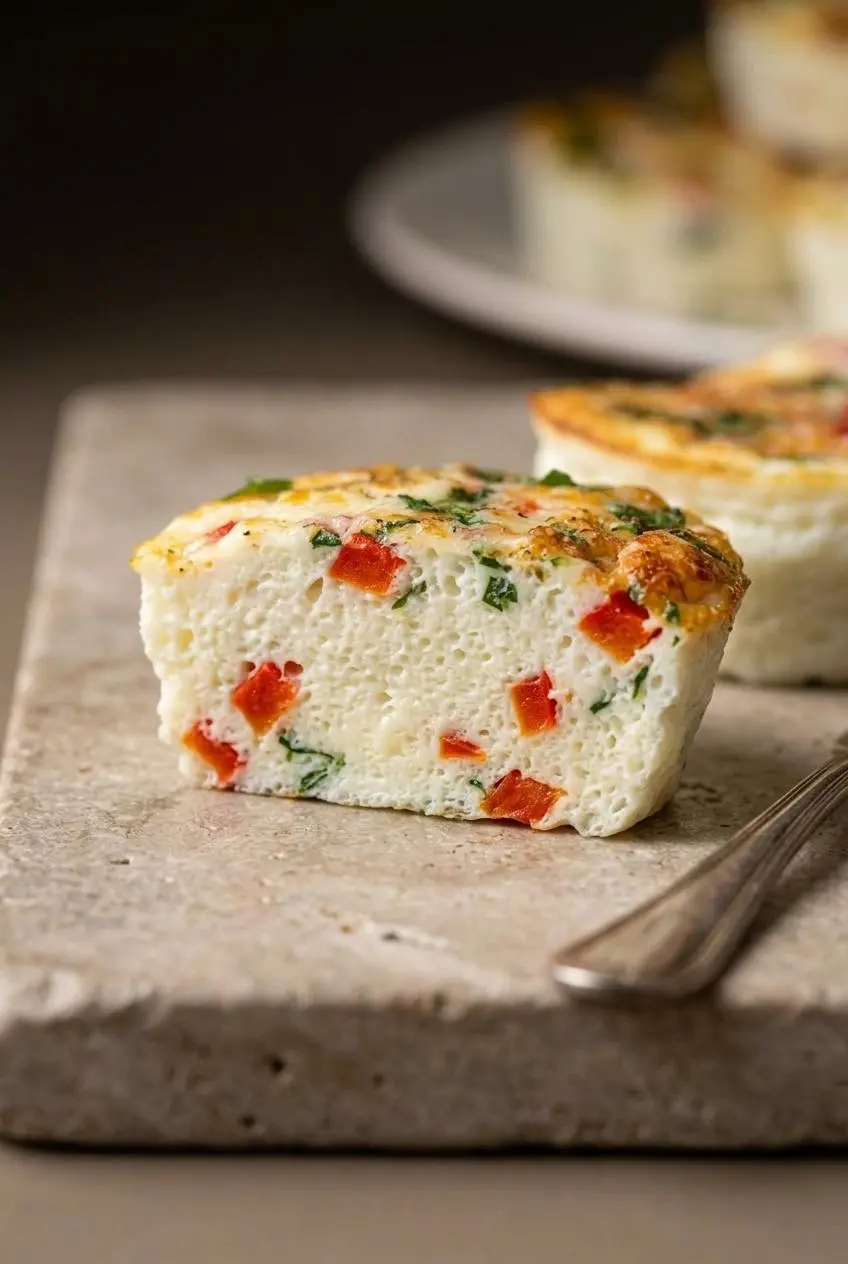
The hot-water bath cushions the silicone tray from the oven’s dry direct heat. Instead of setting the outer edges too quickly, the humid heat lets the eggs cook more evenly, which helps the bites stay tender from edge to center.
Blending matters just as much. The blender disperses cottage cheese and cheese through the egg whites while adding tiny air bubbles. Those bubbles give the batter lift, and the dairy helps the proteins set into a delicate, custard-like crumb instead of a tight sponge.
Some settling after baking is normal. Steam and trapped air expand while the bites heat, then contract as they cool. A gentle water bath, properly dried vegetables, and the five-minute rest all reduce dramatic collapse by giving the protein structure time to firm before unmolding.
Pro Tips to Master Egg White Bites
A few small choices make the difference between smooth, rounded bites and ones that stick, weep moisture, or turn chewy.
- Rubbery texture: Dry oven heat or overbaking tightens egg proteins. Keep the water bath in place and remove the bites when the tops are firm and softly springy.
- Deflated centers: Overfilled cups puff dramatically, then sink as they cool. Fill close to the top rather than to the brim, and allow the full resting time.
- Watery bottoms: Moist vegetables dilute the batter as they cook. Blot, squeeze, or sauté high-moisture fillings before adding them.
- Stubborn sticking: Egg proteins cling strongly to hot surfaces. Use silicone cups and coat them evenly with cooking spray.
Silicone vs. Metal Muffin Pans
Silicone is the most reliable choice for this recipe. The flexible cups release delicate egg bites with far less tearing, and you can gently peel the silicone away from each bite once it has rested.
Bare metal muffin tins conduct heat more aggressively, which can overcook the outside before the middle finishes setting. Egg whites also bond tightly to metal. If metal is your only option, grease it generously with butter or oil and expect a firmer exterior. Avoid paper liners, which tend to cling to baked egg whites.
Managing Vegetable Moisture Before Baking
Think of fillings in two groups. Dense, dry ingredients such as sun-dried tomatoes, cooked turkey bacon, and well-drained chicken sausage hold their shape. High-water ingredients such as zucchini, mushrooms, spinach, and onions need moisture removed first.
For optional vegetables that are raw or frozen, sauté them until their released liquid evaporates, then cool them before adding them to the cups. This keeps the blended egg mixture creamy and helps the bites hold together after cooling.
Why the 5-Minute Post-Bake Rest Matters
Fresh from the oven, the egg structure is still delicate and inflated with heat. Pulling the bites out immediately can tear their edges and make them slump faster.
Give the tray the full five-minute rest. During that pause, the proteins finish firming and the trapped steam settles gradually. The bites should release more cleanly and keep their rounded shape better.
Flavor Variations and Healthy Add-Ins
Keep the original ingredient list intact, then use these combinations as optional ways to change the flavor from week to week. Add-ins should be chopped small, drained well, and used with restraint so the custardy structure remains intact.
Mediterranean Feta and Sun-Dried Tomato
Lean into the feta with oil-drained sun-dried tomatoes, diced Kalamata olives, dried oregano, and extra crumbled feta. This version tastes briny and savory, with concentrated tomato flavor rather than excess moisture. Use spinach as a natural fit here, but make sure it is thoroughly pressed dry.
Southwest Green Chile and Pepper Jack
For gentle heat, swap the mozzarella for shredded pepper jack and use mild diced fire-roasted green chiles with chopped cilantro. Drain the chiles well before adding them so their flavorful liquid does not thin the batter. This variation is especially good with avocado, pico de gallo, and warm corn tortillas.
High-Protein Meat and Dairy Adjustments
- Fold in cooked, well-drained turkey bacon crumbles for smoky flavor without greasy pockets.
- Add cooked chicken sausage in small pieces for a heartier breakfast, taking care not to overload each cup.
- Try sharp white cheddar with turkey bacon for a salty, bold variation.
- Use part-skim ricotta for a mild creamy swap, or strained Greek yogurt for a tangier, denser bite.
- Add a pinch of cream of tartar and a drop of garlic oil as an optional flavor adjustment, keeping both additions very light so they do not overpower the cheese.
If you prefer a richer whole-egg version with the same blended-dairy approach, these cottage cheese egg bites offer a useful alternative.
Storage and Gentle Reheating

Let the bites cool completely before packing them. Sealing them while warm traps steam, which can make the surface damp and soften the texture.
Refrigeration and Storage Guidelines
Place cooled bites in an airtight container with a paper towel to catch excess condensation, then keep them chilled. Refrigeration at 40°F or below helps maintain proper handling for egg and dairy foods, as covered in refrigeration guidance for dairy and eggs.
For a varied breakfast rotation, pair these with other prepared morning foods such as pancake sausage bites, keeping each item in its own container to protect texture.
Gentle Microwave Warming
Warm chilled bites in the microwave at reduced power rather than blasting them at full strength. Cover them with a damp paper towel so gentle steam keeps the interior from drying out.
Heat only until warmed through. If the center is still cool, continue in brief bursts and check between each one. This approach gives you more control than one long microwave cycle.
Air Fryer Warming for Lightly Toasted Edges
An air fryer or toaster oven is a good choice when you want a lightly toasted outside. Use a moderate setting and warm the bites just until the centers are hot and the edges pick up a little color.
Watch closely near the end. The goal is a tender center with lightly browned edges, not a dried-out egg muffin. A loose cover during microwave warming and gentle heat in the air fryer are the best defenses against toughness.
Smart Ways to Use Leftover Egg Yolks
If you separate fresh eggs for this recipe, the yolks can become tomorrow’s treat rather than an overlooked container in the refrigerator. Stir them into pancake batter for extra richness, whisk them into a small batch of mayonnaise, or use them for lemon curd.
Yolks also make a silky pastry cream or a rich sauce for roasted vegetables. Keep them chilled and use them promptly with careful food handling.
Conclusion
These soft egg white bites bring the comfort of a coffee-shop breakfast to your own kitchen, with enough flexibility to change the vegetables and cheeses whenever you want a new flavor.
Once you get comfortable with the blender, silicone cups, and gentle water bath, weekday breakfast prep feels a lot more relaxed. Tender, savory bites are waiting.
Frequently Asked Questions
How Do You Keep Egg White Bites From Turning Rubbery?
Blend the cottage cheese and cheeses fully into the egg whites so the batter stays smooth and moist. Bake at 350°F with the hot-water bath in place to buffer the oven’s direct heat. Start checking at 30 minutes and avoid baking beyond 35 minutes.
Why Do Homemade Egg White Bites Deflate When Cooling?
Steam and air expand inside the egg mixture while it bakes, then contract as the bites cool. A little settling is normal, but overfilling and excess vegetable moisture make it more dramatic. Resting the bites for 5 minutes before unmolding lets the proteins set gradually and limits shrinkage.
Can You Make Egg White Bites Without a Silicone Muffin Pan?
Silicone is strongly recommended because it releases the delicate bites without tearing them. If you use metal, grease each cup generously with butter or oil rather than relying on a light coating of spray. Expect firmer edges from metal, and let the bites cool briefly before loosening them.
What Is the Best Way to Reheat Frozen Egg Bites Without Drying Them Out?
Use medium microwave power and cover the bite with a damp paper towel to create gentle steam. Check it in brief intervals instead of using one long heating cycle. An air fryer on moderate heat can warm the outside while keeping the center tender, but remove the bite as soon as it is heated through.

Egg White Bites Recipe

Equipment
- High-Speed Blender
- Silicone Muffin Pan
- Baking Sheet
Ingredients
- 16 ounces egg whites
- 1/2 cup shredded mozzarella cheese
- 1/2 cup whole milk cottage cheese
- 1/4 cup crumbled feta cheese
- 1/4 cup roasted red pepper finely diced
- 1/4 cup spinach finely chopped
- Salt and pepper to taste
- Cooking spray
- Boiling water
Instructions
- Heat the oven to 350°F, then place a silicone 12-cup muffin tray on a baking sheet and coat the cups with non-stick spray. The flexible cups should sit flat and remain stable on the sheet.
- Blend the egg whites, mozzarella, cottage cheese, and feta for about 30 seconds until the mixture is smooth and foamy. Look for tiny bubbles across the surface rather than visible cottage cheese curds.
- Scatter the diced roasted red pepper and chopped spinach among the cups, then pour the blended egg mixture over them and season with salt and black pepper. Fill the cups close to the top, leaving enough room for a gentle rise.
- Set the baking sheet on the middle oven rack, then carefully pour boiling water into the sheet until it reaches about halfway up the silicone cups. The water should surround the cups without splashing into the egg mixture.
- Bake for 30 to 35 minutes, then let the bites stand for 5 minutes before lifting them from the silicone mold. The tops should feel firm with a gentle spring when lightly pressed, and the bites will begin to pull away from the silicone edges.