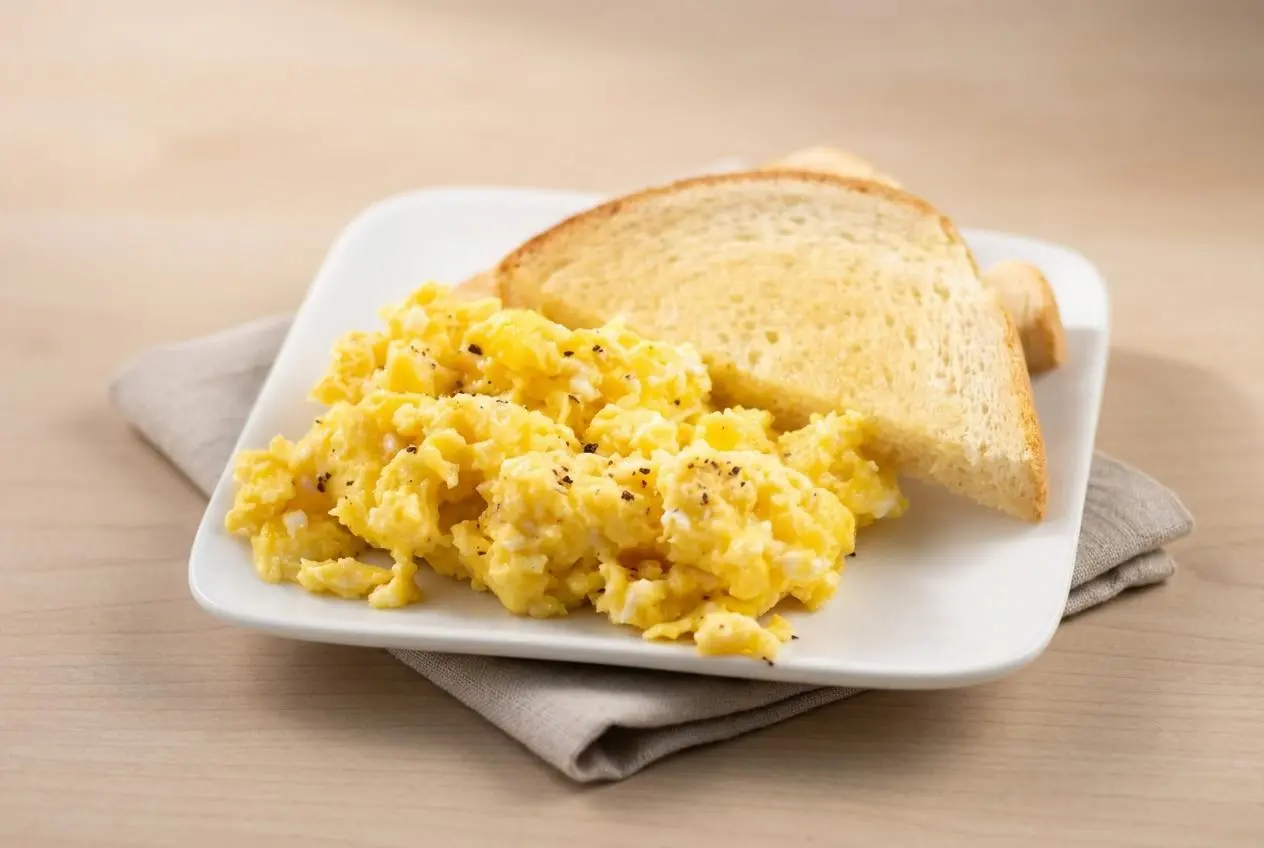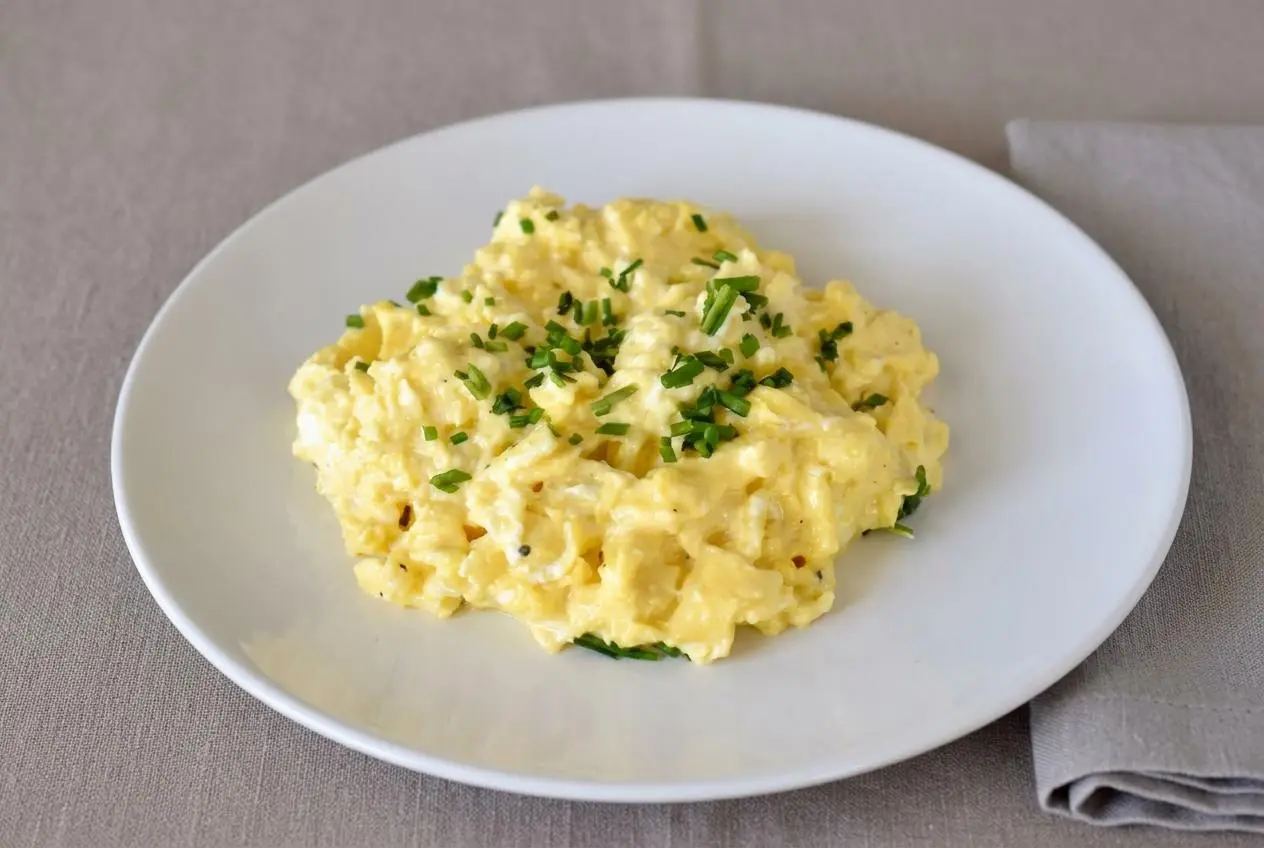
Scrambled eggs with cream cheese stay velvety because the cheese adds fat and moisture that help egg proteins form soft, tender curds instead of tightening too quickly.
These scrambled eggs with cream cheese bring together buttery eggs and little molten pockets of tangy cheese. The key is gentle heat, a light hand with the spatula, and adding the cubes after soft curds begin to form.
The butter aroma alone makes breakfast feel more promising. Keep an eye on the glossy curds.
Cut the cream cheese before starting, then let the cubes lose their refrigerator chill while you whisk the eggs.
Why Cream Cheese Creates the Ultimate Scrambled Eggs
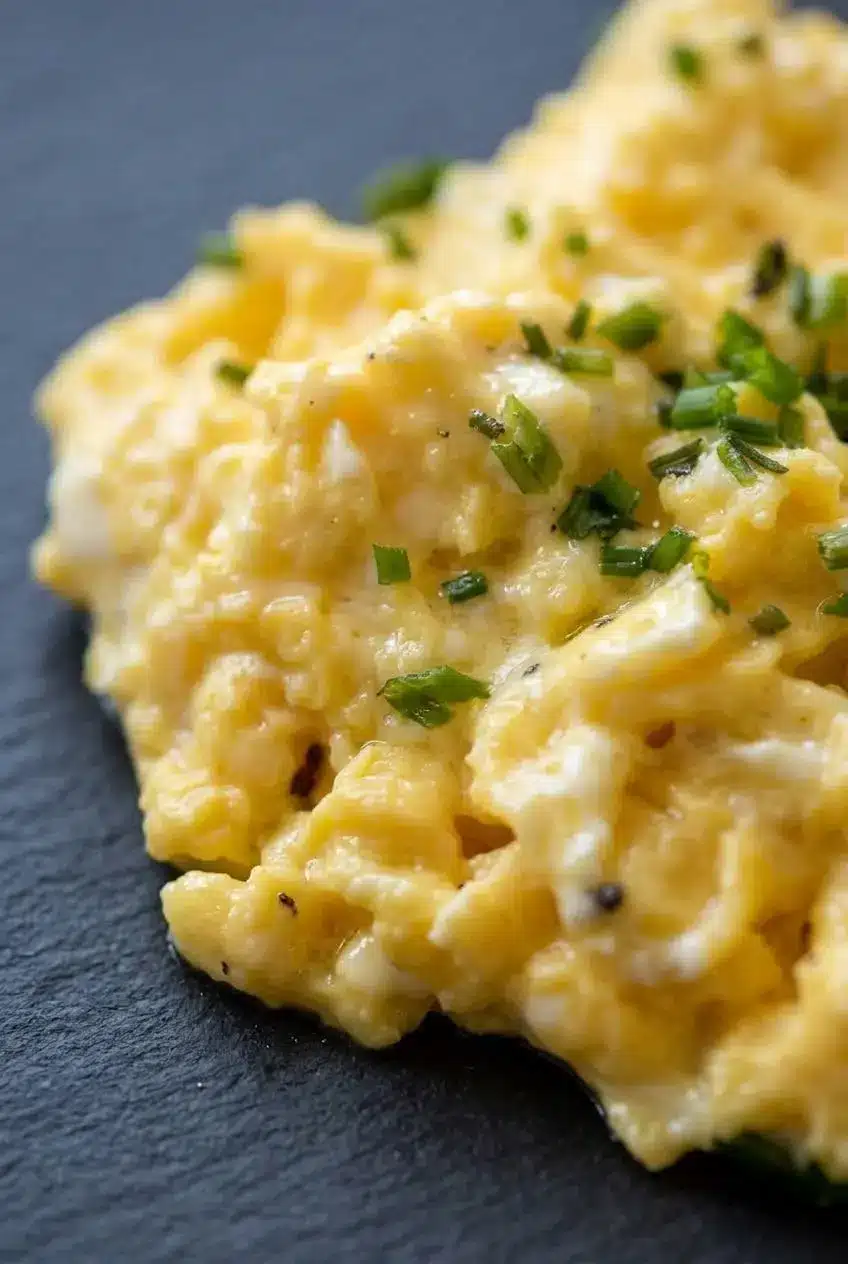
Cream cheese changes scrambled eggs in a way that milk or heavy cream cannot quite match. Its concentrated dairy fat and moisture mingle with the setting eggs, slowing the tightening of the protein strands that can otherwise make curds dry and firm.
As eggs cook, their proteins join together and push out moisture when exposed to too much heat. Cream cheese cushions that process, helping the curds stay soft and plush. It also brings a mild tang that cuts through the richness of butter, so the finished eggs taste rounded rather than heavy.
Unlike milk, which thins the raw egg mixture, cream cheese melts into the partially cooked eggs. That creates creamy ribbons and pockets throughout the pan instead of a diluted scramble. If you enjoy classic scrambled eggs, think of this version as the richer, tangier cousin with a softer finish.
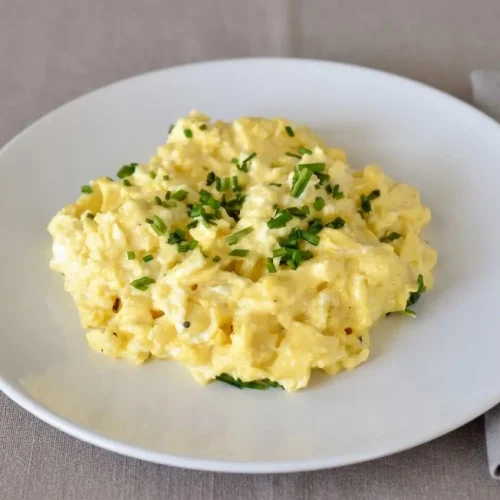
The goal is not to melt every bit of cheese into a perfectly smooth sauce. A few soft white streaks and molten pockets give these eggs their best texture.
Key Ingredients and Proportions
Each ingredient has a clear job: eggs create tender curds, seasoning sharpens their flavor, butter keeps the pan slick and rich, and cream cheese adds moisture, tang, and creamy pockets.
- 8 large eggs
- 1/8 teaspoon kosher salt (plus more to taste)
- 1/8 teaspoon black pepper (plus more to taste)
- 2 tablespoons butter
- 4 ounces cream cheese, cut into cubes (half an 8 ounce package)
Large eggs give the scramble enough structure to hold soft folds. If they have been sitting out briefly while you prepare the pan, they whisk more evenly, though cold eggs will still work. Whisk the salt and pepper into the eggs so the seasoning reaches every curd instead of sitting on the surface.
Butter lubricates the nonstick skillet and adds the buttery flavor that pairs so well with cream cheese. Full-fat block cream cheese delivers the richest pockets and melts gradually, which helps it blend into the eggs without turning them loose or greasy.
I cut cold cream cheese into neat cubes first, then leave them at a cool room temperature during prep so they soften evenly in the pan without dissolving into liquid.
The Perfect Egg-to-Cheese Ratio
A lighter ratio gives a creamy scramble, while a more generous amount creates obvious melted pockets. Use these proportions as a guide, keeping in mind that the 8-egg version below is intentionally extra creamy.
- 2 eggs: Use 1/2 ounce cream cheese, about 1 tablespoon, for one serving.
- 4 eggs: Use 1 ounce cream cheese for breakfast for two.
- 8 eggs: Use 4 ounces cream cheese for the rich family-size batch in this method.
For the first two batch sizes, roughly 1/2 ounce of cream cheese per two large eggs gives a balanced result. The 8-egg batch uses more cheese on purpose, giving you those signature creamy pockets without overwhelming the eggs.
Block vs. Whipped Cream Cheese
- Block cream cheese: Firm block cream cheese cuts into tidy cubes, melts gradually, and leaves defined creamy pockets in the finished eggs.
- Whipped cream cheese: Whipped varieties contain more air and melt faster, so they can make the eggs softer but may become greasy if the pan is too hot.
- Tub spread: Tub spreads work when needed, though added stabilizers can change the melt and produce a more uniform texture than block cream cheese.
How to Make Scrambled Eggs With Cream Cheese
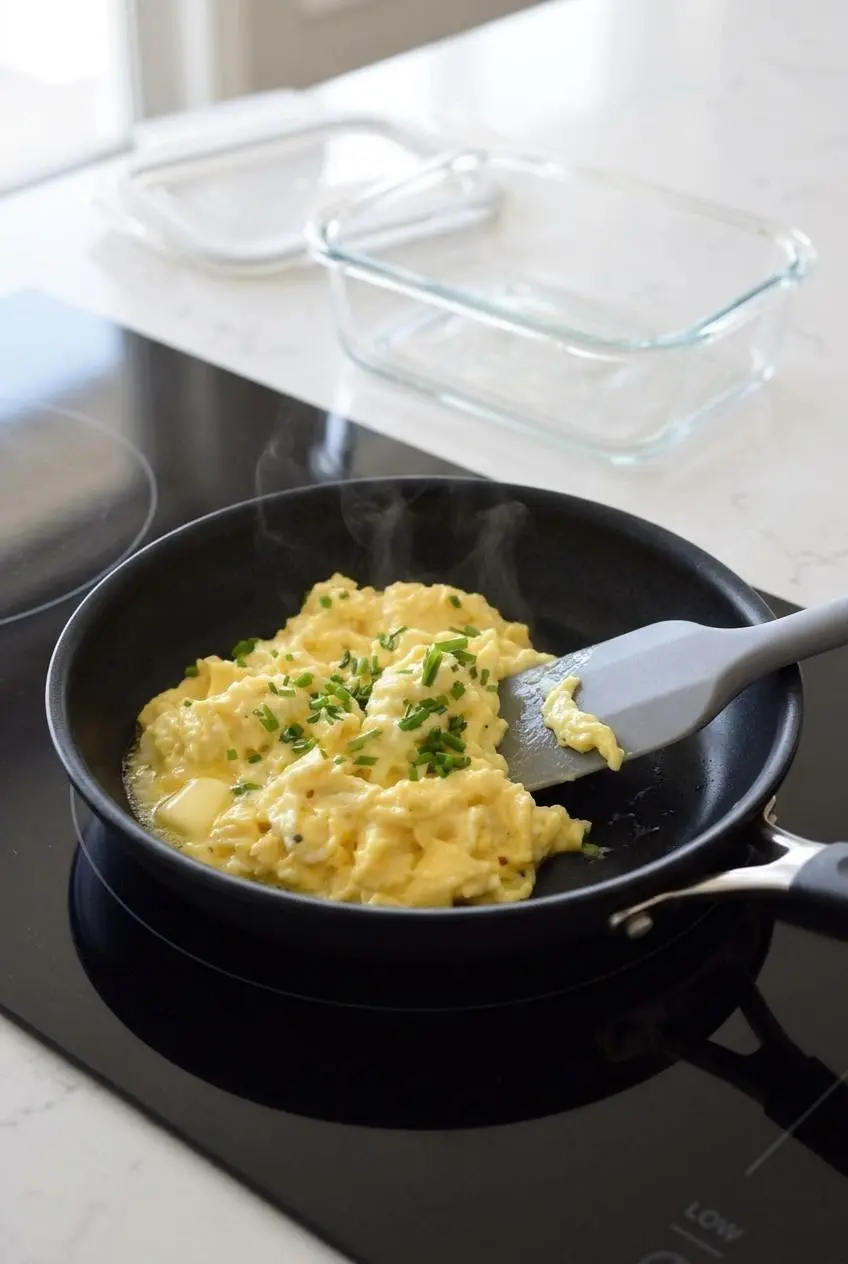
Use a 12-inch nonstick skillet so the eggs have room to set in soft folds rather than piling up and steaming. Medium heat is enough. High heat is where tender eggs go astray.
- Whisk the eggs, kosher salt, and black pepper in a large bowl until the mixture looks evenly yellow and lightly foamy.
A few bubbles show that air has been worked in, helping the eggs form lighter curds. - Melt the butter in a large nonstick skillet over medium heat, then pour in the egg mixture and sweep the bottom with a spatula as the edges begin to set.
Push the set egg toward the center in broad strokes so soft curds gather in large folds. - Scatter in the cream cheese cubes once the eggs are partially set, then fold occasionally until the eggs thicken and begin to hold their shape; taste and serve immediately.
Take the skillet off the heat while the curds still look glossy, since their residual heat will finish the last bit of cooking.
Do not stir nonstop. Gentle pauses between folds allow larger, more tender curds to form. When the butter foam settles and the pan smells warm and buttery, the heat is ready for the eggs.
When to Add Cream Cheese: In the Bowl vs. In the Pan
- Adding it to raw eggs: Even softened cream cheese can leave stubborn flecks when whisked into cold eggs. The mixture can also become thick and heavy before it ever reaches the skillet.
- Adding it to half-set eggs: Folding cubes into soft, warm curds lets the cheese soften gradually. You get ribbons of creaminess plus distinct pockets that make every bite more interesting.
Add the cubes when glossy ribbons run across the skillet and about half the eggs have set. At that point, the cheese has enough heat to melt but the eggs still have room to fold around it.
Troubleshooting Common Texture Mistakes
- Watery eggs: Liquid pooling around the curds usually means the pan was too hot and the proteins tightened too quickly. Slide the skillet off the burner, tilt it gently so steam can escape, and lower the heat for the next batch.
- Rubbery curds: Eggs continue cooking after the skillet leaves the heat. Stop while they still look slightly underdone and glossy instead of waiting for every surface to look dry.
- Cold cheese chunks: Large or ice-cold cubes do not have enough time to soften before the eggs finish. Cut them into small cubes and let them sit out briefly during prep.
- Dry eggs: Remove the pan from the heat right away, then fold in a small pat of cool butter. It will add back a little shine and richness, though it cannot fully reverse overcooking.
- Greasy curds: Too much heat can cause dairy fat to separate. Keep the burner moderate and fold the eggs rather than beating them aggressively.
If using baby spinach as an optional add-in, sauté it separately and drain away excess moisture before folding it in near the end. Wet vegetables can undo all that careful curd work.
Delicious Variations and Serving Suggestions
Keep the main scramble as written, then add optional flavors after the eggs have formed their soft curds. Choose additions that brighten the rich cheese instead of competing with it.
Fresh Herb and Green Onion Scramble
Fold chopped chives, dill, or thinly sliced green onions into the eggs during the final seconds of cooking. Their fresh bite lifts the buttery flavor without needing extra heat. A light grating of lemon zest adds brightness and keeps the richness from feeling too dense.
For a heartier option, fold in sautéed baby spinach and crisp crumbled bacon near the end. Make sure the spinach is dry and the bacon is well drained so the eggs stay creamy rather than watery.
Quick Microwave Single-Serve Method
For one serving, whisk 2 eggs with a pinch of salt and pepper in a microwave-safe mug or small bowl. Cook on medium power for 45 seconds, then stir in 1/2 ounce of cubed cream cheese.
Continue cooking in 20-second bursts, stirring gently between each burst, until the eggs are softly set. Let the eggs stand briefly before eating so the cheese finishes softening and the center settles.
Morning Serving and Brunch Platter Ideas
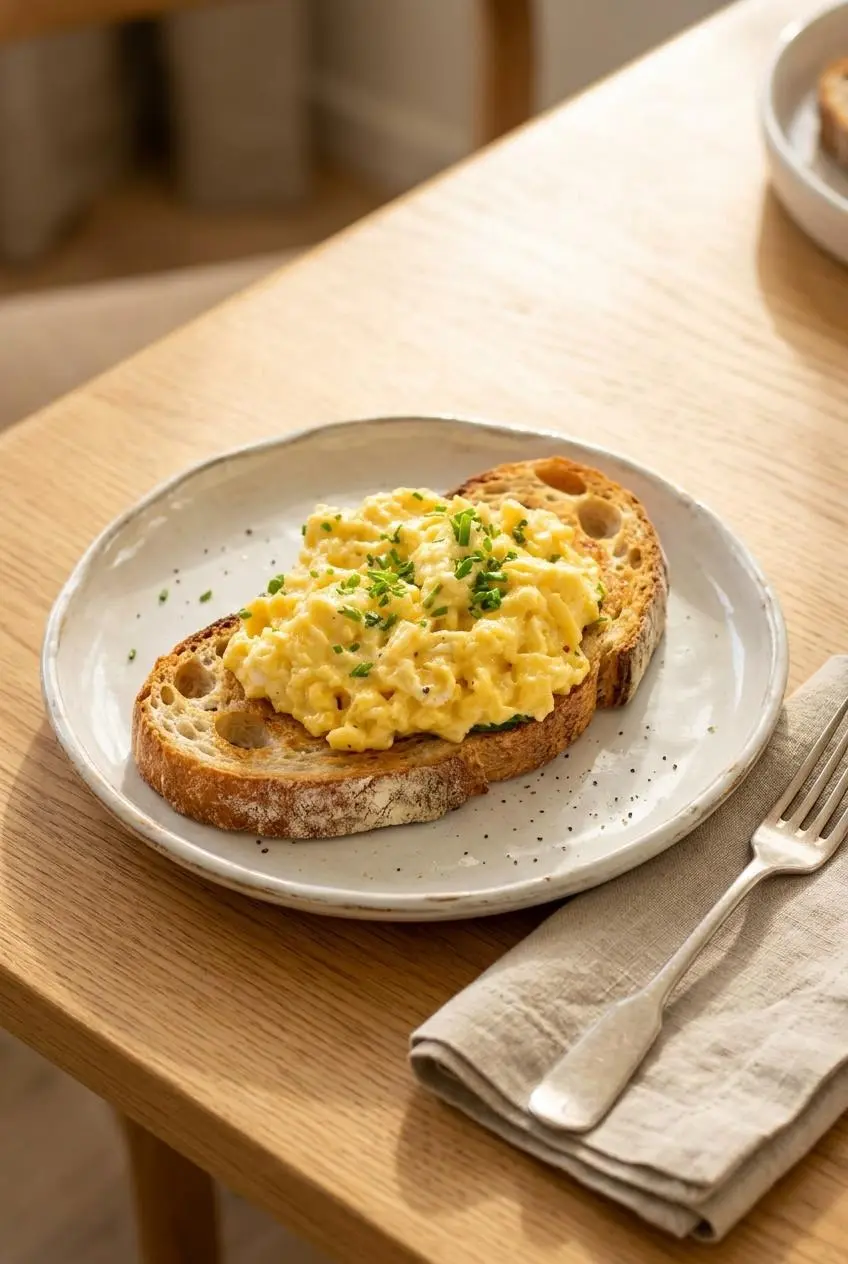
- Spoon the warm eggs over thick toasted sourdough and finish with freshly cracked black pepper.
- Build open-faced toasted bagels with smoked salmon, capers, and the creamy eggs for a salty, tangy brunch plate.
- Fill warm tortillas with the scramble for breakfast burritos, adding any optional herbs or cooked vegetables just before rolling.
- Set out these eggs alongside cream cheese sausage balls for a hearty brunch spread.
If you want another dairy-and-egg breakfast for a slower morning, try baked cottage cheese eggs.
Storage and Reheating Guidelines
Scrambled eggs are at their best straight from the skillet. If you have leftovers, move them to an airtight container and chill them promptly to protect both their texture and freshness.
Rewarm a portion in a small skillet over low heat with a little butter, folding gently just until warm. High microwave power can quickly make the curds tough, so use short, gentle warming instead if the microwave is your only option.
Keep eggs and dairy chilled at 40°F or below as part of safe egg handling and refrigeration practices.
Conclusion
Gentle heat, broad folds, and softened cream cheese cubes turn ordinary eggs into rich, buttery curds with a tangy finish. Pull the pan early, while the eggs still shine, and they will stay far more tender.
Add chives, dill, green onions, or lemon zest when you want a brighter brunch plate. A warm skillet and a little patience make the difference.
Frequently Asked Questions
What Does Putting Cream Cheese in Scrambled Eggs Do?
Cream cheese adds fat and moisture that help the eggs stay soft as they cook. It also creates tangy melted ribbons and creamy pockets throughout the curds.
When Should You Add Cream Cheese to Scrambled Eggs?
Add cubed cream cheese when the eggs are about halfway cooked and soft curds have started forming. Adding it too early can make the mixture dense, while adding it too late can leave firm, cold pieces.
How Much Cream Cheese Do You Put in Scrambled Eggs?
For a lighter creamy texture, use about 1/2 ounce, or 1 tablespoon, for every 2 large eggs. The 8-egg family batch uses 4 ounces for a more pronounced cream cheese flavor and larger melted pockets.
Can You Use Whipped Cream Cheese or Tub Spread Instead of Block Cream Cheese?
Yes, both work in a pinch. Whipped cream cheese and tub spreads melt faster because they contain more air and stabilizers, so watch the heat closely. Block cream cheese gives the richest, most distinct pockets.
How Do You Fix Scrambled Eggs With Cream Cheese if They Turn Watery?
Take the skillet off the heat as soon as liquid begins to gather around the curds, then tilt it gently to release steam. For the next batch, use lower heat and stop cooking while the eggs still look glossy.
Scrambled Eggs With Cream Cheese

Equipment
- 12-inch nonstick skillet
- large bowl
- Whisk
- Spatula
Ingredients
- 8 large eggs
- 1/8 teaspoon kosher salt plus more to taste
- 1/8 teaspoon black pepper plus more to taste
- 2 tablespoons butter
- 4 ounces cream cheese, cut into cubes half an 8 ounce package
Instructions
- Whisk the eggs, kosher salt, and black pepper in a large bowl until the mixture looks evenly yellow and lightly foamy. A few bubbles show that air has been worked in, helping the eggs form lighter curds.
- Melt the butter in a large nonstick skillet over medium heat, then pour in the egg mixture and sweep the bottom with a spatula as the edges begin to set. Push the set egg toward the center in broad strokes so soft curds gather in large folds.
- Scatter in the cream cheese cubes once the eggs are partially set, then fold occasionally until the eggs thicken and begin to hold their shape; taste and serve immediately. Take the skillet off the heat while the curds still look glossy, since their residual heat will finish the last bit of cooking.