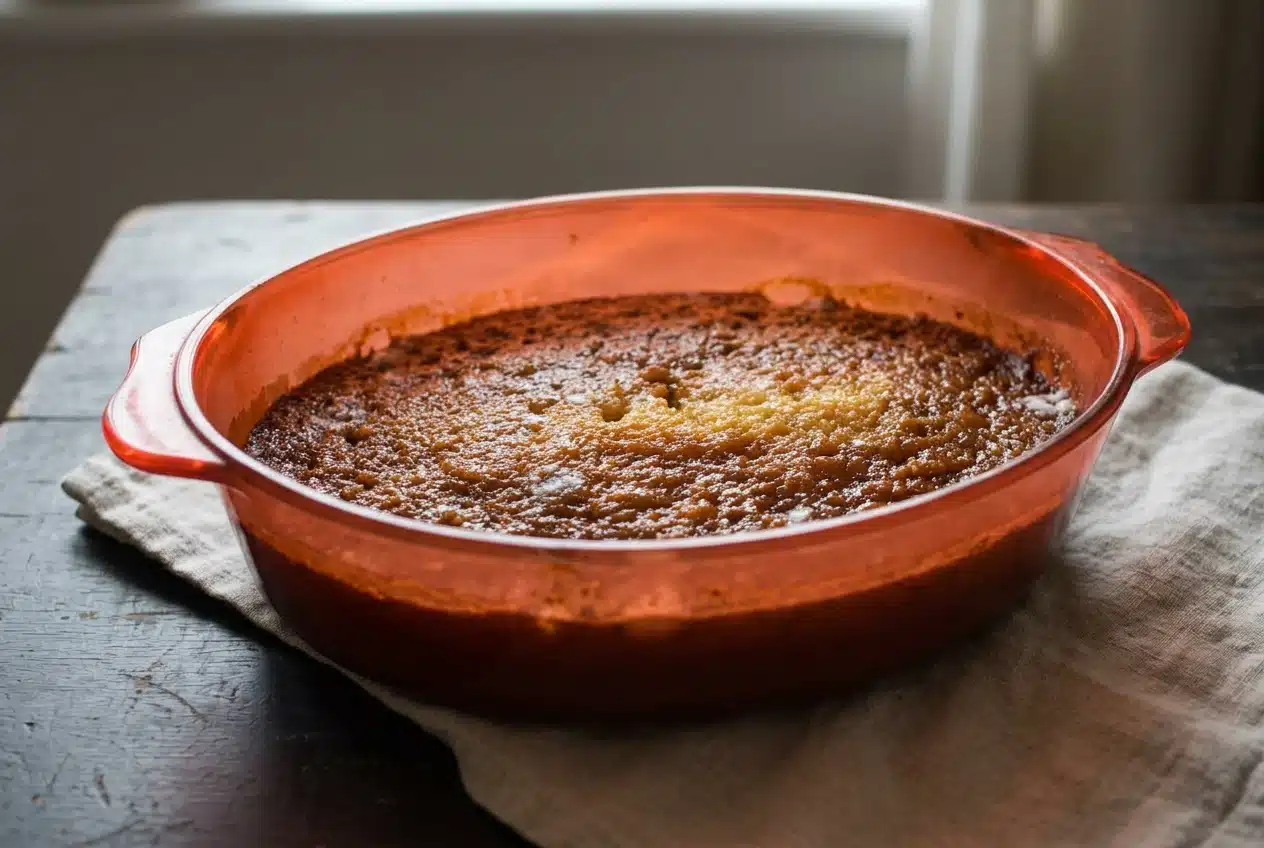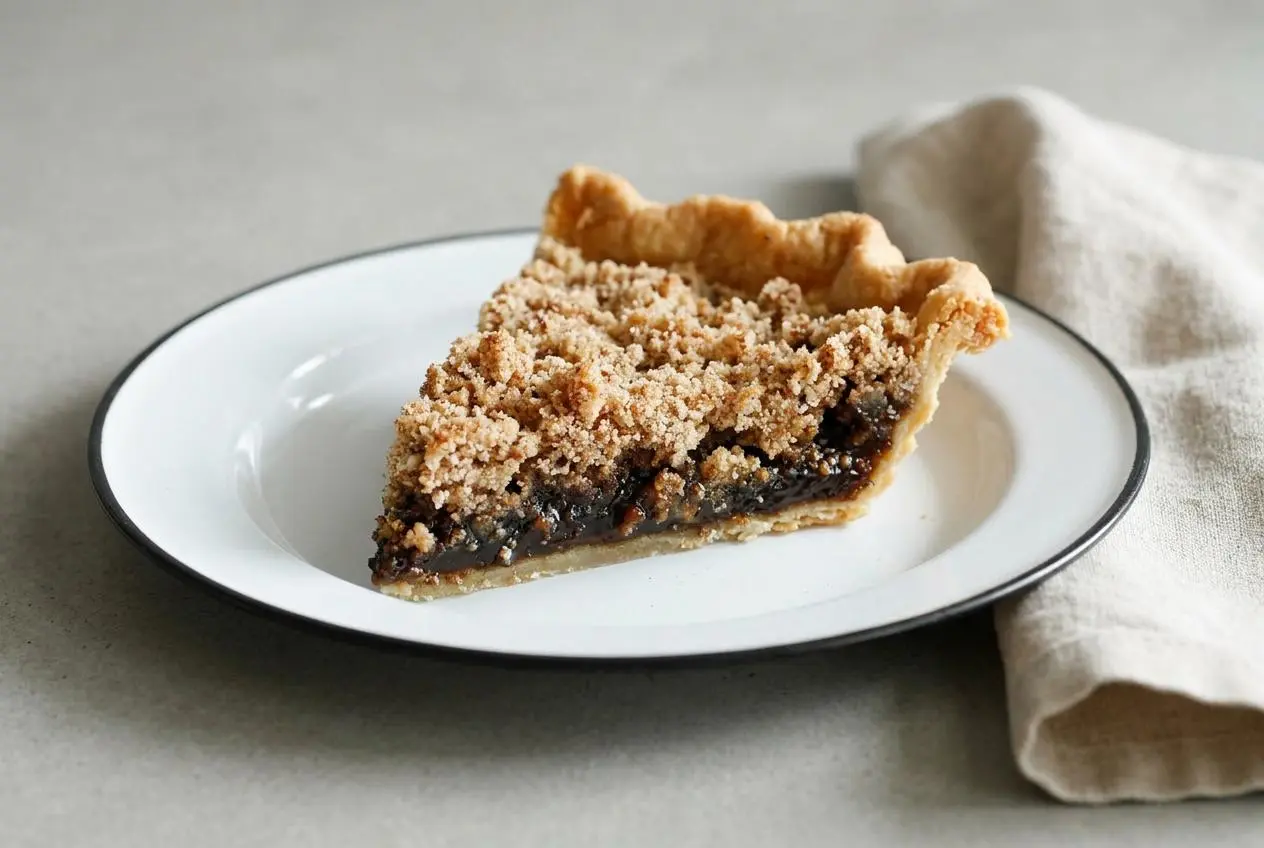
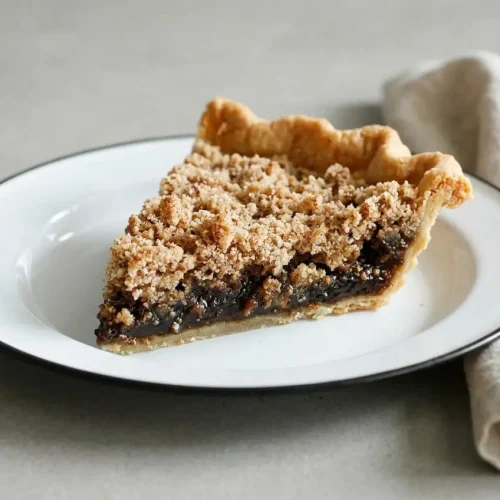
Shoofly pie is a Pennsylvania Dutch dessert with a gooey molasses layer beneath spiced brown sugar crumbs, all baked in a pastry crust.
This shoofly pie fills the kitchen with the warm scent of dark molasses, cinnamon, nutmeg, and browning butter. It delivers the classic contrast of soft custardy filling and tender streusel.
The high heat start gives the pastry a head start before the filling settles and sets. That first blast makes a real difference.
Chill the pastry in its pie plate while you mix the filling so the crust stays firm when the hot liquid goes in.
The Heritage and Naming of Shoofly Pie
Shoofly pie belongs to Pennsylvania Dutch cooking, especially around Lancaster County, where molasses desserts were valued for their deep flavor and keeping qualities.
Its story is often connected to Centennial Cake, a crustless molasses cake associated with Philadelphia’s 1876 Centennial celebration. Over time, the cake-like sweet filling found its way into a pie shell and became a hearty cold-weather bake that could be served for breakfast or dessert.
The name has a few folk explanations. One popular tale says sweet pies attracted flies while cooling, but the better-known legend connects the name to Shoofly the Boxing Mule, a well-known 19th-century circus animal whose name was also used on molasses products. Whatever name came first, the pie itself has remained a beloved molasses classic.
Essential Ingredients and Their Roles
Each ingredient contributes to the pie’s dark sweetness, warm spice, crumbly topping, airy filling, or sturdy pastry foundation.
Crumb Topping
- 1 ½ cups flour
- ½ cup dark brown sugar
- 1 teaspoon cinnamon
- ½ teaspoon nutmeg
- ⅛ teaspoon salt
- ¼ pound (1 stick) cold unsalted butter
Liquid Filling
- ¾ cup molasses
- ¾ cup boiling water
- ½ teaspoon baking soda
Crust
- 1 single crust pie pastry, rolled flat and placed in a 9-inch pie plate
The molasses creates the pie’s signature dark, caramel-like flavor. Brown sugar, cinnamon, and nutmeg round it out with warmth, while flour and cold butter form the topping that sits above the syrupy filling instead of disappearing into it.
I keep the butter cold until the moment it is cut in because soft butter turns the topping dense and greasy instead of light and crumbly.
Choosing the Right Molasses
Choose standard dark baking molasses for balanced sweetness and a full-bodied flavor. It has enough intensity to stand up to the spices without overpowering the crust.
Light table syrup tastes milder and produces a paler, less distinctive filling. Blackstrap molasses goes too far in the other direction: its stronger mineral flavor can make the pie harsh and bitter. Save blackstrap for dishes where its robust character is welcome.
Cold Butter and Crumb Texture
Cold butter is what creates a true streusel texture. Use a pastry cutter to work it into the flour mixture until the crumbs look sandy and coarse, with some small butter pieces still visible.
As the pie bakes, those cold bits melt gradually and leave behind tender crumbs. If the butter warms into a paste before baking, the topping can sink, clump, and lose its pleasant crumbly finish.
The Baking Soda Activation
Boiling water dissolves the baking soda evenly before it meets the molasses. Once combined, the acidic molasses and baking soda begin to foam gently, which helps lighten a filling that could otherwise bake up heavy.
Stir until the soda is fully dissolved and pour the filling into the crust while it is still hot. The mixture may bubble a little, which is exactly what you want.
How to Make Shoofly Pie With Success Cues
The two-temperature bake gives this pie its defining contrast: a pastry base that begins to crisp quickly and a molasses layer that finishes gently without scorching.
Preparation and Baking
- Heat the oven to 450 degrees.
Set the pie on a lower-middle oven rack so the first burst of heat reaches the bottom crust promptly. - Combine the flour, dark brown sugar, cinnamon, nutmeg, and salt in a mixing bowl, then cut in the cold butter with a pastry cutter.
Stop when the mixture resembles sandy cornmeal with loose, uneven crumbs rather than a smooth dough. - Stir the molasses, boiling water, and baking soda together, then pour the bubbling liquid into the pastry shell and scatter the crumb mixture evenly over the surface.
The crumbs should cover the filling without being pressed down, leaving a soft layer that will bake above the gooey center. - Bake for 15 minutes at 450 degrees, then lower the oven to 350 degrees and bake for 20 minutes longer.
The kitchen will smell of warm molasses and browned butter, and the center should look set with a gentle wobble rather than a loose wave.
Let the pie cool before slicing. The molasses layer continues to settle as it stands, so cutting it while piping hot can send the filling sliding across the plate.
Wet-Bottom vs. Dry-Bottom
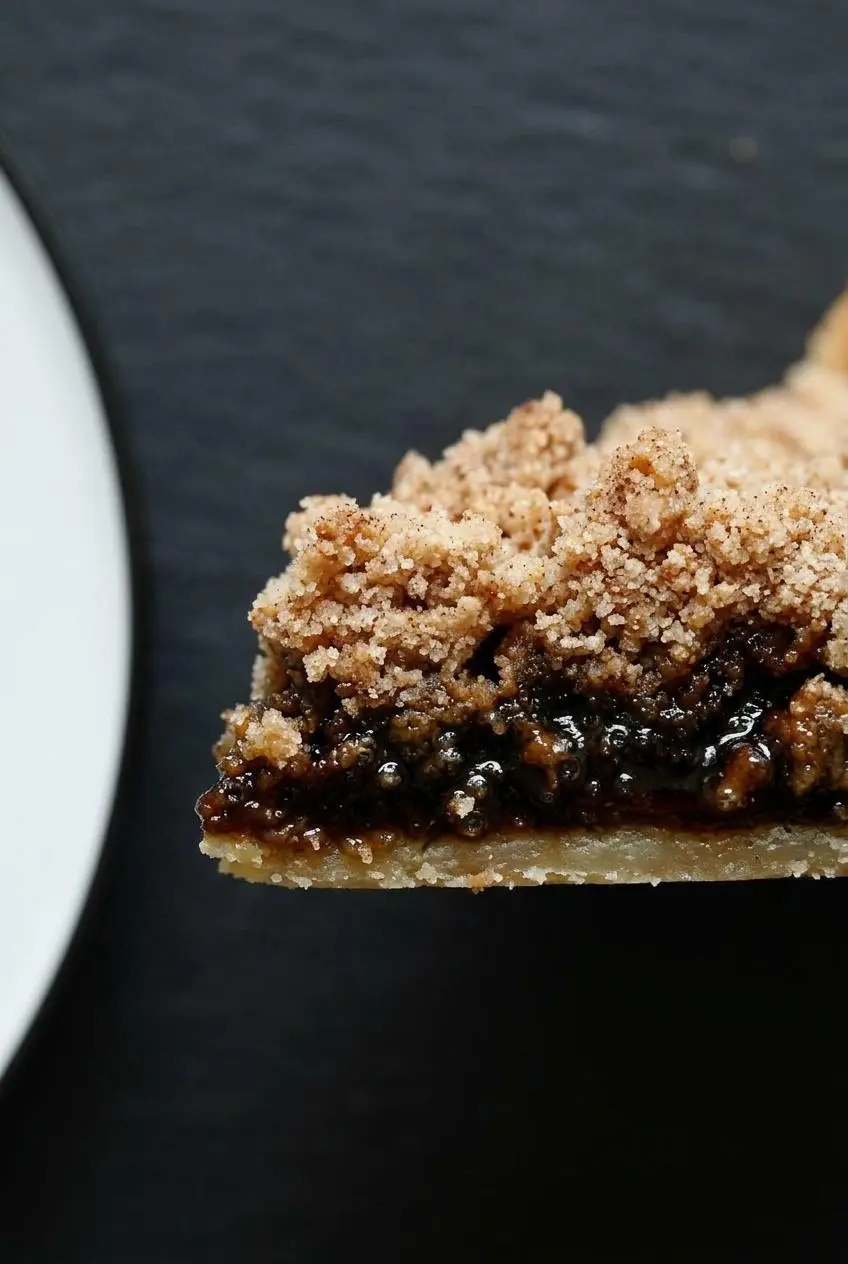
The filling and crumbs can be arranged in two traditional ways, and each one creates a different texture.
- Wet-bottom: The liquid filling goes directly into the pastry shell, and the crumbs are scattered over it. The result is a distinct gooey molasses layer under a soft, spiced topping. This is the style made here.
- Dry-bottom: The crumb mixture is worked through the molasses filling rather than sitting separately on top. It bakes into a more uniform, gingerbread-like cake texture.
- For coffee dunking: Dry-bottom pie is especially suited to a morning cup of strong black coffee because its firmer crumb holds together well.
Neither style is a lesser version. Wet-bottom pie leans toward spoonable richness, while dry-bottom pie offers a more cake-like bite.
Baker Troubleshooting and Common Pitfalls
Molasses filling is lively in the oven, so a little preparation prevents the most common crust and topping problems.
Preventing a Soggy Crust
- Pale or soft pastry: The crust likely warmed before baking. Chill the rolled pastry in the pie plate before adding the filling so it can firm up.
- Bottom that will not brown: Place the pie on a lower-middle rack. The initial 450-degree bake needs direct bottom heat to set the pastry quickly.
- Heavy topping: The butter probably softened too much. Keep mixing brief and stop when the crumbs still look dry and loose.
Fixing Overflowing Syrup
- Molasses bubbling over: The filling expands during the first hot stage. Spread the crumbs all the way to the edge so they help contain the bubbling surface.
- Drips in the oven: Set a baking sheet on the rack below the pie to catch any spillover while leaving room for heat to circulate around the pie plate.
- Crumbs sinking into the filling: Spoon them gently and evenly across the surface. Pressing them down disrupts the separate wet-bottom layers.
Avoiding Overly Bitter Flavor
- Harsh molasses taste: Blackstrap molasses is usually the culprit. Use standard dark baking molasses for a rounder sweetness.
- Burnt brown sugar edge: Check the pie around the 20-minute point. Loosely tent the outer crust edge with foil if it is browning faster than the center.
- Flat spice flavor: Make sure the cinnamon and nutmeg are evenly mixed through the flour before the butter goes in.
Storing and Reheating Shoofly Pie
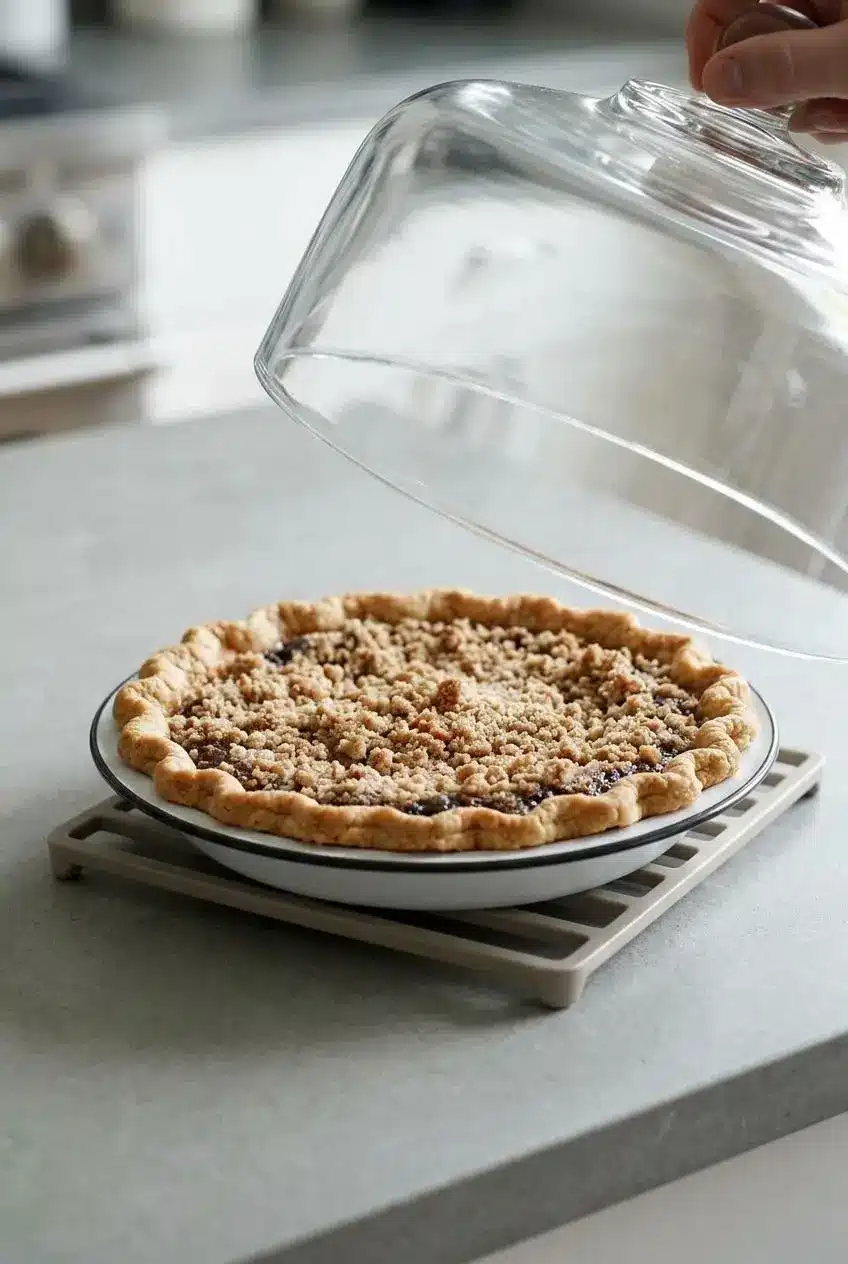
Once the pie has cooled completely, cover it well and keep it in a cool, dry spot away from direct sunlight. Because this version contains no eggs or dairy custard, it is commonly served at room temperature.
- Cover the pie snugly to protect the crumb topping from humidity.
- For a firmer slice, keep the pie chilled and let it lose its chill before serving.
- To revive a warm-from-the-oven feel, warm individual slices briefly in a low oven. Avoid the microwave, which can make the pastry chewy.
- For the best crumb texture, add whipped cream or ice cream only when serving.
Delicious Shoofly Pie Variations
Keep the classic version intact, then try one of these optional directions when you want a different flavor profile.
- Warm winter spice: Add ground ginger and cloves to the crumb mixture for a deeper, more aromatic spice profile alongside the cinnamon and nutmeg.
- Chocolate shoofly pie: Work cocoa powder into the streusel crumbs and add dark chocolate bits to the bottom layer for a richer, bittersweet contrast with molasses.
- Citrus spice: Add fresh orange zest with a little ground ginger to brighten the dark sweetness and give the topping a fragrant lift.
Serving Suggestions for Every Occasion
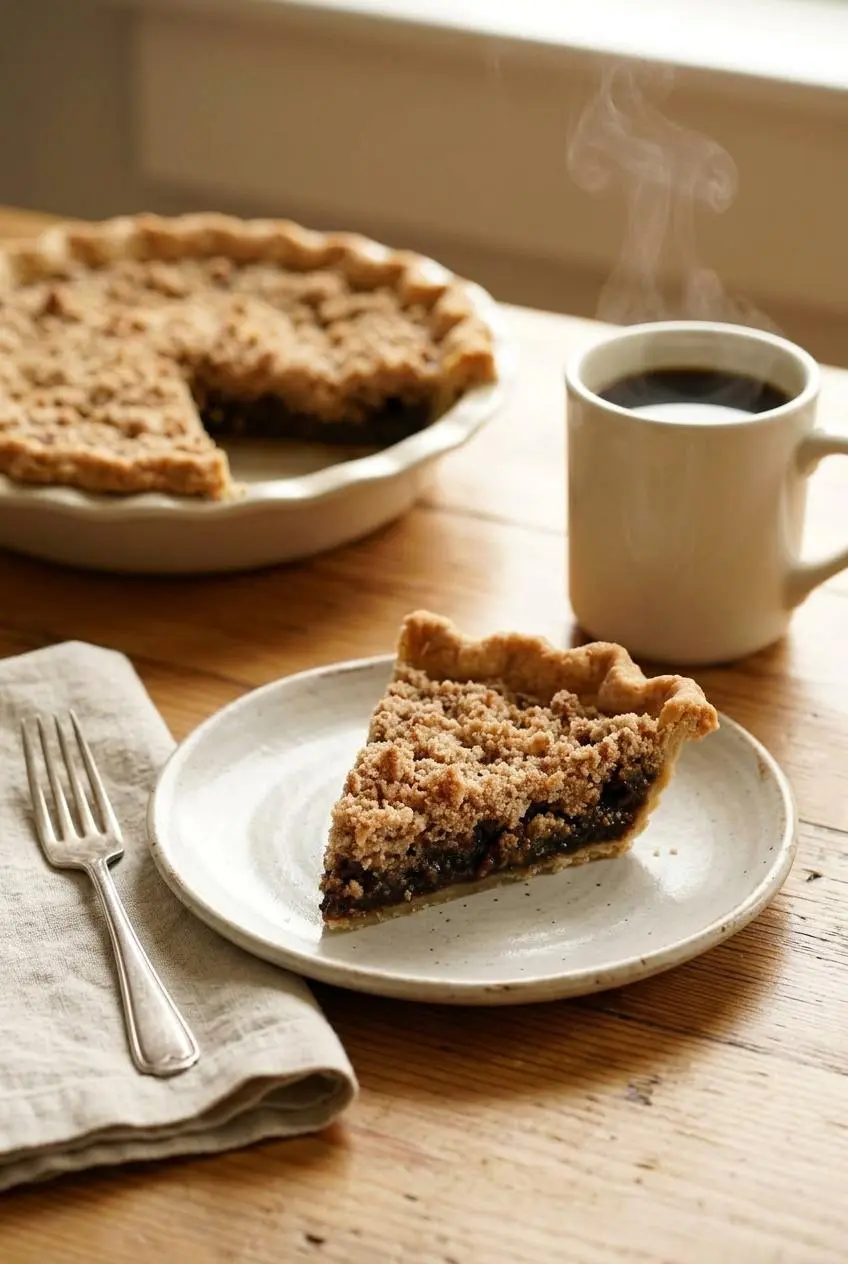
Serve slightly warm slices with vanilla bean ice cream or unsweetened whipped cream. Both soften the pie’s intensity without covering up the molasses and spice.
For a Pennsylvania Dutch-style breakfast treat, offer a room-temperature slice with strong black coffee or hot black tea. On a holiday dessert spread, the deep molasses flavor also pairs nicely with a tangy traditional rhubarb pie for contrast.
For a winter gathering, set it alongside a festive eggnog pie and let guests choose between dark molasses spice and creamy holiday richness.
Conclusion
This shoofly pie brings together a crisp-edged pastry shell, a deep gooey molasses center, and buttery crumbs scented with cinnamon and nutmeg. Dark baking molasses and cold butter make the flavor and texture feel true to the style.
Start hot, lower the heat after 15 minutes, and give the filling time to cool before slicing. That patience is what turns a bubbling pie into a neat, luscious slice.
Frequently Asked Questions
What Is the Difference Between Wet-Bottom and Dry-Bottom Shoofly Pie?
Wet-bottom pie has a distinct gooey molasses layer beneath the crumb topping. Dry-bottom pie mixes the crumbs through the filling for a more even, cake-like texture. Wet-bottom is especially soft and rich, while dry-bottom is well suited to dunking in coffee.
Why Is It Called Shoofly Pie?
The name is widely connected to Shoofly the Boxing Mule, a 19th-century circus animal. Molasses products associated with that name likely helped the unusual title stick. Stories about shooing flies away from sweet pies are part of the folklore, but they are not the only explanation.
Can I Use Blackstrap Molasses for Shoofly Pie?
It is better to use standard dark baking molasses. Blackstrap has a more forceful, mineral-heavy flavor that can overwhelm the brown sugar and warm spices. Dark baking molasses gives the filling a deeper sweetness without pushing it toward bitterness.
Does Shoofly Pie Need to Be Refrigerated?
This egg-free, dairy-free pie is commonly kept covered at room temperature. Keep it protected from heat and humidity so the crumb topping stays pleasant. Chilling it is an option if you prefer a firmer filling, especially after it has fully cooled.
Shoofly Pie

Equipment
- Pastry Cutter
- 9-inch pie plate
- Mixing Bowl
Ingredients
Crumb Topping
- 1 ½ cups flour
- ½ cup dark brown sugar
- 1 teaspoon cinnamon
- ½ teaspoon nutmeg
- ⅛ teaspoon salt
- ¼ pound cold unsalted butter (1 stick)
Liquid Filling
- ¾ cup molasses
- ¾ cup boiling water
- ½ teaspoon baking soda
Crust
- 1 single crust pie pastry rolled flat and placed in a 9-inch pie plate
Instructions
Preparation and Baking
- Heat the oven to 450 degrees. Set the pie on a lower-middle oven rack so the first burst of heat reaches the bottom crust promptly.
- Combine the flour, dark brown sugar, cinnamon, nutmeg, and salt in a mixing bowl, then cut in the cold butter with a pastry cutter. Stop when the mixture resembles sandy cornmeal with loose, uneven crumbs rather than a smooth dough.
- Stir the molasses, boiling water, and baking soda together, then pour the bubbling liquid into the pastry shell and scatter the crumb mixture evenly over the surface. The crumbs should cover the filling without being pressed down, leaving a soft layer that will bake above the gooey center.
- Bake for 15 minutes at 450 degrees, then lower the oven to 350 degrees and bake for 20 minutes longer. The kitchen will smell of warm molasses and browned butter, and the center should look set with a gentle wobble rather than a loose wave.