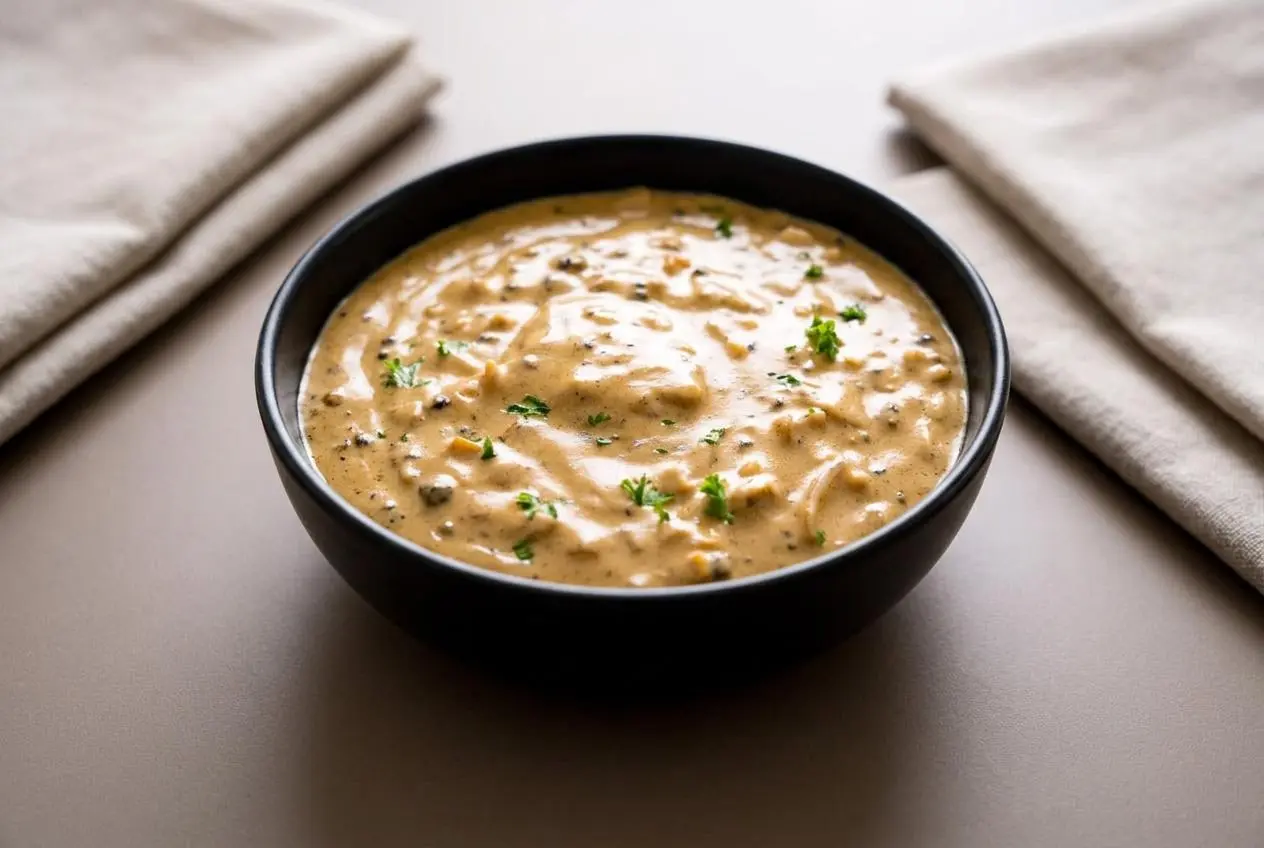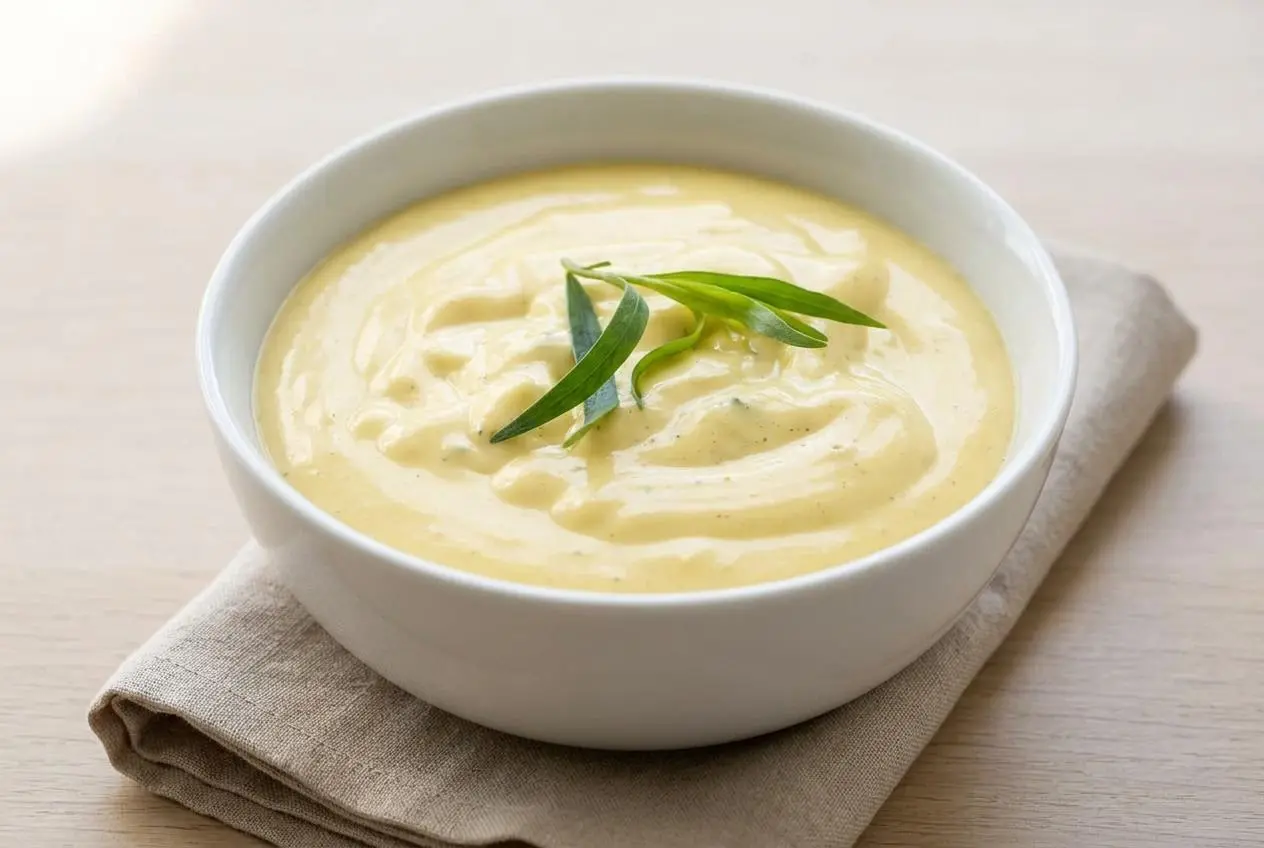
Béarnaise sauce is a classic French warm emulsion of egg yolks, melted butter, white wine, vinegar, shallots, and fresh herbs, blended until thick, creamy, and glossy.
Bearnaise sauce tastes rich, tangy, and deeply herbal, with that unmistakable tarragon aroma that makes steakhouse dinners feel a little dramatic in the best way.
This version uses a blender for a faster, steadier emulsion and includes the fixes that matter if the sauce starts to split. The silky part is closer than it looks.
Cool the herb reduction completely before blending so the yolks stay smooth instead of scrambling.
What Is Béarnaise Sauce?
If you have ever wanted a sauce that feels restaurant fancy without requiring a culinary degree, this is the one. Béarnaise is a warm butter sauce built from egg yolks and a sharp, fragrant reduction of white wine, white wine vinegar, shallots, tarragon, and chervil.
It is technically a derivative of Hollandaise, but the flavor is very much its own thing. Instead of leaning lemony, it tastes buttery, tangy, and herbal, with a soft anise-like note from fresh tarragon. The texture should be velvety and spoonable, thick enough to coat food without turning heavy.
That herb reduction matters. Béarnaise gets its distinct aroma from tarragon and chervil simmered in vinegar and wine, which gives the finished sauce its savory backbone instead of just tasting like melted butter with eggs.
Béarnaise vs Hollandaise: What Is the Difference?
These two sauces are close cousins, so the confusion makes sense. Both are warm egg-and-butter emulsions, meaning egg yolks help hold butter and liquid together into one smooth sauce instead of a greasy separation.
Hollandaise is brighter and simpler. It usually gets its acidity from lemon juice, and it often includes a touch of cayenne for gentle heat. The flavor is clean, buttery, and citrusy.
Béarnaise starts with a reduction of white wine, white wine vinegar, shallots, and herbs such as tarragon and chervil. That gives it a deeper, more savory flavor with a pronounced herbal aroma. It feels more assertive on the plate, which is why it is such a classic steak sauce.
The pairings shift with that flavor profile. Hollandaise is a natural fit for eggs, asparagus, and delicate fish. Béarnaise still works with vegetables and seafood, but it especially shines with grilled beef, roast beef, and richer cuts that benefit from a tangy herbal lift.
Essential Ingredients for Classic Bearnaise Sauce
Each ingredient has a real job here, from building the herb aroma to creating the smooth emulsion and balancing the richness of the butter.
- 1/4 cup white wine
- 2 tablespoons white wine vinegar
- 2 tablespoon minced shallot
- 1/4 teaspoon coarsely ground black pepper
- 1/4 teaspoon salt
- 1 tablespoon fresh tarragon
- 1 tablespoon fresh chervil
- 4 large fresh egg yolks
- 3/4 cup unsalted butter, cut into cubes
- 2 teaspoons chopped fresh tarragon
White wine and white wine vinegar create the reduction that gives the sauce its tang and structure. Shallots add gentle sweetness and savory depth, while black pepper keeps the flavor from feeling flat. Tarragon and chervil are what make béarnaise taste like béarnaise, with tarragon bringing the boldest herbal note.
Egg yolks do the technical work. Their lecithin helps pull fat and liquid together into a stable emulsion, which is why the sauce turns creamy instead of oily. Unsalted butter brings body and richness, and the final chopped tarragon freshens the whole sauce right at the end.
I like to use the best unsalted butter I can find here, because in a sauce this butter-forward, you can really taste the difference in how silky it finishes.
How to Make Foolproof Blender Béarnaise
This method keeps the classic flavor but makes the process much less fussy. The keys are a properly reduced herb base, a fully cooled reduction, and a slow steady stream of very hot butter while the blender runs on high.
- Pour the white wine, white wine vinegar, minced shallot, black pepper, salt, fresh tarragon, and fresh chervil into a small saucepan and simmer until the liquid reduces by half, leaving about 3 tablespoons; then let the mixture cool completely before adding it to the blender with the egg yolks.
The reduction is ready when it lightly coats the back of a spoon, and cooling it fully keeps the yolks from tightening too soon. - Melt the butter in a small saucepan or in the microwave, then remove the center cap from the blender lid, run the blender on HIGH, and slowly stream the very hot butter into the yolk mixture in one steady pour.
As the emulsion forms, the sauce should turn pale and glossy, and the blender’s sound usually deepens slightly as it thickens. - Keep blending for 30 seconds, then check the texture and blend on HIGH for another 5 seconds only if needed; serve warm right away, or set the blender container in warm water until serving time and finish with the chopped fresh tarragon.
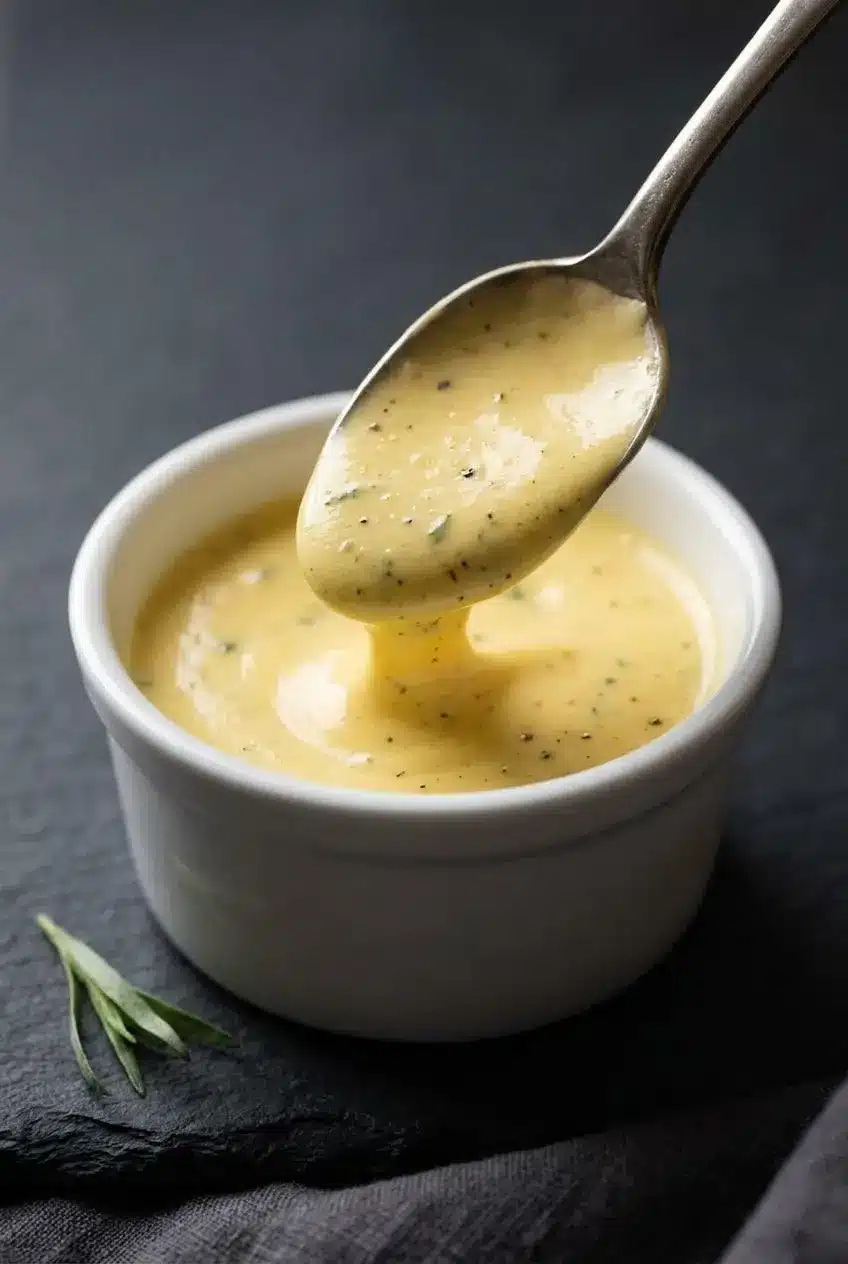
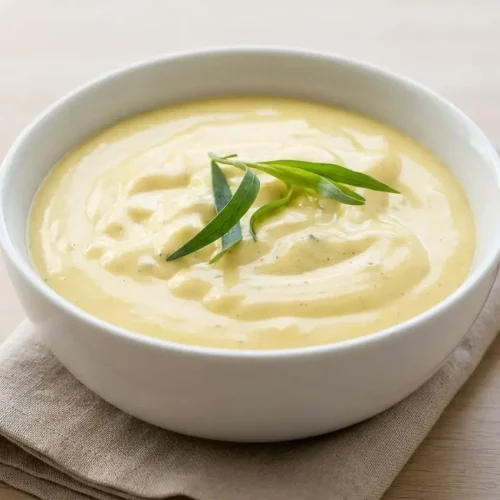
The finished sauce should look like a thin mayonnaise, smooth and spoonable rather than runny or greasy.
A few cues make this easier the first time. Before the butter goes in, the blended yolks and reduction should look smooth and pale, almost custard colored. Once you start streaming the butter, go slowly. Pouring too fast is the quickest way to break the emulsion.
Do not skip the cooling step for the reduction. Warm herbs and vinegar are fine. Hot reduction plus yolks is how you end up with tiny scrambled bits in the blender.
Blender vs. Traditional Double Boiler Method
Both methods can produce a beautiful sauce. The real difference is how you manage heat and how much hands-on whisking you want.
The blender method is the easier everyday option. It is faster, the blades do most of the emulsifying work, and the sauce thickens in well under a minute once the butter starts going in. It is a great choice if you want dependable results with less arm work.
The traditional double boiler method, often called a bain-marie, gives you more direct control over the sauce as it thickens. Some cooks prefer it because they can feel the texture changing as they whisk. It is slower, but it can be very steady when you keep the heat gentle.
Classic Bain-Marie Béarnaise
To make it the classic way, prepare the same reduction first and let it cool slightly. Then whisk the yolks and reduction in a bowl set over barely simmering water, making sure the bottom of the bowl does not sit in the water. Once the mixture thickens slightly, drizzle in melted butter little by little while whisking constantly.
This method rewards patience. The lower indirect heat gives you more control, but if the bowl gets too hot, the yolks can curdle. If you like a quieter pace and don’t mind whisking the whole time, it is a lovely method.
Flavor Twists and Creative Variations
Béarnaise is classic for a reason, but it also handles small changes well when you keep them optional and add them after the main sauce is made.
- Quick blender béarnaise is the weeknight path. You keep the same flavor base but let the blender handle the heavy lifting for a fast, stable emulsion.
- Classic bain-marie béarnaise is better if you want that traditional whisked texture and more direct control over the heat.
- A little extra tarragon at the end makes the sauce smell fresher and more vivid, especially if it has been held warm briefly before serving.
Southwestern Green Chile Béarnaise
For a smoky variation, fold roasted green chiles into the finished sauce after blending. Keep the amount to your own taste, since this is a flavor add-on rather than part of the core recipe.
This version is especially good with grilled steak, burgers, or other Southwestern-style meats because the mild heat plays well with the buttery tang of the sauce. Add the chiles gently so the sauce stays smooth.
How to Fix a Broken or Split Béarnaise Sauce
A split sauce usually looks thin, oily, or grainy instead of creamy and unified. The most common causes are pouring the butter too quickly, overheating the mixture, or letting the sauce get too cool before the emulsion fully forms.
Watch for the early warning signs. If glossy sauce suddenly looks greasy around the edges, if the texture loses body, or if you see separate pools of butter, the emulsion is slipping. Stop and fix it right away. There is no reason to throw it out.
- If the sauce looks oily while blending, stop pouring the butter and let the blender run for a few seconds to see if it pulls back together.
- If it stays too thin, the butter may have gone in too fast. Blend a little longer before deciding it is broken.
- If the sauce looks curdled, it likely got too hot. Move to a rescue method rather than applying more direct heat.
- If the flavor seems harsh, white wine vinegar matters here. Standard white vinegar can make the acidity taste sharp instead of balanced.
The Fresh Egg Yolk Method
This is the best rescue for a fully broken sauce. Put a fresh egg yolk in a clean warm bowl and whisk it until smooth, then slowly drizzle the broken béarnaise into that yolk while whisking constantly.
The new yolk acts like a reset button for the emulsion. Add the broken sauce gradually, almost as if you were making it from scratch again, and it should become creamy and cohesive as it comes back together.
The Warm Water Rescue
If the sauce has only started to split, try the gentler fix first. Whisk a tablespoon of warm water in a clean bowl, then add the sauce very slowly while whisking until it smooths out.
This works because the water gives the emulsion a little room to rebalance without adding more fat. It is especially useful when the sauce is only slightly greasy or just beginning to separate.
Storage, Reheating, and Make-Ahead Tips
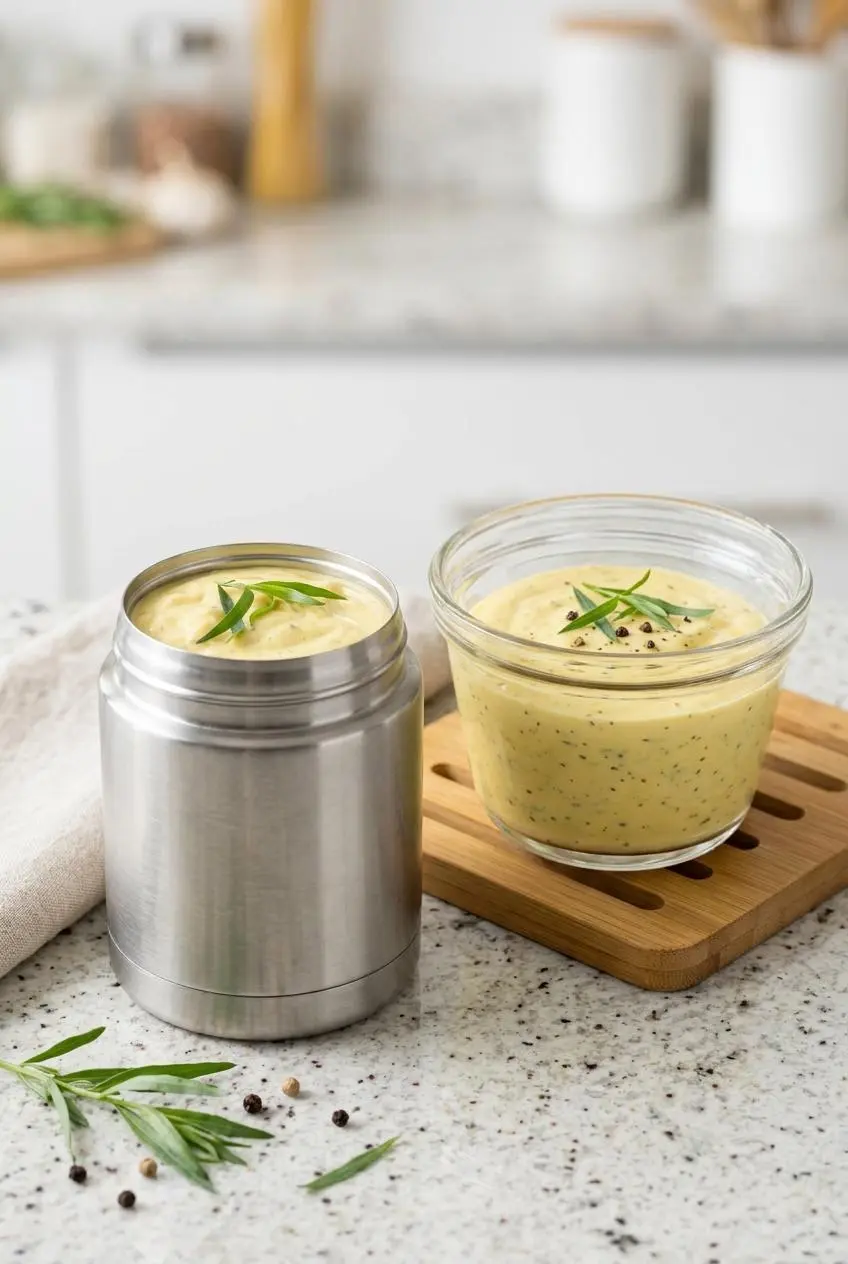
Béarnaise is best right after making it, while the texture is at its glossiest. If you need to hold it briefly for dinner, keep it warm rather than trying to cook it again later on direct heat.
A warm water bath works well. Set the blender container in a bowl or sink of warm water and give the sauce a stir now and then. For a party or a steak dinner with a little timing pressure, a prewarmed thermos can help keep the sauce warm until serving.
If you do refrigerate leftovers, transfer them promptly to a covered container and keep them well chilled. In the US, refrigerator temperature matters for dairy and egg based foods, and the FDA advises keeping refrigerators at or below 40°F for dairy and egg products.
To reheat, use a double boiler or a bowl set over warm water and whisk gently the whole time. Keep the heat low. Microwaving or reheating directly in a saucepan can cause the sauce to split fast.
Because this sauce contains egg yolks, extra caution is wise for anyone avoiding raw or lightly cooked eggs, including some higher risk groups described by the USDA in its guidance on raw or undercooked egg safety. When in doubt, serve it fresh and warm.
What to Serve with Homemade Béarnaise
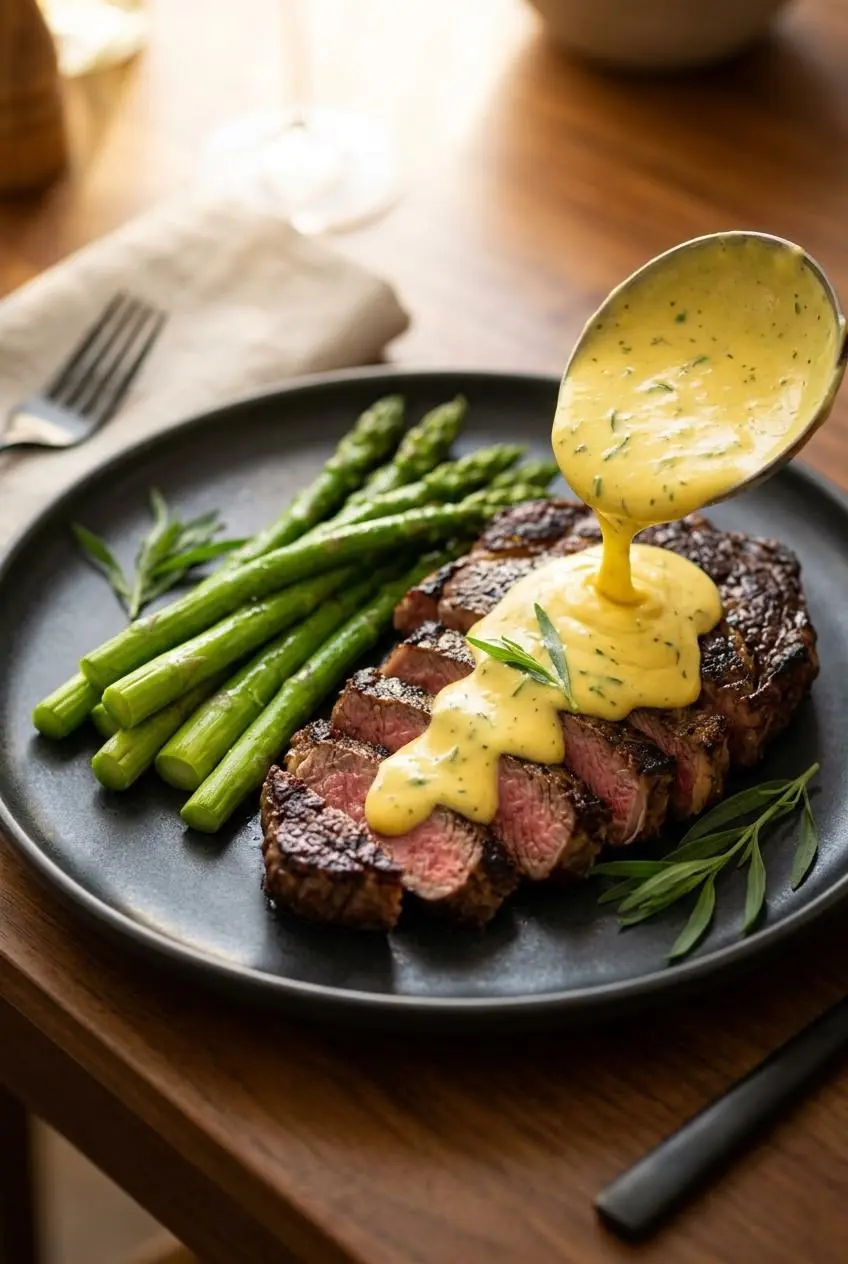
The rich butter and bright herbal acidity make this sauce especially good with foods that want a little lift. Think roasted, grilled, or simply cooked dishes that benefit from a glossy spoonful on top.
Classic Steakhouse Pairings
Grilled ribeye, filet mignon, and prime rib are the old-school matches for a reason. The tang from the vinegar reduction cuts through rich beef beautifully, while the tarragon makes the whole plate smell like something special just happened.
If you are planning a steak dinner and want a brighter contrast on the side, a vibrant chimichurri sauce also pairs well with grilled beef. It gives you a fresh, punchy option next to the richer béarnaise.
Vegetable and Seafood Complements
Steamed asparagus and roasted broccoli are excellent because their mild bitterness loves the creamy tang of béarnaise. Spoon it over poached salmon if you want something elegant without much effort.
It is also a classic finish for eggs benedict, where the herbs make the whole dish taste a little more savory and less purely rich. Even plain boiled potatoes become far more interesting with a warm spoonful over the top.
Conclusion
Béarnaise can seem intimidating, but it is really a matter of managing an emulsion with a few clear cues. Once you watch the reduction, cool it properly, and stream in the hot butter slowly, the sauce becomes much more approachable.
If it wobbles, you have rescue options. Trust the texture, use gentle heat, and you will end up with a sauce that feels far fancier than the effort it takes.
Frequently Asked Questions
Can you reheat Bearnaise sauce?
Yes, but reheat it very gently. Use a double boiler or a bowl over warm water, not direct high heat. Whisk constantly so the emulsion stays together. A microwave can make it split quickly, so it is better as a last resort.
Why did my Bearnaise sauce split?
The butter may have been poured in too quickly. The sauce may have gotten too hot or cooled down too much during blending. Early signs include a greasy surface, thinning texture, or visible separation. You can usually save it with a fresh yolk or a little warm water.
What Is the Best Substitute for Chervil?
Use the same amount of extra fresh tarragon if chervil is hard to find. A mix of fresh tarragon and parsley also works well. The goal is to keep the herbal freshness without losing the classic tarragon note.
Can I Make Bearnaise Sauce Ahead of Time?
It is best served fresh, when the texture is smoothest. If you need to hold it before dinner, keep it warm rather than fully cooling and reheating it. A prewarmed thermos can help for a short window before serving.
Bearnaise Sauce

Equipment
- Blender
- Small saucepan
Ingredients
- 1/4 cup white wine
- 2 tablespoons white wine vinegar
- 2 tablespoon minced shallot
- 1/4 teaspoon coarsely ground black pepper
- 1/4 teaspoon salt
- 1 tablespoon fresh tarragon
- 1 tablespoon fresh chervil
- 4 large fresh egg yolks
- 3/4 cup unsalted butter cut into cubes
- 2 teaspoons chopped fresh tarragon
Instructions
- Pour the white wine, white wine vinegar, minced shallot, black pepper, salt, fresh tarragon, and fresh chervil into a small saucepan and simmer until the liquid reduces by half, leaving about 3 tablespoons; then let the mixture cool completely before adding it to the blender with the egg yolks. The reduction is ready when it lightly coats the back of a spoon, and cooling it fully keeps the yolks from tightening too soon.
- Melt the butter in a small saucepan or in the microwave, then remove the center cap from the blender lid, run the blender on HIGH, and slowly stream the very hot butter into the yolk mixture in one steady pour. As the emulsion forms, the sauce should turn pale and glossy, and the blender’s sound usually deepens slightly as it thickens.
- Keep blending for 30 seconds, then check the texture and blend on HIGH for another 5 seconds only if needed; serve warm right away, or set the blender container in warm water until serving time and finish with the chopped fresh tarragon. The finished sauce should look like a thin mayonnaise, smooth and spoonable rather than runny or greasy.