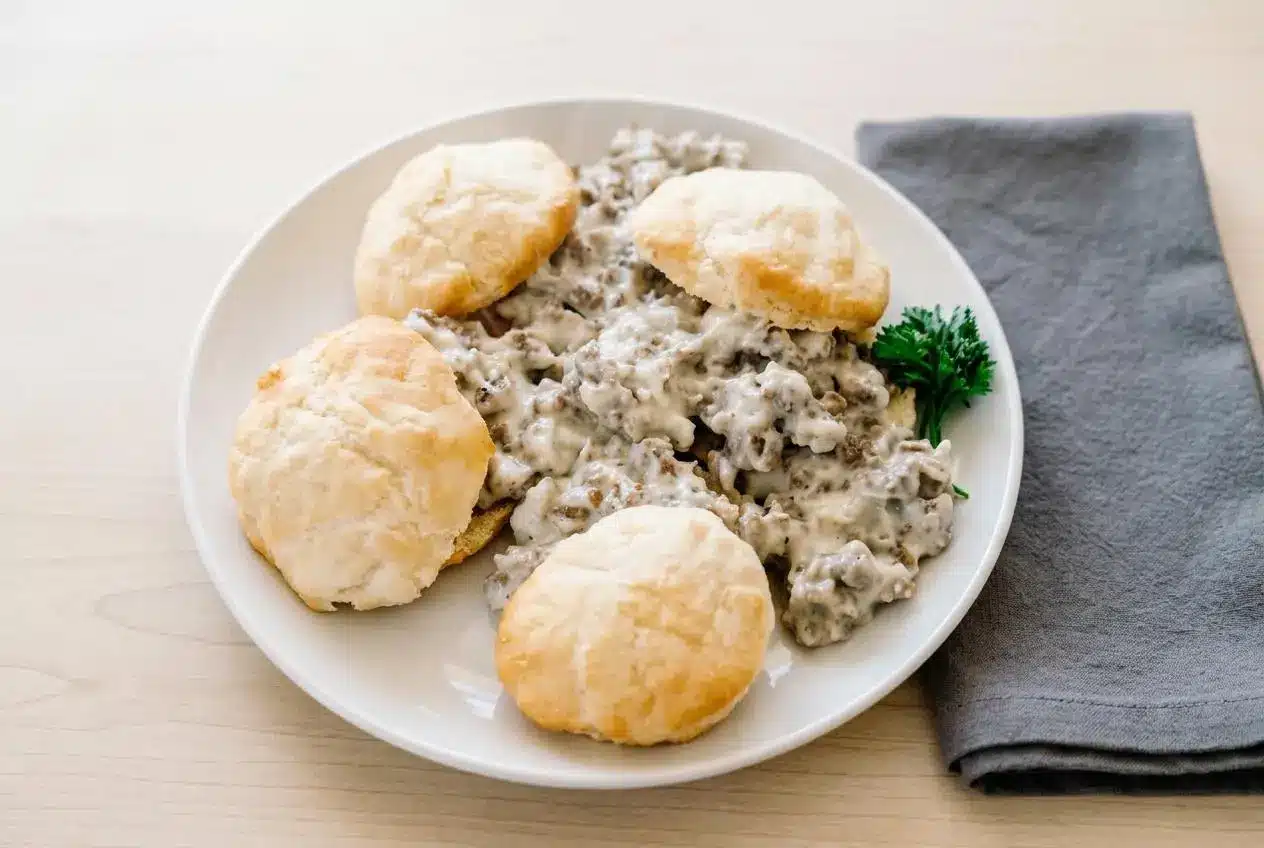
The secret to perfect creamy gravy is keeping the sausage fat in the skillet, cooking the flour until it smells toasty, and whisking in milk gradually until the gravy turns smooth, thick, and peppery.
This sausage gravy recipe is a classic Southern breakfast: browned pork sausage, flour, milk, salt, black pepper, and warm biscuits turned into a rich skillet gravy in about 20 minutes.
It’s comforting, fast, and very forgiving once you know what to watch for. The key cue is that pale golden roux stage right before the milk goes in.
Set the milk near the stove before you start so it loses some of the chill and blends into the roux more smoothly.
Why This Classic Sausage Gravy Recipe Works
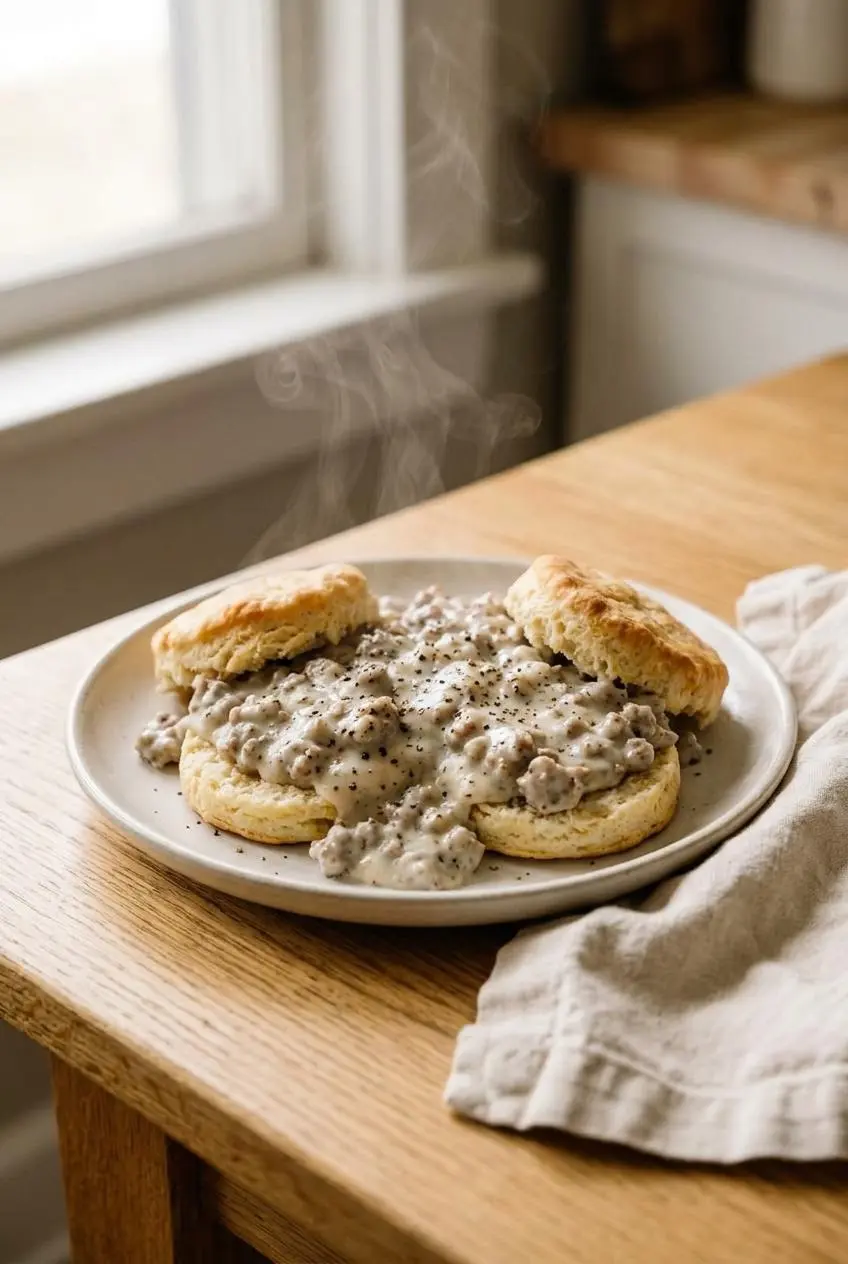
This gravy works because every part of it pulls its weight. The sausage brings savory depth and the rendered drippings become the flavor base for the roux, so the gravy tastes meaty instead of just milky.
The flour thickens the drippings into a proper skillet roux, and the milk turns that roux into a smooth sauce with that familiar country-style body. Black pepper matters here too. It is not background seasoning. It gives the gravy its warm bite and keeps the richness from feeling flat.
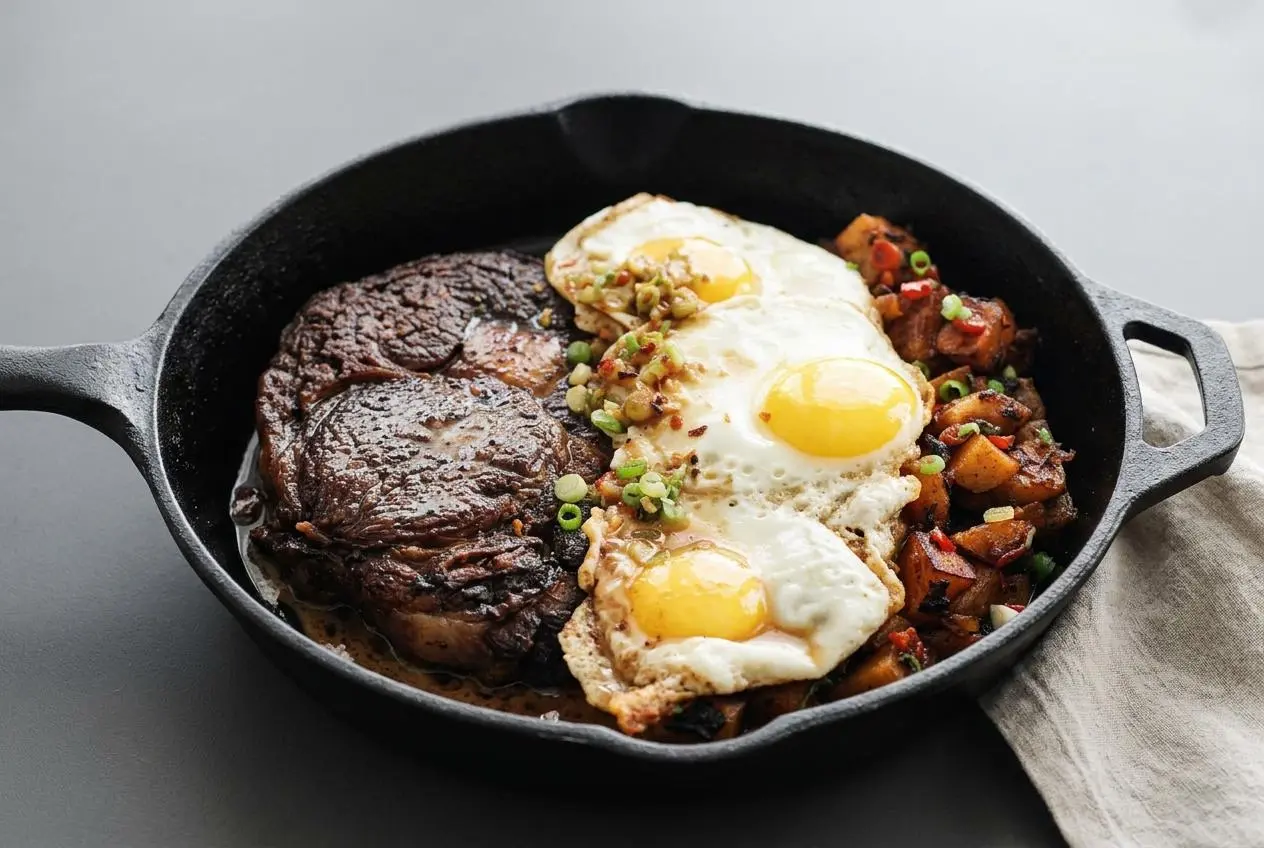
It also fits real breakfasts. Spoon it over biscuits, add eggs on the side, or build out a bigger brunch with something savory like sausage breakfast taquitos if you want another hearty option on the table.
Sausage Gravy Ingredients and Their Roles
Each ingredient shapes the gravy’s flavor, body, and finish, from the sausage drippings that build the roux to the milk that makes it creamy and the pepper that sharpens every bite.
- 1 Pound Bob Evans Original Roll Pork Sausage
- 1/4 Cup all-purpose flour
- 2 Cups milk
- Salt & black pepper to taste
- 8 biscuits
Pork sausage is the backbone here. As it cooks, it releases fat that binds with the flour and creates the base of the roux. That fat carries flavor and gives the finished gravy a fuller mouthfeel. If you use a leaner sausage, you may not get enough drippings to make the gravy feel as rich, which is why a traditional pork sausage is the easiest choice. If you like working with leaner breakfast meat in other dishes, homemade turkey sausage is useful to compare, but it usually needs more careful fat management in gravy.
All-purpose flour is the thickener. It swells into the sausage drippings and gives the gravy structure. The important part is cooking it long enough to lose the raw flour taste before the milk goes in.
Milk controls the final texture. Whole milk gives the creamiest result because it has enough fat to round out the gravy without making it feel heavy. Lower-fat milk can work in a pinch, but the texture tends to be thinner and the flavor less plush. Heavy cream pushes the gravy in the opposite direction and can make it overly rich.
Salt and black pepper finish the balance. Season lightly with salt at first because sausage is already seasoned, then add black pepper until the gravy tastes lively. Coarse black pepper is especially good here because you can see it and taste it in every spoonful.
Biscuits are the landing spot. A good biscuit catches the gravy in all the nooks and keeps the whole breakfast from sliding into soup territory.
I like to break the sausage into very small crumbles from the start so the finished gravy feels even and easy to spoon over biscuits.
The Importance of Pork Sausage Fat
This is where the gravy either becomes silky or turns stubborn. The sausage drippings mix with the flour to form the roux, and that roux is what thickens the milk into gravy. If you drain all the fat, the flour has nothing flavorful to bloom in, so the gravy can taste pasty and thin.
You do not need a deep pool of grease, but you do need enough to coat the flour and let it cook into a smooth paste. If your sausage seems especially lean, stir the flour carefully and watch the texture. It should look moist and sandy at first, then loosen into a soft paste as the drippings absorb it.
Selecting the Right Milk
Whole milk is the best fit for classic sausage gravy because it gives enough body to support the roux and enough richness to soften the peppery edge.
- Whole milk makes the gravy creamy and balanced.
- Skim milk often makes the gravy feel thinner and a little watery unless you cook it longer.
- Heavy cream makes a much denser gravy and can mute that old-school country feel.
If the milk is ice-cold, it can slow the roux and make lumping more likely. Cool milk still works, but milk that has warmed slightly at room temperature is easier to whisk in smoothly.
How to Make Perfect Sausage Gravy Step by Step

This method is all about pace. Brown the sausage well, give the flour time to cook in the drippings, and add the milk in a steady stream instead of all at once.
- Cook the crumbled sausage in a large skillet over medium heat until it is fully browned and broken into small pieces.
The meat should lose its pink color, smell savory, and leave flavorful drippings in the pan. - Sprinkle in the flour and stir it through the sausage until the drippings absorb it and no dry patches remain.
After about a minute or two, the mixture should look pale golden, a bit like peanut butter, and smell lightly toasted instead of raw. - Pour in the milk gradually while whisking or stirring constantly to smooth out the roux as it loosens.
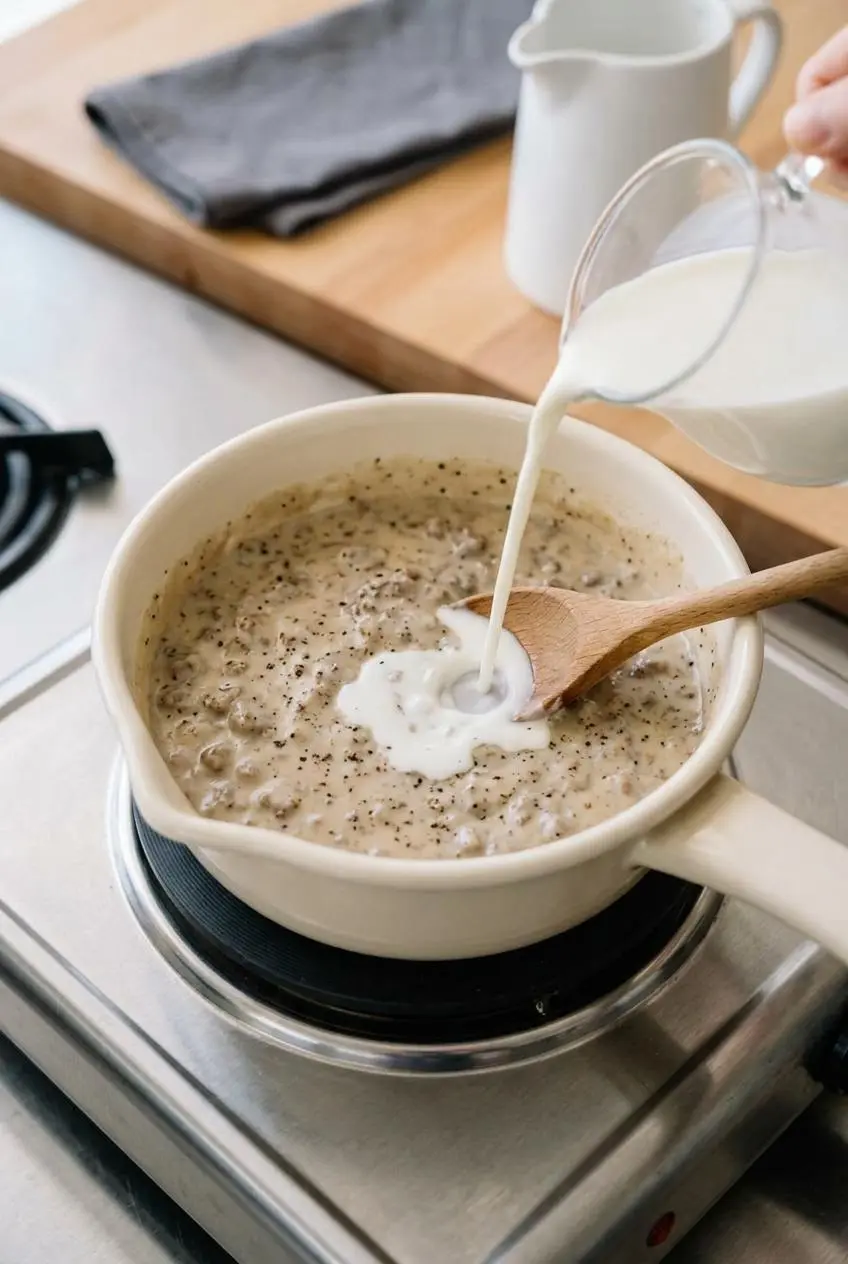
The mixture will first look thin, then turn creamy and uniform as the milk fully blends with the flour and sausage fat. - Keep cooking over medium heat until the gravy thickens and starts to bubble gently.
You should feel more resistance on the whisk or spoon, and the gravy should coat the back of it without looking gluey. - Taste and season with salt and black pepper.
The finished gravy should taste savory and peppery, with enough seasoning to wake up the milk and sausage. - Spoon the hot gravy over the biscuits and serve right away, then cool any leftovers before covering and refrigerating.
The gravy is at its best when it is hot, glossy, and loose enough to spread over the biscuit halves.
Listen for the sizzle when the flour hits the drippings. That sound means the roux is actually cooking, which helps remove the raw starch taste. If the pan seems too cool and the flour just sits there, give it another moment over medium heat before adding the milk.
The built-in ratio here is dependable: 1 pound of sausage, 1/4 cup flour, and 2 cups milk makes a thick, classic country gravy. If you like it a touch looser, stop cooking as soon as it bubbles and still pours easily.
Troubleshooting and Fixing Common Gravy Mistakes
Most gravy problems come down to heat, whisking, or fat balance. The good news is that nearly all of them are fixable.
- Lumpy gravy: This usually happens when the milk goes in too fast or the roux is not stirred well enough. Lower the heat and whisk firmly, or pass the gravy through a fine mesh strainer if a few lumps refuse to leave.
- Too thick: Add small splashes of warm milk and stir after each addition until the gravy loosens. This works better than blasting it with high heat, which can make the bottom catch.
- Too thin: Let it bubble a little longer first because gravy thickens as the starch fully hydrates. If it still seems loose, a small flour slurry can help, but whisk it in carefully so you do not create new lumps.
- Bland flavor: Add more black pepper first. If it still tastes flat, a tiny splash of Worcestershire sauce can deepen the savory notes without changing the character of the gravy.
- Greasy texture: This can happen if the sausage gives off more fat than the flour can absorb. Stir thoroughly and let the gravy simmer gently so the roux can fully emulsify the fat into the milk.
If you want a slightly warmer finish, a pinch of cayenne can brighten the gravy without making it taste like a different dish.
How to Store and Reheat Sausage Gravy
Leftover sausage gravy thickens a lot once cold, so storage is mostly about texture. Let it cool, transfer it to a tightly covered container, and keep it refrigerated.
When you reheat it, use low heat on the stovetop and stir often. Add a small splash of milk as it warms so the gravy relaxes back into a creamy texture instead of tightening into a paste.
A microwave can work for small portions, but go gently. Heat in short bursts and stir between each one so the dairy and fat have a chance to come back together.
For the sausage itself, keeping raw pork sausage refrigerated at 40°F or lower and cooking it thoroughly before serving follows safe raw pork sausage handling.
Flavor Variations and Substitutions
Keep the base recipe as written for the classic version, then tweak it only if you want a different edge or need to work around an ingredient.
Spicy Southern Gravy
- Use hot pork sausage if you want the heat built into the meat.
- Add red pepper flakes or a pinch of cayenne at the end for a sharper kick.
- A little fresh sage works well here too if you want the heat to feel more rounded than fiery.
Gluten-Free Sausage Gravy
- Swap the all-purpose flour for a gluten-free flour blend if you want to keep the method close to the original.
- A cornstarch slurry can also thicken the gravy, but the texture will be a bit silkier and less country-style than a flour-based roux.
- Serve it over gluten-free biscuits so the whole plate stays aligned.
Deepening the Savory Flavor
- A tiny splash of Worcestershire sauce at the end adds depth and makes the pepper pop a little more.
- A pinch of ground nutmeg gives the background warmth some old-school diner charm.
- If you want a playful serving idea beyond biscuits, the flavors also work well in sausage gravy pizza.
Conclusion
Homemade sausage gravy is worth making from scratch because the skillet does almost all the work for you. Browned sausage, a properly cooked roux, and slow milk whisking turn a few classic ingredients into a rich breakfast gravy with real depth.
If you remember one thing, keep the sausage fat in the pan and add the milk gradually. Serve it hot over warm biscuits and it will feel like breakfast knew exactly what it was doing.
Frequently Asked Questions
Why Is My Sausage Gravy Lumpy and How Do I Fix It?
Lumps usually mean the milk went in too fast or the roux was not smooth before the milk was added. Whisk over low heat until the lumps loosen and the gravy evens out. If needed, pour it through a fine mesh strainer for a smoother finish.
Can I Use Whole Milk, Skim Milk, or Heavy Cream?
Whole milk gives the most classic creamy texture. Skim milk can make the gravy thinner and less rich. Heavy cream makes it much heavier, so it can overpower the traditional balance.
Do You Drain the Grease Before Making Sausage Gravy?
No, do not drain all the grease. The rendered sausage fat mixes with the flour to form the roux that thickens the gravy. If there is an excessive amount of grease, keep enough in the skillet for the flour to turn into a smooth paste.
How Do You Reheat Leftover Sausage Gravy Without It Separating?
Warm it slowly on the stovetop over low heat. Add a splash of milk while stirring to bring the texture back together. Avoid rushing it over high heat, which can make the dairy look broken and oily.

Sausage Gravy Recipe

Equipment
- Large Skillet
- Wooden spoon or spatula
Ingredients
- 1 Pound Bob Evans Original Roll Pork Sausage
- 1/4 Cup all-purpose flour
- 2 Cups milk
- Salt & black pepper to taste
- 8 biscuits
Instructions
- Cook the crumbled sausage in a large skillet over medium heat until it is fully browned and broken into small pieces. The meat should lose its pink color, smell savory, and leave flavorful drippings in the pan.
- Sprinkle in the flour and stir it through the sausage until the drippings absorb it and no dry patches remain. After about a minute or two, the mixture should look pale golden, a bit like peanut butter, and smell lightly toasted instead of raw.
- Pour in the milk gradually while whisking or stirring constantly to smooth out the roux as it loosens. The mixture will first look thin, then turn creamy and uniform as the milk fully blends with the flour and sausage fat.
- Keep cooking over medium heat until the gravy thickens and starts to bubble gently. You should feel more resistance on the whisk or spoon, and the gravy should coat the back of it without looking gluey.
- Taste and season with salt and black pepper. The finished gravy should taste savory and peppery, with enough seasoning to wake up the milk and sausage.
- Spoon the hot gravy over the biscuits and serve right away, then cool any leftovers before covering and refrigerating. The gravy is at its best when it is hot, glossy, and loose enough to spread over the biscuit halves.