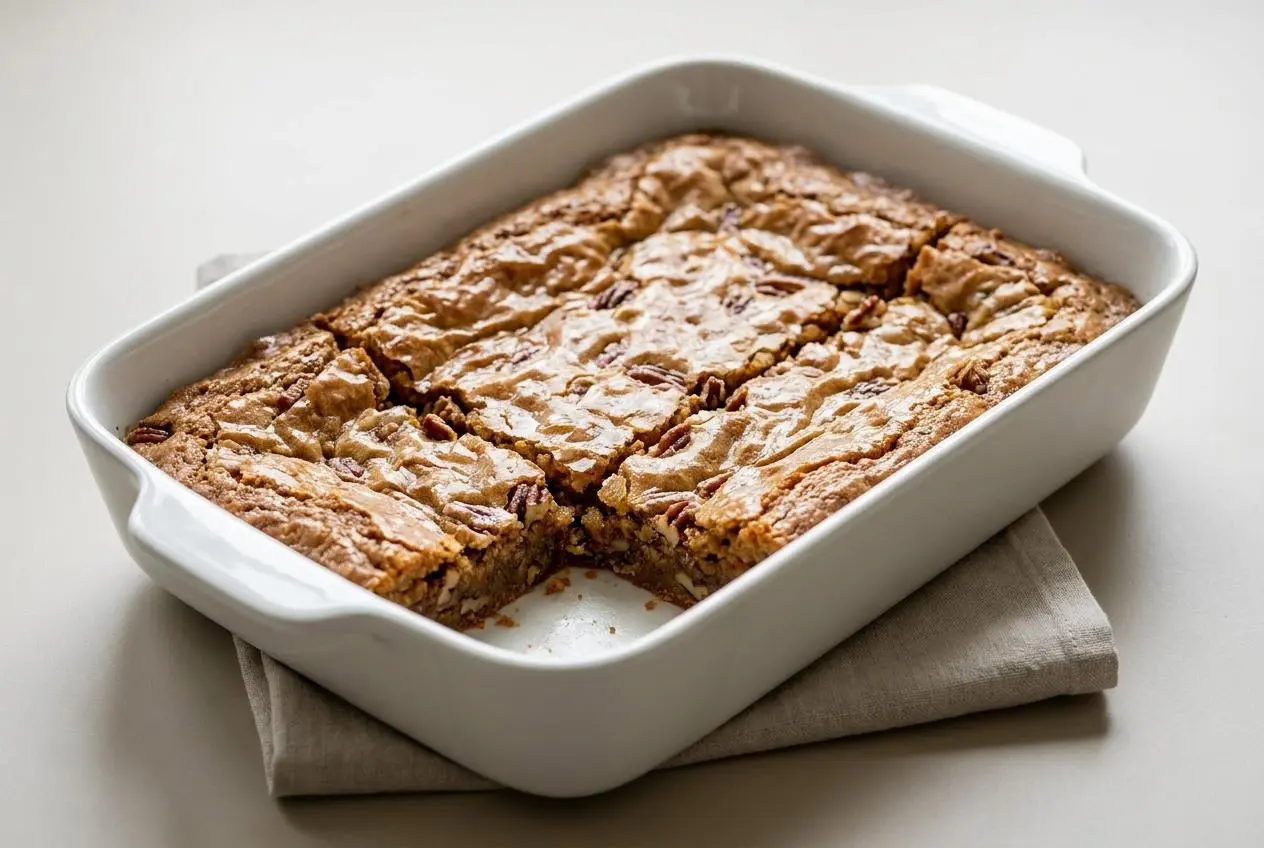
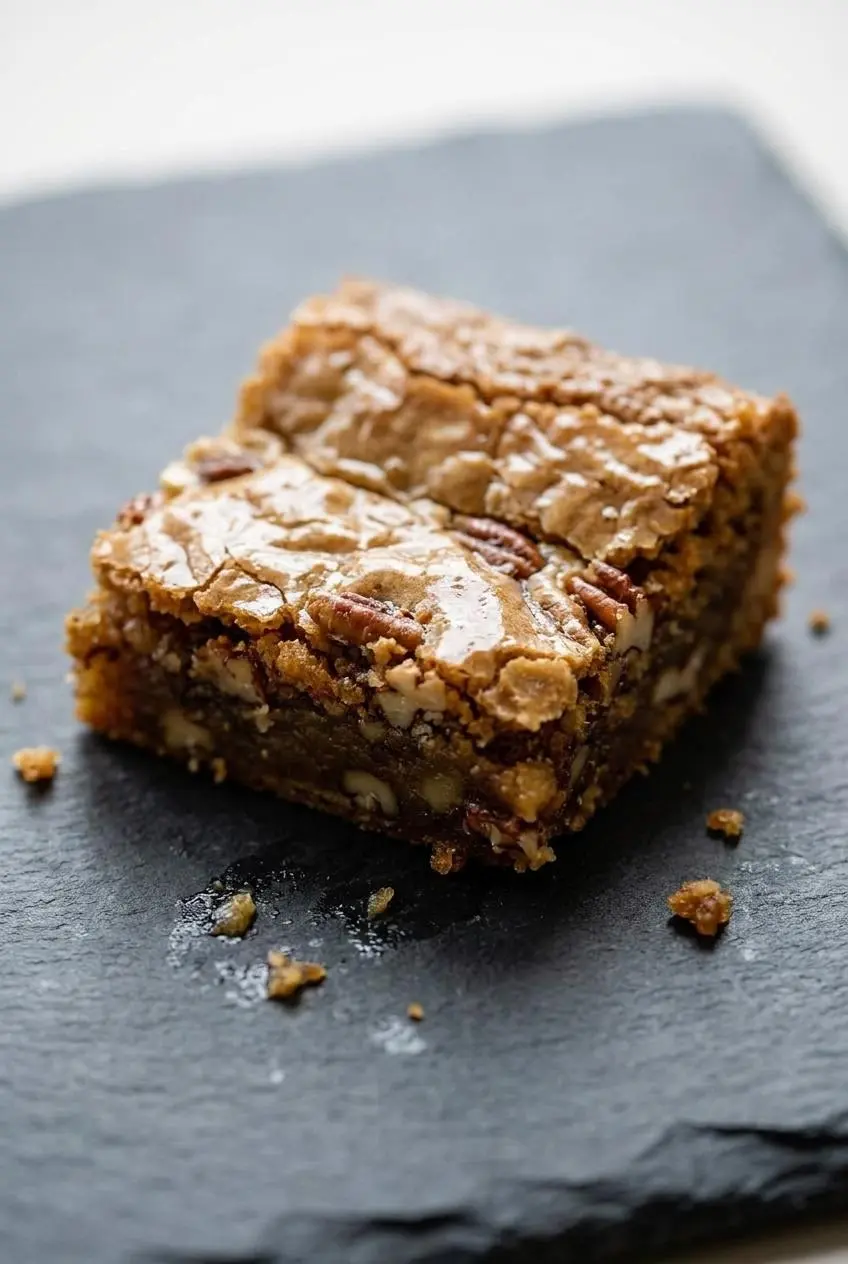
Alabama Chew Bread is a sweet Southern bar cookie made with brown sugar, eggs, flour, butter or margarine, and chopped nuts. It bakes into golden squares with a thin crinkly crust, a dense chewy center, and a rich caramel aroma.
Think of it as the delicious meeting point between a blondie and a bar cookie. The edges set firmly while the middle stays moist and fudgy, especially when you avoid over-mixing and pull the pan as soon as the top looks golden. That crackly crust is worth watching for.
Line the pan with parchment, leaving a little overhang on two sides, or grease every corner thoroughly before adding the batter.
What Is Alabama Chew Bread?
Alabama Chew Bread is a traditional Southern brown sugar dessert baked as a bar rather than a loaf. Despite its name, it has the bite of a chewy cookie bar, with a shiny, paper-thin top and a rich, compact center.
The brown sugar gives the bars their deep caramel flavor and soft chew. Eggs hold the batter together and help create the lightly crinkled surface, while self-rising flour provides enough lift to keep the squares from becoming heavy without turning them cakey. Chopped nuts add contrast to the tender brown sugar base.
These bars are especially good when cut into modest squares. Their flavor becomes richer as the buttery aroma settles, and the firm edges give each piece a satisfying bite.
Ingredients and Easy Substitutions
Each ingredient has a job here: margarine or butter adds richness, brown sugar brings moisture and caramel flavor, flour gives the bars structure, eggs bind the batter, and nuts provide crunch.
- 1 stick (1/2 cup) margarine, melted
- 1 box light brown sugar
- 2 cups self-rising flour
- 3 eggs
- 1 cup chopped nuts
Self-rising flour supplies the lift needed for a thin crust and dense middle. Brown sugar does more than sweeten the batter because its moisture helps create the signature chewy bite. The eggs add structure and help the surface turn glossy as the bars bake.
I prefer real unsalted butter when the choice is available. It gives the bars a fuller, nuttier flavor while keeping the texture pleasantly chewy.
Understanding the Brown Sugar Measurement
Older versions of this dessert often call for one 1-pound box of light brown sugar. For modern measuring, use approximately 2 1/4 cups of firmly packed light brown sugar.
When measuring from a bag, spoon the sugar into the cup and press it down firmly before leveling the top. Loosely filled cups can reduce the moisture and caramel flavor that make these bars distinctive.
If the brown sugar feels dry or lumpy, break up the clumps before mixing. Even distribution matters because concentrated pockets of sugar can leave sticky patches in the finished squares.
Margarine vs Butter in Chew Bread
Margarine is part of the traditional preparation and works well in the batter. Unsalted butter can replace it in the same amount and brings a deeper dairy flavor with a more pronounced toasted aroma.
Use melted butter only after it has cooled enough that it will not scramble the eggs when they meet in the bowl. For an optional flavor variation, brown the butter first, cool it briefly, and use it in place of the plain melted fat. A tiny pinch of sea salt over the batter before baking can sharpen the brown sugar flavor, but neither addition belongs in the official ingredient list.
How to Make Alabama Chew Bread Step-by-Step
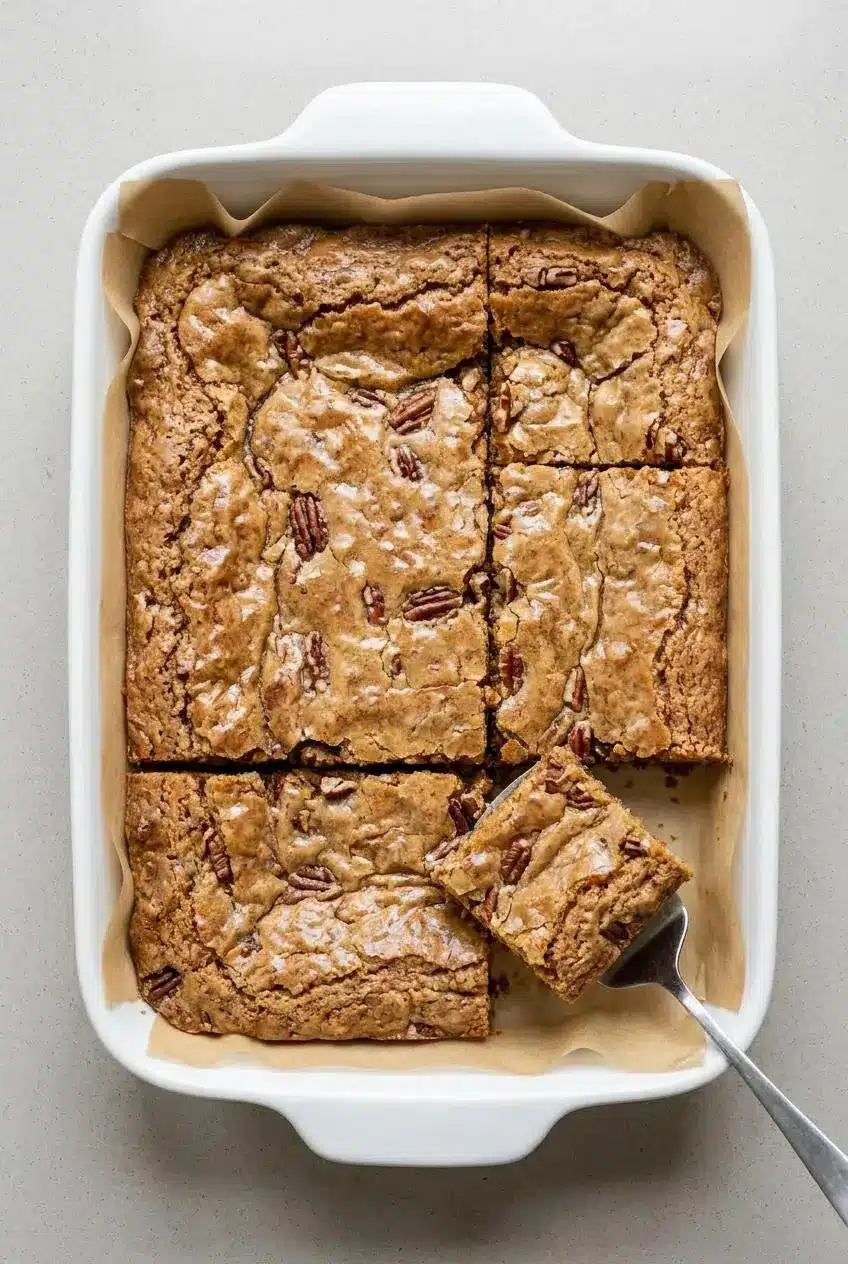
The method is quick, but the texture depends on two details: mix only until the batter comes together and let the pan cool fully before cutting. A 9-inch by 13-inch baking pan gives the bars the right thickness for firm edges and a chewy middle.
- Heat the oven to 350 degrees before mixing the batter.
The oven should be fully hot so the bars begin setting evenly as soon as the pan goes in. - Combine the melted margarine, brown sugar, self-rising flour, eggs, and chopped nuts in a mixing bowl, then use an electric mixer briefly to bring everything together.
Stop as soon as no dry streaks remain because prolonged beating can make the finished bars cakier. - Prepare a 9-inch by 13-inch baking pan with thorough grease or a parchment lining, then spread the batter into an even layer.
Use a spatula to reach the corners so the bars bake at a consistent thickness. - Bake the pan for 25 minutes at 350 degrees.
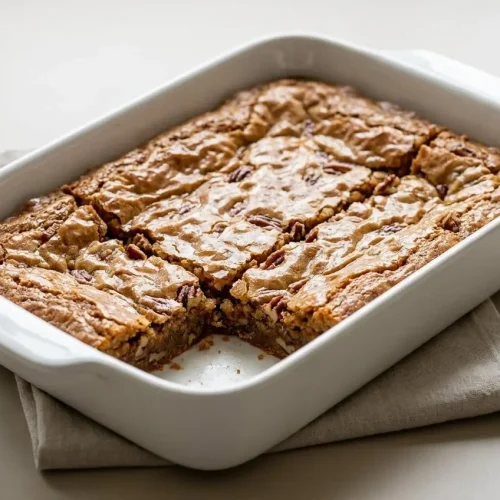
The top should be golden and lightly crinkled, the edges should feel firm, and the center should be set rather than liquid. - Leave the baked bars in the pan until completely cool, then cut them into squares.
A tester in the center should show moist crumbs, and cooling first helps each square hold its shape.
Do not judge doneness by the edges alone. They firm up before the center, so look for a set top and a middle that still has a little softness without appearing wet.
Success Tips and Troubleshooting
Most texture problems come from over-baking, over-mixing, or using the wrong flour. These checks help protect the dense, chewy quality that defines the dessert.
- Bars turn out dry: The pan likely stayed in the oven too long. Begin checking at the stated baking time and remove it when the crust is golden and the center is set but still moist.
- The texture seems cakey: Too much mixing can develop the flour and incorporate excess air. Beat only until the ingredients are evenly combined.
- The center looks wet after baking: Give the bars a careful doneness check at the center rather than relying on the browned edges. The middle should show moist crumbs, not liquid batter.
- The squares stick to the pan: Grease the base, corners, and sides thoroughly, or line the pan with parchment. Let the bars cool completely before lifting and slicing.
- The batter seems unusually loose or dense: Check the flour type. Self-rising flour already contains leavening and salt, so replacing it with all-purpose flour requires a separate adjustment.
If self-rising flour is unavailable, combine 2 cups of all-purpose flour with 3 teaspoons of baking powder and 1/2 teaspoon of salt. This replacement is optional guidance for the flour, not an addition to the official ingredient list.
For the cleanest cuts, use a sharp knife and wipe the blade between slices. If the bars crumble, they likely needed more cooling time or baked slightly past their ideal point.
Variations and Customizations
The official batter works well as written, but the nut choice can shift the flavor and crunch. Keep any changes optional so the classic brown sugar texture stays intact.
Pecan Alabama Chew Bread
Chopped pecans are a natural Southern pairing for these bars. Lightly toast them before adding them to the batter to deepen their nutty aroma and make their crisp texture stand out against the soft center.
For another regional baking idea with a strong pecan focus, try sweet Alabama pecan bread. It makes a useful comparison for anyone who enjoys brown sugar desserts with toasted nuts.
Nut-Free Brown Sugar Chewies
For a nut-free version, omit the chopped nuts. The bars will remain chewy and rich, with a smoother interior and no added crunch.
Quick oats or chocolate chips can also be used as optional alternatives when appropriate for the people you are serving. For gatherings involving allergies, check every ingredient label and prevent contact with utensils or pans that have handled nuts.
Storage and Serving Ideas
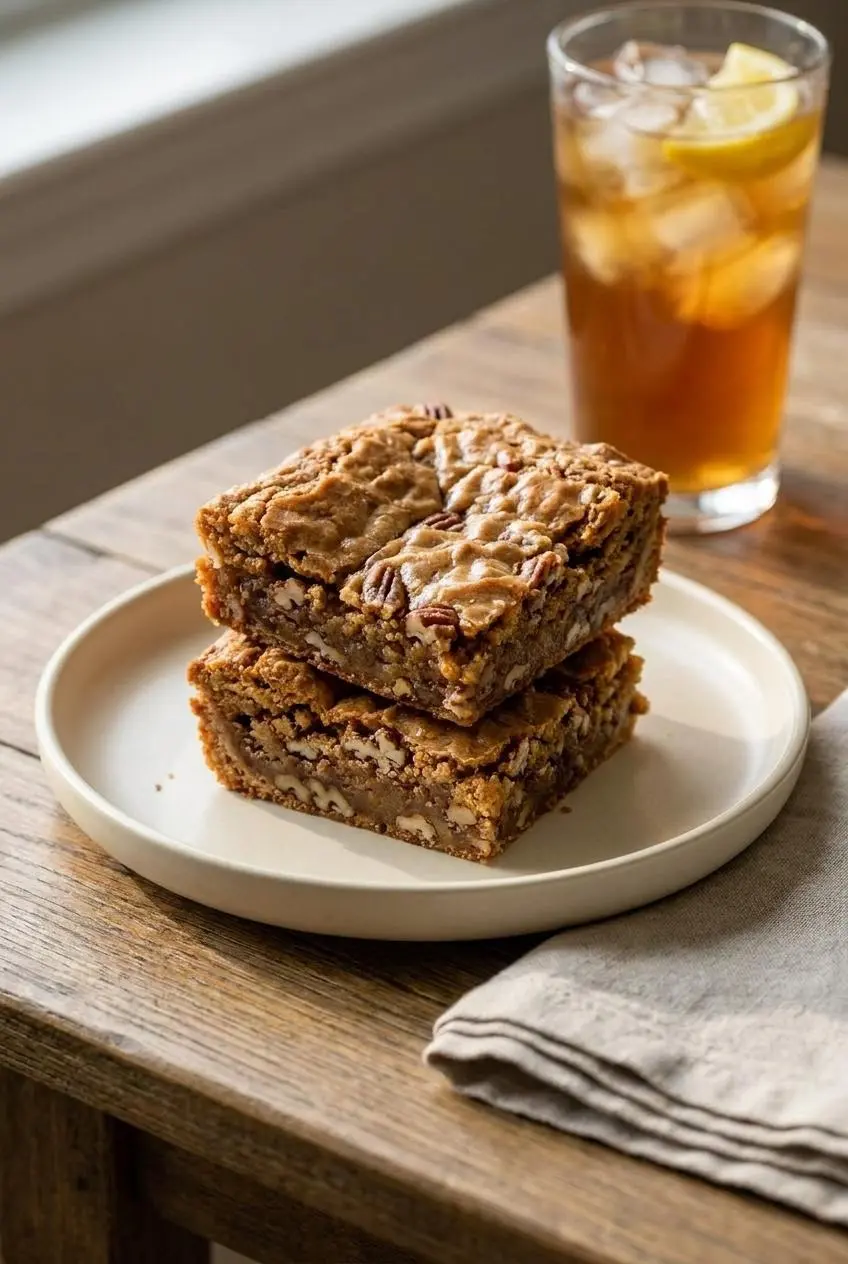
Let the squares cool completely before storing them. Place them in an airtight container with parchment between layers to protect the crinkly top and keep the edges from sticking together.
Keep the container at room temperature in a dry spot. Refrigeration can make brown sugar bars feel firmer and less chewy, so avoid chilling them unless another ingredient requires it.
For longer planning, fully cooled bars may be wrapped well and stored in a freezer-safe container. Separate the pieces with parchment so they can be removed individually, then bring them back to room temperature while still covered to help prevent excess moisture on the surface.
- Warm dessert: Serve a square slightly warm with vanilla ice cream so the cool, creamy topping contrasts with the dense bar.
- Afternoon snack: Pair a room-temperature square with hot coffee or sweet tea.
- Dessert table: Cut the bars into smaller pieces and arrange them beside other cookies or fruit for an easy Southern-style spread.
Conclusion
Alabama Chew Bread brings together brown sugar richness, buttery flavor, chopped nuts, and a wonderfully dense texture in one mixing bowl. Careful pan preparation and gentle mixing make the process straightforward.
Pull the pan when the top is golden, the edges are firm, and the center has set without drying out. Let it cool completely, then slice into chewy squares made for sharing.
Frequently Asked Questions
What Is Alabama Chew Bread?
Alabama Chew Bread is a classic Southern brown sugar bar dessert made with flour, eggs, margarine or butter, and chopped nuts. It has a thin crinkly top, firm edges, and a dense, chewy center similar to a rich blondie.
How Many Cups of Brown Sugar Is 1 Box?
One standard 1-pound box of light brown sugar is approximately 2 1/4 cups when the sugar is firmly packed into the measuring cups.
Can I Use Butter Instead of Margarine in Chew Bread?
Yes. Use unsalted butter in the same amount as the margarine. It adds a richer buttery flavor and pairs especially well with the caramel notes of light brown sugar.
How Do You Store Alabama Chew Bread?
Cool the squares completely, then keep them in an airtight container at room temperature with parchment between layers. For longer storage, wrap the cooled bars well and place them in a freezer-safe container, separating each piece with parchment.
Alabama Chew Bread

Equipment
- Mixing Bowl
- Electric Mixer
- 9×13 inch baking pan
Ingredients
- 1 stick margarine (1/2 cup), melted
- 1 box light brown sugar
- 2 cups self-rising flour
- 3 eggs
- 1 cup chopped nuts
Instructions
- Heat the oven to 350 degrees before mixing the batter. The oven should be fully hot so the bars begin setting evenly as soon as the pan goes in.
- Combine the melted margarine, brown sugar, self-rising flour, eggs, and chopped nuts in a mixing bowl, then use an electric mixer briefly to bring everything together. Stop as soon as no dry streaks remain because prolonged beating can make the finished bars cakier.
- Prepare a 9-inch by 13-inch baking pan with thorough grease or a parchment lining, then spread the batter into an even layer. Use a spatula to reach the corners so the bars bake at a consistent thickness.
- Bake the pan for 25 minutes at 350 degrees. The top should be golden and lightly crinkled, the edges should feel firm, and the center should be set rather than liquid.
- Leave the baked bars in the pan until completely cool, then cut them into squares. A tester in the center should show moist crumbs, and cooling first helps each square hold its shape.