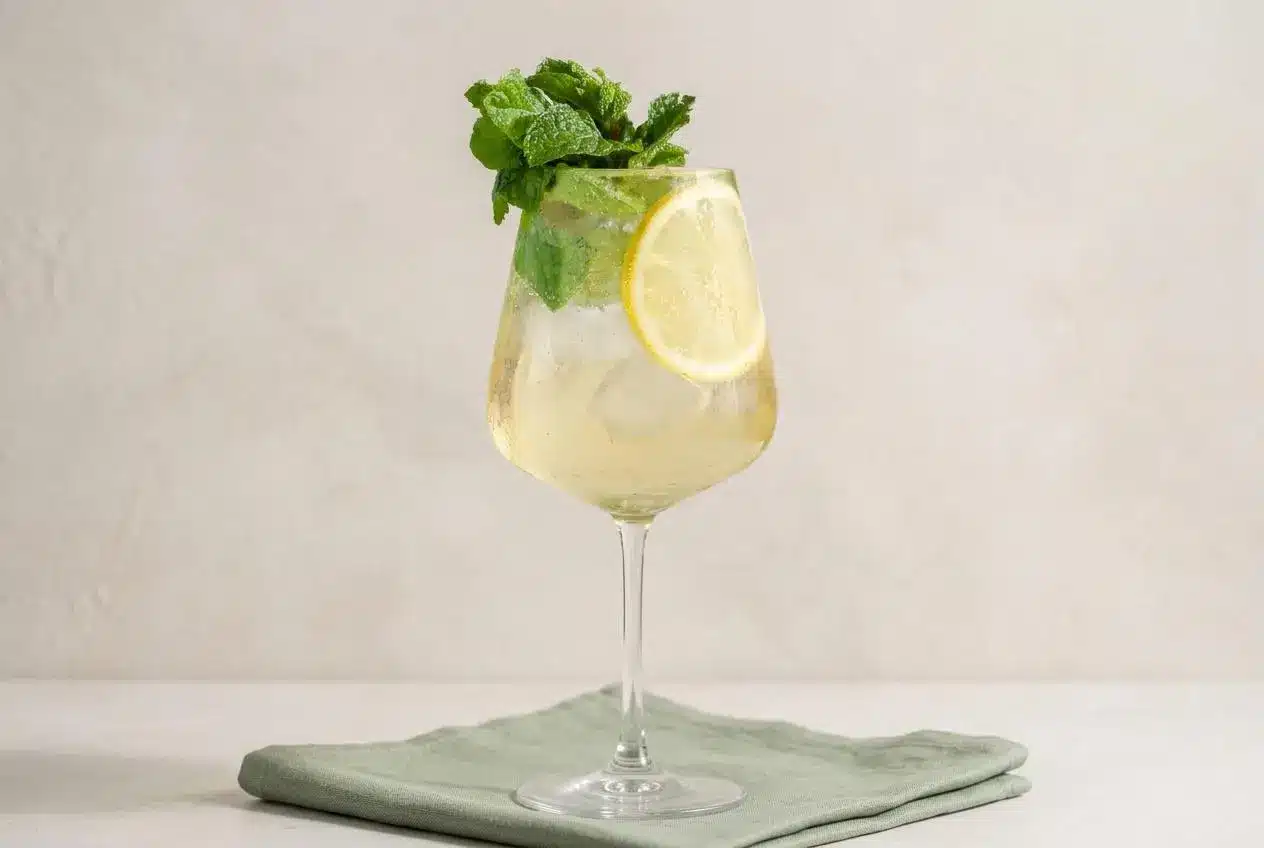
A Hugo Spritz Mocktail is a quick, floral, bubbly drink made with mint, elderflower, non-alcoholic sparkling wine, and soda water. It takes 2 minutes, tastes crisp and refreshing, and feels a little fancy with almost no effort.
The Hugo Spritz Mocktail is the alcohol-free take on the classic Italian aperitif, known for its light elderflower aroma, cool mint, and bright citrusy finish. It’s the kind of drink that feels instantly festive.
You’ll like this version because it’s easy to balance to your taste, whether you want it drier, sweeter, or extra fizzy. And the mint trick makes a big difference.
Chill the glass and all the bubbly ingredients first if you want the coldest, crispest spritz with the slowest ice melt.
What Is a Hugo Spritz Mocktail?
This drink is light, floral, and refreshing, with a soft elderflower sweetness, fresh mint on the nose, and a clean bubbly finish. A lemon slice or squeeze of citrus sharpens everything and keeps it lively.
It’s the non-alcoholic version of the Hugo Spritz, a popular aperitif associated with South Tyrol in northern Italy. In mocktail form, it keeps the same breezy, elegant feel, just without the alcohol.
Think of it as an elderflower mocktail that lands somewhere between a sparkling lemonade and a very gentle botanical spritz. Cold glass, fresh mint, lots of fizz. That’s the mood.
Ingredients for the Perfect Hugo Spritz Mocktail
Each ingredient has a clear job here: mint brings aroma, elderflower adds floral sweetness, sparkling wine gives structure and bubbles, and soda water keeps the finish light and crisp.
- 8 mint leaves
- 1.5 oz non-alcoholic elderflower cordial or liqueur
- 3 oz non-alcoholic Prosecco or alternative
- 1 oz soda water or plain seltzer
- Optional garnishes: fresh lemon slice and mint
I always reach for mint that looks springy and deeply green here, because tired leaves lose that cool, fragrant lift that makes this drink feel special.
The four core ingredients are doing all the work. Mint perfumes the glass, elderflower gives the signature floral note, the non-alcoholic bubbly adds body and that classic spritz feel, and soda water keeps the drink from tasting heavy.
Elderflower Syrup vs. Cordial: What’s the Difference?
This is one of the biggest points of confusion, and it matters because sweetness levels vary a lot.
Elderflower syrup is usually thicker and sweeter, so it gives a richer floral hit. Cordial is often a little lighter and more diluted, though some brands still run sweet. A non-alcoholic elderflower liqueur usually tastes less sugary and more botanical, so the drink may need a little extra to reach the same flavor level.
Start with the listed amount, taste after stirring, and adjust from there. If your elderflower product tastes candy-sweet, use a drier bubbly and lean on lemon garnish. If it tastes more delicate, add a touch more after tasting.
How to Make Homemade Elderflower Syrup
If you want more control over sweetness and a fresher flavor, homemade syrup is a nice option. The basic idea is simple: warm equal parts sugar and water just until the sugar dissolves, then steep elderflower flavor into it with either dried elderflowers or a food-safe elderflower infusion product.
Keep the flavor gentle. You want floral and fresh, not perfumey. Once cooled, strain if needed and store it covered in the refrigerator. Since there isn’t approved source support for an exact shelf-life number here, it’s best to make a modest batch, keep it chilled, and use it while it still smells bright and clean.
Homemade syrup also lets you steer the drink in a fresher direction than some bottled cordials, which can taste heavier or more candied. Honestly, that cleaner finish is lovely in a spritz.
How to Make a Hugo Spritz Mocktail (Step-by-Step)
This method is fast, but a gentle hand matters. Use a large spritz glass or a big stemmed wine glass so the mint, ice, and bubbles have room to move.
- Add the mint leaves and elderflower cordial or liqueur to a large spritz glass, then press the mint very lightly with a muddler or the handle of a wooden spoon.
The leaves should look bruised and fragrant, not shredded or dark. - Fill the glass with ice, then pour in the non-alcoholic Prosecco or alternative followed by the soda water or plain seltzer.
You should hear a lively fizz, and the glass should look bright and bubbly right away. - Stir gently, taste, and add a little more elderflower only if you want a sweeter finish, then garnish and serve.
The final drink should taste floral, crisp, and cooling, with the mint staying fresh rather than grassy.
If you’re using a delicate stemmed glass, I prefer muddling with the lightest pressure possible and stopping early. Mint gives up its aroma fast.
Tips for the Best-Tasting Mocktail
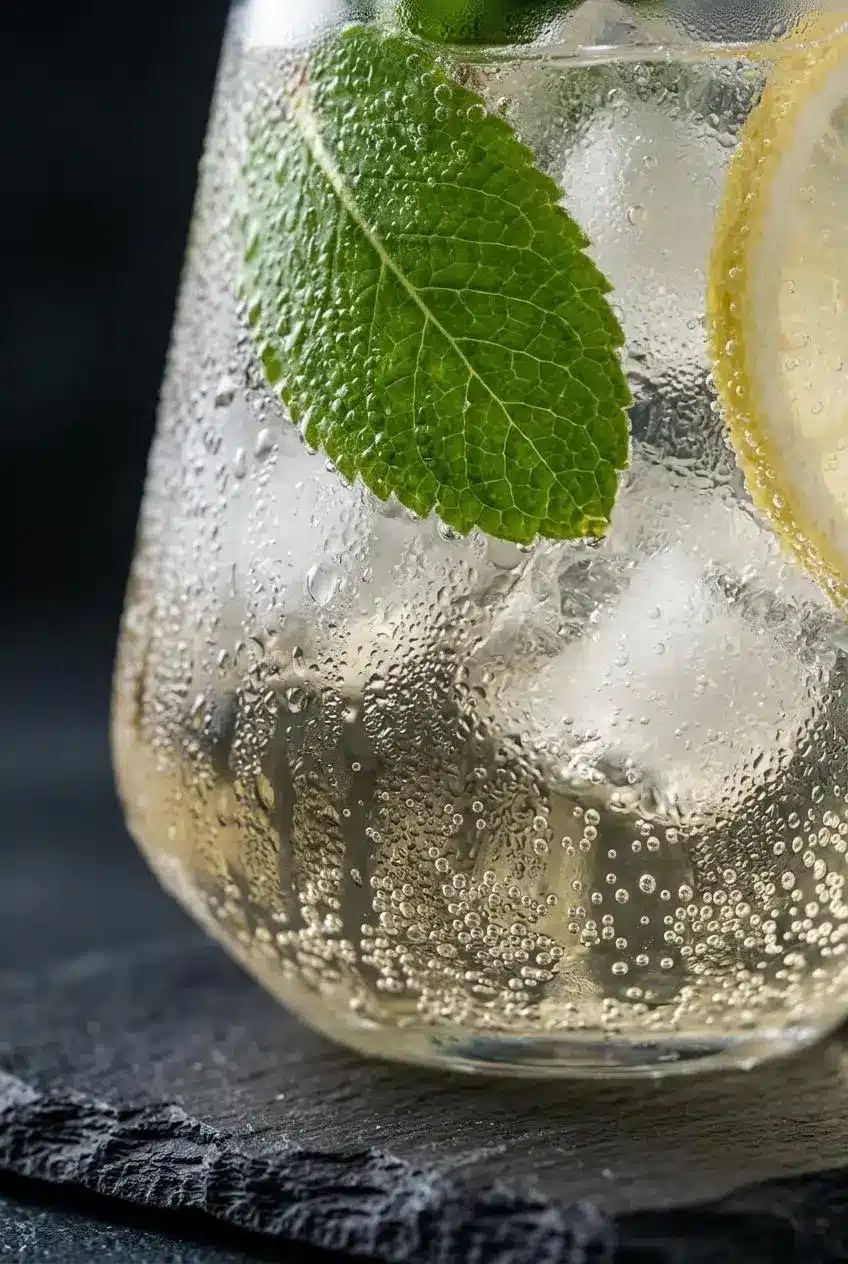
Small details make this drink taste sharper and more refreshing instead of watered down or flat.
First, chill everything. Cold elderflower, cold sparkling wine, cold soda water, and even a cold glass help the drink stay crisp longer. Warm ingredients melt the ice too quickly and blur the floral flavor.
Second, taste before you garnish. Elderflower products vary a lot, and so do non-alcoholic sparkling wines. Some are dry and brisk, others are fruitier and softer. A quick taste lets you decide whether you want more sweetness, more citrus, or a splash more soda.
The Secret to Perfect Mint Flavor
A lot of home bartenders run into the same issue: bitter mint. The fix is simple. Don’t crush the leaves hard enough to tear them.
Gentle muddling works because it bruises the mint just enough to release aromatic oils. You want about a few soft presses, not a mash. Once the leaves start looking torn, the drink can pick up a greener, harsher edge.
The other good method is clapping the mint between your palms before adding it to the glass. It sounds a little dramatic, but it works. That quick smack wakes up the oils without grinding the leaves into the drink.
Why does this help? Overworking mint releases more chlorophyll from the broken leaf tissue, and that can taste bitter. So go easy. This is a spritz, not a lawn smoothie.
Troubleshooting Your Mocktail
If something tastes off, the fix is usually quick.
| Problem | Likely Cause | Solution |
|---|---|---|
| Mocktail is too sweet | Your elderflower product is quite sugary, or the bubbly is on the fruity side | Use a drier sparkling option next time, add a squeeze of lemon, or top with a bit more soda water |
| Mocktail tastes bland | The mint was too old, the drink is over-diluted, or the elderflower flavor is weak | Use fresher mint, chill ingredients well, and adjust elderflower after tasting |
| Mocktail tastes bitter | The mint was muddled too aggressively | Bruise the leaves lightly or clap them instead of crushing them |
| Mocktail is not bubbly enough | The sparkling ingredients were warm or stirred too hard | Use well-chilled bubbly and stir with a gentle lift rather than a fast swirl |
| Mocktail feels watery | The ice melted too quickly | Chill the glass and ingredients first, and use plenty of fresh ice right before serving |
A Guide to the Best Non-Alcoholic Bubbly for Your Spritz
If you’re shopping for the right bottle, look for something labeled dry, brut, or crisp rather than juicy or sweet. Elderflower already brings sweetness, so the best non-alcoholic bubbly usually balances that rather than adding more.
Many bottles marketed as non-alcoholic sparkling wine may still be labeled differently by brand, and product style matters more than the exact front label. For this drink, dryness and lively bubbles matter most.
Choosing Your Non-Alcoholic Bubbly
| Brand | Flavor Profile | Sweetness Level | Where to Find |
|---|---|---|---|
| Noughty Sparkling | Crisp, apple-forward, clean finish | Dry | Specialty bottle shops, online retailers, some upscale groceries |
| Oddbird Blanc de Blancs | Bright, citrusy, a little toasty | Dry to off-dry | Online retailers, specialty markets |
| Surely Sparkling White | Fresh, fruity, easy-drinking | Off-dry | Online, some natural food stores |
| Töst | White tea, ginger, soft fruit notes | Off-dry | Major grocery stores, online retailers |
If you can’t find a bottle labeled non-alcoholic Prosecco, any dry non-alcoholic sparkling white wine works well. Sparkling white grape juice can work too, though it usually makes a sweeter drink. Plain sparkling water with a squeeze of lemon gives the driest, lightest version.
Creative Hugo Spritz Mocktail Variations
The base drink is flexible, which makes it great for parties and warm-weather menus. Keep the main recipe as written first, then play with one flavor direction at a time so the elderflower still comes through.
| Variation | What to Change | Flavor Result |
|---|---|---|
| Berry Hugo Spritz | Add muddled strawberries or raspberries with the mint | Juicier, fruitier, and lightly pink |
| Botanical Hugo Spritz | Add a small splash of non-alcoholic gin | More herbal depth and a grown-up finish |
| Citrus-Forward Hugo Spritz | Add fresh lemon or lime juice, or use lemon balm with the mint | Brighter, sharper, and extra refreshing |
Berry Hugo Spritz
Muddle a few fresh raspberries or sliced strawberries with the mint before adding the bubbly ingredients. The berry flavor softens the floral edge and makes the drink feel a little more playful.
If you love that juicy, colorful direction, this fruity Pink Mocktail is another fun glass to try next.
Botanical Hugo Spritz
Add a small splash of non-alcoholic gin before the ice for a more layered, botanical finish. Juniper, citrus peel, and herbal notes make the drink taste more like a true aperitif while still keeping the elderflower center stage.
This is the variation I’d choose for a dinner party because it tastes a little more structured and less obviously sweet.
Citrus-Forward Hugo Spritz
Add a squeeze of fresh lemon or lime if you want the drink to finish brighter and a little snappier. You can also tuck in a few lemon balm leaves with the mint for a softer citrus aroma without extra tartness.
For anyone who leans hard into tangy mocktails, the Virgin Margarita Mocktail is another good pick.
How to Make a Pitcher for a Crowd
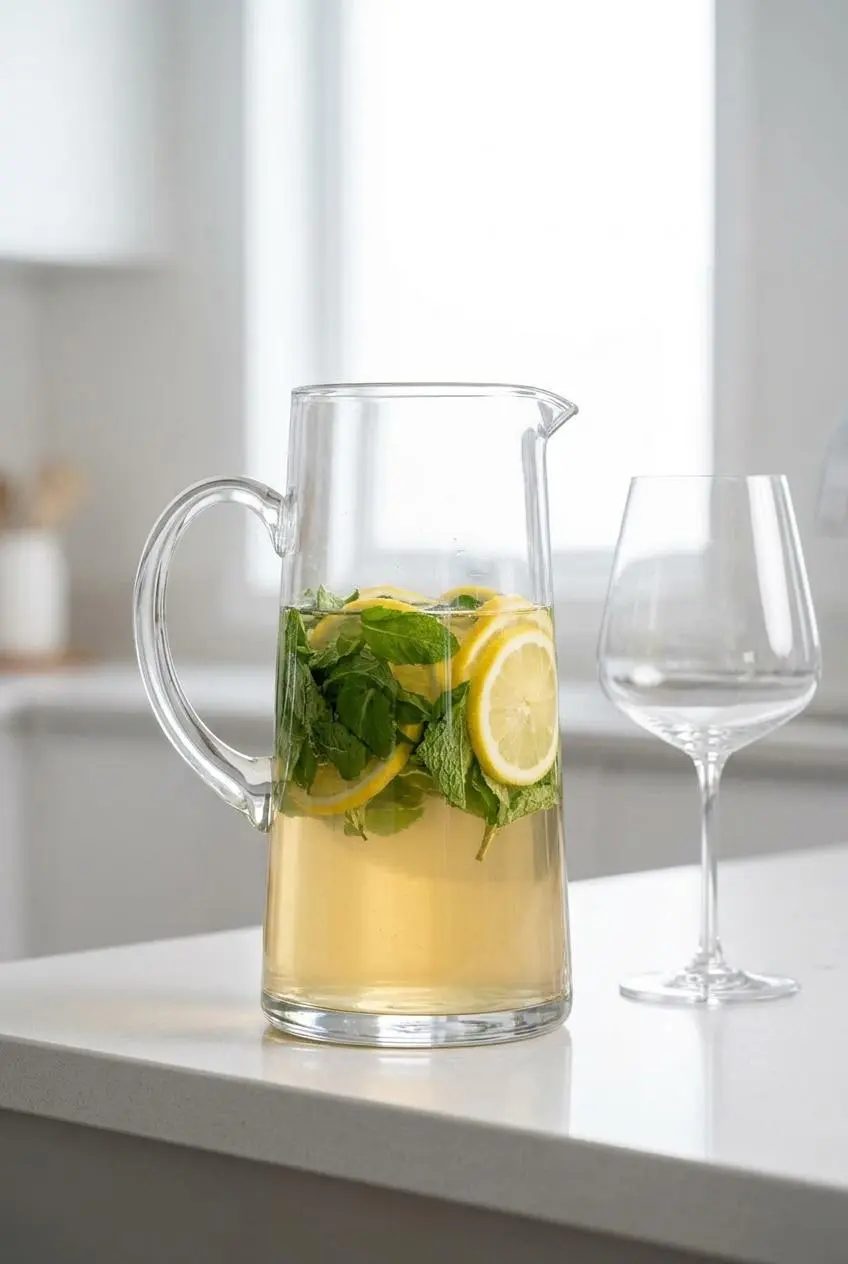
This drink is great for entertaining, but the trick is timing. Build the flavor base first, then add the sparkling ingredients right before serving so the pitcher stays lively instead of flat.
In a large pitcher, gently muddle the mint with the elderflower. Add ice to individual glasses rather than the pitcher if you can, since that keeps the batch from getting diluted. Pour in the chilled non-alcoholic sparkling wine and soda water just before serving, then stir very gently and pour right away.
| Servings | Mint Leaves | Elderflower | NA Prosecco or Alternative | Soda Water or Seltzer |
|---|---|---|---|---|
| 1 | 8 mint leaves | 1.5 oz | 3 oz | 1 oz |
| 4 | 32 mint leaves | 6 oz | 12 oz | 4 oz |
| 8 | 64 mint leaves | 12 oz | 24 oz | 8 oz |
For the prettiest service, garnish each glass instead of the whole pitcher. That keeps the mint fresh-looking and the lemon slices from getting tired in the batch.
What to Serve with Your Mocktail
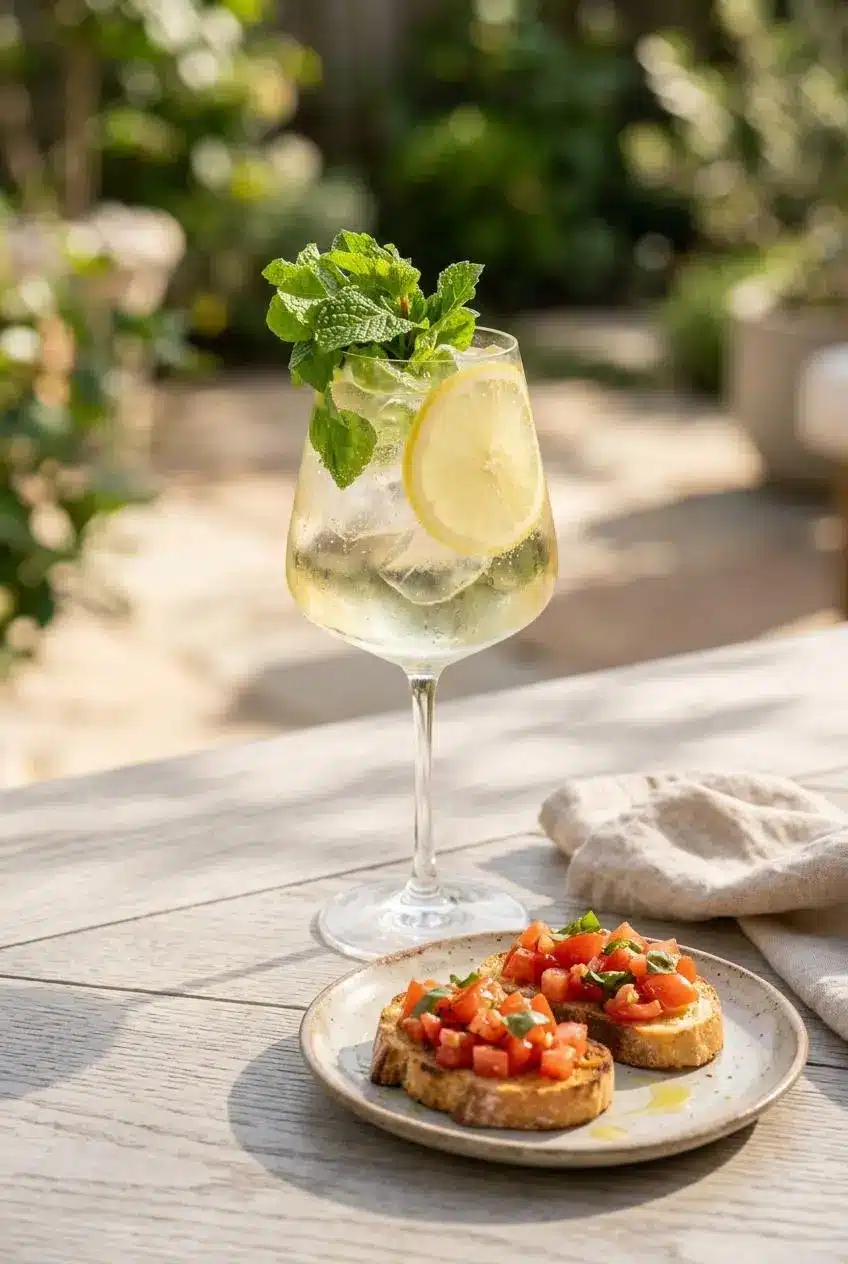
This spritz likes food that feels bright, fresh, and a little salty. Rich, heavy dishes can bulldoze the floral notes, so lighter appetizers usually taste better alongside it.
- Tomato bruschetta, because the acidity and herbs echo the drink’s fresh finish.
- Goat cheese with crackers, since tangy cheese plays nicely with elderflower’s soft sweetness.
- A light Greek salad, which brings crisp vegetables and briny contrast.
- Fresh Mango Salsa with crostini or crackers for a fruity-savory pairing that feels summery and bright.
If you want dessert afterward, something lemony and airy fits the mood better than a dense cake.
Storing and Make-Ahead Instructions
This mocktail is best mixed and served right away, because carbonation fades fast once the drink is assembled.
You can still make party prep easier by washing the mint, slicing the garnish, measuring the elderflower, and chilling the bubbly ingredients in advance. If you’re making homemade elderflower syrup, cool it fully and keep it covered in the refrigerator until you’re ready to use it.
If you have leftover mixed mocktail, refrigerate it covered and expect softer bubbles later. It will still taste pleasant for a short while, but it won’t have the same crisp spritz texture.
Conclusion
This is the kind of mocktail that feels polished without being fussy: floral, minty, cold, and sparkling in all the right ways. The best version starts with chilled ingredients and a light hand on the mint.
Once you’ve made it once, it’s easy to tweak for your own taste or scale up for a crowd. Keep it cold, keep it fizzy, and enjoy every sip.
Frequently Asked Questions
What can I use if I don’t have non-alcoholic Prosecco?
You have a few good options. Use any dry non-alcoholic sparkling white wine if you want the closest flavor and texture. Sparkling white grape juice works, but the drink will taste sweeter. For a lighter, less sweet version, use plain sparkling water or club soda with a squeeze of lemon.
How do I make a big batch of Hugo Spritz mocktails for a party?
Build the flavor first, then add the fizz at the end. Gently muddle the mint with the elderflower in a pitcher. Add the chilled sparkling wine and soda water just before serving. Stir softly and pour over ice in individual glasses.
My mocktail tastes bitter. What did I do wrong?
Mint is usually the reason. You probably muddled the mint too hard and tore the leaves. Next time, bruise the mint gently instead of crushing it. You can also clap the mint between your palms before adding it to the glass.
Can I use elderflower liqueur instead of syrup?
Yes, as long as it’s non-alcoholic. Non-alcoholic elderflower liqueur can replace syrup or cordial in this drink. It often tastes less sweet and more botanical. Start with the listed amount, then taste and adjust if needed.
Can I make this mocktail ahead of time?
Partly, yes. Prep the mint, garnish, and elderflower ahead so assembly goes quickly. Keep the sparkling ingredients chilled until serving time. Mix the final drink just before serving if you want the best bubbles.
What foods pair well with a Hugo Spritz mocktail?
Go for light, fresh flavors. Bruschetta works well because the tomatoes and herbs keep things bright. Goat cheese and crackers are a great match for the floral elderflower notes. Fresh salads and fruit-forward appetizers also pair nicely.
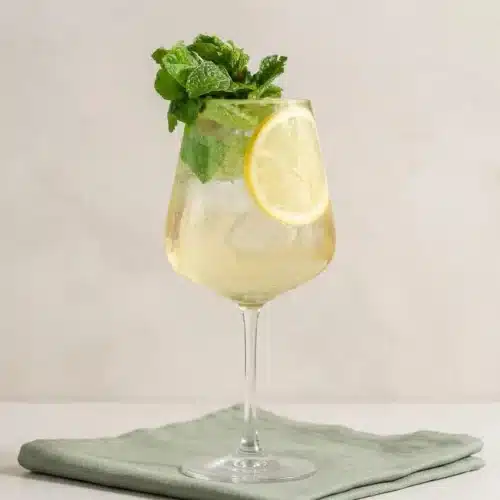
Hugo Spritz Mocktail

Equipment
- A large Spritz glass
- A muddler
- Jiggers or measuring spoons
Ingredients
- 8 mint leaves
- 1.5 oz non-alcoholic elderflower cordial or liqueur
- 3 oz non-alcoholic Prosecco or alternative
- 1 oz soda water or plain seltzer
- fresh lemon slice and mint Optional garnishes
Instructions
- Add the mint leaves and elderflower cordial or liqueur to a large spritz glass, then press the mint very lightly with a muddler or the handle of a wooden spoon. The leaves should look bruised and fragrant, not shredded or dark.
- Fill the glass with ice, then pour in the non-alcoholic Prosecco or alternative followed by the soda water or plain seltzer. You should hear a lively fizz, and the glass should look bright and bubbly right away.
- Stir gently, taste, and add a little more elderflower only if you want a sweeter finish, then garnish and serve. The final drink should taste floral, crisp, and cooling, with the mint staying fresh rather than grassy.