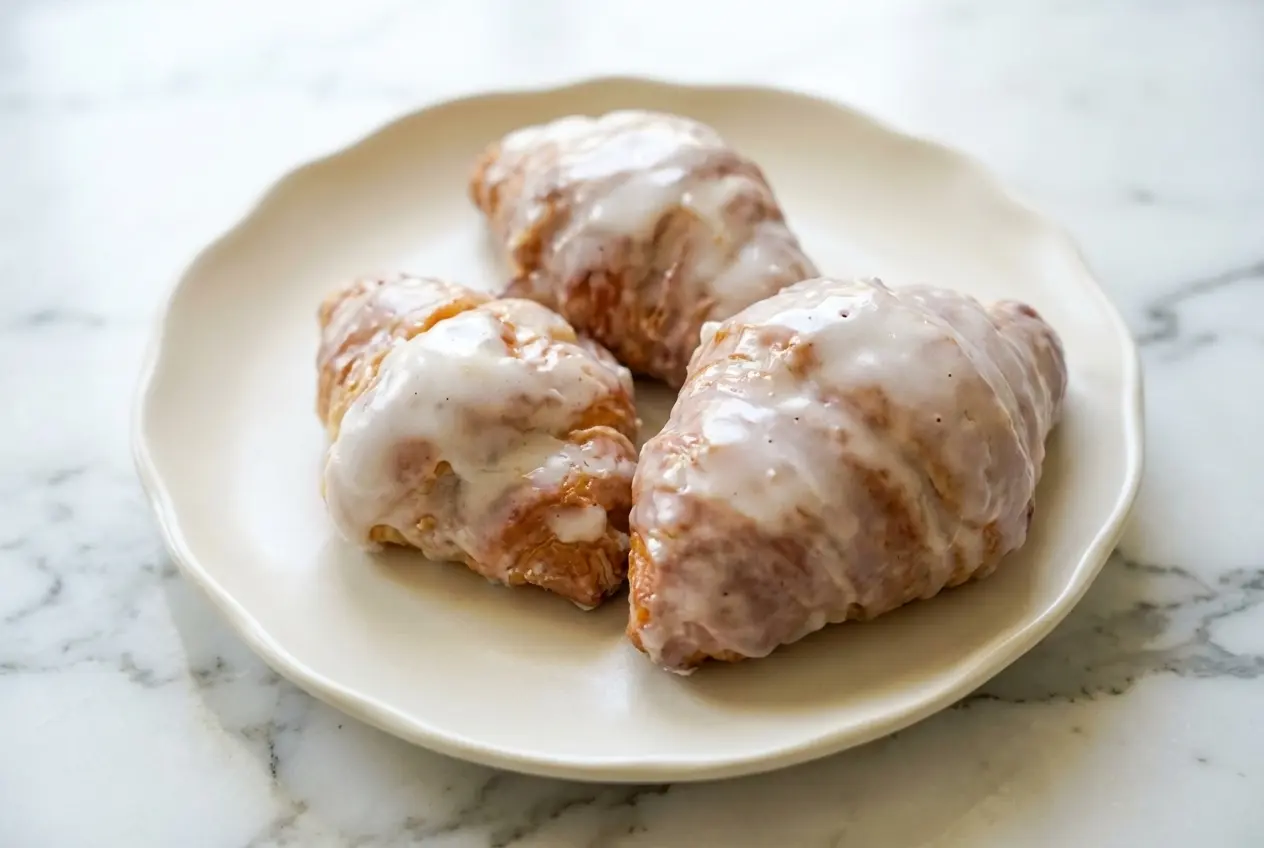
Lazy Sunday mornings have a funny way of making even a plain grocery run feel full of promise. When I want something that tastes bakery fresh without laminating dough at sunrise, this Glazed Croissants Recipe is the one I pull out, because a box of store-bought croissants can turn glossy, buttery, and downright irresistible in minutes.
The little secret is not just the glaze, it is how you wake those pastries back up. With a quick oven crisp and a touch of brown butter in the glaze, you get flakey layers, a sweet crackly finish, and the kind of sweet breakfast that feels far fancier than the effort suggests.
Why You’ll Love This Recipe
Bakery magic, fast: In my kitchen, these store-bought croissants go from sleepy and soft to crisp and golden in about 10 minutes, which is exactly what I want when I am craving a bakery-style treat before the coffee cools.
The texture fix: I discovered that a quick 350F oven or air fryer blast brings back the buttery, flakey layers far better than a microwave ever could, and it keeps the glaze from soaking in and turning the pastry limp.
The brown butter touch: Swapping just a teaspoon of the heavy cream for melted brown butter gives the glaze a nutty caramel note that reminds me of the deep flavor you get in miso caramel, only here it lands on a crisp croissant instead of a spoon.
Cronut vibes, no frying: You get that glossy, indulgent satisfaction people love in cronuts, but without hot oil, extra mess, or any complicated dough work.
Ingredients and Substitutions
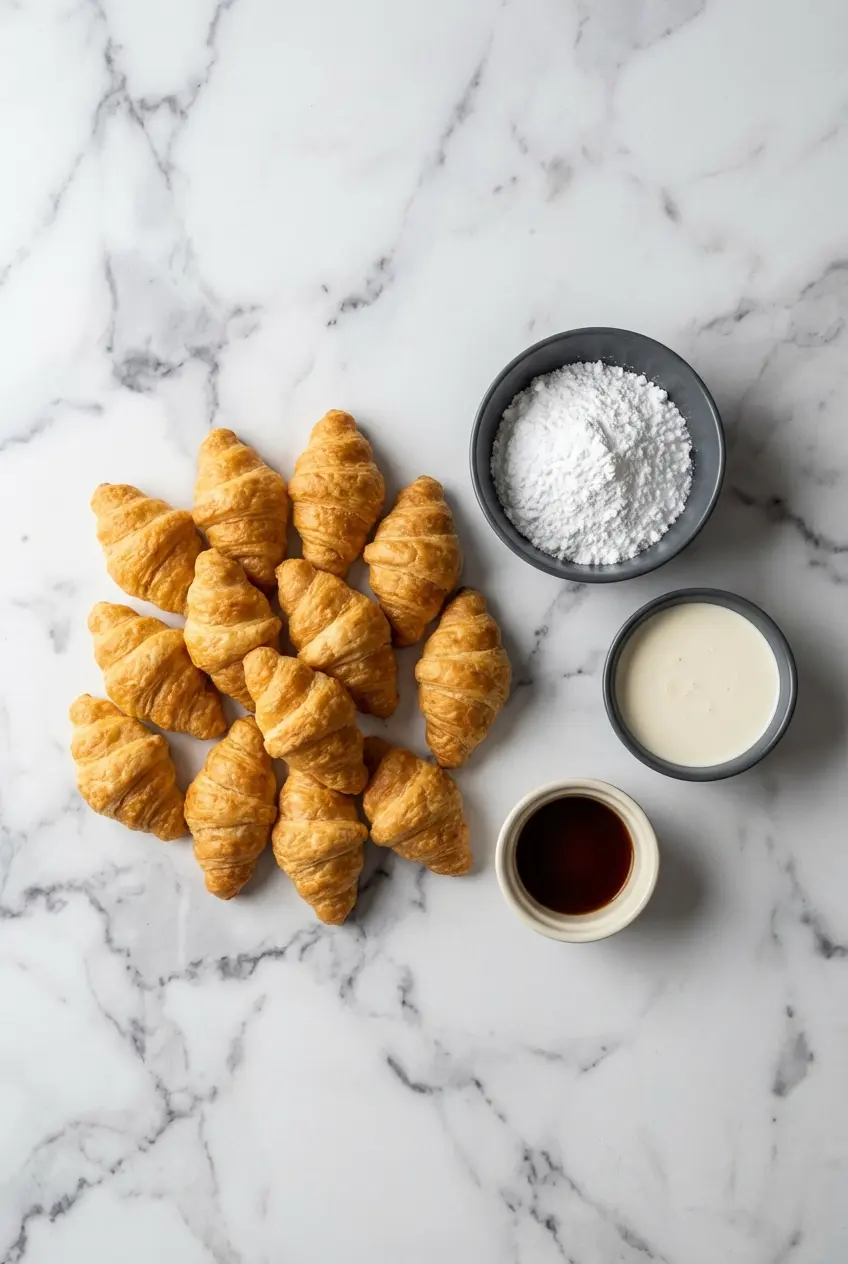
You only need a handful of basics here, and each one pulls its weight, from the flaky pastry to the smooth vanilla glaze.
Ingredients
- 12 mini store bought Croissants
- 1 cup Powdered sugar
- 2-3 tablespoons Heavy cream
- 1 teaspoon Vanilla extract or vanilla bean paste
Ingredient Notes & Substitutions
Store-bought croissants: Day-old pastry is actually wonderful here. Slightly stale croissants hold their shape better under glaze, and once they are warmed properly, the outside turns crisp while the inside stays tender.
Powdered sugar: Confectioners sugar gives the smoothest finish, especially if you sift it first. Those tiny lumps seem harmless, but they can keep the glaze from turning silky and opaque.
Heavy cream: This is what gives the glaze body and that classic donut-like coating. If you use milk, the glaze often turns too thin and translucent, so I stay with heavy cream whenever I want that true bakery finish.
Vanilla extract or vanilla bean paste: Vanilla bean paste brings a fuller aroma and those lovely specks in the glaze, while extract keeps things simple and still delicious. Either works beautifully with the buttery pastry.
Flavor variations: For an orange-cranberry mood, replace part of the cream with fresh orange juice and add a little zest for brightness. If mini croissants are not available, regular-sized croissants work just fine, you will simply glaze fewer pastries and warm them a touch longer.
How to Make Glazed Croissants Recipe
Mix the Glaze
In a small bowl, whisk the powdered sugar, heavy cream, and vanilla extract or vanilla bean paste until the mixture is smooth and glossy. For the upgraded version I love most, swap 1 teaspoon of the heavy cream for melted brown butter, then whisk until the glaze looks slightly thick but still pourable, like thick pancake batter that falls in a ribbon.
Crisp the Croissants
The original shortcut is to warm the croissants, two at a time, in the microwave for 15 seconds. But for far better texture, place them in a 350F oven or air fryer for 3 minutes instead, just until the outside feels lightly crisp again and the buttery aroma wakes right up.
Glaze the Pastries
Once the croissants are warm, but not piping hot, dip each one into the glaze or drizzle the glaze over the top. You want a generous, opaque coating that clings to the ridges and catches in the flaky folds.
Let Them Set
Set the glazed croissants on a cooling rack for about 2-3 minutes so the surface can begin to firm up. If patience is not happening this morning, they are also lovely eaten while the glaze is still soft and shiny.
Secrets for Bakery Perfection
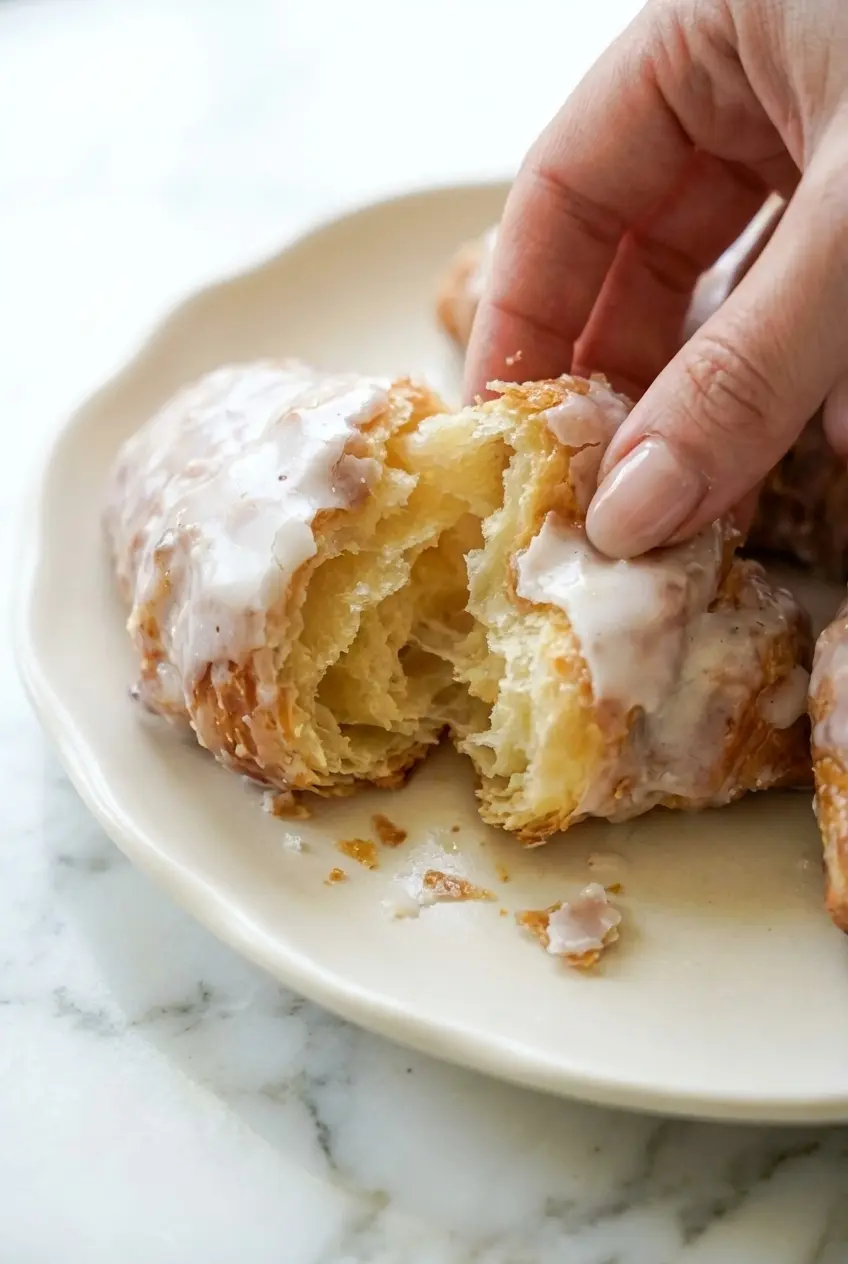
The best glaze consistency looks like thick pancake batter. When you lift the whisk, it should fall back in a ribbon and sit on the surface for a second before melting in, which is how you know it will leave that classic thick, opaque coating instead of a watery sheen.
If the glaze runs straight off, it needs a little more powdered sugar. If it feels stiff and chalky, loosen it with heavy cream a few drops at a time until it moves smoothly and coats the croissant without dripping too fast.
Reviving stale grocery store croissants is where this recipe really earns its keep. A short oven or air fryer blast at 350F restores structure to the outer layers, while the inside stays tender enough to eat comfortably, and that contrast is what makes the finished pastry taste fresh baked.
Microwaves warm quickly, but they can leave pastries oddly limp at first and rubbery a few minutes later. If you want to split the croissant after the glaze sets and add a playful filling, a spoonful of chocolate marshmallow mousse turns it into a proper pastry case treat.
Humidity matters more than most people expect. On dry days, the sugar crust may set in minutes, while on rainy mornings it can take much longer because the glaze pulls moisture from the air and stays tacky.
Pro Tips & Troubleshooting
Pro Tips
- Set a cooling rack over a parchment-lined baking sheet before glazing, and the drips will be easy to manage instead of turning your counter sticky.
- If you can wait 1 to 2 hours, the glaze develops a crisp, crackly sugar shell that feels even more bakery-style.
- Day-old croissants often work better than very fresh ones because they hold up to the moisture of the glaze without collapsing.
- Keep the glaze on the thicker side so it clings to the pastry ridges and creates a glossy white finish instead of disappearing into the layers.
Common Mistakes to Avoid
- Glazing the croissants while they are piping hot, which melts the coating and sends it sliding right off instead of setting on top.
- Using milk instead of heavy cream, which usually creates a thin glaze rather than a substantial sugar crust.
- Leaving the croissants in the microwave too long, which makes the delicate pastry tough and chewy instead of tender and flaky.
- Skipping the cooling rack, because a flat plate traps excess glaze underneath and can make the bottoms sticky.
Serving & Storage
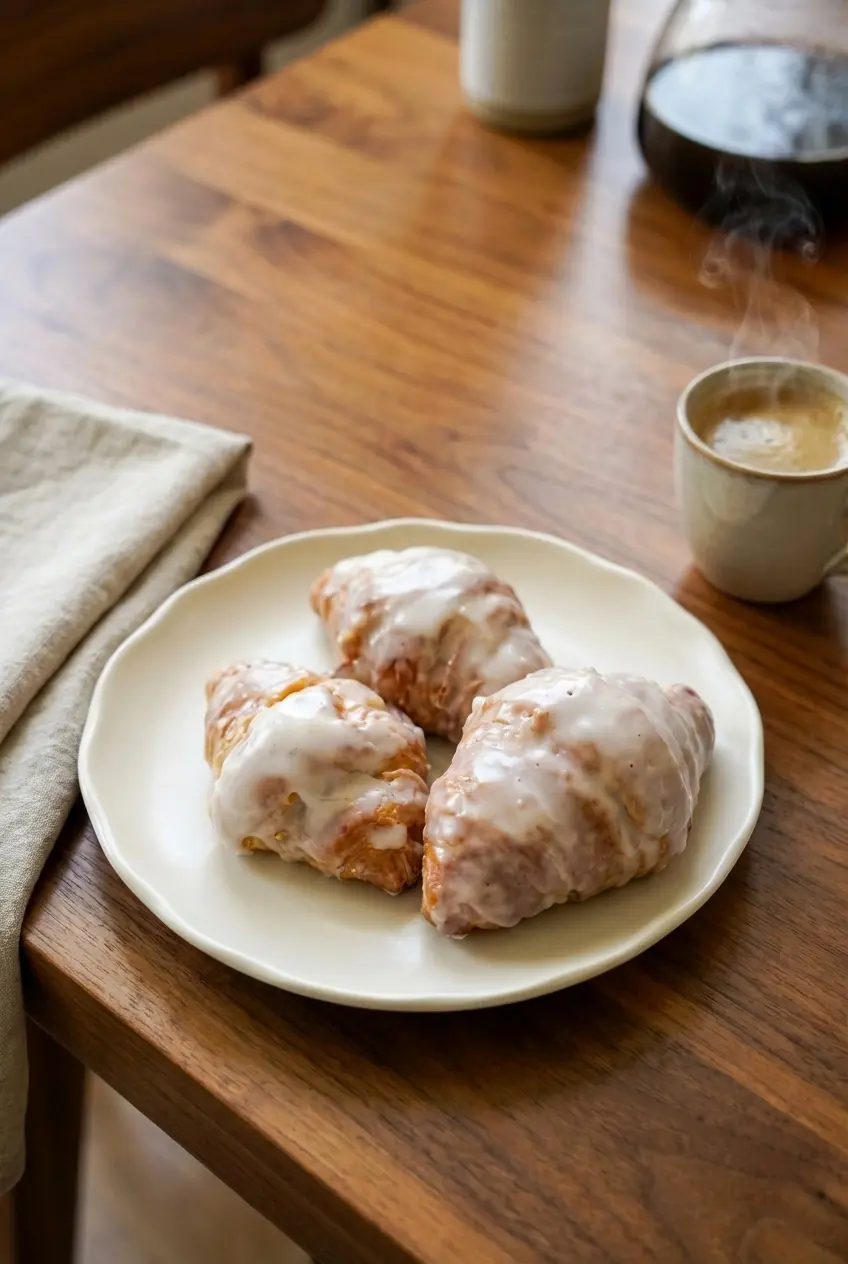
Serving Ideas
These glazed croissants are at their best with hot coffee, a short espresso, or black tea that cuts through the sweetness. A roasted drink like a hojicha latte is especially lovely because its toasty notes echo the browned butter glaze.
For a fuller breakfast, I like serving them with bacon or a simple egg casserole so the plate feels balanced instead of purely sugary. A little savory bite beside a sweet pastry always makes brunch feel more thoughtful.
If you want to dress them up, add toasted sliced almonds or a pinch of sea salt flakes while the glaze is still wet. For something richer, split one horizontally and tuck in berries with whipped cream, or a swipe of pistachio butter for a nutty contrast under the sweet shell.
Storage & Make-Ahead
Store leftover glazed croissants at room temperature in an airtight container, with parchment paper between layers so the sugar crust does not stick and smear. This works better than refrigeration, which often encourages the glaze to sweat and soften by the next day.
If your kitchen is humid, do not glaze them too far ahead. The sugar coating can slowly absorb moisture and melt into the croissant, so I prefer to mix the glaze in advance and finish the pastries fresh the next morning.
For leftovers, avoid sealing them while the glaze is still wet. Let the coating dry first, then store them gently so the crust stays as intact as possible.
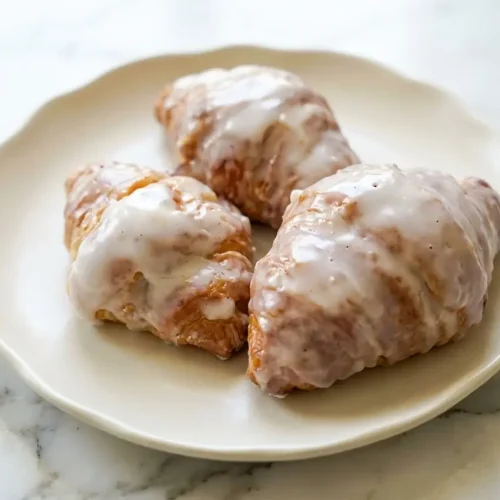
Glazed Croissants Recipe

Equipment
- Whisk
- Cooling Rack
- Baking Sheet
Ingredients
- 12 mini store bought Croissants
- 1 cup Powdered sugar
- 2-3 tablespoons Heavy cream
- 1 teaspoon Vanilla extract or vanilla bean paste
Instructions
Mix the Glaze
- In a small bowl, whisk the powdered sugar, heavy cream, and vanilla extract or vanilla bean paste until the mixture is smooth and glossy. For a richer flavor, swap 1 teaspoon of the heavy cream for melted brown butter and whisk until it falls in a thick ribbon.
Crisp the Croissants
- Place the store-bought croissants in a 350F oven or air fryer for 3 minutes. Heat them just until the outside feels lightly crisp and the buttery aroma is revived.
Glaze the Pastries
- Once the croissants are warm, but not piping hot, dip each one into the glaze or drizzle the glaze generously over the top to create an opaque coating.
Let Them Set
- Set the glazed croissants on a cooling rack for about 2 to 3 minutes so the surface can begin to firm up into a shiny sugar shell.
Notes
Conclusion
There is something deeply satisfying about turning simple store-bought croissants into a glossy, crisp little treat that tastes straight from a pastry case. That quick oven crisp and brown butter glaze are the small touches that make all the difference.
If you make them, play with the vanilla, citrus, or filling ideas and settle on your own favorite version. This is the kind of recipe that feels easy on paper, but on the plate it tastes like you spoiled everyone a little.