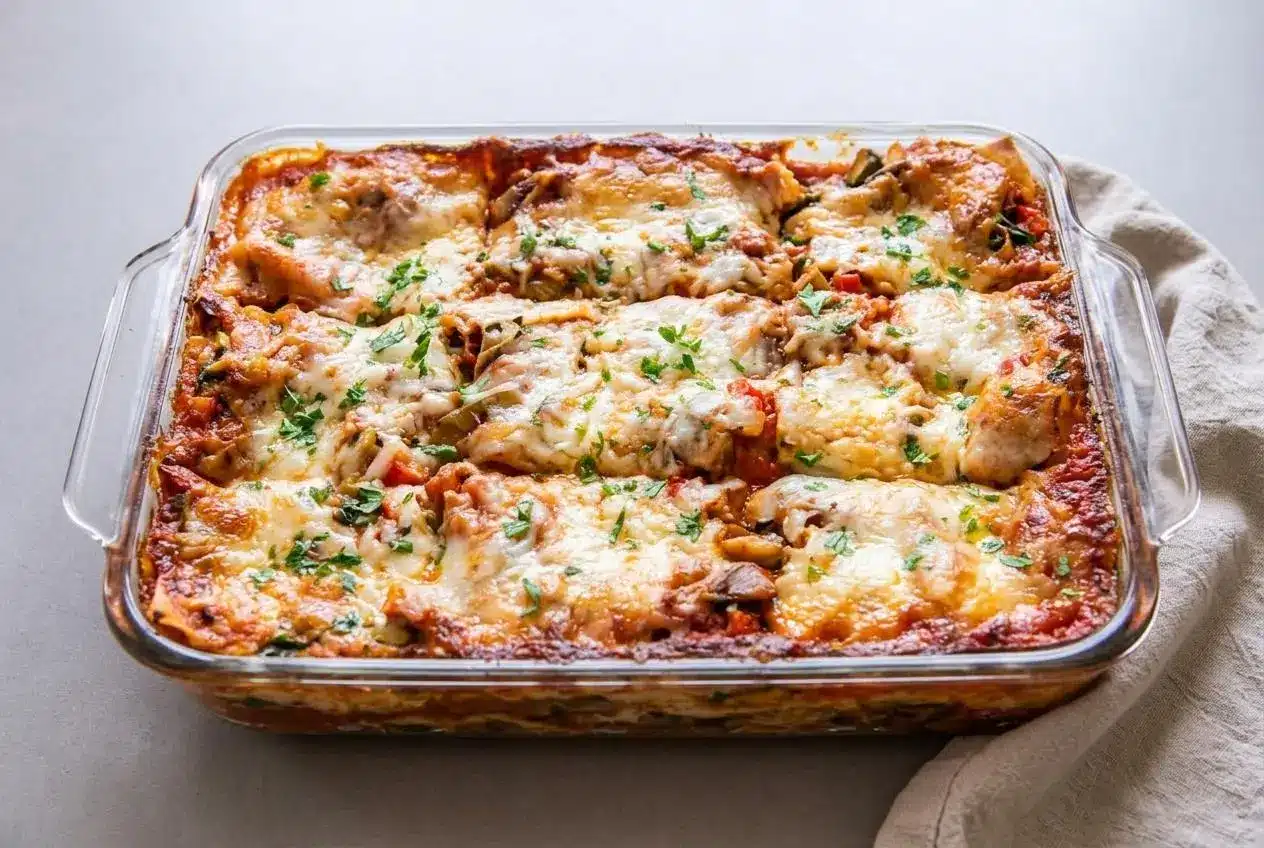
The key to a firm vegetable lasagna is cooking the zucchini and mushrooms first, layering them with marinara, egg-bound ricotta, and oven-ready noodles, then resting the baked pan for 15 minutes.
This vegetable lasagna recipe brings together savory vegetables, bubbling tomato sauce, creamy ricotta, and a golden mozzarella top in a generous 9×13-inch pan.
The kitchen smells like garlic, herbs, and melted cheese as it bakes. The clean-cut layers are worth the wait.
Chop the vegetables into even ½-inch pieces so they cook at the same pace and stay neatly distributed through every square.
Essential Ingredients and Their Roles
Every ingredient contributes to the lasagna’s savory depth, creamy texture, sturdy layers, bright herb flavor, or moisture balance.
- 2 tablespoons olive oil
- 1 ½ cups chopped yellow onion
- 1 red bell pepper, chopped
- 8 ounces cremini mushrooms, chopped
- 2 medium zucchini, chopped into ½-inch pieces
- 4 cloves garlic, minced
- 48 ounces marinara sauce
- 1 teaspoon dried Italian seasoning
- salt and pepper, to taste
- 2 pinches crushed red pepper flakes, or to taste
- ¼ cup chopped fresh parsley
- 5 ounces baby spinach, coarsely chopped
- 1 egg
- 1 cup ricotta cheese, 8 ounces
- 9 oven ready (no boil) lasagna noodles
- 16 ounces shredded mozzarella cheese, about 4 cups
- ½ cup grated Parmesan cheese
- chopped fresh basil or parsley, optional, for serving
Zucchini, red bell pepper, cremini mushrooms, and onion make a hearty, savory foundation. The mushrooms bring deep earthy flavor, the pepper adds gentle sweetness, and zucchini softens into the sauce without taking over.
The egg matters more than it may seem. It binds the ricotta so the dairy layer sets into soft, defined pockets instead of slipping out when you cut the lasagna. Mozzarella melts into the stretchy top layer, while Parmesan adds a salty finish and helps the surface brown.
Oven-ready noodles are especially useful with vegetable fillings because they absorb steam and sauce as they bake. Unlike boiled noodles, they go into the dish dry, so they help manage the juices released by the vegetables and cheeses.
I look for firm zucchini with smooth skin and mushrooms that feel dry rather than slick, since fresher vegetables are easier to brown instead of steam.
How to Make Vegetable Lasagna
Cook the vegetables until their moisture has a chance to evaporate, then build tidy layers with enough sauce to hydrate every noodle. The rest after baking is part of the method, not an optional pause.
- Heat the oven to 375° F.
Set a rack in the center so the pan bakes evenly from edge to edge. - Warm the olive oil in a large skillet or Dutch oven over medium-high heat, then cook the onion, bell pepper, mushrooms, and zucchini for 7 to 8 minutes, stirring now and then; add the garlic and cook for 30 seconds.
The vegetables should be softened with light browning, and the lively sizzle should quiet as excess moisture cooks away. - Stir the marinara, Italian seasoning, salt, pepper, crushed red pepper flakes, and parsley into the vegetables; bring the mixture to a simmer, reduce to low, and cook for 10 to 15 minutes before folding in the spinach.
The sauce should look thicker around the spoon, smell fragrant with herbs and garlic, and wilt the spinach without turning it dull. - Beat the egg lightly in a medium bowl, stir in the ricotta, and shred the mozzarella while the sauce simmers.
The ricotta mixture should be evenly blended and loose enough to drop from a spoon in small dollops. - Spread about 1 cup of sauce across the bottom of a 9×13-inch baking dish, arrange 3 noodles over it, then add ⅓ of the remaining sauce, ½ of the ricotta mixture, ⅓ of the mozzarella, and ⅓ of the Parmesan.
The sauce underneath cushions the first noodles and prevents dry corners from forming. - Build the second layer with 3 noodles, ½ of the remaining sauce, the remaining ricotta, ½ of the remaining mozzarella, and ½ of the remaining Parmesan; finish with the last 3 noodles, remaining sauce, mozzarella, and Parmesan.
Scatter the ricotta in small, even dollops so every serving gets creamy filling rather than one large pocket. - Cover the dish with foil sprayed with cooking spray on the underside.
The oiled surface keeps the melted cheese from clinging to the foil when it is removed. - Bake covered for 35 minutes, with a rimmed baking sheet on the rack below to catch drips; uncover and bake for 10 to 15 minutes more, then rest the lasagna for 15 minutes before serving.
The edges should bubble, the cheese should be lightly browned, and the bubbling sauce should settle along the pan edges during the rest.
Essential Vegetable Selection and Prep
Vegetable lasagna turns watery when fresh produce releases its liquid inside the pan instead of in the skillet. This combination works well because zucchini, bell pepper, mushrooms, onion, and spinach each bring a different texture, but they need proper handling before layering.
Keep the onion, pepper, mushrooms, and zucchini close to a ½-inch chop. Pieces that are roughly the same size soften evenly, brown more consistently, and create layers that are easier to slice without large chunks pulling away.
Use a wide skillet or roomy Dutch oven and avoid crowding it. When too many vegetables are packed into a small pan, they release steam faster than it can escape. The result is pale vegetables and thin sauce. Give them room until you see browned spots and less liquid pooling at the bottom.
Skillet Sautéing vs. Oven Roasting Vegetables
For this lasagna, skillet sautéing is the practical choice because the vegetables cook directly before they join the marinara. Medium-high heat quickly softens the produce and drives off moisture while creating light browning.
Oven roasting is an optional approach when you want deeper caramelized flavor from vegetables such as zucchini, mushrooms, peppers, or squash. Spread them out on a sheet pan so they roast rather than steam, then fold them into a sauce only after they have released their moisture. Roasting adds sweetness, while the skillet method keeps the meal moving.
Handling High-Moisture Greens and Zucchini
Zucchini needs a hot pan and enough time to shed water before it goes near the baking dish. Do not layer it in raw. Raw zucchini continues releasing liquid while the lasagna bakes, which can leave the center loose even when the cheese looks perfectly melted.
Baby spinach belongs at the end of the sauce simmer. Fold it in just until it wilts, then move on to assembly. This keeps its fresh green flavor while avoiding a long cooking time that can make it collapse and add extra water to the sauce.
Step-by-Step Assembly and Baking
A protective layer of marinara on the bottom of the baking dish gives the first noodles moisture from the start. It also keeps the edges from drying out while the oven-ready pasta softens.
As you build the layers, make sure sauce reaches the corners and covers the noodle edges. The noodles need contact with the sauce to become tender. If a corner looks bare, nudge sauce into place before adding cheese.
Use spoonfuls of ricotta rather than trying to spread it into a smooth blanket. Dollops stay more evenly distributed, and they are less likely to drag the sauce around. Finish with the final mozzarella and Parmesan layer so the top turns golden after the foil comes off.
Set a rimmed baking sheet on the rack below the dish before baking. Marinara can bubble over at the edges, especially in a full pan, and the sheet catches any drips before they reach the oven floor. Spray the underside of the foil before covering the pan, too. Bare foil has a talent for taking the best cheese with it.
After baking, leave the pan alone for the full 15 minutes. During that time, the cheese firms, the noodle starches settle, and the sauce stops actively bubbling. A knife pushed into the center should glide through tender noodles without meeting a firm, dry-looking pasta sheet.
Troubleshooting and Texture Mastery
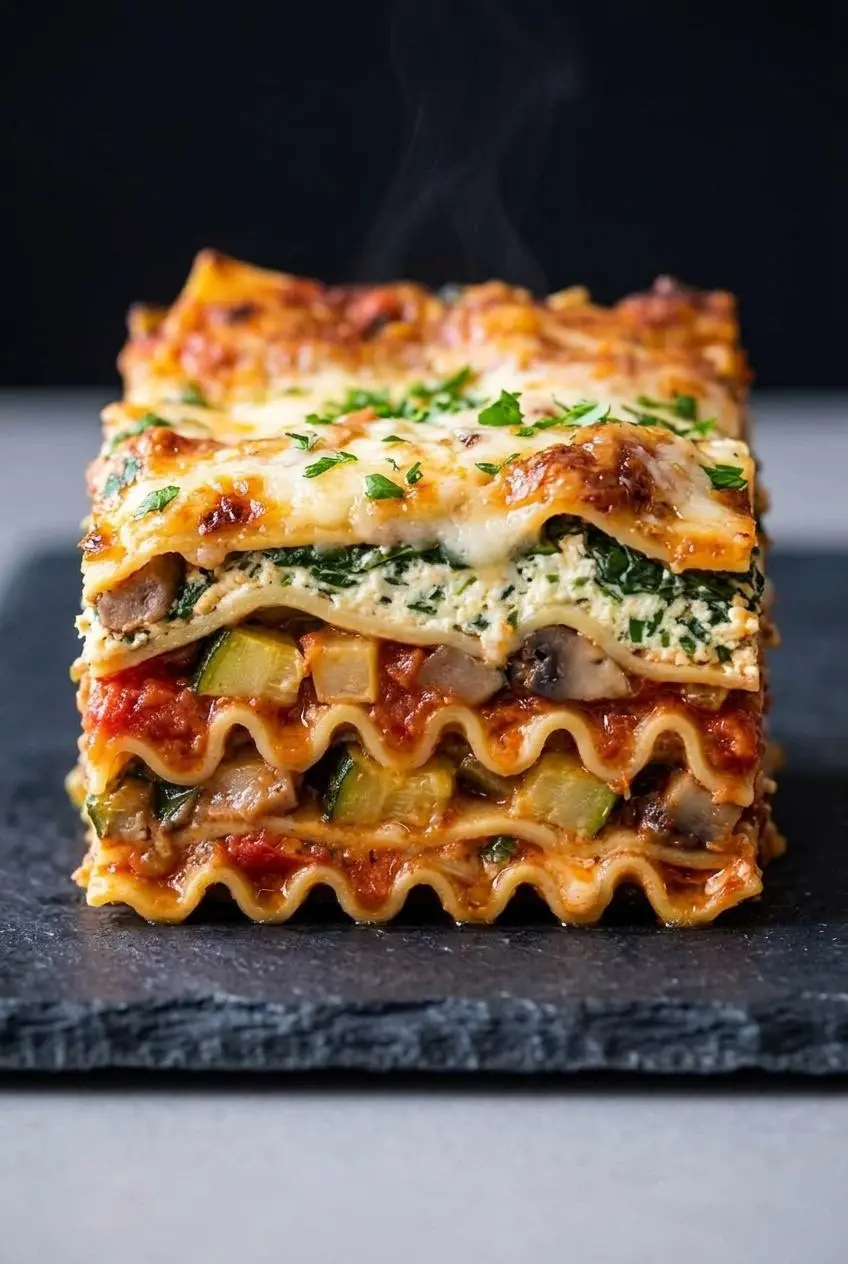
Most lasagna problems come down to moisture, noodle coverage, or impatience at the cutting board. These quick fixes target the spots that matter most.
- Watery layers: The vegetables likely went into the pan before enough moisture evaporated. Cook the zucchini and mushrooms until the bottom of the skillet is no longer collecting a puddle of liquid, then simmer the sauce until it lightly thickens.
- Loose slices after baking: Cutting immediately lets hot sauce and melted cheese run together. Give the lasagna its full 15-minute rest so the layers can settle and hold their shape.
- Firm or dry noodle edges: Those edges did not get enough sauce. Before baking, check that every noodle is covered, especially around the corners of the dish.
- Undercooked noodles in the center: Keep the pan covered during the first baking stage so steam can soften the oven-ready noodles. If the center still resists the knife test, return the covered pan to the oven until the noodles feel tender.
- Cheese browning too quickly: Loosely tent the pan with foil for the remaining bake time. Keep the foil from pressing onto the hot cheese surface.
- Foil pulling off mozzarella: Spray the underside before covering the dish. The coating allows the foil to lift away without tearing the top layer.
Preparing and Reheating Lasagna
If you need to assemble the lasagna before baking, keep the completed pan tightly covered and chilled until it goes into the oven. A cold dish may need additional covered baking time, so rely on the center of the pan: the noodles should be tender, and the sauce should bubble around the edges before you uncover it.
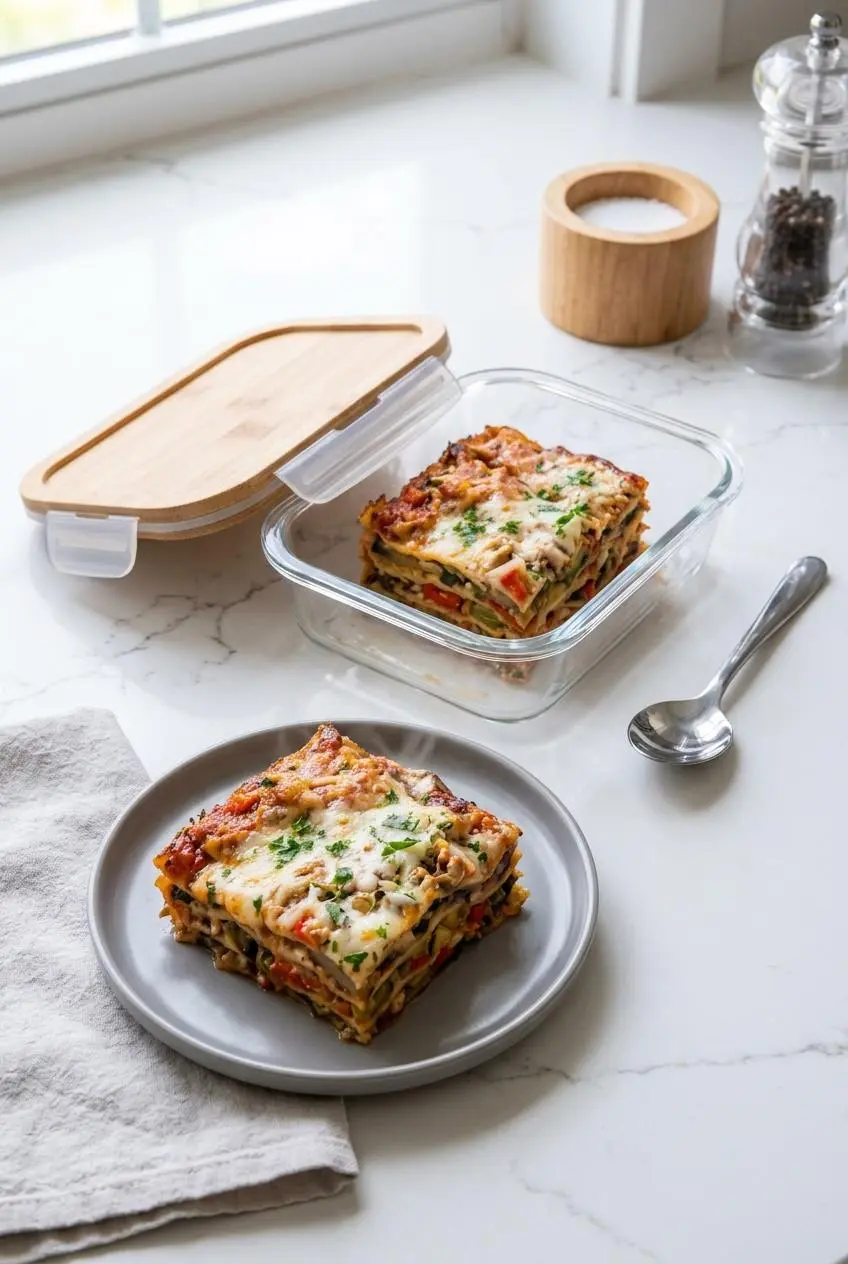
For leftovers, let the lasagna cool before covering and refrigerating it. Reheat portions covered so the center warms without drying the mozzarella, then uncover near the end if you want to refresh the top. Heat until the middle is thoroughly hot and the sauce is bubbling.
For the cleanest texture, reheat only the portion you plan to serve. A smaller piece warms more evenly, and the remaining lasagna stays undisturbed instead of repeatedly cycling through heating and cooling.
Flavorful Variations and Substitutions
Keep the main version as written, then use these options when you want a different flavor direction or need to accommodate a preference. Changes work best when the vegetable mixture remains cooked down and the pasta still has enough sauce for hydration.
Creamy Béchamel White Sauce Variation
For a white vegetable lasagna, replace the marinara with a creamy garlic-herb béchamel made from butter, flour, and milk, seasoned with nutmeg. It creates a gentler, richer profile that pairs especially well with mushrooms, spinach, and zucchini.
Because béchamel is milder than marinara, season it carefully with herbs, garlic, salt, and pepper so the vegetables do not taste flat. Keep the sauce pourable rather than overly thick, since the oven-ready noodles still need moisture to soften.
High-Protein Cottage Cheese Swap
For a higher-protein filling, use blended low-fat cottage cheese in place of ricotta. Pulse it until smooth before mixing it with the egg, which gives the filling a more ricotta-like texture and helps it settle into the layers. For another hearty pasta bake built around that idea, try this high-protein lasagna.
- Autumn vegetable version: Use roasted butternut squash and hearty kale in place of part of the zucchini and spinach. Roast the squash first so it is tender and concentrated rather than watery.
- Gluten-free option: Choose certified gluten-free oven-ready lasagna sheets and follow the package directions for sauce coverage and baking behavior.
- Brighter ricotta: Add finely grated lemon zest and a pinch of ground nutmeg to the ricotta mixture for a fresh, gently warm flavor that complements spinach.
Serving Suggestions for a Complete Meal
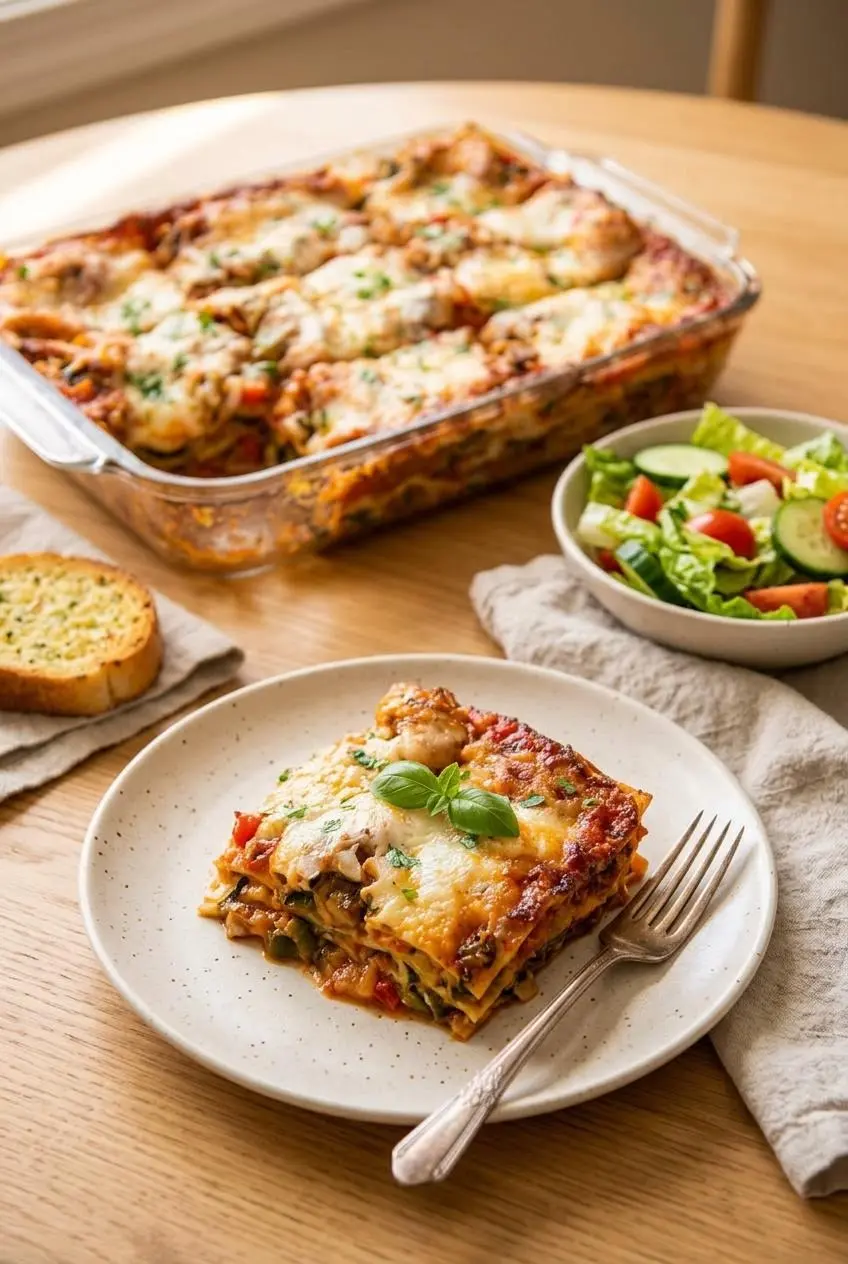
This rich, cheesy lasagna benefits from something crisp and acidic alongside it. A simple Italian garden salad with lemon vinaigrette cuts through the creamy ricotta and mozzarella without competing with the tomato sauce.
- Serve warm garlic bread for catching the marinara left on the plate.
- Offer rosemary focaccia when you want a heartier bread with a fragrant, savory edge.
- Add a crunchy salad of romaine, cucumber, and pepperoncini for contrast against the soft baked layers.
Conclusion
This vegetable lasagna earns its sturdy slices by cooking down the vegetables, giving the oven-ready noodles plenty of sauce, and letting the finished pan rest before cutting.
Bring it to the table while the cheese is still warm and stretchy, then enjoy the kind of comforting dinner that makes a 9×13-inch pan feel like a very good idea.
Frequently Asked Questions
Do You Cook Vegetables Before Putting Them in Lasagna?
Yes. Sauté the vegetables before layering them into lasagna. Cooking zucchini and mushrooms first lets excess water evaporate in the skillet instead of collecting in the baking dish. Light browning also builds a deeper savory flavor than raw vegetables can provide. Fold spinach into the simmered sauce at the end, just until wilted.
Why Does Vegetable Lasagna Get Watery and How Do You Prevent It?
Vegetables release moisture as they cook, especially zucchini, mushrooms, and spinach. Sauté the vegetables until their liquid has cooked off and the skillet sizzle softens. Use oven-ready noodles, which absorb surrounding sauce and vegetable steam as they bake. Rest the finished lasagna for 15 minutes before slicing so the cheese and sauce can set.
Can You Assemble Vegetable Lasagna Ahead of Time?
You can assemble the pan, cover it tightly, and keep it chilled until baking. Start baking with the pan covered so the center can heat gently and the noodles can soften. A chilled pan may need extra covered oven time, so check for tender noodles and bubbling sauce before uncovering. Keep the foil oiled on the underside to protect the mozzarella top.
Are No-Boil Noodles Better Than Regular Boiled Noodles for Veggie Lasagna?
Oven-ready noodles are especially helpful for this style of lasagna because they absorb moisture released by the vegetables and sauce. They help create firmer layers and cleaner slices. They also skip the separate boiling step. Make sure every noodle edge is covered with sauce so it softens evenly in the oven.
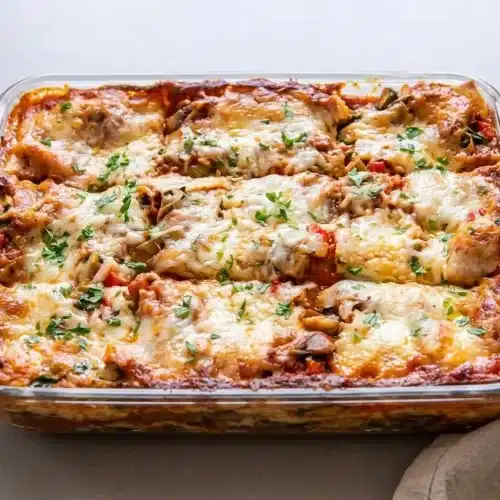
Vegetable Lasagna Recipe

Equipment
- large skillet or Dutch oven pot
- 9×13-inch baking dish
- Aluminum Foil
- Rimmed baking sheet
Ingredients
- 2 tablespoons olive oil
- 1 ½ cups chopped yellow onion
- 1 red bell pepper, chopped
- 8 ounces cremini mushrooms, chopped
- 2 medium zucchini, chopped into ½-inch pieces
- 4 cloves garlic, minced
- 48 ounces marinara sauce
- 1 teaspoon dried Italian seasoning
- salt and pepper to taste
- 2 pinches crushed red pepper flakes or to taste
- ¼ cup chopped fresh parsley
- 5 ounces baby spinach, coarsely chopped
- 1 egg
- 1 cup ricotta cheese 8 ounces
- 9 oven ready (no boil) lasagna noodles
- 16 ounces shredded mozzarella cheese about 4 cups
- ½ cup grated Parmesan cheese
- chopped fresh basil or parsley optional, for serving
Instructions
- Heat the oven to 375° F. Set a rack in the center so the pan bakes evenly from edge to edge.
- Warm the olive oil in a large skillet or Dutch oven over medium-high heat, then cook the onion, bell pepper, mushrooms, and zucchini for 7 to 8 minutes, stirring now and then; add the garlic and cook for 30 seconds. The vegetables should be softened with light browning, and the lively sizzle should quiet as excess moisture cooks away.
- Stir the marinara, Italian seasoning, salt, pepper, crushed red pepper flakes, and parsley into the vegetables; bring the mixture to a simmer, reduce to low, and cook for 10 to 15 minutes before folding in the spinach. The sauce should look thicker around the spoon, smell fragrant with herbs and garlic, and wilt the spinach without turning it dull.
- Beat the egg lightly in a medium bowl, stir in the ricotta, and shred the mozzarella while the sauce simmers. The ricotta mixture should be evenly blended and loose enough to drop from a spoon in small dollops.
- Spread about 1 cup of sauce across the bottom of a 9×13-inch baking dish, arrange 3 noodles over it, then add ⅓ of the remaining sauce, ½ of the ricotta mixture, ⅓ of the mozzarella, and ⅓ of the Parmesan. The sauce underneath cushions the first noodles and prevents dry corners from forming.
- Build the second layer with 3 noodles, ½ of the remaining sauce, the remaining ricotta, ½ of the remaining mozzarella, and ½ of the remaining Parmesan; finish with the last 3 noodles, remaining sauce, mozzarella, and Parmesan. Scatter the ricotta in small, even dollops so every serving gets creamy filling rather than one large pocket.
- Cover the dish with foil sprayed with cooking spray on the underside. The oiled surface keeps the melted cheese from clinging to the foil when it is removed.
- Bake covered for 35 minutes, with a rimmed baking sheet on the rack below to catch drips; uncover and bake for 10 to 15 minutes more, then rest the lasagna for 15 minutes before serving. The edges should bubble, the cheese should be lightly browned, and the bubbling sauce should settle along the pan edges during the rest.