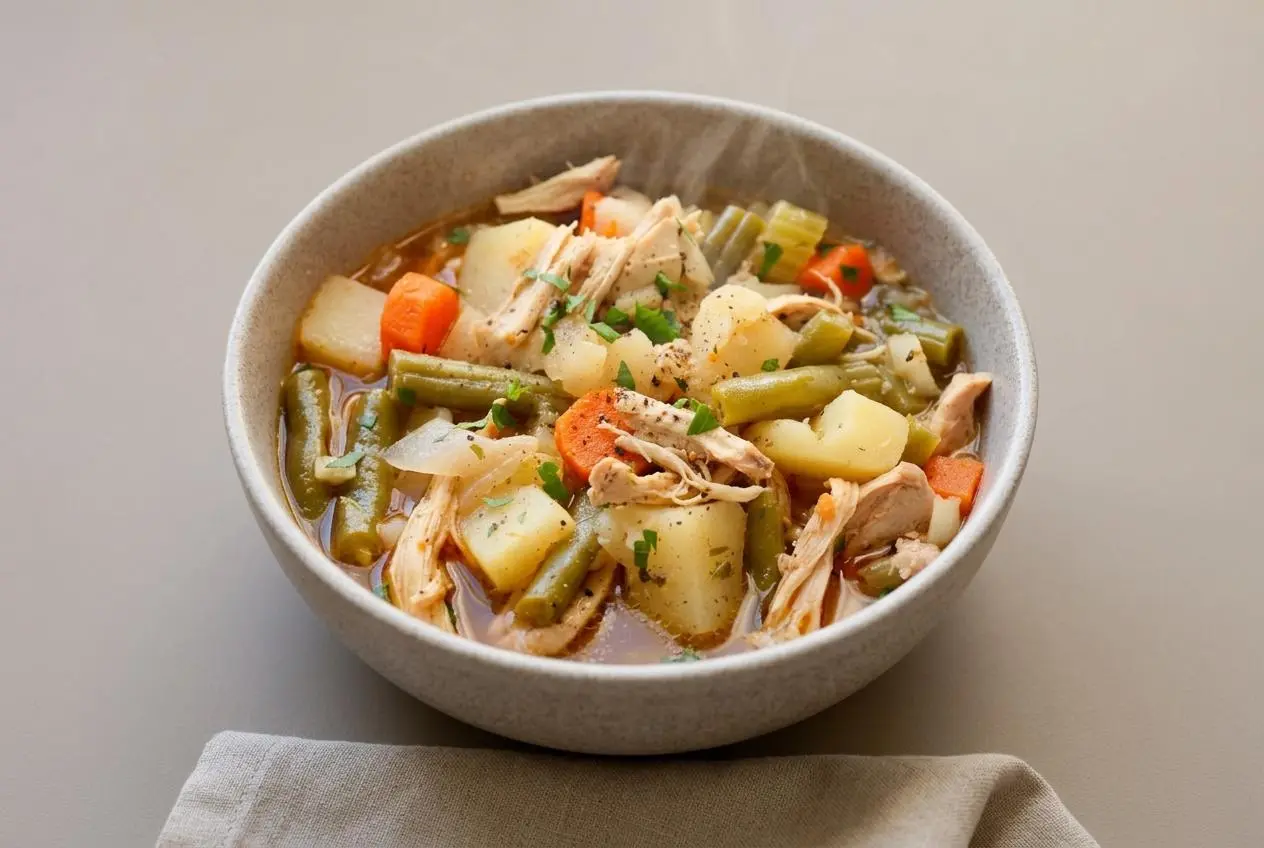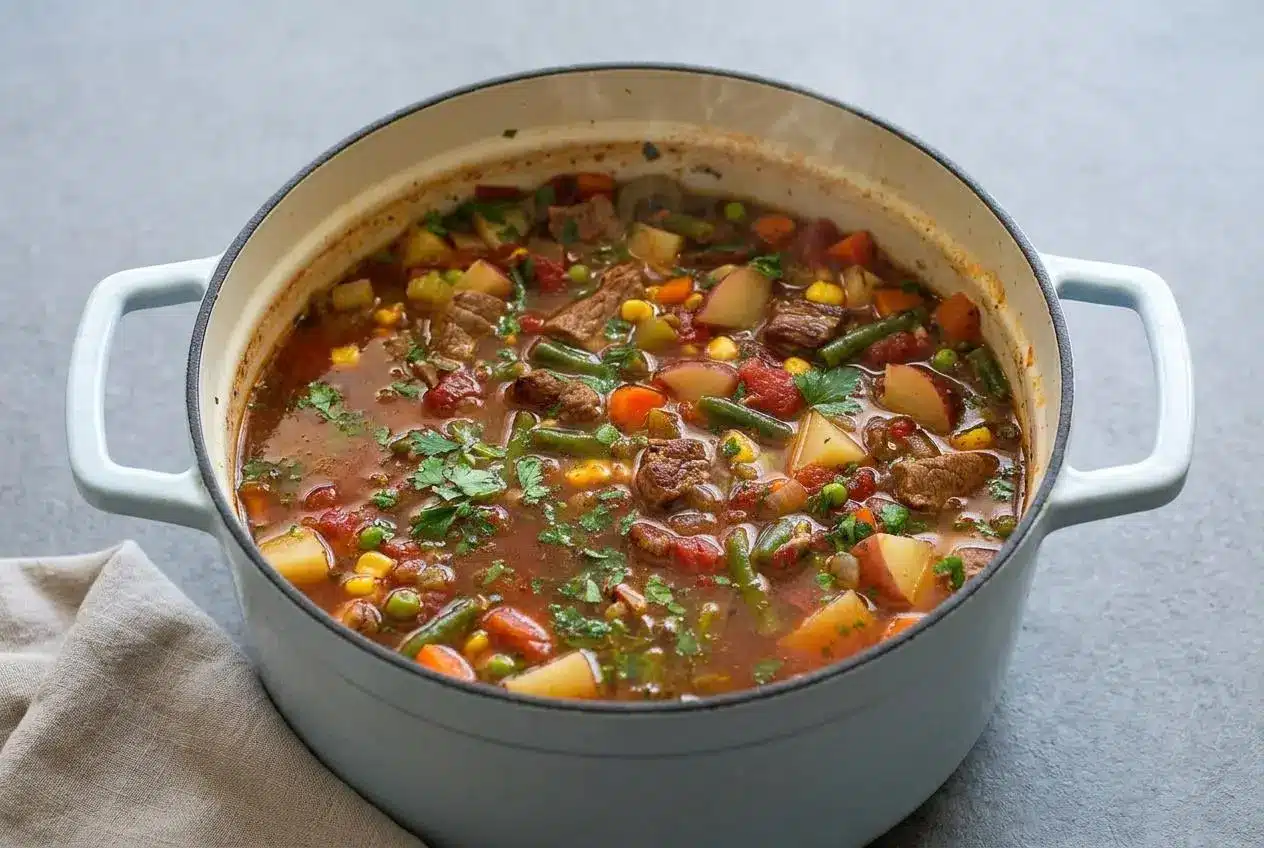
This homemade vegetable beef soup combines seared beef, aromatic vegetables, potatoes, tomatoes, and herbs in a savory broth simmered until tender.
This vegetable beef soup recipe is a hearty one-pot meal with rich broth, tender beef, and vegetables that keep their color and bite.
Deep browning gives the broth its savory backbone, while adding vegetables in stages keeps the pot from turning soft and murky. That final handful of parsley brightens every bowl.
Pat the beef very dry before it hits the hot oil so it develops a dark crust instead of releasing steam.
Best Cuts of Beef and Key Ingredients
Each ingredient contributes something useful: beef adds richness, aromatics create depth, tomatoes bring brightness, potatoes add body, and the final vegetables keep the soup fresh and colorful.
- 1 1/2 lbs beef stew meat
- 2 1/2 Tbsp olive oil, divided
- Salt and freshly ground black pepper
- 1 3/4 cups chopped yellow onion (1 large)
- 1 1/4 cups peeled and chopped carrots (3 medium)
- 1 cup chopped celery (3 medium)
- 1 1/2 Tbsp minced garlic (4 cloves)
- 8 cups low-sodium beef broth or chicken broth
- 2 (14 oz.) cans diced tomatoes
- 1 1/2 tsp dried basil
- 1 tsp dried oregano
- 1/2 tsp dried thyme
- 1 lb red or yellow potatoes, chopped into 3/4-inch cubes
- 1 1/2 cups (5 oz.) chopped green beans (trim ends first)
- 1 1/2 cups frozen corn
- 1 cup frozen peas
- 1/3 cup chopped fresh parsley
The onions, carrots, celery, and garlic form a classic aromatic base, while tomatoes lift the rich broth with gentle acidity. Potatoes make the soup satisfying, and peas, corn, green beans, and parsley provide sweetness, color, and a fresh finish.
I look for beef cubes with a little visible marbling because those small streaks of fat make the finished bites noticeably more succulent.
Choosing Chuck Roast vs. Stew Meat
Boneless beef chuck roast is an excellent choice when you can cut the meat yourself. It has marbling and connective tissue that soften during a low simmer, creating tender bites and a fuller-tasting broth. Pre-cut stew meat can work well, but it varies widely, so avoid packages that look especially lean or contain unevenly sized pieces.
For another slow-simmered dinner built around this same satisfying texture, try hearty beef stew. In either dish, a gentle simmer gives collagen time to soften rather than tightening the meat with a hard boil.
Selecting Vegetables That Hold Their Shape
Red potatoes and Yukon Gold potatoes are better soup choices than russets because they stay intact after simmering. Cut them evenly so they cook at the same pace. Carrots and celery bring sweetness and balance, while yellow onion rounds out the broth without overwhelming the herbs.
Keep the frozen corn and peas for the end. They need only enough heat to warm through, which helps them stay bright and pleasantly tender instead of dull and mushy.
Building the Savory Herb Broth Base
Low-sodium beef broth lets you control the final seasoning, especially after the tomatoes reduce into the broth. Basil, oregano, and thyme bring a familiar herb flavor, while parsley adds a cleaner finish just before serving.
If you want an optional deeper savory note, add a dash of Worcestershire sauce or a pinch of smoked paprika while the aromatics cook. Either addition changes the flavor direction slightly, so use it as a personal variation rather than a requirement.
How to Make Vegetable Beef Soup
- Heat 1 Tbsp olive oil in a large pot over medium-high heat.
The oil should look fluid and shimmer across the bottom of the pot. - Dry half of the beef thoroughly, season it with salt and pepper, and sear it for about 4 minutes, turning once halfway through.
Remove the beef when several sides have a deep mahogany-brown crust. - Move the first batch to a plate, add 1/2 Tbsp olive oil, and brown the remaining beef in the same way.
Leave the browned bits in the pot because they will enrich the broth. - Add the remaining 1 Tbsp olive oil, then cook the onion, carrots, and celery for 3 minutes before stirring in the garlic for 1 minute.
The vegetables should soften slightly and smell fragrant, with the onion turning translucent around the edges. - Pour in the broth and tomatoes, then return the beef and add basil, oregano, thyme, salt, and pepper; bring the pot to a boil, cover, reduce to low, and simmer for 30 minutes, stirring once or twice.
As the liquid goes in, scrape the pot bottom so the browned coating dissolves into the broth. - Add the potatoes, cover the pot, and continue simmering for 20 minutes.
The potato edges should be softening but still hold clean cube shapes. - Stir in the green beans and simmer for 15 minutes more, until the beef and vegetables are tender.
A fork should slide into a carrot or potato with light resistance, and the beef should no longer feel chewy. - Add the corn and peas, simmer for about 5 minutes, then stir in the parsley.
The peas and corn should be hot and bright, and the parsley should smell fresh as it wilts into the soup.
Chef Tips for Tender Beef and Rich Broth
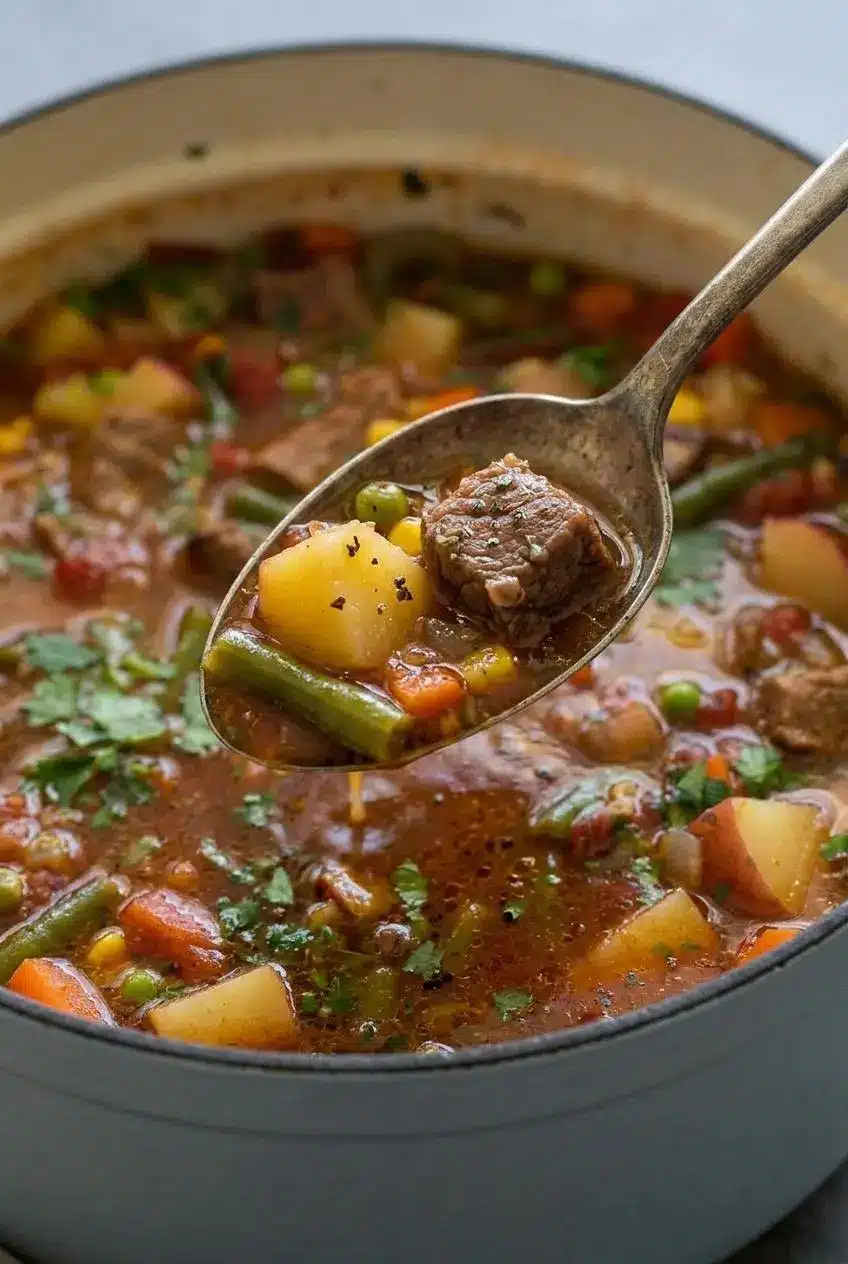
Small choices at the stove make the difference between thin soup with tough beef and a broth that tastes slow-cooked.
- Beef is pale instead of browned: moisture or a crowded pot is usually the problem. Dry the cubes well and sear in batches so they sizzle instead of simmering in their own juices.
- The broth tastes flat: scrape the browned fond from the pot with the broth before the long simmer. Finish with salt and pepper only after the vegetables are tender, since broth and tomatoes concentrate as they cook.
- The beef still feels tough: keep the pot at a quiet, low bubble and continue simmering until the connective tissue softens. Vigorous boiling can make the meat seem firmer rather than more tender.
- The soup feels thin: mash several cooked potato cubes against the side of the pot and stir them back in. For a thicker result, use a light cornstarch slurry during the final simmer.
- The vegetables are too soft: keep the staged timing. Potatoes need time, green beans need less, and corn and peas belong at the end.
Recipe Variations and Adaptations
These options change the cooking approach without changing the main stovetop version above.
Quick 30-Minute Ground Beef Version
- Use lean ground beef instead of stew meat for a faster weeknight pot.
- Brown the ground beef with the onions, carrots, and celery, breaking it into small pieces as it cooks.
- Add the broth, tomatoes, herbs, and potatoes, then simmer until the potatoes are tender. This version skips the longer simmer needed to soften cubed beef.
- For ground beef, cook it to 160 °F, as outlined in safe cooking temperatures for ground beef.
Slow Cooker Crock Pot Method
- Brown the beef and cook the aromatics in a skillet first to preserve the deeply browned flavor.
- Transfer them to a 6-quart slow cooker with the broth, tomatoes, herbs, and potatoes.
- Cook on low for 6 to 7 hours, until the beef is tender and the potatoes yield easily to a fork.
- Stir in green beans, corn, and peas near the end so they keep more color and texture.
Wholesome Grains and Cabbage Additions
- Stir in cooked pearl barley near the end for a heartier bowl. If that sounds appealing, this classic beef barley soup is another cozy option.
- Add separately cooked egg noodles just before serving so they do not absorb too much broth.
- Fold in shredded green cabbage during the later part of simmering for a rustic, lightly sweet variation.
- Use cubed parsnips, turnips, or rutabaga in place of part of the potatoes when you want more root-vegetable flavor.
Storage, Freezing, and Reheating Guide
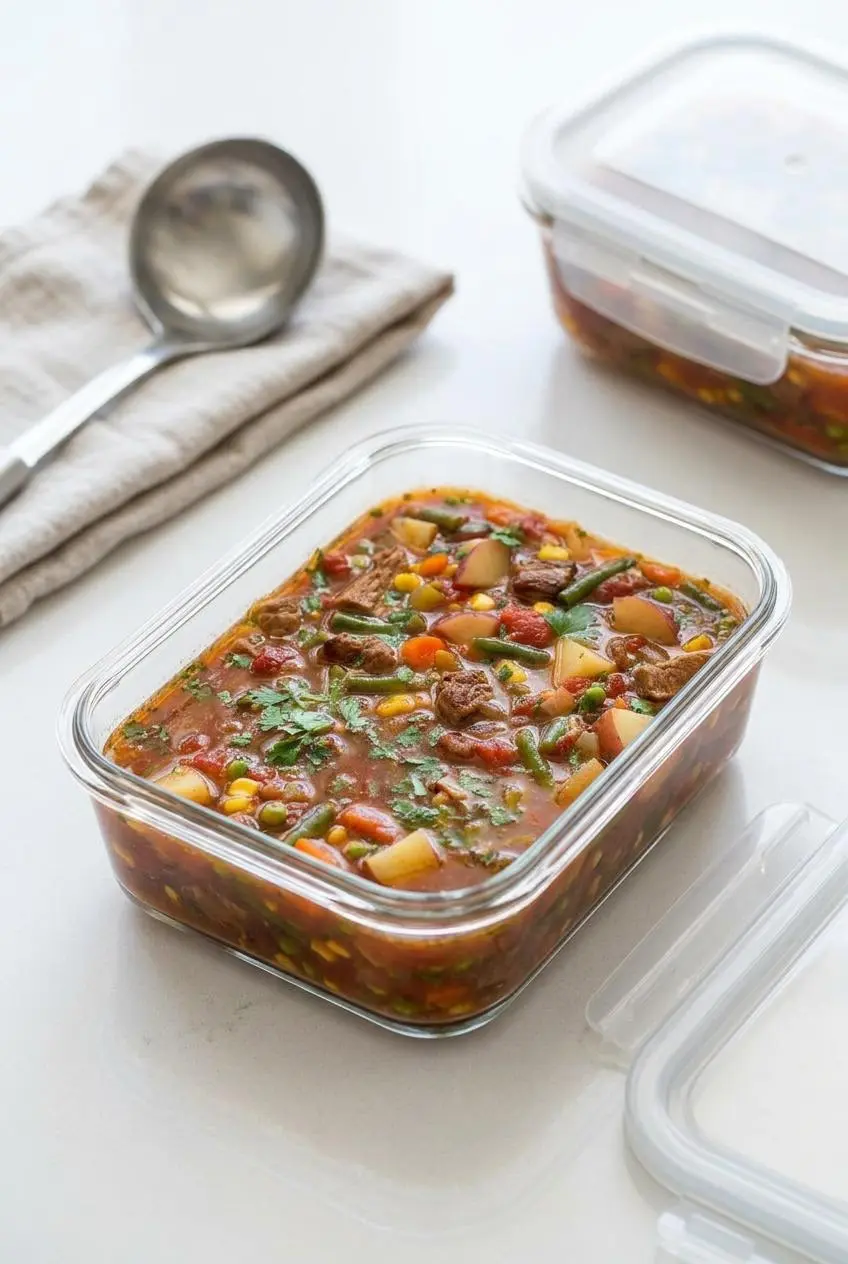
Cool leftover soup promptly in shallow containers rather than placing a large hot pot straight into the refrigerator. For safer cooling, keep soup no more than 2 inches deep in the containers or chill the pot in an ice or cold-water bath, as explained in cooling soup in shallow containers.
Store covered soup in the refrigerator for 3 to 4 days. Freeze fully cooled portions in airtight freezer-safe containers if you want to save them longer; potatoes keep a better texture when they are slightly firm rather than already very soft.
Reheat only the portion you plan to serve in a saucepan over medium-low heat, stirring occasionally. Add a splash of broth or water if the soup has thickened, and warm it until steaming throughout. Move frozen soup to the refrigerator until thawed, then reheat gently to protect the vegetables and keep the beef tender.
Serving Suggestions and Pairings
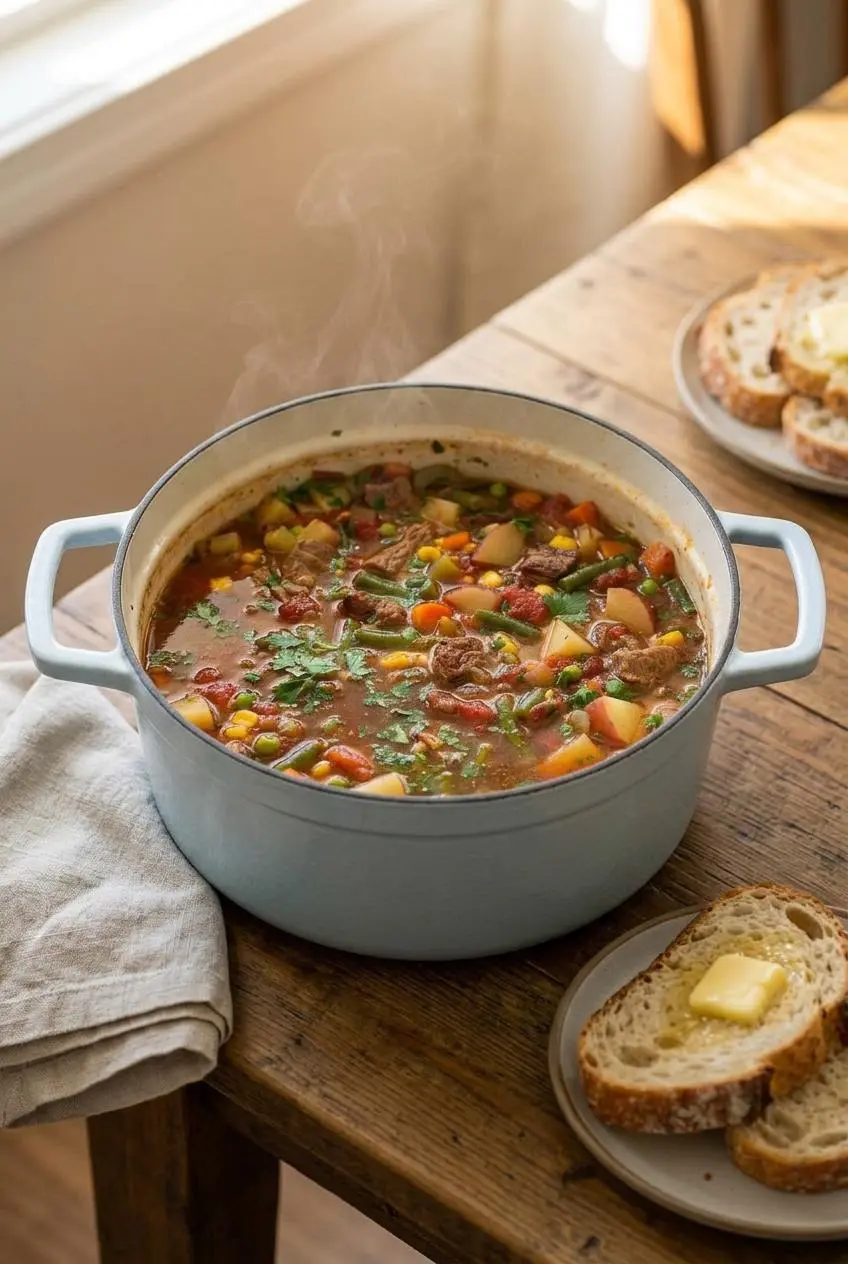
A warm bowl of soup becomes dinner with one easy side and a bright contrast.
- Serve with warm buttermilk biscuits, crusty sourdough, or skillet cornbread for soaking up the savory broth.
- Pair it with a crisp green salad tossed in a light vinaigrette to cut through the soup’s richness.
- Finish each bowl with chopped parsley and cracked black pepper for a fresh, peppery lift.
- Offer grated Parmesan at the table for anyone who wants a salty, nutty finish.
Conclusion
This soup brings together deeply browned beef, tender vegetables, and a rich tomato-herb broth in one satisfying pot. The key is patience at the beginning and a gentle simmer afterward.
Keep the vegetable additions staggered, taste before serving, and let the parsley finish the bowl with freshness. It is the kind of comforting dinner that makes the kitchen smell especially good.
Frequently Asked Questions
What Is the Best Cut of Beef for Tender Vegetable Beef Soup?
Boneless beef chuck roast is the best choice for tender soup because it contains marbling and collagen. During a gentle simmer, that connective tissue softens and helps create juicy, tender bites. Very lean cuts can dry out or stay chewy during extended cooking.
Can I Make This Soup With Ground Beef Instead of Stew Meat?
Yes. Lean ground beef works well when you want a quicker version. Brown it with the onion, carrots, and celery, then add the broth, tomatoes, herbs, and potatoes. Skip the long beef simmer and cook until the potatoes are tender before adding the quick-cooking vegetables.
How Do I Make Vegetable Beef Soup in a Slow Cooker?
Brown the beef and aromatics first, then transfer them to a 6-quart slow cooker with the broth, tomatoes, herbs, and potatoes. Cook on low for 6 to 7 hours, until the beef is tender. Add green beans, corn, peas, or leafy greens near the end so they do not overcook.
Can You Freeze Homemade Vegetable Beef Soup?
Yes. Cool the soup fully, then pack it into airtight freezer-safe containers. For the best potato texture, freeze the soup before the potatoes become overly soft. Thaw it in the refrigerator, then reheat gently on the stovetop with a splash of broth if needed.
How Can I Thicken the Broth if I Prefer a Heartier Consistency?
Mash a few cooked potato cubes against the side of the pot and stir them into the broth. This thickens the soup naturally without changing its flavor. A light cornstarch slurry also works during the final simmer if you prefer a smoother, thicker broth.
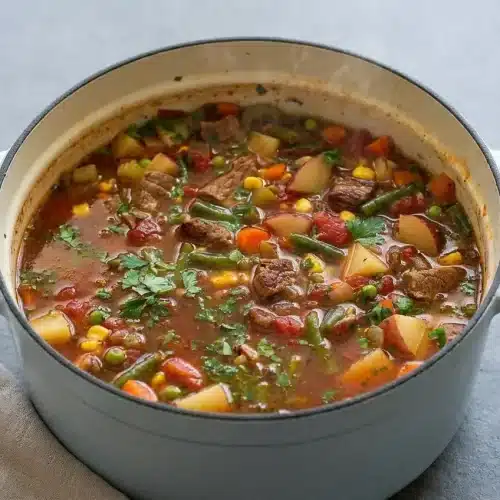
Vegetable Beef Soup Recipe

Equipment
- Large Pot
Ingredients
- 1 1/2 lbs beef stew meat
- 2 1/2 Tbsp olive oil divided
- Salt and freshly ground black pepper
- 1 3/4 cups chopped yellow onion 1 large
- 1 1/4 cups peeled and chopped carrots 3 medium
- 1 cup chopped celery 3 medium
- 1 1/2 Tbsp minced garlic 4 cloves
- 8 cups low-sodium beef broth or chicken broth
- 2 cans diced tomatoes 14 oz. each
- 1 1/2 tsp dried basil
- 1 tsp dried oregano
- 1/2 tsp dried thyme
- 1 lb red or yellow potatoes chopped into 3/4-inch cubes
- 1 1/2 cups chopped green beans 5 oz., trim ends first
- 1 1/2 cups frozen corn
- 1 cup frozen peas
- 1/3 cup chopped fresh parsley
Instructions
- Heat 1 Tbsp olive oil in a large pot over medium-high heat. The oil should look fluid and shimmer across the bottom of the pot.
- Dry half of the beef thoroughly, season it with salt and pepper, and sear it for about 4 minutes, turning once halfway through. Remove the beef when several sides have a deep mahogany-brown crust.
- Move the first batch to a plate, add 1/2 Tbsp olive oil, and brown the remaining beef in the same way. Leave the browned bits in the pot because they will enrich the broth.
- Add the remaining 1 Tbsp olive oil, then cook the onion, carrots, and celery for 3 minutes before stirring in the garlic for 1 minute. The vegetables should soften slightly and smell fragrant, with the onion turning translucent around the edges.
- Pour in the broth and tomatoes, then return the beef and add basil, oregano, thyme, salt, and pepper; bring the pot to a boil, cover, reduce to low, and simmer for 30 minutes, stirring once or twice. As the liquid goes in, scrape the pot bottom so the browned coating dissolves into the broth.
- Add the potatoes, cover the pot, and continue simmering for 20 minutes. The potato edges should be softening but still hold clean cube shapes.
- Stir in the green beans and simmer for 15 minutes more, until the beef and vegetables are tender. A fork should slide into a carrot or potato with light resistance, and the beef should no longer feel chewy.
- Add the corn and peas, simmer for about 5 minutes, then stir in the parsley. The peas and corn should be hot and bright, and the parsley should smell fresh as it wilts into the soup.