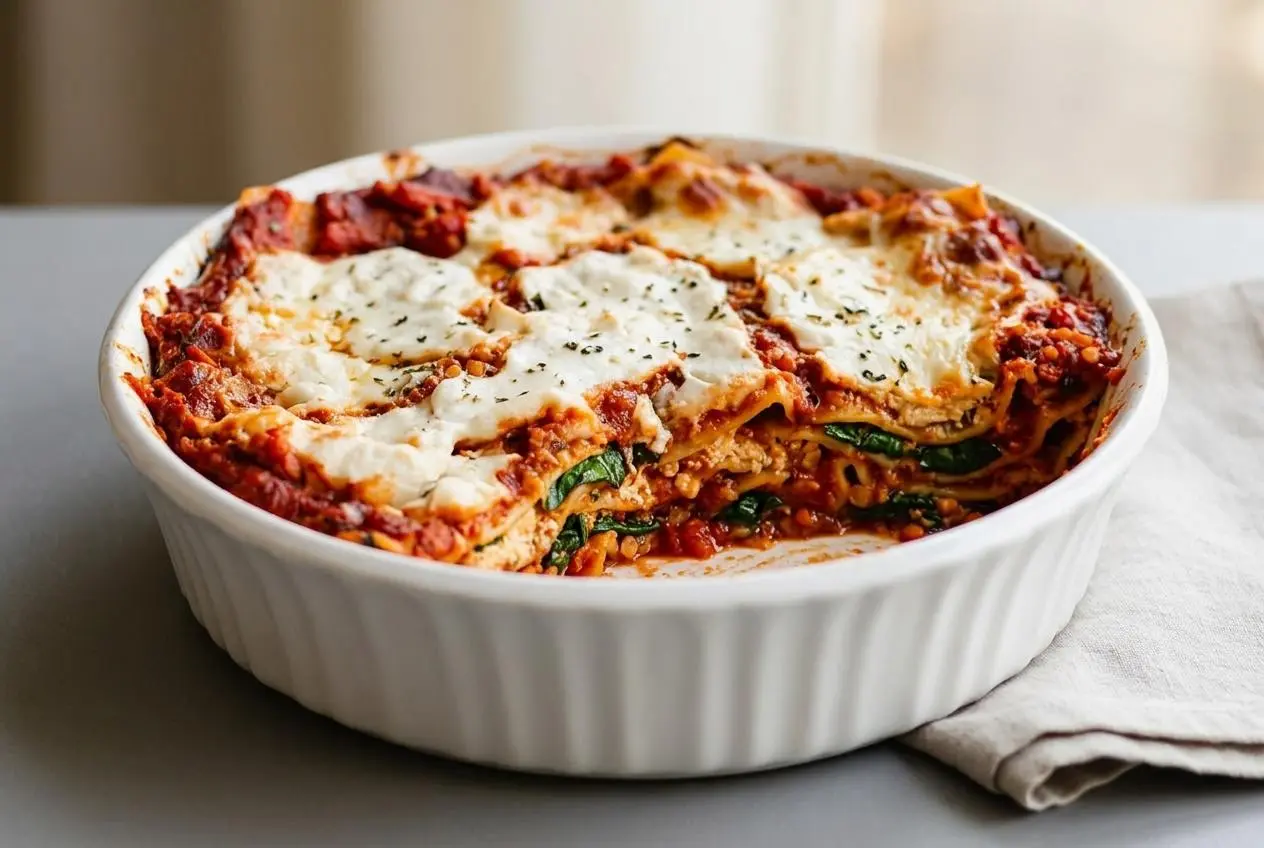
This hearty vegan lasagna layers red lentil marinara, creamy cashew-tofu ricotta, spinach, dry noodles, and dairy-free mozzarella for a bubbly, sliceable casserole baked at 350 °F.
This vegan lasagna recipe brings classic baked-pasta comfort without dairy or meat. The lentils make the marinara substantial, while the blended ricotta creates creamy layers that hold together.
Covered baking softens the noodles directly in the sauce, then an uncovered finish turns the top golden and bubbling. The rest is what makes those neat squares happen.
Pat the tofu dry before blending so the ricotta stays thick enough to spread instead of turning loose and watery.
Essential Ingredients for Rich Vegan Lasagna
Each ingredient contributes to the finished layers: lentils add body, marinara supplies moisture, cashews and tofu create richness and structure, and spinach brings fresh color beneath the melted topping.
- 1 cup dried red lentils
- (2) 25-ounce jars marinara sauce
- 1 cup raw cashews
- 14.5 ounce firm tofu (patted dry)
- 1/2 cup nutritional yeast
- 3 tablespoons fresh lemon juice (from about 2 lemons)
- 1 teaspoon salt
- 1 teaspoon dried basil
- 1 teaspoon oregano
- 1/2 teaspoon garlic powder
- 3 cups baby spinach
- 1 box lasagna noodles (about 12 noodles) (regular, gluten free or whole grain)
- Double recipe Easy Vegan Mozzarella Cheese (or 2-3 cups shredded vegan mozzarella)
Red lentils give the sauce a satisfying, finely crumbled texture that feels substantial between the pasta sheets. Marinara does double duty here: it brings tomato-herb flavor and provides the moisture that cooks the dry noodles. Choose a marinara you enjoy straight from the jar, since its seasoning comes through in every layer.
Cashews, tofu, nutritional yeast, lemon, herbs, and garlic powder turn into a tangy plant-based ricotta. The mozzarella adds the final stretchy or spoonable layer on top, while baby spinach wilts gently under the steam without requiring a separate pan.
I prefer a marinara with balanced seasoning and no added sweetness, because a bright tomato flavor keeps the rich ricotta from tasting heavy.
The Perfect Cashew-Tofu Ricotta Blend
The cashew-tofu combination works because each ingredient solves a different texture problem. Cashews become creamy when processed, adding the richness that dairy ricotta usually gets from milk fat. Firm tofu gives the mixture a faintly curdy, delicate texture so it does not eat like a smooth dip.
Process the cashews first until they look finely crumbly, then add the tofu and seasonings. Pulse until mostly smooth but not completely silky. That slight texture helps the filling resemble ricotta and keeps it from sliding out of the layers. If you want a more savory edge, stir in a little white miso and lemon zest as an optional flavor boost.
This filling also works well in lasagna stuffed shells when you want the same creamy tomato-and-ricotta flavor in a different baked pasta format.
Savory Lentil Marinara Foundation
Red lentils cook down quickly and absorb enough sauce to become tender without disappearing into it. Their small size creates a texture similar to a fine meat sauce, especially after they are folded into marinara.
Tomatoes bring acidity, while basil, oregano, garlic, and nutritional yeast round out the savory flavor. Keep the lentil marinara loose enough to spread easily. The noodles depend on that moisture as they bake.
Selecting the Right Lasagna Sheets
Regular dry noodles work well here, as do no-boil sheets and whole-grain noodles. The key is coverage, not a special brand: every pasta sheet needs contact with sauce and trapped steam to soften evenly.
For gluten-free lasagna, use noodles labeled for baking and check the package directions. Brown rice and lentil-based sheets can work nicely, but brittle edges usually mean a noodle was left exposed rather than covered with marinara.
How to Make Vegan Lasagna
Build the filling first, then assemble in a 9×13-inch casserole dish so the noodles, ricotta, spinach, and sauce stay in distinct, even layers.
- Bring the dried red lentils and 3 cups water to a boil in a medium pot, then lower the heat and simmer for about 20 minutes.
Drain the lentils through a fine strainer when they are tender, then return them to the pot and stir in both jars of marinara. - Heat the oven to 350 °F.
Give the oven time to fully preheat while you prepare the ricotta and assemble the casserole. - Process the cashews in a food processor until finely ground, then add the tofu, nutritional yeast, lemon juice, salt, basil, oregano, and garlic powder.
Pulse until the mixture is blended and thick with a lightly crumbly texture; add a few tablespoons of water only if it will not blend. - Spread about 1 cup lentil marinara over the bottom of a large 9×13-inch casserole dish, then arrange 4 to 5 uncooked noodles over it.
Cover the noodles with half the ricotta, half the spinach, and about 1 cup sauce before repeating with another noodle layer, the remaining ricotta, spinach, and a final layer of noodles. - Pour the remaining lentil marinara evenly over the top, covering exposed pasta edges, then seal the dish tightly with foil.
The sauce should reach across the entire surface so the top noodles can soften rather than dry out. - Bake the covered lasagna for 40 minutes.
The sealed foil traps steam, allowing the dry noodles to cook through inside the saucy layers. - Prepare the Easy Vegan Mozzarella Cheese while the lasagna bakes, if using, or have the shredded vegan mozzarella ready.
The topping should be ready to add as soon as the foil comes off, keeping the second bake smooth and efficient. - Remove the foil, add the vegan mozzarella, and bake uncovered for 20 minutes more.
Take the dish out when the topping bubbles and the edges look golden, then rest it for at least 15 minutes before slicing.
Step-by-Step Assembly and Baking Guide
A stable lasagna starts with sauce beneath the first noodle layer. That initial coating prevents sticking and protects the pasta from direct heat at the bottom of the dish.
Lay the noodles flat from edge to edge, overlapping only slightly if needed. Spread the ricotta gently rather than pressing hard enough to shove the noodles aside. An offset spatula makes this easier, but the back of a spoon works well too. Scatter the raw spinach in an even layer so it wilts into the ricotta and sauce instead of gathering in one soggy pocket.
Keep the layer pattern consistent: sauce, noodles, ricotta, spinach, then sauce again. The last layer of noodles needs especially generous coverage. Pasta that peeks above the sauce can toughen at the corners.
The baking happens in two useful stages. Forty minutes under tightly sealed foil creates steam and hydrates the noodles. The final 20 minutes without foil lets the dairy-free mozzarella melt, bubble, and take on a little color around the edges. Let the finished casserole stand before cutting so the hot layers settle into clean portions.
Crucial Techniques for Flawless Texture
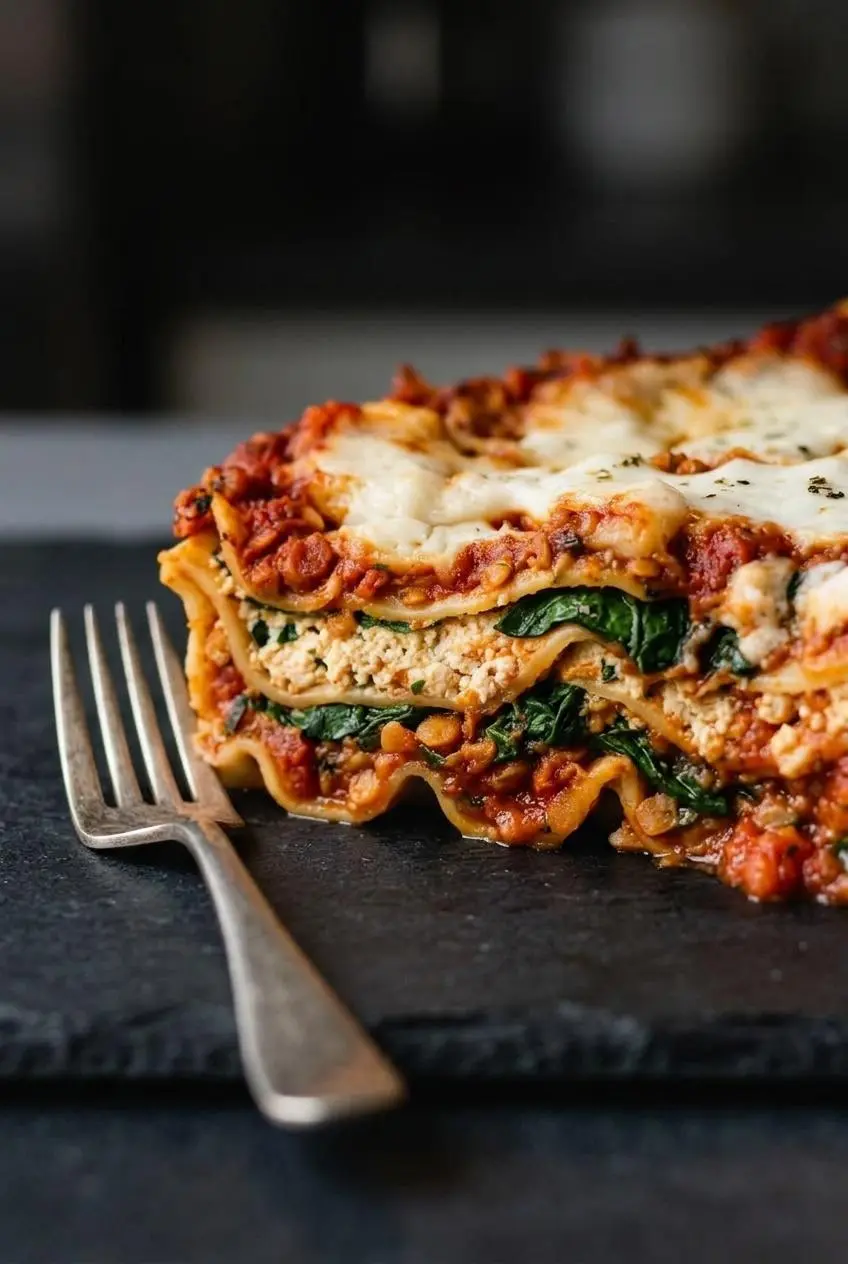
Most loose vegan lasagna comes down to excess water, not a lack of cheese. Manage moisture before layering, and the casserole will hold its shape much more reliably.
- Watery ricotta: Firm tofu still carries moisture. Pat it thoroughly dry before processing so the filling stays thick and spreadable.
- Soupy vegetable layers: Do not tuck raw zucchini, mushrooms, or other water-rich vegetables directly between the noodles. Cook them first so they release excess liquid before entering the casserole.
- Dry or firm noodle edges: Cover every exposed piece of pasta with lentil marinara before sealing the dish with foil.
- Lasagna that collapses when cut: Give it 15 to 20 minutes to rest. The starches and plant-based cheeses firm as the casserole cools slightly.
- Flat-tasting sauce: Taste the marinara before assembly. If it seems dull, choose a more assertive jar next time rather than relying on the ricotta alone to carry the flavor.
Pre-Cooking Vegetables to Banish Excess Water
If you want extra vegetables, roast sliced zucchini, bell peppers, or eggplant on a sheet pan until their surfaces look concentrated and lightly browned. For mushrooms, use a wide skillet and cook them until their released liquid evaporates. Let the vegetables cool briefly before layering.
High heat does more than remove water. It concentrates sweetness and creates deeper savory flavor, which helps the vegetables stand up to the tomato sauce. For a squash-focused baked pasta idea, try this keto zucchini lasagna after you have mastered the moisture-control approach.
No-Boil Noodle Method and Sauce Hydration
Dry noodles cook directly in this casserole because the marinara supplies liquid while the foil holds in steam. The sauce belongs below, between, and above the pasta sheets, not just in a thick layer on top.
After the covered bake, pierce the center with a fork before adding the mozzarella. The fork should pass through the pasta with little resistance. If the center still feels firm, keep the dish covered until the noodles are tender, then add the topping and finish the uncovered bake.
Dietary Swaps and Variations
Keep the main casserole as written, then use these optional changes when you need to accommodate allergies or want a different style of filling.
Nut-Free Hummus and White Bean Ricotta
For a nut-free ricotta, leave out the cashews and blend pressed firm tofu with rinsed cannellini beans or garlic hummus, plus the nutritional yeast and lemon juice from the recipe. White beans create a mild, creamy filling, while hummus adds garlic and a more savory, rounded flavor.
For a soy-free route, skip the tofu and use soaked cashews blended with white beans and lemon juice. The texture will be creamier and less curdy, so spread it gently and avoid adding extra water unless the processor truly needs help.
Gluten-Free Lasagna Instructions
Choose certified gluten-free lasagna noodles made from brown rice or lentils. Arrange them in the same layers, but take extra care that all edges sit under marinara. Gluten-free pasta can stay brittle where it is exposed to oven heat instead of sauce.
Additional Flavor and Protein Variations
- Meaty vegan lasagna: Brown plant-based ground crumbles with garlic and Italian herbs, then use them in place of some lentils or fold them into the lentil marinara for a more traditional Bolognese-style bite.
- Roasted vegetable lasagna: Add roasted bell peppers, zucchini ribbons, and sautéed cremini mushrooms with the spinach for a fuller vegetable layer without excess moisture.
- Brighter ricotta: Add lemon zest and a small amount of white miso to the filling for a sharper, more cheese-like flavor.
- Individual portions: For a rolled presentation with similar tomato and ricotta flavors, make lasagna roll ups.
Keeping Leftovers at Their Best
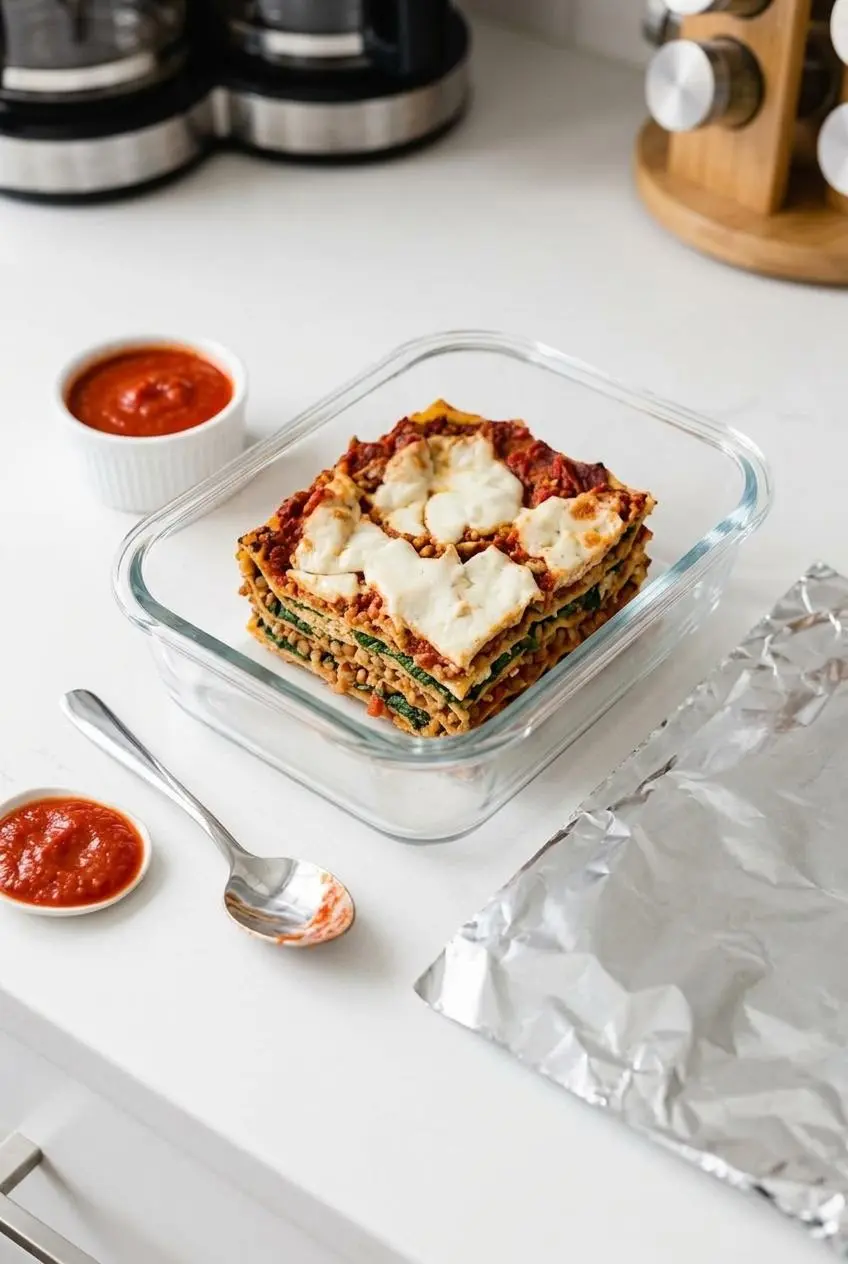
Cool leftover lasagna before transferring it to an airtight container and refrigerate it. It keeps for about 4 days. Reheat portions in a covered baking dish at 350 °F until hot in the center, adding a spoonful of marinara around the edges if they look dry.
Covering the dish helps protect the top from over-browning before the middle warms through. For the best texture, reheat only the portion you plan to eat and keep the remaining slices tightly covered.
Serving Suggestions
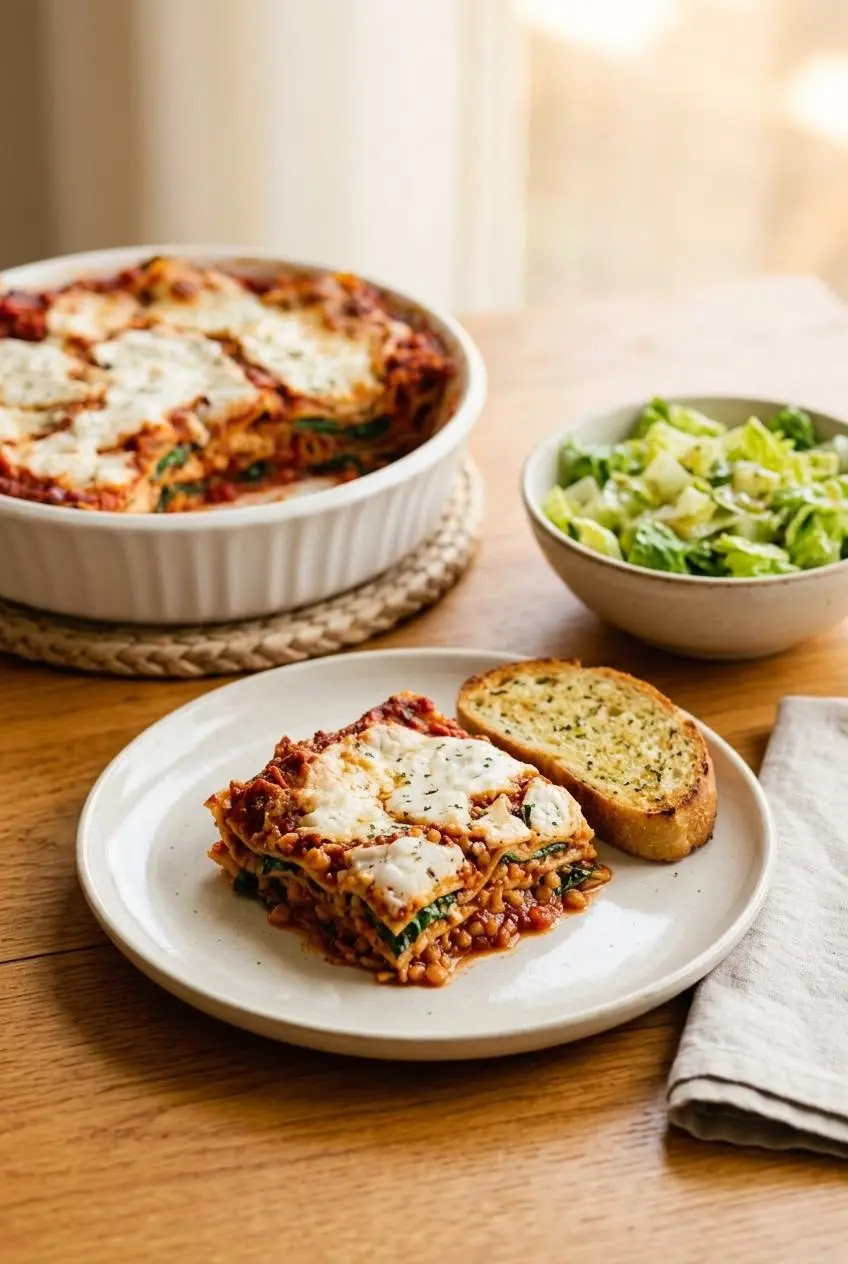
The rich, saucy layers pair especially well with something crisp or toasty alongside them.
- Serve warm slices with vegan garlic bread for a comforting dinner that makes good use of extra marinara.
- Offer rosemary focaccia for scooping up sauce from the plate.
- Balance the creamy filling with an Italian chopped green salad tossed in a bright lemon vinaigrette.
Conclusion
This lasagna delivers the cozy layers people expect from a baked Italian-American casserole, with lentil marinara for body and cashew-tofu ricotta for creamy structure.
Give the dish its full resting time before cutting, then customize future pans with roasted seasonal vegetables when you want a different twist on the same comforting format.
Frequently Asked Questions
Can You Bake Regular Lasagna Noodles Without Boiling Them First?
Yes. Regular dry noodles become tender when they are fully covered with marinara and the casserole is sealed tightly with foil for the first 40 minutes of baking. Spread sauce beneath the first layer of noodles. Cover the final noodle layer completely with marinara. Check the center with a fork after the covered bake before adding the mozzarella.
How Do You Prevent Vegan Lasagna From Becoming Runny or Watery?
Pat the tofu dry, cook moisture-heavy vegetables before layering, and let the baked lasagna rest for 15 to 20 minutes before slicing. Roast or sauté zucchini, mushrooms, eggplant, and peppers before adding them. Keep the ricotta thick enough to spread rather than pour. Do not cut into the casserole straight from the oven, when the sauce and filling are still very loose.
What Can You Substitute for Cashews in Vegan Ricotta?
Use pressed firm tofu blended with cannellini beans or garlic hummus, plus nutritional yeast and lemon juice. White beans create a mild, creamy filling, while hummus adds a more savory garlic flavor.
How Long Does Leftover Vegan Lasagna Keep and How Do You Reheat It?
Keep cooled leftovers in an airtight container in the refrigerator for about 4 days. Warm slices covered at 350 °F until hot in the center so the noodles and topping stay moist.
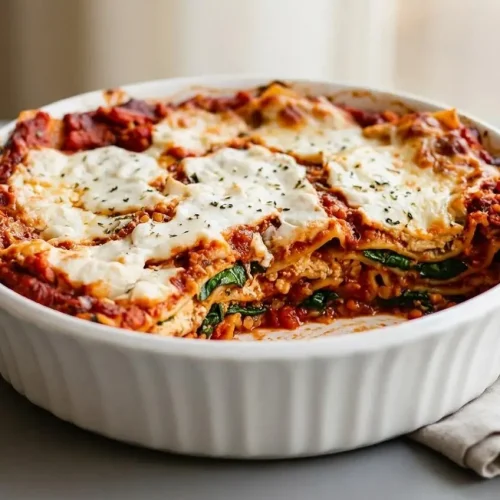
Vegan Lasagna Recipe

Equipment
- 9×13 inch casserole dish
- Food processor
- Medium pot
- Fine strainer
- Aluminum Foil
Ingredients
- 1 cup dried red lentils
- 2 25-ounce jars marinara sauce
- 1 cup raw cashews
- 14.5 ounce firm tofu patted dry
- 1/2 cup nutritional yeast
- 3 tablespoons fresh lemon juice from about 2 lemons
- 1 teaspoon salt
- 1 teaspoon dried basil
- 1 teaspoon oregano
- 1/2 teaspoon garlic powder
- 3 cups baby spinach
- 1 box lasagna noodles about 12 noodles (regular, gluten free or whole grain)
- Double recipe Easy Vegan Mozzarella Cheese or 2-3 cups shredded vegan mozzarella
Instructions
- Bring the dried red lentils and 3 cups water to a boil in a medium pot, then lower the heat and simmer for about 20 minutes. Drain the lentils through a fine strainer when they are tender, then return them to the pot and stir in both jars of marinara.
- Heat the oven to 350 °F. Give the oven time to fully preheat while you prepare the ricotta and assemble the casserole.
- Process the cashews in a food processor until finely ground, then add the tofu, nutritional yeast, lemon juice, salt, basil, oregano, and garlic powder. Pulse until the mixture is blended and thick with a lightly crumbly texture; add a few tablespoons of water only if it will not blend.
- Spread about 1 cup lentil marinara over the bottom of a large 9×13-inch casserole dish, then arrange 4 to 5 uncooked noodles over it. Cover the noodles with half the ricotta, half the spinach, and about 1 cup sauce before repeating with another noodle layer, the remaining ricotta, spinach, and a final layer of noodles.
- Pour the remaining lentil marinara evenly over the top, covering exposed pasta edges, then seal the dish tightly with foil. The sauce should reach across the entire surface so the top noodles can soften rather than dry out.
- Bake the covered lasagna for 40 minutes. The sealed foil traps steam, allowing the dry noodles to cook through inside the saucy layers.
- Prepare the Easy Vegan Mozzarella Cheese while the lasagna bakes, if using, or have the shredded vegan mozzarella ready. The topping should be ready to add as soon as the foil comes off, keeping the second bake smooth and efficient.
- Remove the foil, add the vegan mozzarella, and bake uncovered for 20 minutes more. Take the dish out when the topping bubbles and the edges look golden, then rest it for at least 15 minutes before slicing.