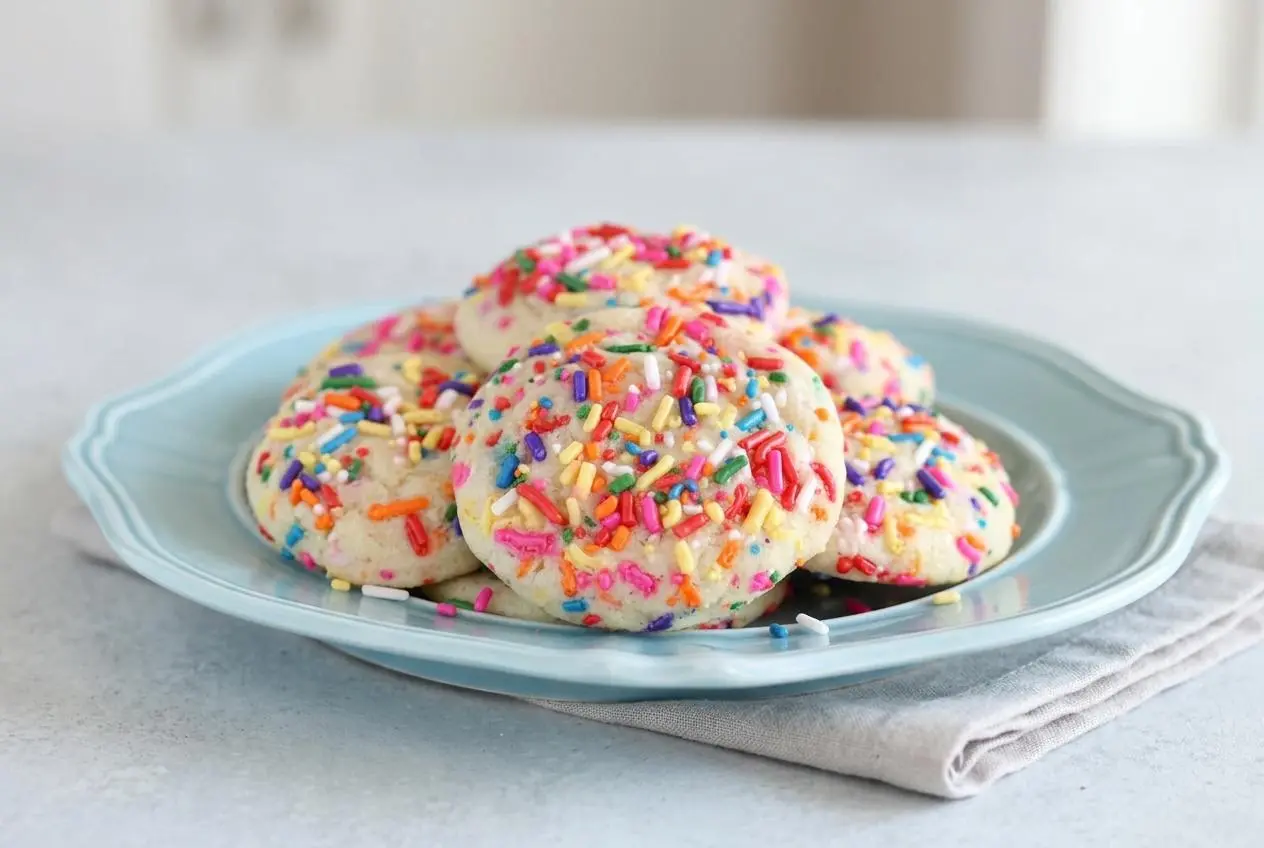
For the best soft, chewy sprinkle cookies, use cool-softened butter, fold in jimmies gently, shape the dough tall, and bake just until the edges are set and the centers still look a little soft.
Sprinkle Cookies are buttery vanilla sugar cookies with a tender center, lightly crisp edges, and bright pops of color throughout the dough. They bake quickly and don’t need a full chill to turn out thick and soft.
They’re especially good when you want something festive without fussy decorating. The big wins here are texture, shape, and sprinkles that stay cheerful instead of turning muddy. The round-cookie trick is worth it.
Set the butter out just long enough to lose its chill but not long enough to look glossy or squishy.
Key Ingredients and Their Roles
Each ingredient has a job here, from building a tender crumb to keeping the cookies tall, buttery, and colorful instead of flat or dull.
- 1 1/2 cups all purpose flour (add an extra tablespoon for thicker cookies)
- 1 1/2 teaspoons baking powder
- 1/4 teaspoon salt
- 1/2 cup unsalted butter (softened slightly but still cool)
- 3/4 cup granulated sugar
- 1 large egg
- 1 1/2 teaspoons pure vanilla extract
- 1/4 teaspoon almond extract (optional)
- 3/4 cup sprinkles
The flour gives structure, while the baking powder lifts the dough so the cookies puff instead of baking heavy. Salt sharpens the vanilla flavor, and the egg helps bind everything into a soft, cohesive dough.
Butter and sugar set the tone for texture. Creamed properly, they create a lighter crumb and help the cookies bake up thick instead of dense. Vanilla gives that classic sugar-cookie warmth, and the optional almond extract adds a bakery-style aroma that tastes a little more finished.
If you like baking by weight, 1 1/2 cups all purpose flour is about 180 g, 1/2 cup butter is 113 g, and 3/4 cup granulated sugar is about 150 g. Those numbers can help if you want a little more precision.
The Butter Temperature Rule
Butter temperature matters more here than almost anything else. You want it softened enough to beat smoothly, but still cool to the touch. It should give slightly when pressed, not slump, shine, or look partly melted.
When butter gets too warm, the fat loosens before the cookies have time to set in the oven. That leads to wide, thin, greasy cookies. Cool-softened butter holds its shape longer, which gives you thicker centers and better lift.
Almond Extract: The Bakery Secret
A small splash of almond extract changes the whole aroma. It doesn’t make the cookies taste strongly almondy. Instead, it rounds out the vanilla and gives that familiar bakery sugar-cookie flavor people often can’t quite identify.
If you prefer a pure vanilla profile, leave it out. The cookies will still be buttery and sweet, just a little more classic and a little less confectionery.
Choosing the Right Sprinkles
Use classic jimmies, the long cylinder-shaped sprinkles. They hold their shape better in thick cookie dough, and their color stays cleaner during baking.
Nonpareils are the tiny round sprinkles. In dough, they tend to dissolve faster and release color, which can turn the batter gray, greenish, or streaky. Sanding sugar is better for tops than for mixing in because it adds sparkle but not the same confetti look throughout.
I always check that my sprinkles feel dry and loose before adding them. Clumpy sprinkles can drag extra color into the dough and make streaks faster.
How to Make Soft Sprinkle Cookies
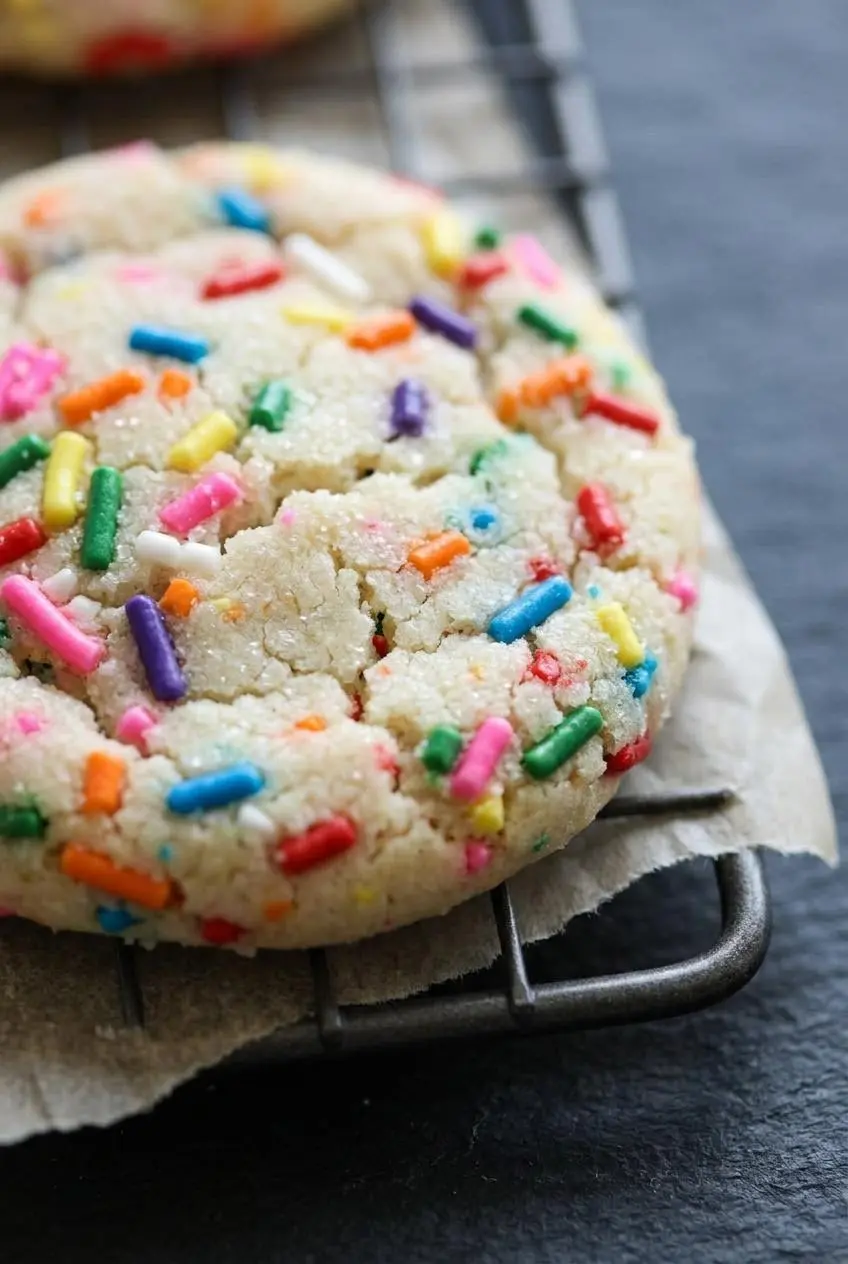
This method is quick, but a few small details make the difference between thick bakery-style cookies and ones that spread too far.
- Heat the oven to 350°F and line two baking sheets with parchment paper.
The parchment helps the bottoms bake evenly and keeps cleanup easy. - Whisk the flour, baking powder, and salt together in a bowl, then set the mixture aside.
Mixing the dry ingredients first helps the leavening and salt distribute evenly through the dough. - Beat the butter until smooth, then add the sugar gradually and mix for about 1 minute before blending in the egg, vanilla extract, and almond extract.
The mixture should look pale yellow, a little fluffy, and slightly aerated rather than heavy or greasy. - Mix in the flour mixture just until no dry streaks remain, then stir in 1/2 cup sprinkles by hand.
Stop as soon as the dough comes together so the cookies stay tender and the colors stay bright. - Scoop 2-tablespoon portions, roll each one into a ball, and press the tops into the remaining 1/4 cup sprinkles on a plate.
Keep the dough balls taller than wide so the cookies bake with thicker, softer centers. - Arrange the dough balls on the prepared baking sheets with space between them and bake for 9-11 minutes.
The edges should look set while the centers stay pale, soft, and lightly cracked. - Set the baking sheets on wire racks to cool, then repeat with the remaining dough only after the pans have cooled completely.
Warm pans can start melting the next batch before it bakes, which encourages spreading.
Creaming the Butter and Sugar
This stage builds the base texture. Beating butter first smooths it out, and adding the sugar gradually helps the crystals start cutting tiny air pockets into the fat. After about a minute, the mixture should look lighter in color and fluffier in texture.
If it still looks dense and slick, keep mixing briefly. If it looks shiny and very soft, the butter may have been too warm from the start.
Mounding the Dough for Thicker Cookies
Shape matters more than people expect. A low, wide dough ball starts spreading outward almost immediately, while a taller mound gives the center more height to hold onto as the edges set.
A cookie scoop helps keep the portions even, but the key detail is the final shape. Think more dome than hockey puck.
The Cookie-Scoot Swirl Technique
If your cookies come out a little lopsided, fix them while they’re still hot. Place a large round glass or round cookie cutter over one cookie and swirl gently in a small circle. The warm edges tuck inward and smooth out fast.
Do this right after the pan comes out of the oven, before the cookies firm up. Use light pressure. You’re guiding the edges, not smashing the cookie.
The Science of Perfect Cookie Texture
Soft cookies come from a chain of small choices. Measure carefully, keep the butter at the right temperature, and pull the cookies before the centers look fully done.
Why Underbaking Is Non Negotiable
These cookies stay soft because they finish setting on the hot baking sheet after you pull them from the oven. If you wait until the centers look fully baked, the final texture will be drier and firmer.
Look for edges that are set and centers that still seem a little soft and pale. That slight underbaked look is exactly what you want. Also, skip tasting raw dough or batter, since raw flour, dough, or batter can carry harmful bacteria.
How to Measure Flour Without a Scale
Too much flour is one of the fastest ways to end up with dry or heavy cookies. If you’re using cups, fluff the flour first, spoon it into the measuring cup, and level it off with a straight edge.
Don’t scoop straight into the bag. That packs the flour down and can add more than you meant to use. If you like a weight reference, 1 1/2 cups all purpose flour is about 180 g.
To Chill or Not to Chill
This dough is built to bake right away, so you can go from mixing bowl to oven without the usual wait. That’s ideal when you want soft sprinkle cookies fast and your kitchen is reasonably cool.
A brief chill can still help in one situation: the butter got too soft or the room is warm enough that the dough feels loose. In that case, chilling the shaped dough balls for 20 minutes can help control spreading and slightly deepen the buttery flavor. You don’t need a long rest for this recipe to work well.
Troubleshooting Common Sprinkle Cookie Mistakes
Most sprinkle cookie problems come down to butter temperature, flour handling, or the wrong kind of sprinkles. These fixes are easy once you know what to watch for.
Why Did My Cookies Spread So Flat?
- Warm or melted butter is the usual culprit. Start with butter that is soft but still cool, and avoid dough that looks glossy.
- Hot baking sheets can make the next batch spread before the structure has time to set. Let pans cool fully between rounds.
- If the first tray spreads more than expected, chill the remaining shaped dough briefly before baking. That can tighten the fat back up enough to rescue the batch.
How to Prevent Tough and Dense Cookies
- Over-mixing after the flour goes in develops gluten. Mix only until the last dry streak disappears.
- Packed flour can make the dough too stiff. Spoon and level it, or use the weight measurement.
- Stir the sprinkles in by hand at the end. That keeps the dough tender and prevents extra color bleeding from aggressive mixing.
Avoiding Gray or Bleeding Dough
- Use jimmies for mixing into the dough. Their longer shape and firmer coating help them stay colorful during baking.
- Avoid nonpareils in the dough. Their tiny round shape melts and leaks color much faster once moisture and heat hit them.
- If you want extra sparkle, press decorative sprinkles on top instead of mixing delicate ones all the way through.
Make-Ahead and Freezing Tips
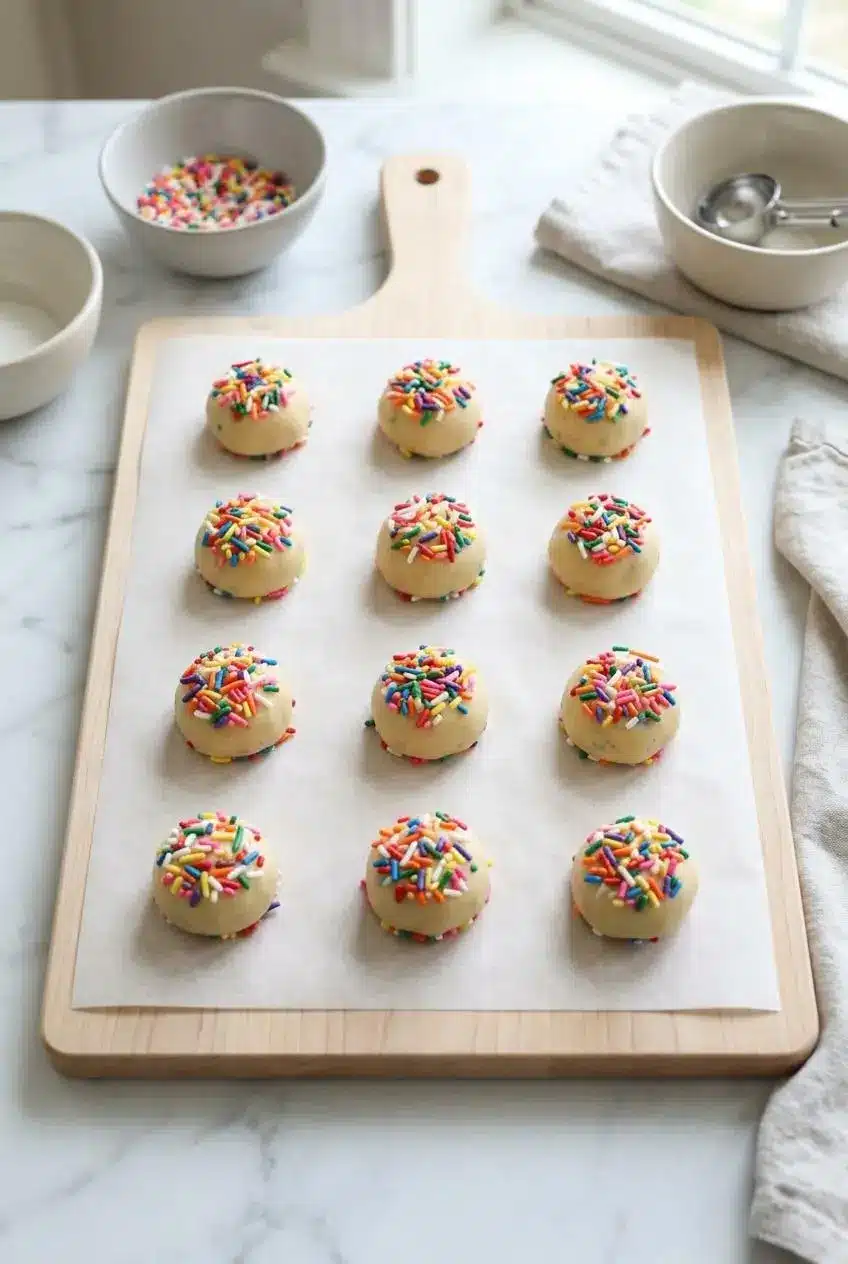
You can break up the prep if that helps, and this dough also handles freezing well when shaped first.
Rolling and Decorating Before Freezing
Shape the dough into balls first, then press the tops into sprinkles before freezing. That way they’re ready to bake straight from cold, and the sprinkle topping sticks better than if you try to add it later.
Freeze the dough balls on a flat tray until firm, then transfer them to a well-sealed container or freezer bag. The recipe data supports freezing them for up to 3 months.
How to Bake Frozen Dough Without Thawing
Bake the dough straight from frozen at the same 350°F oven temperature. Add 1 to 2 minutes to the baking time and keep the same visual cue: set edges with soft-looking centers.
If the tops lose a little color in the freezer, press on a few more jimmies just before baking. It freshens up the finish nicely.
Keeping Baked Cookies Soft at Room Temperature
Once the cookies are fully cool, store them in an airtight container so they stay tender and don’t dry out. If your kitchen runs warm, good refrigeration habits matter for perishable ingredients before baking, and refrigerator temperatures should stay at 40°F or below.
A slice of sandwich bread in the container can help maintain softness, especially if you’re keeping the cookies for snacking over the next stretch of days. Replace the bread if it dries out.
Fun Variations for Holidays
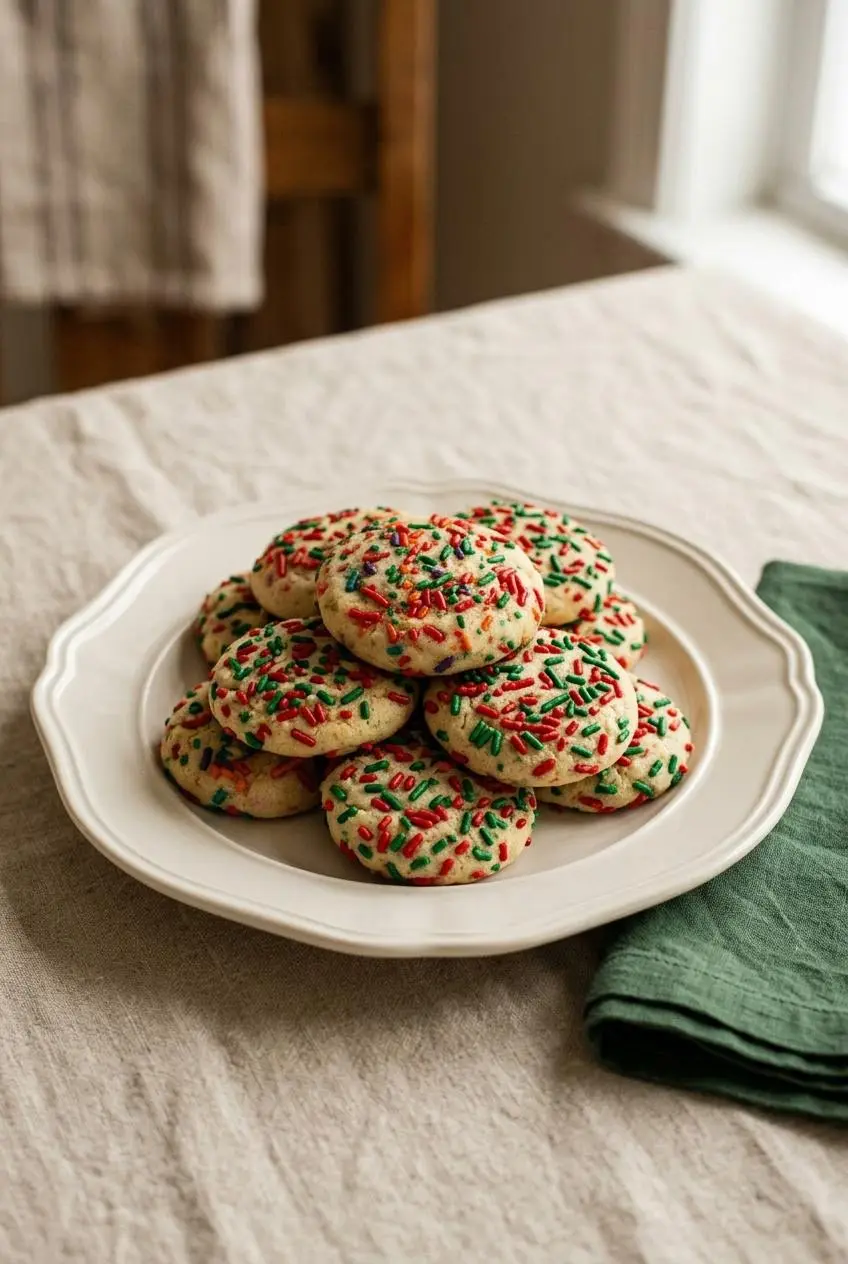
These cookies are easy to adapt without changing the base dough, which makes them handy for parties, holiday trays, and classroom treats.
Seasonal and Holiday Themes
Swap the rainbow jimmies to match the occasion. Red and green feel classic for Christmas, pastel shades work beautifully in spring, and orange with black makes them instantly Halloween-ready.
For pink, red, and white baking ideas, take a look at valentines day cookies. If you want another colorful option with a different look, jello sugar cookies are a fun direction too.
Classic Plain Drop Sugar Cookies
You can leave the sprinkles out entirely and keep the rest of the dough the same. The result is a soft, buttery vanilla cookie with a crackly top and a more classic sugar-cookie look.
For a holiday tray with a more old-fashioned buttery style, christmas butter cookies make a nice contrast beside these softer cookies.
Conclusion
These cookies deliver exactly what most people want from a sprinkle cookie: soft centers, buttery vanilla flavor, and bright color without complicated steps. The biggest keys are cool-softened butter and pulling them from the oven while the centers still look a little soft.
Once you get those two details right, the rest is easy. Keep a jar of jimmies around and you’re never far from a cheerful batch.
Frequently Asked Questions
What are the best sprinkles to use in cookie dough?
Jimmies are the best choice. They are the long, cylinder-shaped sprinkles. They hold their color and shape better in the oven. Nonpareils are more likely to bleed and turn the dough muddy.
Do I need to chill the cookie dough?
No, this recipe is designed to bake without a full chill. Bake it right away if the dough feels cool and holds its shape. If your kitchen is warm or the butter got too soft, chill the shaped dough balls for 20 minutes. That short chill helps reduce spreading.
Can I freeze sprinkle cookie dough?
Yes, this dough freezes well. Roll the dough into balls first and press the tops into sprinkles. Freeze the shaped dough balls until firm, then move them to a sealed container. The recipe supports freezing for up to 3 months, and you can bake them straight from frozen.
How do I get perfectly round cookies?
Use the cookie-scoot trick while the cookies are still hot. Set a round glass or large round cookie cutter over one cookie. Swirl gently in a small circle right after baking. The warm edges tuck into a neat round shape without flattening the center.
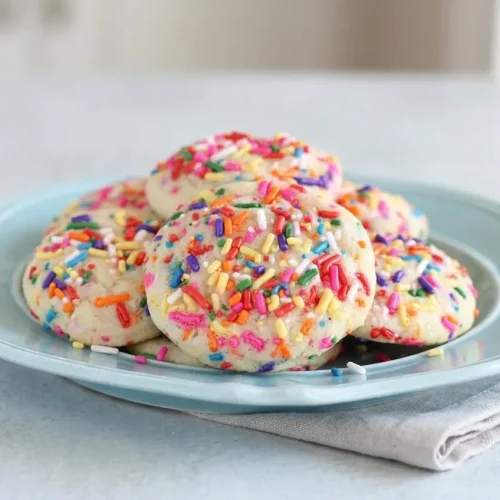
Sprinkle Cookies

Equipment
- Hand Mixer or Stand Mixer
- Baking Sheets
- Parchment Paper
- Wire Racks
Ingredients
- 1 1/2 cups all purpose flour add an extra tablespoon for thicker cookies
- 1 1/2 teaspoons baking powder
- 1/4 teaspoon salt
- 1/2 cup unsalted butter softened slightly but still cool
- 3/4 cup granulated sugar
- 1 large egg
- 1 1/2 teaspoons pure vanilla extract
- 1/4 teaspoon almond extract optional
- 3/4 cup sprinkles
Instructions
- Heat the oven to 350°F and line two baking sheets with parchment paper. The parchment helps the bottoms bake evenly and keeps cleanup easy.
- Whisk the flour, baking powder, and salt together in a bowl, then set the mixture aside. Mixing the dry ingredients first helps the leavening and salt distribute evenly through the dough.
- Beat the butter until smooth, then add the sugar gradually and mix for about 1 minute before blending in the egg, vanilla extract, and almond extract. The mixture should look pale yellow, a little fluffy, and slightly aerated rather than heavy or greasy.
- Mix in the flour mixture just until no dry streaks remain, then stir in 1/2 cup sprinkles by hand. Stop as soon as the dough comes together so the cookies stay tender and the colors stay bright.
- Scoop 2-tablespoon portions, roll each one into a ball, and press the tops into the remaining 1/4 cup sprinkles on a plate. Keep the dough balls taller than wide so the cookies bake with thicker, softer centers.
- Arrange the dough balls on the prepared baking sheets with space between them and bake for 9-11 minutes. The edges should look set while the centers stay pale, soft, and lightly cracked.
- Set the baking sheets on wire racks to cool, then repeat with the remaining dough only after the pans have cooled completely. Warm pans can start melting the next batch before it bakes, which encourages spreading.