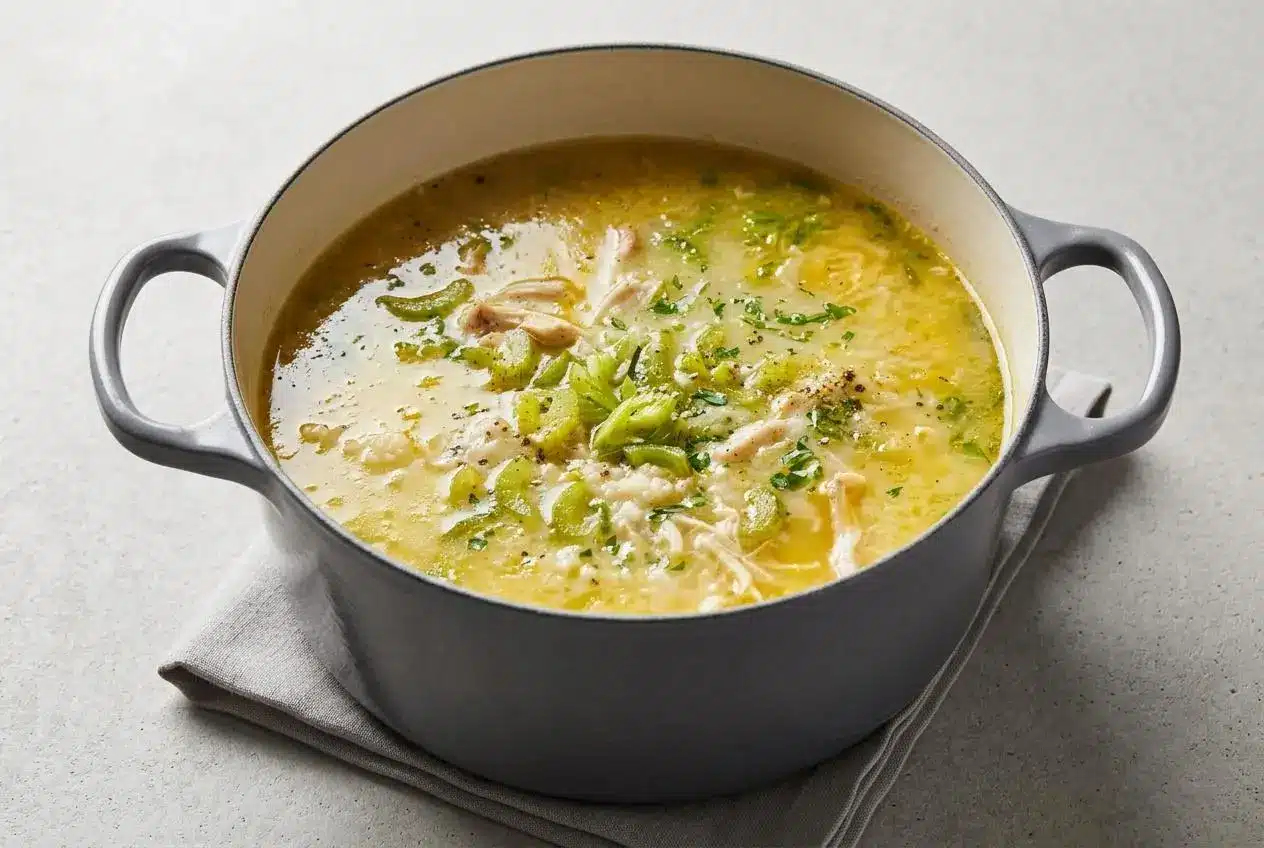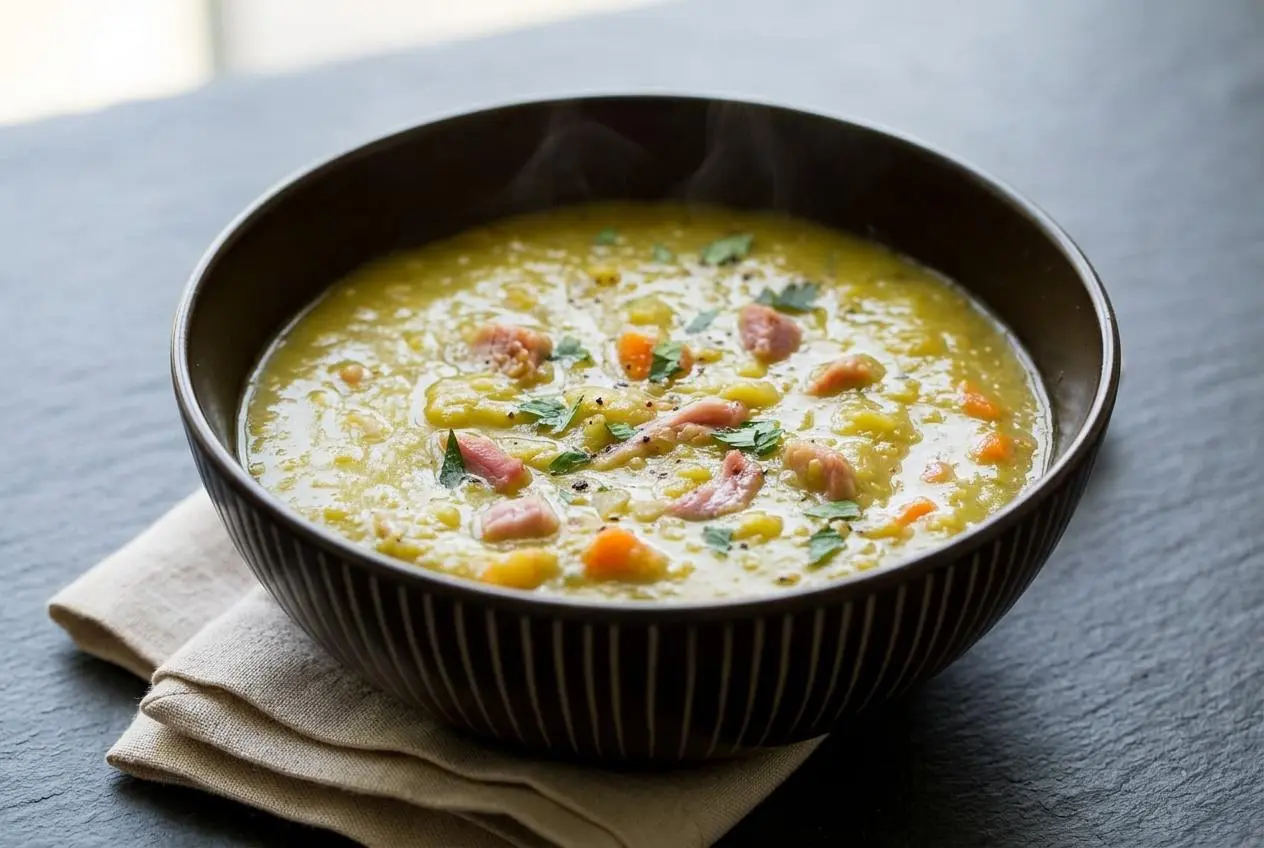
Split pea soup is a thick, hearty soup made with dried split peas, aromatics, herbs, broth, and a ham bone, and the peas do not need soaking before cooking.
Split pea soup is one of those classic pots that does most of the work on its own. As it simmers, the peas soften, the broth turns silky, and the ham adds deep smoky flavor.
It’s especially good when you want something warm, filling, and forgiving. The biggest trick is timing the salt and carrots so the soup stays balanced and the vegetables keep their shape.
Pick through the dried peas before you rinse them, because tiny pebbles and bits of field debris do occasionally sneak into the bag.
Ingredients
Each ingredient pulls its weight here, building body, savoriness, aroma, and that signature thick texture that makes this soup so cozy.
- 1 Tbsp olive oil
- 1 1/2 cups chopped yellow onion (1 medium)
- 1 1/4 cups chopped celery (about 3 ribs)
- 1 tsp minced garlic (1 clove)
- 4 cups unsalted chicken broth
- 4 cups water
- 1 (16 oz) bag dried split peas, picked over and rinsed
- 2 bay leaves
- 1 1/2 tsp chopped fresh thyme, or 1/2 tsp dried
- Salt and freshly ground black pepper
- 1 1/2 lb meaty ham bone or ham shanks
- 1 cup chopped carrots
- Chopped fresh parsley, for garnish (optional)
The split peas are the backbone of the soup. As they simmer, they soften and release starch, which gives the broth its naturally creamy body without any added cream.
The onion, celery, and garlic build the savory base. Thyme and bay leaves add that old-school soup aroma that makes the kitchen smell like dinner long before the pot is ready.
The ham bone or ham shanks do two jobs at once: they flavor the broth and give you tender pieces of meat to stir back in later. Unsalted chicken broth matters here because ham can vary a lot in saltiness, and a lower-sodium start gives you control at the end.
I always choose a ham bone with a little extra meat clinging to it, because those shreds stirred back into the pot make the finished soup feel much heartier.
How to Make Classic Split Pea Soup
- Warm the olive oil in a large soup pot or Dutch oven over medium-high heat, then cook the onion and celery for 3 minutes before adding the garlic for 1 minute more.
The vegetables should start to soften and smell sweet and savory, but they do not need to brown. - Pour in the chicken broth and water, then add the split peas, bay leaves, thyme, a light seasoning of salt, and black pepper to taste.
The peas will settle into the liquid, and the pot should look loose and brothy at this stage. - Set the ham bone or ham shanks into the pot, bring everything to a boil, then lower the heat to medium-low, cover, and simmer for 60 to 80 minutes, stirring now and then.
You’ll know this stage is working when the broth smells deeply smoky and the peas begin to swell and soften. - Lift out the ham and let it rest for 10 minutes, then shred or dice the meat and keep it covered.
The meat should come away easily once it has cooled slightly, and the bone will have given the broth a fuller, richer taste. - Stir the carrots into the soup, cover again, and keep simmering for 30 to 60 minutes, stirring occasionally, until the peas have mostly broken down.
Fully cooked split peas look collapsed and creamy, while undercooked ones still hold a firm, grainy center. - Return the ham to the pot, taste, and add more salt if needed, then serve warm with parsley if desired.
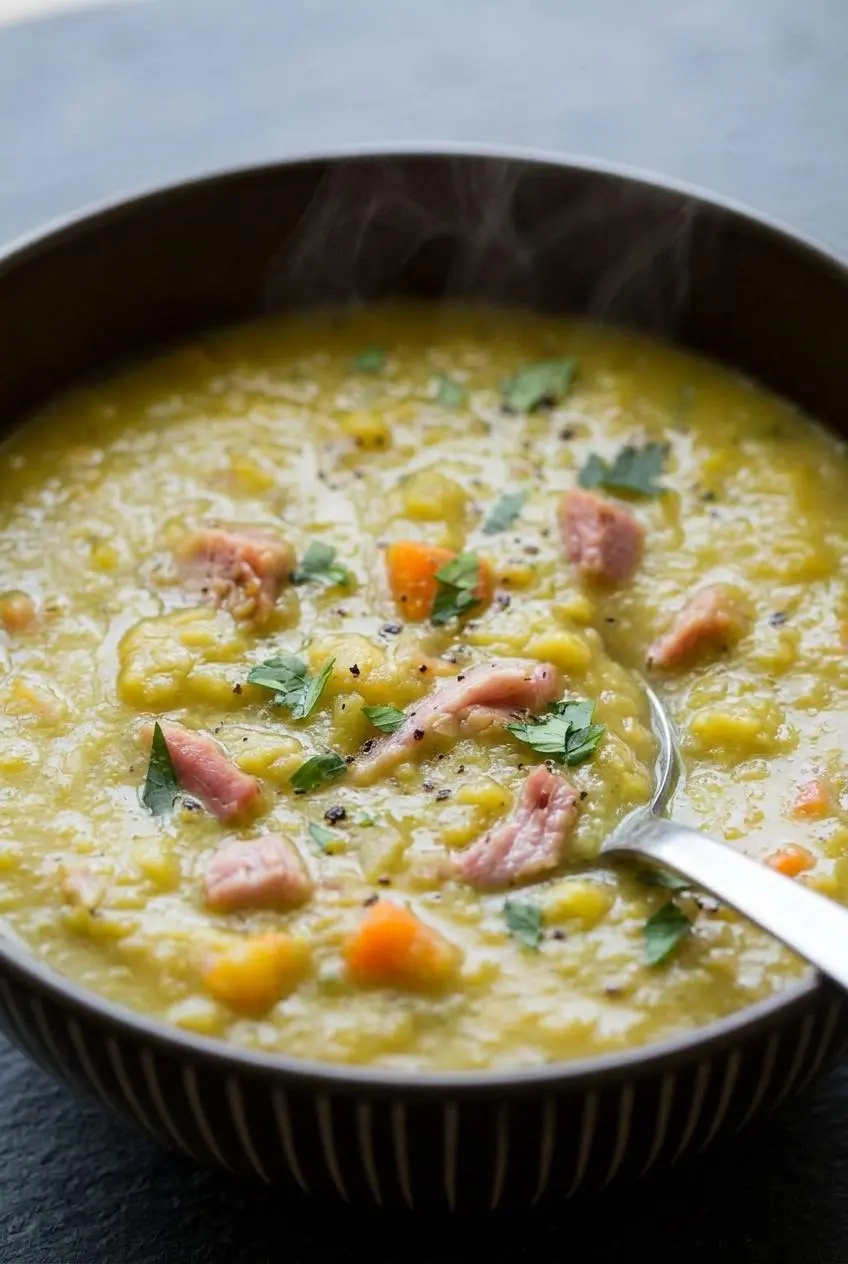
The finished soup should be thick enough to coat the spoon, with soft peas, tender carrots, and little bits of smoky ham throughout.
If you like a more rustic bowl, stop cooking once most of the peas have broken down but a few still hold their shape. For a smoother texture, keep simmering gently and stir often, since split peas naturally melt into the broth without any blender help.
Ingredient Explanations and Substitutions
This is where a few smart choices make the soup taste fuller and save you from common problems like salty broth or peas that never seem to soften.
Dried split peas do not need soaking. Unlike whole dried peas or some beans, they’re already split, so water reaches the center quickly and they soften right in the pot as they simmer.
Ham bones, ham shanks, and diced ham all work a little differently. A meaty ham bone gives the deepest broth because the bone, fat, and attached meat all simmer together. Ham shanks also bring strong smoky flavor and usually plenty of meat. Diced ham is useful if that’s what you have, but the broth will taste less rounded because it lacks the slow release you get from bone-in pieces.
If you’re using a leftover holiday ham bone, trim off any hard glaze or very sweet crust before adding it to the pot. You want smoky, savory depth here, not extra sugar. If you like cooking with leftover ham bones, ham and bean soup is another great way to use them.
Unsalted chicken broth is especially helpful in this recipe. Ham can range from mildly seasoned to quite salty, so starting with unsalted or low-sodium broth keeps the soup from tipping too far. It’s much easier to add salt at the end than to fix an over-salted pot.
If you only have low-sodium broth, that’s still a solid choice. If you only have regular broth, hold back on the salt early and taste carefully once the ham has finished cooking.
Tips for the Best Split Pea Soup
A pot of split pea soup is pretty forgiving, but these small choices make the texture creamier and the flavor cleaner.
- Wait on most of the salt. The ham seasons the broth as it cooks, so a light hand early on prevents a soup that tastes flat-out salty later.
- Pick over the peas before rinsing them. They’re an agricultural product, and an occasional pebble is reason enough to take a quick look.
- Give the peas time. If the simmer is rushed, they can stay grainy and firm instead of turning soft and creamy.
- Add carrots later, as this recipe does. That timing keeps them tender but still recognizable instead of fading into orange mush.
- If you want even more carrot texture, hold back part of the chopped carrots and add that portion toward the end of the second simmer. You’ll get some that melt in and some that keep a gentle bite.
- If the soup looks thinner than you want near the end, uncover the pot and let it simmer a bit longer. The extra evaporation concentrates flavor and thickens the broth naturally.
- Skip the food processor. Split peas break down on their own, and mechanical pureeing can turn the texture pasty.
A small squeeze of lemon juice and a little lemon zest right before serving can wake up the whole pot. You do not need much. The brightness cuts through the earthy peas and smoky ham without making the soup taste lemony.
If your ham is especially smoky or salty, that fresh finish helps even more. It’s the kind of last-minute adjustment that makes the bowl taste balanced instead of heavy.
The Perfect Topping: Homemade Garlic Croutons
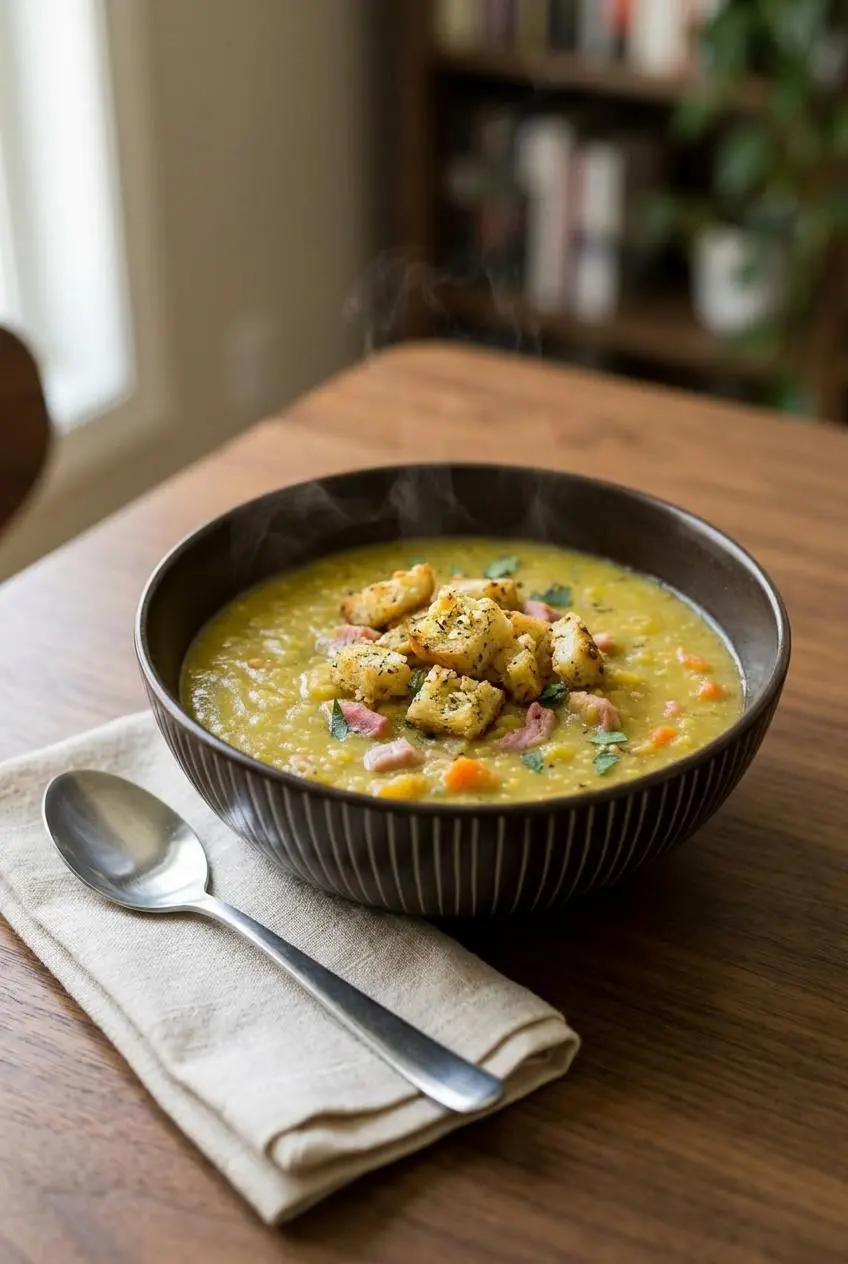
A crunchy topping changes the whole bowl. Split pea soup is soft and velvety, so crisp garlic croutons give it the contrast it loves.
Cut sturdy bread into cubes and toss them with olive oil, minced garlic, a pinch of salt, black pepper, and a little dried or fresh herb if you like. Spread them on a baking sheet in one layer and bake until golden and crisp, shaking the pan once so they color evenly.
Let them cool briefly before topping the soup. They’ll stay crisper that way and won’t disappear into the bowl on contact. Fresh parsley on top keeps the finish bright, and warm cornbread or crusty sourdough on the side turns the soup into a full meal.
Alternative Cooking Methods: Slow Cooker and Instant Pot
If you want the same cozy result with a different schedule, both appliance methods work well. The key is still the same: give the peas enough time to fully soften and add the carrots late enough that they do not fall apart.
Crockpot Slow Cooker Method
Sautéing the onion, celery, and garlic first will give you the best flavor, then transfer them to the slow cooker with the broth, water, split peas, thyme, bay leaves, and ham bone or shanks. Cook on low for 6 to 8 hours, until the peas are tender and the ham is ready to shred.
Remove the ham, let it rest briefly, then shred or dice the meat and keep it covered. Add the carrots during the final hour so they turn tender without going mushy, then stir the ham back in and season at the end.
Instant Pot Pressure Cooker Method
Use the sauté function for the onion, celery, and garlic, then add the broth, water, split peas, thyme, bay leaves, and ham. Cook on high pressure for 15 to 20 minutes and allow a natural release.
Once the pressure drops, remove the ham and shred or dice the meat. Stir in the carrots and simmer on sauté mode until they soften, then return the ham and adjust the seasoning.
How to Make Vegetarian Split Pea Soup
You can absolutely make a meatless version and still get a satisfying, savory pot. The flavor profile changes, but it can still be full and comforting rather than thin or flat.
Swap the chicken broth for vegetable stock and leave out the ham bone or shanks. To replace some of that smoky depth, add smoked paprika near the beginning or use sliced leeks along with the onion and celery for a sweeter, deeper base.
Without ham, seasoning becomes more straightforward, so taste earlier and adjust salt as needed. A little black pepper, thyme, bay leaves, and a bright finish from parsley or lemon help keep the flavor lively.
If you enjoy meatless legume soups, hearty chickpea soup is another cozy option for the same kind of dinner mood.
You can also add diced red or yellow potatoes during the final stretch of cooking for an even heartier vegetarian bowl. Keep that as an optional variation, since the main recipe already thickens beautifully on its own.
How to Store and Digest Split Pea Soup
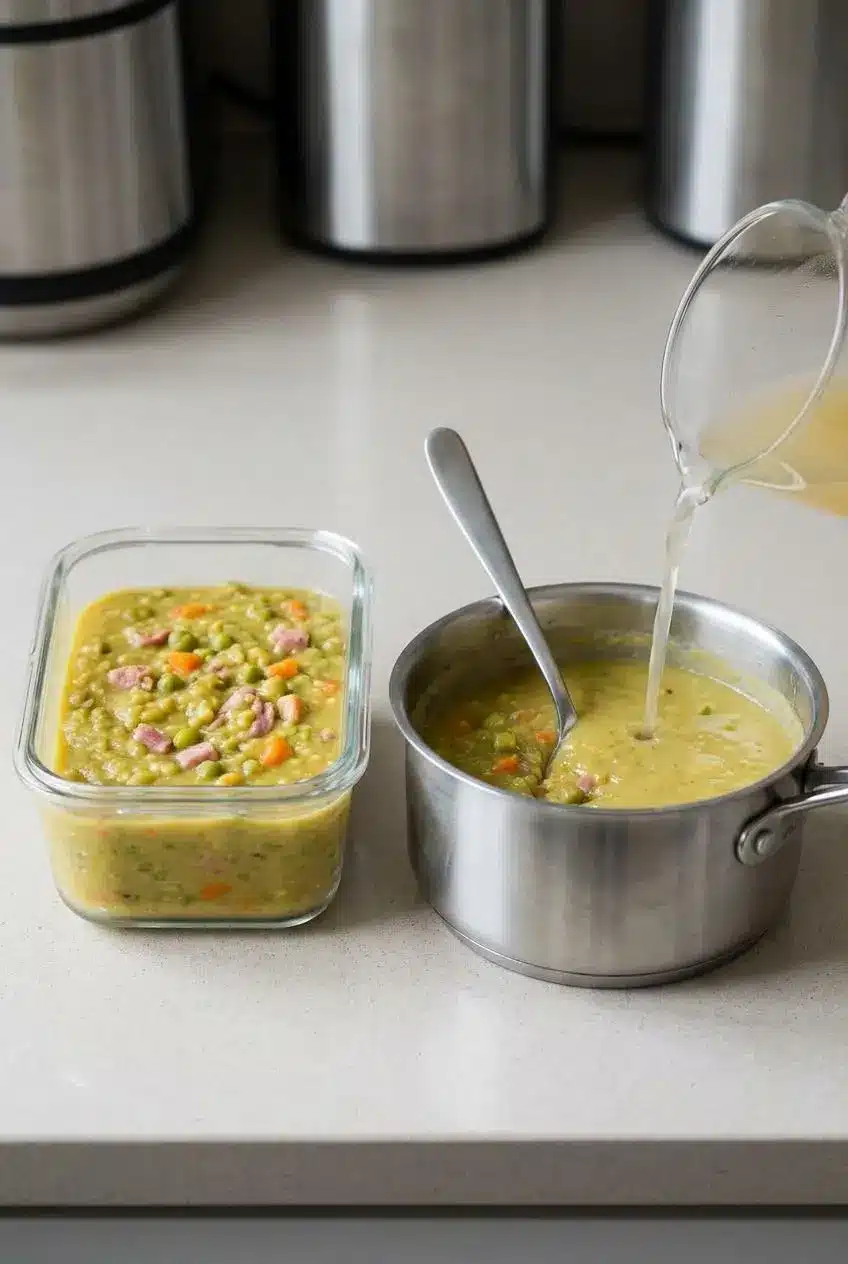
Leftover split pea soup changes a lot as it cools, and that’s normal. The peas release starch as they cook, so once the soup chills, that starch firms up and the pot can turn very thick, almost sliceable.
To reheat it, warm it gently on the stovetop over low heat and stir in a splash of water, chicken broth, or vegetable stock until the texture loosens back into a creamy soup. Add the liquid gradually so you can stop when it reaches the consistency you like.
If you’re storing leftovers, cool the soup and transfer it to a tightly covered container before refrigerating. The croutons are best kept separate so they stay crisp.
For easier digestion, rinse the split peas well and cook them until fully soft. Undercooked peas can stay a little chalky in the center, and that firmer texture tends to feel heavier. Some people also find a moderate portion easier than a very large bowl, especially when the soup is extra thick and fiber-rich.
If the soup tastes a bit dull after chilling, that usually comes from the starch muting the seasoning. A fresh grind of black pepper, a little parsley, or that small squeeze of lemon can bring it back to life.
Conclusion
This soup earns its place with big comfort and very little fuss. When the peas fully soften and the ham has time to flavor the broth, you get a thick, smoky bowl that feels like real cold-weather cooking.
The best habit to keep in mind is simple: season lightly at first and finish the salt at the end. That one move keeps the whole pot balanced and makes the leftovers just as satisfying.
Frequently Asked Questions
Do split peas need to be soaked?
No. Split peas are already split, so they soften directly in the pot without soaking first. What they do need is a steady simmer and enough time. Once fully cooked, they collapse easily and thicken the broth on their own.
Why are my split peas still hard after cooking?
Old peas are a common reason. If they have been sitting around a long time, they can take much longer to soften. Hard water can also slow them down, and early heavy salting may not help. Keep simmering gently, and avoid adding acidic ingredients early if you’re making your own variation.
How do you thin out leftover split pea soup?
Reheat it slowly over low heat and stir in a splash of water, chicken broth, or vegetable stock as it warms. The soup thickens in the fridge because of the starch from the peas, so loosening it gradually gives you back that creamy texture instead of a watered-down bowl.
Can I make split pea soup without ham?
Yes. Use vegetable broth instead of chicken broth and skip the ham bone. To build back some of the missing depth, add smoked paprika, leeks, or another savory layer from aromatics and herbs. The result will be different from the classic version, but still hearty and deeply comforting.
Split Pea Soup

Equipment
- Large soup pot or Dutch oven
- Chef knife and cutting board
- Wooden Spoon
Ingredients
- 1 Tbsp olive oil
- 1 1/2 cups chopped yellow onion (1 medium)
- 1 1/4 cups chopped celery (about 3 ribs)
- 1 tsp minced garlic (1 clove)
- 4 cups unsalted chicken broth
- 4 cups water
- 1 (16 oz) bag dried split peas picked over and rinsed
- 2 bay leaves
- 1 1/2 tsp chopped fresh thyme or 1/2 tsp dried
- Salt and freshly ground black pepper
- 1 1/2 lb meaty ham bone or ham shanks
- 1 cup chopped carrots
- Chopped fresh parsley for garnish (optional)
Instructions
- Warm the olive oil in a large soup pot or Dutch oven over medium-high heat, then cook the onion and celery for 3 minutes before adding the garlic for 1 minute more. The vegetables should start to soften and smell sweet and savory, but they do not need to brown.
- Pour in the chicken broth and water, then add the split peas, bay leaves, thyme, a light seasoning of salt, and black pepper to taste. The peas will settle into the liquid, and the pot should look loose and brothy at this stage.
- Set the ham bone or ham shanks into the pot, bring everything to a boil, then lower the heat to medium-low, cover, and simmer for 60 to 80 minutes, stirring now and then. You’ll know this stage is working when the broth smells deeply smoky and the peas begin to swell and soften.
- Lift out the ham and let it rest for 10 minutes, then shred or dice the meat and keep it covered. The meat should come away easily once it has cooled slightly, and the bone will have given the broth a fuller, richer taste.
- Stir the carrots into the soup, cover again, and keep simmering for 30 to 60 minutes, stirring occasionally, until the peas have mostly broken down. Fully cooked split peas look collapsed and creamy, while undercooked ones still hold a firm, grainy center.
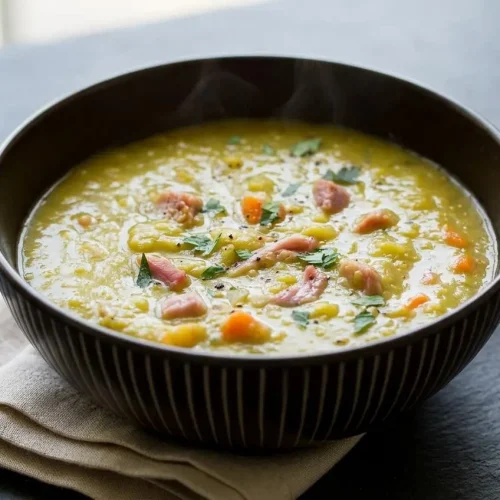
- Return the ham to the pot, taste, and add more salt if needed, then serve warm with parsley if desired. The finished soup should be thick enough to coat the spoon, with soft peas, tender carrots, and little bits of smoky ham throughout.