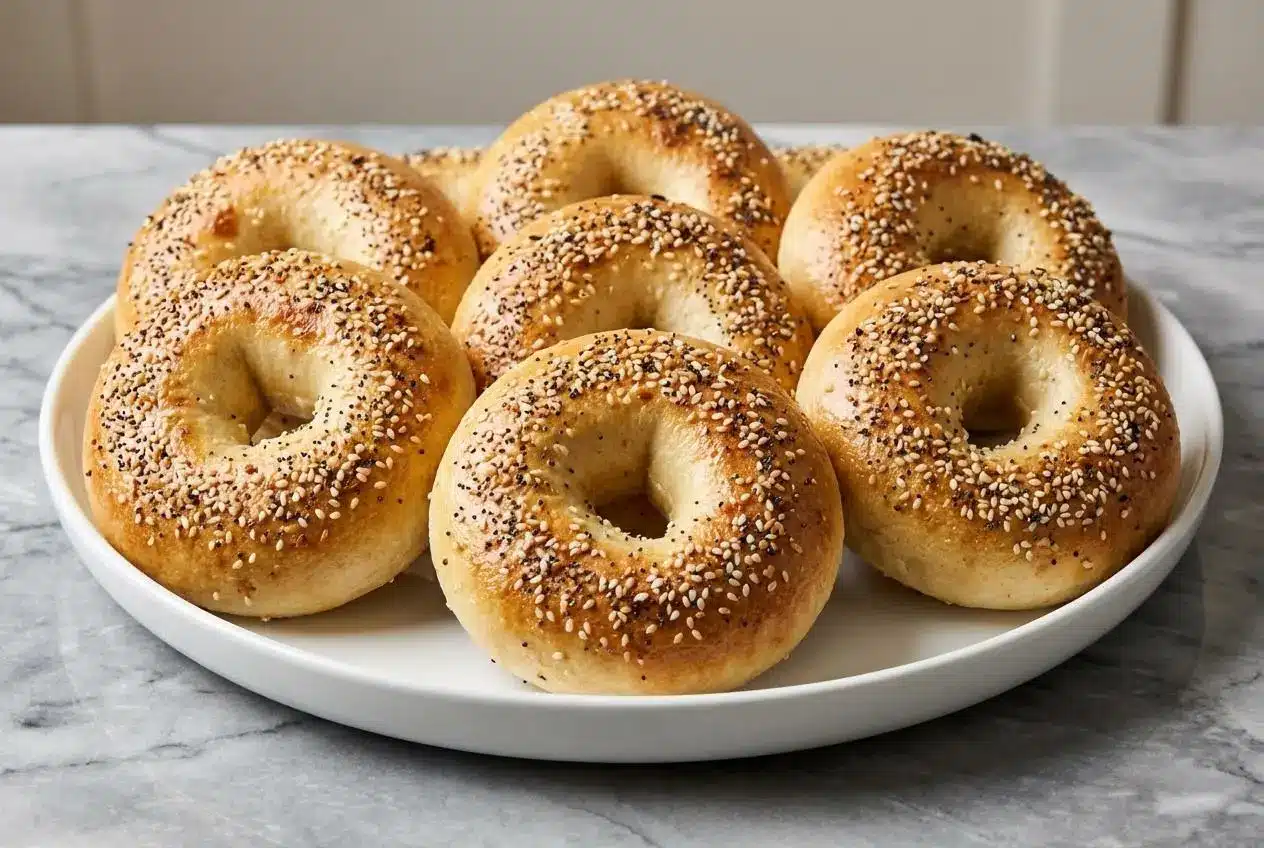
On busy mornings, I want breakfast to feel like a little victory, not a full baking project. These Sourdough Discard Protein Bagels with Greek Yogurt are exactly that, chewy, golden, satisfyingly tangy, and smart enough to use up the discard sitting in your jar.
They give you the spirit of a bakery bagel without the long sourdough timeline. The dough comes together quickly, the Greek yogurt adds body and protein, and the optional boil gives that proper bagel bite I always miss in shortcut recipes.
Why You’ll Love This Recipe
Bakery-Style Chew: The optional boil is my favorite little kitchen trick here. A quick 30-60 seconds per side in water with 1 tablespoon baking soda and 1 tablespoon honey or barley malt syrup gives these boiled bagels a glossier, chewier crust than typical no-boil bagels.
Protein-Packed and Filling: Greek yogurt brings a creamy tang, extra moisture, and a welcome protein boost. I love these as a high-protein breakfast with eggs, or split and toasted after a workout.
No-Waste Sourdough Flavor: Sourdough discard adds that mellow, slightly tangy depth without asking you to babysit a loaf all day. It is practical, flavorful, and very much a “use what you have” kind of bake.
Simple Enough for a Weekday: The dough is sturdy and forgiving, so you do not need to be a seasoned bread baker. With a little kneading, a short rest, and a hot oven, you get protein bagels that feel special but not fussy.
Ingredients and Substitutions
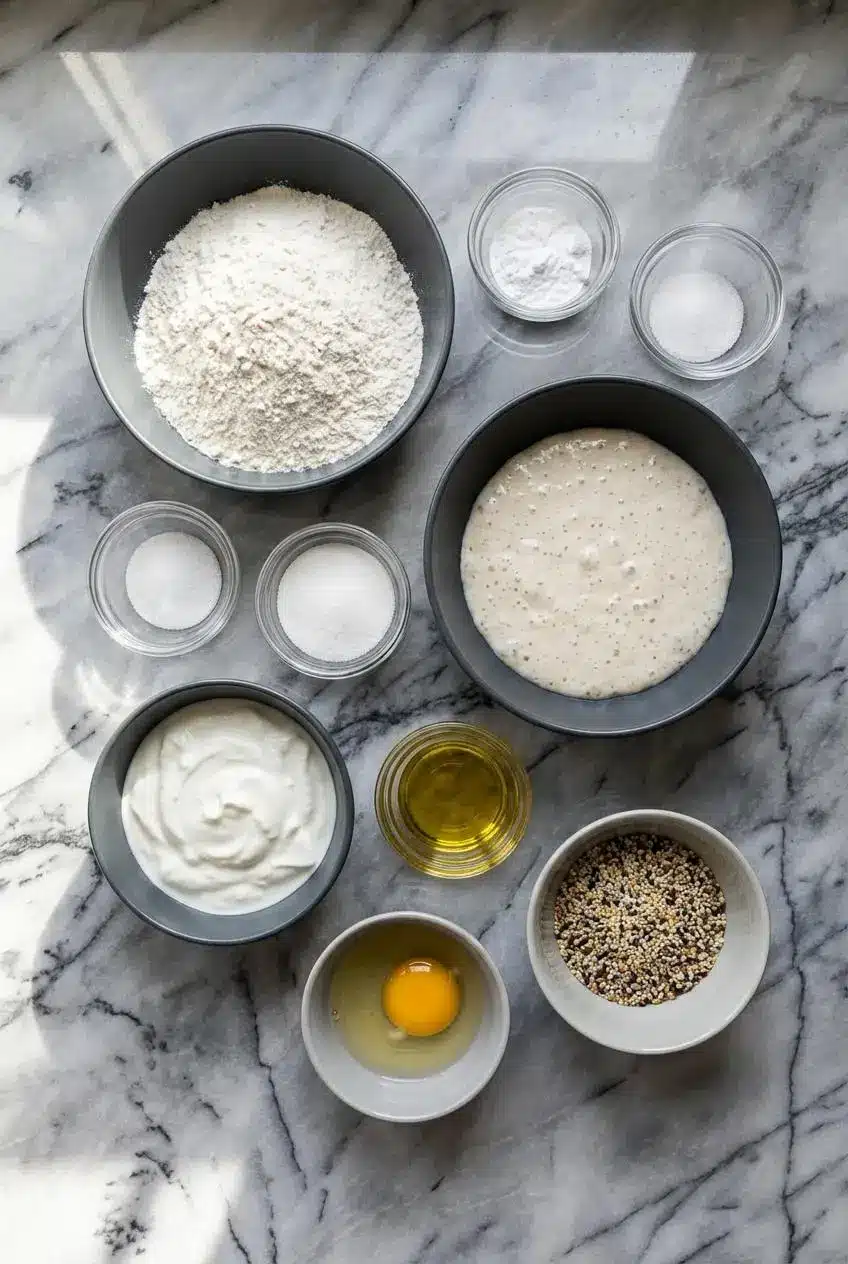
These bagels lean on a short, hardworking ingredient list. Flour builds structure, Greek yogurt brings moisture and protein, and sourdough discard adds that unmistakable tangy backbone.
Ingredients
- 300 grams all-purpose flour
- 5 grams baking powder
- 6 grams salt
- 5 grams sugar
- 200 grams sourdough discard
- 240 grams full fat Greek yogurt
- 10 grams olive oil
For the egg wash:
- 1 egg & a splash of water
- seeds for topping
Ingredient Notes & Substitutions
Flour: All-purpose flour works beautifully and keeps the texture tender enough for everyday eating. If you want the chewiest possible bite, bread flour is a strong upgrade because its higher protein content helps with gluten development.
Greek Yogurt: Thick, strained, full fat Greek yogurt is the one I reach for because it makes the dough rich without turning it soupy. Thin or low-fat yogurt can make the dough sticky in a frustrating way, while blended full-fat cottage cheese can work as a high-protein alternative.
Sourdough Discard: Use discard that smells pleasantly tangy, not harsh, gray, or overly alcoholic. Active starter can stand in for discard, though the finished bagels may taste a little less sour and a touch milder.
No-Discard Option: If you do not keep a starter, replace the 200 grams sourdough discard with 100 grams more flour and 100 grams more Greek yogurt. Add an extra 1/2 teaspoon baking powder to help replace the lift and volume you lose from the discard.
Whole Wheat Flour: You can replace up to one-third of the all-purpose flour with whole wheat flour for a heartier flavor. The dough may need a tablespoon or two of extra water because whole wheat absorbs more moisture.
How to Make Sourdough Discard Protein Bagels with Greek Yogurt
Mix the Dough
- In a medium bowl, whisk the all-purpose flour, baking powder, salt, and sugar until the mixture looks evenly blended and airy. This quick step keeps the baking powder from clumping in one corner of the dough.
- In another bowl, whisk the sourdough discard with the full fat Greek yogurt until smooth and creamy, then stir in the olive oil. The mixture should look thick, glossy, and slightly stretchy from the discard.
- Pour the creamy mixture into the dry ingredients and fold with a spatula until a soft, slightly tacky dough comes together. If dry bits remain at the bottom of the bowl, add water 1 teaspoon at a time, just until the dough looks shaggy but holds as one mass.
Knead and Rest
- Turn the dough onto a clean work surface and knead for 3–5 minutes. It may feel firm and stubborn at first, but as you press, fold, and turn it, the surface will become smoother and a little more elastic.
- Cover the dough and let it rest for 15-30 minutes. This short pause relaxes the gluten, which makes the dough easier to shape and less likely to spring back like a rubber band.
Shape the Bagels
- Line a large baking sheet with parchment paper and preheat the oven to 425 degrees F. The hot oven helps the bagels puff quickly and set with a golden surface.
- After resting, move the dough to a lightly floured surface and divide it into 8 pieces, aiming for about 95-100 grams each. Roll each piece into a smooth ball, set them on the pan, and let them rest for 10 minutes so they loosen up before shaping.
- Press your thumb into the center of each dough ball, then push through to make an opening. Gently rotate and stretch the dough with your fingers until you have an even ring.
- Make the hole a little larger than the size of a quarter, at least about 1 inch across. Bagel holes shrink as the dough puffs, so a generous opening now saves you from bagel buns later.
Boil, Top, and Bake
- Once all 8 bagels are shaped and sitting on the baking sheet, you can move straight to egg wash, or use the optional boil for a chewier crust. For the boil, bring a large pot of water to a gentle boil, stir in 1 tablespoon baking soda and 1 tablespoon honey or barley malt syrup, then boil 2-3 bagels at a time for 30-60 seconds per side before returning them to the parchment-lined pan.
- Whisk the egg with a splash of water until loose and smooth. Brush the tops and sides of each bagel, then scatter on seeds or everything bagel seasoning so the toppings cling to the shiny surface.
- Bake the bagels for 20–25 minutes, or until they are lightly golden and smell warm, toasty, and faintly tangy. Let them cool for 15–20 minutes before slicing so the inside crumb can finish setting instead of turning gummy under the knife.
Secrets for the Perfect Chewy Protein Bagel
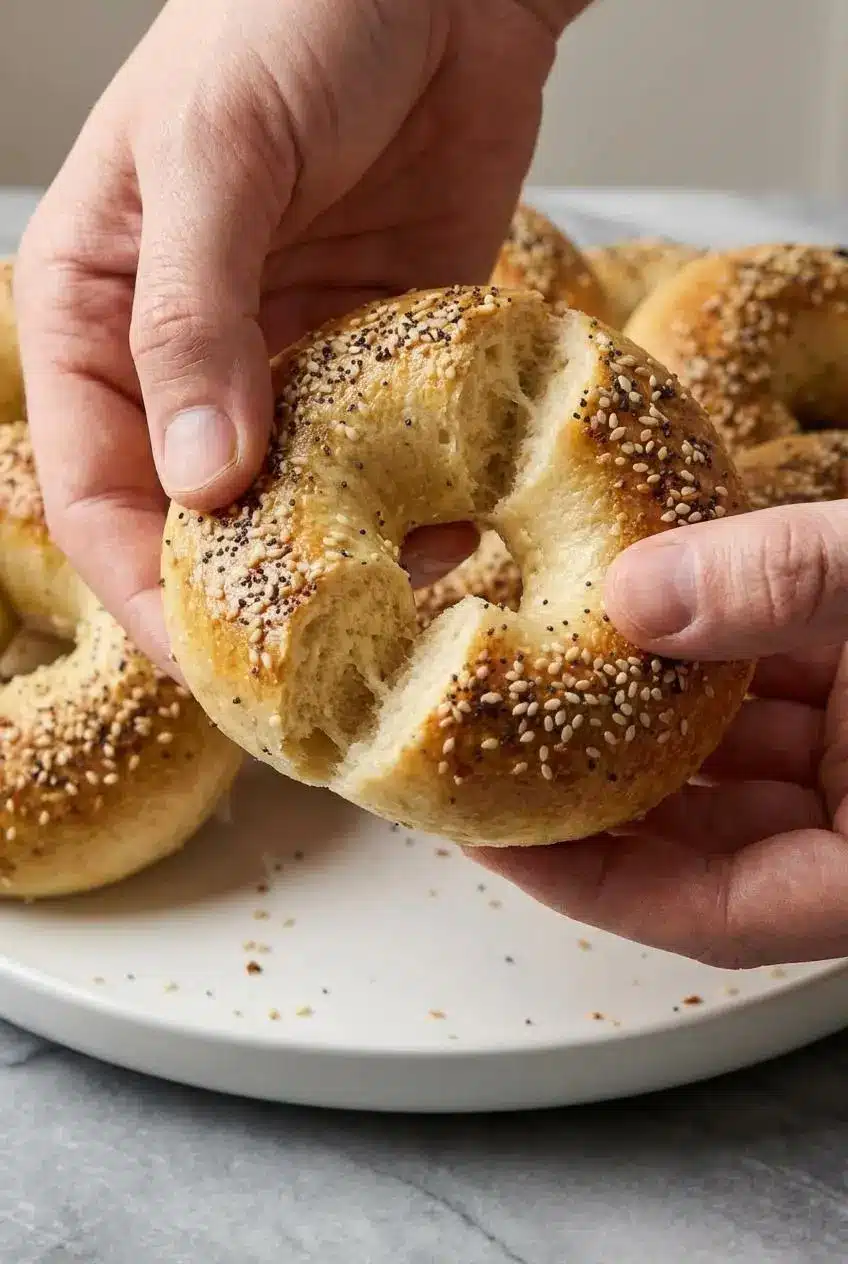
The Science of the Boil
A traditional bagel gets its personality from the boil. When the shaped dough hits hot water, the surface starches gelatinize quickly, creating a skin that keeps the bagel dense and chewy instead of letting it balloon like a soft roll.
The baking soda makes the water alkaline, which encourages the Maillard reaction and helps the crust brown more beautifully in the oven. Honey or barley malt syrup adds a whisper of sweetness and supports that glossy, golden finish.
Adding a Protein Powder Boost
If you want to push these further into protein bagel territory, whisk 1 scoop, about 30 grams, of unflavored or vanilla whey or plant-based protein powder into the dry ingredients. Protein powder is thirsty, so be ready to add 1-2 extra tablespoons of Greek yogurt or water until the dough feels tacky but workable.
This same dry-ingredient strategy is handy in other baked breakfasts too, though every batter behaves differently. In a softer bake like our protein banana bread, the extra moisture from bananas helps balance protein powder, while bagel dough needs careful adjustment so it stays firm enough to shape.
Why a Food Scale Is Your Best Friend
Baking is not fussy for the sake of being fussy, it is ratio-driven. A food scale keeps the flour, Greek yogurt, and sourdough discard in balance, which is the difference between dough that behaves and dough that turns into paste.
The Power Trio: Sourdough, Greek Yogurt, and Flour
Sourdough Discard’s Role
In this quick recipe, sourdough discard is mostly about flavor, not rise. The baking powder does the lifting, while the discard brings a deeper, slightly tangy character that plain yeast-style shortcut doughs often miss.
That tang is especially nice once the bagels are toasted. It plays well with cream cheese, eggs, smoked salmon, cheddar, or a swipe of salted butter.
Greek Yogurt: The Protein and Texture Powerhouse
Greek yogurt does double duty here. It adds protein and moisture, and its natural acidity works with the baking powder to give the dough a little lift.
The fat in full fat Greek yogurt also makes the crumb richer than a water-based dough. If you enjoy that high-protein breakfast style, cottage cheese is another smart ingredient to keep around, especially in recipes like protein cottage cheese pancakes, where it blends into a tender, satisfying batter.
Flour’s Function Is All About Texture
All-purpose flour gives you a balanced bagel, chewy but not overly tough. Bread flour creates a stronger gluten network during kneading, which traps gas better and gives that classic chewy texture many of us associate with a proper deli bagel.
If your bagels have ever felt crumbly or flat, flour choice and kneading are usually part of the story. A few minutes of firm kneading helps the dough go from rough and stiff to smooth and structured.
Mastering Bagel Shaping: Two Easy Methods
Method 1: The Poke and Stretch
This is the easiest method for beginners and the one I use most often for weekday baking. Roll each piece into a snug ball, poke through the center, then stretch the hole wider than feels necessary because it will shrink in the oven.
The goal is an even ring with no thin spots. If the dough resists, let it rest for a few minutes and come back to it rather than forcing it.
Method 2: The Roll and Loop
For a more traditional shape, roll each portion of dough into an 8-10 inch rope. Wrap it around your hand, overlap the ends, then roll the seam gently on the counter until it seals.
This method can give the bagel a slightly tighter crumb and that hand-rolled bakery look. It takes a little practice, but once your hands learn the rhythm, it feels wonderfully old-school.
Why It Matters
Good shaping is not just about looks. A tight, evenly shaped ring bakes more evenly, holds toppings better, and gives you the same chewy bite from edge to edge.
Pro Tips & Troubleshooting
Pro Tips
- Use bread flour if your dream bagel is extra chewy and sturdy.
- Lightly oil your hands before kneading or shaping if the dough feels sticky. This keeps you from adding too much flour, which can make the bagels dry.
- For deeper flavor, place the shaped bagels on the baking sheet, cover them well, and refrigerate overnight for up to 24 hours before boiling and baking.
- Choose thick, strained Greek yogurt, such as a true Greek-style yogurt or skyr. Thin yogurt can make the dough loose and difficult to handle.
- A stand mixer with a dough hook can be used, but keep it brief and stop once the dough looks smoother and gathered. This dough is firm, so do not walk away from the mixer.
Common Mistakes to Avoid
- Do not use self-rising flour. It can throw off the leavening and leave a chemical aftertaste.
- Do not make the center hole too small. Aim for at least 1 inch across because the opening tightens as the dough expands.
- Do not skip the 15-30 minute rest after kneading. Rested dough is easier to shape and less likely to snap back.
- Avoid using sourdough discard that is very old, discolored, or sharply unpleasant. That flavor will come through in the finished bagels.
Troubleshooting Common Issues
Dense or flat bagels: Old baking powder, under-kneading, or very wet dough can all be culprits. Use fresh baking powder, knead until the dough smooths out, and keep the texture tacky rather than sloppy.
Dough that is too sticky: Start by oiling your hands before adding more flour. If it is truly unworkable, your yogurt may be thin, so knead in flour 1 tablespoon at a time until the dough can hold its shape.
Bagels that taste too sour: Your discard may be too old or too strong. Use fresher sourdough discard next time, or use active starter for a milder flavor.
Bagel holes that disappeared: The hole was likely too small before baking. Shape it larger than you think, or tuck a small rolled piece of parchment in the center during the early part of baking to help hold the opening.
Serving, Storing, and Freezing Your Bagels
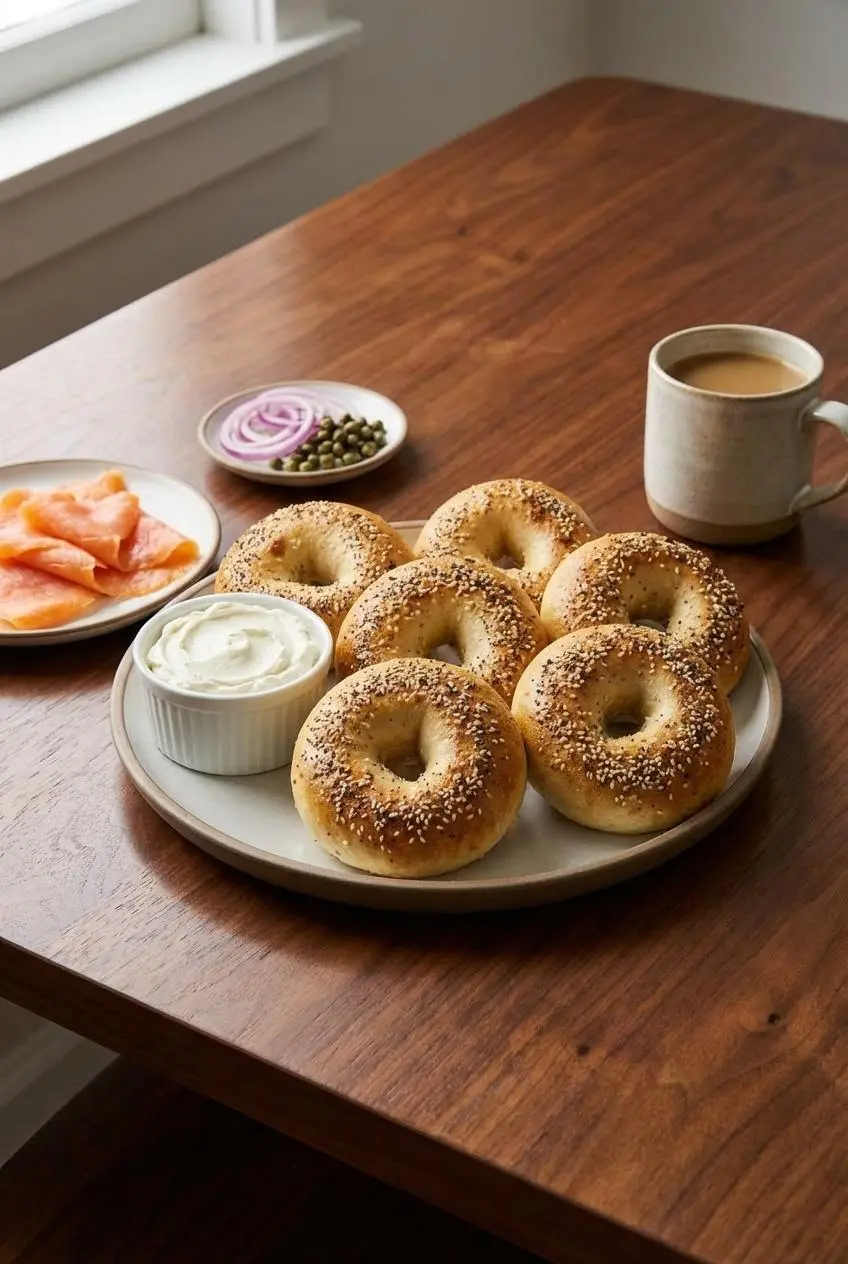
Serving Suggestions
For a classic deli-style breakfast, toast a bagel and layer it with cream cheese, smoked salmon, red onion, and capers. The tang from the sourdough discard is especially good against salty, savory toppings.
For a hearty breakfast sandwich, add a fried egg, cheddar, avocado, or bacon. If Greek yogurt breakfasts are already your thing, our Greek yogurt pancakes use the same protein-rich ingredient in a softer, weekend-brunch direction, which makes them a nice companion recipe for the same tub of yogurt.
For a sweet bagel, go with butter and cinnamon sugar, honey walnut cream cheese, or a swipe of jam. For a pizza bagel, add marinara, mozzarella, and mini pepperoni, then broil just until the cheese bubbles and browns.
Savory add-ins are fair game too. A little shredded cheddar, Asiago, Parmesan, or chopped rosemary can turn the dough into something that smells like a neighborhood bakery on a Saturday morning.
Storage, Freezing, and Reheating
Let the bagels cool completely before storing. For the best crust, keep them in a paper bag at room temperature for up to 2 days, since plastic tends to soften that lovely exterior.
For longer storage, slice the bagels first, then freeze them in a freezer-safe bag for up to 3 months. Slicing before freezing is the move, because you can send the halves straight into the toaster without wrestling a frozen bagel on the cutting board.
To reheat, toast frozen halves in a toaster or toaster oven until the edges are crisp and the center is warmed through. If you like a softer bite, wrap a thawed bagel loosely in foil and warm it briefly before slicing and toasting.
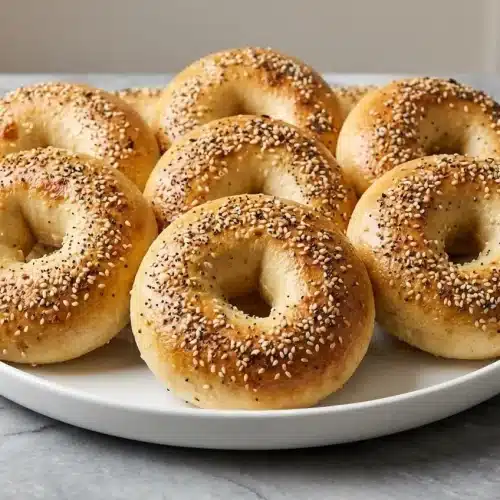
Sourdough Discard Protein Bagels With Greek Yogurt

Equipment
- Medium bowl
- Whisk
- Spatula
- Baking Sheet
- Parchment Paper
- Large pot (optional for boiling)
Ingredients
- 300 grams all-purpose flour
- 5 grams baking powder
- 6 grams salt
- 5 grams sugar
- 200 grams sourdough discard
- 240 grams full fat Greek yogurt
- 10 grams olive oil
For the egg wash:
- 1 egg & a splash of water
- seeds for topping
Instructions
Mix the Dough
- In a medium bowl, whisk together the all-purpose flour, baking powder, salt, and sugar until well combined.
- In a separate bowl, whisk the sourdough discard with the full fat Greek yogurt until smooth, then stir in the olive oil.
- Pour the wet mixture into the dry ingredients and fold with a spatula until a shaggy dough forms. If needed, add water 1 teaspoon at a time until the dough comes together.
Knead and Rest
- Turn the dough onto a clean surface and knead for 3–5 minutes, until it becomes smoother and more elastic.
- Cover the dough and let it rest for 15-30 minutes to relax the gluten.
Shape the Bagels
- Preheat your oven to 425°F (220°C) and line a large baking sheet with parchment paper.
- Divide the rested dough into 8 equal pieces (about 95-100 grams each). Roll each piece into a smooth ball, place on the prepared pan, and let them rest for another 10 minutes.
- Press your thumb into the center of each dough ball to create an opening. Gently stretch the dough with your fingers to form a ring with a hole about 1 inch across.
Boil, Top, and Bake
- Optional: For a chewier crust, bring a large pot of water to a boil. Add 1 tablespoon of baking soda and 1 tablespoon of honey. Boil 2-3 bagels at a time for 30-60 seconds per side, then return them to the baking sheet.
- In a small bowl, whisk the egg with a splash of water. Brush this egg wash over the tops and sides of each bagel, then sprinkle generously with your desired seeds or toppings.
- Bake for 20–25 minutes, or until the bagels are golden brown and sound hollow when tapped.
- Let the bagels cool on a wire rack for at least 15-20 minutes before slicing to allow the crumb to set properly.
Notes
Nutrition
Conclusion
These Sourdough Discard Protein Bagels with Greek Yogurt are the kind of recipe that earns a permanent spot in the breakfast rotation. They are practical, protein-rich, lightly tangy, and satisfying without requiring a full sourdough baking day.
If you have a few extra minutes, use the optional boil, it is the secret to the glossy crust and chewy texture that makes them feel bakery-worthy. Start with seeds, then branch into cheese, herbs, or sweet toppings once the basic batch wins you over.
Frequently Asked Questions
What is the benefit of using Greek yogurt in bagels?
Are these bagels boiled? What’s the difference if I don’t boil them?
How can I get a chewier, more authentic bagel texture?
Can I prepare the dough ahead of time?
What are the best toppings for sourdough protein bagels?
How do I properly store, freeze, and reheat these bagels?
Can I cook these bagels in an air fryer?