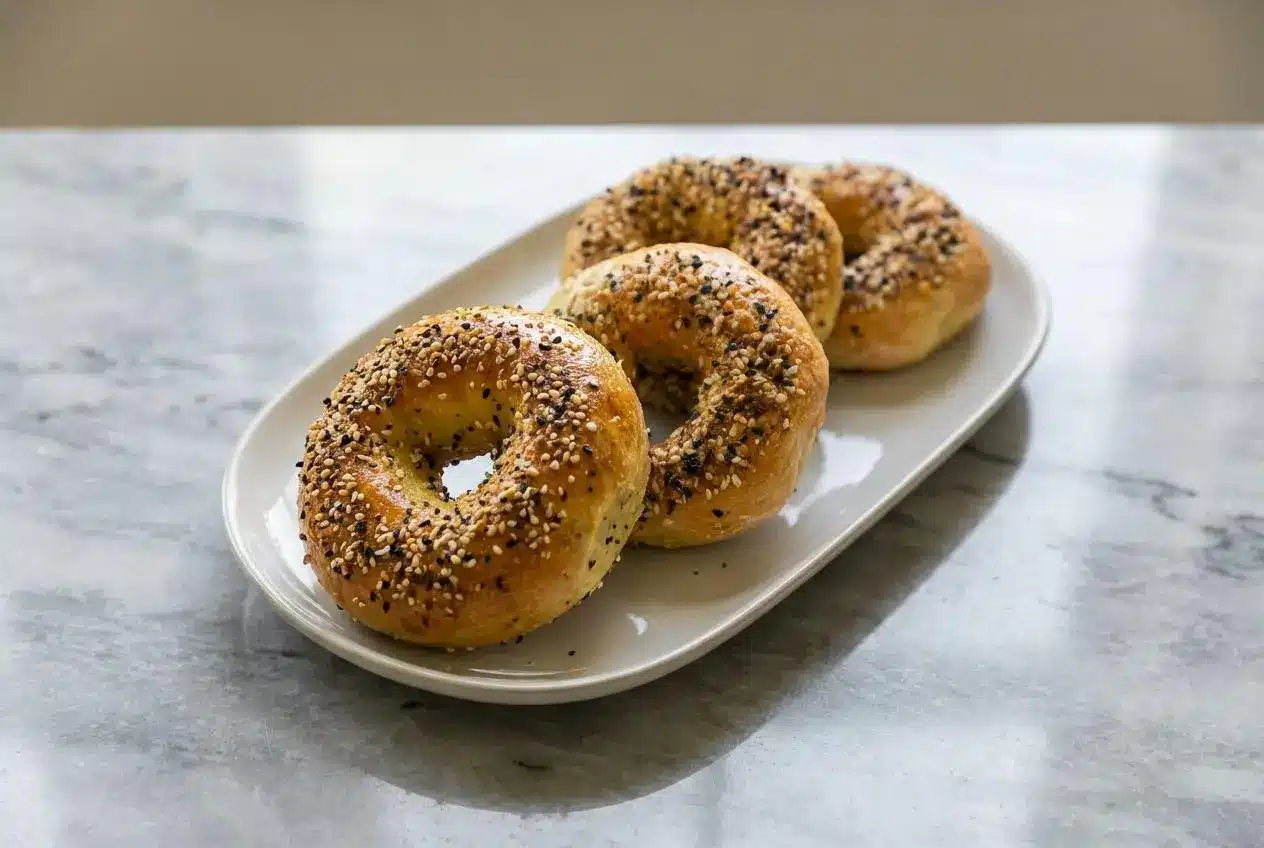
I have made more batches of homemade bagels than I can count, and the biggest letdown is always the same, they look promising but eat like dense little rolls. These air fryer protein bagels solve that problem with a dough that is easy to mix, quick to shape, and far more satisfying to bite into.
They are perfect for a high-protein breakfast, a post-workout snack, or a meal prep bagel you can toast all week. What makes them worth your time is not just the air fryer convenience, but the small technique choices that give you a glossy crust and a genuinely chewy center.
Why You’ll Love This Recipe
Real bagel texture: I wanted these to taste like bagels, not cake in a ring shape. The dough bakes up with a pleasantly chewy bite instead of the soft, scone-like crumb that so many no yeast bagels end up with.
The secret twist: A little vital wheat gluten in the dough, plus a quick baking soda boil before air frying, changes everything. That combination gives air fryer protein bagels the tight crust and springy texture I usually only get from bakery-style bagels.
High protein, low fuss: Greek yogurt keeps the dough simple and boosts the protein without yeast or a long rise. On busy weeks, I lean on recipes like this for breakfast, just like I do with blueberry protein muffins when I want another easy make-ahead option.
Made for meal prep: These healthy bagels hold up beautifully for a few days and toast well straight from frozen. That makes them one of my favorite air fryer recipes for getting ahead without getting bored.
Ingredients and Substitutions
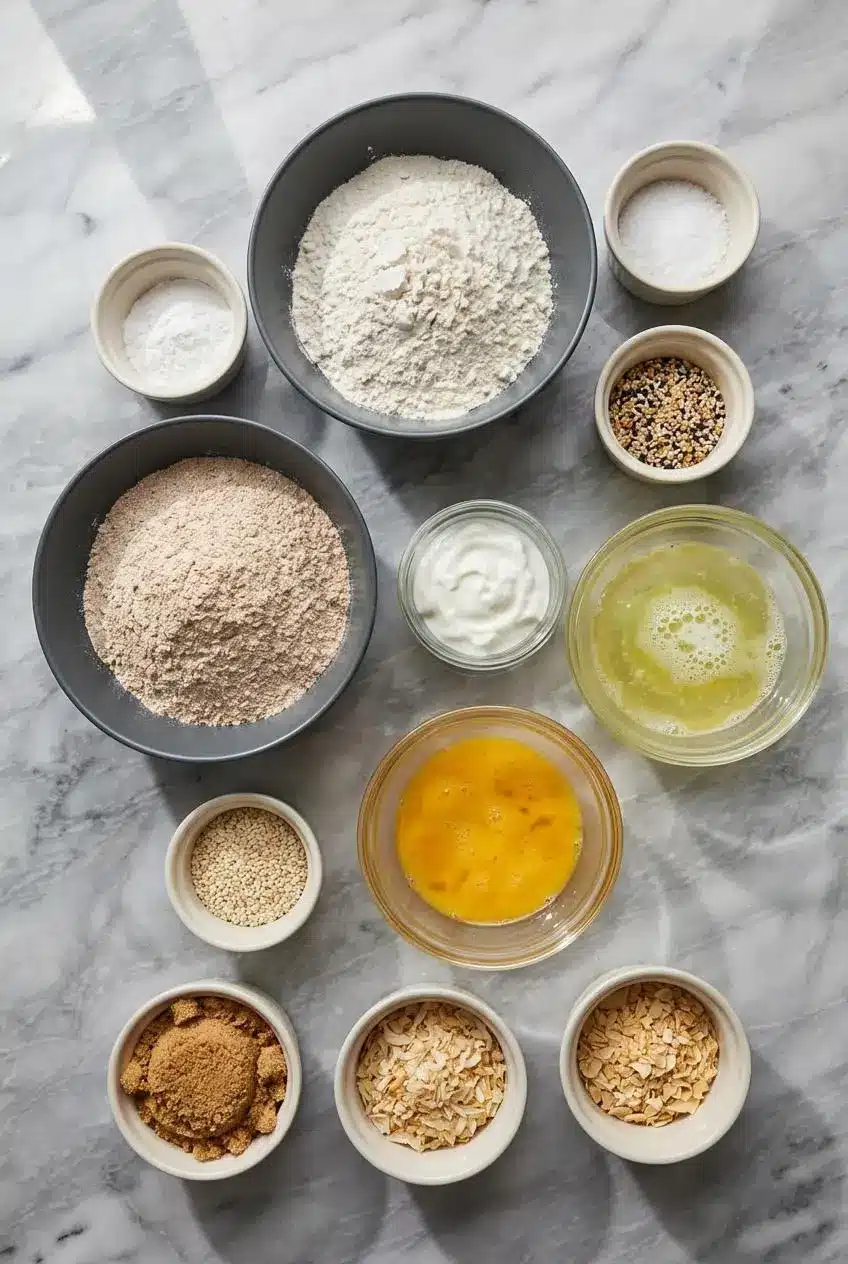
These ingredients keep the dough simple, sturdy, and protein-forward, while giving you plenty of room to tweak the flavor and texture to suit your kitchen.
Ingredients
- 1 1/4 cups unbleached all purpose flour, whole wheat or gluten-free mix
- 2 teaspoons baking powder
- 3/4 teaspoon kosher salt
- 3/4 cup non-fat Greek yogurt
- 2 large eggs, whites and yolks separated, and beaten
- everything bagel seasoning, sesame seeds, brown sugar, onion flakes, garlic flakes, etc, optional toppings
Ingredient Notes & Substitutions
Flour: All purpose flour gives the most classic texture here, with enough structure for a chewy crumb and a clean bagel shape. Whole wheat works too, but the bagels will be a little heartier and less airy, while gluten-free bagels made with a 1-to-1 baking blend will be softer and more cake-like.
Greek yogurt: Thick Greek yogurt is the difference between workable dough and a sticky mess. I like to drain off any liquid sitting on top before measuring, and if you want to make cottage cheese bagels instead, blended full-fat cottage cheese can usually stand in nicely once it is completely smooth.
Eggs: Separating the eggs helps in two ways, the yolks enrich the dough and the whites give the tops that handsome golden finish. That glossy top is part of what makes these feel like proper bagels instead of quick bread.
Baking powder: Fresh baking powder matters more than people think in 2-ingredient dough style recipes. If your canister has been hanging around the pantry forever, the bagels may bake up flat and dense.
Vital wheat gluten: Even though it is not listed in the base ingredient list above, this is the trick I use when I want a truly chewy result. If you are making a gluten-free version, skip it entirely, but for standard dough it adds the elasticity that homemade protein bagels often lack.
Toppings: Everything bagel seasoning is the obvious favorite, but sesame seeds, poppy seeds, flaky salt, onion flakes, and garlic flakes all work beautifully. For a sweeter spin, a little brown sugar or cinnamon sugar on top turns these into a breakfast treat that still fits into the healthy bagels lane.
How to make air fryer protein bagels
Mix and knead the dough
- In a medium bowl, whisk together the flour, baking powder, and kosher salt until everything is evenly distributed. Add the Greek yogurt and egg yolks, then stir with a fork until the mixture turns into small, shaggy crumbles with no obvious dry pockets.
- Dust your work surface lightly with flour and tip the dough out of the bowl. Knead it for about 15 to 20 turns, just until it becomes smooth and tacky, but not sticky, and feels supple under your hands. If it clings too much, a light extra dusting of flour usually brings it back in line.
Shape and top the bagels
- Divide the dough into 4 equal pieces so the bagels cook evenly. Roll each piece into a rope about 3/4 inch thick, then press the ends together firmly to form a ring, or shape a ball, poke a hole through the center, and gently stretch it open.
- Brush the tops with the beaten egg whites so the surface looks glossy and lightly coated. Sprinkle both sides with everything bagel seasoning or your topping of choice, pressing gently so the seasoning sticks well.
Air fry until golden
- Arrange the bagels in the air fryer basket in a single layer, making sure they do not overlap or touch too closely. Good airflow is what helps them brown evenly instead of steaming.
- Air fry at 280°F for 15 to 16 minutes, until the tops are richly golden and the bagels feel set and lightly firm when tapped. There is no need to turn them during cooking.
Cool before slicing
Transfer the bagels to a rack and let them rest for at least 15 minutes before cutting. This little pause matters, because the inside finishes setting as it cools, which gives you a better texture and a cleaner slice.
The Science of a Perfect Protein Bagel
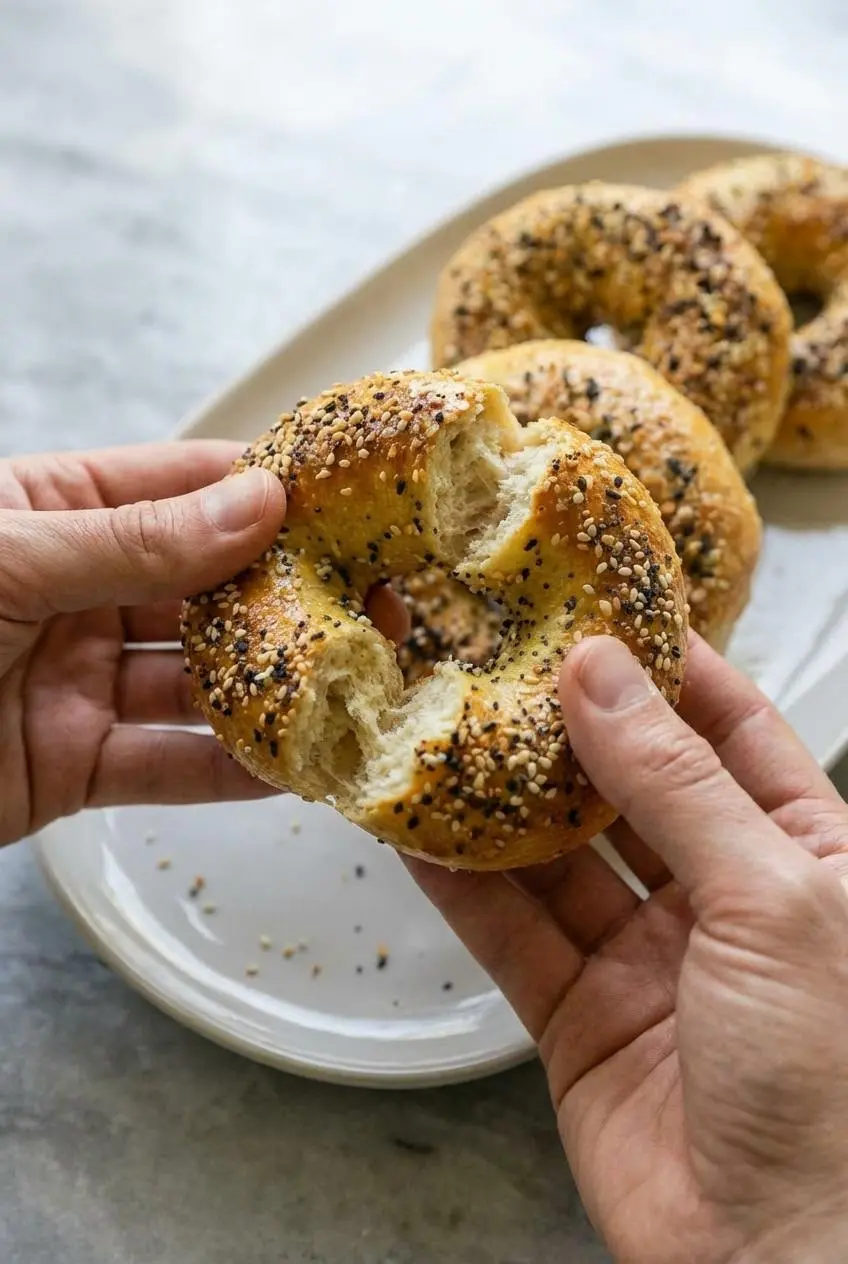
The reason many Greek yogurt bagels miss the mark is simple, they have enough moisture and protein, but not always enough structure to create that classic chew. In my kitchen, the missing piece is vital wheat gluten, which provides the necessary elasticity that helps the dough stretch, hold shape, and bake into a more authentic crumb.
The other thing that separates a good protein bagel from bagel-shaped bread is the boil. A quick dip in baking soda water gelatinizes the starch on the outside, which is what gives you that shiny crust and pleasantly firm exterior that air frying alone cannot fully create.
If you skip the boil, the bagels still bake and taste good, but the crust stays softer and the shape looks a bit more like a roll. That is why I treat the boiling step as non-negotiable whenever I want a true bagel feel rather than just a convenient high-protein breakfast bread.
Choosing Your Protein Base: Greek Yogurt vs. Cottage Cheese
Greek yogurt, the classic: Greek yogurt brings a gentle tang that makes these bagels taste a little closer to old-school shop bagels. Thick brands such as Fage or Stonyfield are especially reliable because they keep the dough sturdy and easy to shape.
Cottage cheese, the milder option: Cottage cheese bagels have a softer dairy flavor and can be a touch denser, which some people really love for sandwiches. The key is blending the cottage cheese until it is perfectly smooth before measuring it, otherwise the dough stays lumpy and uneven.
Quick comparison: Greek yogurt gives you a tangier flavor, a slightly lighter crumb, and a classic protein bagel taste. Cottage cheese is milder, often a bit richer in protein, and tends to bake into a slightly more compact texture.
For anyone comparing the general macros (protein, carbs) of these two dairy bases, the differences are usually modest enough that taste and texture should guide your choice first. I reach for Greek yogurt when I want a brighter flavor, and blended cottage cheese when I want a milder bite for savory sandwiches.
Boosting Your Bagels: How to Add Protein Powder
If you want to push the protein a little higher, the cleanest way is to swap in protein powder for part of the flour, not to dump it into the bowl on top of everything else. My best results come from unflavored whey or casein, because both blend into the dough more naturally than most plant-based powders.
The ratio that works best is simple, replace 1/4 cup of the flour with 1/4 cup, or about 1 scoop, of protein powder. This keeps the dough balanced enough to still shape, cook, and brown properly in the air fryer.
Protein powder absorbs liquid quickly, so expect the dough to look drier and more crumbly at first. Add a little extra yogurt or a tablespoon of water at a time until the dough feels soft and tacky again, then stop as soon as it comes together.
Once you get comfortable with that balance, it becomes much easier to adapt other baked breakfasts too. I use the same careful approach in our protein banana bread, where a modest protein boost works beautifully as long as the moisture is adjusted with a light hand.
Pro Tips & Troubleshooting
Pro Tips
- If the dough feels too sticky to shape, chill it for 20 to 30 minutes. Cold dough is calmer dough, and it is much easier to roll into clean, even rings.
- For the smoothest texture, especially when using cottage cheese, blend your dairy base before mixing it into the dry ingredients. That same trick works well in other breakfast bakes, including these protein breakfast biscuits, where a smoother dough makes shaping much easier.
- Check the expiration date on your baking powder before you start. Fresh leavening is what keeps these no yeast bagels from turning into heavy little pucks.
- Leave space between the bagels in the basket so the hot air can circulate. Crowding causes pale spots and uneven cooking.
- Wait the full 15 minutes before slicing. The crumb continues to set as the bagels cool, and cutting too soon can make the center gummy.
Common Mistakes to Avoid
- My dough is a sticky mess: Thin yogurt is usually the culprit. Use very thick Greek yogurt next time, and for the current batch add a little flour gradually or chill the dough before shaping.
- My bagels are dense and hard: This often happens when the dough is overworked or the baking powder is old. Knead only until smooth and tacky, then stop.
- My bagels did not brown well: The egg white coating helps with color and shine. If you skip it, the tops usually stay paler.
- The texture feels more like bread than a bagel: That usually means the dough was not given enough help with structure. A bit of vital wheat gluten and a quick alkaline boil make a noticeable difference in chew and crust.
Serving and Storage Suggestions
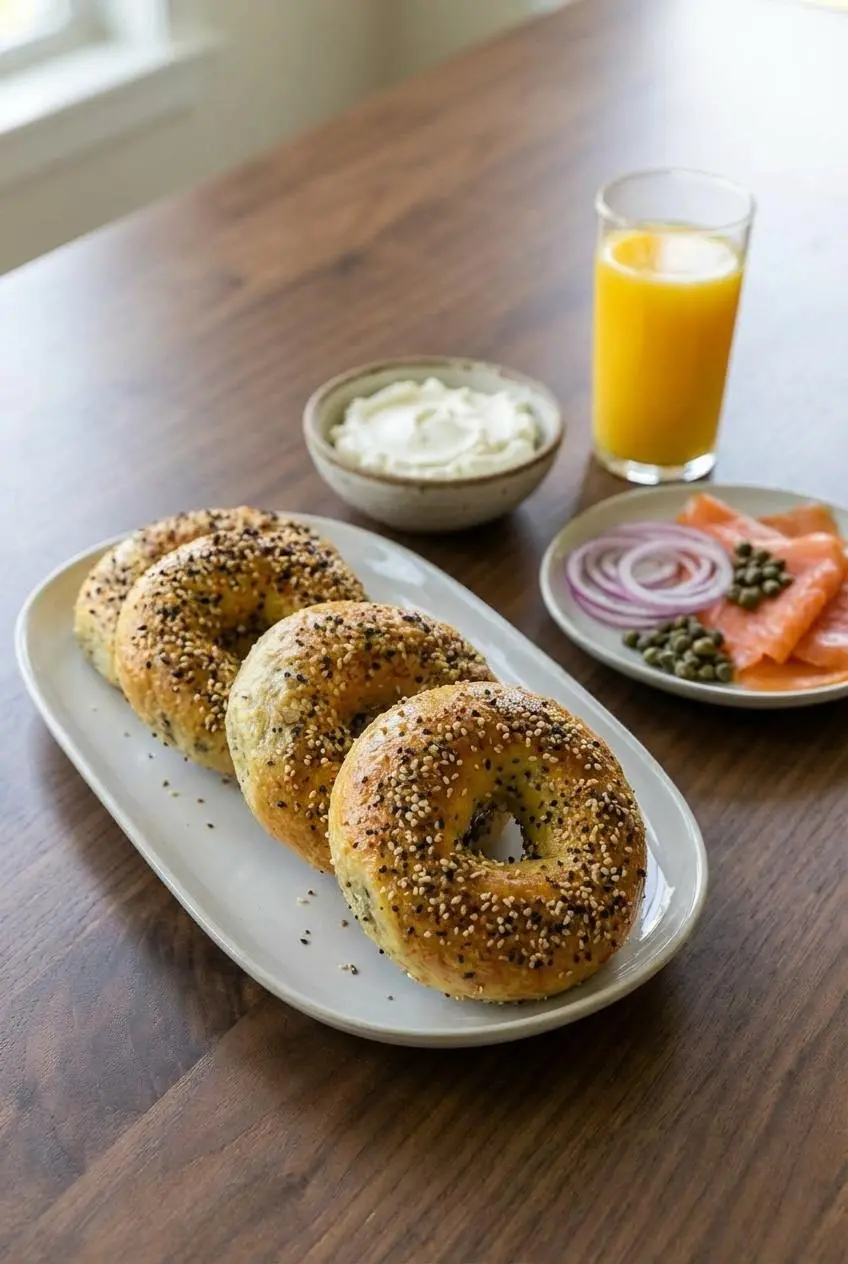
Serving Ideas
- Toast and spread with cream cheese, butter, or peanut butter for an easy weekday breakfast.
- Top with smoked salmon, cream cheese, red onion, and capers for a lox-style bagel that feels a little fancy without much effort.
- Turn one into a breakfast sandwich with egg and cheese, or build a high-protein sandwich with sliced chicken, avocado, and crisp greens when you want something heartier for lunch.
- Use them as the base for chicken salad, egg salad, or turkey and cheese when you want meal prep bagels that actually stay satisfying.
Storing, Freezing, and Reheating
- Keep fully cooled bagels in an airtight container or zip-top bag at room temperature for up to 3 days. I leave them unsliced until I am ready to eat, because they stay fresher that way.
- For longer storage, freeze them once they are completely cool. They keep well for up to 3 months in a freezer-safe bag.
- For the best texture, slice and toast from frozen. You can also warm them in the air fryer at 300°F for 3 to 4 minutes until hot and lightly crisp on the outside.
Air Fryer Protein Bagels

Equipment
- Air fryer
- Medium bowl
- Whisk
- Wire rack
Ingredients
- 1 1/4 cups unbleached all purpose flour, whole wheat or gluten-free mix
- 2 teaspoons baking powder
- 3/4 teaspoon kosher salt
- 3/4 cup non-fat Greek yogurt
- 2 large eggs, whites and yolks separated, and beaten
- everything bagel seasoning, sesame seeds, brown sugar, onion flakes, garlic flakes, etc, optional toppings
Instructions
Mix and knead the dough
- In a medium bowl, whisk together the flour, baking powder, and kosher salt until evenly distributed. Add the Greek yogurt and egg yolks, then stir with a fork until the mixture forms shaggy crumbles.
- Lightly flour your work surface and turn the dough out. Knead for 15 to 20 turns, just until it becomes smooth and tacky but not sticky. Add a little more flour if it feels too sticky.
Shape and top the bagels
- Divide the dough into 4 equal pieces. Roll each piece into a rope about 3/4 inch thick and press the ends together to form a ring. Alternatively, form a ball, poke a hole in the center, and gently stretch it into a bagel shape.
- Brush the tops of the bagels with the beaten egg whites. Sprinkle generously with everything bagel seasoning or your topping of choice, pressing gently to help it adhere.
Air fry until golden
- Arrange the bagels in a single layer in the air fryer basket, ensuring they are not touching. This allows for even air circulation and browning.
- Air fry at 280°F (138°C) for 15 to 16 minutes, until the tops are a deep golden brown and the bagels feel firm to the touch. There is no need to flip them.
Cool before slicing
- Transfer the hot bagels to a wire rack and let them rest for at least 15 minutes before slicing. This allows the crumb to set properly.
Notes
Nutrition
Conclusion
If you have been disappointed by cakey homemade bagels, this method is the one I would start with. The chewy texture comes from smart little choices, especially the vital wheat gluten and the quick boil, and the air fryer makes the whole thing feel weeknight easy.
Once you make a batch, it is hard not to start playing with toppings and protein swaps. These bagels are simple, reliable, and absolutely worth a spot in your breakfast rotation.
Frequently Asked Questions
Why use Greek yogurt or cottage cheese in protein bagels?
How do I prevent my bagel dough from being too sticky?
Do I really need to boil the bagels before air frying? What’s the benefit?
Can I make these bagels gluten-free or dairy-free?
What’s the best way to store, freeze, and reheat air fryer protein bagels?
How can I add protein powder to the recipe for an extra protein boost?