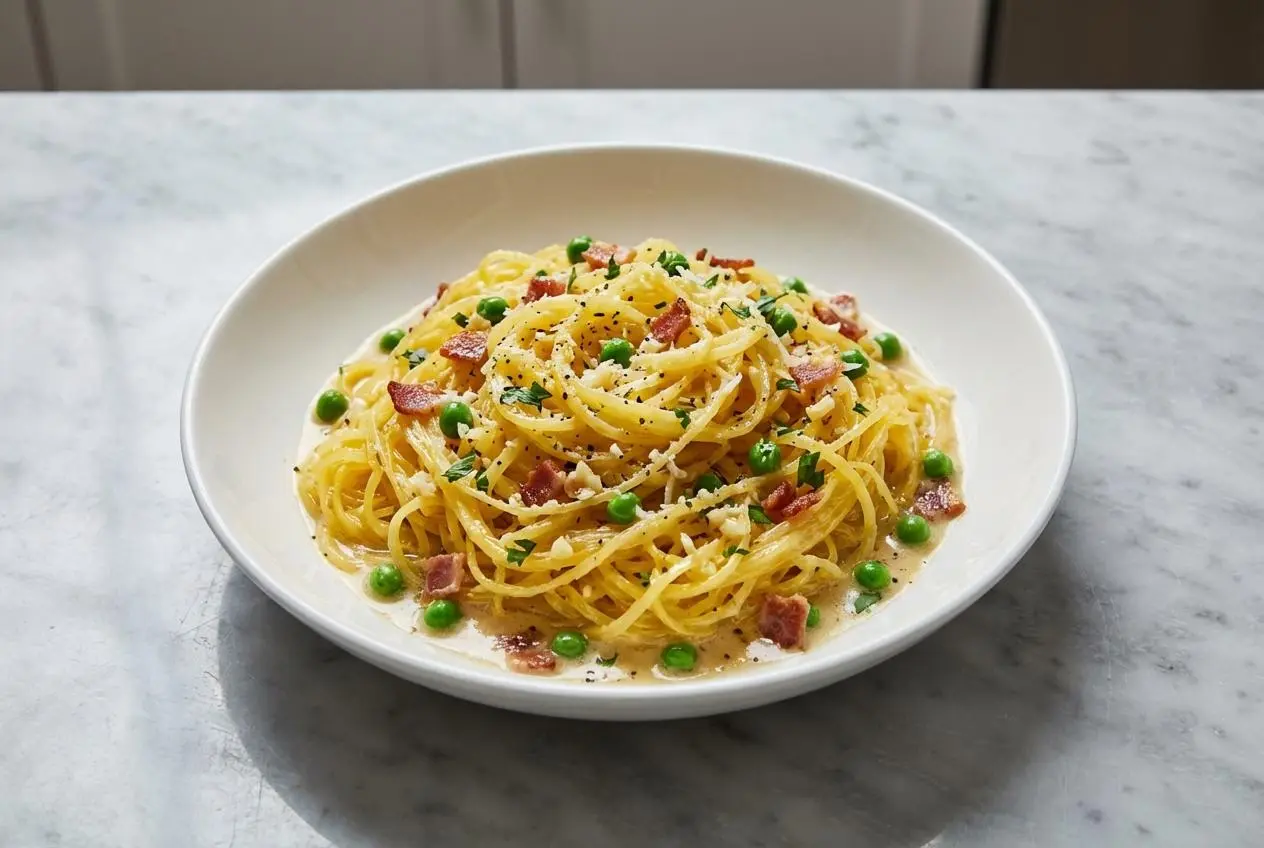
When I am craving the cozy, peppery richness of Carbonara but want something lighter on the table, this is the dish I reach for. Spaghetti squash carbonara brings all that creamy, savory comfort you want from Italian-inspired comfort food, but with tender squash strands standing in for pasta.
It is especially good for weeknights when you want a gluten-free, low carb recipe that still feels a little indulgent. The best part is that it is surprisingly easy to pull off, and one small brown butter trick gives the whole pan a deep, nutty flavor that makes it taste far more luxurious than the effort suggests.
Why You’ll Love This Recipe
Big Carbonara flavor: This is not one of those swaps that feels like a compromise. In my kitchen, the combination of bacon, Parmesan cheese, eggs, garlic, and black pepper makes it every bit as satisfying as the classic.
The secret twist: Browning the butter before the garlic and peas go in adds a toasted, nutty depth that plain melted butter simply cannot match. It is a tiny extra step, but it makes the whole spaghetti squash carbonara taste restaurant-worthy.
Creamy without heaviness: The squash strands stay tender and slightly springy, and the sauce clings to them in a silky coat. You get that comforting Carbonara texture without a bowl of heavy pasta.
Fits the way many of us eat now: Because Spaghetti Squash is naturally Gluten-Free and lower in carbs, this dish slides easily into a keto-friendly or lighter dinner rotation. If low-carb meals are your thing, dishes like low-carb chicken wraps often appeal for the same reason, they feel satisfying without weighing you down.
Ingredients and Substitutions
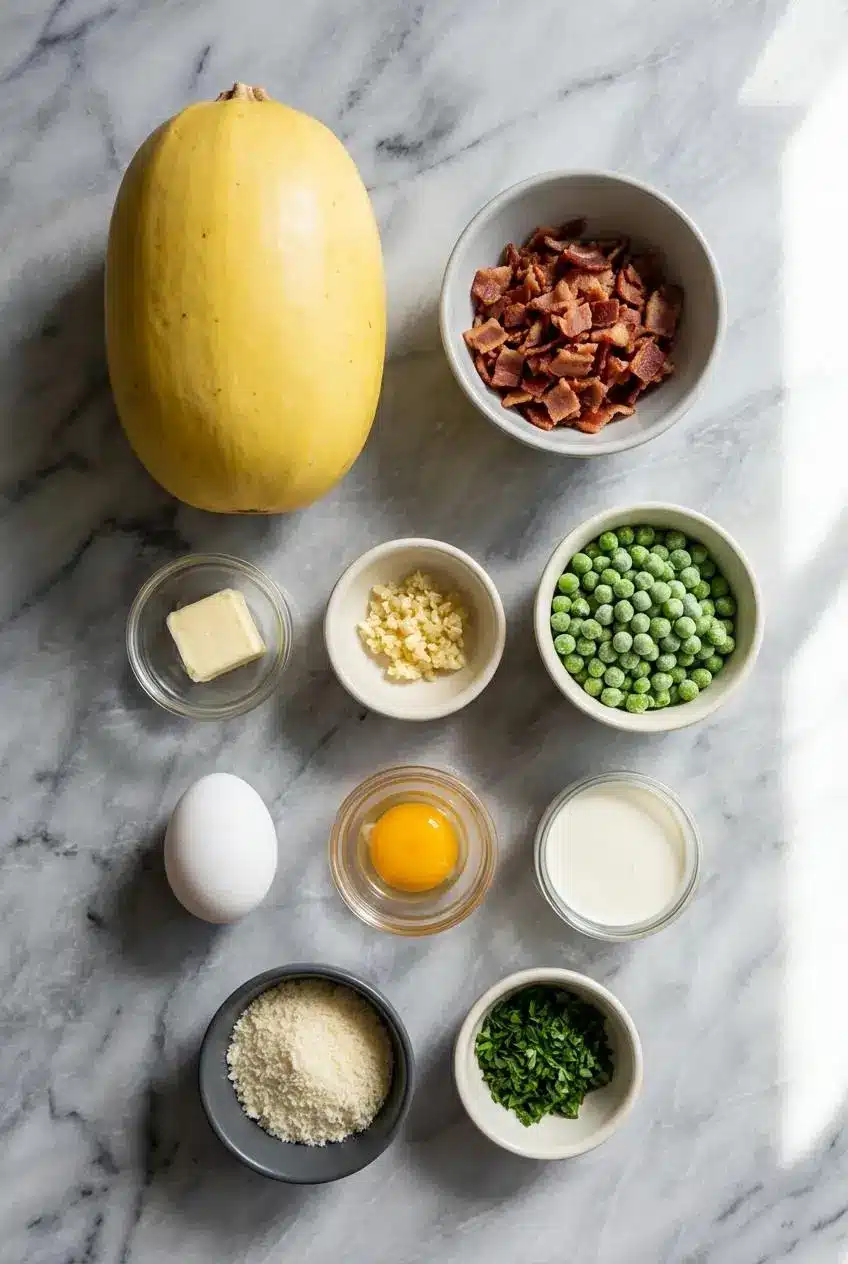
A short ingredient list does most of the heavy lifting here. Each piece matters, from the sweet roasted squash to the eggs and cheese that create that signature creamy finish.
Ingredients
- 1 medium spaghetti squash 2.5 lbs
- 1/2 tablespoon olive oil
- salt
- 3 slices nitrate-free bacon cooked until crisp and crumbled
- 1/2 tablespoon unsalted butter
- 2 medium garlic cloves minced
- 1/2 cup frozen peas
- 1 large egg
- 1 large egg yolk
- 2 tablespoon heavy cream
- 1/4 cup grated Parmesan cheese plus extra to serve, if desired
- 1/8 teaspoon ground black pepper or more to taste
- 2 tablespoons minced fresh parsley
Ingredient Notes & Substitutions
Cured Meat: Traditional Carbonara leans on Guanciale, with Pancetta as a very close runner-up, while bacon brings a smokier, more familiar flavor that works beautifully in an American kitchen. If you swap in Pancetta or Guanciale, taste before salting because both are usually saltier than bacon.
Cheese: A wedge of Parmigiano-Reggiano is worth it here. I always grate Parmesan cheese fresh because pre-shredded cheese is coated with anti-caking ingredients that can leave your sauce grainy instead of smooth, and Pecorino Romano is a terrific alternative if you want a sharper, saltier finish more in line with Italian Cuisine.
Eggs: Room temperature eggs blend into the hot squash much more gracefully and help with emulsification, which is what gives you that glossy sauce instead of scrambled bits. If raw eggs make you nervous, pasteurized eggs are easy to find in most US grocery stores and work well in this recipe.
Spaghetti Squash: Look for one with a hard rind, a deep even color, and no soft spots. A good Winter Squash should feel solid and heavy in your hands, because that usually means better texture once roasted.
Vegetarian swaps: If you want the same creamy character without meat, skip the bacon and sauté sliced mushrooms in the brown butter until deeply golden. A handful of spinach stirred in at the end is also lovely and keeps the dish feeling bright.
How to Make Spaghetti Squash Carbonara
Prep and Roast the Squash
- Heat your oven to 375℉. Carefully split the spaghetti squash lengthwise, scoop out the seeds, then prick the cut flesh with a fork so heat can move through it more evenly.
- Set both halves cut side up in a large baking pan. Drizzle the olive oil over the exposed flesh, season with a generous pinch of salt, and roast for about 45 minutes, until the squash is fork-tender and the edges look lightly caramelized.
Build the Flavor Base
- While the squash is in the oven, cook the bacon in the microwave for about three minutes, or until crisp. Let it cool, crumble it into small pieces, and keep it nearby for the final toss.
- Place the butter in a large saucepan over medium-high heat. Let it melt and continue cooking, swirling the pan, until it foams and turns a warm golden brown with a nutty aroma, then quickly stir in the minced garlic and peas and cook for about 45 seconds, just until the garlic smells fragrant and the peas soften. Set the pan aside.
- In a small bowl, whisk the whole egg, egg yolk, and heavy cream until smooth. Add the grated Parmesan cheese and ground black pepper, whisk again until creamy and well combined, then set that mixture aside too.
Turn the Squash into Noodles
Once the squash is tender, take it from the oven and let it rest for about five minutes so it is easier to handle. Using a fork, scrape the flesh into long, spaghetti-like strands, holding the hot squash steady with a clean towel as you work.
Finish the Carbonara
- Return the garlic and pea mixture to the heat and warm it until it is sizzling again. Add the spaghetti squash strands and toss until everything is heated through and glossy, then remove the pan from the heat.
- Pour in the egg and cheese mixture right away, add the crumbled bacon and parsley, and toss quickly so the residual heat gently cooks the eggs into a creamy sauce. Serve immediately with extra Parmesan if you like.
The Secret to a Perfect, Silky Sauce
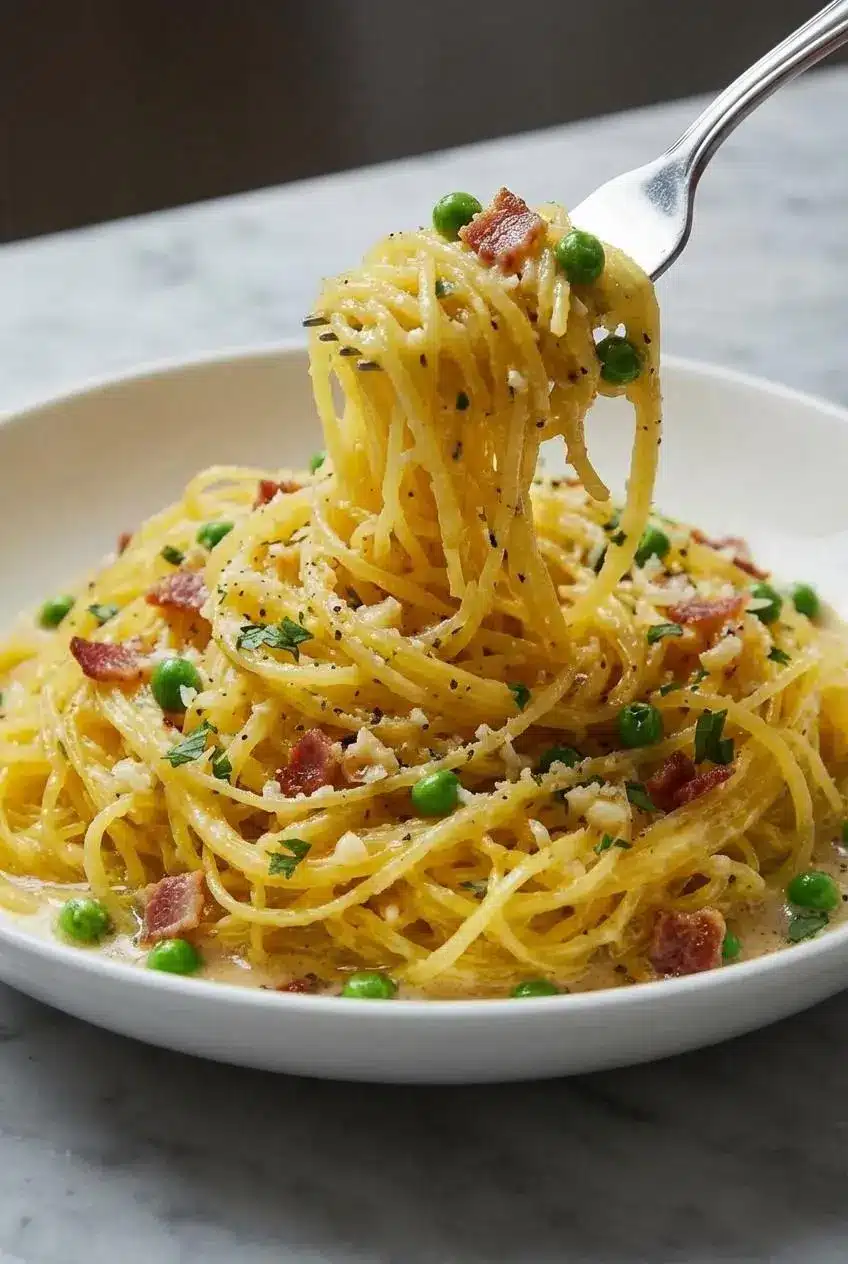
The magic starts with brown butter. As the milk solids in the butter toast, they develop deeper savory notes through The Maillard reaction, which is why this dish tastes nutty and complex rather than merely buttery. That extra layer of flavor helps the squash feel like the star of dinner, not just a stand-in for pasta.
Classic pasta carbonara gets a little help from starch released by the noodles, but spaghetti squash does not bring that same built-in thickener. That means your sauce depends on technique, hot squash, room temperature eggs, and quick tossing, so the eggs and cheese emulsify into a creamy coating instead of tightening into curds.
Good cheese matters more than people think. Aged Parmigiano-Reggiano has lower moisture and a more crystalline texture, so it melts into the eggs far more smoothly, while bargain pre-shredded cheeses often turn oily or gritty and make the sauce feel broken.
How to Master Spaghetti Squash: From Cutting to Roasting
Choosing a good squash is the first win. Look for one that is firm, heavy for its size, and evenly colored, with no soft spots or shriveled patches, because those are the ones that roast up sweet and hold their strands well.
Cutting spaghetti squash can be the trickiest part, and I never wrestle with it cold if I can help it. Pierce the skin a few times with a fork and microwave the whole squash for 3 to 5 minutes first, which slightly softens the hard rind and makes slicing through it much safer and easier.
The biggest mistake with Spaghetti Squash is overcooking it or trapping in too much moisture. Roasting the halves cut-side up lets steam escape, encourages a little caramelization around the edges, and gives you firmer, more distinct strands, while roasting cut-side down tends to steam the squash and leave it watery or mushy.
Pro Tips & Troubleshooting
Expert Tips for Success
- Get everything ready before final assembly. Carbonara moves quickly, so have the bacon crumbled, cheese grated, eggs whisked, and parsley chopped before the hot squash hits the pan.
- Bring the eggs to room temperature about 30 minutes before cooking. Cold eggs are much more likely to seize when they hit the hot squash.
- For even more savory depth, reserve a tablespoon of rendered bacon fat and add it to the pan with the butter before sautéing the garlic and peas.
- If cutting the squash feels awkward, soften it briefly in the microwave first. That one little prep trick saves a lot of effort.
Common Mistakes to Avoid
- Scrambled eggs happen when the pan is too hot. Always remove it from the burner before adding the egg mixture, and if the squash is giving off lots of steam, let it settle for about 60 seconds first.
- Watery sauce usually starts with watery squash. Roast the halves cut-side up and do not cover the pan, so moisture can evaporate instead of collecting.
- Clumpy sauce often comes from pre-shredded cheese or timid mixing. Freshly grated Parmesan and quick, constant tossing make all the difference.
- Overcooked squash loses that noodle-like bite. Pull it from the oven once it is fork-tender, not collapsed and soggy.
Serving, Storing, and Reheating
Serving Suggestions
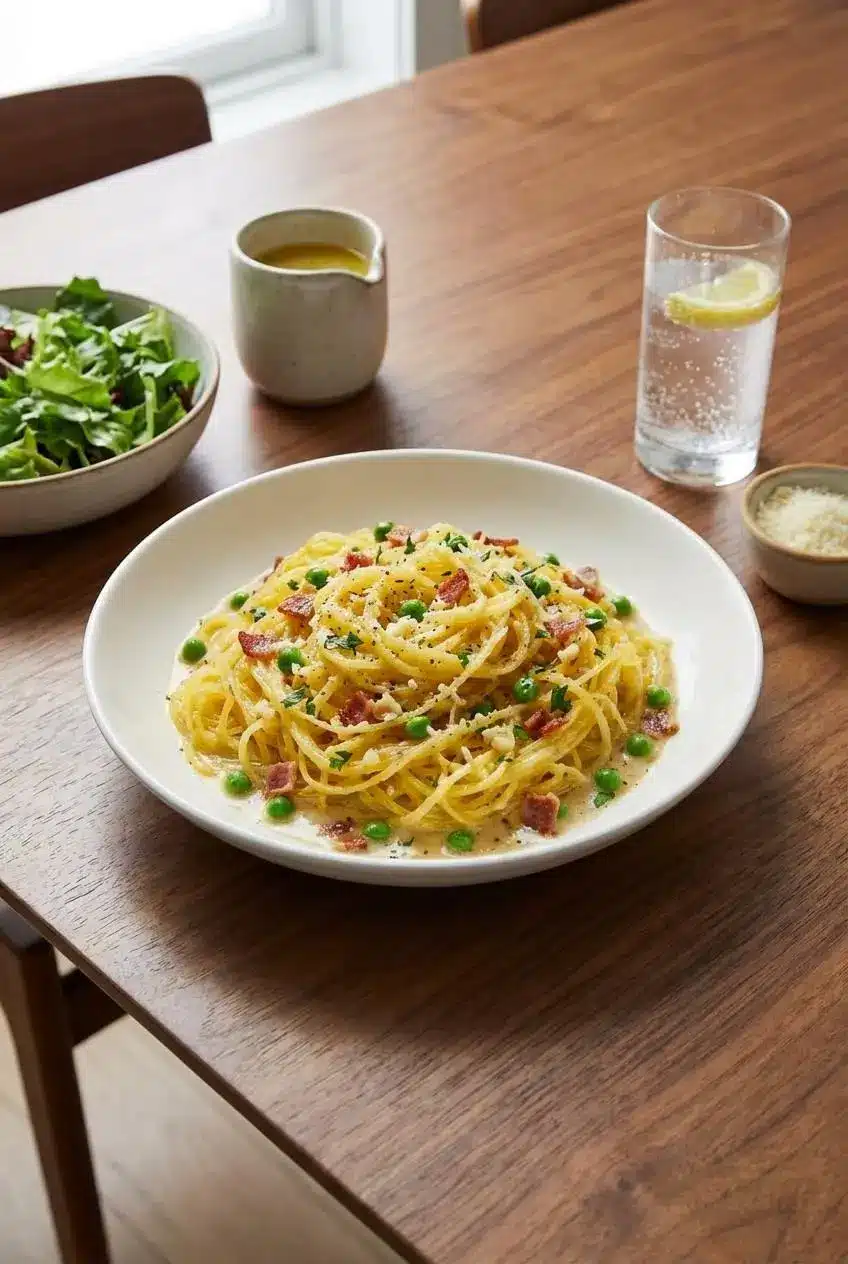
Serve this spaghetti squash carbonara right away with extra Parmesan cheese, more black pepper, and a shower of fresh parsley. A crisp green salad with a lemony vinaigrette is my favorite partner because it cuts through the creamy richness beautifully.
If you want something heartier on the side, cheesy potatoes can be surprisingly good here too. I like the contrast of crisp edges and bold seasoning, and garlic parmesan wedges pair especially well with the savory bacon and nutty cheese notes in the dish.
For a fun dinner-party look, spoon the finished carbonara back into the roasted squash shells. It has the same cozy appeal as other stuffed spaghetti squash boats, and it makes a simple weeknight meal feel a little special.
Storage and Reheating Instructions
This dish is at its absolute best fresh from the pan, when the sauce is silky and loose. If you want to get ahead, roast the squash and cook the bacon earlier in the day, then do the final toss just before serving.
Leftovers can be stored in an airtight container in the refrigerator for 2 to 3 days. The texture will soften a bit, but the flavor stays very good.
The best way to reheat it is gently in a non-stick skillet over low heat with a small splash of heavy cream or water. Stir slowly until just warmed through, because the microwave tends to make the sauce oily and the squash mushy.
Spaghetti Squash Carbonara

Equipment
- Baking pan
- Large saucepan
- Small bowl
- Whisk
- Fork
Ingredients
- 1 medium spaghetti squash 2.5 lbs
- 1/2 tablespoon olive oil
- salt
- 3 slices nitrate-free bacon cooked until crisp and crumbled
- 1/2 tablespoon unsalted butter
- 2 medium garlic cloves minced
- 1/2 cup frozen peas
- 1 large egg
- 1 large egg yolk
- 2 tablespoon heavy cream
- 1/4 cup grated Parmesan cheese plus extra to serve, if desired
- 1/8 teaspoon ground black pepper or more to taste
- 2 tablespoons minced fresh parsley
Instructions
Prep and Roast the Squash
- Preheat your oven to 375°F. Carefully cut the spaghetti squash in half lengthwise and use a spoon to scoop out the seeds. Prick the cut flesh all over with a fork.
- Place the squash halves cut-side up in a baking pan. Drizzle with olive oil, season with salt, and roast for about 45 minutes, or until the flesh is tender when pierced with a fork.
Build the Flavor Base
- While the squash roasts, cook the bacon until crisp. Let it cool slightly, then crumble it into small pieces and set aside.
- In a large saucepan over medium-high heat, melt the butter. Continue cooking, swirling the pan, until it turns golden brown and smells nutty. Immediately stir in the minced garlic and frozen peas, cooking for about 45 seconds until fragrant. Remove the pan from the heat and set aside.
- In a small bowl, whisk together the whole egg, egg yolk, and heavy cream until smooth. Stir in the grated Parmesan cheese and black pepper.
Turn the Squash into Noodles
- Once the squash is tender, remove it from the oven and let it rest for about 5 minutes, until cool enough to handle. Use a fork to scrape the flesh from the peel into long, spaghetti-like strands.
Finish the Carbonara
- Return the saucepan with the garlic and pea mixture to medium heat. Add the spaghetti squash strands and toss until everything is heated through and glossy. Immediately remove the pan from the heat.
- Pour the egg and cheese mixture over the hot squash, add the crumbled bacon and minced parsley, and toss everything together quickly and constantly. The residual heat will gently cook the eggs into a creamy sauce. Serve immediately, with extra Parmesan cheese if desired.
Notes
Nutrition
Conclusion
This spaghetti squash carbonara brings together everything I love in a comfort food dinner, creamy sauce, savory bacon, plenty of Parmesan, and that extra depth from brown butter. It feels cozy and satisfying, but still light enough for a weeknight.
Once you make it once, the method becomes second nature. Give it your own spin with pancetta, mushrooms, or extra greens, then settle in and enjoy every silky, nutty bite.
Frequently Asked Questions
How do I cook spaghetti squash for the perfect ‘al dente’ noodle texture?
Is it safe to use raw eggs in carbonara sauce?
Why did my carbonara sauce become scrambled eggs, and how do I prevent it?
Can I make spaghetti squash carbonara ahead of time or reheat leftovers?
What are the best variations for this recipe (vegetarian, different meats)?
What should I serve with spaghetti squash carbonara?