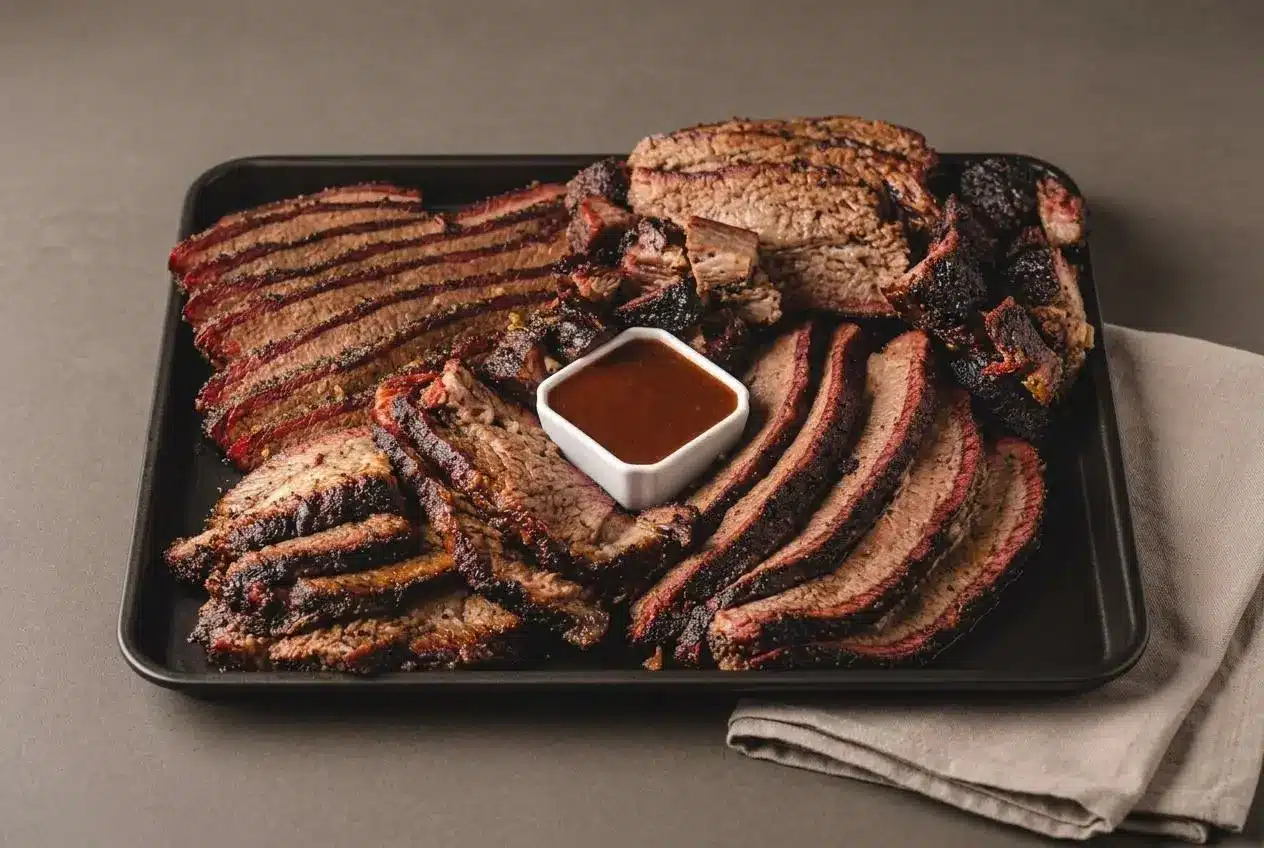
For a tender smoked brisket recipe, cook a whole packer at 225°F until it reaches 165°F, wrap it tightly in butcher paper, then continue until probe-tender around 202°F.
Hardwood smoke, coarse pepper, and slowly rendered beef fat give brisket its deep barbecue character. A whole packer takes patience, but each stage has a clear cue to watch for.
The reward is a dark mahogany crust around slices that bend softly without falling apart. That first cut is worth the wait.
Keep the brisket cold until trimming time so the fat stays firm and easier to shape cleanly.
What Defines Authentic Smoked Brisket
Texas-style brisket puts beef, smoke, salt, and pepper in the spotlight. Rather than relying on sugary marinades or heavy sauce during the cook, it uses steady indirect heat to render fat gradually and build a dark, peppery bark.
A whole packer brisket includes both muscles: the leaner flat and the fattier point. That combination cooks more evenly than a pre-trimmed flat, and the rich point helps protect the flat through the long smoke.
Brisket rewards steady pit management. Keep the lid closed, maintain clean smoke, and let the bark set before wrapping. The clock is useful for planning, but tenderness decides when the brisket is finished.
Ingredients for Smoked Brisket
Each ingredient contributes to the brisket’s savory crust, smoke-friendly texture, and deep beef flavor without covering up the meat.
- 1 12-14 pound whole packer brisket
- 2 Tablespoons coarse Kosher salt
- 2 Tablespoons coarse black pepper
- 2 Tablespoons garlic powder (optional)
Coarse kosher salt helps the seasoning cling to the meat as moisture reaches the surface. Coarse black pepper gives the bark its rugged texture and catches smoke beautifully. Garlic powder is optional, adding a gentle savory layer while keeping the beef front and center.
I prefer mixing the rub in a shaker or small container before opening the brisket package, which keeps the seasoning ready while the cold meat is easiest to handle.
How to Make Smoked Brisket
- Take the brisket from the refrigerator and trim it while cold. With the point facing down, remove silver skin and loose fat from the flat, trim the firm crescent of deckle fat into a smooth transition, tidy loose meat around the point, square the flat, then leave an even 1/4-inch fat cap across the top.
The finished brisket should have rounded, streamlined edges and no thin dangling pieces likely to dry out. - Combine the coarse Kosher salt, coarse black pepper, and optional garlic powder in a bowl or empty spice container, then season every side of the brisket evenly.
A consistent coat of coarse seasoning creates the foundation for a dark, peppery bark. - Heat the smoker to 225°F for indirect hardwood cooking and set the brisket on the grate with the point facing the main heat source. Smoke with the lid closed until the thickest area reaches 165°F, usually around 8 hours.
The surface should look deeply browned and feel dry and leathery rather than wet or pasty. - Lay out a large sheet of butcher paper or foil, place the brisket in the center, and fold the wrap tightly around it before returning it to the smoker seam-side down.
The brisket’s weight should hold the folded edges firmly against the meat. - Maintain the smoker at 225°F and continue cooking until the thickest part reaches 202°F, which can take another 5 to 8 hours.
Begin checking for tenderness near the end of the cook instead of relying on temperature alone. - Move the brisket to a large cutting board and rest it for 1 hour before carving. Separate and slice the flat and point against their individual grain directions, then serve right away.
The slices should feel tender and moist, with a bark that stays attached rather than crumbling away.
Selecting and Trimming Your Whole Packer Brisket
Start with a USDA Choice or Prime whole packer when possible. The flat alone is lean and can dry out more easily, while a packer includes the marbled point and a protective fat cap that better handle a long cook.
Look for a brisket with a flexible feel, a thick flat, and fairly even thickness from end to end. Avoid trimming away every bit of external fat. The goal is to remove hard, excessive fat while leaving enough coverage to protect the lean muscle.
Understanding the Flat and the Point
The flat is the broad, more uniform muscle that makes neat slices. It is leaner, so it needs protection from harsh heat and overcooking. The point sits above part of the flat and contains more marbling, which makes it especially rich and forgiving.
A fat seam runs between these muscles. Find that seam before slicing because the grain changes direction where the flat meets the point. Cutting both muscles in the same direction can turn an otherwise tender brisket chewy.
Trimming Technique for an Aerodynamic Cut
Cold fat is firm fat, and firm fat is much easier to trim accurately. Turn the brisket point-side down first, shave away silver skin from the flat, and carve away the dense deckle fat that will not render pleasantly during the cook.
Round off sharp corners and thin edges so hot smoker airflow moves around the brisket instead of scorching exposed bits. Finish by evening the fat cap to about 1/4 inch across the flat. That layer provides protection without leaving thick, rubbery fat on the finished slices.
The Simple Texas Rub and Smoker Setup
A restrained rub lets the smoke and beef do the talking. Set the smoker for indirect heat at 225°F and give it time to produce a clean, steady stream of hardwood smoke before the brisket goes on.
Place the brisket so the thick, well-marbled point faces the firebox or strongest heat zone. The point can take more heat than the delicate flat, which helps reduce the chance of a dry edge.
Coarse Salt and Pepper Ratios
The classic Central Texas Dalmatian rub uses equal parts coarse kosher salt and coarse black pepper by volume. This recipe follows that balanced approach, with garlic powder as an optional savory accent.
Use coarse pepper rather than finely ground pepper. Fine pepper can form a dusty coating, while coarse pepper creates the craggy surface that becomes a proper barbecue bark. Fine table salt is also less forgiving and can make the exterior overly salty.
Choosing the Best Hardwood Smoke Profile
Post oak gives brisket a mild, classic Texas-style smoke that supports rather than overwhelms the beef. Hickory brings a bolder, more assertive flavor, while pecan adds a gentler nutty sweetness. Use whichever clean-burning wood suits your smoker and taste.
Oak and pecan are also excellent choices for other low-and-slow cooks, including juicy smoked turkey. For brisket, avoid heavy, stale smoke. Clean smoke should smell pleasantly woody, never acrid.
Mastering the Step-by-Step Smoked Brisket Method
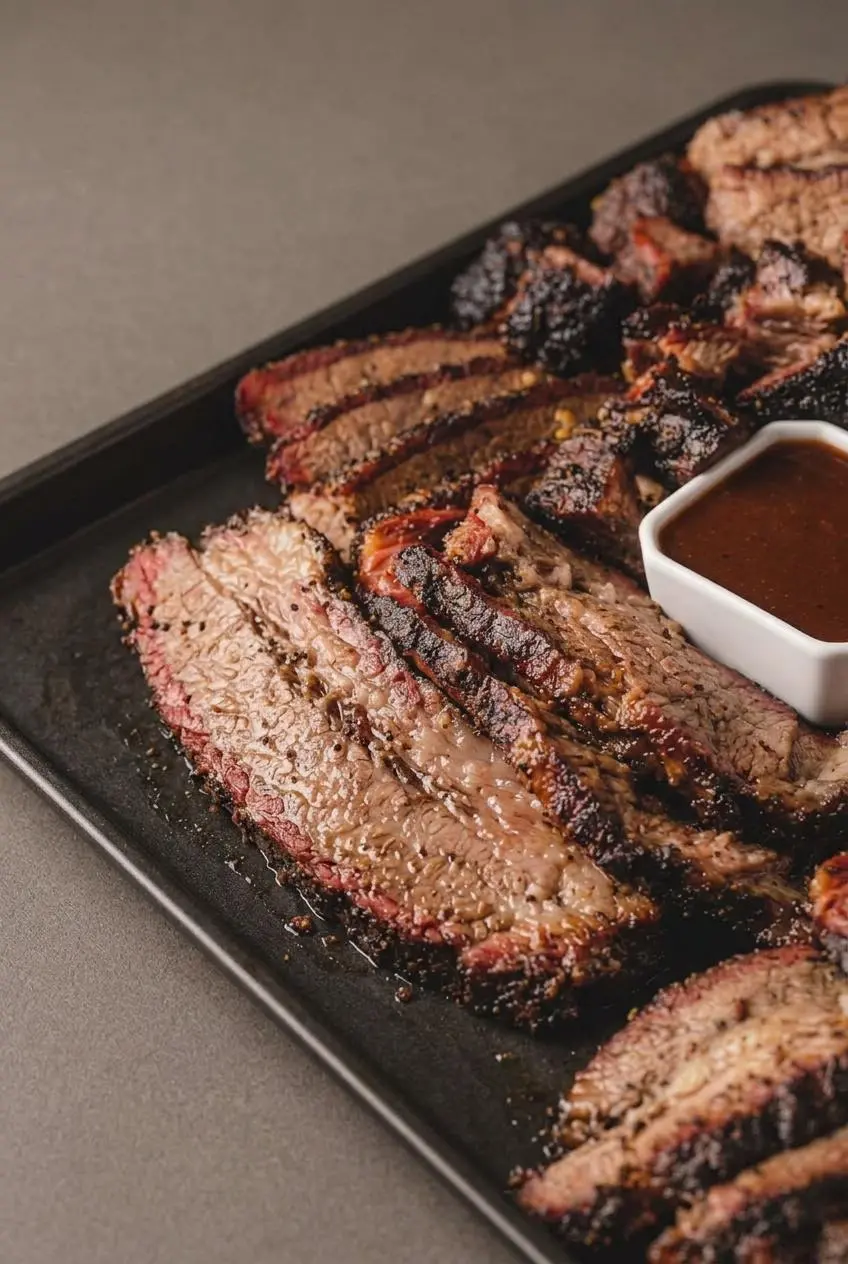
The key to a great brisket is responding to the meat, not forcing it through a rigid schedule. Keep the smoker near 225°F, keep the point toward the strongest heat, and watch the bark and probe feel as closely as the thermometer.
If the flat looks like it is darkening much faster than the point, check your smoker’s heat pattern rather than flipping the brisket repeatedly. A steady setup protects the bark and prevents unnecessary heat loss.
- Dry flat: The fat cap may have been trimmed too thin, or the flat sat too close to the heat. Keep the point facing the heat source and preserve an even protective fat layer.
- Soft bark: Wrapping too early traps steam before the surface has set. Wait until the exterior is dark, dry, and firm before wrapping.
- Chewy slices: The brisket may need more time, more resting, or a different slicing direction. Probe the flat and cut across the grain.
Surviving the Brisket Stall
Between about 150°F and 170°F, the brisket’s internal temperature may barely move. This stall happens as surface moisture evaporates and cools the meat. It can feel endless, but it is normal.
Keep the smoker steady rather than cranking the heat high. Once the bark has set and the brisket reaches 165°F, wrapping helps limit surface evaporation and moves the cook forward without sacrificing the low-and-slow approach.
If weather turns rough or wood pellets run low after the brisket has absorbed smoke and been wrapped, finishing it indoors is an optional alternative:
- Keep the brisket tightly wrapped and move it to a 225°F oven.
- Continue checking the thickest part of the flat for tenderness rather than following a fixed finish time.
- Rest and slice it exactly as you would a brisket finished in the smoker.
Butcher Paper vs Aluminum Foil Wrap
Both wraps work, but they create different results.
- Peach butcher paper: This breathable option releases some steam, helping preserve a firmer pepper bark while still protecting the brisket from drying out.
- Aluminum foil: Foil seals more tightly and can speed the cook, but its steamy environment usually softens the exterior crust.
- Rendered beef tallow: As an optional finishing touch, brush warm rendered tallow over the butcher paper before wrapping for extra richness around the lean flat.
Checking for Probe Tenderness
Start testing the flat with an instant-read probe when the brisket enters the 195°F to 205°F range. Temperature tells you when to begin checking, but the probe tells you whether the brisket is actually ready.
Slide the probe into several spots in the thickest part of the flat. It should enter with very little resistance, similar to pushing into warm butter. A tight or springy feel means the brisket needs more time, even if the thermometer shows 202°F.
Resting, Holding, and Carving for Maximum Tenderness
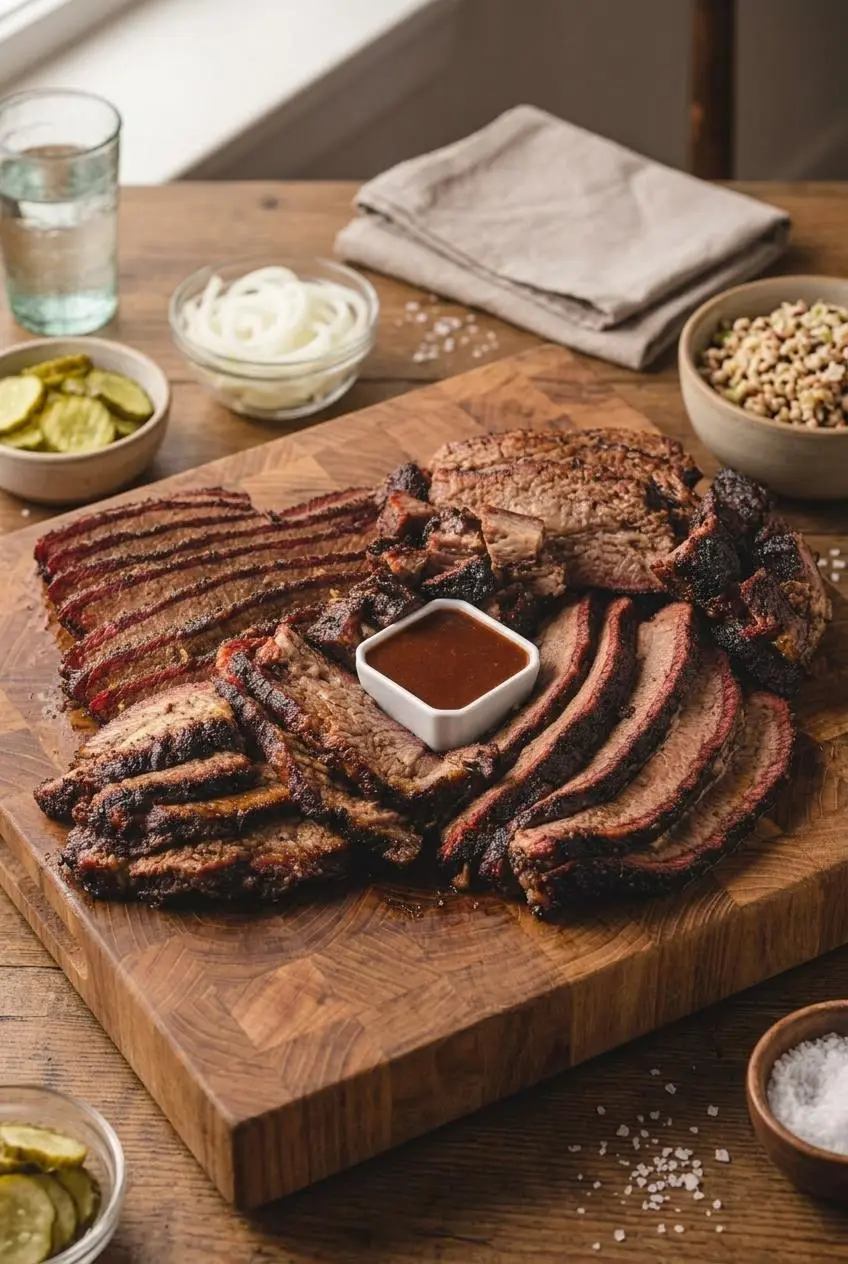
Resting gives the brisket time to settle before slicing. Cutting immediately can send flavorful juices running across the board instead of staying in the meat, especially in the lean flat.
The Insulated Cooler Rest
For the recipe method, rest the brisket on a cutting board for 1 hour. If you need to hold it longer for a meal, keep it wrapped, surround it with a clean towel, and place it in a dry insulated cooler while monitoring its temperature with a probe.
Keep the brisket hot for serving and avoid leaving it unattended at room temperature. The wrap protects moisture, while the insulated environment slows cooling and gives the meat a more relaxed, sliceable texture.
Slicing Flat and Point Against the Grain
Find the natural seam of fat between the flat and point, then separate the two muscles before carving. The flat’s grain runs in one direction, while the point’s grain turns at a near-perpendicular angle.
Slice the flat across its grain into pencil-thick strips. Slice the point across its own grain for rich, tender pieces, or cube it for a more indulgent barbecue bite. Serve brisket with vinegar slaw, pit beans, warm cornbread, potato rolls, dill pickles, sweet onions, or crispy steak fries.
Leftover Brisket Storage and Reheating
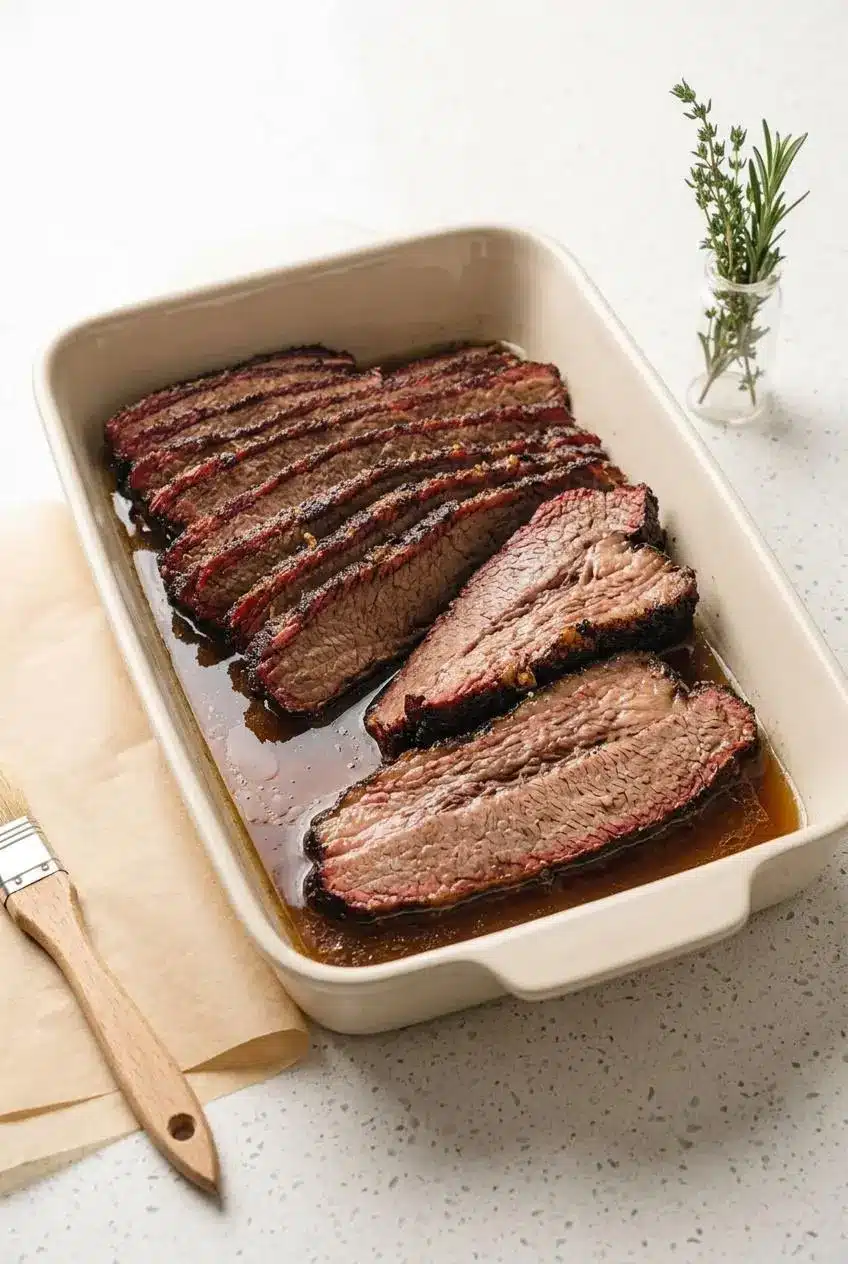
Cool leftover brisket promptly, keep it tightly covered in the refrigerator, and store slices with any collected juices to protect the flat from drying out. Portioning the meat before chilling makes it easier to warm only what you plan to serve.
Reheat slices gently in a covered dish with a splash of beef broth or reserved juices until warmed through. Avoid blasting lean slices dry in the microwave without moisture. Chopped brisket also works beautifully in breakfast hash, smoky chili, tacos, or comforting cowboy soup.
Conclusion
Great brisket comes from steady heat, thoughtful trimming, a well-set bark, and patience at the stall. Keep the fat cap even, place the point toward the heat, and trust probe tenderness over the clock.
Give the brisket time to rest before slicing, then carve each muscle across its grain. If you choose the optional tallow-brushed paper wrap, enjoy the extra richness and let the bark still lead the way.
Frequently Asked Questions
How Long Does It Take to Smoke a Brisket at 225 Degrees Fahrenheit?
Plan for roughly 30 to 60 minutes per pound at 225°F. A whole packer often takes about 12 to 16 hours from smoker to slicing board. Use that range for planning, then cook until the flat feels probe-tender.
What Is the Brisket Stall and How Do You Push Through It?
The stall commonly appears around 150°F to 170°F, when evaporation cools the brisket’s surface. Keep the smoker steady and avoid reacting with a large heat increase. Wrap tightly in peach butcher paper once the bark is dark and set, usually around 165°F.
Should You Wrap a Smoked Brisket in Peach Butcher Paper or Aluminum Foil?
Choose unlined peach butcher paper for a firmer, crunchier pepper bark. Choose foil when a faster cook matters more than a crisp exterior. Both wraps should fit tightly around the brisket to limit moisture loss.
Do You Place the Brisket Fat Side Up or Fat Side Down in the Smoker?
Point the fat toward your smoker’s primary heat source. On smokers with heat rising from below, that often means fat-side down to shield the flat. When the strongest heat comes from above, orient the fat cap upward instead.
Smoked Brisket Recipe

Equipment
- smoker
- Chef’s knife
- Butcher paper
- Large cutting board
Ingredients
- 1 12-14 pound whole packer brisket
- 2 Tablespoons coarse Kosher salt
- 2 Tablespoons coarse black pepper
- 2 Tablespoons garlic powder ((optional))
Instructions
- Take the brisket from the refrigerator and trim it while cold. With the point facing down, remove silver skin and loose fat from the flat, trim the firm crescent of deckle fat into a smooth transition, tidy loose meat around the point, square the flat, then leave an even 1/4-inch fat cap across the top. The finished brisket should have rounded, streamlined edges and no thin dangling pieces likely to dry out.
- Combine the coarse Kosher salt, coarse black pepper, and optional garlic powder in a bowl or empty spice container, then season every side of the brisket evenly. A consistent coat of coarse seasoning creates the foundation for a dark, peppery bark.
- Heat the smoker to 225°F for indirect hardwood cooking and set the brisket on the grate with the point facing the main heat source. Smoke with the lid closed until the thickest area reaches 165°F, usually around 8 hours. The surface should look deeply browned and feel dry and leathery rather than wet or pasty.
- Lay out a large sheet of butcher paper or foil, place the brisket in the center, and fold the wrap tightly around it before returning it to the smoker seam-side down. The brisket’s weight should hold the folded edges firmly against the meat.
- Maintain the smoker at 225°F and continue cooking until the thickest part reaches 202°F, which can take another 5 to 8 hours. Begin checking for tenderness near the end of the cook instead of relying on temperature alone.
- Move the brisket to a large cutting board and rest it for 1 hour before carving. Separate and slice the flat and point against their individual grain directions, then serve right away. The slices should feel tender and moist, with a bark that stays attached rather than crumbling away.