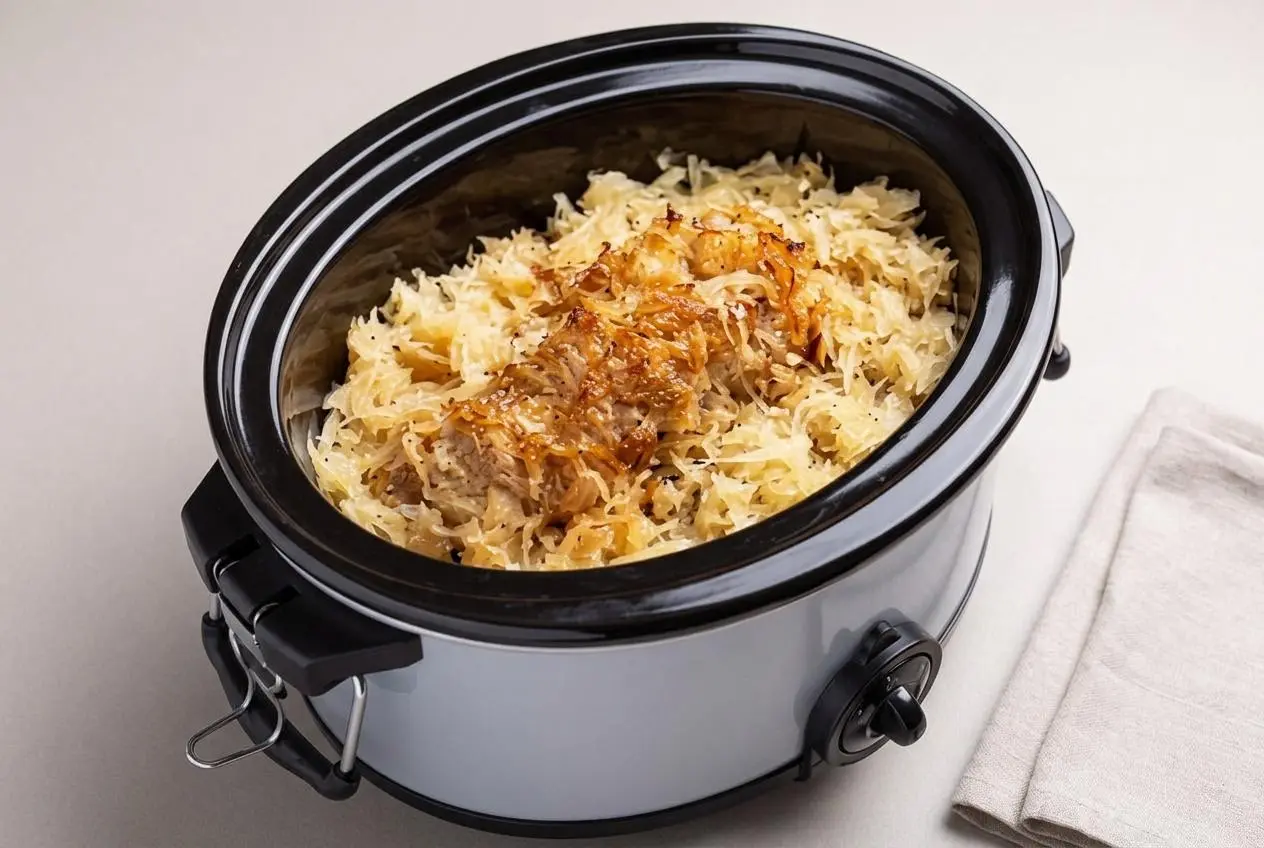
Make Slow Cooker Pork and Sauerkraut by layering seasoned pork with applesauce, undrained sauerkraut, brown sugar, and melted butter. Cook on low for about 8 hours, checking the meat’s temperature rather than relying on the clock alone, then stir the kraut into its buttery juices before serving.
Slow Cooker Pork and Sauerkraut brings savory pork and sweet-tart cabbage together in a warm, buttery braise. As it cooks, the applesauce and brown sugar soften the kraut’s sharp edge, filling the kitchen with a comforting sweet-and-sour aroma.
The slow cooker handles most of the work, and the finished juices are worth spooning over every serving. Lean pork needs some attention to doneness, though, even on low. Keep an eye on the pork, and save every drop of that broth.
Open the sauerkraut over the slow cooker so its brine goes into the pot instead of down the drain.
Key Ingredients and Flavor Harmony
Pork supplies the savory centerpiece, sauerkraut contributes tang and cooking liquid, and applesauce and brown sugar round out the acidity. Butter adds richness, while salt and black pepper season the meat beneath the cabbage.
- 2-3 lbs. whole pork tenderloin
- ½ tsp. black pepper
- 1 tsp. salt
- 1/3 cup applesauce
- 32 oz Frank’s Kraut or SnowFloss Kraut, undrained
- ¼ cup brown sugar
- 4 Tbsp. butter, melted
Pork tenderloin: This lean cut gives you mild pork flavor and sliceable portions. Tenderloin and pork loin are different cuts, so use the tenderloin listed here and treat a loin roast as an optional substitution.
Undrained sauerkraut: The cabbage and its brine provide the main braising liquid. Keep both. Rinsing or thoroughly draining the kraut changes its seasoning and removes liquid this recipe uses; no additional water is required for the standard preparation.
Applesauce and brown sugar: Applesauce spreads easily over the pork and adds fruitiness and moisture. Brown sugar brings a deeper sweetness that balances the kraut’s fermented acidity. Neither removes the acid, but together they make the finished flavor less sharp.
Melted butter: Butter enriches the lean pork and coats the softened cabbage. Stirring it through the brine before serving distributes that richness, although butter cannot prevent overcooked meat from drying out.
Salt and black pepper: These season the pork directly. Since preserved sauerkraut already contributes salt, wait until the finished dish is stirred and tasted before adding any seasoning beyond the listed amount.
I keep the sauerkraut package tilted over the pot until the last briny drips fall in; that liquid belongs in the braise.
How to Make Slow Cooker Pork and Sauerkraut
The layering matters: pork goes underneath, followed by fruit, cabbage, sugar, and butter. This lets the flavorful liquid collect around the meat as everything cooks.
Equipment: slow cooker and food thermometer. Cook time: about 8 hours on low. Yield: 6-8 servings.
- Set the tenderloin in the slow cooker insert and distribute the salt and black pepper over its surface.
The seasoning should cover the exposed meat rather than collect in one spot. - Spread the applesauce across the pork, then empty the sauerkraut and all its brine over the fruit layer.
The cabbage should blanket the meat, with liquid gathering beneath it. - Scatter the brown sugar across the cabbage in an even layer.
Avoid thick piles so the sweetness can spread through the braising juices. - Pour the melted butter over the sugar-topped kraut, moving across the surface as you pour.
The top should have buttery streaks rather than one concentrated puddle. - Cover and cook on low for about 8 hours, checking the thickest part of the pork with a thermometer for this recipe’s target of at least 160 °F.
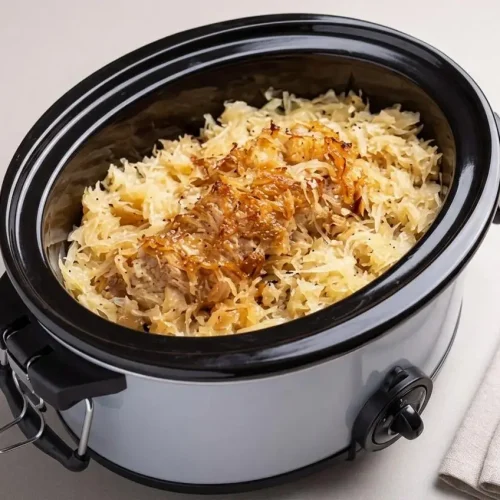
The kraut should look softened and slightly translucent, but use the thermometer rather than appearance to judge the meat. - Fold the cooked cabbage through the liquid at the bottom of the insert before serving.
The finished kraut should glisten with evenly mixed buttery juices.
Use low heat for this preparation, not a shortened high-heat schedule. Slow cookers and tenderloin thickness vary, so begin checking the meat before the estimated finish rather than assuming every tenderloin needs the full cooking time. If it reaches the recipe’s target sooner, don’t keep cooking merely to complete the clock.
Choosing the Best Cut of Pork
Choose your pork by the texture you want on the plate. Tenderloin and loin suit slices; shoulder suits a richer, shredded meal. These cuts don’t cook at the same speed, even when their package weights look similar.
Pork Tenderloin and Loin: Lean and Sliceable
Tenderloin is narrow and relatively small, while boneless pork loin is a broader roast. Both are lean, but they are not interchangeable on a fixed schedule. A thicker loin roast can behave differently from tenderloin, so check its center rather than borrowing a cooking time blindly.
Low heat offers gentler cooking, but it does not make lean pork immune to dryness. Brine keeps the cooking environment moist; it cannot stop the meat’s muscle fibers from losing moisture when cooked too far. Once done, cut across the grain for easier-to-chew slices.
The minimum internal temperature for whole pork cuts is 145 °F followed by a 3-minute rest. This preparation uses a higher cooking target, which is a recipe choice rather than the minimum requirement. Higher temperatures can make lean cuts firmer, so careful monitoring still matters.
Pork Shoulder Butt: Rich and Shredded
Pork shoulder, often sold as Boston butt, contains more fat and connective tissue. A long, moist braise helps that connective tissue soften, giving you pork that pulls apart rather than tidy tenderloin medallions.
Shoulder is an optional substitution when you want a richer sauerkraut dinner. Don’t assume the tenderloin schedule will produce shreddable shoulder: check for easy separation with a fork as well as proper doneness. A safe cooking temperature and a pull-apart texture are different endpoints.
For another preparation built around that shredded texture, crock pot pulled pork makes a useful alternative. With shoulder in this sauerkraut dish, mix the shredded meat through the cabbage so the juices coat it evenly.
Recipe Tips and Troubleshooting
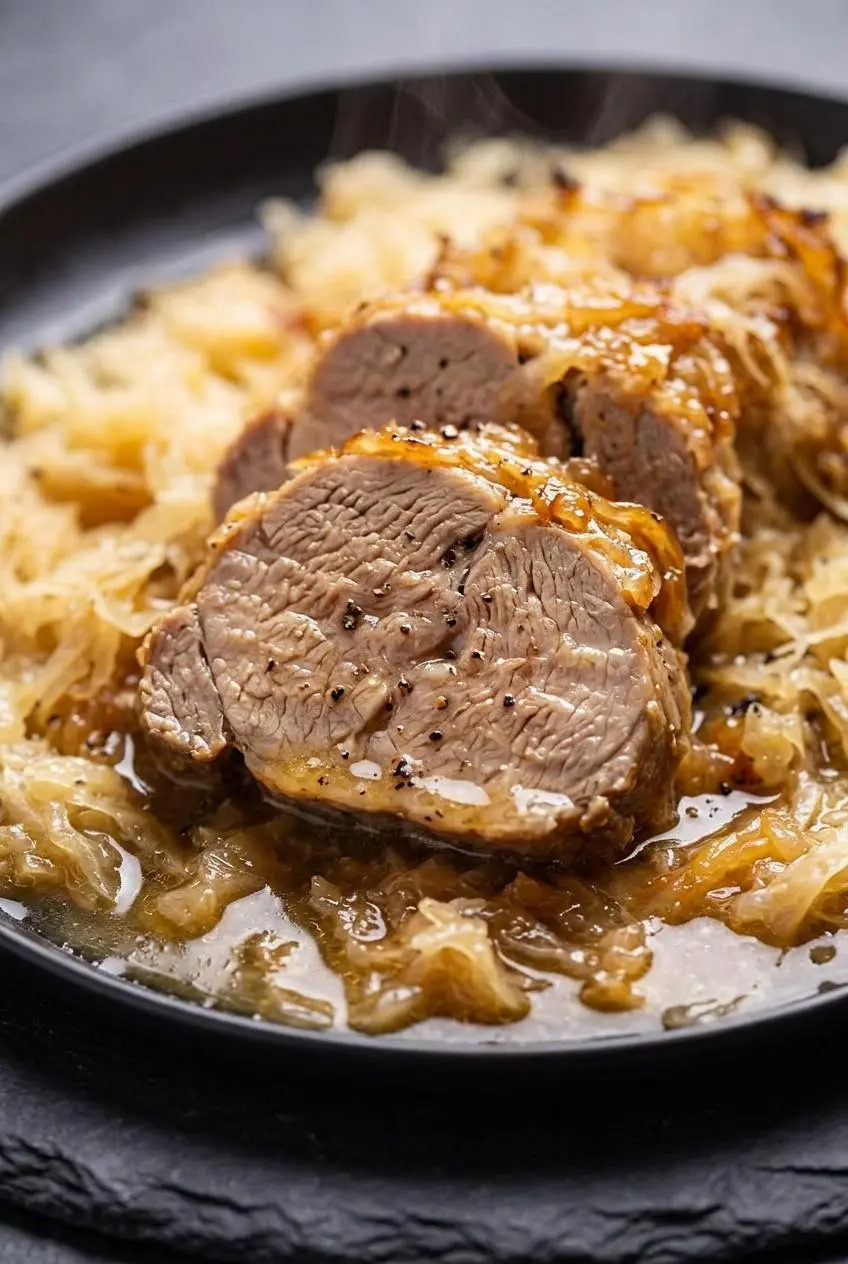
Taste the kraut after stirring it through the cooking liquid. Before that final mix, the top can taste sweeter than the cabbage underneath, giving you a misleading impression of the whole dish.
- The kraut tastes too sour: Fermented cabbage varies in acidity. Stir in a little additional applesauce or brown sugar, taste again, and stop while the dish still has a pleasant tang.
- The kraut tastes too sweet: Sugar may stand out more with a mild brand of kraut. Stir thoroughly first, then serve it with an unsweetened side such as plain mashed potatoes rather than adding another strong flavor.
- The dish tastes too salty: Brine and added seasoning can combine into a salty finish. A small splash of water can dilute the juices, while an unsalted starch helps balance each bite.
- The pork feels dry or firm: Lean meat may have cooked past its best texture. Slice it thinly across the grain, or break it into small pieces, and coat it with warm kraut juices before serving.
- There seems to be too much liquid: Brine is part of the dish, not a thick gravy. Lift out the pork and cabbage with a slotted spoon, then add just enough liquid to moisten each portion.
Juices can improve the way dry pork eats, but they cannot restore its original texture. Avoid leaving firm meat cooking longer in hopes that it will behave like shoulder; extra heat can make tenderloin drier.
Delicious Recipe Variations
Keep these changes optional and separate from the ingredient list above. They alter the meal’s flavor or texture, so check the meat and any additions individually rather than assuming everything finishes together.
For a richer shoulder version: Substitute pork shoulder when you prefer shredded meat, following the cut-selection guidance above. Its rendered fat produces a fuller-bodied braise, and it may need a different cooking schedule from tenderloin.
Adding Potatoes for a One-Pot Meal
Nestle halved baby red potatoes or pieces of Yukon Gold potato around the base and sides of the pork before adding the toppings. Keep the pieces reasonably uniform so they cook more evenly and sit in contact with the flavorful liquid.
The potatoes absorb some of the buttery kraut broth while softening. Check them separately with a fork: they should offer little resistance at the center. If the pork finishes first, remove it rather than overcooking it while waiting for firm potatoes.
Bavarian Apples and Caraway
For a Bavarian-inspired flavor, optionally add diced tart apple and caraway seeds. Apple contributes fruity sweetness with a tart edge, while caraway adds a distinctive earthy, herbal aroma.
Add apple earlier for a softer texture or nearer the end for more distinct pieces, checking for the texture you prefer. Use caraway sparingly because its flavor can quickly dominate the mild pork and cabbage. Keep the applesauce in the standard preparation unless you intentionally choose a fruit substitution.
What to Serve with Pork and Kraut
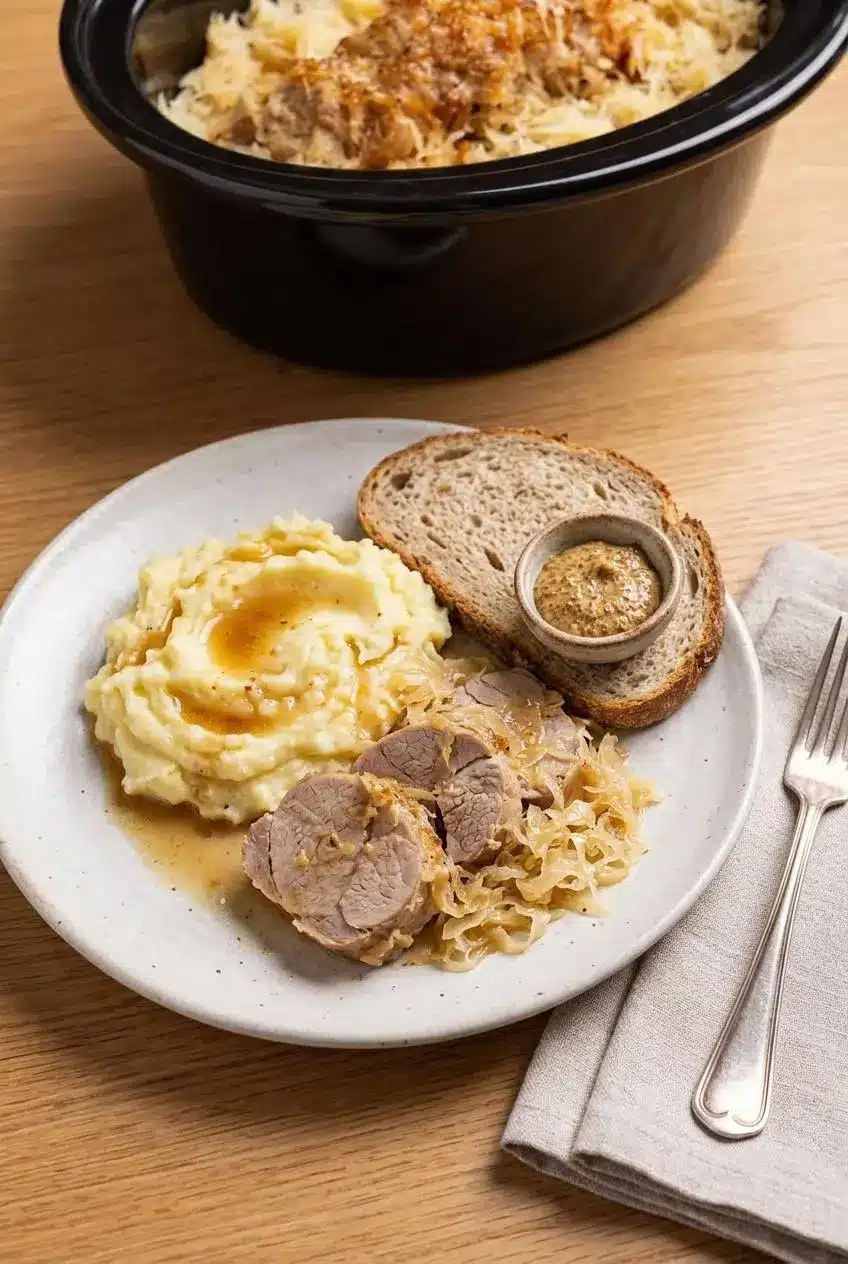
Choose sides that soak up the juices or offer a mellow contrast to the cabbage. The braise already brings plenty of acidity, so it doesn’t need a sharply dressed accompaniment.
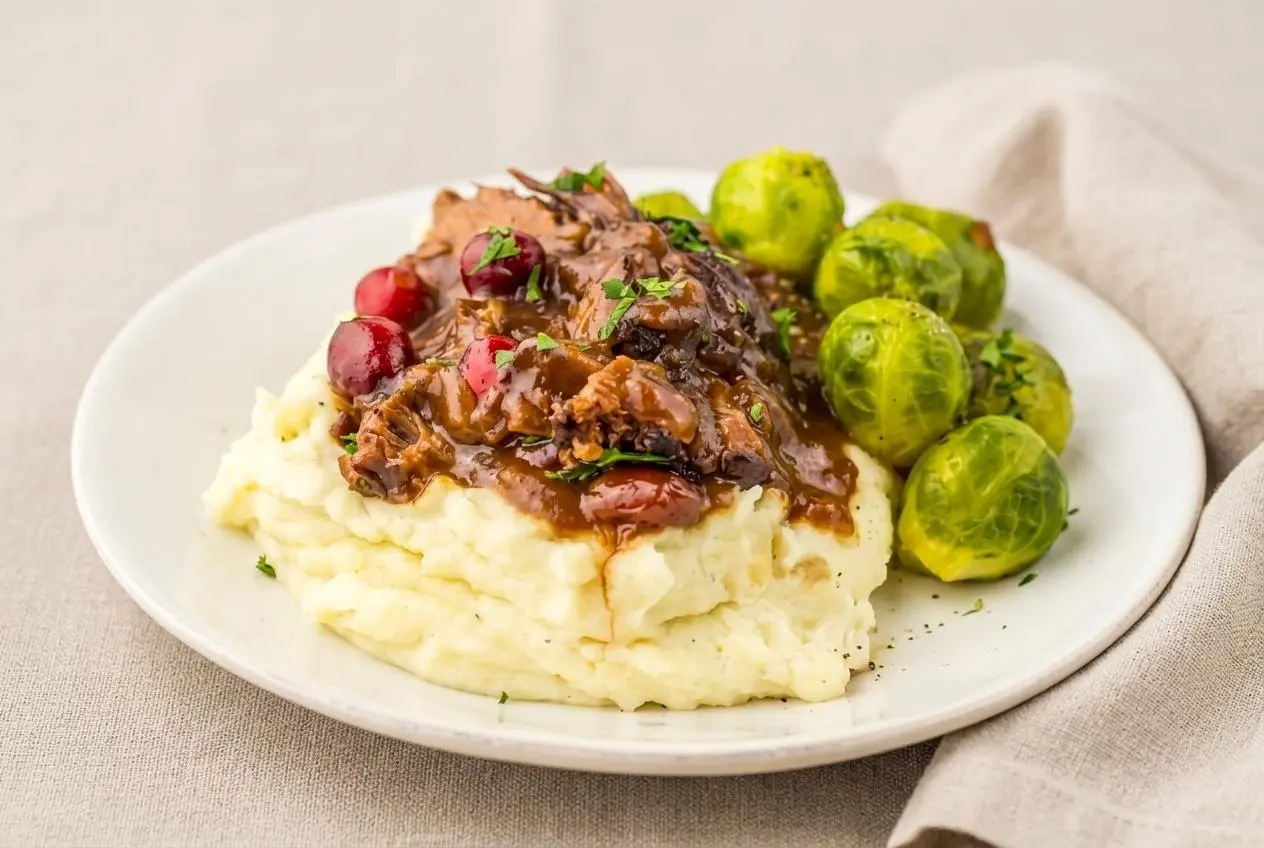
- Creamy mashed Yukon Gold potatoes: Their buttery texture catches the cooking liquid and softens the kraut’s tang.
- Buttered egg noodles or spaetzle: Both make a comforting bed for sliced pork and cabbage.
- Roasted carrots or other root vegetables: Their browned edges and natural sweetness balance the sour notes.
- Crusty rye bread and German mustard: Bread catches the juices, while a small dab of mustard adds a sharper accent for anyone who wants it.
A creamy vegetable side such as slow cooker cheddar corn also works well if you have another cooking vessel available. Its sweetness offers a gentle contrast without adding more acidity.
Storage and Reheating
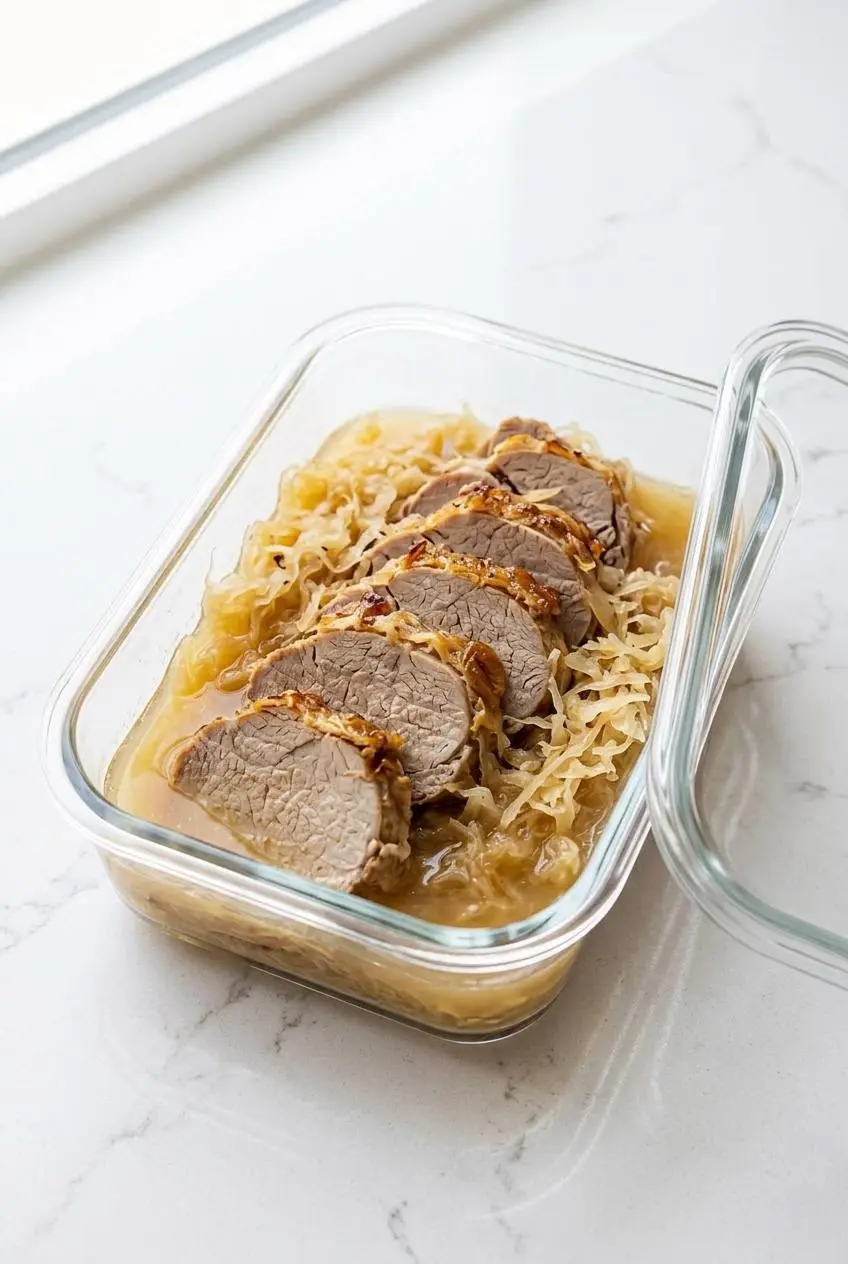
Save the pork with its cabbage and braising juices, not in a separate dry container. The liquid is especially useful when warming lean slices again.
Divide leftovers into shallow containers and refrigerate promptly, keeping them covered for storage. Portioning the meal makes it easier to reheat only what you plan to serve instead of repeatedly warming the entire batch.
Reheat on the stovetop in a covered pan, using gentle heat and enough reserved liquid to keep the pork moist. Turn slices carefully and stir the cabbage so the food heats evenly throughout. If the liquid has reduced too much, add a small splash of water.
A covered baking dish offers another option. Keep the meat tucked into the kraut and juices, and heat it thoroughly without prolonged cooking. Avoid hard boiling or reheating uncovered until the edges become dry.
Conclusion
Sweet applesauce, brown sugar, and butter round out the sauerkraut’s tang while the pork supplies a savory centerpiece. Keeping the brine gives you flavorful juices to spoon over the finished meal.
Use low heat, monitor lean pork carefully, and stir the cabbage before serving. Add a comforting side, and bring the meal to the table with plenty of those buttery juices.
Frequently Asked Questions
What Cut of Pork Works Best in the Slow Cooker?
Pork shoulder butt works best for rich, shreddable meat because it contains more fat and connective tissue. Tenderloin and boneless loin suit lean, sliceable portions, but they need closer doneness monitoring. This preparation uses tenderloin.
Should I Drain the Sauerkraut Before Adding It to the Crock Pot?
No. Add the sauerkraut and its brine together because the liquid supplies moisture and seasoning for this braise. Rinsing or draining it changes the flavor and removes liquid the recipe relies on.
How Do I Keep Pork Tenderloin from Drying Out in a Slow Cooker?
Use low heat, keep the pork beneath the sauerkraut, and check its internal temperature before the estimated finish. Stop cooking when it reaches the recipe’s target rather than leaving it for the full schedule automatically. Spoon the warm braising juices over the slices.
Can I Add Potatoes Directly into the Slow Cooker with the Pork?
Yes, as an optional addition. Place halved baby potatoes or evenly sized Yukon Gold pieces around the bottom and sides so they contact the liquid. Check their centers with a fork, and remove finished pork if the potatoes still need more cooking.
Slow Cooker Pork and Sauerkraut

Equipment
- Crock Pot
Ingredients
- 2-3 lbs. whole pork tenderloin
- ½ tsp. black pepper
- 1 tsp. salt
- 1/3 cup applesauce
- 32 oz Frank’s Kraut or SnowFloss Kraut, undrained
- ¼ cup brown sugar
- 4 Tbsp. butter, melted
Instructions
- Set the tenderloin in the slow cooker insert and distribute the salt and black pepper over its surface. The seasoning should cover the exposed meat rather than collect in one spot.
- Spread the applesauce across the pork, then empty the sauerkraut and all its brine over the fruit layer. The cabbage should blanket the meat, with liquid gathering beneath it.
- Scatter the brown sugar across the cabbage in an even layer. Avoid thick piles so the sweetness can spread through the braising juices.
- Pour the melted butter over the sugar-topped kraut, moving across the surface as you pour. The top should have buttery streaks rather than one concentrated puddle.
- Cover and cook on low for about 8 hours, checking the thickest part of the pork with a thermometer for this recipe’s target of at least 160 °F. The kraut should look softened and slightly translucent, but use the thermometer rather than appearance to judge the meat.
- Fold the cooked cabbage through the liquid at the bottom of the insert before serving. The finished kraut should glisten with evenly mixed buttery juices.