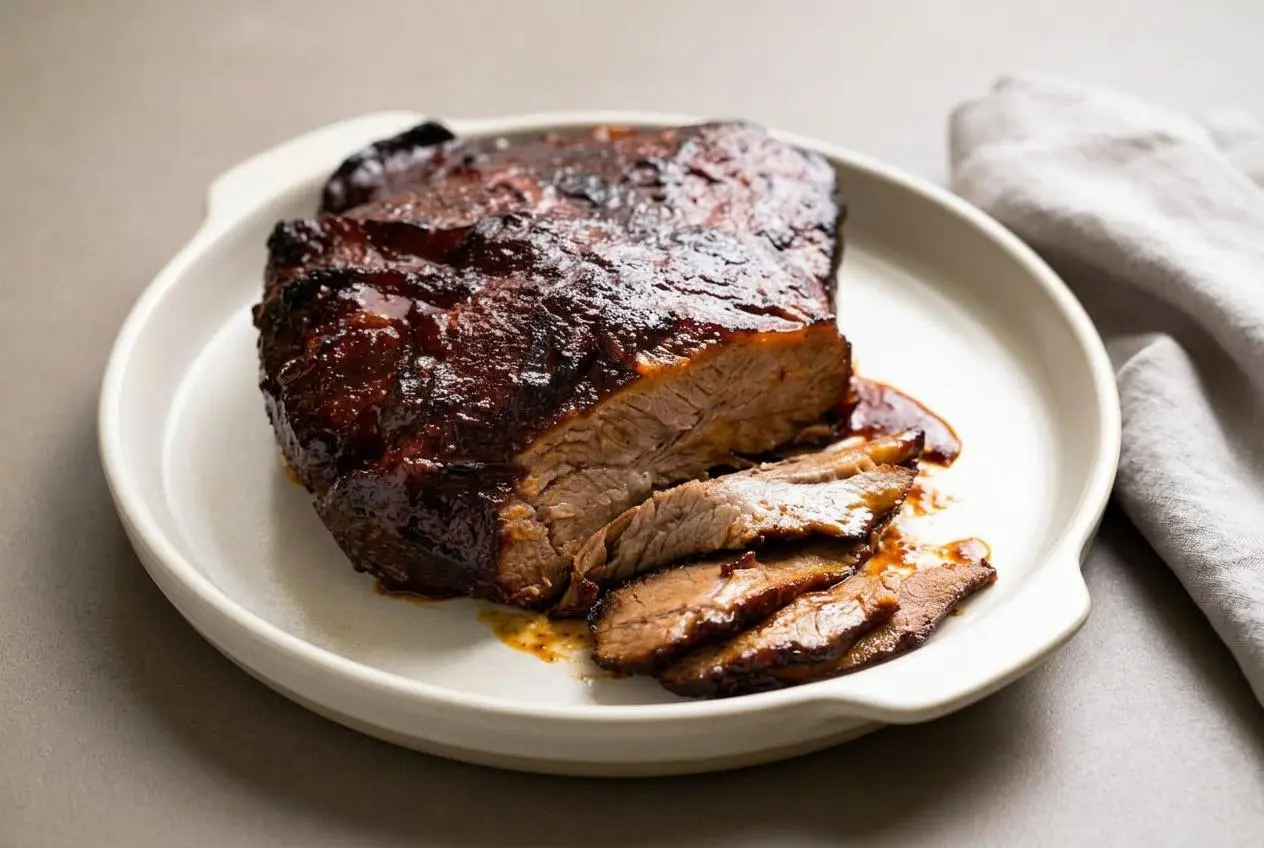
Cook brisket on low for 8 to 10 hours until fork tender, then reduce the cooking juices and finish the meat in a hot oven for a sticky caramelized glaze.
This slow cooker brisket recipe turns a sturdy cut of beef into tender slices with a sweet smoky crust and deep barbecue flavor. The slow cooker does the patient work while the final oven finish adds those dark, savory edges.
Expect rich beefy aromas, a sauce that clings instead of puddles, and slices that bend without falling apart. The glaze is the payoff.
Set the brisket fat side up so the trimmed fat cap can render gently over the meat as it cooks.
Choosing the Best Cut: Flat Cut Versus Point Cut
The cut you buy determines whether your finished brisket is best for neat slices or generous piles of shredded beef. Both cuts benefit from long, moist cooking, but they behave differently on the cutting board.
- Flat cut: This is the leaner, more even section of brisket. Choose it when you want tidy slices for a dinner platter, sandwiches, or sliders. Its uniform thickness makes carving easier once it has rested.
- Point cut: This section has more marbling and a looser grain. It stays especially rich during the braise and is the better choice when you plan to shred the meat for tacos or saucy sandwiches.
- Whole brisket: A whole packer brisket includes both sections. It can be awkward in a slow cooker, so make sure it fits without folding too tightly or forcing the lid open.
Leave some surface fat in place, but trim an unusually thick fat cap to about 1/4 inch. That layer adds flavor as it renders, while excessive fat can leave the cooking liquid greasy and make the finished sauce feel heavy.
If you enjoy a leaner brisket prepared for clean slicing, slow cooker corned beef is another useful way to see how this cut responds to a long, gentle braise.
Essential Ingredients for Tender Brisket
Each ingredient builds the brisket’s flavor and finish: beef brings richness, the rub forms a seasoned crust, vinegar balances the fat, and the sauce becomes a glossy glaze.
- 1.5 – 2 kg / 3 – 4 lb beef brisket
- 1 tbsp olive oil
Rub
- 1 tbsp brown sugar
- 2 tsp paprika powder
- 1 tsp onion powder
- 1 tsp garlic powder
- 1/2 tsp cumin powder
- 3/4 tsp mustard powder
- 1 tsp salt
- 1/2 tsp black pepper
BBQ Sauce
- 2 garlic cloves, minced
- 1/2 cup / 125 ml apple cider vinegar
- 1 1/2 cups / 375 ml ketchup
- 1/2 cup / 110g brown sugar, packed
- 2 tsp EACH black pepper, onion powder, mustard powder
- 1 tsp cayenne pepper
- 1 tbsp Worcestershire sauce
Brown sugar helps the rub darken during the oven finish, while paprika adds warm color and mild earthiness. Apple cider vinegar cuts through the brisket’s richness and keeps the barbecue sauce from tasting overly sweet. Garlic, onion powder, and mustard powder build a savory backbone, while cumin and cayenne bring gentle warmth.
Salt matters here because it seasons a thick cut from the outside in, so use the stated amount and let the reduced sauce provide the final flavor concentration.
I look for brisket with fine white marbling through the meat rather than large solid seams of fat, which gives the finished slices a richer texture without an oily sauce.
Step-by-Step Slow Cooking and Caramelization
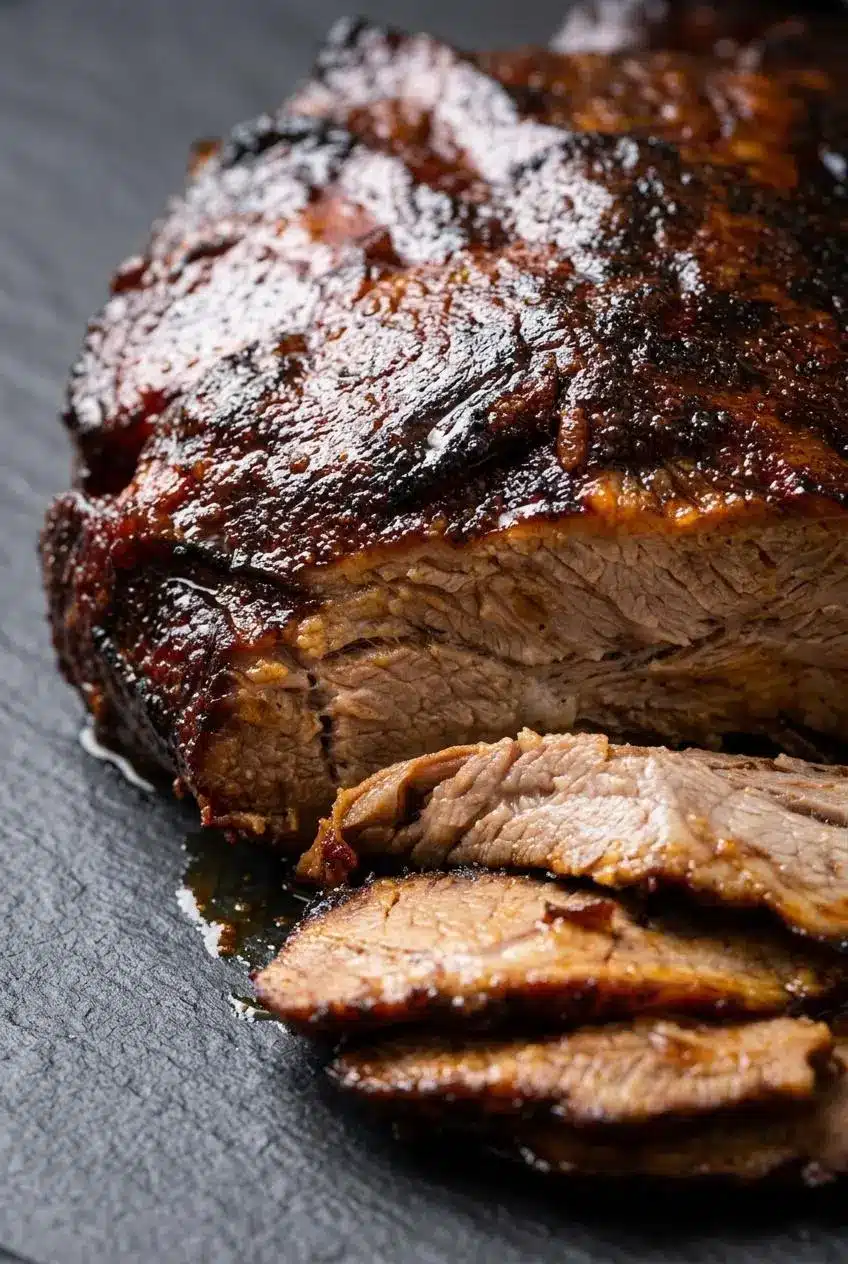
Low heat gives brisket time for its connective tissue to soften, creating meat that yields when pressed with a fork. The slow cooker keeps the braise moist, then the stovetop and oven turn those juices into a proper barbecue finish.
- Stir together all of the rub ingredients, then coat the brisket thoroughly on every side; refrigerate it for 30 minutes to 24 hours if desired.
The seasoning should form an even layer over the beef, with no bare patches around the edges. - Mix the BBQ Sauce ingredients directly in the slow cooker, then nestle the brisket into the sauce with the fat side facing up.
The sauce should reach around the meat and the lid should sit securely on the cooker. - Cook on low for 8 hours for a 1.5 kg / 3 lb brisket or up to 10 hours for a 2 kg / 4 lb brisket.
A fork should slide into the center and twist with almost no resistance when the brisket is tender. - Transfer the cooked brisket to a baking tray, keeping the liquid in the slow cooker for the sauce.
The meat will be very soft, so support it from underneath rather than gripping one end. - Pour the slow cooker liquid into a saucepan and simmer it over medium-high heat until it reaches a syrupy consistency.
Watch for active bubbles that become glossy and slower as the sauce thickens; it will continue to thicken as it cools. - Drizzle the brisket with olive oil and roast it at 200°C/390°F for 15 minutes, until browned spots form.
The exterior should sizzle and darken while the center remains moist. - Baste the brisket generously with the reduced sauce, return it to the oven for 5 minutes, then baste again and cook for a final 5 to 10 minutes.
The glaze should look dark, shiny, and caramelized rather than wet or runny. - Rest the brisket briefly, then slice it thinly across the grain and serve with the remaining BBQ sauce.
Resting helps the juices settle so they stay with the slices instead of pooling across the cutting board.
Cooking time is the best tenderness guide for this style of brisket, but safe handling still matters. Beef reaches the recommended minimum at 145°F with a three minute rest; brisket usually needs much longer than that to become truly tender.
Do not use the high setting as the standard shortcut. Brisket can reach a safe temperature before its collagen has softened enough for tender slicing, which is why the fork test matters more than the clock alone.
Troubleshooting Common Brisket Mistakes
Brisket is forgiving when you identify the problem correctly. Most disappointing results come from stopping too early, reducing the sauce too little, or carving in the wrong direction.
Fixing Tough Undercooked Meat
Tough brisket usually needs more time, not less. The meat feels firm or stringy when its connective tissue has not softened enough during the low braise.
- Problem: The fork goes in, but twisting it takes effort. Fix: Return the brisket to the slow cooker on low and keep cooking until the fork turns easily in the center.
- Problem: The meat tears into chewy strands instead of soft pieces. Fix: Keep it in the cooking liquid and give it more gentle heat. Do not discard it just because it is still firm.
- Problem: The outer portion seems tender but the center resists. Fix: Test in the thickest part rather than judging from the thinner edges.
Thinning or Thickening the Sauce
Slow cookers trap steam, so the braising liquid often starts thin even though it tastes great. Simmering it in a saucepan concentrates the flavor and turns it into a sauce that coats the brisket.
- Watery sauce: Keep it at an active simmer, stirring occasionally, until it clings to a spoon in a shiny layer.
- Over-reduced sauce: Loosen it gradually with a splash of warm water or warm broth until it brushes easily over the meat.
- Greasy sauce: Spoon off excess surface fat before reducing, especially if the brisket had a thick fat cap.
Slicing Perpendicular to the Grain
Look closely at the cooked brisket before carving. The grain is the direction of the long muscle fibers running through the meat.
Turn the brisket so your knife cuts across those fibers, not alongside them. Slicing perpendicular to the grain shortens each strand, making the meat feel tender rather than chewy. If the grain changes direction between sections, rotate the brisket before continuing to carve.
Make-Ahead Strategy and Fat Skimming
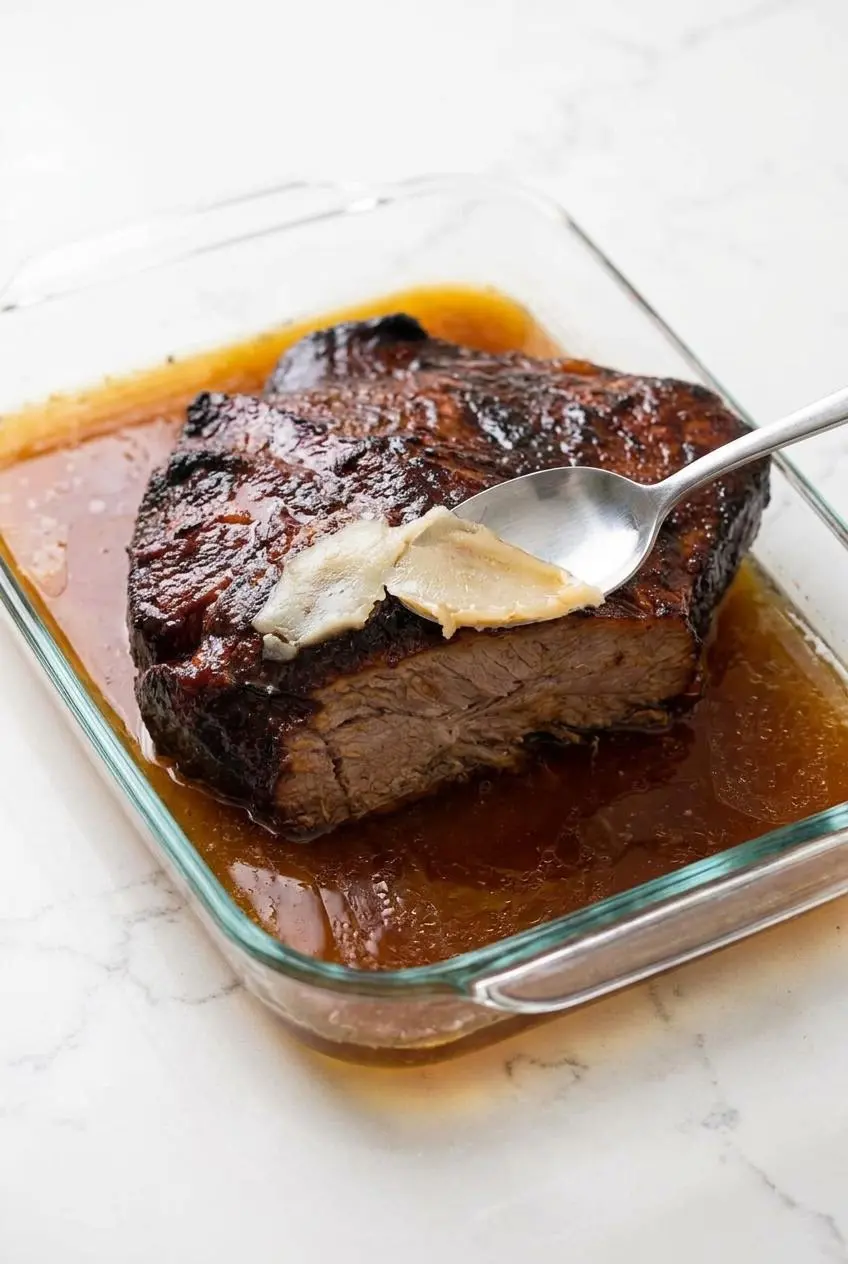
Brisket works well for a planned dinner because chilling it in its cooking juices makes the meat easier to handle and the sauce easier to defat. Keep the brisket whole rather than slicing it while hot, since cold meat cuts into cleaner, more even portions.
After cooking, place the brisket with its braising juices in a covered container and refrigerate it until thoroughly chilled. The surface fat firms up and can be lifted away before you reduce or warm the sauce. Refrigerate cooked slow cooker food in shallow containers within two hours, as described in slow cooker food storage guidance.
Slice the chilled brisket across the grain, then warm the slices gently in the reduced sauce until heated through. This protects the edges from drying out and gives each slice time to soak up the barbecue glaze.
Flavor Variations for Any Occasion
The barbecue version above is built for a tangy, caramelized finish. These are optional directions for different meals, not changes to the ingredient list or method above.
Savory Garlic and Onion Holiday Brisket
For a less sweet holiday-style braise, use rich beef stock with caramelized onions, minced garlic, thyme, and bay leaf in place of the barbecue mixture. The result is a deeply savory brisket with a silky onion-forward gravy, especially good with mashed potatoes and roasted vegetables.
Spicy Shredded Taco Brisket
Add chipotle, extra cumin, and Mexican oregano for a bolder, chile-forward direction. Cook until the brisket pulls apart easily with two forks, then toss the shredded meat with some of the cooking juices for tacos or tostadas.
For another slow-cooked filling to keep in your taco-night rotation, try slow cooker pork carnitas.
Smoky Apple Cider Glaze
For a fruitier finish, brush the cooked brisket with a reduced apple cider and smoked sea salt glaze before the oven caramelization. The cider’s bright acidity balances the beef’s richness, while smoked salt adds a campfire-like aroma without changing the brisket’s tender interior.
Best Side Dishes for Beef Brisket
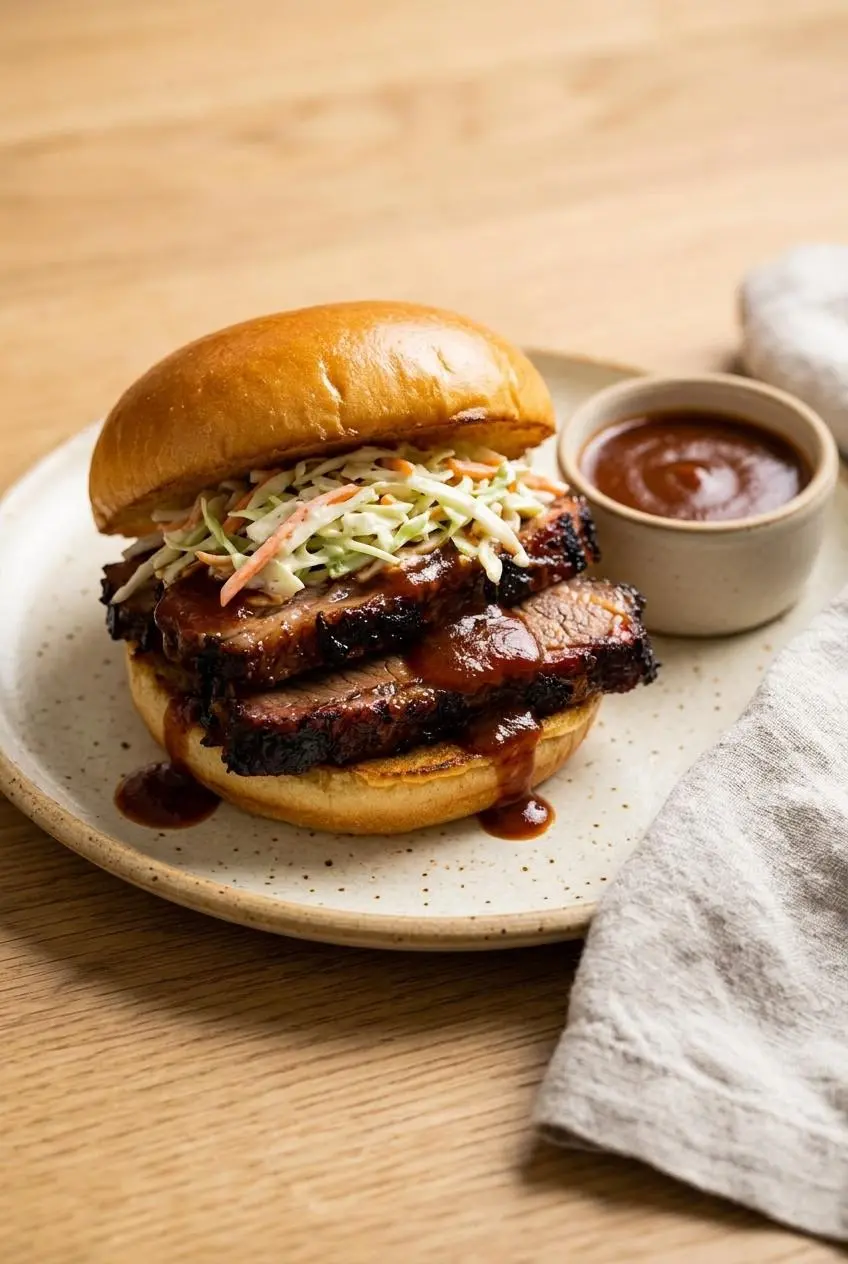
Choose sides that either catch the sauce or bring a fresh contrast to the rich meat.
- Serve brisket on soft brioche slider buns with creamy coleslaw for a casual crowd meal.
- Pair sliced brisket with buttery mashed potatoes so the reduced barbecue sauce has somewhere delicious to land.
- Add skillet cornbread for a crisp-edged, comforting plate that suits the smoky glaze.
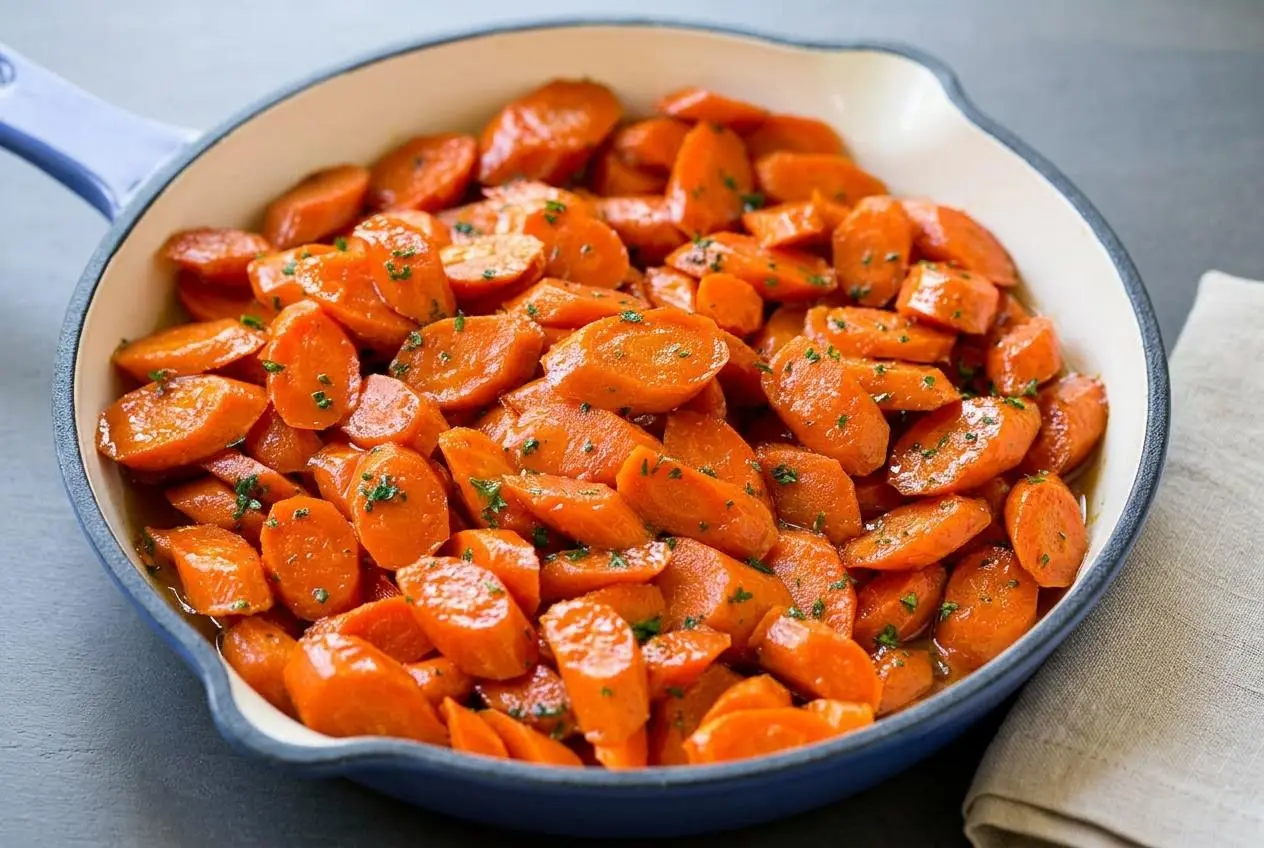
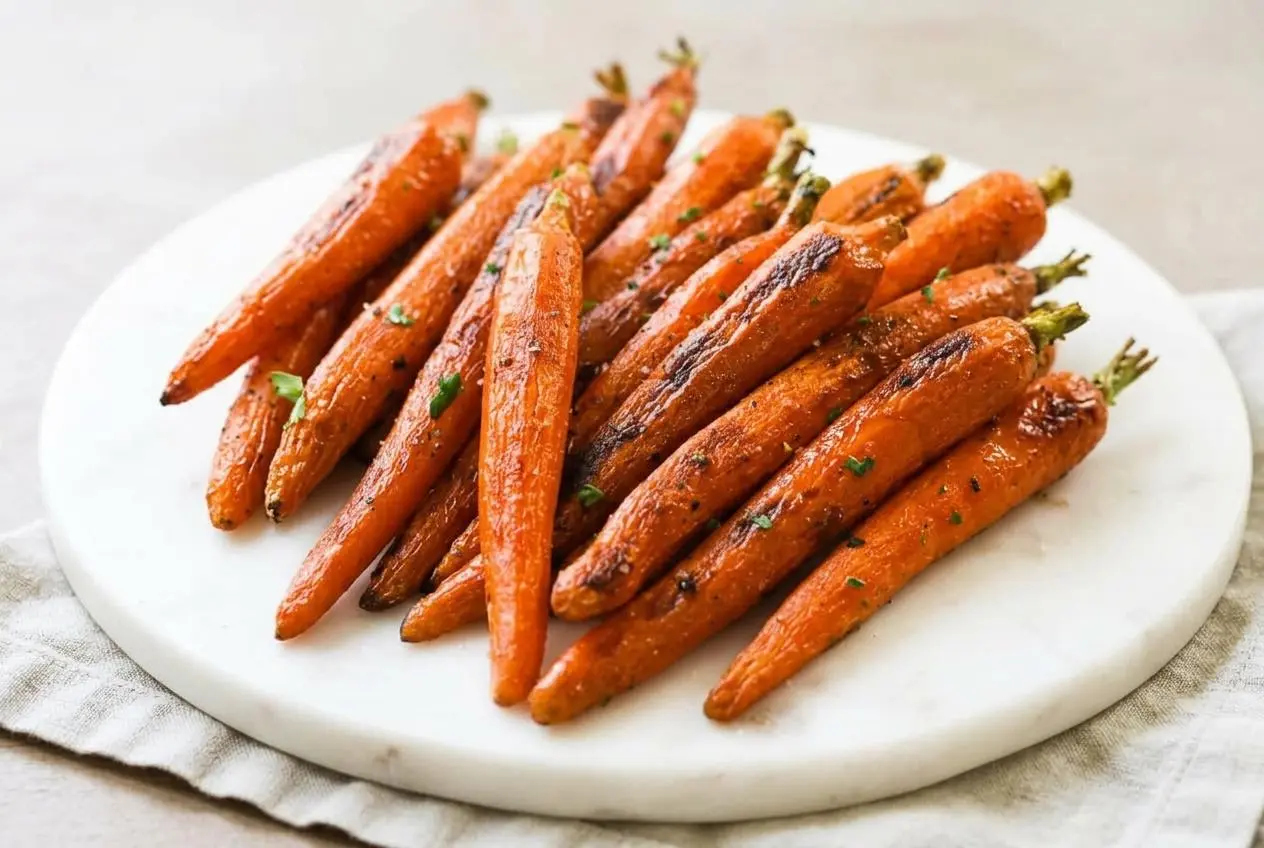
- Roast carrots, parsnips, or sweet potatoes until browned for a naturally sweet contrast.
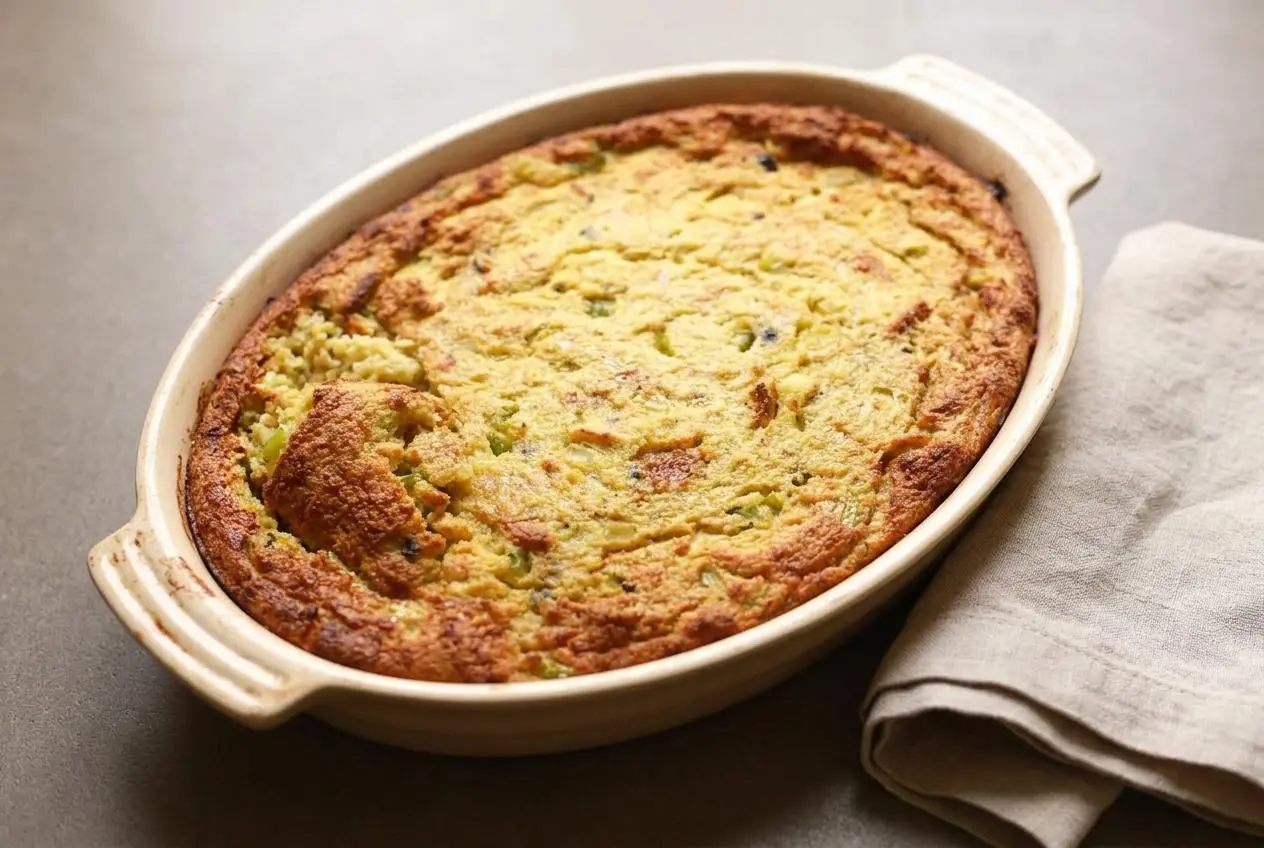
- Bring a creamy vegetable side to the table with slow cooker cheddar corn.
Conclusion
Low, steady cooking turns brisket tender, while reducing the cooking juices and finishing the meat in the oven delivers the sticky barbecue glaze that makes every slice feel complete.
Give the beef enough time, trust the fork test, and always slice across the grain. That combination keeps this brisket tender from the first cut to the last saucy bite.
Frequently Asked Questions
What Liquid Is Best for Slow Cooking Brisket?
A barbecue sauce mixture with apple cider vinegar and aromatics gives this brisket both moisture and flavor. Seasoned beef broth also works for a more savory braised brisket. Acidic ingredients such as apple cider vinegar balance rich beef fat and help create a fuller-tasting sauce once the cooking juices reduce.
Why Is My Slow Cooker Brisket Still Tough?
Tough brisket is usually undercooked, even if it has reached a safe temperature. Keep cooking it on low until a fork slides into the thickest part and twists without resistance. The connective tissue needs extended gentle heat to soften, so a firm brisket often improves with more time in the braising liquid.
Should Slow Cooker Brisket Be Cooked Fat Side Up or Down?
Cook it fat side up. As the trimmed fat cap renders, it moves down over the brisket and helps baste the surface during the long cook. Trim very thick exterior fat first so the sauce stays rich rather than greasy.
Can You Make Slow Cooker Brisket a Day Ahead?
Yes. Cooking it ahead and chilling it in its juices makes the solidified fat easier to remove. Keep the brisket whole while it chills for cleaner slicing. Warm the carved slices gently in the reduced sauce to protect their moisture and restore the glossy finish.
Slow Cooker Brisket Recipe

Equipment
- Slow cooker
- Baking tray
- Saucepan
Ingredients
- 1.5 – 2 kg / 3 – 4 lb beef brisket
- 1 tbsp olive oil
Rub
- 1 tbsp brown sugar
- 2 tsp paprika powder
- 1 tsp onion powder
- 1 tsp garlic powder
- 1/2 tsp cumin powder
- 3/4 tsp mustard powder
- 1 tsp salt
- 1/2 tsp black pepper
BBQ Sauce
- 2 cloves garlic minced
- 1/2 cup apple cider vinegar 125 ml
- 1 1/2 cups ketchup 375 ml
- 1/2 cup brown sugar 110g, packed
- 2 tsp EACH black pepper, onion powder, mustard powder
- 1 tsp cayenne pepper
- 1 tbsp Worcestershire sauce
Instructions
- Stir together all of the rub ingredients, then coat the brisket thoroughly on every side; refrigerate it for 30 minutes to 24 hours if desired. The seasoning should form an even layer over the beef, with no bare patches around the edges.
- Mix the BBQ Sauce ingredients directly in the slow cooker, then nestle the brisket into the sauce with the fat side facing up. The sauce should reach around the meat and the lid should sit securely on the cooker.
- Cook on low for 8 hours for a 1.5 kg / 3 lb brisket or up to 10 hours for a 2 kg / 4 lb brisket. A fork should slide into the center and twist with almost no resistance when the brisket is tender.
- Transfer the cooked brisket to a baking tray, keeping the liquid in the slow cooker for the sauce. The meat will be very soft, so support it from underneath rather than gripping one end.
- Pour the slow cooker liquid into a saucepan and simmer it over medium-high heat until it reaches a syrupy consistency. Watch for active bubbles that become glossy and slower as the sauce thickens; it will continue to thicken as it cools.
- Drizzle the brisket with olive oil and roast it at 200°C/390°F for 15 minutes, until browned spots form. The exterior should sizzle and darken while the center remains moist.
- Baste the brisket generously with the reduced sauce, return it to the oven for 5 minutes, then baste again and cook for a final 5 to 10 minutes. The glaze should look dark, shiny, and caramelized rather than wet or runny.
- Rest the brisket briefly, then slice it thinly across the grain and serve with the remaining BBQ sauce. Resting helps the juices settle so they stay with the slices instead of pooling across the cutting board.