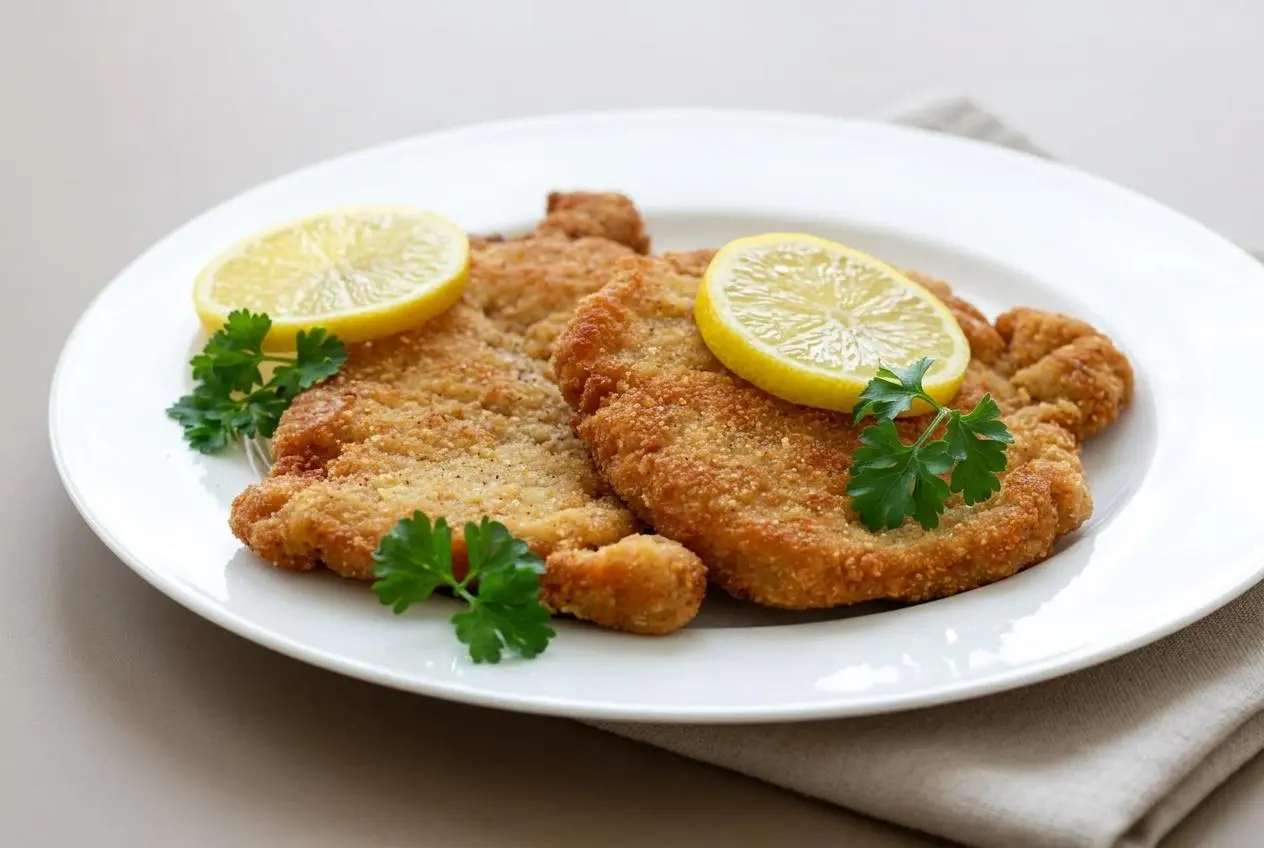
Authentic schnitzel is made with thin pork cutlets coated in flour, egg, and breadcrumbs, then shallow-fried at 330 °F until crisp and golden.
This schnitzel recipe delivers tender pork beneath a delicate shell that crackles straight from the skillet. The method is fast, but the order matters: dry cutlets, a light coating, and hot oil.
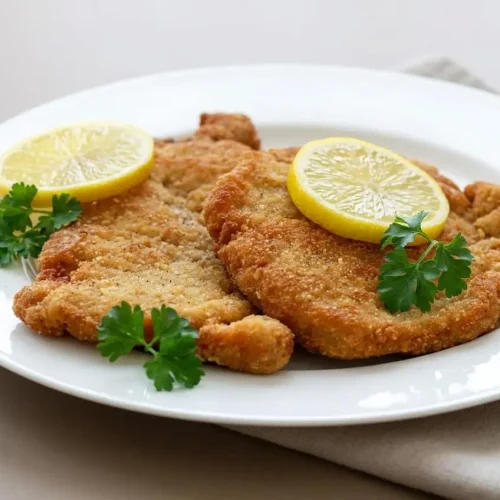
Those loose crumbs turn from pale gold to rich amber quickly, while the center stays tender. The rippled crust is the reward.
Pat the pork very dry before it reaches the flour, or the coating can develop patchy spots and pull away in the pan.
Essential Ingredients for Authentic Schnitzel
Each ingredient supports a particular part of the finished cutlet: seasoned pork brings flavor, flour creates grip, egg joins the layers, breadcrumbs build crunch, and frying oil delivers even browning.
- 4 boneless pork steaks or chops, (to make Austrian Wienerschnitzel use thin veal cutlets)
- salt and freshly ground black pepper
- 1/2 cup all-purpose flour combined with 1 teaspoon salt
- 2 large eggs, lightly beaten
- 3/4 cup plain breadcrumbs
- Oil for frying (use a neutral-tasting oil with a high smoke point)
Thin pork cooks quickly, helping the crust brown before the meat loses moisture. Flour gives the egg a dry surface to cling to, egg binds the crumbs, and plain breadcrumbs form the characteristic light crunch. Season the pork directly so its flavor comes through the coating.
I look for dry, fine crumbs with an even sandy texture, because they coat the cutlet more evenly than stale, clumpy crumbs.
Choosing the Best Pork Cut
Boneless center-cut pork chops offer a traditional, meaty Schweineschnitzel texture and hold a neat cutlet shape once pounded. Choose chops without a thick band of exterior fat, which can make pounding uneven.
Pork tenderloin is especially tender and needs little trimming beyond any silvery membrane. Slice it into portions before pounding. Boneless pork loin is another dependable middle ground, with enough structure for a broad cutlet and a tender bite when flattened evenly.
Selecting the Optimal Cooking Fat
Use a neutral, high-smoke-point oil such as canola, vegetable, or peanut oil. It lets the breadcrumb flavor stay in front and withstands the heat needed for shallow frying. The cutlets need enough fat to move freely rather than stick against the skillet bottom.
For a fuller buttery aroma, you can add a spoonful of clarified butter or ghee to the oil. Regular butter browns quickly, while clarified butter brings its flavor with more heat tolerance.
Fine Breadcrumbs vs. Panko Crumbs
Fine, unseasoned dry breadcrumbs make the classic delicate, wavy crust. They hydrate lightly in the egg, then puff away from the meat as hot fat moves over the surface. That small air gap creates the fragile, soufflé-like sheet associated with schnitzel.
Panko makes a coarser, crunchier coating, but it produces a different finish. For the traditional rippled effect, choose fine crumbs and leave them loose. Pressing them firmly into the pork removes the air pockets that help the crust lift.
How to Make Traditional German Schnitzel
Work in order and fry each cutlet as soon as it is breaded. A large fry pan and meat mallet are the two pieces of equipment that make the technique easier to control.
- Set each pork cutlet between two sheets of plastic wrap, then use the flat side of a meat tenderizer to flatten it to 1/4 inch; season both sides with salt and freshly ground black pepper.
An even thin cutlet cooks quickly across its whole surface, so the pork stays tender while the coating browns. - Arrange the salted flour, lightly beaten eggs, and plain breadcrumbs in three shallow bowls; coat each cutlet in flour, egg, then crumbs, covering the edges and shaking away every loose excess.
Keep the crumb layer light and do not press it down, then move the cutlet directly to the hot pan before moisture softens it. - Heat enough frying oil in the large skillet to 330 °F so the cutlets can float slightly in the fat.
A cutlet should meet the oil with a gentle sizzle and small foaming bubbles around its edges. - Fry the cutlets for about 2 to 3 minutes per side, gently swirling the skillet as they cook, then transfer them briefly to a paper towel-lined plate.
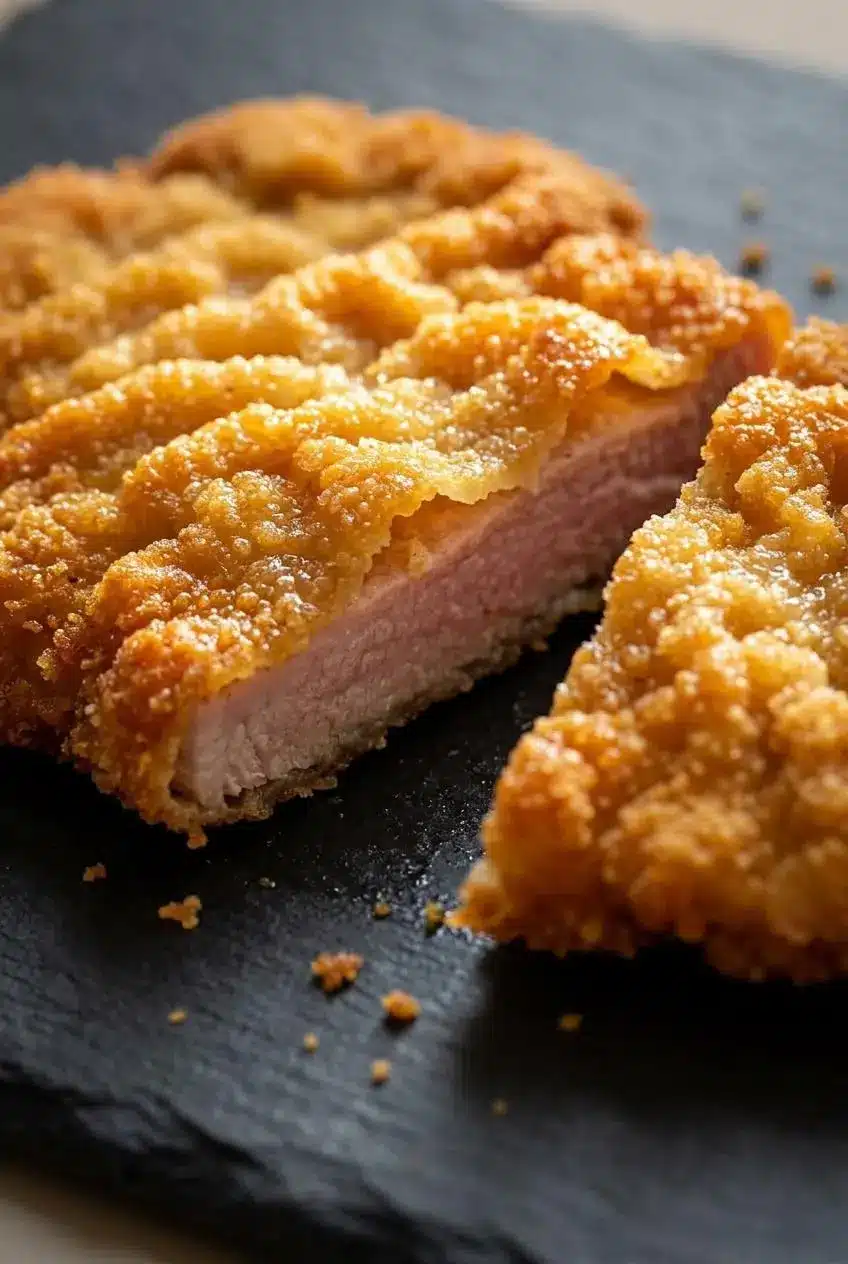
The crumbs should shift to a deep golden brown and feel crisp, with a slightly rippled surface rather than a flat, tight shell.
Pounding Cutlets to Uniform Thinness
Start in the center and work outward with controlled, overlapping taps from the smooth side of the mallet. Plastic wrap contains any tiny tears and prevents the mallet from grabbing the meat. Aim for the same 1/4-inch thickness from edge to edge, especially where a chop naturally thickens near the center.
Thinness is about even cooking, not aggressive pounding. If one section remains thick, it will need more time than the rest and can leave the surrounding crust overly dark.
Setting Up the Three-Step Dredging Station
Keep the bowls in a straight line: flour first, egg second, breadcrumbs last. Use one hand for dry ingredients and the other for egg if you want to avoid building a breadcrumb glove.
Shake the flour-coated cutlet before the egg bath. Heavy flour pockets turn into a weak, steamy layer that can release the crust. After the breadcrumbs, lift the cutlet by an edge and give it a delicate shake. Loose crumbs are exactly what you want.
The Pan-Swirl and Spoon-Basting Method
At 330 °F, the hot oil should circulate around the cutlet instead of merely frying its underside. Gently swirl or shake the pan so fat washes over the top. If needed, spoon hot oil over bare-looking areas without disturbing the crumb layer.
This motion encourages the coating to bubble and separate slightly from the pork, creating those signature waves. Avoid crowding the skillet, because adding too many cutlets at once cools the oil and slows the crisping.
Troubleshooting Common Schnitzel Mistakes
Most schnitzel problems come down to moisture, heavy breading, or oil that has drifted away from the right heat. These quick fixes keep the crust light and the pork properly browned.
- Soggy breading: The cutlet may have waited too long after breading or the oil may be too cool. Bread only what fits in the skillet, then fry immediately at the target temperature.
- Uneven color: The skillet may have hot spots or too little oil. Give each cutlet room and swirl the pan so hot fat reaches the top and edges.
- Coating that separates: Surface moisture or thick flour can create steam between the pork and crust. Dry the pork thoroughly and shake off excess flour before the egg.
- Greasy cutlets: Oil that loses heat lets crumbs absorb fat instead of crisp. Fry in smaller batches and allow the oil to return to 330 °F before adding the next cutlet.
- Dark crumbs with undercooked pork: The oil is too hot or the cutlet is thicker in one area. Flatten the meat evenly and adjust the heat when crumbs darken too quickly.
- Soft cutlets during batch cooking: Stacking traps steam. Hold finished pieces on a wire rack over a baking sheet in a low oven, leaving space around each cutlet.
Classic Schnitzel Variations and Sauces
Once you understand the light breading and active shallow-frying technique, you can adapt the style without changing the character of the pork version.
Austrian Wiener Schnitzel With Veal
Wiener Schnitzel is the Austrian veal version, made with thinly pounded veal cutlets rather than pork. Use the same flour, egg, and fine-crumb sequence, then fry the veal promptly in hot fat. Pork schnitzel is often called Schweineschnitzel, which keeps the distinction clear.
Savory Jägerschnitzel Mushroom Sauce
Jägerschnitzel is a hunter-style variation served with savory mushroom gravy, often enriched with bacon and shallot. Keep the sauce optional and spoon it alongside or over only part of the cutlet. Covering every inch softens the very crust you worked to create.
Tender Chicken Schnitzel
For chicken schnitzel, halve boneless chicken breasts horizontally and pound the pieces to an even thinness before using the same breading technique. Fry in batches and cook the chicken through rather than relying on the pork timing. The result is a lighter-tasting cutlet with the same crisp coating.
Traditional Accompaniments and Side Dishes
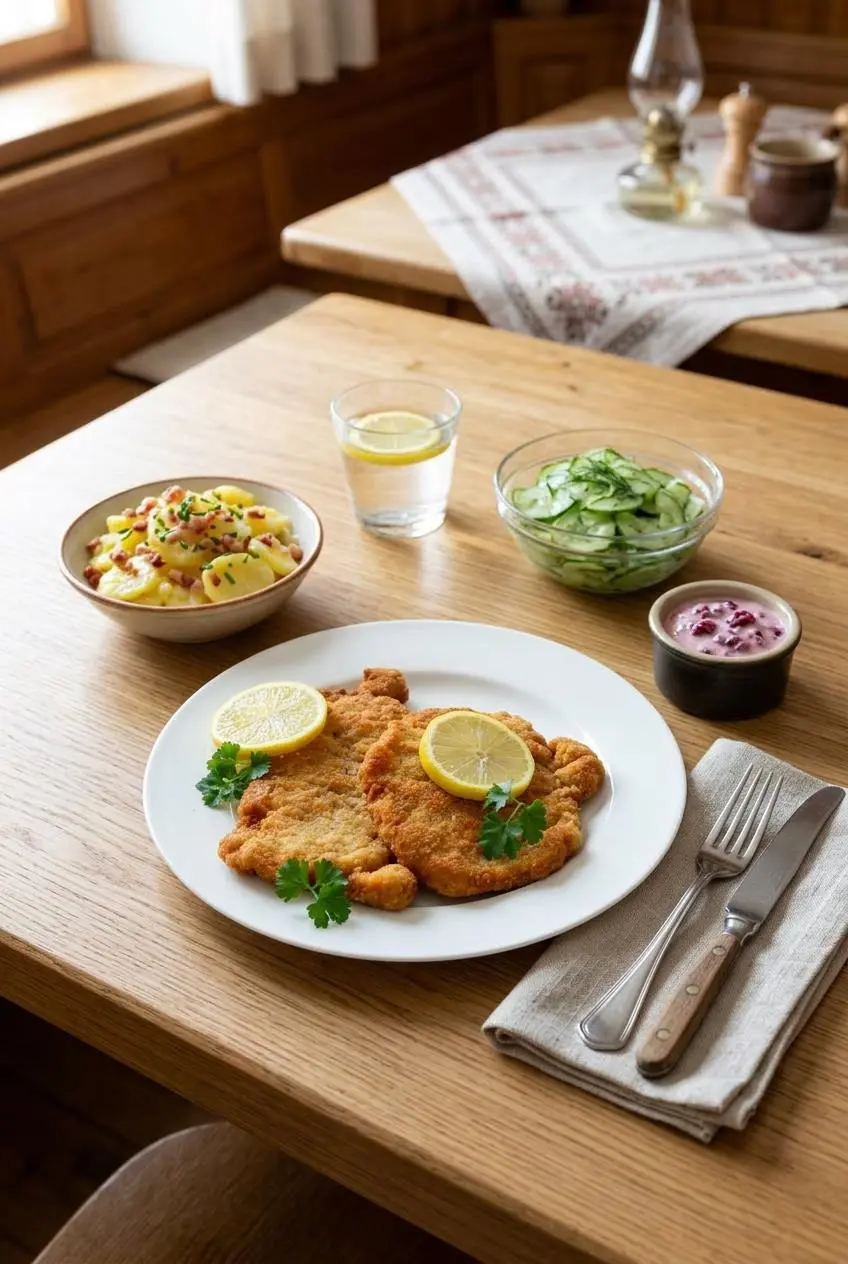
Fresh, tangy sides keep a fried schnitzel dinner balanced. Serve every cutlet with lemon wedges and fresh flat-leaf parsley, then choose a potato or salad side that adds contrast rather than more richness.
Classic Warm Potato Salad and Spätzle
Warm German potato salad with a vinegar-and-bacon dressing brings welcome acidity to the plate. Buttery Spätzle tossed with fresh herbs offers a soft, comforting counterpoint to the crisp cutlet. For a more casual potato side, crispy steak fries work beautifully with lemon-brightened schnitzel.
Crisp Cucumbers and Refreshing Salads
Cucumber-dill salad, known as Gurkensalat, is cool and lightly sharp beside hot pork. A sweet-and-sour cabbage salad, or Krautsalat, adds crunch and tang. A simple leafy green salad also keeps the meal fresh without competing with the breadcrumbs.
Storing and Reheating Schnitzel
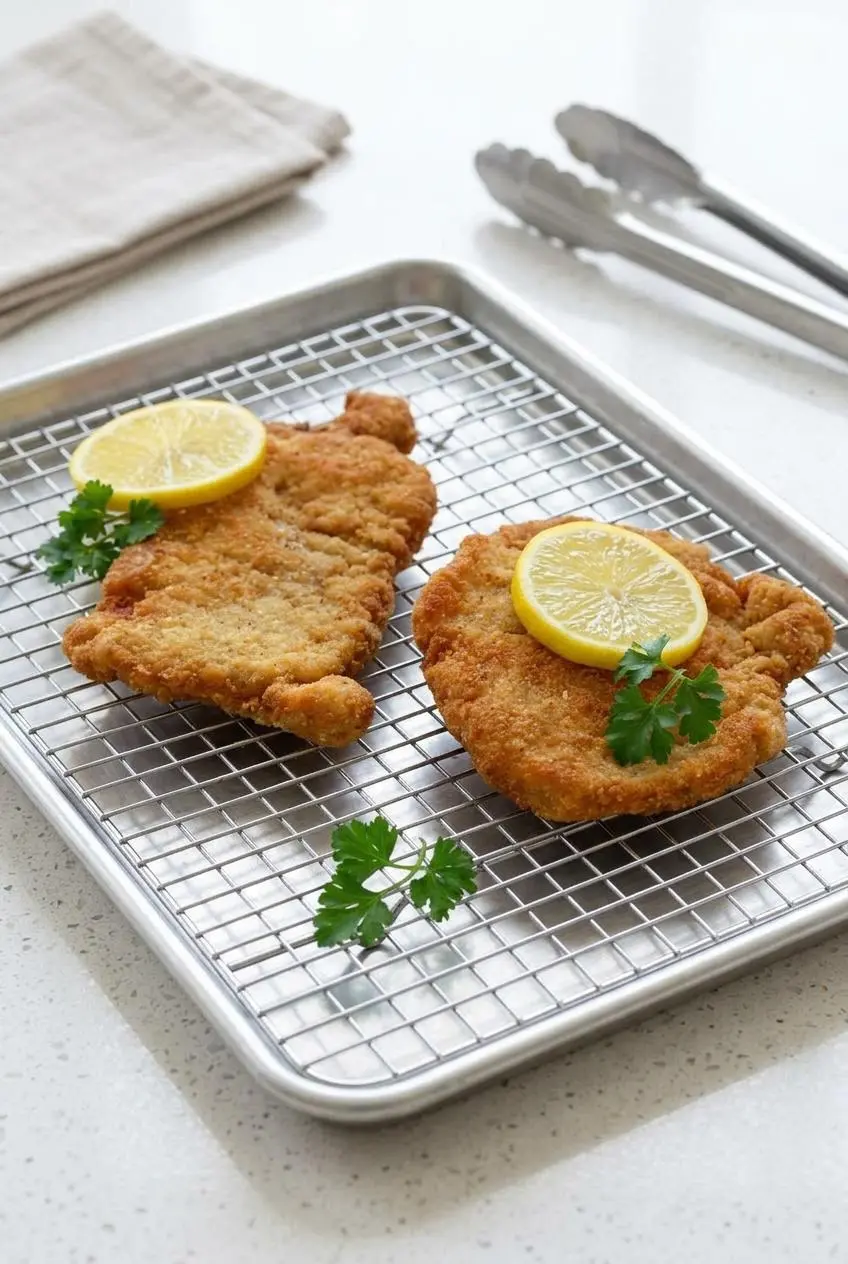
Freshly fried schnitzel has the best texture, but leftovers can stay enjoyable when you protect the crust from trapped steam. Cool cutlets fully on a wire rack before placing them in a covered container, with parchment between layers if stacking is unavoidable.
Cooling and Refrigerating Leftovers
Do not seal hot schnitzel in a container. Condensation settles into the coating and turns it soft. Once cooled, keep the cutlets chilled in an airtight container and keep lemon and salads separate until serving.
Restoring Crunch in the Oven
Reheat on a wire rack in a hot oven or toaster oven so dry heat can reach both sides. Heat only until the cutlet is hot and the crust is crisp again. Skip the microwave, which tends to leave breading limp and the pork rubbery.
Conclusion
Great schnitzel comes from thin, evenly pounded pork, a loose crumb coating, and hot oil kept near 330 °F. The gentle pan swirl is the small move that helps the crust puff instead of lying flat.
Serve the cutlets right away with lemon wedges and parsley while every bite still crackles. A warm, crisp plate is hard to beat.
Frequently Asked Questions
What Cut of Meat Is Best for Traditional Pork Schnitzel?
Boneless center-cut pork chops and trimmed pork tenderloin are excellent choices. Center-cut chops provide classic pork flavor and a broad, sturdy cutlet. Tenderloin is exceptionally tender and requires minimal trimming. Boneless pork loin offers a useful balance of tenderness, flavor, and easy pounding.
Why Does the Breading Fall Off the Meat During Frying?
The pork is usually too damp, or it carries too much flour into the egg. Pat the cutlets dry before dredging. Shake off loose flour before dipping into the egg. Do not press breadcrumbs into the meat, and fry as soon as the cutlet is coated.
Can You Make Authentic Schnitzel Ahead of Time?
Schnitzel is at its crispest immediately after frying. For a batch, keep finished cutlets spaced on a wire rack in a low oven while you fry the remaining pieces. For later servings, cool and chill the cutlets as described above, then restore the crust in a hot oven.
What Oil Is Best for Frying Homemade Schnitzel?
Choose a neutral oil with a high smoke point, such as canola, vegetable, or peanut oil. It keeps the flavor focused on the pork and breadcrumbs. A little clarified butter or ghee can add a buttery finish without the quick browning of regular butter.
Schnitzel Recipe

Equipment
- Meat Mallet
- Large fry pan
Ingredients
- 4 boneless pork steaks or chops (to make Austrian Wienerschnitzel use thin veal cutlets)
- salt and freshly ground black pepper
- 1/2 cup all-purpose flour combined with 1 teaspoon salt
- 2 large eggs lightly beaten
- 3/4 cup plain breadcrumbs
- Oil for frying use a neutral-tasting oil with a high smoke point
Instructions
- Set each pork cutlet between two sheets of plastic wrap, then use the flat side of a meat tenderizer to flatten it to 1/4 inch; season both sides with salt and freshly ground black pepper. An even thin cutlet cooks quickly across its whole surface, so the pork stays tender while the coating browns.
- Arrange the salted flour, lightly beaten eggs, and plain breadcrumbs in three shallow bowls; coat each cutlet in flour, egg, then crumbs, covering the edges and shaking away every loose excess. Keep the crumb layer light and do not press it down, then move the cutlet directly to the hot pan before moisture softens it.
- Heat enough frying oil in the large skillet to 330 °F so the cutlets can float slightly in the fat. A cutlet should meet the oil with a gentle sizzle and small foaming bubbles around its edges.
- Fry the cutlets for about 2 to 3 minutes per side, gently swirling the skillet as they cook, then transfer them briefly to a paper towel-lined plate. The crumbs should shift to a deep golden brown and feel crisp, with a slightly rippled surface rather than a flat, tight shell.