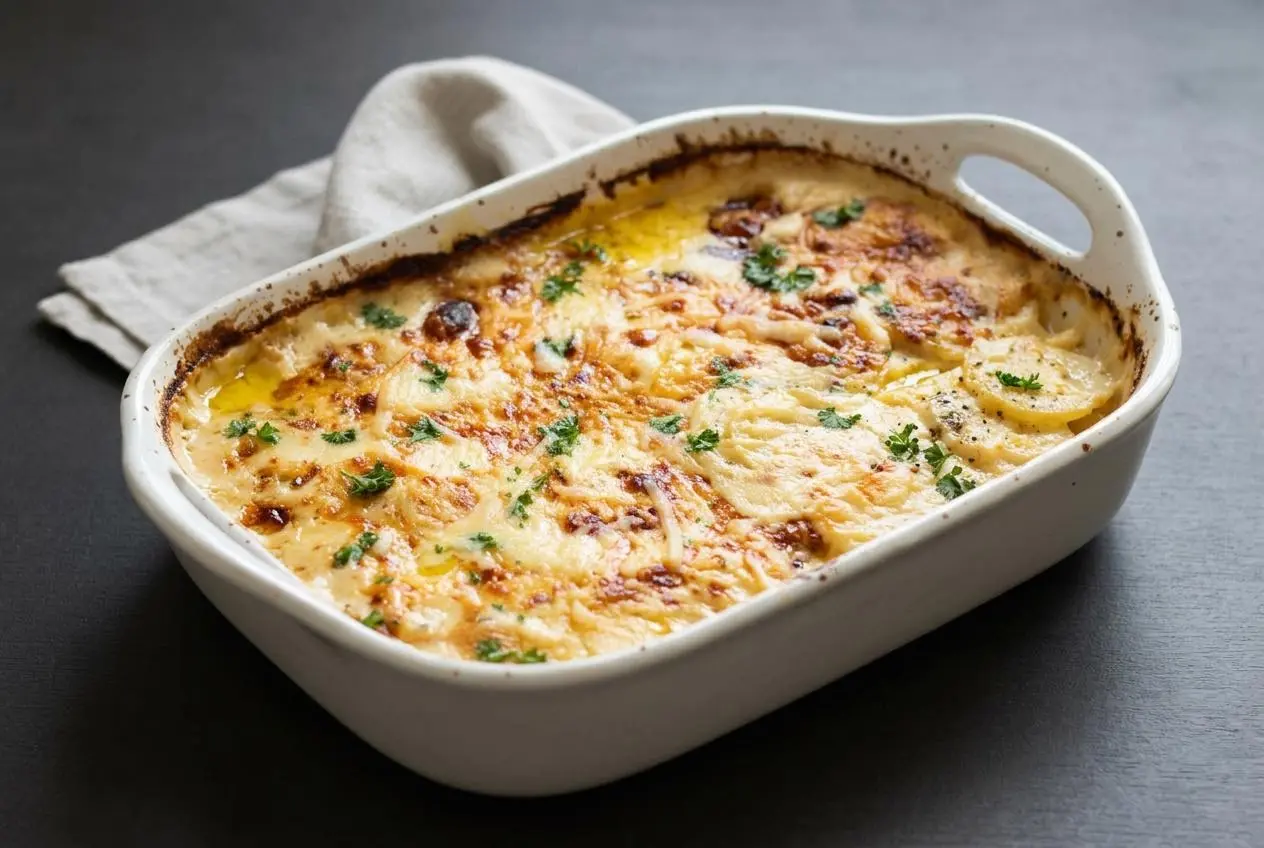
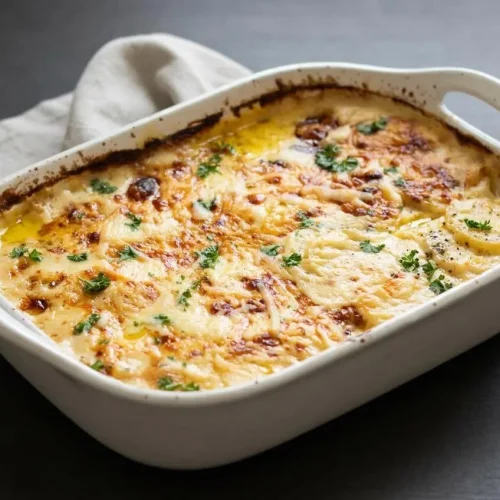
The secret to a great scalloped potatoes recipe is thinly sliced Yukon Gold potatoes layered with a roux-based cheese sauce made with whole milk, heavy cream, and freshly grated cheese.
This is the kind of baked potato casserole that lands right between cozy weeknight comfort and holiday side dish glory. You get tender layers, a silky sauce, and browned edges that taste extra good straight from the oven.
It’s rich without feeling heavy, and the method is simple once you know what cues to watch for. That bubbling golden top is worth it.
Slice the potatoes as evenly as you can, about 1/8 inch thick, so every layer finishes cooking at the same time.
Ingredients for the Best Casserole
Each ingredient pulls its weight here, from the potatoes that give structure to the dairy and cheese that build the creamy, savory sauce.
- 3-4 pounds white or Yukon gold potatoes (sliced 1/8 inch or thinner)
- 6 tablespoons butter
- 1 small/medium yellow or white onion (diced small)
- 1/4 cup all-purpose flour
- 2 cups whole milk
- 1/2 cup heavy cream
- 1 tablespoon Dijon mustard (or another prepared mustard)
- 2 1/2 cups freshly shredded cheese (combination of Gruyere, Havarti, Gouda, and cheddar)
- Salt and black pepper to taste
- fresh parsley garnish (optional)
Yukon Gold potatoes are especially good here because they hold their shape through the long bake while releasing enough starch to help the sauce stay cohesive. The onion softens into the sauce and adds sweetness, while Dijon sharpens the richness without making the dish taste mustardy.
The milk and heavy cream work together for body and smoothness. Flour gives the sauce structure, and the cheese blend brings both flavor and melt. Gruyere adds nuttiness, Havarti and Gouda melt beautifully, and sharp cheddar gives the casserole a stronger savory finish.
I always grate cheese from the block for this dish because it melts smoother and keeps the sauce glossy instead of grainy.
How to Bake Perfect Scalloped Potatoes
- Heat the oven to 400 °F and grease a 9×13-inch baking dish with butter or cooking spray.
The dish should be fully coated so the edges release easily after baking. - Cut the potatoes into slices about 1/8 inch thick with a mandoline or a sharp serrated knife.
Uniform slices matter because thick pieces stay firm while thinner ones can disappear into the sauce. - Melt the butter in a large saucepan over low to medium heat, then add the diced onion and cook for 5-7 minutes.
The onion is ready when it turns soft and translucent without taking on dark color. - Stir in the flour and cook it for 1 minute, then slowly whisk in the milk followed by the heavy cream.
The sauce should look smooth and lightly thickened, enough to coat the back of a spoon. - Mix in the Dijon mustard, season with salt and black pepper, then add the shredded cheese over low heat and stir until melted, about 1 minute.
Once the sauce looks silky and unified, take it off the heat and keep it covered so it stays warm. - Arrange a layer of potato slices in the baking dish with slight overlap, season with salt and pepper, and spoon some sauce over the top.
Repeat the layers two more times, finishing with sauce so the top stays moist as it bakes. - Cover the dish with aluminum foil, set it on a parchment-lined half sheet pan, and bake for 90 minutes.
By the end of this stage, the potatoes should be nearly tender and the pan will usually have bubbling edges. - Remove the foil and bake for 20 minutes more to brown the top and fully bubble the sauce, adding a handful of shredded cheese on top if desired.
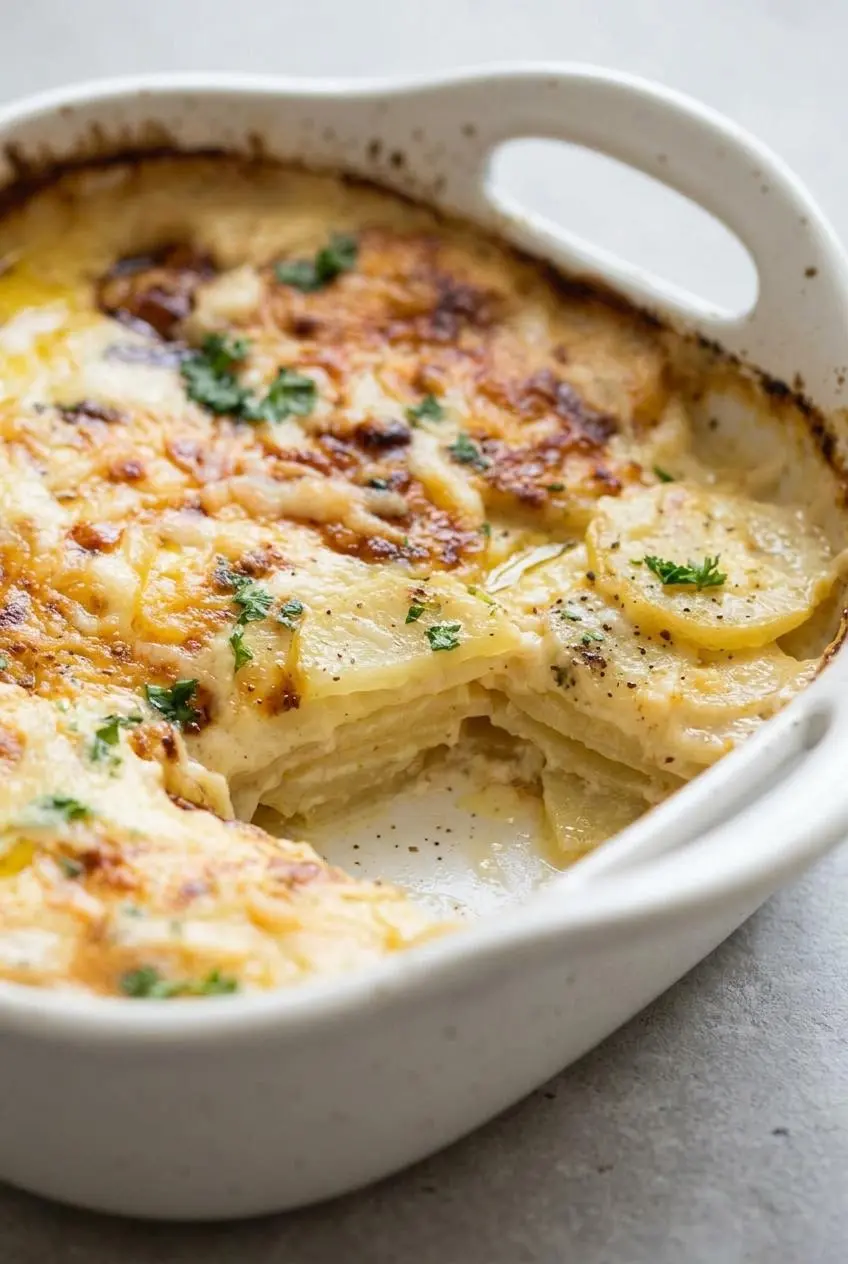
The surface should look golden in spots and the sauce should bubble around the rim. - Let the casserole rest for 10-15 minutes before serving, then finish with fresh parsley if desired.
This pause helps the sauce thicken so a spoonful holds together instead of running across the plate.
The biggest doneness test is simple: slide a fork into the center and check for zero resistance. If the fork catches, the potatoes need more time, usually because the slices ran a bit thick in one layer.
Place the baking dish on a lined sheet pan exactly as written. This casserole likes to bubble enthusiastically, and your oven will appreciate the backup plan.
The Best Potatoes and Cheeses to Use
This dish works because the potatoes and cheese are chosen for how they bake, melt, and hold together, not just for flavor.
Why Yukon Gold Wins
Yukon Gold potatoes hit the sweet spot for scalloped potatoes. They have enough starch to lightly thicken the surrounding sauce, but they do not fall apart as quickly as higher-starch potatoes can during a long bake.
That balance gives you clear layers instead of a mashed interior. Their naturally buttery texture also matches the creamy sauce especially well. If you already love how Yukon Golds behave in Yukon Gold mashed potatoes, the same starch structure is working in your favor here.
White potatoes can also work, but Yukon Golds are the more reliable pick when you want slices that turn tender without going mushy. Leave Russets as a secondary option rather than the automatic first choice.
Selecting the Ultimate Cheese Blend
A mix of Gruyere, Havarti, Gouda, and sharp cheddar gives you the best balance of flavor and melt. Gruyere brings a nutty, slightly savory edge, Havarti and Gouda add creaminess, and cheddar keeps the whole thing from tasting flat.
Freshly grated cheese is especially important in this recipe. Bagged shredded cheese is often coated with anti-caking ingredients such as starch or cellulose, and those coatings can keep the sauce from melting smoothly. The result is a grainier texture and less stretch.
If you want a slightly more classic French-style profile, lean a little harder on Gruyere and add thyme as an optional flavor accent in the variation section below.
How to Make the Cheese Sauce and Roux
If you have ever wondered what makes scalloped potatoes feel restaurant-worthy, it is the sauce. A good roux gives the casserole body, helps the cheese stay evenly distributed, and keeps the layers creamy instead of watery.
Start by cooking the onion gently in butter so it softens and sweetens. Then add the flour and stir for the full minute. That short cook gets rid of the raw flour taste and sets up the thickening power you need later.
When you add the whole milk and heavy cream, pour slowly and whisk continuously. This is the easiest way to avoid lumps. The sauce should thicken just enough to coat a spoon before the cheese goes in. If it still looks thin like plain milk, keep it on low to medium heat a bit longer and whisk.
Once the sauce base is smooth, add the mustard, salt, and pepper. Then melt in the cheese over low heat only. Better yet, once the pan is hot and thickened, pull it away from direct heat before the cheese fully finishes melting. That small move helps the sauce stay emulsified instead of splitting.
If you like a little extra depth, a pinch of ground nutmeg fits naturally into this kind of cream sauce, and a bit of lemon zest can brighten the richness. Keep both additions optional so the classic flavor stays front and center.
The finished cheese sauce should be velvety and thick enough to cling to the potatoes as you layer. Think pourable, not runny. If it slips off the spoon like water, it needs a touch more cooking before it hits the baking dish.
Troubleshooting: Why Scalloped Potatoes Curdle
Curdling usually comes down to heat, dairy choice, or cheese handling. The good news is that most problems are preventable, and a slightly rough sauce can often be smoothed out before baking.
- The sauce looks grainy: The cheese likely got too hot. Melt it over low heat or off the burner so the proteins do not tighten and separate.
- The sauce seems broken after adding cheese: Keep whisking gently over very low heat and let the mixture come back together. A stable roux often helps rescue a slightly split sauce before it goes into the dish.
- The casserole looks oily on top: The cheese blend overheated or the emulsion weakened. Next time, remove the pan from direct heat sooner before stirring in the cheese.
- The dairy separated during baking: High oven heat and thinner dairy can push the sauce too far. Whole milk and heavy cream hold up better than low-fat milk in a long oven bake.
- The mustard made the sauce seem sharper or less smooth: Acid can nudge an emulsion in the wrong direction if the sauce is already stressed. Keep the heat moderate and make sure the sauce is thickened before the mustard and cheese go in.
- The casserole turned watery: The potatoes may have been sliced unevenly, or the dish was served too soon. Thin, even slices and a proper rest help the starch settle into the sauce.
Many home cooks blame the cheese first, but the roux is really the insurance policy here. When the butter and flour are cooked properly and the dairy is whisked in slowly, the whole casserole bakes up with a much better chance of staying creamy.
Flavor Variations to Try
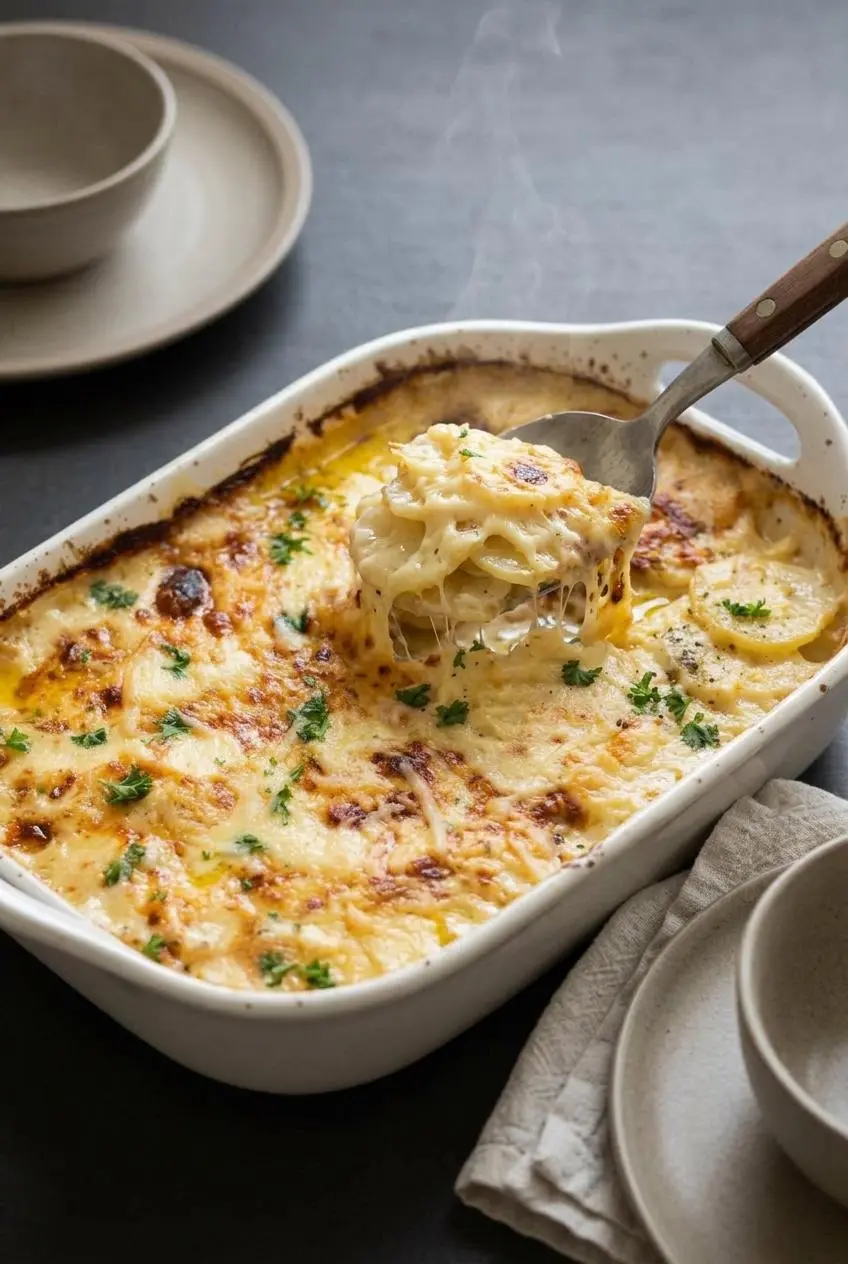
The main recipe is rich, classic, and dependable, but there’s room for a few optional twists when you want a different flavor direction.
Cheesy Garlic Scalloped Potatoes
For a more savory version, whisk minced garlic into the warm roux and add fresh thyme or rosemary before the cheese goes in. Garlic deepens the flavor fast, so this version feels a little bolder without changing the basic method.
Gluten-Free Scalloped Potatoes
To make the sauce without all-purpose flour, use a good 1-to-1 gluten-free baking flour in the roux. The texture can vary slightly by brand, so whisk carefully and give the sauce time to thicken before adding the cheese.
If you enjoy comparing creamy layered potato bakes, potatoes au gratin are the cheesier cousin with a more cheese-forward identity.
Make-Ahead and Storage Guide
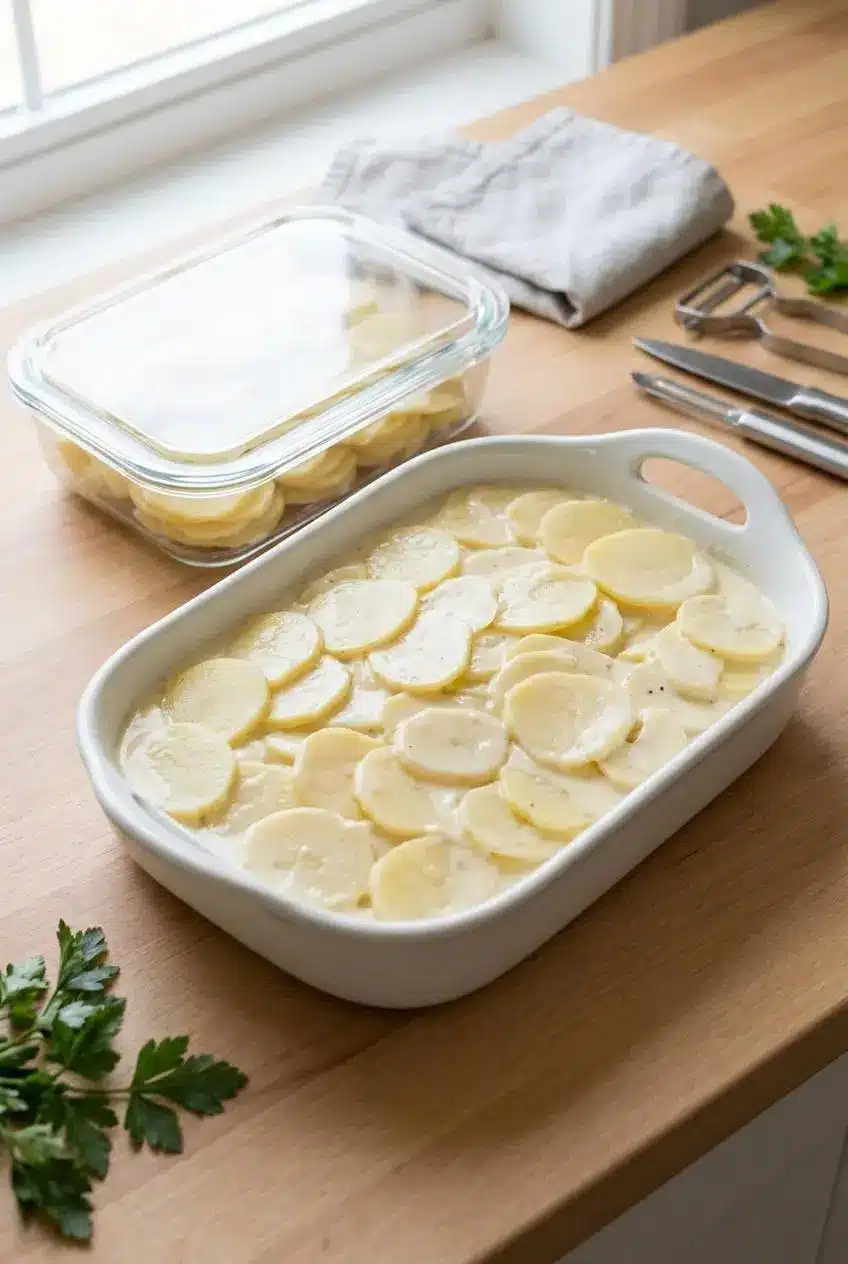
This casserole is a strong choice for holidays because much of the work can be done before the meal gets busy. The key is protecting the texture so the sauce stays creamy and the potatoes bake evenly.
Refrigeration and Prep Tips
You can assemble the dish completely, cover it tightly, and refrigerate overnight before baking the next day. If it is going into the oven straight from the fridge, expect it to need a bit of extra baking time before the center becomes fully tender.
For the best texture, keep the sauce warm while assembling so it coats the potatoes evenly, then chill the covered dish promptly. For dairy ingredients used in make-ahead cooking, keep your refrigerator at 40 °F or below for safe cold storage of perishables like milk, cream, and cheese, as outlined here on refrigerator temperatures for perishable foods.
After baking, cool leftovers before covering and refrigerating. Reheat gently, covered if needed, so the sauce warms through without turning greasy. Smaller portions usually reheat more evenly than one huge scoop packed into a deep dish.
Leftovers and Freezing Texture Tips
Raw sliced potatoes are not a great freezing candidate for this recipe because they discolor and lose texture. If you want to save part of the casserole, it is better to do so after baking and cooling.
Freeze portions only if you are comfortable with a softer texture after reheating. Cream-based potato casseroles can lose some of their original silkiness once thawed and warmed again, so this works best as a convenience option rather than the ideal first plan.
If you are building a holiday menu and want another prep-friendly side, twice baked potatoes are another good make-ahead option.
Conclusion
The keys to great scalloped potatoes are steady and practical: slice the potatoes evenly, build a smooth roux, melt the cheese gently, and bake until a fork glides through the center with no resistance.
Let the dish rest before serving so the sauce thickens beautifully, then pair it with glazed ham, roasted chicken, or salmon for a dinner that feels a little special without being fussy.
Frequently Asked Questions
What is the best type of potato for scalloped potatoes?
Yukon Gold potatoes are the top choice because they hold their shape while releasing enough starch to help the sauce stay creamy. They bake up tender without turning mealy or falling apart too quickly. White potatoes can work too, but Yukon Golds are usually more reliable for a smooth, layered casserole.
Can I make scalloped potatoes ahead of time?
Yes, you can assemble the casserole, cover it tightly, and refrigerate overnight before baking. If you bake it straight from the refrigerator, the center may need a little extra oven time. This is especially helpful for holiday meals when oven juggling is already a sport.
How do I prevent my cheese sauce from curdling?
Start with a solid butter-and-flour roux and cook it long enough to lose the raw flour taste. Use whole milk and heavy cream rather than low-fat dairy, which separates more easily under heat. Melt the cheese over low heat, or off the burner, so the sauce stays smooth and emulsified. Do not boil the cheese sauce after the cheese is added.
What is the difference between scalloped and au gratin potatoes?
Traditionally, scalloped potatoes are baked in a seasoned milk or cream sauce and often include onion. Au gratin potatoes usually lean harder on cheese and may include a more pronounced cheesy top or crumb topping. In everyday cooking, the names overlap a lot, but texture and cheese level are usually the giveaway.
Scalloped Potatoes Recipe

Equipment
- 9×13-inch baking dish
- Large saucepan
- Whisk
- mandoline or serrated knife
- Half sheet pan
- Parchment Paper
Ingredients
- 3-4 pounds white or Yukon gold potatoes sliced 1/8 inch or thinner
- 6 tablespoons butter
- 1 small/medium yellow or white onion diced small
- 1/4 cup all-purpose flour
- 2 cups whole milk
- 1/2 cup heavy cream
- 1 tablespoon Dijon mustard or another prepared mustard
- 2 1/2 cups freshly shredded cheese combination of Gruyere, Havarti, Gouda, and cheddar
- Salt and black pepper to taste
- fresh parsley garnish optional
Instructions
- Heat the oven to 400 °F and grease a 9×13-inch baking dish with butter or cooking spray. The dish should be fully coated so the edges release easily after baking.
- Cut the potatoes into slices about 1/8 inch thick with a mandoline or a sharp serrated knife. Uniform slices matter because thick pieces stay firm while thinner ones can disappear into the sauce.
- Melt the butter in a large saucepan over low to medium heat, then add the diced onion and cook for 5-7 minutes. The onion is ready when it turns soft and translucent without taking on dark color.
- Stir in the flour and cook it for 1 minute, then slowly whisk in the milk followed by the heavy cream. The sauce should look smooth and lightly thickened, enough to coat the back of a spoon.
- Mix in the Dijon mustard, season with salt and black pepper, then add the shredded cheese over low heat and stir until melted, about 1 minute. Once the sauce looks silky and unified, take it off the heat and keep it covered so it stays warm.
- Arrange a layer of potato slices in the baking dish with slight overlap, season with salt and pepper, and spoon some sauce over the top. Repeat the layers two more times, finishing with sauce so the top stays moist as it bakes.
- Cover the dish with aluminum foil, set it on a parchment-lined half sheet pan, and bake for 90 minutes. By the end of this stage, the potatoes should be nearly tender and the pan will usually have bubbling edges.
- Remove the foil and bake for 20 minutes more to brown the top and fully bubble the sauce, adding a handful of shredded cheese on top if desired. The surface should look golden in spots and the sauce should bubble around the rim.
- Let the casserole rest for 10-15 minutes before serving, then finish with fresh parsley if desired. This pause helps the sauce thicken so a spoonful holds together instead of running across the plate.