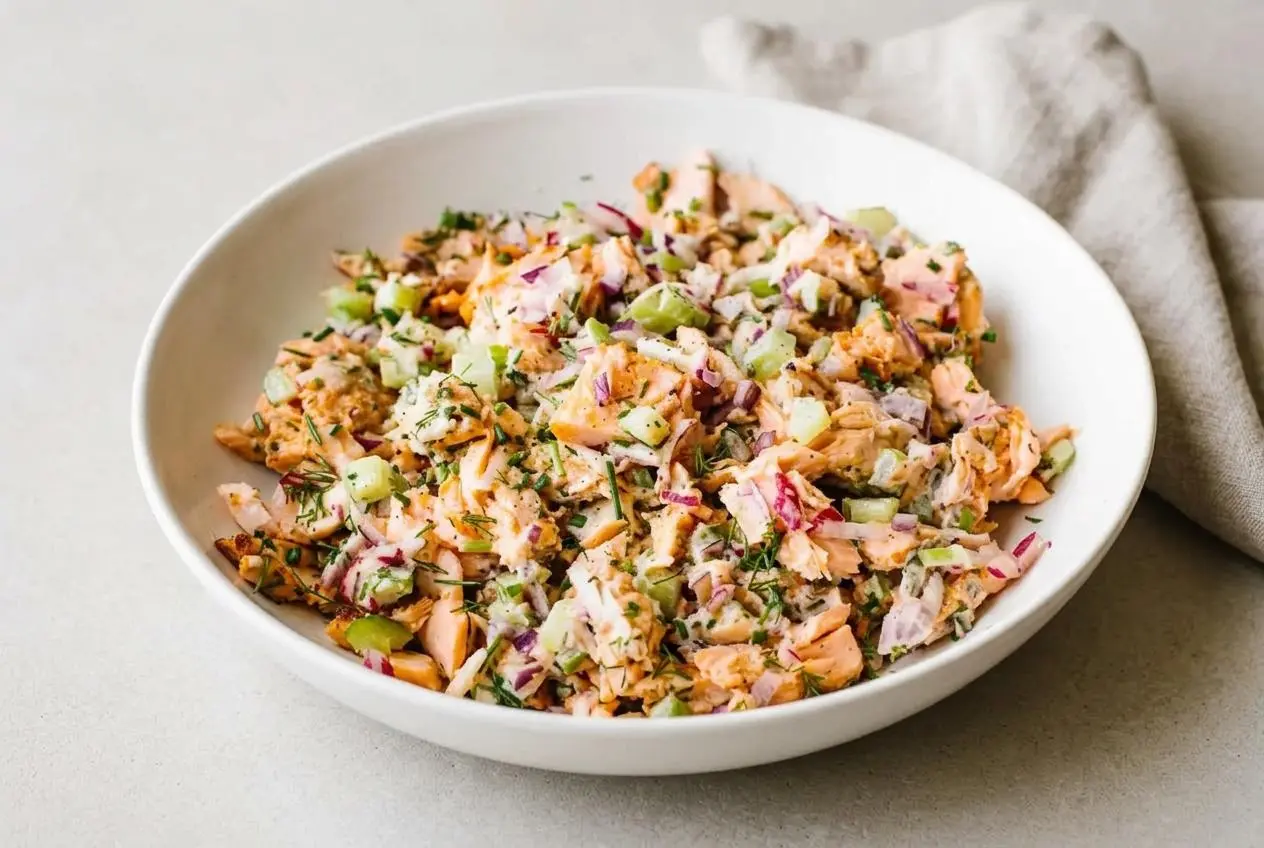
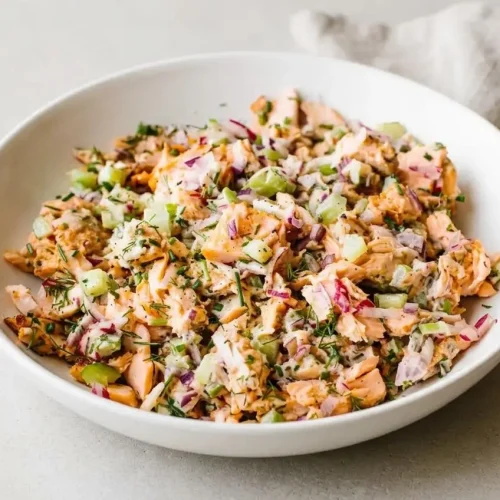
Salmon salad combines tender flaked salmon, crunchy vegetables, fresh herbs, and a creamy lemon-Dijon dressing. Baking the fish first gives the salad large, delicate flakes that hold their shape.
This salmon salad balances buttery fish with peppery radish, crisp celery, dill, chives, and bright lemon. It works for a chilled lunch, lettuce cups, or a hearty sandwich.
The brief chill before mixing makes all the difference.
Pat the grated radishes and diced celery dry with paper towels before they meet the dressing.
Key Ingredients for the Best Salmon Salad
Every ingredient builds a distinct part of the finished salad, from smoky richness in the salmon to crisp texture, herbal freshness, creamy body, and lemony balance in the dressing.
For the Salmon
- 1 ¼ pounds salmon filet
- ½ tablespoon olive oil
- 1 teaspoon smoked paprika
- kosher salt and freshly ground black pepper (to taste)
For the Dressing
- ⅓ cup mayonnaise
- ½ lemon (zested and juiced (about ½ tablespoon of zest and 1 ½ tablespoons juice))
- 2 teaspoons Dijon mustard
- 1 garlic clove (minced)
- kosher salt and freshly ground black pepper (to taste)
For the Salad
- ½ small red onion (finely diced)
- 3 large radishes (grated)
- 2 stalks celery (small diced)
- 2 tablespoons finely chopped fresh dill
- 2 tablespoons finely chopped fresh chives
Salmon brings the rich, savory center, while smoked paprika adds gentle warmth without overpowering the fish. Celery and radish keep each bite lively, and the red onion, dill, and chives give the salad a sharp, fresh finish. Mayonnaise creates a smooth coating, while lemon juice cuts through its richness.
I grate the radishes rather than chopping them because their peppery crunch spreads through the salad without competing with the tender salmon.
Salmon Selection: Fresh Fillets vs Canned Wild Salmon
Fresh baked salmon gives you the most delicate flavor and broad, tender flakes. It is the right choice when texture is the main event, especially if you want a composed lunch salad or a generous sandwich filling. For a more detailed approach to cooking the fish before flaking, try tender baked salmon.
Canned wild salmon is a convenient alternative when you need lunch without turning on the oven. Drain it thoroughly, then flake it gently before adding the vegetables and dressing. Its texture is softer and more compact than baked fillets, but it still works beautifully with the bright lemon-herb flavors.
Crisp Vegetables and Fresh Herb Additions
Finely diced red onion adds a savory bite, while celery delivers clean crunch. Grated radishes bring a milder peppery edge than larger slices would, so they mingle with the salmon instead of taking over each forkful.
Dill has a natural affinity for salmon, and chives add a fresh onion flavor without extra bulk. Keep the vegetables finely cut and dry them well after washing. Extra water is the usual culprit when a creamy seafood salad becomes thin after chilling.
The Zesty Lemon-Dijon Dressing Base
Mayonnaise, Dijon, garlic, lemon zest, and lemon juice form a creamy dressing with enough acidity to keep the salmon from tasting heavy. Dijon adds savory sharpness and helps the ingredients blend smoothly.
Lemon zest matters as much as the juice here. It gives the dressing a fragrant citrus lift without loosening its texture, while the juice brings the bright tang that makes the herbs and smoky paprika pop.
How to Make Flaky Salmon Salad Step-by-Step
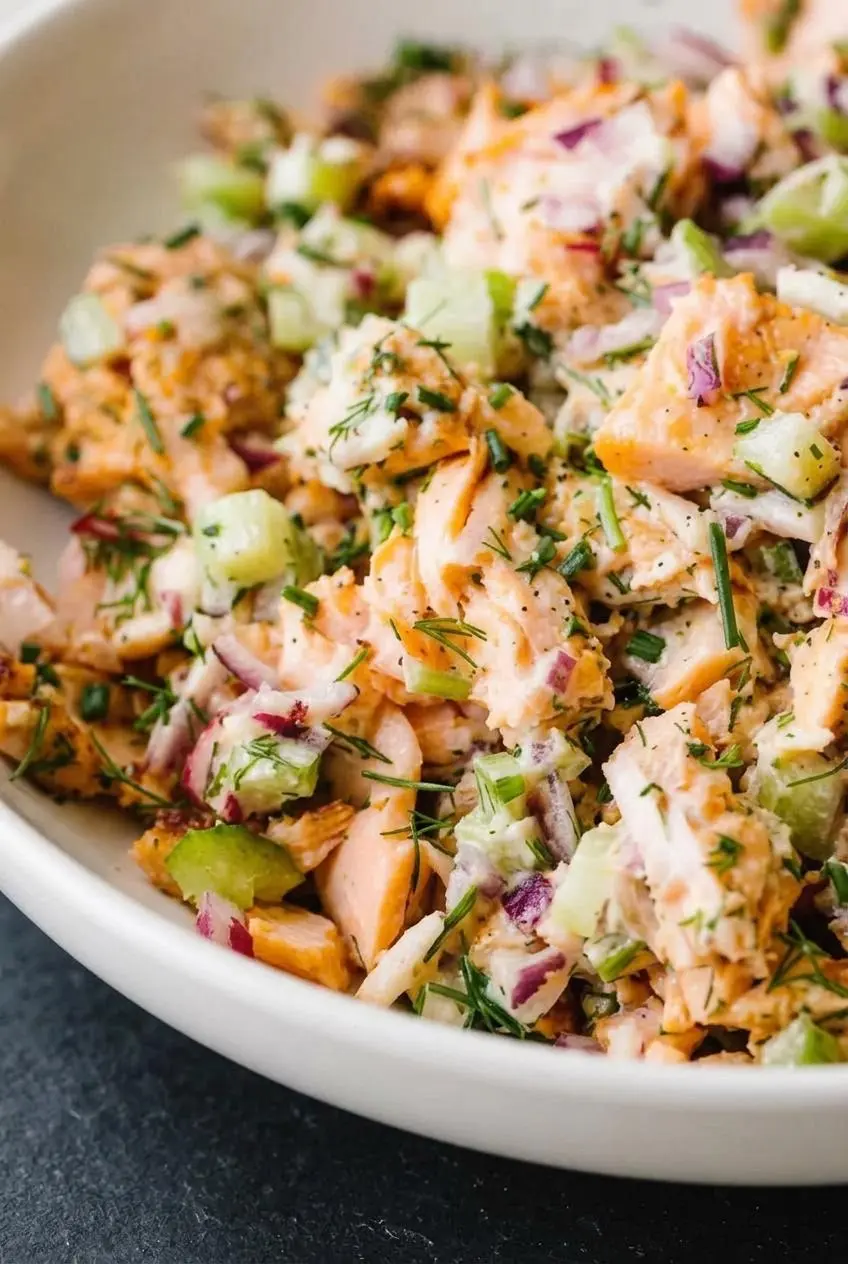
Cook the salmon gently, cool it fully, and fold it with a light hand. Those three moves protect the creamy dressing and keep the fish in satisfying flakes rather than turning it into a soft paste.
For fish that is cooked through, aim for an opaque center that separates easily with a fork. Cooking most fish to 145°F is part of safe fish handling and refrigeration practices.
- Heat the oven to 375°F (190°C), line a baking sheet with parchment paper, and set the salmon on the pan. Drizzle it with olive oil, then season with smoked paprika, salt, and pepper.
The surface should be evenly coated with oil and seasoning before it goes into the oven. - Bake the salmon for 16 to 18 minutes, adjusting within that range for the thickness of the filet. Remove it when the center is opaque and the flesh separates easily into flakes with a fork.
Let the fish reach room temperature, then break it into large chunks in a mixing bowl and chill for 5 to 10 minutes. - Add the red onion, grated radishes, celery, dill, and chives to the chilled salmon. Scatter the vegetables over the fish instead of stirring right away.
This keeps the salmon chunks intact while you prepare the dressing. - Whisk the mayonnaise, lemon zest, lemon juice, Dijon mustard, garlic, salt, and pepper in a small bowl. Stir until the dressing looks creamy and evenly seasoned.
The mixture should be thick enough to coat a spoon, not runny. - Pour the dressing over the salmon and vegetables, then fold gently with a spatula. Stop as soon as the flakes are coated and the herbs are distributed.
Large salmon pieces should still be easy to spot throughout the salad. - Serve the salad cold from the bowl, tucked into butter lettuce leaves, or spooned into a sandwich or wrap. Keep the finished salad chilled until serving.
The flavors become especially bright once the lemon dressing has settled around the fish and herbs.
If the mixture looks watery after folding, do not keep stirring. Let it sit chilled briefly, then use a slotted spoon for serving and leave excess liquid behind in the bowl.
Flavorful Variations and Dietary Swaps
The creamy lemon-herb version is classic, but salmon handles bold flavors well. Keep these changes separate from the main preparation so you can choose the direction that fits your meal.
5-Minute Canned Salmon Shortcut
Replace the baked filet with two 5 to 6-ounce cans of wild salmon. Drain the salmon very well, then pick through the skin or soft bones if you prefer before flaking it directly into the mixing bowl. No baking or chilling is needed when the canned fish is already cold.
This route makes a fast lunch with the same dressing, herbs, and crunchy vegetables. If canned salmon is already on your shopping list, crispy salmon patties are another useful way to put it to work.
Mayo-Free Greek Yogurt Dressing Option
For a lighter dressing, replace all or part of the mayonnaise with plain whole milk Greek yogurt. The yogurt brings tang and a thicker texture, while the salmon still gets a creamy coating.
Taste before serving because yogurt has more acidity than mayonnaise. If the dressing needs roundness, add a little more Dijon or a drizzle of olive oil. Mashed ripe avocado also works when you want a richer, dairy-free option, though it changes the salad’s flavor and color.
Mediterranean Caper and Herb Variation
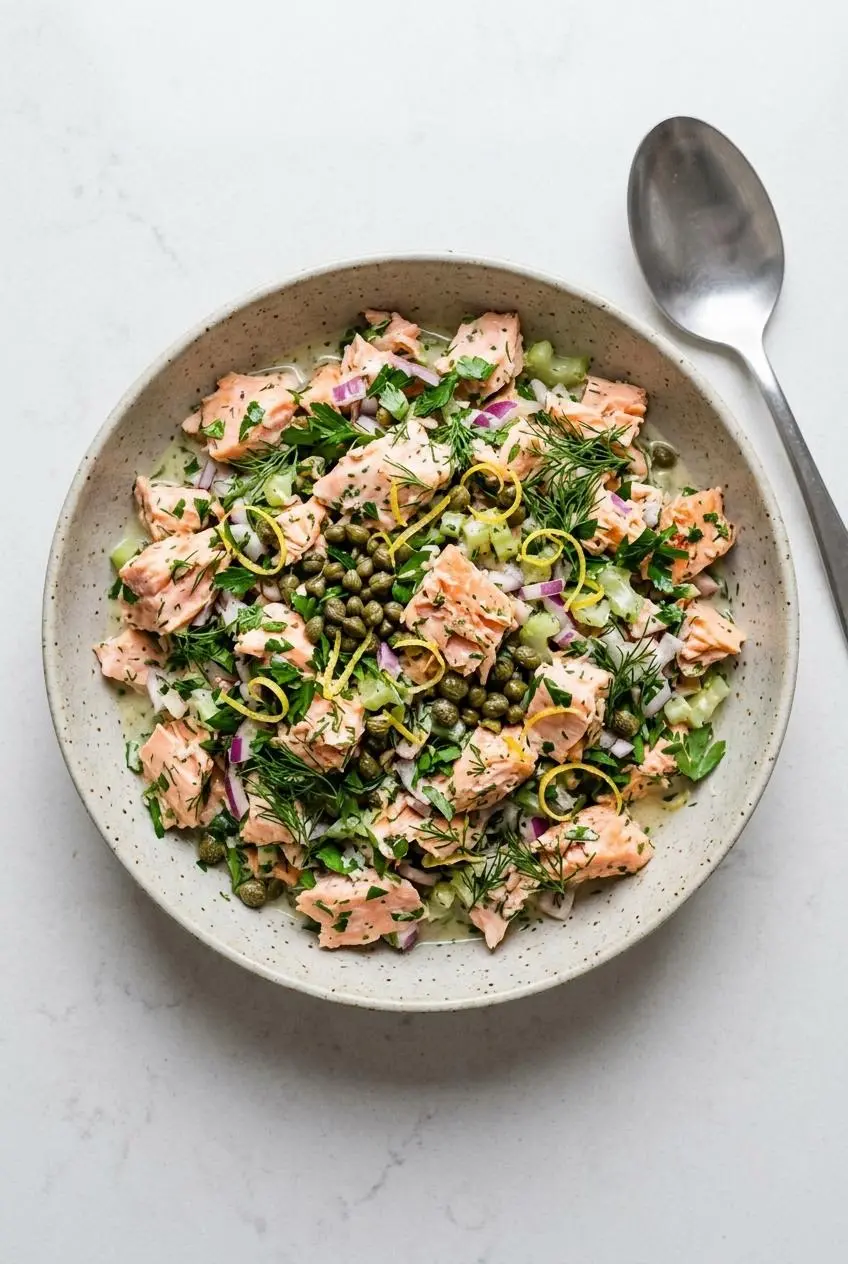
For a briny, herb-forward version, fold in rinsed capers, chopped flat-leaf parsley, a pinch of sumac, and finely diced preserved lemon rind. These additions bring concentrated citrus and savory depth without adding much extra moisture.
Keep the capers well drained and use the preserved lemon sparingly. Both are salty, so taste the salad before adding more salt. For another chilled seafood lunch with a creamy profile, try creamy crab salad.
How to Serve and Store Salmon Salad
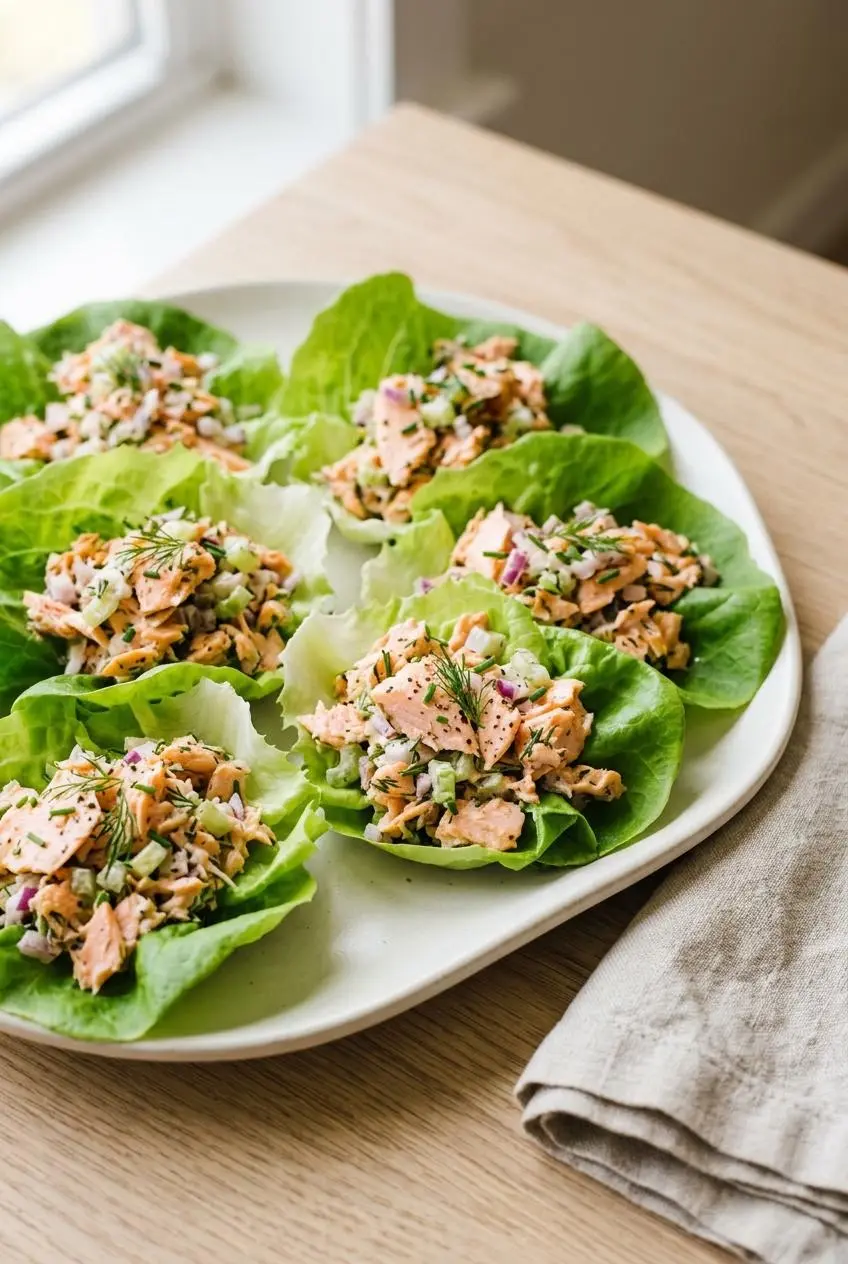
This salad is flexible enough for a casual desk lunch or a more generous plate. Keep the salmon cold and add crisp components just before serving when you want the strongest crunch.
Creative Ways to Serve: Wraps, Sandwiches, and Greens
- Spoon it into crisp butter lettuce cups for a fresh, light lunch.
- Layer it on toasted sourdough with cucumber slices and ripe avocado for a substantial sandwich.
- Serve it over mixed baby greens with avocado, cucumber, and tomatoes for a colorful salad bowl.
- Roll it into a wrap with lettuce for an easy packed lunch that does not need extra dressing.
For sandwiches, toast the bread well and build it right before eating. The crisp surface gives the creamy filling a better contrast and helps prevent sogginess.
Proper Refrigeration and Make-Ahead Storage Tips
Transfer leftovers to a tightly sealed container and keep them chilled promptly. Store bread, greens, and lettuce cups separately so they stay crisp until serving. If the salad releases liquid during storage, give it one gentle fold and serve with a slotted spoon.
Avoid leaving the salad out while preparing the rest of a meal. Keeping cooked seafood cold, using clean utensils, and preventing contact with raw fish juices all help reduce handling risks.
Conclusion
This creamy, zesty salmon salad turns baked fish into a versatile meal with fresh crunch from celery and radishes, plus plenty of dill and chives. The key is cooling and briefly chilling the salmon before folding it into the dressing.
Serve it over crisp lettuce, pile it onto toasted bread, or make it your own with a yogurt dressing or briny capers. Keep those big flakes intact, and lunch will feel pleasantly special.
Frequently Asked Questions
Can I Use Canned Salmon Instead of Fresh Baked Fillets?
Yes. Use two 5 to 6-ounce cans of wild salmon in place of the baked filet. Drain the salmon thoroughly before mixing. Remove skin or soft bones if you prefer. Flake it directly into the bowl with no oven cooking required.
How Do I Prevent My Salmon Salad From Getting Watery?
Cool baked salmon completely before adding the dressing, and chill it briefly so the mayonnaise stays thick. Drain canned salmon very thoroughly. Pat the celery and radishes dry after washing. Fold gently instead of stirring aggressively, which can release moisture from the vegetables and break down the fish.
What Can I Use Instead of Mayonnaise for the Dressing?
Plain whole milk Greek yogurt is the closest substitute when you still want a thick, tangy dressing. You can replace all or part of the mayonnaise, then adjust the Dijon or olive oil to balance the flavor. Mashed ripe avocado makes a creamy dairy-free alternative. A lemon and olive oil vinaigrette works too, though the finished salad will be lighter and less creamy.
How Long Does Homemade Salmon Salad Stay Fresh in the Refrigerator?
Keep homemade salmon salad in a tightly sealed container in the refrigerator and serve it while the fish, herbs, and vegetables still taste fresh. Store lettuce, bread, and greens separately to protect their texture.
Salmon Salad

Equipment
- Baking Sheet
- Parchment Paper
- Mixing Bowl
Ingredients
For the Salmon
- 1 1/4 pounds salmon filet
- 1/2 tablespoon olive oil
- 1 teaspoon smoked paprika
- kosher salt and freshly ground black pepper (to taste)
For the Dressing
- 1/3 cup mayonnaise
- 1/2 lemon zested and juiced (about ½ tablespoon of zest and 1 ½ tablespoons juice)
- 2 teaspoons Dijon mustard
- 1 garlic clove minced
- kosher salt and freshly ground black pepper (to taste)
For the Salad
- 1/2 small red onion finely diced
- 3 large radishes grated
- 2 stalks celery small diced
- 2 tablespoons fresh dill finely chopped
- 2 tablespoons fresh chives finely chopped
Instructions
- Heat the oven to 375°F (190°C), line a baking sheet with parchment paper, and set the salmon on the pan. Drizzle it with olive oil, then season with smoked paprika, salt, and pepper. The surface should be evenly coated with oil and seasoning before it goes into the oven.
- Bake the salmon for 16 to 18 minutes, adjusting within that range for the thickness of the filet. Remove it when the center is opaque and the flesh separates easily into flakes with a fork. Let the fish reach room temperature, then break it into large chunks in a mixing bowl and chill for 5 to 10 minutes.
- Add the red onion, grated radishes, celery, dill, and chives to the chilled salmon. Scatter the vegetables over the fish instead of stirring right away. This keeps the salmon chunks intact while you prepare the dressing.
- Whisk the mayonnaise, lemon zest, lemon juice, Dijon mustard, garlic, salt, and pepper in a small bowl. Stir until the dressing looks creamy and evenly seasoned. The mixture should be thick enough to coat a spoon, not runny.
- Pour the dressing over the salmon and vegetables, then fold gently with a spatula. Stop as soon as the flakes are coated and the herbs are distributed. Large salmon pieces should still be easy to spot throughout the salad.
- Serve the salad cold from the bowl, tucked into butter lettuce leaves, or spooned into a sandwich or wrap. Keep the finished salad chilled until serving. The flavors become especially bright once the lemon dressing has settled around the fish and herbs.