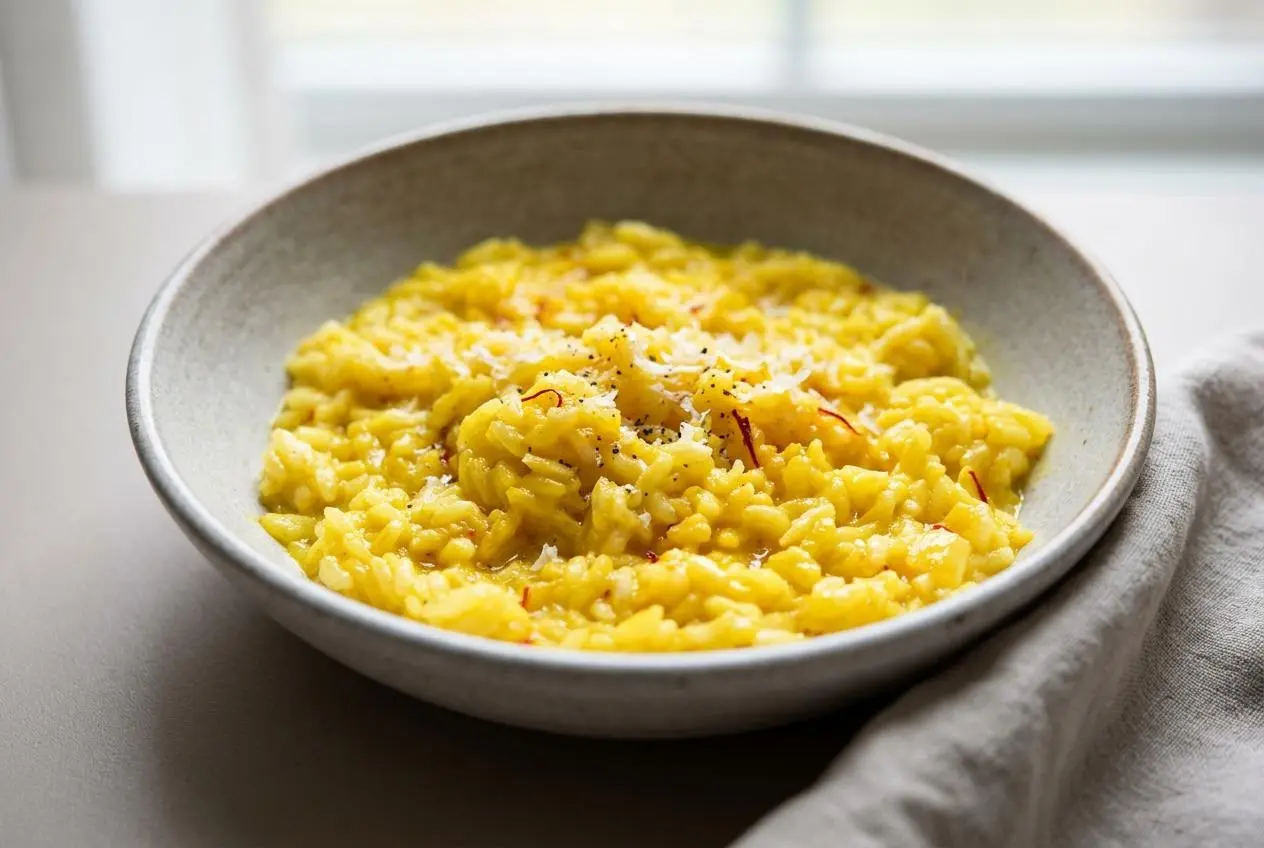
Saffron risotto is a Northern Italian rice dish made by gently cooking starchy short-grain rice with warm broth, white wine, and bloomed saffron until creamy and golden.
Saffron Risotto brings a glowing yellow color, soft floral aroma, and comforting richness to the table without relying on cream. The rice creates its own silky sauce as it cooks.
The key is patience at the stove: add warm broth gradually, then stop while the risotto still flows softly across the bowl. That gentle ripple is worth chasing.
Keep the stock barely simmering in a saucepan beside the skillet so each ladleful keeps the rice cooking steadily.
Essential Ingredients for Authentic Saffron Risotto
Each ingredient has a clear job: rice provides creaminess, shallots add sweetness, saffron gives color and aroma, wine brings balance, and Parmesan finishes the dish with savory depth.
- 1 1/2 cups arborio rice, (290g)
- 2 shallots, finely chopped
- ~ 1 tsp saffron, (0.3g)
- 1/2 cup white wine, (125m)
- 3 1/4 cups chicken stock, good quality (800ml)
- 2 tbsp Parmesan, freshly grated
- 1 tbsp olive oil
- Salt and pepper, to season
Arborio rice releases starch as it cooks, creating the creamy texture that defines risotto. Gently cooked shallots add a mellow foundation, while crisp white wine cuts through the rice’s richness. Freshly grated Parmesan brings a nutty, salty finish, and warm stock keeps the grains cooking evenly.
I like to rub the saffron threads lightly between my fingertips before blooming them, which helps release their warm floral perfume.
Choosing the Best Risotto Rice
Arborio is easy to find and gives risotto a soft, lush texture because it releases plenty of starch into the broth. Carnaroli is another excellent choice when available: its grains tend to hold their shape a little longer while still creating a creamy finish. Avoid regular long-grain rice here, since it does not release enough starch for that signature sauce-like texture.
Selecting and Blooming Saffron
Choose saffron threads with a deep red color and a fragrant, honey-like aroma. To bloom them, steep the threads in a small amount of warm broth before they go into the pan. The liquid turns golden and disperses the saffron more evenly through the rice. For a bright optional accent, add a very fine grating of lemon zest to the saffron liquid before stirring it in.
How to Make Saffron Risotto Step by Step
Risotto works best over low-medium heat, where the rice can absorb broth gradually without scorching or turning gummy. Stay nearby, stir consistently, and use the changing texture of the grains as your guide.
Toasting the Grains and Deglazing
Softening the shallots without browning keeps the flavor sweet and clean. Once the rice is coated in oil, toast it until the outer edges look slightly translucent while the centers remain opaque. A soft sizzle and faintly nutty aroma signal that it is ready for wine.
- Warm the chicken stock in a saucepan and keep a ladle beside it.
The stock should stay hot but not boil aggressively while the rice cooks. - Heat the olive oil in a large skillet over low-medium heat, then cook the shallots until softened and translucent.
Keep the shallots pale; any browning can muddy the delicate saffron flavor. - Stir in the rice until every grain is coated, pour in the white wine, and let it simmer for 2 minutes before adding the first ladle of stock.
The wine should mostly cook away, leaving rice with translucent edges and a gentle toasted aroma. - Stir as the rice absorbs the broth, adding another ladle only when the pan looks nearly dry.
The mixture should bubble quietly and become creamier with each addition while the grains remain distinct. - Stir in the bloomed saffron when two ladles of stock remain, then continue adding and absorbing broth until it is all used; season with salt and pepper, stir in the Parmesan, taste, and serve.
The rice should look golden and glossy, with a tender grain and a slight firmness at the center.
Simmering With Warm Broth
Add broth in a calm, steady rhythm rather than all at once. Hot stock keeps the skillet at a stable temperature, while gradual additions encourage the rice to release starch without drowning it. Stir enough to keep the grains moving and creamy, but do not beat the rice into submission.
Check a grain near the end of cooking by biting into it. It should be tender around the outside with a small, pleasant resistance in the middle, never chalky or hard.
The Finishing Mantecatura Touch
Mantecatura is the Italian finishing technique that turns cooked rice and fat into a smooth emulsion. In this version, stir the Parmesan into the hot rice at the end, then let the skillet rest briefly off the heat before serving. The risotto should loosen into a glossy, wave-like consistency called all’onda when you gently tilt the bowl.
Traditional versions often use cold butter during this final step, but it is not required for the ingredient list above. The important part is avoiding prolonged heat once the cheese goes in, which helps the texture stay smooth instead of tight or grainy.
Pro Success Tips and Troubleshooting Common Issues
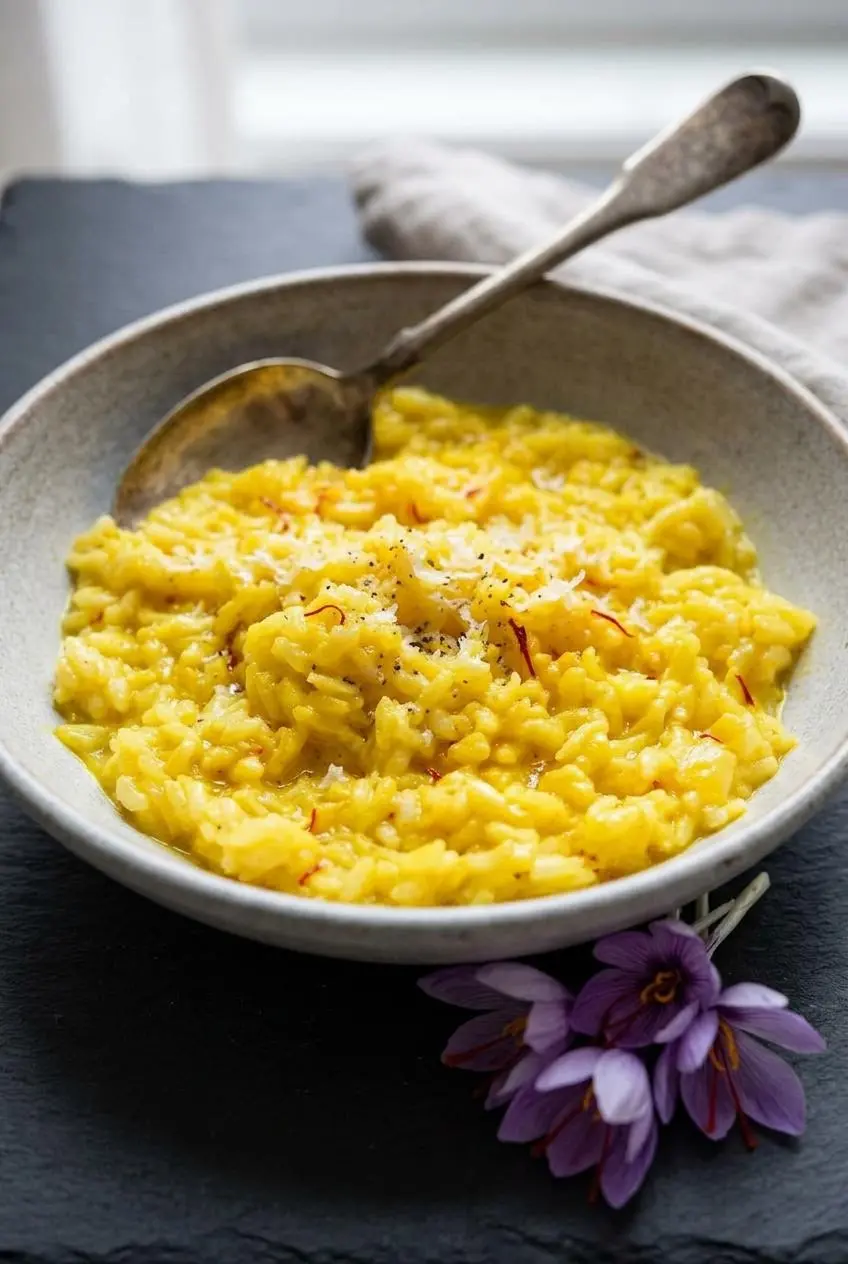
A few small adjustments can rescue risotto before it reaches the table.
- Rice still feels crunchy: Keep it over gentle heat and add more warm stock or water a little at a time. Continue cooking until the firm center loses its chalky bite.
- Risotto is too thick: Stir in a splash of hot broth just before serving. The goal is a fluid texture that slowly settles, rather than a stiff mound.
- Risotto looks sticky or gummy: This usually comes from adding too much liquid at once or stirring too aggressively. Loosen it with warm broth and fold gently until it becomes glossy again.
- The flavor tastes flat: Add salt gradually and taste after the Parmesan has melted in. Saffron’s floral character becomes clearer when the seasoning is balanced, but Parmesan can add more salt than expected.
- The cheese turns clumpy: Remove the skillet from the heat before stirring it in. High heat can tighten the cheese and break the creamy finish.
- The saffron color seems weak: Bloom the threads in warm broth before adding them during the final ladles. The yellow color should deepen gradually as you stir.
Storage, Reheating, and Repurposing Leftovers
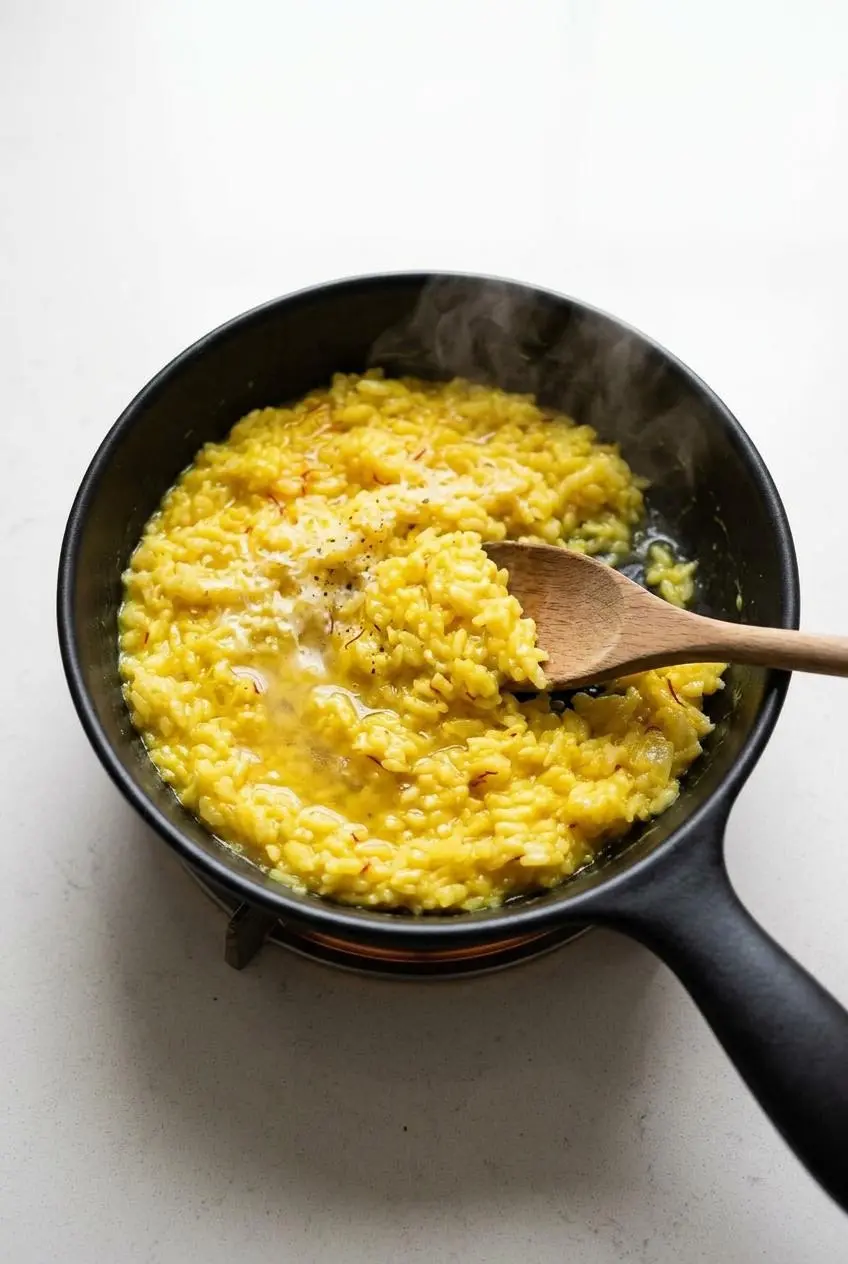
Cool leftover risotto promptly in a shallow container, cover it, and refrigerate it at 40 °F or below. For safer handling, refrigerate leftovers within two hours and use them within two days, following safe cooling and refrigeration practices for cooked foods.
Refrigeration and Reheating Guidelines
Cold risotto thickens as its starches set, so the stovetop is the gentlest way to bring it back. Put the rice in a saucepan over low heat and stir in warm broth or water a splash at a time until it becomes creamy again. Avoid blasting it over high heat, which can overcook the grains and leave the texture gluey.
Reheat only the portion you plan to eat. Warm it until hot and steaming throughout, then serve it right away while the rice still has some structure.
Golden Homemade Arancini
Chilled risotto is ideal for optional arancini because it firms up enough to shape. Form the rice into balls around a small cube of mozzarella, then coat each one in flour, egg wash, and breadcrumbs. Fry until the coating is crisp and deeply golden, then let the arancini cool slightly before serving so the center can settle.
Serving Suggestions and Complementary Pairings
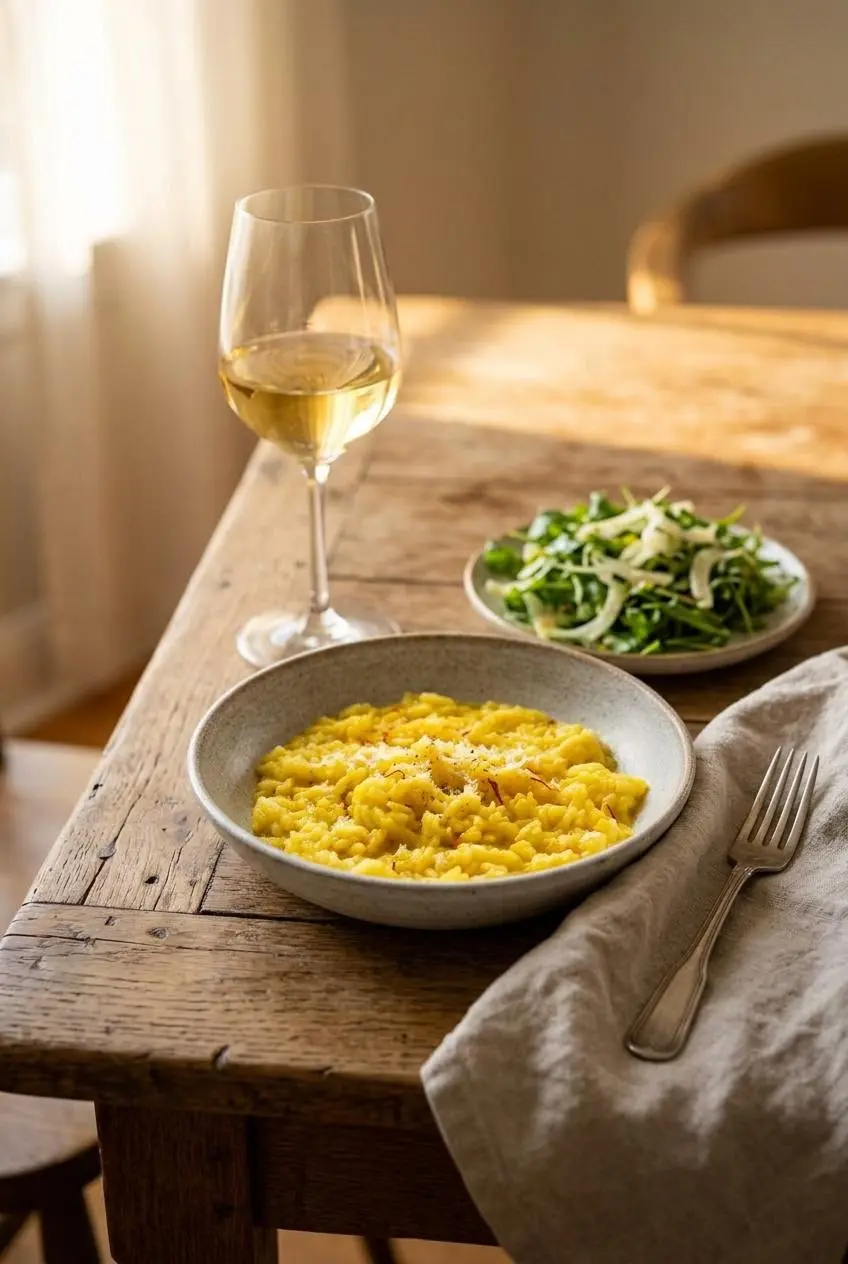
Saffron risotto is rich enough to anchor dinner, but it also welcomes a savory main or bright side dish.
- Serve it beside slow-braised osso buco, stewed veal, or tender Italian beef for a comforting Northern Italian-style meal.
- Pair it with pan-seared sea scallops, delicate white fish, or garlic shrimp. Their subtle sweetness works beautifully with saffron’s floral warmth.
- Balance the creamy rice with peppery arugula and shaved fennel dressed in lemon and olive oil.
- For a fresh, crunchy contrast, serve a crisp Greek salad alongside the warm risotto.
Helpful Variations and Adaptations
These options change the character of the dish without changing the main method above.
Risotto alla Milanese Style
Risotto alla Milanese is closely related to saffron risotto, but the traditional Milanese version begins with rendered beef bone marrow and uses a richer beef-based broth. That combination gives the rice a deeper savory flavor and a more luxurious finish while saffron remains the defining aroma and color.
- Vegetarian saffron risotto: Replace the chicken stock with a light vegetable broth. Choose one with a gentle flavor so the saffron and Parmesan remain the focus.
- Carnaroli variation: Use Carnaroli instead of Arborio when you want grains that stay slightly more defined through the final stirring.
Conclusion
A bowl of homemade saffron risotto feels special because the transformation happens right in the skillet: firm grains, warm broth, and saffron become something silky and golden.
Keep the stock hot, add it patiently, and stop when the risotto still moves in a soft wave. That is the small detail that makes each spoonful shine.
Frequently Asked Questions
What Is the Difference Between Saffron Risotto and Risotto alla Milanese?
Saffron risotto generally centers on short-grain rice, broth, aromatics, saffron, and cheese. Risotto alla Milanese traditionally includes beef bone marrow in the cooking base and often uses a richer meat broth.
When Is the Best Time to Add Saffron to Risotto?
Bloom saffron threads in warm broth first, then stir them in during the final stage of cooking, when about two ladles of broth remain. This gives the risotto a deeper golden color while keeping saffron’s delicate aroma present.
Can I Use Ground Saffron Powder Instead of Threads?
Yes. Dissolve ground saffron powder in warm stock before adding it to the rice. Use slightly less than you would with threads because powder disperses quickly and can taste stronger by volume.
How Do I Reheat Leftover Saffron Risotto Without Making It Mushy?
Warm it slowly in a saucepan over low heat with a few splashes of warm broth or water. Stir gently until the rice loosens and becomes creamy again, then serve as soon as it is hot throughout.
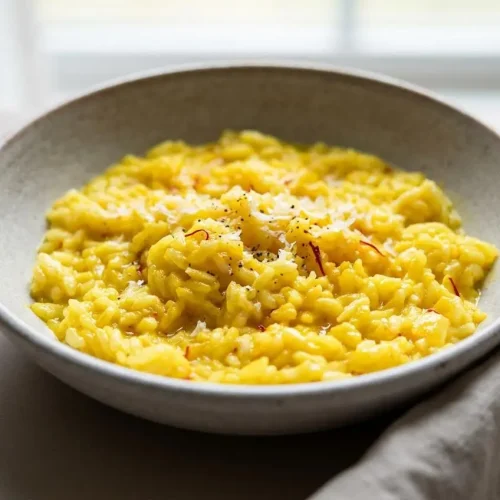
Saffron Risotto

Equipment
- Saucepan
- Ladle
- large pan/skillet
Ingredients
- 1 1/2 cups arborio rice (290g)
- 2 shallots finely chopped
- ~ 1 tsp saffron (0.3g)
- 1/2 cup white wine (125m)
- 3 1/4 cups chicken stock good quality (800ml)
- 2 tbsp Parmesan freshly grated
- 1 tbsp olive oil
- Salt and pepper to season
Instructions
- Warm the chicken stock in a saucepan and keep a ladle beside it. The stock should stay hot but not boil aggressively while the rice cooks.
- Heat the olive oil in a large skillet over low-medium heat, then cook the shallots until softened and translucent. Keep the shallots pale; any browning can muddy the delicate saffron flavor.
- Stir in the rice until every grain is coated, pour in the white wine, and let it simmer for 2 minutes before adding the first ladle of stock. The wine should mostly cook away, leaving rice with translucent edges and a gentle toasted aroma.
- Stir as the rice absorbs the broth, adding another ladle only when the pan looks nearly dry. The mixture should bubble quietly and become creamier with each addition while the grains remain distinct.
- Stir in the bloomed saffron when two ladles of stock remain, then continue adding and absorbing broth until it is all used; season with salt and pepper, stir in the Parmesan, taste, and serve. The rice should look golden and glossy, with a tender grain and a slight firmness at the center.