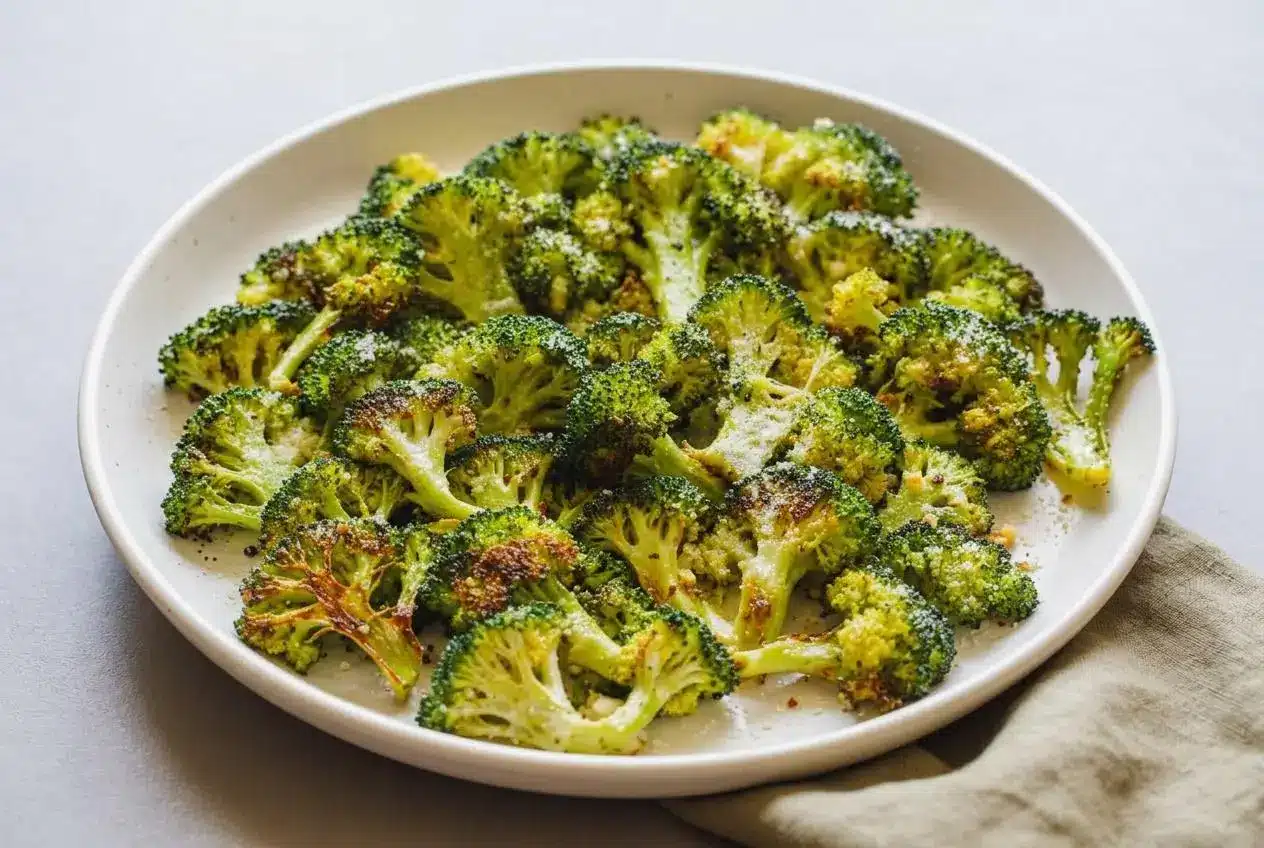
For great roasted broccoli, cut the florets evenly, dry them very well, roast at 425°F, and keep the pan uncrowded so the edges turn sweet and caramelized instead of soft.
This is the kind of vegetable side dish that disappears fast because it tastes nutty, deeply savory, and a little sweet where the edges brown. The stems stay tender, while the tops get crisp in the best way.
It also works on busy nights because the method is quick, the seasoning is flexible, and one small prep step makes all the difference. That drying step is where the magic starts.
If the broccoli is damp when it hits the pan, it will steam before it roasts.
Ingredients for the Ultimate Roasted Broccoli
Each ingredient pulls its weight here, from browning and crispness to savory depth, clean seasoning, and that final hit of richness on top.
- 1 1/2 pounds broccoli (1 head), cut into medium florets
- 3 Tbsp olive oil
- 3 garlic cloves, minced, or 1/2 tsp garlic powder
- 1/2 tsp fine sea salt, or more to taste
- 1/4 tsp pepper, or to taste
- 2 Tbsp freshly grated parmesan, to serve, optional
Broccoli is the star, but how you prep it matters as much as the seasoning. Medium florets give you enough surface area for browning without leaving the stems undercooked.
Olive oil helps the florets brown and keeps the rough tops from drying out before the stems turn tender. A high-heat-friendly oil matters because this recipe depends on a hot oven and direct contact with the baking sheet.
Garlic gives you options. Minced fresh garlic tastes sharper and more aromatic, but it can brown quickly in a 425°F oven. Garlic powder spreads more evenly and gives a gentler savory flavor. If you want garlic flavor without the risk of bitter bits, smashed cloves work especially well as an optional variation later on.
Fine sea salt coats the broccoli evenly, which helps every bite taste seasoned instead of patchy. Kosher salt works too if that is what you keep on hand, but finer grains cling better to the oiled florets. Pepper adds mild heat and rounds out the sweetness that develops as the broccoli roasts.
Parmesan is optional, but it adds salty richness and a lightly crisp finish when it hits the hot broccoli right after roasting.
I look for broccoli with tight, deep green florets and firm stalks because loose yellowing tops usually roast up drier and less sweet.
How to Roast Broccoli Perfectly Step by Step
A good roast comes down to heat, dryness, and spacing. Once those three pieces are in place, the oven does the heavy lifting.
- Heat the oven to 425°F and line a baking sheet with parchment paper.
The hot oven sets you up for browning, and the lined pan keeps the broccoli from sticking as the edges darken. - Place the broccoli on the baking sheet, then add the olive oil, garlic, salt, and pepper and toss until everything is coated.
Every floret should look lightly glossy, not drenched, so the surface can roast instead of turning heavy. - Arrange the broccoli in a single layer and roast for 14 to 18 minutes.
It is ready when the tops have golden brown spots, the kitchen smells sweet and nutty, and a fork slides into the stems with light resistance while the florets stay crisp. - Finish with freshly grated parmesan, if using, and serve right away.
The cheese softens on contact with the hot broccoli and adds a savory finish while the edges are still at their crispest.
Before the broccoli goes onto the pan, give it a real dry-off after washing. A salad spinner works best, but clean towels or paper towels do the job too. The florets should feel dry to the touch before you add oil.
Uniform cutting matters more than it seems. If some pieces are tiny and frilly while others are big and thick, the little ones can burn before the stems of the large ones become tender. Aim for bite-sized pieces that look close in size, and split extra-large florets through the stem so each piece has some stalk attached.
High heat is what gives broccoli that roasted flavor instead of a boiled taste in disguise. At 425°F, the natural sugars on the surface brown fast enough to create caramelized edges while the inside stays moist and tender. If your oven runs cool, the broccoli may soften before it colors.
When the pan comes out, serve the broccoli while it is still hot and crisp, or tuck it into roasted veggie bowls for lunch meal prep.
How to Keep Roasted Broccoli from Getting Soggy
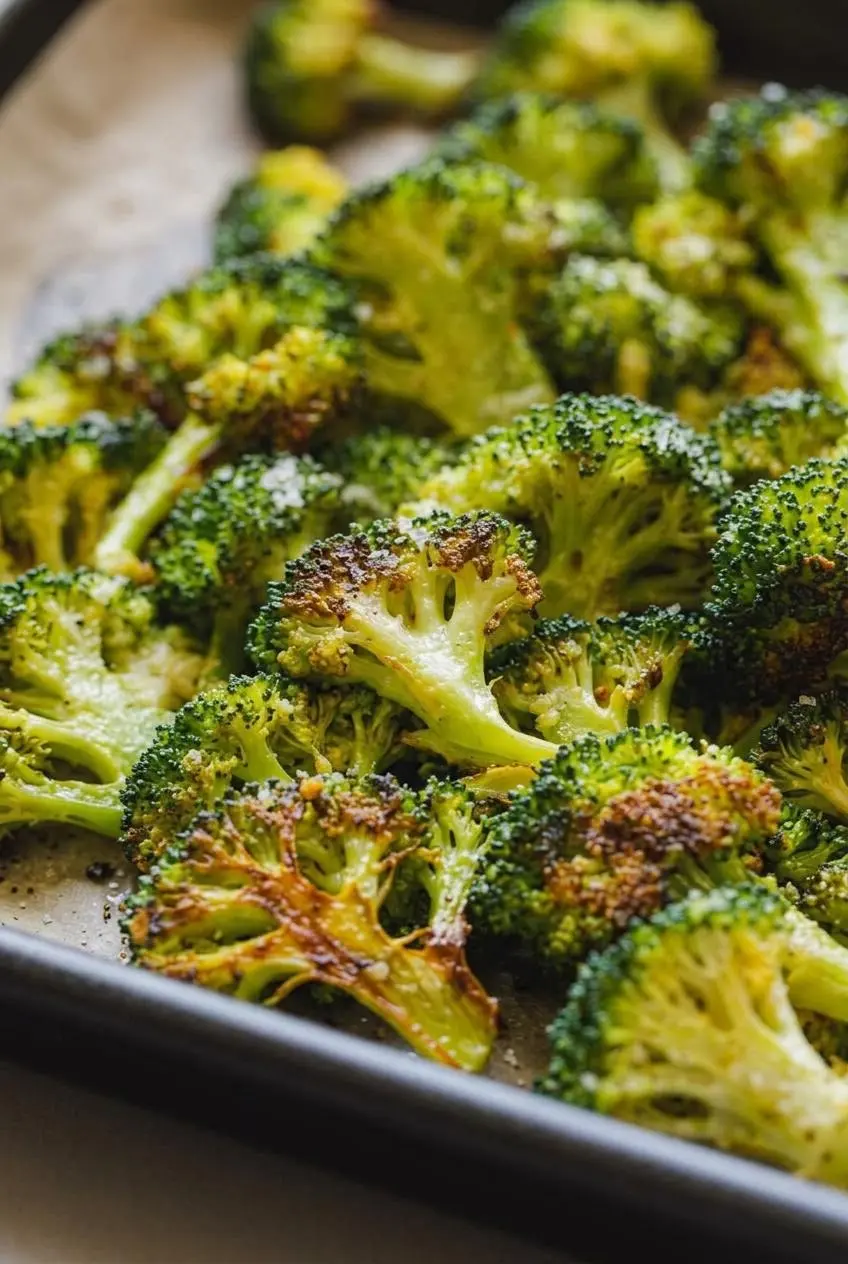
Soggy broccoli usually comes from trapped moisture. If the florets are wet, packed too closely together, or slick with too much oil, they steam on the pan instead of roasting.
Leave space between the pieces. About 1/2 inch is a good visual guide, enough room so the hot air can move around each floret. If pieces are touching all over, they will release steam into each other and soften before they brown.
Use enough oil to lightly coat the broccoli, but not so much that it pools on the pan. Too much oil weighs down the florets and can leave them limp rather than crisp.
A preheated baking sheet can help jump-start browning, especially if your broccoli tends to stay pale. If you try that approach, warm the empty lined sheet briefly in the oven, then spread the seasoned broccoli quickly so the first sizzle starts right away. The idea is the same one that helps vegetables like roasted Brussels sprouts crisp up instead of going soft.
- Broccoli looks wet after roasting: it likely went onto the pan damp. Dry it more thoroughly before oiling next time.
- Edges burn before the stems soften: the florets were probably cut unevenly. Keep the pieces closer in size.
- The flavor seems flat: add a little more salt after roasting, not more oil before roasting.
- Garlic tastes bitter: minced garlic browned too hard. Use garlic powder or smashed cloves when roasting at high heat.
Pro Tips for Maximum Crispiness
Drying the broccoli completely is the single biggest texture fix in this recipe. Water clinging to the buds turns into steam the second it hits the hot oven, and steam is the enemy of crisp edges.
After rinsing, spin the broccoli dry or press it gently between towels until the tops no longer feel cool and damp. Pay attention to the branchy parts of the florets because that is where water hides. Once the broccoli is bone-dry, the oil can coat the surface instead of mixing with water and sliding off.
If you often roast vegetables, it helps to think of the pan like a parking lot. Every piece needs its own space, or nobody is getting a crisp edge.
Don’t Waste the Stems: How to Prep Broccoli Stalks
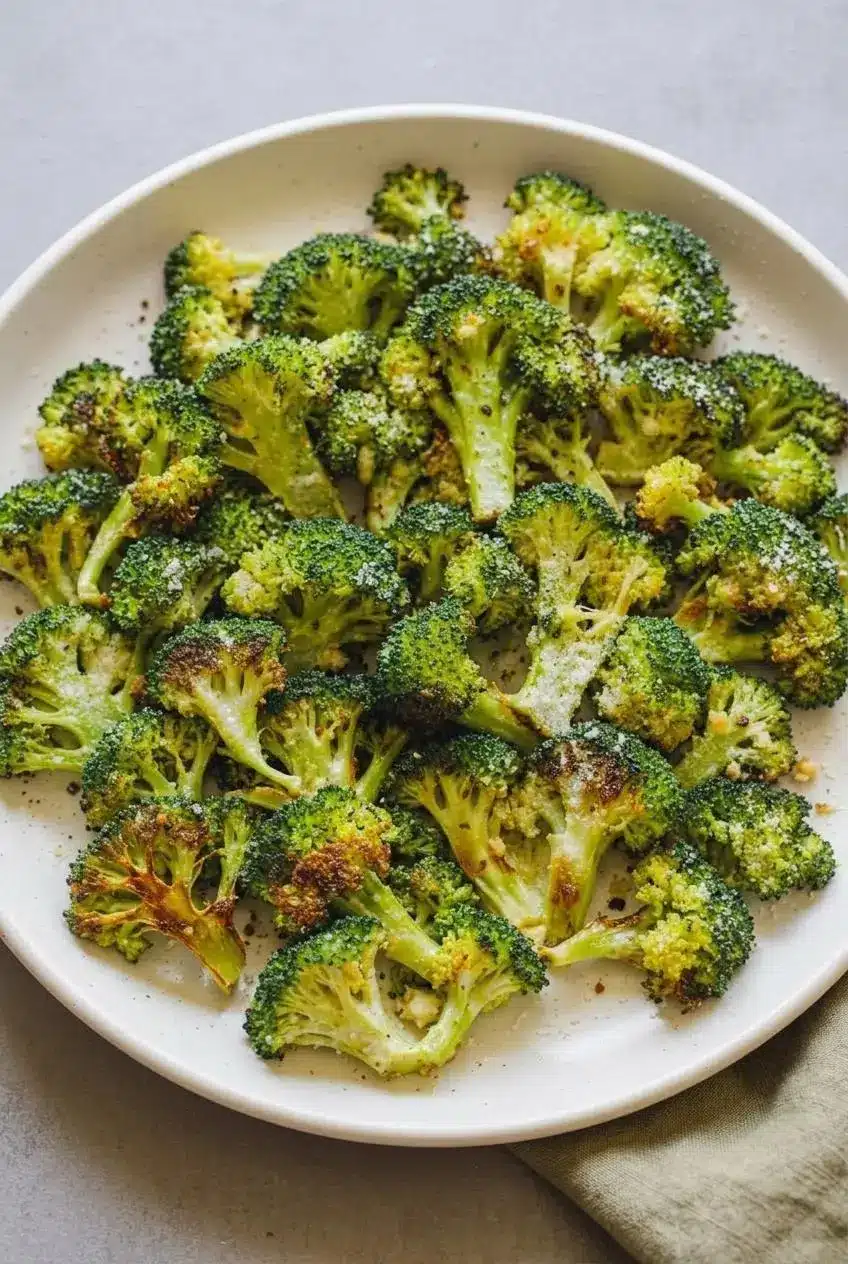
The stalks are fully worth roasting. They turn sweet and tender in the oven, and using them means less waste and more texture on the pan.
Start by trimming off the tough bottom end. Then use a vegetable peeler to remove the fibrous outer layer from the thicker stalk. Once peeled, slice the stem into coins or half-moons that are close in thickness so they roast at the same pace as the florets.
If the stem pieces are very thick, cut them a little smaller than the florets. Dense stem sections take slightly longer to soften, so smaller pieces help everything finish together.
You will know the stalks are done when the edges pick up a bit of color and a fork slips through without much effort. They should be tender, not mushy, with a mild sweetness that balances the darker roasted tops.
If you trim extra peeled stem pieces and want another way to use them, they fit naturally into broccoli cheddar soup for a creamy second meal.
Flavor Variations to Try
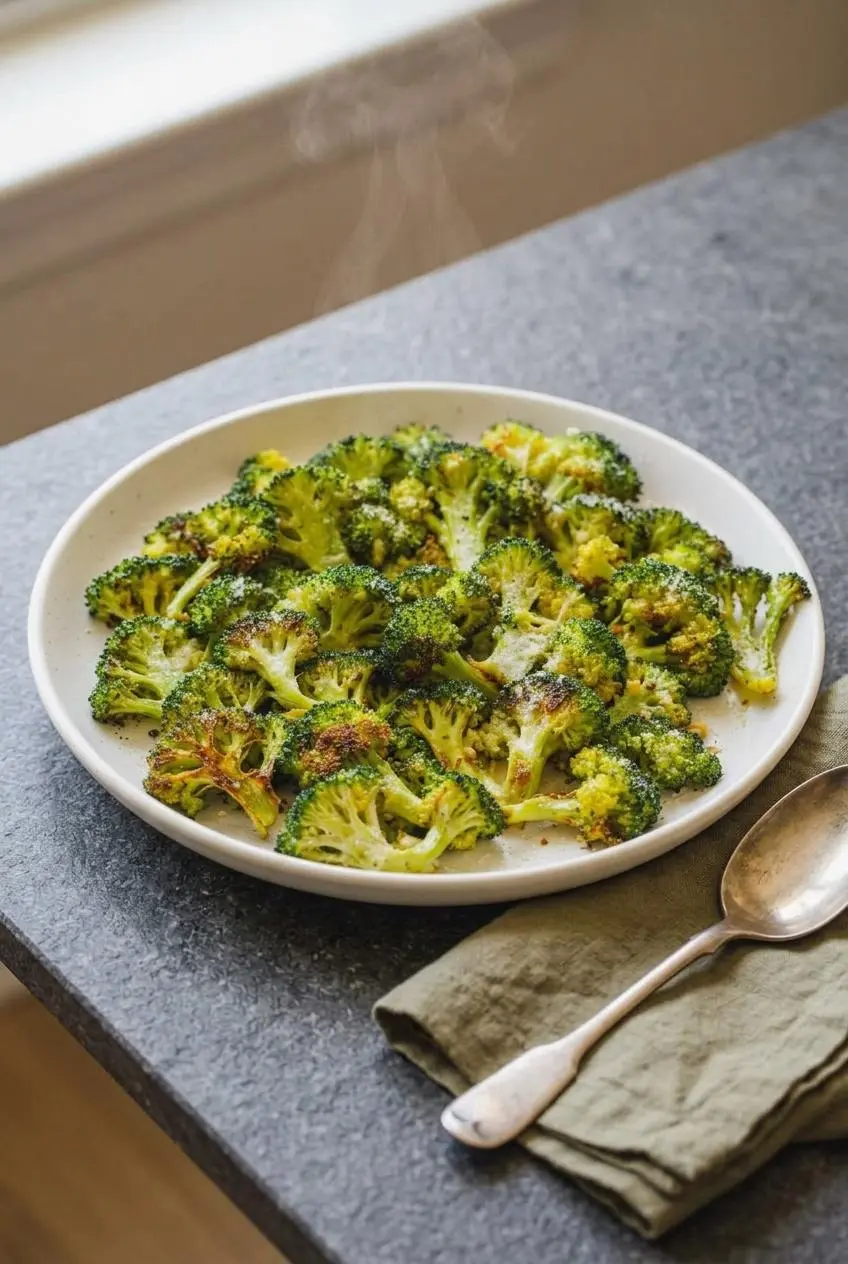
Once you have the base method down, it is easy to change the flavor without changing the recipe itself. Add these only if the mood strikes.
For a deeper savory twist, toss the hot broccoli with a spoonful of white miso butter and a shower of toasted sesame seeds after roasting. The miso melts into the rough surface of the florets and adds a rich, salty depth that plays especially well with the browned edges.
You can also add a pinch of red pepper flakes after roasting if you want a little heat without changing the cooking method.
Garlic and Parmesan Roasted Broccoli
This is the most classic variation for a reason. Garlic and parmesan lean into the savory side of broccoli and make it feel a little more dinner-table worthy without adding much work.
If you use minced garlic, mix it well with the oil so it is distributed instead of clumped on one part of the pan. Tiny piles of garlic can burn before the broccoli finishes. Garlic powder is gentler and more forgiving if you want a similar flavor with less risk.
For parmesan, add it after roasting while the broccoli is still hot. That way it softens and clings to the florets instead of scorching on the sheet pan. If a few shreds land on the hot pan, they can turn lacy and crisp, which is never bad news.
Lemon and Herb Roasted Broccoli
If you want the broccoli to taste brighter and lighter, finish it with fresh lemon juice as soon as it comes out of the oven. The heat wakes up the citrus and balances the darker roasted flavor.
Fresh parsley or thyme work especially well here. Sprinkle the herbs on at the end so they stay vibrant and fragrant instead of drying out in the oven.
This version is especially good next to roasted chicken, steak, or folded into warm grain bowls and pasta.
The Smashed Garlic Technique
Smashed garlic cloves are a smart option when you want fresh garlic flavor without bitter, burnt bits. Because the cloves stay larger, they roast more slowly than minced garlic in a hot oven.
As they cook, smashed cloves soften and turn mellow, almost sweet, rather than sharp. You can tuck them among the broccoli on the pan, then mash the roasted garlic lightly into the vegetables before serving for a softer, rounder flavor.
Storage and Reheating Guidelines
Roasted broccoli is best right away, but leftovers can still be very good if you cool and reheat them the right way.
Once cooled, store leftovers in an airtight container in the refrigerator. Cooked leftovers are best used within 3 to 4 days, and fresh broccoli keeps for 3 to 5 days in the refrigerator based on storage guidance for fresh broccoli and cooked leftovers.
If your fridge struggles to stay cold, it helps to keep perishable foods at 40°F or below for better food safety and quality, as outlined in refrigerator temperature guidance.
Leftover broccoli also works well beyond reheating. Toss it into sausage broccoli pasta for a fast dinner that tastes more intentional than random leftovers.
Reheating Roasted Broccoli the Right Way
The microwave warms it, but it also softens the edges. If you want the broccoli to taste roasted again, use dry heat.
Set a skillet over medium-high heat and let it get hot before adding the broccoli. Reheat the florets in the dry pan for 3 to 4 minutes, turning a few times so the cut sides and tops make contact with the surface. The edges should perk back up and smell toasty again.
An air fryer also works well for bringing back crispness, especially for small portions, as long as you spread the pieces out.
Conclusion
Roasted broccoli is one of the easiest ways to turn a head of broccoli into something deeply flavorful, with crisp browned edges and stems that stay pleasantly tender.
Keep the florets dry, give them room on the pan, and roast them hot. That is the whole game, and it pays off every time.
Frequently Asked Questions
How long do I roast broccoli at 425 degrees?
Roast it for 14 to 20 minutes total. For this recipe, 14 to 18 minutes is the sweet spot for medium florets. Turn or stir the broccoli about halfway through if you want more even browning. Look for caramelized edges and crisp-tender stems rather than relying on the clock alone.
How do you roast broccoli without it getting soggy?
Dry it completely after washing. Use only enough oil to lightly coat the florets. Keep the broccoli in a single layer with space between pieces. Roast at high heat so the surface browns quickly instead of steaming.
Can you roast frozen broccoli successfully?
Yes, it can work, though the texture is usually a little softer than fresh. Roast it straight from frozen at 425°F to 450°F. A preheated sheet pan helps evaporate surface ice faster. Do not thaw it first, and keep the pieces spread out so excess moisture can cook off.
Should you wash broccoli before roasting?
Yes, rinse it under cold water to remove any grit. Then dry it very thoroughly before adding oil and seasoning. A salad spinner is handy, but towels or paper towels work too. If the florets are still damp, the oven will steam them before they can brown.
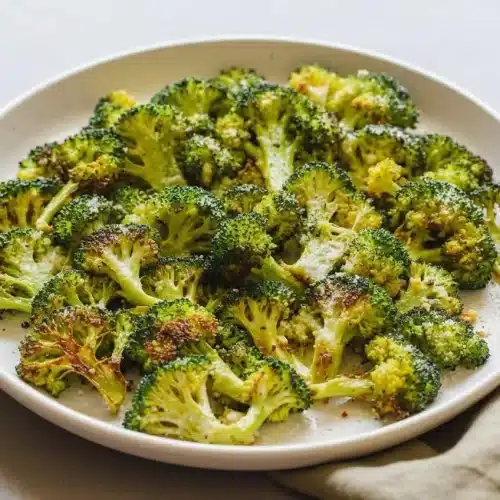
Roasted Broccoli

Equipment
- Baking Sheet
- Parchment Paper
- Vegetable peeler
Ingredients
- 1 1/2 pounds broccoli (1 head) cut into medium florets
- 3 Tbsp olive oil
- 3 cloves garlic minced, or 1/2 tsp garlic powder
- 1/2 tsp fine sea salt or more to taste
- 1/4 tsp pepper or to taste
- 2 Tbsp freshly grated parmesan to serve, optional
Instructions
- Heat the oven to 425°F and line a baking sheet with parchment paper. The hot oven sets you up for browning, and the lined pan keeps the broccoli from sticking as the edges darken.
- Place the broccoli on the baking sheet, then add the olive oil, garlic, salt, and pepper and toss until everything is coated. Every floret should look lightly glossy, not drenched, so the surface can roast instead of turning heavy.
- Arrange the broccoli in a single layer and roast for 14 to 18 minutes. It is ready when the tops have golden brown spots, the kitchen smells sweet and nutty, and a fork slides into the stems with light resistance while the florets stay crisp.
- Finish with freshly grated parmesan, if using, and serve right away. The cheese softens on contact with the hot broccoli and adds a savory finish while the edges are still at their crispest.