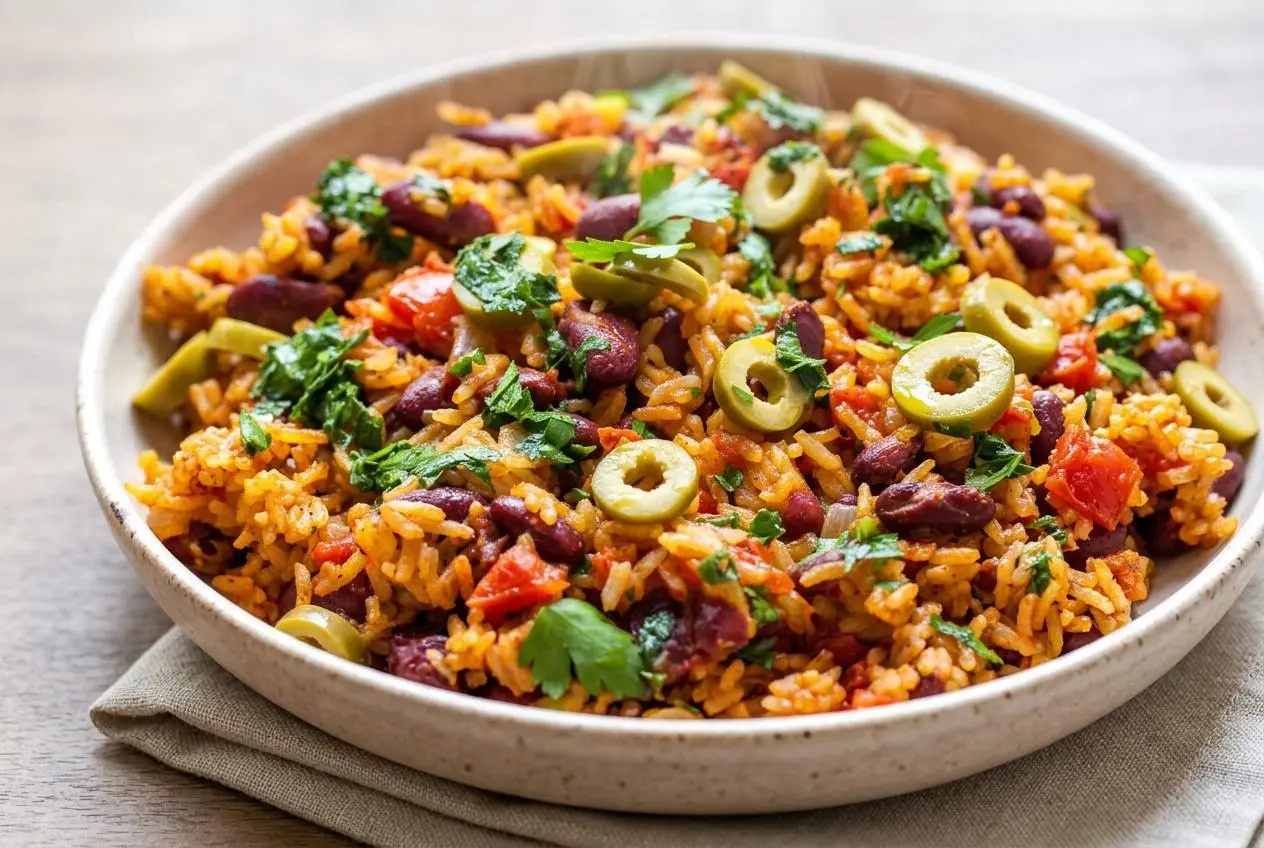
This one-pot meal cooks long-grain white rice, kidney beans, tomatoes, aromatics, and broth together in a covered skillet until the grains are tender and separate.
This rice and beans recipe brings comforting, smoky flavor to the table with fire-roasted tomatoes, warm spices, briny olives, and a fresh parsley-lemon finish.
Sizzling onion and toasted paprika make the kitchen smell especially inviting, while the covered simmer keeps the rice fluffy instead of gummy. The lid does the quiet work.
Use a large skillet with a fitted lid, and make sure the lid sits snugly before the rice begins to simmer.
Key Ingredients for Rice and Beans
Each ingredient builds flavor and structure: oil carries the spices, rice absorbs the seasoned broth, beans add hearty texture, tomatoes add moisture, and lemony parsley oil lifts the finished skillet.
Main Dish
- 2 Tbsp. extra-virgin olive oil
- 1 yellow onion, finely chopped
- 3 garlic cloves, minced
- 1 1/2 tsp. paprika
- 1 1/4 tsp. kosher salt
- 1 tsp. chili powder
- 1 tsp. dried oregano
- 1/2 tsp. black pepper
- 1/4 tsp. cayenne pepper (optional for added heat)
- 2 cups long-grain white rice ((such as jasmine or basmati))
- 1 (14.5-oz.) can fire-roasted diced tomatoes ((sub 1 cup jarred salsa))
- 2 (15.5-oz.) cans kidney beans, drained and rinsed
- 3 cups vegetable or chicken broth ((sub water))
- 1/3 cup sliced green olives
Parsley Oil
- 3 Tbsp. finely chopped fresh parsley leaves
- 1/2 tsp. lemon zest, plus 1 Tbsp. fresh lemon juice
- 3 Tbsp. extra-virgin olive oil
The paprika, chili powder, oregano, and black pepper create the savory backbone. Fire-roasted tomatoes deepen the smoky character, while green olives and lemon cut through the rice’s richness with a welcome salty-bright contrast.
I prefer rinsing canned kidney beans until the water runs mostly clear, which keeps their flavor clean and prevents excess canning liquid from clouding the skillet.
Choosing the Right Rice
Long-grain white rice is the best fit here because it cooks into distinct, fluffy grains. Jasmine brings a soft floral aroma, while basmati has a slightly drier, more separate texture. Both have less tendency to clump than shorter-grain rice when simmered without stirring.
Toasting the dry grains in seasoned oil matters. After about 2 minutes, the rice should look lightly glossy and a little translucent around the edges. That coating helps the grains stay more defined as they absorb broth. If you enjoy jasmine rice in other meals, Instant Pot jasmine rice is another useful way to highlight its fragrant texture.
Canned Versus Cooked Dried Beans
Drained and rinsed canned kidney beans are tender enough to warm through as the rice cooks, so they hold their shape without needing a separate pot. Black beans and pinto beans also work as optional swaps, though they bring different color and creaminess.
Cooked dried beans can replace canned beans if they are fully tender before they go into the skillet. Add them only after they have been simmered until soft, since raw or firm dried beans will not cook properly in the rice’s short simmering window.
Spices, Broth, and Aromatics
Onion and garlic give the skillet a savory base, while paprika, chili powder, and oregano bloom in the oil for deeper aroma. Stir the spices often during this stage. When the paprika smells clean and toasty rather than sharp or raw, it is ready for the rice.
Broth adds more depth than water, but water remains a workable substitution listed in the ingredients. The tomatoes contribute both flavor and liquid, so avoid draining them. Their juices help the rice cook evenly while lending the finished dish a vibrant red-orange color.
How to Make Rice and Beans
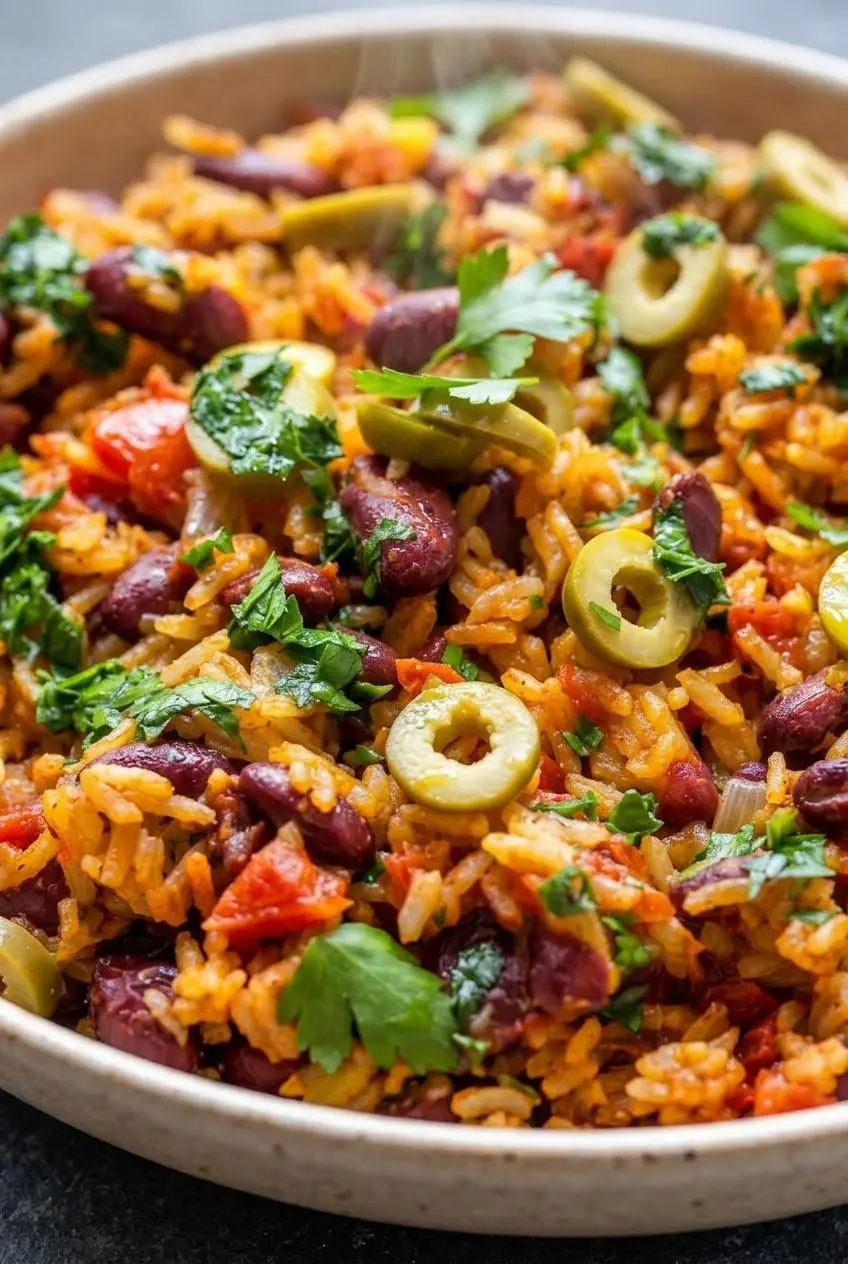
This method relies on steady heat and trapped steam. Build flavor first, then leave the skillet alone once the lid goes on so the rice can absorb liquid evenly.
Rice and Beans
- Warm the olive oil in a large covered skillet over medium heat, then cook the onion for 5 minutes until it softens.
The onion should look glossy and tender, with no browned edges yet. - Add the garlic, paprika, salt, chili powder, oregano, black pepper, and cayenne, if using, and stir frequently for 2 minutes.
The spices should smell fragrant and toasted, and the garlic should remain pale rather than brown. - Stir in the rice and cook it for 2 minutes before adding the tomatoes, kidney beans, and broth or water.
The grains should develop a slight translucent sheen as they become coated in the seasoned oil. - Bring the skillet to a boil, cover tightly, reduce the heat to medium-low, and cook for about 25 minutes without stirring or lifting the lid.
A quiet, gentle bubbling under the lid signals steady heat; the dish is ready when the liquid is absorbed and the rice is tender.
Finishing and Garnish
- While the rice cooks, stir together the parsley, lemon zest, lemon juice, and olive oil in a small bowl.
The mixture should look loose and glossy, with parsley evenly suspended in the oil. - Finish the cooked rice and beans with the sliced green olives and the parsley oil.
The olives add briny pops, while the lemony oil gives the skillet a fresh aroma right before serving.
Troubleshooting Common Cooking Mistakes
Most skillet rice problems come down to steam loss, uneven burner heat, or stirring at the wrong moment. Small adjustments can rescue the texture without changing the dish’s character.
- The rice is still crunchy: Keep the pan over low heat and add a small splash of hot broth or water around the edges. Cover it again immediately so the added moisture steams the grains instead of evaporating.
- The bottom is getting too dark: Move the skillet to a cooler burner or set it over a heat diffuser if available. Heavy skillets help, but even they can scorch when a burner runs hotter on one side.
- The rice looks gummy: Avoid stirring after the liquid reaches a boil. Stirring releases starch and turns the cooking liquid cloudy, which encourages the grains to cling together.
- The skillet seems watery at the end: Keep the lid on for a little longer over low heat so the rice can finish absorbing moisture. If the rice is already tender, remove the pan from the heat and let the trapped steam settle the texture.
- The flavor tastes flat: Finish with the parsley oil, olives, and lemon. The salty, acidic finish wakes up the smoky spices without needing to alter the main cooking method.
Storing and Reheating Rice and Beans
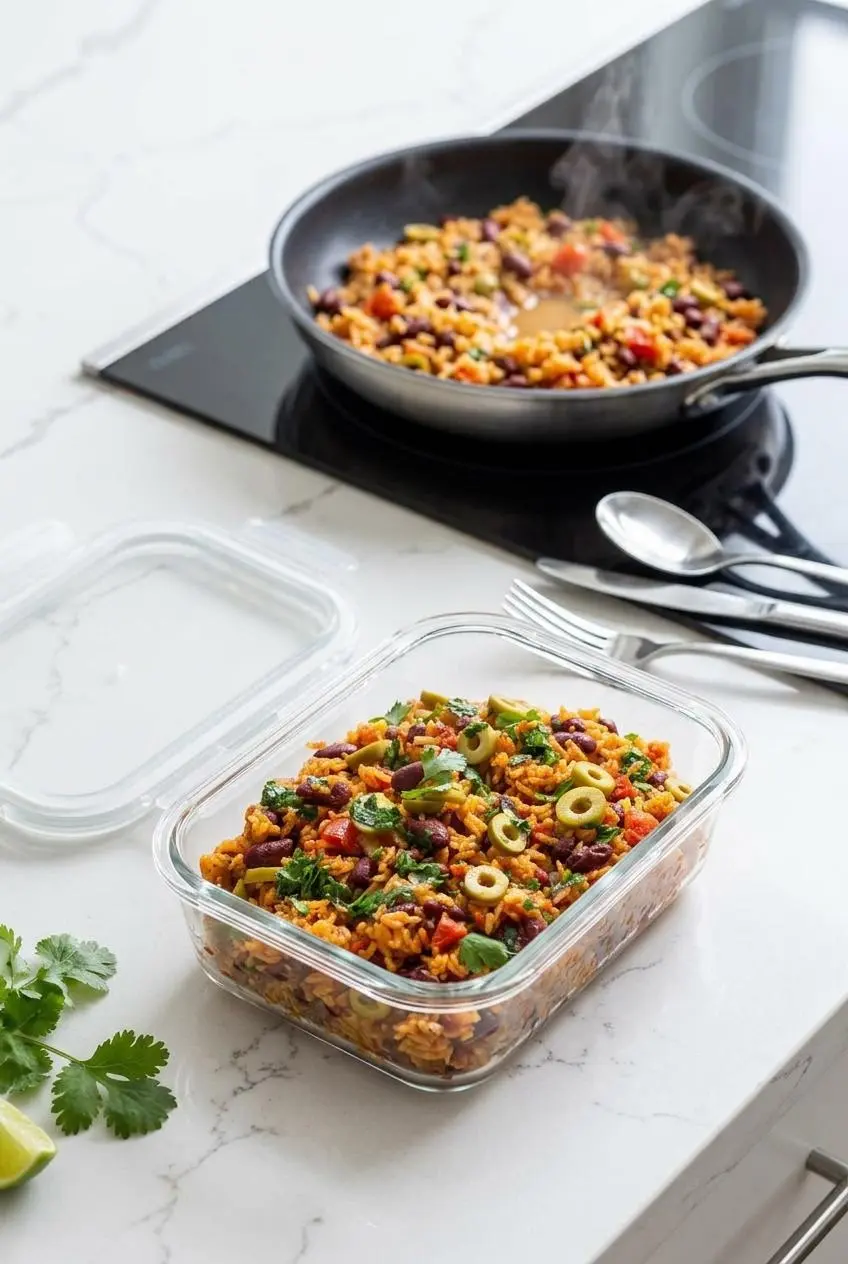
For leftovers, transfer the rice and beans to shallow containers so they cool promptly, then cover and refrigerate. Keep the parsley oil separate when possible, since its fresh lemon flavor is best added after reheating.
Reheat a portion in a covered skillet over low heat with a splash of broth or water, stirring gently only after the grains begin to loosen. For the microwave, cover loosely and add a little moisture first so the rice steams rather than dries out. Heat until the center is thoroughly hot, then finish with parsley oil and olives.
Portioning before chilling makes reheating easier and protects the fluffy texture. Avoid leaving cooked rice sitting out while you prepare other parts of the meal; get it covered and chilled once it has stopped steaming heavily.
Flavorful Serving Ideas and Toppings
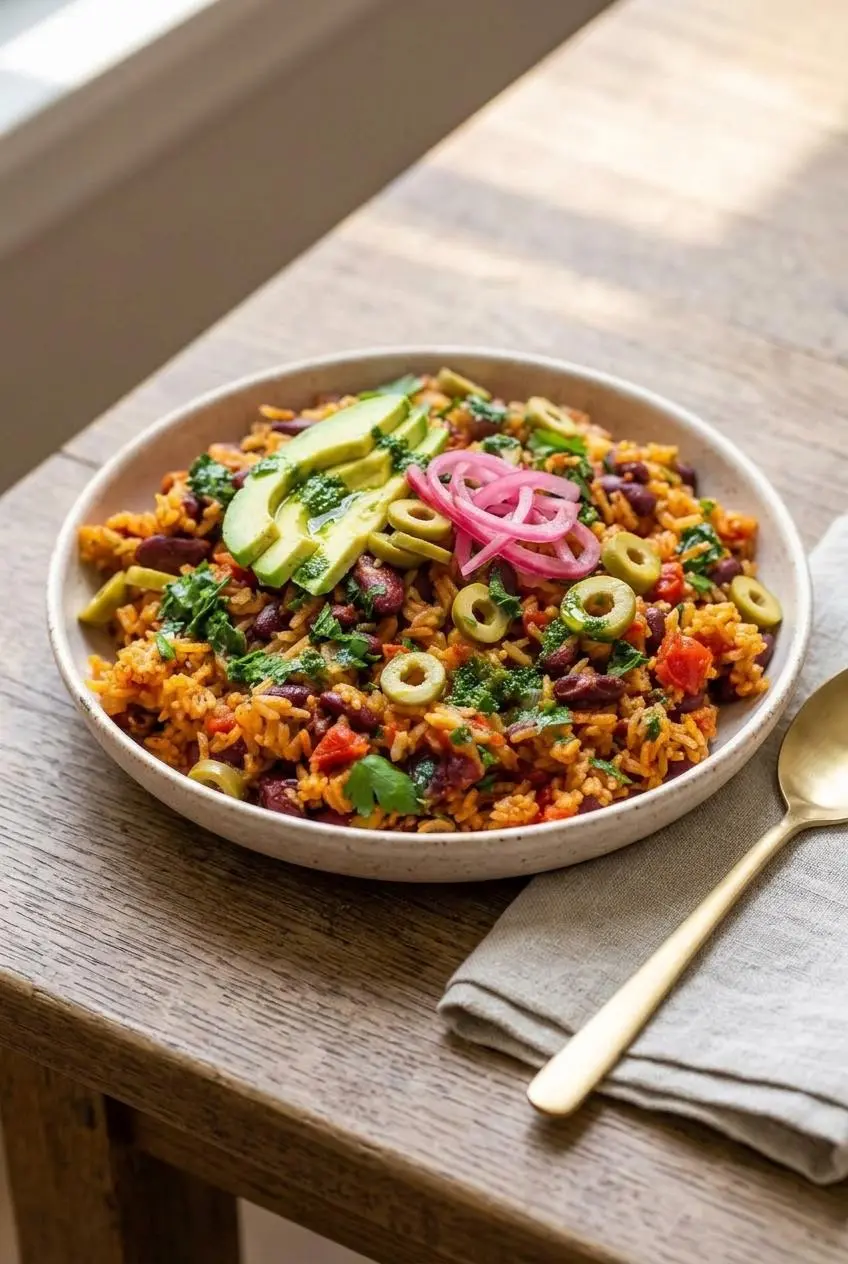
Turn this skillet into a side dish, burrito filling, or satisfying main course by adding a fresh or creamy topping just before serving.
- Sliced avocado: Its creamy texture softens the warmth of the chili and paprika.
- Pickled red onions: Their tangy crunch adds contrast to the tender rice and beans.
- A sunny-side-up fried egg: The rich yolk makes the bowl feel extra substantial.
- Sour cream: A cool spoonful rounds out the heat from cayenne and chili powder.
- Fresh lime zest and toasted ground cumin: Add both at the table for a brighter, more earthy finish.
Use the mixture as a hearty filling for burritos or tacos, or serve it alongside grilled chicken, steak, or vegetables. The olives and parsley oil already give the dish plenty of character, so toppings can stay light.
Popular Regional Variations
The skillet method stays the same, but optional bean and seasoning changes can steer the flavor in a different direction. Make these changes only when you are intentionally changing the finished dish.
Cuban Style Black Beans and Rice
Swap the kidney beans for black beans, then add a touch of cumin and a bay leaf for a Cuban-inspired direction. Black beans bring a creamier center and darker color, while oregano keeps the flavor in a familiar Caribbean range. Remove the bay leaf before serving.
Cajun Red Beans and Rice
For a Southern-inspired version, use red beans and lean into Cajun seasoning and smoky flavors. Keep the seasoning moderate at first because blends vary widely in salt and heat. For a more traditional regional meal, try Louisiana red beans and rice.
Brown Rice and Pinto Beans
Brown rice and pinto beans make a heartier option, but brown rice needs more liquid and a longer covered cook than the white-rice method here. Use a brown-rice skillet recipe as the framework rather than making a direct swap, since the timing and moisture needs are different.
Conclusion
This skillet meal delivers smoky spices, tender beans, bright tomatoes, and fluffy rice in one pan. Toasting the dry rice first builds better grain structure and a deeper savory flavor.
Once the skillet reaches a gentle simmer, keep the lid closed and let the steam do its job. Finish with lemony parsley oil, then serve while the grains are warm and separate.
Frequently Asked Questions
What Type of Rice Works Best for This Recipe?
Long-grain white rice, jasmine rice, and basmati rice work best. Their starch structure helps the grains stay lighter and more separate than short-grain varieties. Toasting the rice in oil before adding liquid further supports a fluffy result.
Can I Use Dried Beans Instead of Canned Beans?
Yes, as long as the dried beans are fully cooked and tender before they enter the skillet. Add them at the same point as the canned beans. Do not add uncooked dried beans with the rice because they need much longer to soften.
How Do I Prevent the Bottom of the Pan From Burning?
Use a heavy skillet with a fitted lid, reduce the heat as soon as the liquid boils, and keep the heat gentle during the covered simmer. Do not lift the lid repeatedly, and move the skillet to a cooler burner if you smell scorching.
Is Rice and Beans Considered a Complete Protein?
Yes. Rice supplies methionine, while beans contribute lysine, and together they provide all nine essential amino acids. This complementary pairing makes rice and beans a complete plant protein meal.
Rice and Beans Recipe

Equipment
- Large skillet with fitted lid
Ingredients
Main Dish
- 2 Tbsp. extra-virgin olive oil
- 1 yellow onion, finely chopped
- 3 cloves garlic, minced
- 1 1/2 tsp. paprika
- 1 1/4 tsp. kosher salt
- 1 tsp. chili powder
- 1 tsp. dried oregano
- 1/2 tsp. black pepper
- 1/4 tsp. cayenne pepper (optional for added heat)
- 2 cups long-grain white rice ((such as jasmine or basmati))
- 1 (14.5-oz.) can fire-roasted diced tomatoes ((sub 1 cup jarred salsa))
- 2 (15.5-oz.) cans kidney beans, drained and rinsed
- 3 cups vegetable or chicken broth ((sub water))
- 1/3 cup sliced green olives
Parsley Oil
- 3 Tbsp. finely chopped fresh parsley leaves
- 1/2 tsp. lemon zest, plus 1 Tbsp. fresh lemon juice
- 3 Tbsp. extra-virgin olive oil
Instructions
Rice and Beans
- Warm the olive oil in a large covered skillet over medium heat, then cook the onion for 5 minutes until it softens. The onion should look glossy and tender, with no browned edges yet.
- Add the garlic, paprika, salt, chili powder, oregano, black pepper, and cayenne, if using, and stir frequently for 2 minutes. The spices should smell fragrant and toasted, and the garlic should remain pale rather than brown.
- Stir in the rice and cook it for 2 minutes before adding the tomatoes, kidney beans, and broth or water. The grains should develop a slight translucent sheen as they become coated in the seasoned oil.
- Bring the skillet to a boil, cover tightly, reduce the heat to medium-low, and cook for about 25 minutes without stirring or lifting the lid. A quiet, gentle bubbling under the lid signals steady heat; the dish is ready when the liquid is absorbed and the rice is tender.
Finishing and Garnish
- While the rice cooks, stir together the parsley, lemon zest, lemon juice, and olive oil in a small bowl. The mixture should look loose and glossy, with parsley evenly suspended in the oil.
- Finish the cooked rice and beans with the sliced green olives and the parsley oil. The olives add briny pops, while the lemony oil gives the skillet a fresh aroma right before serving.