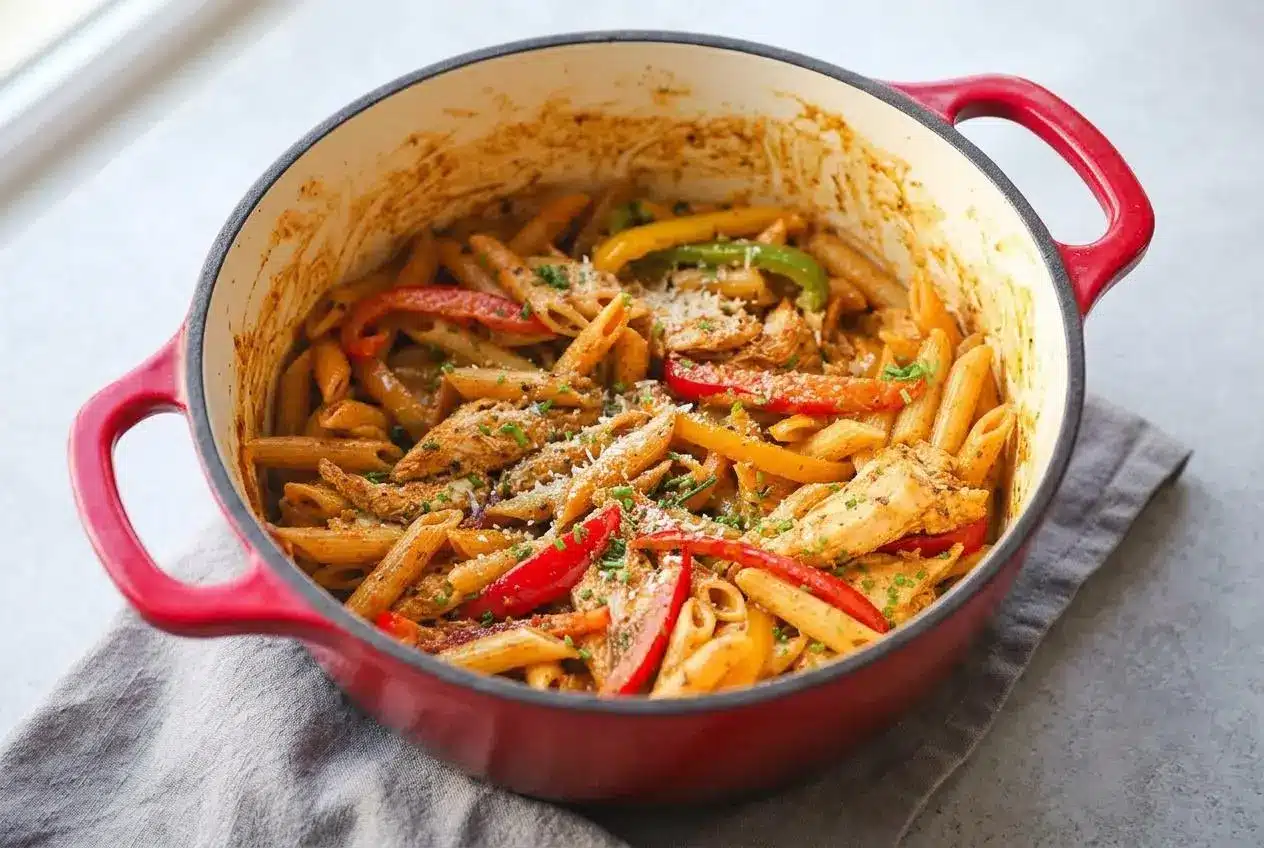
Rasta pasta is a Jamaican Caribbean-Italian dish of pasta, colorful bell peppers, and jerk-seasoned chicken in a rich, spicy cream sauce. It works because sweet peppers and silky dairy balance the warm, fiery seasoning.
This rasta pasta recipe brings sizzling jerk spice, tender chicken, and crisp sweet peppers together for a fast, satisfying weeknight dinner.
The sauce clings to every curve of pasta, while parmesan rounds out the jerk seasoning instead of hiding it. The key is a gentle simmer and a glossy finish.
Reserve some pasta cooking water before draining so you can loosen and smooth the sauce at the end.
What Is Rasta Pasta and Why It Works
Rasta pasta began in Jamaica in 1986 as a colorful fusion of Caribbean flavor and Italian-style pasta. Its red, green, and yellow bell peppers echo Rastafari colors, while jerk seasoning brings the dish its unmistakable allspice, thyme, peppery warmth, and chile heat.
The sauce creates contrast rather than competition. Jerk spices bring intensity, and heavy cream or coconut milk softens their sharp edges into a rich coating. Sweet bell peppers add freshness and a little crunch, which keeps the finished dish from feeling too heavy.
Short tubular pasta shapes work especially well because their hollow centers and ridges catch the creamy sauce. Penne, rigatoni, and cavatappi all hold onto the peppers, chicken, and savory sauce far better than long, delicate noodles.
Rasta pasta is sometimes called jerk pasta because jerk seasoning drives the flavor, but the signature tricolor peppers give it its colorful identity.
Essential Ingredients for Rasta Pasta
Each ingredient supports the finished dish: pasta provides structure, peppers bring color and bite, jerk seasoning adds warmth, and cream with parmesan creates a smooth, savory coating.
- 16 ounces dried pasta
- 2 large chicken breasts (or 2 cups of shredded rotisserie chicken)
- 2 tablespoons vegetable oil (1 tbsp for frying chicken and 1 tbsp for sauteeing bell peppers)
- 3 tablespoons jerk seasoning (1.5 tbsp with the chicken, and 1.5 tbsp goes in the sauce)
- 3 bell peppers (in different colors – sliced)
- ½ cup green onions (sliced)
- 2-3 cloves garlic (minced)
- ¼ cup vegetable stock (or chicken stock)
- ½ cup heavy cream (or half and half)
- ½ cup parmesan cheese (grated)
The bell peppers stay bright and crisp-tender, while green onions and garlic build a savory aromatic base. Jerk seasoning supplies the bold Caribbean character, and the cream and parmesan turn the broth into a silky sauce that hugs the pasta.
I look for firm red, green, and yellow peppers with glossy skin, since they keep their snap and bring the best natural sweetness to the skillet.
Tricolor Bell Peppers and Aromatics
Slice the peppers thinly so they cook quickly without collapsing. Red and yellow peppers taste sweeter, while green peppers bring a pleasantly grassy edge that stands up well to the rich sauce.
Add the green onions before the garlic, then stir in garlic only once the peppers have started to soften. Garlic can scorch quickly in a hot pot, so it should smell fragrant and mellow, never bitter or sharply toasted.
Choosing Your Jerk Seasoning: Rub vs Paste
A dry jerk blend is the easiest choice for this recipe because it seasons the chicken and blooms directly in the oil with the vegetables. Look for one with allspice, thyme, black pepper, and chile for a rounder flavor than a blend that tastes mostly salty or hot.
Wet Jamaican jerk paste can be more concentrated and often carries stronger chile heat. If using it as an optional swap, add it gradually and taste the sauce before adding more. Some pastes also contain more salt than dry blends, so restraint matters.
Scotch bonnet peppers are traditional in many jerk preparations, but they are very hot. For a milder family meal, choose a mild jerk blend and skip any extra fresh hot peppers.
Selecting the Right Pasta Shape
Penne is a dependable choice because its tubes trap sauce and pepper strips. Rigatoni gives an even heartier bite, while cavatappi’s spirals collect the creamy jerk sauce in every curl. Cook whichever shape you choose only until al dente, since it finishes in the sauce.
How to Make Rasta Pasta
Work in one heavy-bottomed pot so the browned bits from the chicken and aromatics can deepen the sauce. If using rotisserie chicken, skip the searing step and add it when the cream and stock go into the pot.
- Cook the dried pasta in boiling water following the package directions, then drain it while it is still al dente and reserve some of the cooking water.
The pasta should have a firm center because it will soften further once it meets the warm sauce. - If using raw chicken breasts, cut them into cubes, coat them with 1.5 tbsp jerk seasoning, and cook them in 1 tbsp vegetable oil until browned and cooked through; transfer them to a plate.
Look for a deep golden surface on the chicken and flavorful browned bits in the bottom of the pot. - Add the remaining 1 tbsp vegetable oil, then cook the sliced bell peppers and green onions until the peppers are tender-crisp.
The peppers should look glossy and flexible while still holding their bright color and shape. - Stir in the minced garlic, then add the remaining 1.5 tbsp jerk seasoning to the warm oil and vegetables.
After a brief stir, the pot should smell warmly toasted with allspice and thyme aromas rather than raw spice. - Pour in the vegetable stock and heavy cream, then return the cooked chicken and let the mixture simmer gently until it thickens slightly.
Small, steady bubbles should form around the edges, and the sauce should lightly coat the back of a wooden spoon. - Take the pot off direct heat, stir in the grated parmesan, then fold in the pasta and add a little reserved cooking water if the sauce feels too thick.
The finished pasta should look glossy and evenly coated, with no dry noodles or puddles of separated oil. - Finish with chopped green onions and serve while the sauce is warm and creamy.
The peppers should still have a little bite against the tender pasta and richly seasoned chicken.
Troubleshooting and Chef Tips for Success
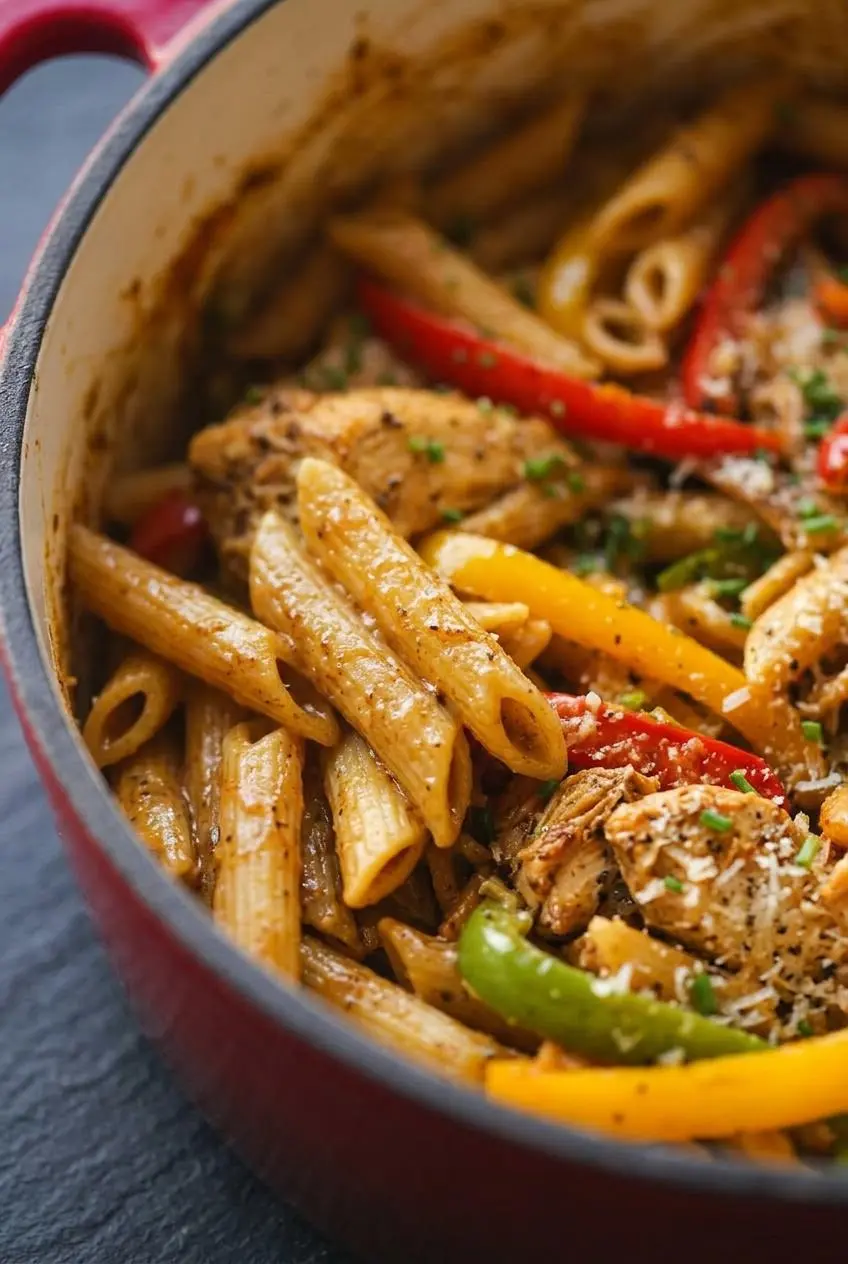
A few small choices make the difference between a velvety jerk cream sauce and one that turns greasy or flat. Keep the heat gentle once the cream goes in, and let texture cues guide you.
- Broken or oily sauce: Rapid boiling can separate the dairy. Remove the pot from direct heat and stir in reserved starchy pasta water a little at a time until the sauce looks smooth again.
- Clumpy parmesan: Cheese can seize when added over strong heat. Let the pot come off the burner before stirring in finely grated parmesan, then mix until it melts into the sauce.
- Thick, sticky pasta: The sauce continues to tighten as pasta absorbs moisture. Loosen it with reserved pasta water or a splash of stock until it returns to a creamy coating.
- Bland flavor: Bloom the jerk seasoning in warm oil after the garlic becomes fragrant. This wakes up the aromatic spices and gives the sauce a fuller allspice scent.
- Too much heat: Use a mild jerk blend from the start. If the sauce still tastes too fiery, add a little more cream or stock to soften the intensity without washing out the flavor.
- Soft peppers: Keep the sauté brief and add the garlic later. The goal is tender-crisp peppers that still add contrast to the creamy pasta.
Think of the reserved pasta water as a bridge between the cream and cheese. Its starch helps the sauce cling rather than slide off the noodles, giving the dish that restaurant-style sheen.
Storing and Reheating Leftovers
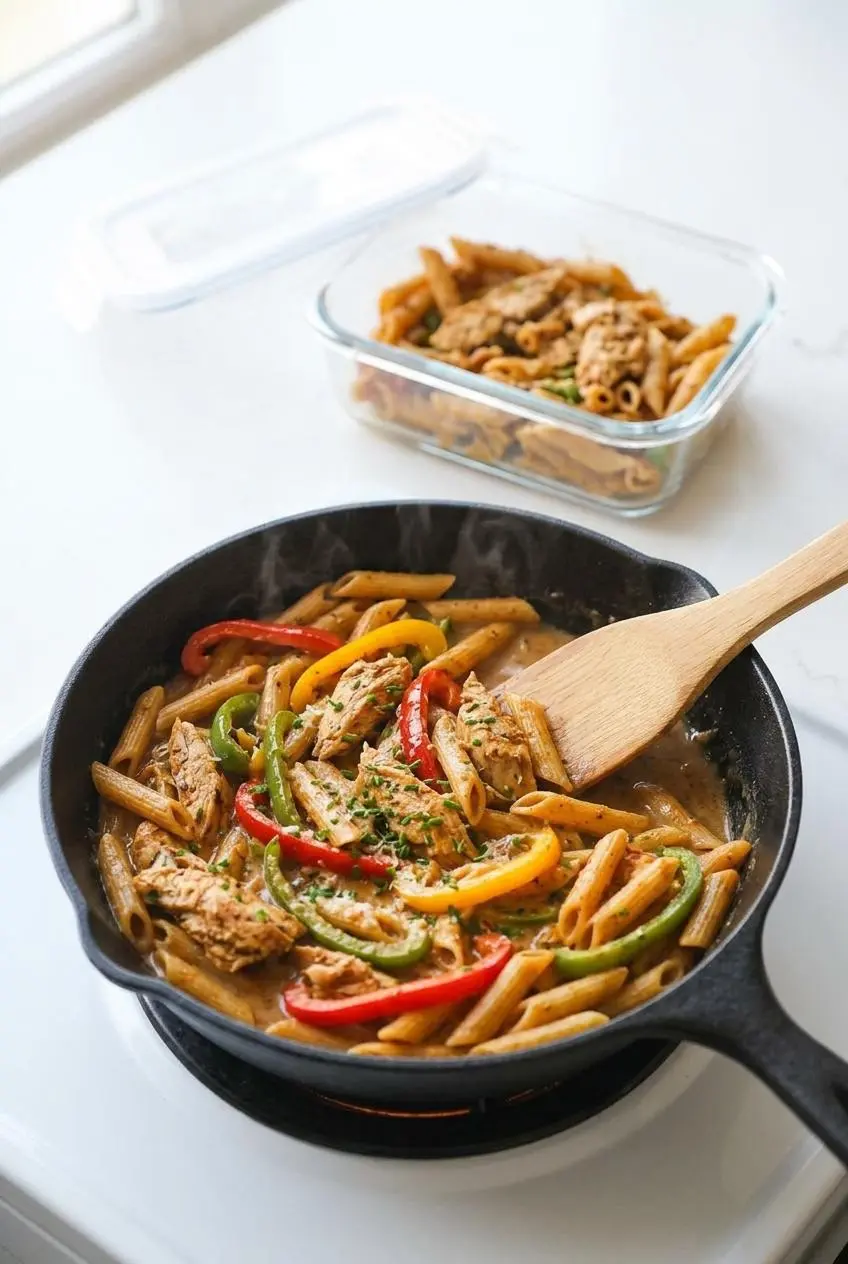
Cool leftover pasta promptly, transfer it to an airtight container, and keep it chilled. For the best texture, store any extra garnish separately and add it after reheating.
Warm portions in a skillet over low heat with a splash of milk, broth, or water. Stir often and stop once the pasta is heated through and the sauce looks creamy again. High heat can make the dairy separate into an oily layer.
If the sauce has thickened in the container, revive it gradually rather than adding a large splash of liquid all at once. Small additions give you more control and help the sauce return to a smooth coating.
Popular Variations and Serving Suggestions
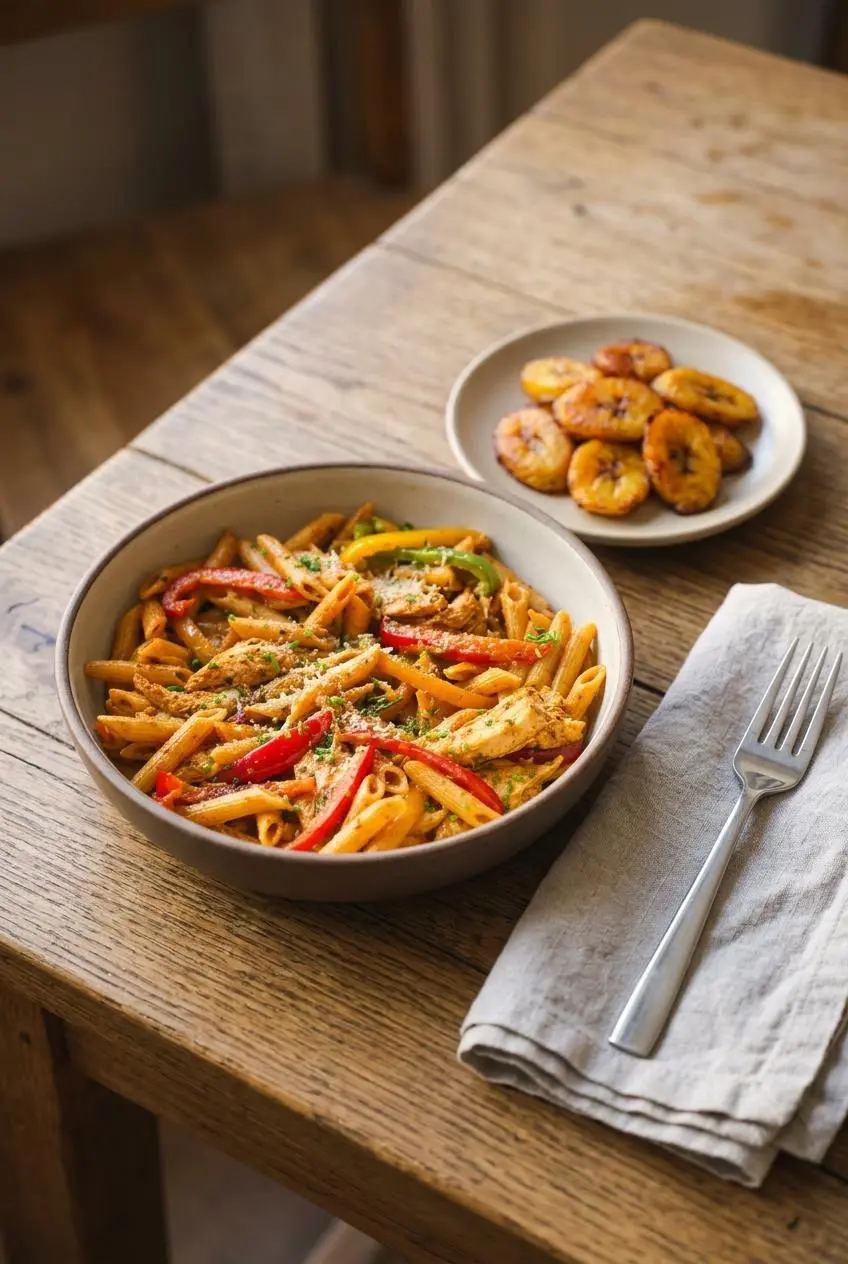
These optional changes keep the same spicy, creamy character while giving you room to tailor the meal to what you enjoy. Keep them outside the main method so the classic chicken version stays intact.
- For a brighter finish, add freshly grated lime zest and fresh thyme right before tossing the pasta. The citrus and herbs lift the rich sauce without changing its texture.
- For a vegetarian option, sauté cremini mushrooms until browned, then add baby spinach near the end until just wilted. Mushrooms bring savory depth, while spinach adds a fresh green contrast.
- For a smoky variation, sliced smoked sausage can replace the chicken. Brown it first, then build the pepper and cream sauce in the same pot.
Jerk Shrimp Rasta Pasta
For an optional seafood version, season jumbo shrimp with jerk seasoning and sear them in a skillet for 2 to 3 minutes per side, until pink and opaque. Set them aside, then fold them into the finished pasta just before serving so they stay tender.
If creamy, boldly seasoned seafood dinners are your thing, try this creamy seafood pasta for another satisfying pasta night.
Dairy-Free Coconut Milk Adaptation
Use unsweetened canned full-fat coconut milk in place of heavy cream for an optional dairy-free version. Coconut milk brings a slightly sweet, tropical flavor that pairs naturally with jerk seasoning and bell peppers.
Let the coconut milk simmer gently with the stock until it has enough body to cling to a spoon. Use a dairy-free parmesan alternative if desired, and avoid a hard boil so the sauce stays smooth.
Side Dishes to Complete the Meal
Balance the rich, spicy pasta with something crisp, bright, or sweet.
- Sweet fried ripe plantains bring caramelized sweetness that softens the jerk heat.
- A cucumber and tomato salad with lime dressing adds cool crunch and acidity.
- Toasted garlic bread is ideal for catching the last streaks of jerk cream sauce.
Conclusion
This pasta delivers the contrast that makes rasta pasta so satisfying: fiery jerk seasoning, sweet peppers, savory chicken, and velvety cream in one colorful bowl.
Keep the pasta al dente, bloom the seasoning in oil, and take the pot off the heat before adding parmesan. That gentle finish keeps every bite smooth, glossy, and full of flavor.
Frequently Asked Questions
What Is the Secret to Getting a Creamy Rasta Pasta Sauce?
Simmer the cream and stock gently until the sauce thickens slightly. Remove the pot from direct heat before adding finely grated parmesan. Stir in reserved starchy pasta water as needed for a glossy, clingy sauce.
Can I Use Coconut Milk Instead of Heavy Cream?
Yes. Unsweetened canned full-fat coconut milk makes a rich dairy-free alternative. Its gentle sweetness pairs especially well with bell peppers and jerk seasoning. Simmer it gently until the sauce thickens enough to coat the pasta.
How Do I Tone Down the Spice Level if It Is Too Hot?
Start with a mild jerk seasoning blend and skip fresh hot peppers. Add a splash of heavy cream or stock to soften the heat. A small pinch of brown sugar can also round out sharp chile heat without making the sauce sweet.
What Is the Best Way to Reheat Leftover Rasta Pasta Without It Getting Greasy?
Reheat it gently in a skillet over low heat rather than letting it boil. Add a small splash of milk, broth, or water and stir frequently. Stop heating once the sauce looks creamy again, before the dairy separates.
Rasta Pasta Recipe

Equipment
- Large Pot
Ingredients
- 16 ounces dried pasta
- 2 large chicken breasts (or 2 cups of shredded rotisserie chicken)
- 2 tablespoons vegetable oil (1 tbsp for frying chicken and 1 tbsp for sauteeing bell peppers)
- 3 tablespoons jerk seasoning (1.5 tbsp with the chicken, and 1.5 tbsp goes in the sauce)
- 3 bell peppers (in different colors – sliced)
- ½ cup green onions (sliced)
- 2-3 cloves garlic (minced)
- ¼ cup vegetable stock (or chicken stock)
- ½ cup heavy cream (or half and half)
- ½ cup parmesan cheese (grated)
Instructions
- Cook the dried pasta in boiling water following the package directions, then drain it while it is still al dente and reserve some of the cooking water. The pasta should have a firm center because it will soften further once it meets the warm sauce.
- If using raw chicken breasts, cut them into cubes, coat them with 1.5 tbsp jerk seasoning, and cook them in 1 tbsp vegetable oil until browned and cooked through; transfer them to a plate. Look for a deep golden surface on the chicken and flavorful browned bits in the bottom of the pot.
- Add the remaining 1 tbsp vegetable oil, then cook the sliced bell peppers and green onions until the peppers are tender-crisp. The peppers should look glossy and flexible while still holding their bright color and shape.
- Stir in the minced garlic, then add the remaining 1.5 tbsp jerk seasoning to the warm oil and vegetables. After a brief stir, the pot should smell warmly toasted with allspice and thyme aromas rather than raw spice.
- Pour in the vegetable stock and heavy cream, then return the cooked chicken and let the mixture simmer gently until it thickens slightly. Small, steady bubbles should form around the edges, and the sauce should lightly coat the back of a wooden spoon.
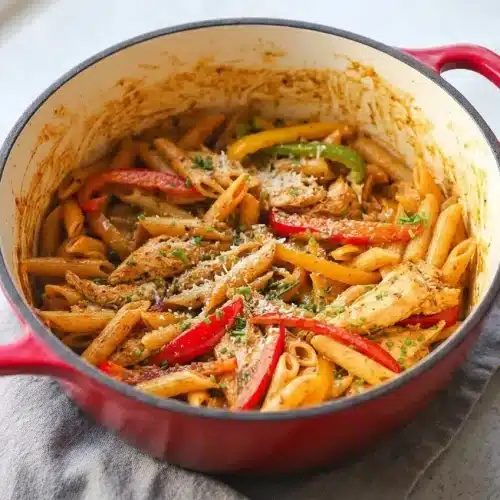
- Take the pot off direct heat, stir in the grated parmesan, then fold in the pasta and add a little reserved cooking water if the sauce feels too thick. The finished pasta should look glossy and evenly coated, with no dry noodles or puddles of separated oil.
- Finish with chopped green onions and serve while the sauce is warm and creamy. The peppers should still have a little bite against the tender pasta and richly seasoned chicken.